Taking candy.

After lunch, I bump into two of my friends, Isabelle and Diana.  I love these eighteen-year-olds, who exude energy even when they’re clearly exhausted.  One of them, Isabelle, who is from Eastern Europe, offers me a hard candy.  I don’t really like hard candy–while my sweet tooth is tusk-sized, it prefers dark chocolate and homemade baked goods (preferably involving chocolate)–but I accept.  It’s a Mentos, one of those fruity flavors that tastes nothing like fruit.

Isabelle watches me chew on the candy.  “What do you think of the–” she pauses, contemplates, then mimes sucking on a candy by pushing her tongue into her cheek.

“Mm, it’s nice,” I say.

She doesn’t seem satisfied, and turns to my other friend.  “How do you say–” Then she points to her tooth.

Great.   I must have some embarrassingly giant herb wedged between my teeth.  I need to start carrying floss.

“Um, is there something in my teeth?”

“No no no!”  She says something to Diana, who is attempting to translate.

“An ulcer?” Diana offers.

No.  Please no.  I arrived in Israel with two open cold sores on my lips, which didn’t help with my natural self-consciousness.  I felt like I should have worn leper bells.  Had they recurred already?

“I have an ulcer on my face???” I ask.

“No no no!”  After another moment of consultation, she arrives at the word: flavor.

“Do you like the flavor?”  she asks.

“Mm, it’s nice,” I say.  Then I head out to check my teeth/cold sore situation.

Huh?

Lost

A very friendly woman asked me to get lunch with her, and I’m hoping (still on the friend hunt) to make a good impression.  We set our trays down on a table and she notices there is no salt shaker.

“I’m going to get one from another table,” she says.

I smile, and somehow manage to come up with an impossible tongue twister in response.  What I wanted to say was, “There seems to be salt shaker shortage.”  What I actually say is more like, “There seems to be a shalt saker sortage–shalt shake–salt sake sort–”

She remains unruffled, smiling through my stumbling, and agrees that there was indeed a shortage.  Despite my tongue being in a hopeless twist of sibilance, our lunch goes well after that.

***

I’m in a study group that meets once a week to discuss the Kitáb-i-Iqán, the Book of Certitude, which is one of the most holy books for Bahá’ís.  For whatever reason, the majority of the group is IT guys.  It’s a funny group.  I have to confess that my stereotype of programmers involves social awkwardness and thick glasses.  While there are some thick glasses in our party (mine), these guys are surprisingly chatty and even constantly wisecracking.  Like, constantly.  And with computer science allusions galore.  The facilitator studied computer science so she picks up on their references.  Me, on the other hand–I know a few HTML <b>codes</b>, but when it comes to real programming, I haven’t got a clue.  I console myself by thinking that if these men were to find themselves seated in a college English seminar, they’d be as lost as I usually am with them.

This particular day, we’re discussing progressive revelation, which Bahá’u’lláh explains with an analogy involving the sun.  There’s the concept that all the Manifestations (Abraham, Jesus, Moses, Muhammad, Krishna, etc) are the same, yet distinct.  He explains that it’s like the sun–I could say that today’s sun is the same as yesterday’s, or I could say it’s different.  Either statement would be true.  The sun is fundamentally the same sun, but it’s undergone changes since yesterday, so it’s also new.

“It’s kind of like object oriented programming,” one of the guys says.  Everyone laughs and agrees–“That’s a great comparison!  Progressive revelation and object oriented programming!”–while I lean back in my chair.  Well that clarifies things, I think, letting my mind wander back towards the humanities.

***

He’s on a ladder in the women’s restroom, and I am peering up at him.  I’m the contact person for problems in the building, including this case of the restroom door shutting too loudly.  It really is quite thunderous, but that’s mostly due to the acoustics of marble floors and bare walls.

So this young repairman/engineer is here.  I let him in and explained the issue to him, and now he’s set up to work on the hinges.

“Is there anything else I can do for you?” I ask.

“I need you to get out,” he says flatly.

I stare for a moment, my friendly admin smile still on my face, wondering why my presence is so obnoxious to this friendly guy.  Then I realize: “I need you to get out” means “I need you to help me get out.”  My building has limited access and lots of locked doors.  I laughed, explained my interpretation, we laughed together, and then there was nothing left to do–I got out.

So shiny

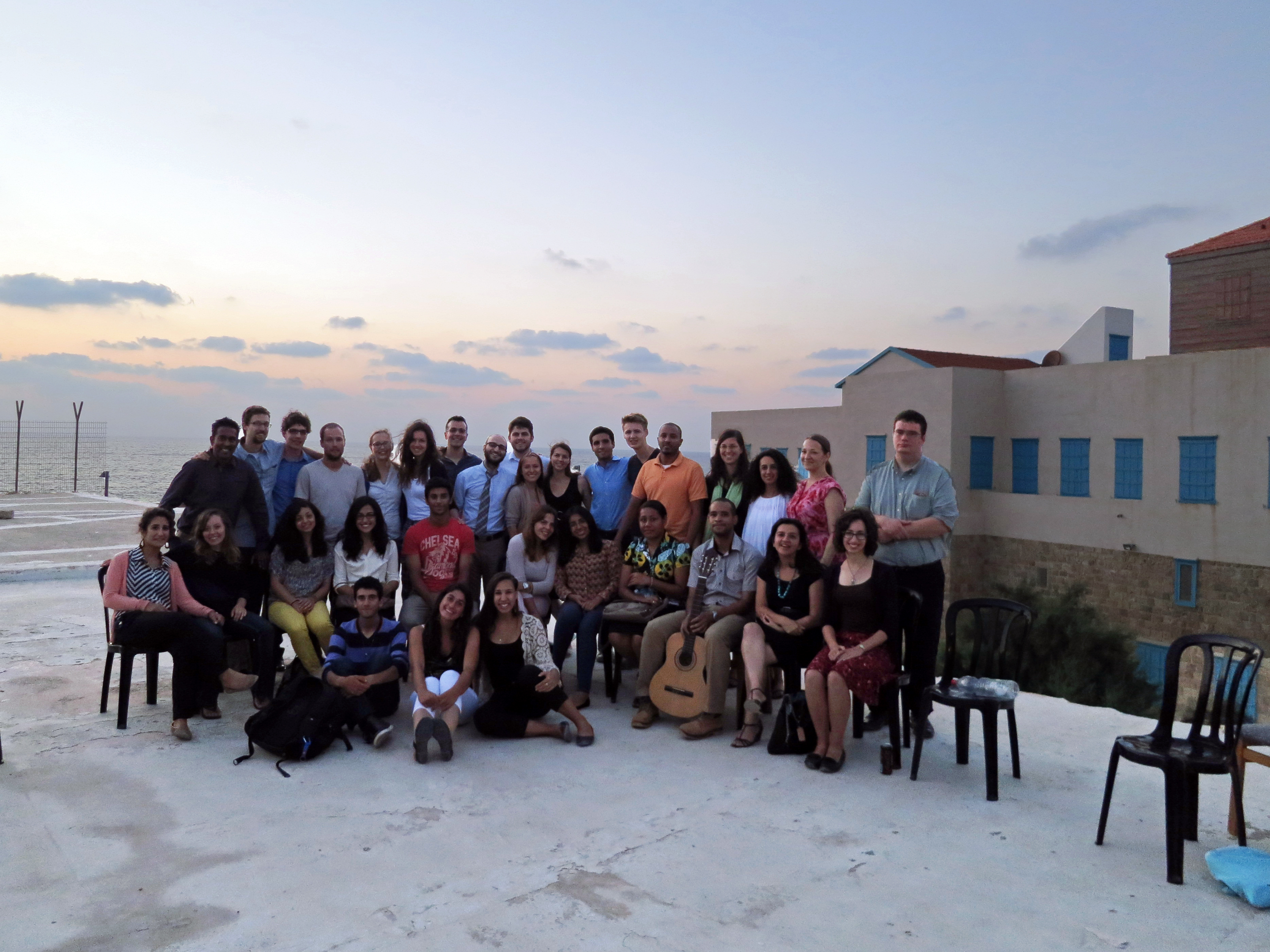
We’re on the roof of a building in the Abdullah Pasha compound in ‘Akká.  It’s 7:00 PM and the sun is setting over the Mediterranean, painting sky and sea.  Viewed through the chain link fence bordering the roof, it becomes a gleaming mosaic.   A mosaic in a Mosaic land.  If I had brought my camera, I would have indulged in some shutterbugging, but I try to take “photos with my brain” instead.  Although I could really use a better memory card.

At least someone remembered their camera!

At least someone remembered their camera!

So we’re on the roof for our weekly reflection program, a change of habitat from our usual multipurpose room.  The group is singing the song we always sing, “Unite the hearts,” when the call to prayer rings out from the nearby mosque.  I find myself wishing church bells would start tolling and the worshippers at a synagogue would start harmonizing in an interfaith mashup.

The previous week, a member of the Universal House of Justice talked with our group about the spiritual prerequisites for success.  I had the (nerve-wracking) honor of introducing him (I cut the word “prerequisite” out of my intro after its multiple R’s proved hostile to my pronunciation) and sitting beside him for the duration.  The scent of his attar of rose permeated the air.

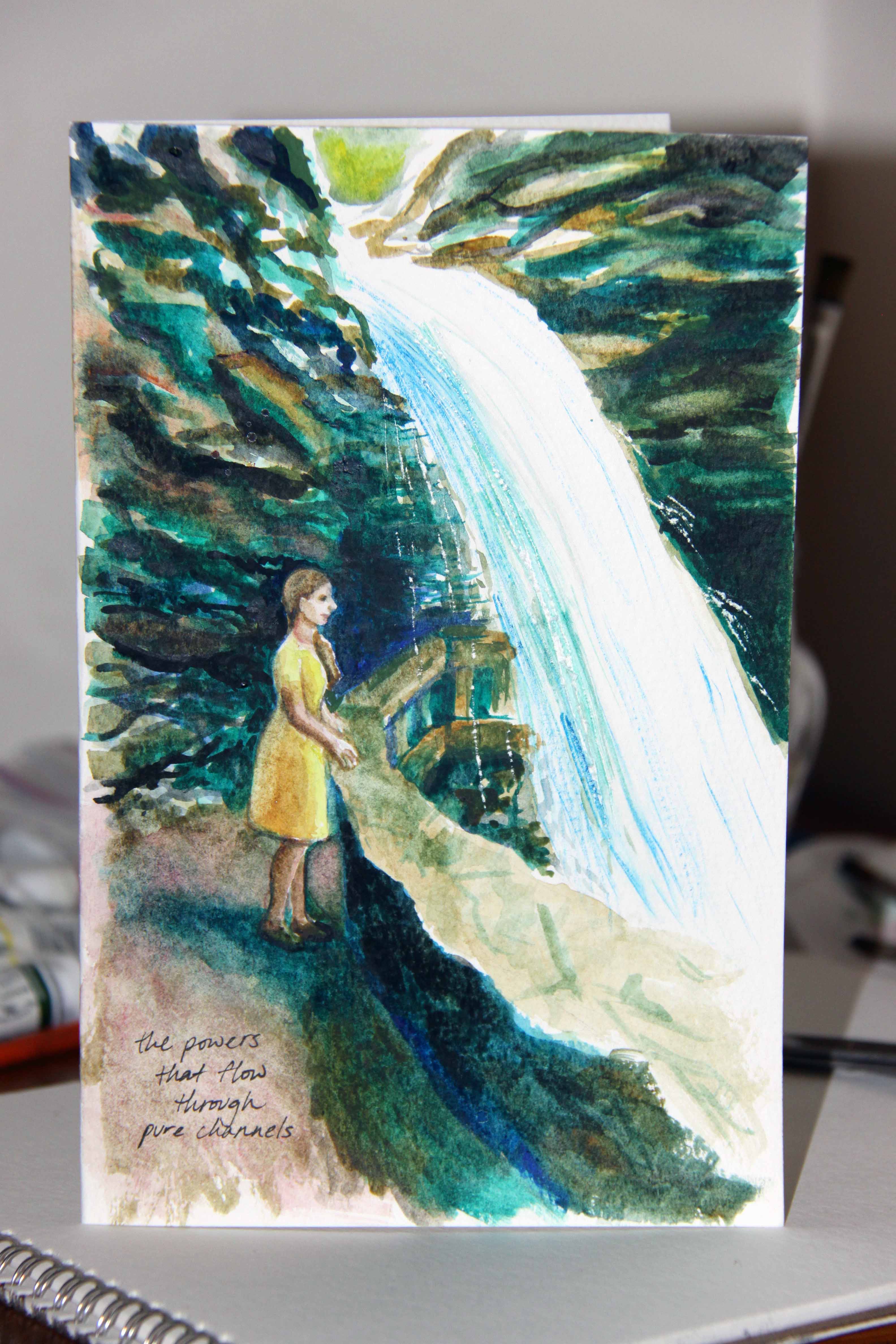
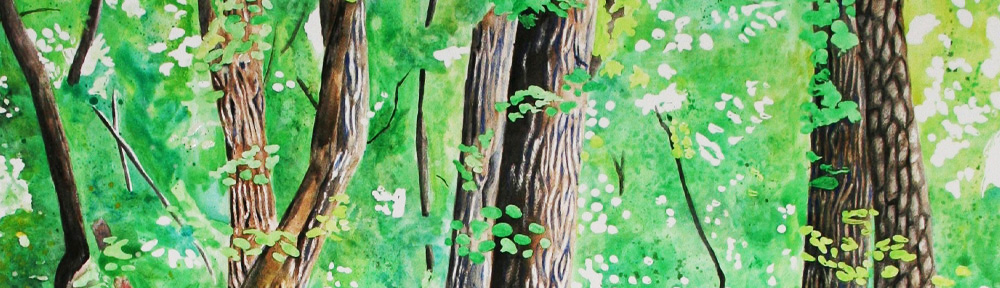
I made a card to thank him for joining us.  It was the first time I’ve painted in quite a while, and losing myself in the watercolors for a few hours reminded me why I love making art.  The line written in the lower left corner comes from the 28 December 2010 message of the UHJ to the Continental Board of Counsellors, which discusses upholding Bahá’í values and nurturing good habits of thought:

May every one of them [youth] come to know the bounties of a life adorned with purity and learn to draw on the powers that flow through pure channels.

Card

I can’t help but notice a resemblance to an earlier painting…

Watercolor - Forest Meditation

Five years have elapsed, and my muse remains the same.

I want to be your friend

A few years ago, one of those hipsterish Brooklyn bands released “Friend Crush.”  Despite the song’s fairly innocent content, with “I want to be your friend” as the main sentiment, it has a distinctly creepy undertone.  Innocent but creepy… like me when I’m trying to make friends.

You see, Mount Holyoke was my ideal friend-making environment.  At the risk of idealizing my alma mater, I arrived in August and by October I had both a bestie and a friend group that more or less persisted all the way to graduation. As firsties, we were all terrified of ending up alone, so we glommed on to our hallmates or classmates and clung on for the ride.  At least I did.  The way my friend Addie tells it, I was so shy upon meeting her that I wouldn’t even make eye contact.  I beg to differ, but it is true that it takes me a long time to get comfortable with anyone, with few exceptions.  My friends steamed me out of my shell like a recalcitrant oyster.

Having a friend group, even a small one, means living in a sort of adopted family–a family with divisions, conflicts, and even the occasional estrangement–yeah, a real family.  We didn’t share any blood, but what we had in common was that we were all uncommon women (or womyn if you’d rather).

Now that I’m out of the res hall, out of class–now that I’m in the adult(ish) world–I see that my friend situation those four years was unique.  My instinct now is to try to aggregate a friend group in the Mount Holyoke model, a gaggle of diverse folks who all love each other and attend weekly brunch together.  I do see some friend groups in the lunchroom here.  There are the high school grads who clean or garden together; the orientation group that stuck together; the office staff in their mid to upper twenties.

Thus far, I have not received a formal invitation to join one of these groups.  To take a page from Zora Neale Hurston, it astonishes me that anyone would want to deny themselves the pleasure of my company.  I mean, I wear cool blazers.

So, too shy to gatecrash a preexisting group, I’m on the friend hunt.  I don’t go about this in the normal way; I strategize like a bounty hunter.  I locate my target, then attempt to construct our friendship regardless of their consent.  First, we shall get lunch together; then, we must hang out outside of the workday; and finally, you will be mine.  Normal people seem to do more of, “Hey, you seem cool, let’s chill,” and things progress naturally.  They don’t have an endgame, but then again, they aren’t Layli.

When I say I’m on the friend hunt, that’s primarily a female friend hunt.  The men… I mean…

Dorothy

Toto, I’ve a feeling we’re not in Mohome anymore.

Basically what I mean is simply that there are men on campus.  Gasp.  See, you put me in conversation with any dude 18 to 30 years old, and I promise things will get awkward, stat.

For instance, there was the kid who generously explained his style of dress for me.  He pulled out his phone and showed me a photo of him in skintight jeans (possibly jeggings?).  “Back in Germany, I like to wear my pants this tight,” he informed me.

Or my friend who texted me, “Do u like roses?”  This struck me as an odd question. Does anyone dislike roses?  I take it as common ground with the rest of humanity that we all like roses.  So, I replied in the affirmative and was delivered a somewhat flattened red rose.  From his explanation, he had tried to press this rose in a book.

Or that poor fellow who worked up the nerve to leave his front row seat–at a talk on preparation for marriage, no less–to come sit next to me.

“What’s your name?” I said.

“Haven’t we met?” he said.

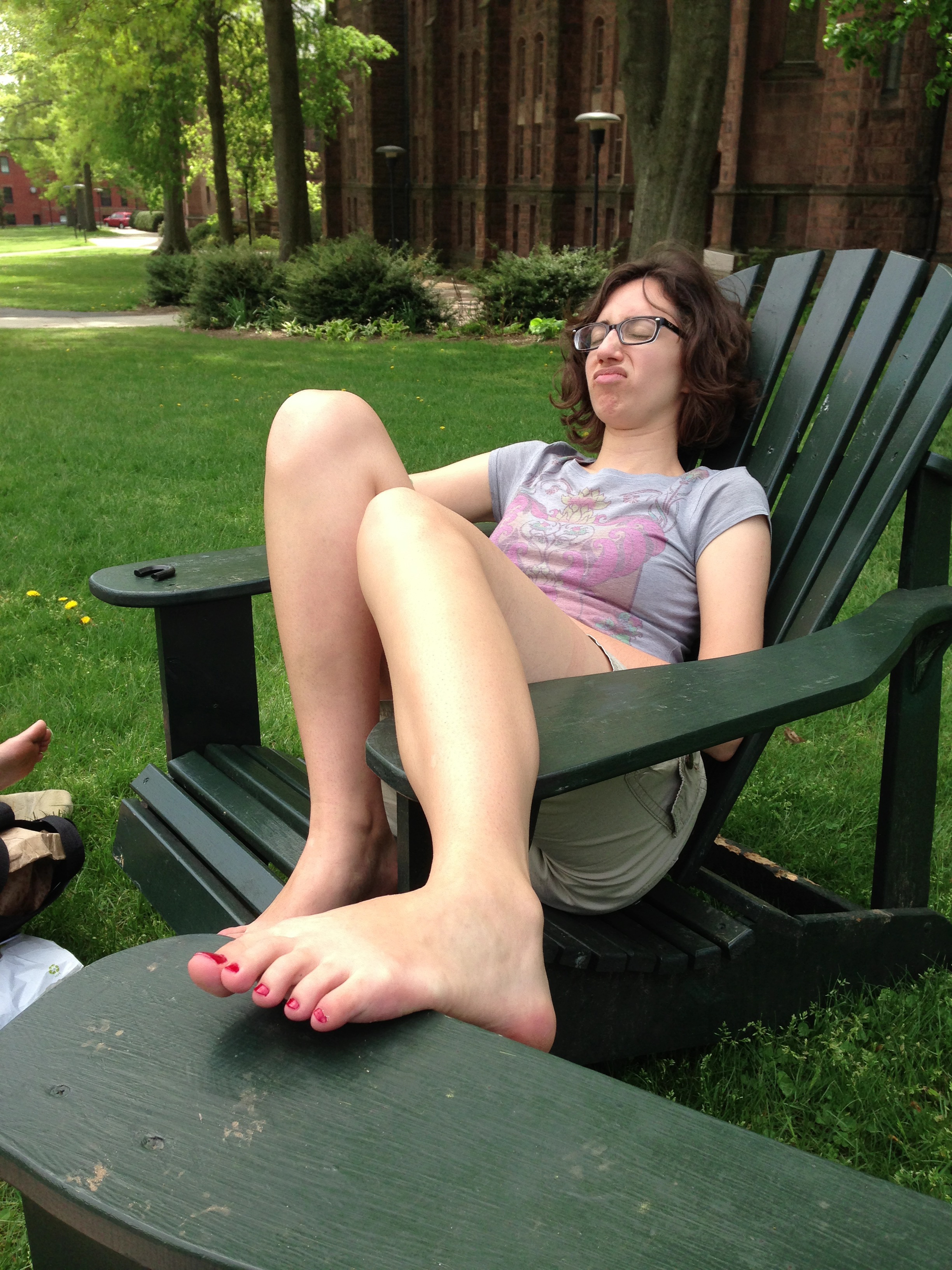
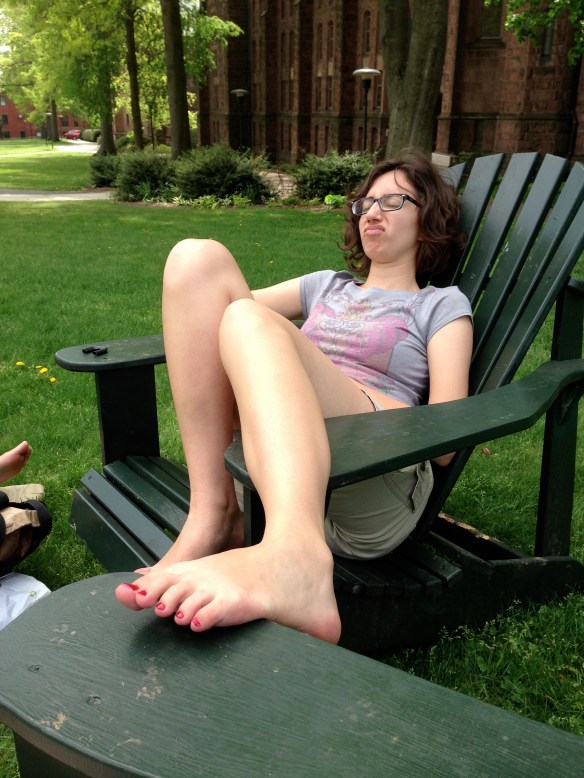
I racked my memory.  Had we?  I had no recollection of ever seeing this guy before.  My bad.  After we got through our (re)introductions, we had the most stilted small talk possible, then lapsed into silence.  You ever come to a point in a conversation where you can think of absolutely nothing more to say?  I was there.  He must have caught sight of my feet and spotted a way to revive our moribund interaction.  “I like your shoes,” he said.  This was unexpected.  I contemplated my feet, purply skin strapped into girly sandals with metallic weaving and big fake stones.  “Oh…oh, thanks,” I replied, “yeah, they’re very…shiny.”  I don’t remember if anything more passed between us, but I jumped out of my chair and ran away when the talk ended.  Afterwards, I was kicking myself for my callousness.

I mean, I didn’t even think to look at his shoes.
Feet: icky.
Feet: icky.

Resettling

I have a new abode.  The daily commute got to me, so I checked out some open flats, chose one, moved, and now live under ten minutes away from my office.  In fact, the view kitchen/dining room looks onto the lower levels of the International Teaching Center.

I like my new little nest.  When I first stepped in to assess it, I felt like I was in a well-loved space.  Maybe it was the combination of houseplants and the framed illustrations, done by one of my new flatmates, that fill a bookshelf.

There are things about living in the stratosphere that I will miss…

View

The incredible panorama from my previous flat.

But I have a new view.

Foreground: roof of next door apartment building Middleground: High rise Background: Mediterranean and infinity

Foreground: roof of next door apartment building
Middleground: High rise
Background: Mediterranean and infinity

Ever the obsessive planner, after I found out I had a week to move out of my old flat and into my new place, one thought consumed me:

I have two big suitcases.  My new apartment is not on a street but rather on a staircase.  And the flat itself happens to be on the top floor of a building that has no elevator.  How am I going to get my things up there?

This question made me realize I need to befriend more muscular young men.  Eventually, utilizing all my networking powers, I assembled a move crew.

My visions of struggling to heave my suitcases upstairs until I was bathed in sweat and tears proved false.  It took only one trip to get my possessions from the car to the flat.

After I thanked my helpers with some ice cream, I noticed how, er, well-loved my new room was.  Besides the dust of many weeks, there were some odder substances, like the sticky, honey-like drips that ran down the wall behind one shelf.  Based on cleaning the room and purging her kitchen cupboard, I pretty much know everything about the previous inhabitant, from hair color to cooking habits.

When I first started dusting the wardrobe shelves, I noticed a shard of glass buried a corner, then spots of blood on my rag.

Five minutes of cleaning, and already injured?  I hadn’t even felt any pain.  After washing and bandaging my cut finger, I got back to work.  I figured it might be wise to dust the top of the wardrobe, and to my horror discovered a decade’s worth of dust up there, soft and thick like gray velvet.  From desk to bookshelf I climbed until I had enough altitude to reach the entire filthy surface.

Oh, did I mention my second injury?  I had the ceiling fan on, mostly because I couldn’t figure out how to turn it off, and was kindly reminded of its presence by a smack on the back of my head.

Don’t worry, my skull is intact.  After this interaction with the fan, I took a moment to thank God that despite my utter lack of common sense, despite my tendency to zone out and step out in front of oncoming traffic, to leave ovens on until they nearly melt,  to use deadly cleaning chemicals and home pesticides without any protection–to do countless foolish things–He’s kept me alive for twenty-two years without so much as a broken bone.

room

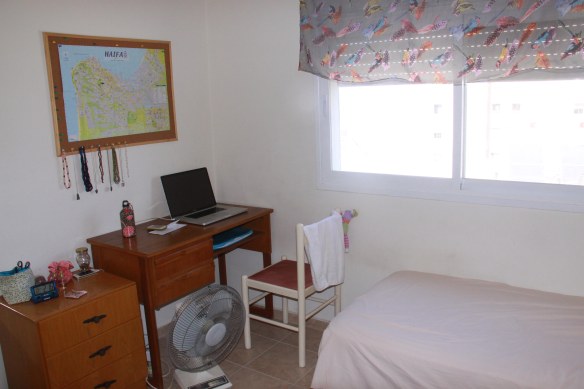
At long last, I have my new room clean and in order.  We’ll see how long the “in order” part lasts, but for now…

In my bedroom, I found a masterpiece of folk art already installed on the wall. Let me describe it: in the background, a sunset glows above green hills and a blue lake. If that was all, it would not be so remarkable, but in the foreground, an admixture of mysterious symbols float ominously, stacked on top of each other: a burning candle, a red plant, a blue amorphous streak, and a green face. The face bothers me a lot, as well as the blue streaky thing that looks to me like a headless woman bending over. But the face. Depending on whether you view the jaw as extending beneath the hills, this person either has the features of Gumby (explains the green skin) or a lantern jaw that makes Jay Leno look weak-chinned.

But until I can find enough acrylics to paint over this canvas, it shall remain, silently watching my doorway, waiting for the arrival of some connoisseur of clumsy symbolist art.

The sea wall

IMG_1232

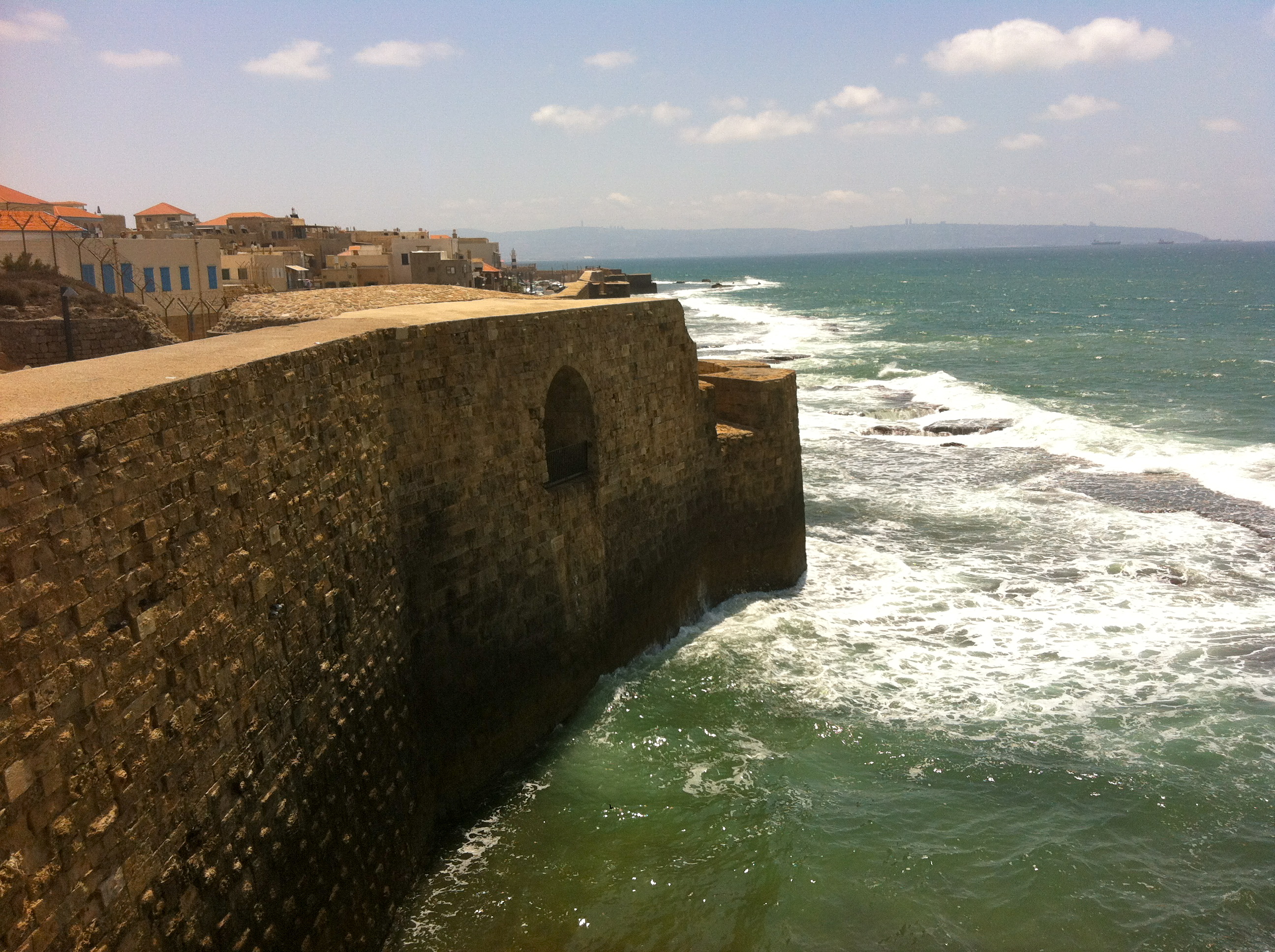
It started as a Wisconsinite reunion, because there are five of us here.  We met up at Bahjí, the most holy place for Bahá’ís, and afterwards three of us traveled into Akko.  That brief journey was complicated by missing our stop on the sherut, which resulted in us hiking toward the old city through an apparent construction zone covered with sand and the occasional concrete amalgamation.  But the important thing is that we got there and counted forty waves.

At the end of Bahá’u’lláh’s Epistle to the Son of the Wolf, there’s a passage in which Bahá’u’lláh quotes proverbs about Akko attributed to Muhammad, including:

The Apostle of God—may the blessings of God and His salutations be upon Him—hath also said: “He that looketh upon the sea at eventide, and saith: ‘God is Most Great!’ at sunset, God will forgive his sins, though they be heaped as piles of sand. And he that counteth forty waves, while repeating: ‘God is Most Great!’—exalted be He—God will forgive his sins, both past and future.”

So we clambered up a steep path to the top of the sea wall, hoping to have our sins forgiven, and counted the forty waves.  Waves are more difficult to count than I anticipated–judging when they’ve broken is pretty subjective.  Maybe if I had paid more attention in Oceanography class sophomore year…

Walking back along the sea wall, I appreciated the occasional sea breeze that would rush in through an opening.  Under the oppressive sun, it wasn’t so hard to imagine how suffocating the city must have been when the Holy Family arrived.

***

Today, I was talking to someone about journaling.  “It’s easy to keep up a daily journal when you’re in a new place, a new situation,” I said, “but once you get into a routine, it’s harder to find something to write. ‘Today I did the same as yesterday.'”  She contemplated, and said, “That’s an interesting question–how to make every day special?”

I don’t know that every day can be special–special cannot be the norm, can it?–but I try to appreciate the small experiences of each day, whether that means a lizard rescue (this one escaped but left behind his tail), a scoop of cardamom ice cream, fuchsia bougainvillea arching overhead, or the haunting song of my Peruvian friend, intoning in Arabic as she wipes down the banisters of a staircase I happen to enter.

Not every day will find me praying at the seaside, but there will always be windows in the wall offering fresh breezes.

B(re)aking

Maybe I just need a cute apron.

Maybe I just need a cute apron.

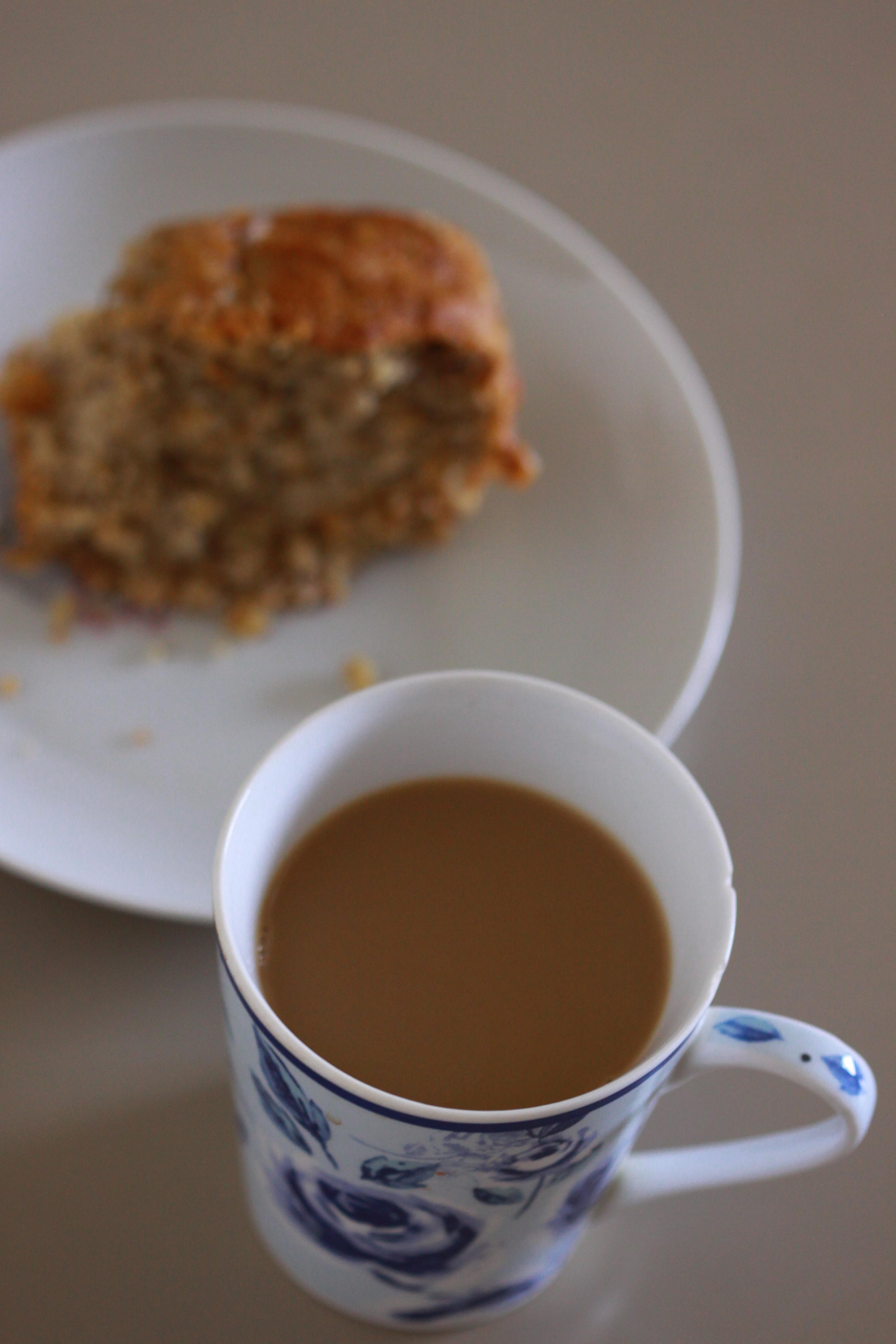
There’s nothing like baking to make a place feel (and smell) homey.  I was so proud when I successfully baked banana bread, despite the inscrutable dials on our oven and lacking measuring spoons.

Best served with coffee

Best served with coffee

Too proud, it turns out, because the goddesses of domesticity decided to punish me for my hubris.

It began with good intentions (which I hear pave a certain road).  I wanted to bake oatmeal raisin cookies for my Serving the Divine Plan group, which meets every Monday night to get our spirituality on.  By the time I started, I was already tired from cooking several pounds of my special peanut noodles, but I was determined.  Three mistakes ensued.

  1. THE EGG. The batter seemed too dry.  “Hm,” I thought to myself, “maybe the eggs here are smaller than at home.”  I stared at an egg.  It looked small. I cracked a third egg into the batter. Now, I know cooking can be an art, but baking must be a science.  Exact proportions of ingredients are key to success.  I knew it was wrong to add that egg, but knowing and knowing are very different.
  2. THE COOKIE SHEET. After dolloping my gooey, lumpy batter onto a cookie sheet, I ran into my second obstacle.  The  sheet did not fit into our oven.  Now, why we have a cookie sheet that can never be used is way beyond me.  My flatmate Deirdre, amused by my consternation, helped me to transfer the batter to two smaller sheets.
  3. THE HEAT. I had been preheating the oven for an hour (yeah, I know).  This was unintentional; I’m just a very slow baker.  By the time I was ready, the oven had reached a temperature somewhere between a kiln and foundry.  The racks inside had turned a threatening red.  In fact, even the oven dials were scorching hot.  Concerned about burning down my apartment building, I shut it off to let it cool down.  And then tried to turn it back on.  Nothing happened.  I tried again.  Nope.  Desperate, I sunk to my haunches, fiddling madly with the dials, a protective dishrag wrapped around my fingers, to no avail.

“I broke it,” I whined to Deirdre. “I told you I break everything I touch.”  When she tried to comfort me but couldn’t help but chortle at my fiasco, I played stoic.  “There are worse tragedies in the world than me not being able to make my cookies,” I said.  She paused to genuinely consider this point, then convinced me to use the neighbors’ oven.  I did.  She recommended putting all the dough on two sheets to make two giant cookies.  I did.

This was the result.  Please keep in mind that I was aiming for 30 cookies.

IMG_2533

In the words of Prospero, “This thing of darkness, I acknowledge mine.”  I’m still trying to figure out what utensil to use with my thing of darkness.  A small jackhammer would be useful.

Seriously, who else sets out to bake cookies and ends up breaking the oven?

Postscript:  No worries, the oven has been repaired.  I plan to bake some brownies soon–at a very low heat.

A whirr of iridescence

You know, that last post was supposed to be about the dinner I attended this week.  Perhaps you’ve noticed my writing strategy: I start with an anecdote, then transition to my bigger point.  The formula I’ve advocated to many applicants to grad programs in the humanities struggling to hack out a personal statement, in fact.  Occasionally, however, that anecdote drives me to distraction.  (Hm, I wonder if I could take a sherut there?)

Here goes.  After lunch, I step out of the building into the bright heat of noontime, and spot a glimmer before me.  It’s a whirr of iridescence: a hummingbird, purple and green, dipping its beak, then settling on a branch only to ascend once again, frenetic, gorgeous.  If I had my camera, I would have stood there snapping away like I did upon finding a veritable flock of colibrís on Cerro Santa Lucia in Santiago.

But I don’t, so I just stop and stare.  It’s just the two of us for this moment.  Then a group comes out behind me, loud and gregarious.  I start, then depart.  I can hear them exclaiming at the hummingbird–oh, look!–and also wishing they had their cameras.

This may come as a shock to you, but I’m not much of a socialite.  Put me in a room where I’m expected to mingle with a bunch of acquaintances and strangers, and I will keep an eye fixed on the nearest exit.  Even slightly formal dinner gatherings pose a series of challenges, particularly the threat of mistakenly feeding my lap instead of my mouth.

But even I couldn’t help but get a little excited at an invitation to dine with a large group of colleagues.

So, after descending the terrace stairs down to Ben Gurion street (which perturbed my leg muscles, making them tremble in protest), with a sheen of perspiration over the makeup I’d applied eleven hours earlier, I found myself in a tastefully appointed flat in the company of about thirty coworkers.

After we finished eating with plates delicately balanced upon our knees (I am proud to say that the only food that escaped me was a shred of spinach that jumped onto my foot), it was proposed that we go around and introduce ourselves, and say how our position contributed to our common mission of preservation.

I listened to the professional, expansive responses of a few veteran staff members, racking my brain as to how to shape my sundry jobs into a coherent statement. I came up with a simple response, and several days later, I’m still trying to figure out what exactly it is I do!

Commuter

Warning: Not designed for twenty-somethings.

Warning: Not designed for twenty-somethings.

Once again, I have forgotten the cardinal rule of life without a car: gradual grocery shopping. I find myself expanded to twice my normal width, with my two reusable shopping bags (one of them features Big Bird’s grinning face) hanging off my shoulders, clutching a 32-pack of toilet paper.  I think it’s the toilet paper that convinces me I will never be a cool urbanite.  No one else on the bus which I’ve just waddled onto has so much toilet paper, or actually any at all.  Nor do the Israelis seem to bring a carryon bag stuffed with dirty laundry as I do every two weeks.

It is at times like this when I, the plodding commuter, feel like the most mundane creature in the world.

But then, as I shlep my laundry toward the machines, I look up and see the Seat of the Universal House of Justice, majestic white columns shooting upward, or I look ahead to see the dome of the Shrine, or I look across the bright blue bay toward Akko.  And it’s so dissonant: my mundane self, this holy place.

I think it’s time for some etymology.  You all know how I love my words.  Once an English major, always an English major.*

When it comes to describing the daily grind, mundane, pedestrian, and prosaic are close contenders.  “Mundane,” from the Latin mundus or world, in its astrological sense means of the earthly world rather than the heavenly one, more than applicable to my situation.  “Prosaic”–I usually dwell in a house of prose, infrequently one of poetry.  “Pedestrian” as an adjective evokes its noun counterpart, the unglamorous person in T-shirt, jeans, and sneakers waiting at the crosswalk.  And it’s fun to be a pedestrian pedestrian.  For the word-snobs among us, “quotidian” works as well, stemming from the same root as the Spanish cotidiana, meaning everyday.  Funny, all these terms are latinate.  A professor renowned as the strictest faculty member in the English Department taught me that English is a bifurcated language, pulling its vocabulary both from the sophisticated palate of Latin and from the earthy mouth of Germanic.   It would seem better to go Germanic to express the commonplace.

Even “commuter” finds its roots in Latin: com=together + mute=change.  Changing together.

Nice, isn’t it?  Six days a week, I change along with my fellow passengers.  Now that’s poetical.

*Thank your lucky stars that since graduating from Mount Holyoke I no longer have access to the Oxford English Dictionary online, or this post would be thrice as long.