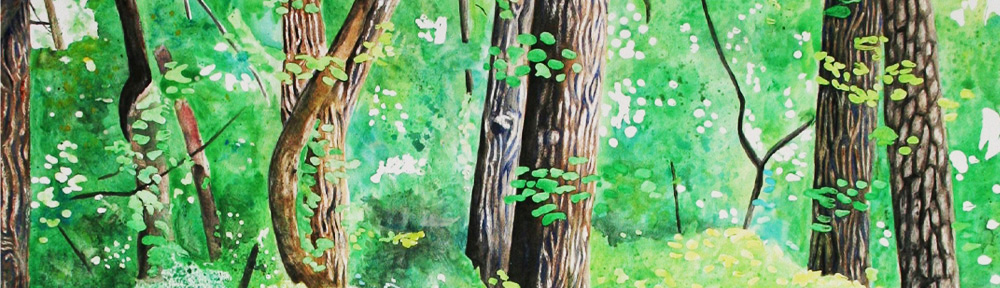
We have witnessed a slew of wildlife in the yard, a reminder that “our property” belongs to many beings besides humans.
Mammals: Gray squirrels and chipmunks make their homes in the yard. Nocturnal visitors include white-tailed deer, raccoons, and opossums—and most likely armadillos. I once saw a red fox run through the yard.
The does here give birth in September, so each fall, we have the pleasure of seeing big-eyed, gangly-legged fawns exploring the yard, which compensates for my annoyance at the deer for sampling nearly everything I plant!

Birds: Year-round, cardinals, finches, chickadees, titmice, nuthatches, phoebes, and woodpeckers dominate. Even bluebirds are a common sight; these traditional meadow-dwellers seem to have adapted to a more wooded existence. My favorite backyard bird is the Carolina wren, which, as a daily routine, thoroughly inspects the porches in pursuit of insects.
Migrants like pine siskins and rose-breasted grosbeaks, which stop in Alabama to refuel, provide excitement at the bird feeder. Ruby-throated hummingbirds spend the entire summer, visiting the nectar feeder countless times.
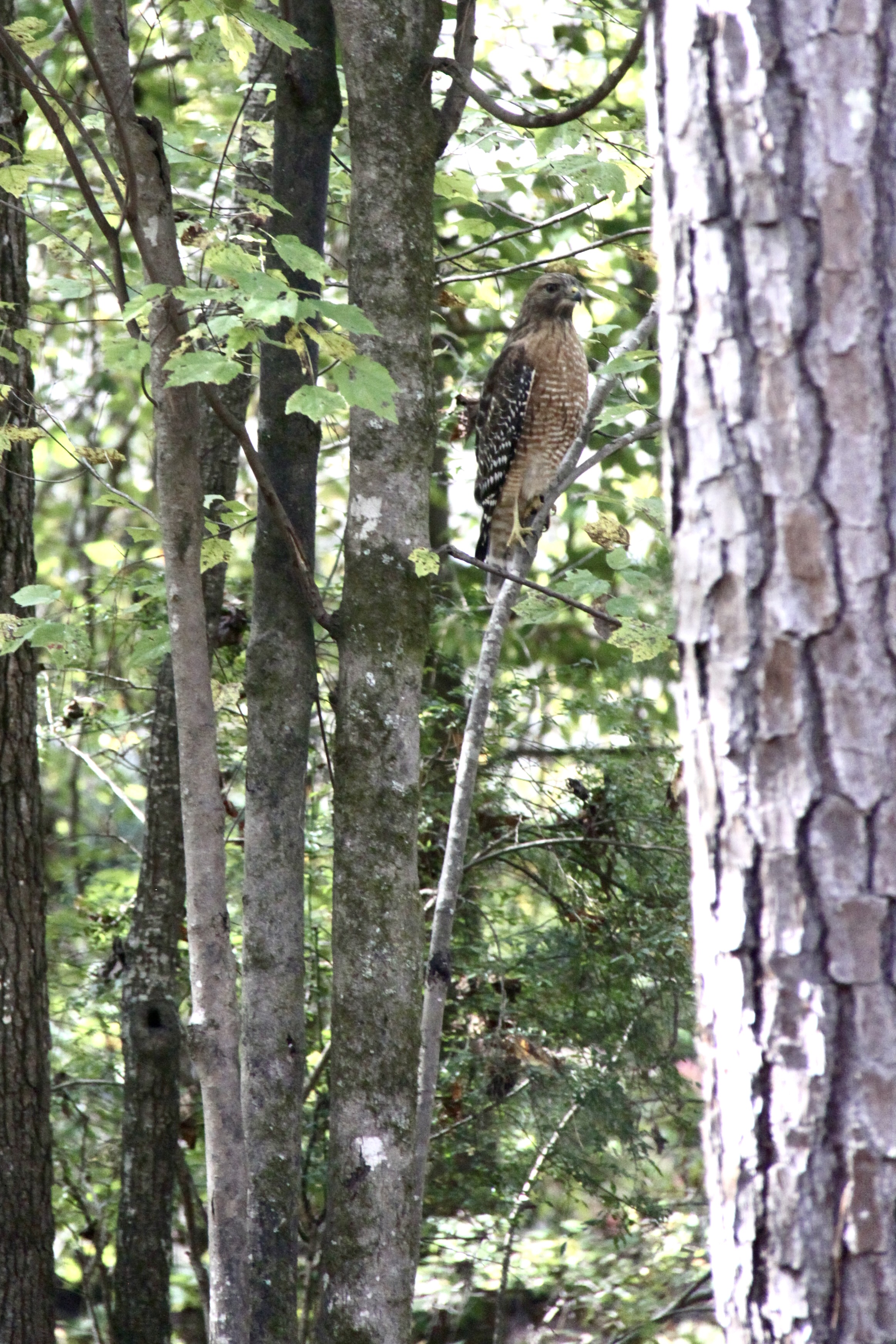
On the raptorial side, a look upward will often reveal circling vultures, nature’s cleanup crew. Much less frequently, we’ll hear the hooting of an owl. A Cooper’s hawk is an everyday visitor, much to the perturbation of the other birds.
Reptiles: Small snakes pass through occasionally; the most impressive so far has been a black racer, which plunged into the pine straw searching for insects. When he passed next to the porch where I was sitting, he raised his head, passing a long moment staring at me with calculating eyes before slithering onwards.
In spring, green anoles stake out territory—the porch swings, the compost bin, the butterfly house. The porch bed anole begrudgingly shares his cushiony kingdom with me. As a child, on a visit to Florida, I became fascinated with these tiny lizards, yearning to get one as a pet; now, I can indulge that fascination by stepping outside!

Amphibians: Toads spend the day hiding, emerging at dusk. When deadheading a marigold in my flowerbed, I noticed a twitch in the mulch. Peering closer, I realized a brown toad had buried herself in the mulch, just her snout visible. The camouflage was perfect!
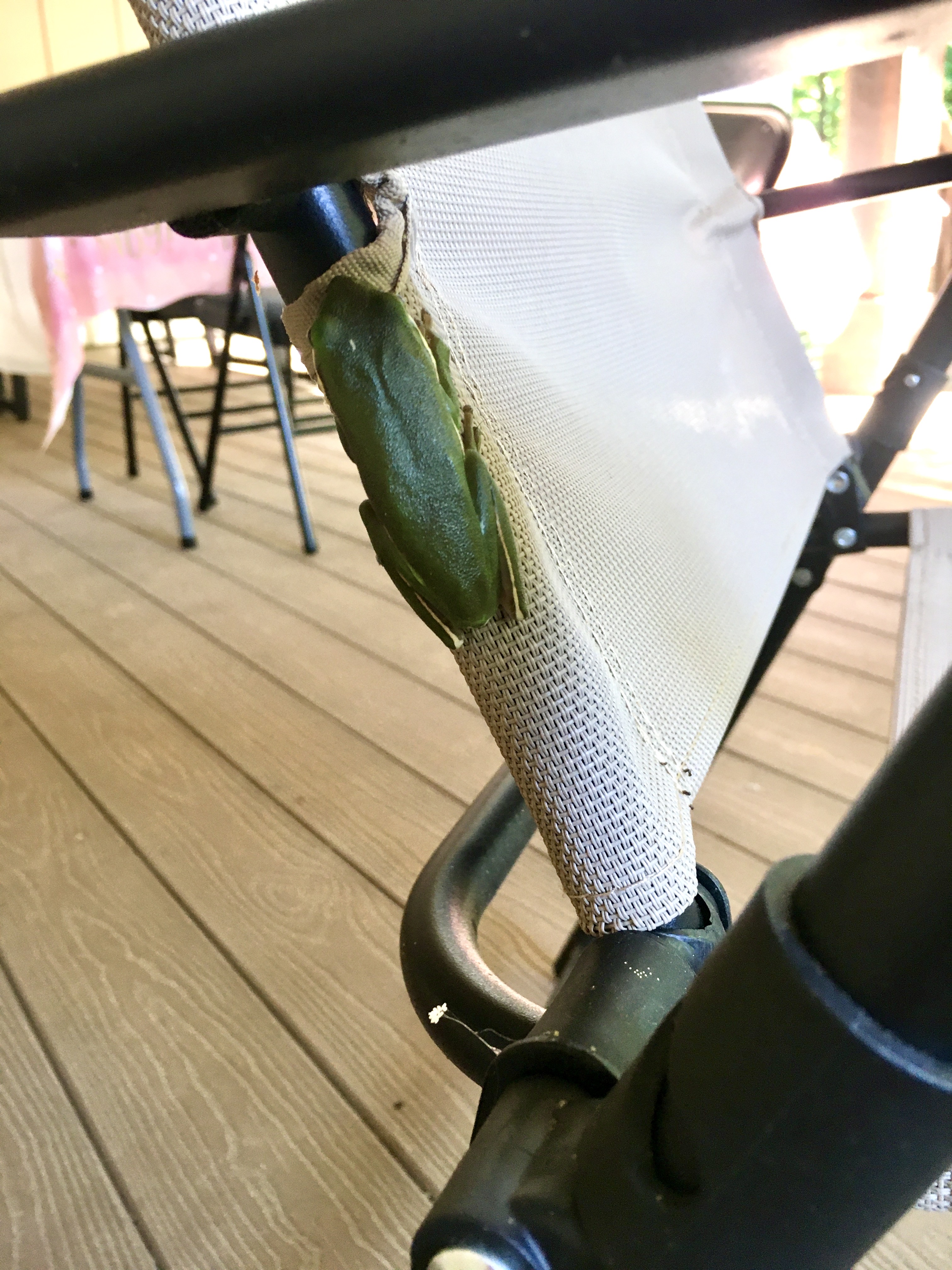
Green tree frogs prefer a more elevated perch, wedging their long bodies behind downspouts and in the concavity of T-posts. They’ll also sometimes take up residence on the back porch.
Arachnids: If you visit in any season but winter, be careful where you walk, because web developers dominate! This past summer, so-called banana spiders had a bumper season, building their amazingly strong webs throughout the yard. To our astonishment, some of their silk was yellow, a prize worthy of Rumpelstiltskin!
Soon after we moved in, a tiny scorpion chose to welcome me, nearly falling onto my head from its perch above the garage door.
In fall, in a golden tableau, we witnessed a pumpkin spider trundling across the orange pine straw that sits atop the red clay.

Insects: Bugs here are large, abundant, and inevitably at odds with humanity throughout much of the year. But let’s set aside the roaches and sugar-seeking ants that invade the house. Let’s set aside the voracious mosquitoes that swarm me within a minute of stepping outside with any skin exposed. Let’s really set aside the horsefly that chased me around the yard, nipping at me! I’m okay dispatching the abovementioned bugs, but others thrust me into a moral quandary.
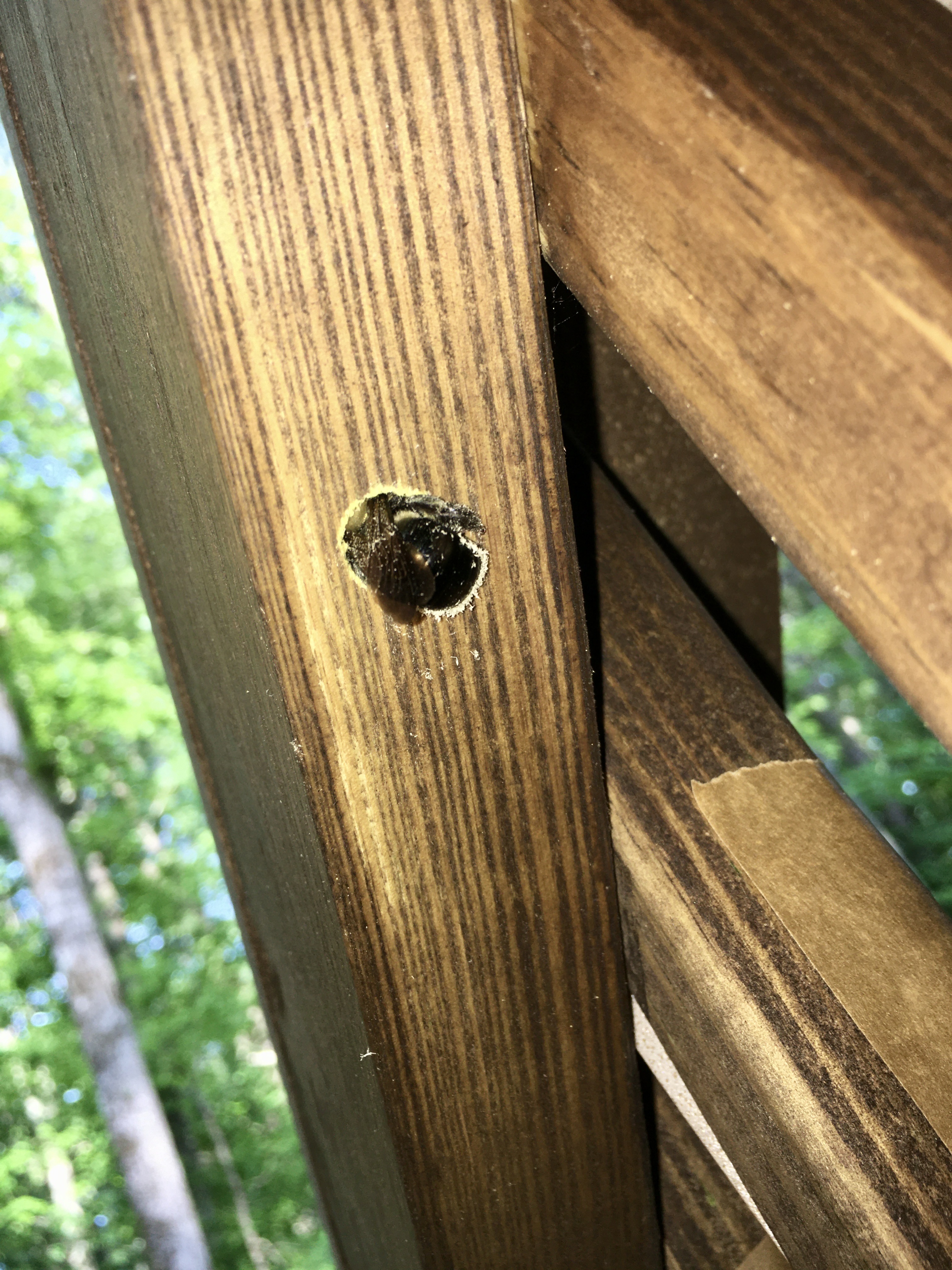
Take the carpenter bees. We all know bees are suffering, and carpenter bees are natives and pollinators. But, true to their name, the mama bees drill holes into the wooden elements of our porches. This spring, a pileated woodpecker discovered their nests and, with extraordinary power, axed right into the wood!
All of these animals depend on plants—if not to eat, then to feed their prey, and to provide shelter. When we bought our home, we learned that apparently houses must wear a necklace of shrubbery. So, we were tasked with working with a landscaper to select some. My wish was to choose native species, but that proved to be a request too unusual to fulfill.
So, we ended up with a typical smattering of evergreen exotics from the other side of the globe—a Burford holly, gardenias, yew, viburnum, distylium, and autumn ferns. And, two years on, most of them are doing fine, except a Japanese maple that succumbed to hungry deer and heavy clay soil. These non-native plants provide the perpetual greenery that most homeowners want.

Yet, with a patch of land to call my own for the first time in my life, and with a wish to do something, however minor, to counteract the environmental devastation wrought by our species, I began researching plants. I learned that our native creatures rely on the plants they’ve evolved alongside for food and shelter.
 Layli Maria Miron
Pingback: Permeable Skins | Layli Maria Miron