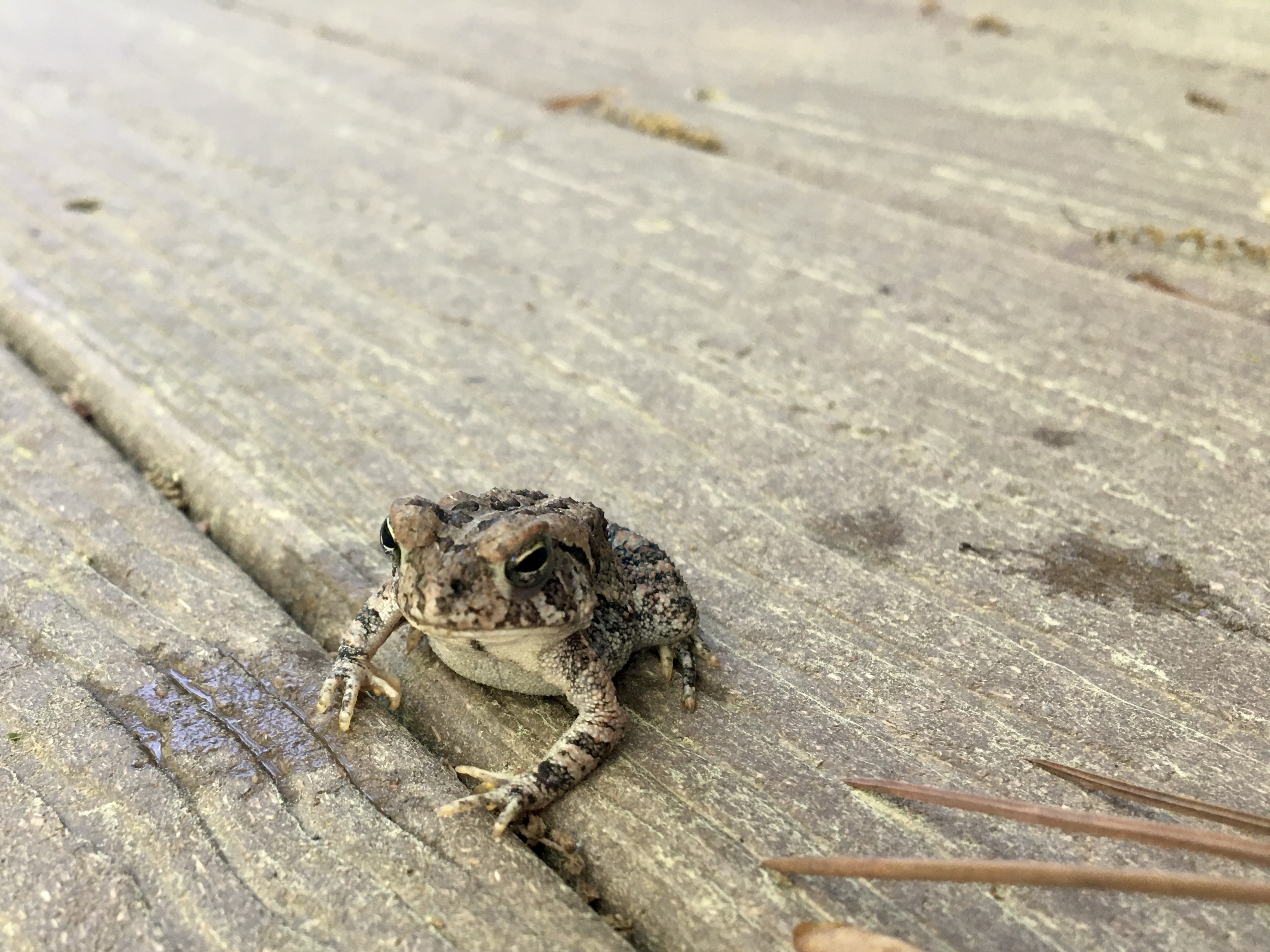
It might seem overzealous for me to worry about our own yard providing habitat given that dozens of species, or probably hundreds or thousands if we’re counting microbial life, already use it, and that at least a hundred native trees—oaks, sweetgums, tulip poplars, dogwoods, loblolly pines, etc.—call it home. But even this habitat could be better.
There are some factors out of my hands. I can’t stop the neighborhood’s free-range cats and dogs that come through our yard, aside from yelling at them like a lunatic (which I do). I can’t both keep out invasive weeds and stop all chemical use, since the yard is far too big and the weeds too aggressive to control without herbicide. I can’t even do much to steward the land from June through September because the sticky subtropical heat and scorching sun persuade me to stay indoors (and I already told you about the mosquitoes).
Yet, I do have power to serve Mother Earth. Sergey and I divert trash from the landfill by composting organic scraps and by grinding fallen branches into soil-enriching mulch. When we wanted a new car, we bought an electric one. We switched our electricity to a renewable source.
I decided I had to do my best to learn about native species. And I wanted to get my hands dirty to make our yard a richer, more biodiverse habitat.
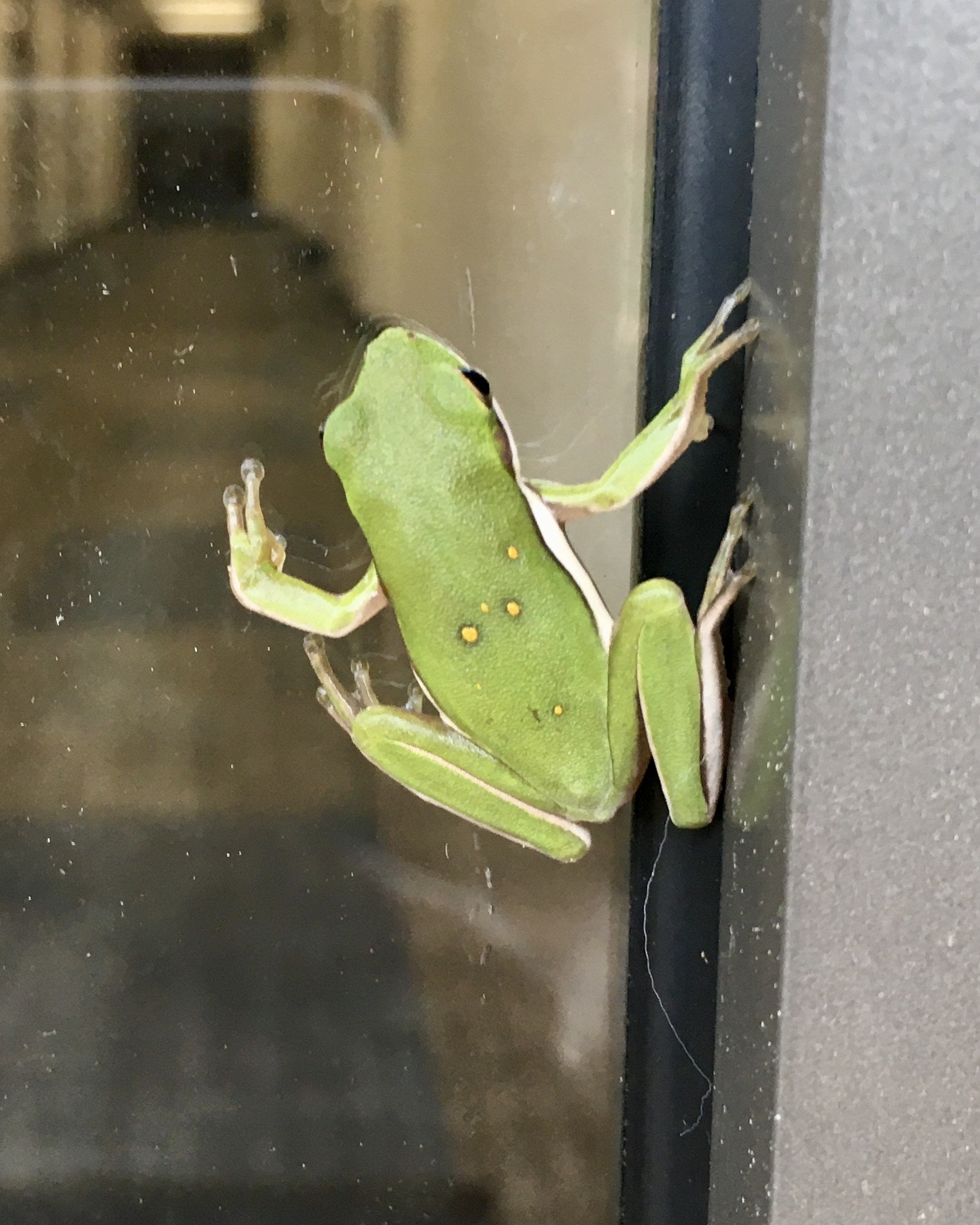
I can’t say when exactly the idea of building a pond emerged. Like a volcanic island in a sea of dreams, it accreted in layers. The final outflow, the one that pushed above the waterline, erupted in a quotidian tragedy. A treefrog got trapped in the spout of my watering can. The frog had evidently sought shelter in the vessel—an animal (soft, permeable, vulnerable) trying to survive in the Anthropocene (hard, impermeable, inescapable).
In “Collateral Damage,” an essay in Braiding Sweetgrass, the Potawatomi ecologist Robin Wall Kimmerer recounts trying to save yellow-spotted salamanders that must cross a road to access their breeding pools. The effort might seem futile—as long as the road is there, some salamanders will be smashed by cars—but I love that she respects these creatures enough to do something to aid their migration.
Aware that amphibians, with their skin-breathing, tender bodies, are especially susceptible to pollution and the human urge to drain and pave, I fixed on an idea: create a small wildlife pond in the backyard.
 Layli Maria Miron
Pingback: Building a Pond | Layli Maria Miron