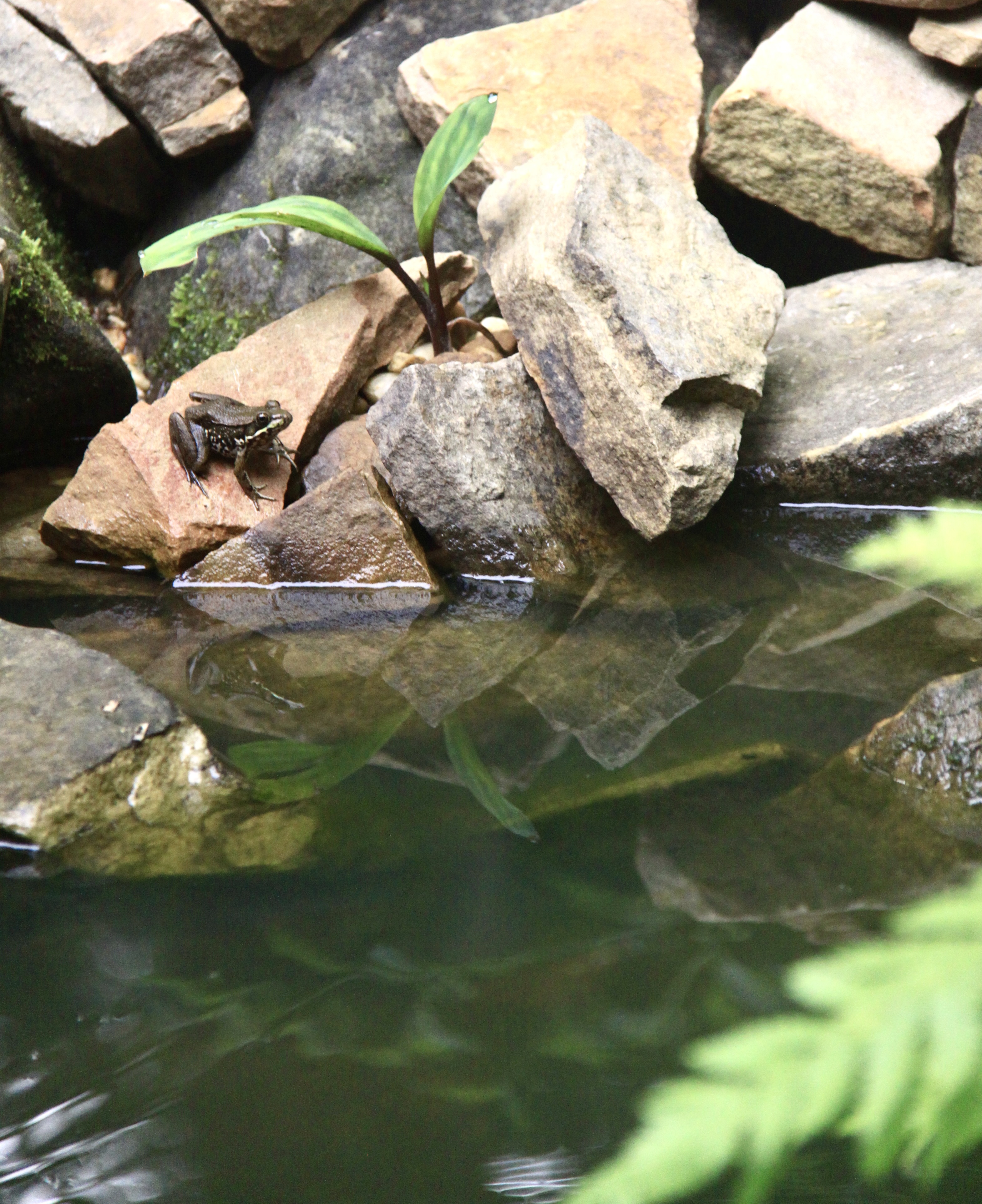
For a while, the tadpoles made themselves invisible. But gradually, as winter turned to spring, they began showing themselves. Tiny legs grew, then lengthened.
By late spring, they’d metamorphosed into frogs. Now, breathing air and warming their cold-blooded bodies in the sun, the frogs perched atop stones, allowing me to count them: four tadpoles had survived to froghood.
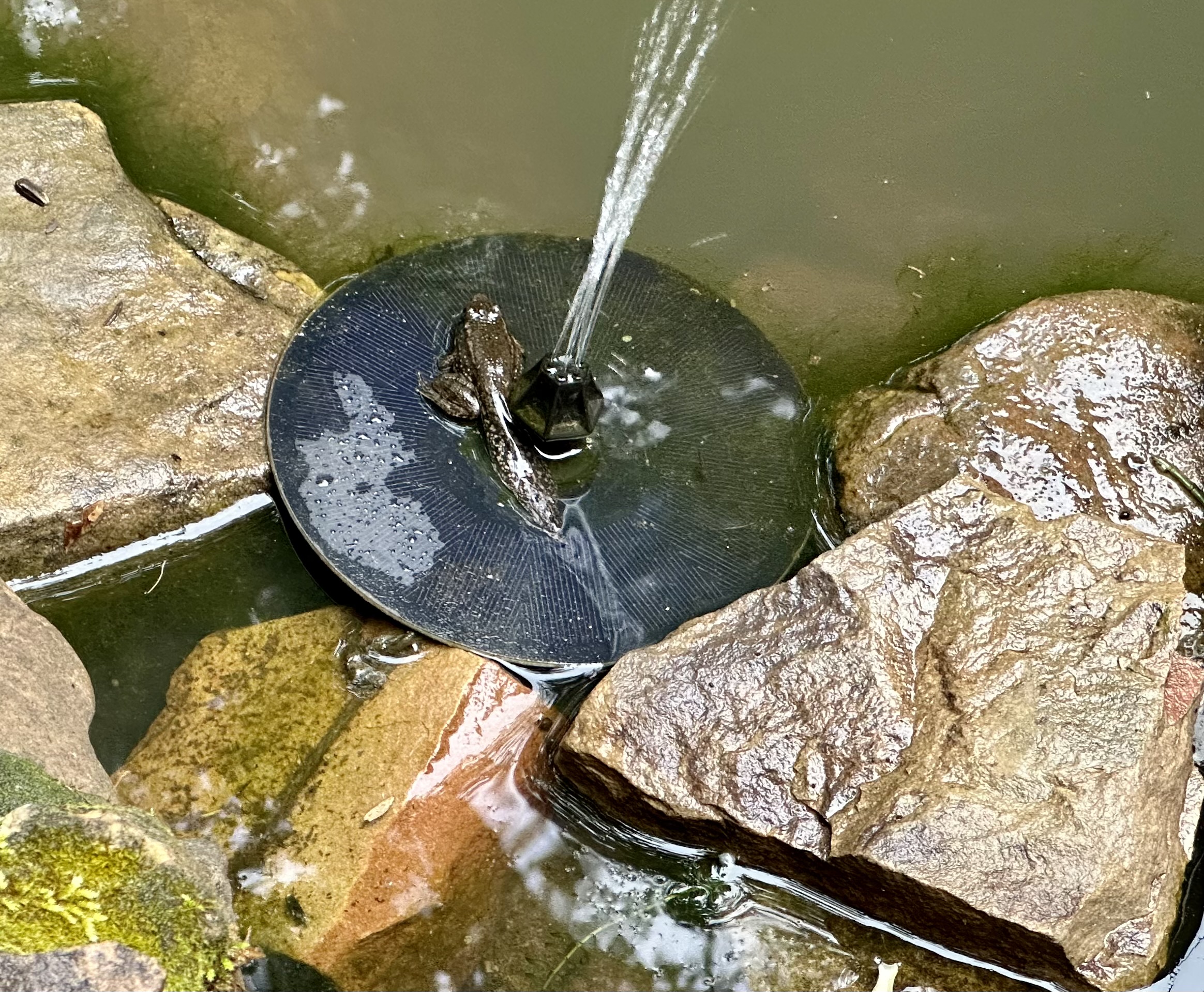
At dusk, I sometimes see them jump out of the pond and bound away, presumably for their nighttime hunting. I hope they’ll make it back to the pond safely, avoiding predators, cars, and swimming pools.
As the frogs grew, so did the plants—or most of them. A few likely had been killed by the Arctic blast in December. That’s a downside of buying plants in winter, as it’s hard to tell what’s dormant versus dead.
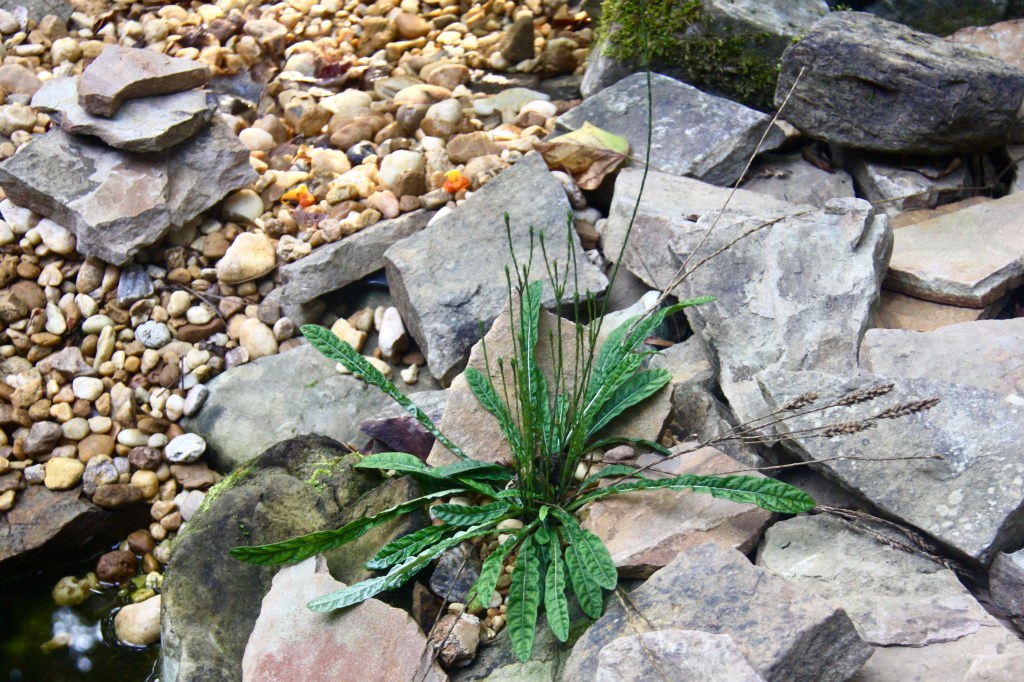
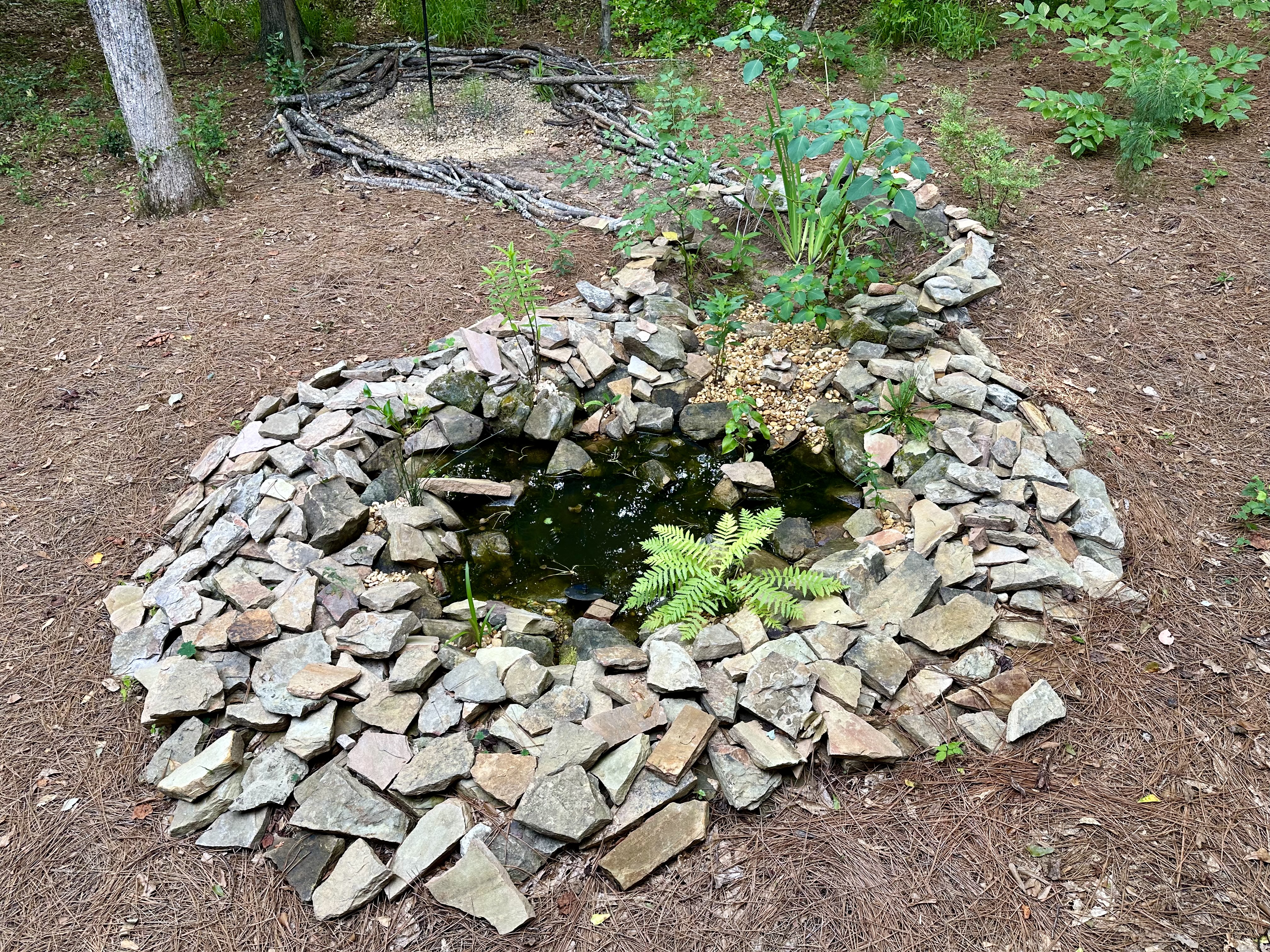
Installing marginal plants is a delicate artform. While a lot of guidance recommends putting them in partially or fully submerged plastic pots, I thought that would be unsightly. Instead, I arranged stones to form crevices that I filled with clay from the yard, arranging the roots within. The confinement should stop these ambitious plants from colonizing the entire water garden.
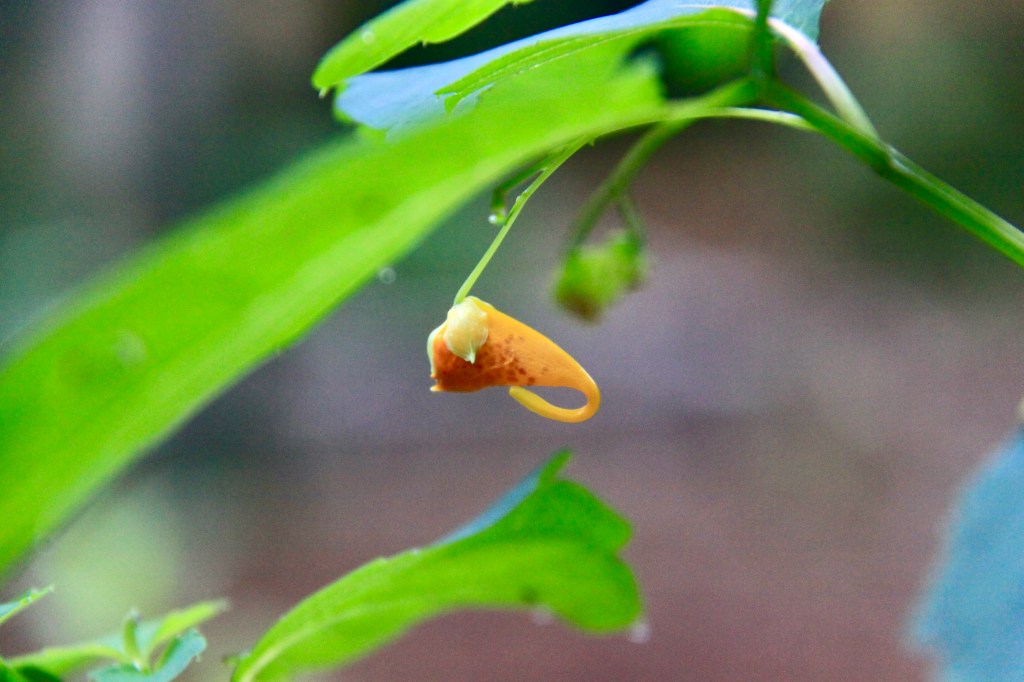
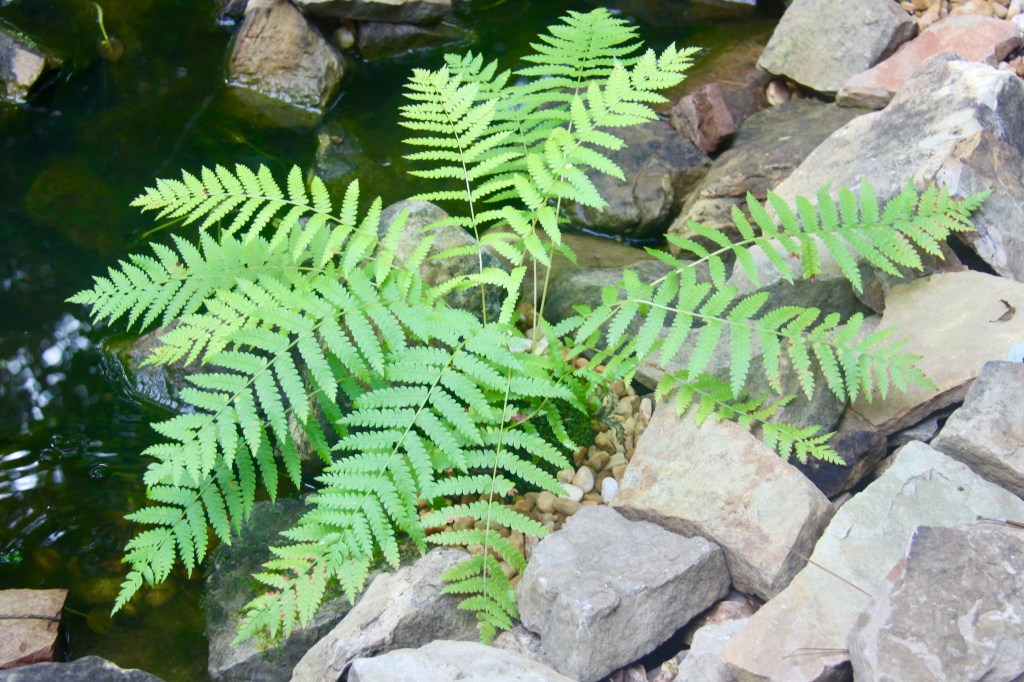
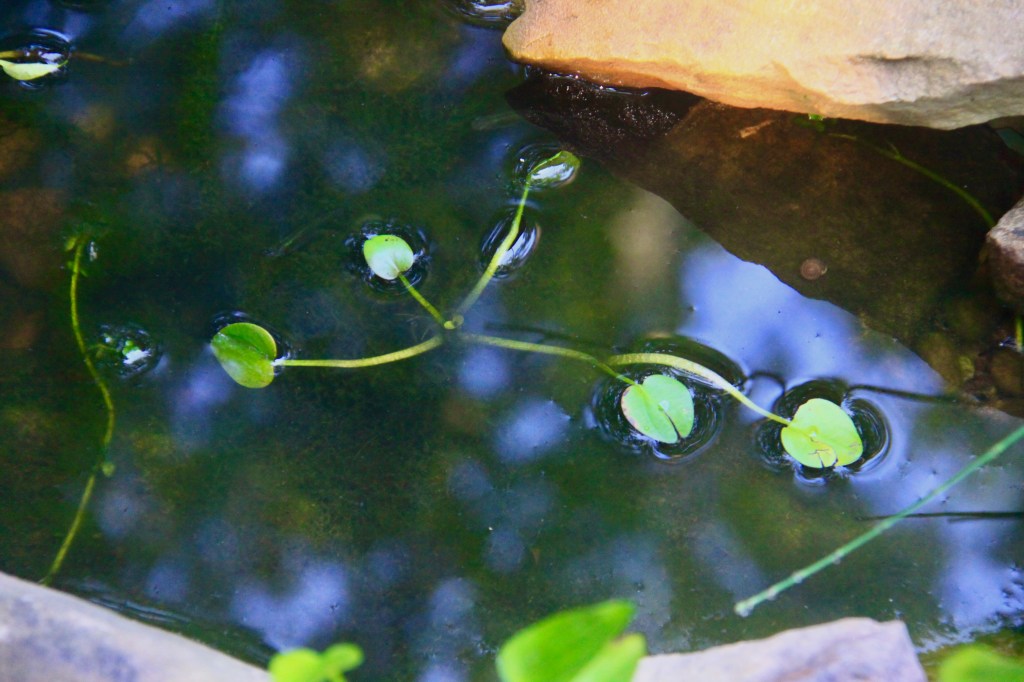
For native underwater plants, I turned to eBay, unable to find any for sale locally. Waterweed (Elodea canadensis), moneywort (Bacopa caroliniana), hornwort (Ceratophyllum demersum), Ludwigia repens, and Sagittaria subulata flew in from a few states away. The same goes for two floating plants that look like tiny green hearts, banana lily (Nymphoides aquatica) and American frogbit (Limnobium spongia).
These plants should clean the water, diminishing the algae blooms that fill the pond with slimy green strings and, when they eventually die and decay, deplete the water of oxygen. I sometimes play “grab the algae,” pulling out long strands of the stuff, along with fallen leaves. Like a monk raking a Zen sand garden, I pluck detritus from the pond.
On a less calming note, I got to wondering whether the mosquitofish were truly good neighbors to the breeding frogs and toads I was hoping to attract. The answer: no. They will eat larvae of any kind—insect or amphibian. In fact, they’re cannibals that snack on their own fry! These minuscule gluttons have been widely introduced around the world to control mosquito populations, with unintended consequences for native fish and amphibians.
It’s unlikely any frogs will choose to spawn in my pond while the fish remain. While I suppose I could go fishing with a miniature hook and lure, I plan to let nature take its course. The mosquitofish have short lifespans, and since they eat their young, I suspect they’ll be gone by next spring. At that point, I can hold an open house for the local frogs, especially since, by then, the submerged plants should be well established, offering refuge and food for tadpoles.
As I flip from doting on the fish to wishing death upon them, I am reminded that genuine learning is rarely linear, fast, or gleeful. I didn’t know what I didn’t know when I set out on this project. The conflictual relationship between tadpoles and fish—even when they’re all native to the region—is a lesson I’ll not soon forget.
 Layli Maria Miron