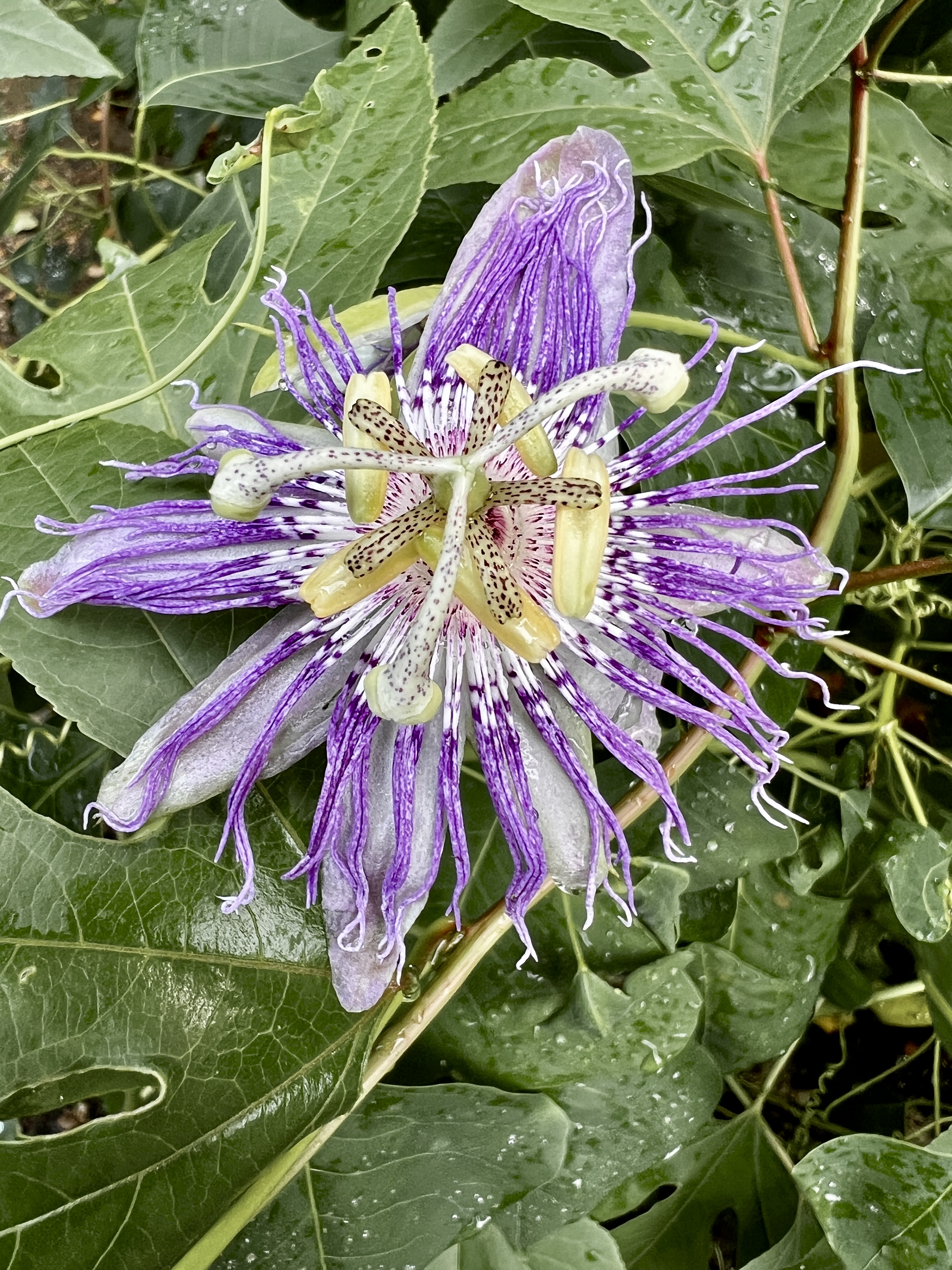
After a June rainstorm, a magical flower blooms. It is exuberantly layered, an extravagant purple wedding cake on a vine by the side of the road. Petaled, fringed, striped, spotted—hypnotic. Bees feel as I do, transfixed, drawn to this short-lived blossom. This is maypop or purple passionflower, Passiflora incarnata, native to the Southeastern United States, though it looks like the kaleidoscopic creation of an otherworldly jungle.
In a burst of pollinator-oriented gardening in early 2023, I’d worked with Sergey to install trellises, on which I trained clematis virginiana, Carolina jessamine, and coral honeysuckle. The clematis and jessamine did fine, but the honeysuckle struggled with powdery mildew. While it made little scientific sense to plant another vine next to a fungus-stunted one, the idea of looking out the window and seeing a spellbinding passionflower rather than a sickly honeysuckle compelled me.
On the hunt for native plant sellers, I was shocked to find an Auburn store come up in Google. I’d made excursions to the Birmingham and Atlanta areas to get plants from Nearly Native Nursery and Recreative Natives—how had I missed this one? It turns out that Nemophily Natives had been opened just a few months earlier by biologists Sarah Wolak and Sonya Auer. And they had maypops—not only incarnata, but also lutea, which has smaller, yellowish flowers.
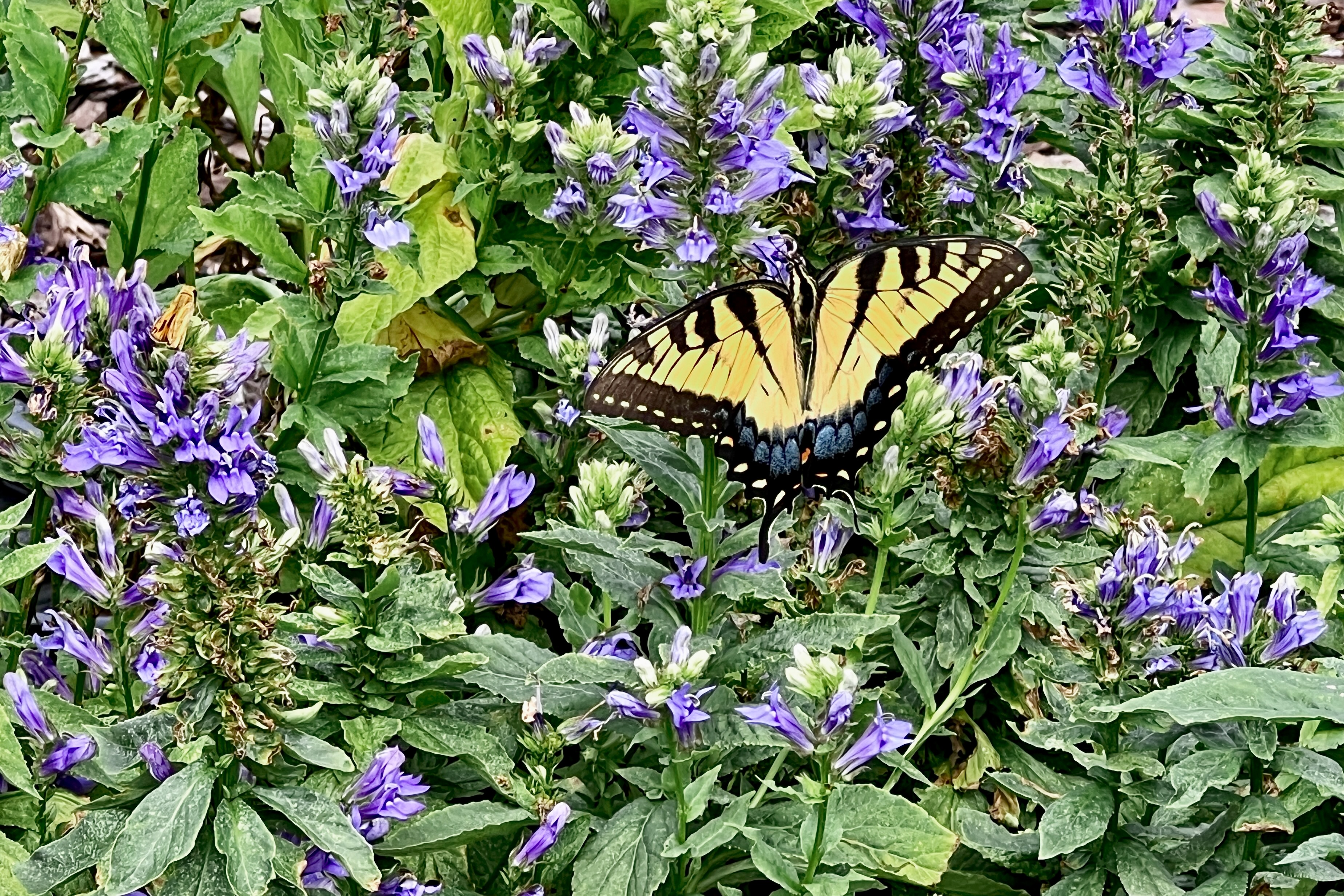
I went that very day. The nursery, free of pesticides and filled with nectar-rich flowers, vibrated with butterflies.
It was also filled with caterpillars, which, as the owners explained, was cause for ambivalence. The caterpillars belong to the ecosystem, but they can defoliate their host plants. The larger passionflower vines, already heavy with passionfruit, had nearly no leaves left, thanks to the Gulf fritillary butterfly.
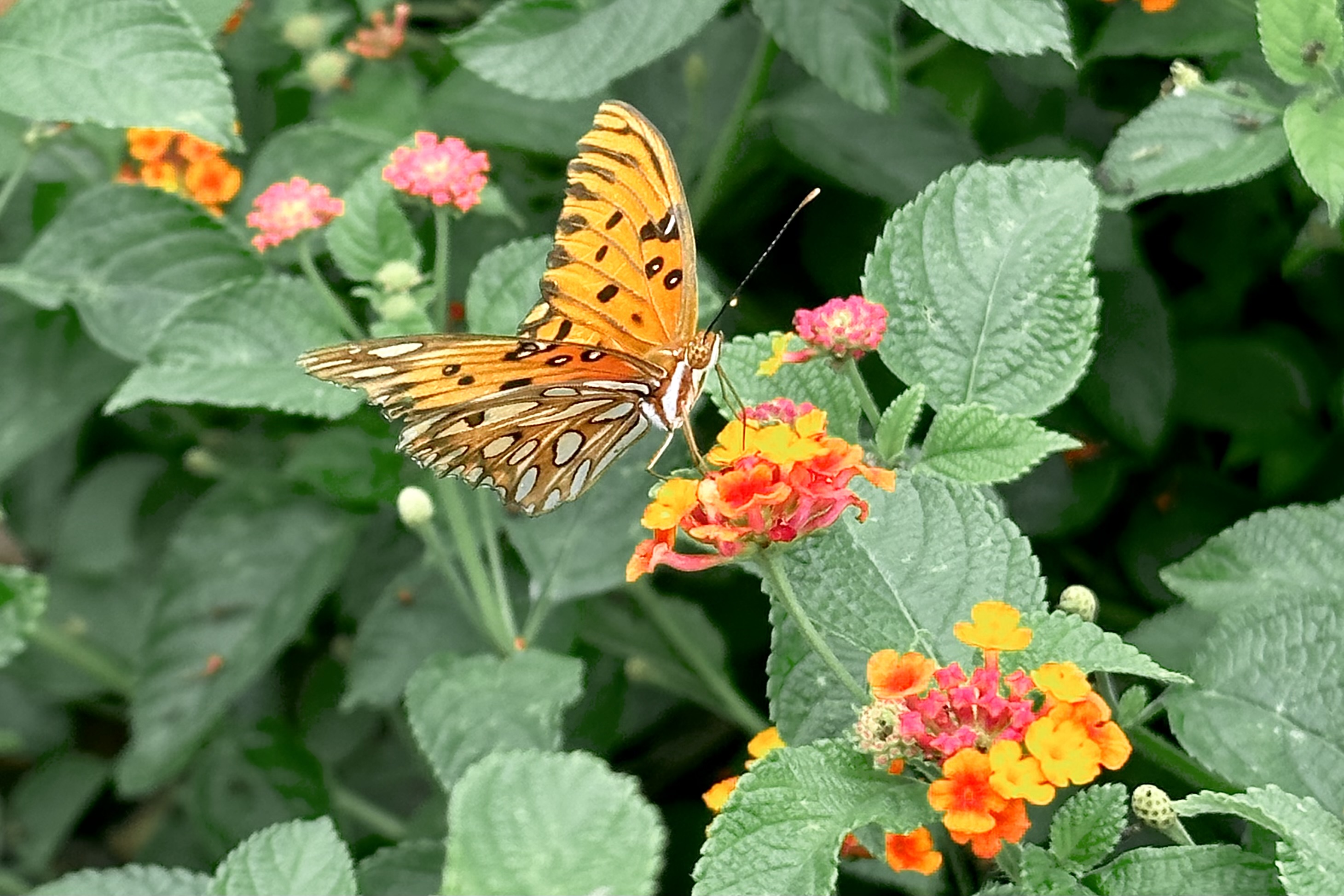
The owners pointed out a butterfly laying an egg on a leaf, then showed us several of the orange, spiky caterpillars hard at work. In a fascinating if gruesome scene, a Florida predatory stinkbug (Euthyrhynchus floridanus) had found the caterpillars and was sucking out their insides.

A principle of native gardening is that insects (aside from invasive species) are good. They’re integral to the ecosystem. Native plants feed bugs, which feed many insectivores, which feed larger predators. So, the plants will have holes in their leaves, but the reward is great: a garden alive with winged marvels.
 Layli Maria Miron