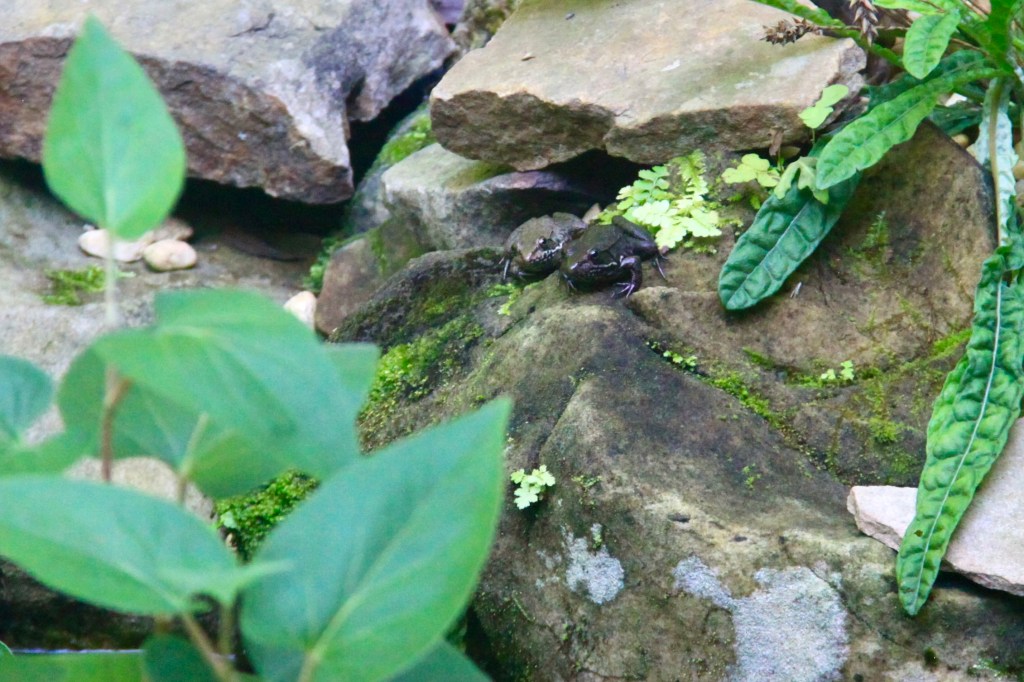
A year ago, I enjoyed witnessing two of the tadpoles I’d been given develop into froglets and then big, beautiful frogs. Come winter, evidently, they managed to hibernate at the bottom of the pond, surviving even when a January cold snap coated the surface with an inch of ice.
By this spring, we’d had a year and a half together—me watching intently and hoping for their wellbeing, them tolerating my presence. I was intrigued when, one day, I noticed the two frogs wrestling. Shortly thereafter, while I sat on the porch in a rainstorm, I saw one of them hop away from the pond and across the yard—and that was that. Not so much as a parting ribbit.
These critters appear to be bronze frogs, a sub-species of the green frog, Lithobates clamitans. The scientific name means “rock climber that cries loudly”! After reading about their lives, I am guessing that the two had a territorial dispute and the loser left, or the wanderer wanted to find a mate.
Honestly, I was crestfallen. I’d grown attached to these animals and wanted them to stay put so I could keep enjoying them. It was a relief that one of the frogs remained; this one liked to rest in the shallows under an overhanging stone. Sitting at the porch table, I could see him in his “cave,” especially when he croaked, inflating his speckled vocal sac and rippling the water.
More happiness came when tiny frogs started showing up in the pond. On a balmy day, I was thrilled to count a handful basking on the rocks.
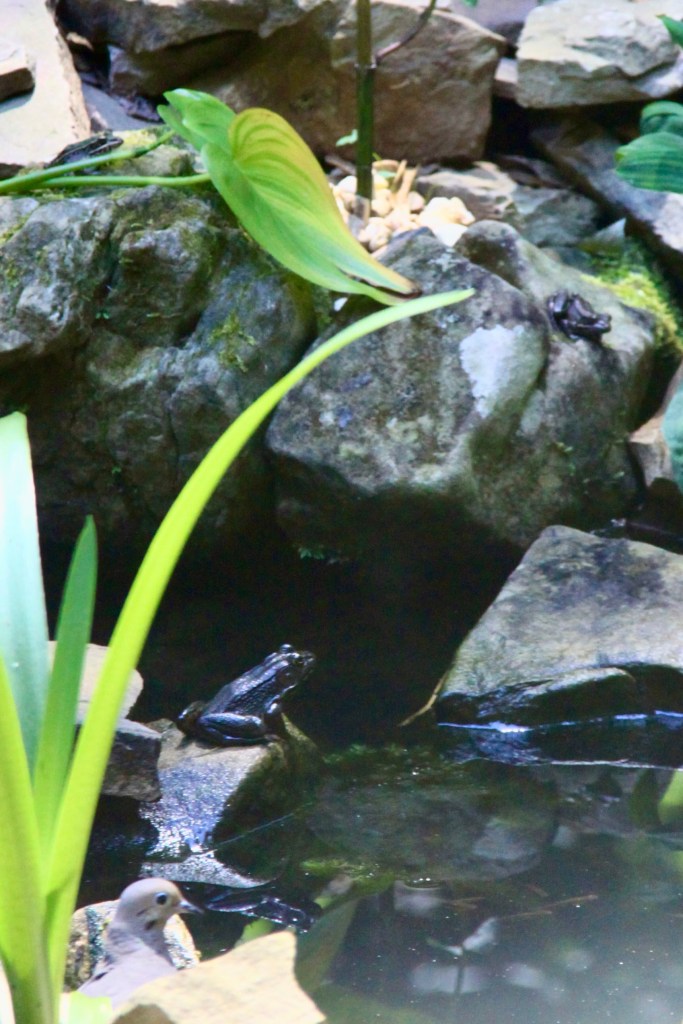
Validation, at last! What I had designed as a frog pond was attracting local frogs. It was also attracting frog predators, as well as dragonflies and damselflies that made a noticeable dent in the mosquito population.
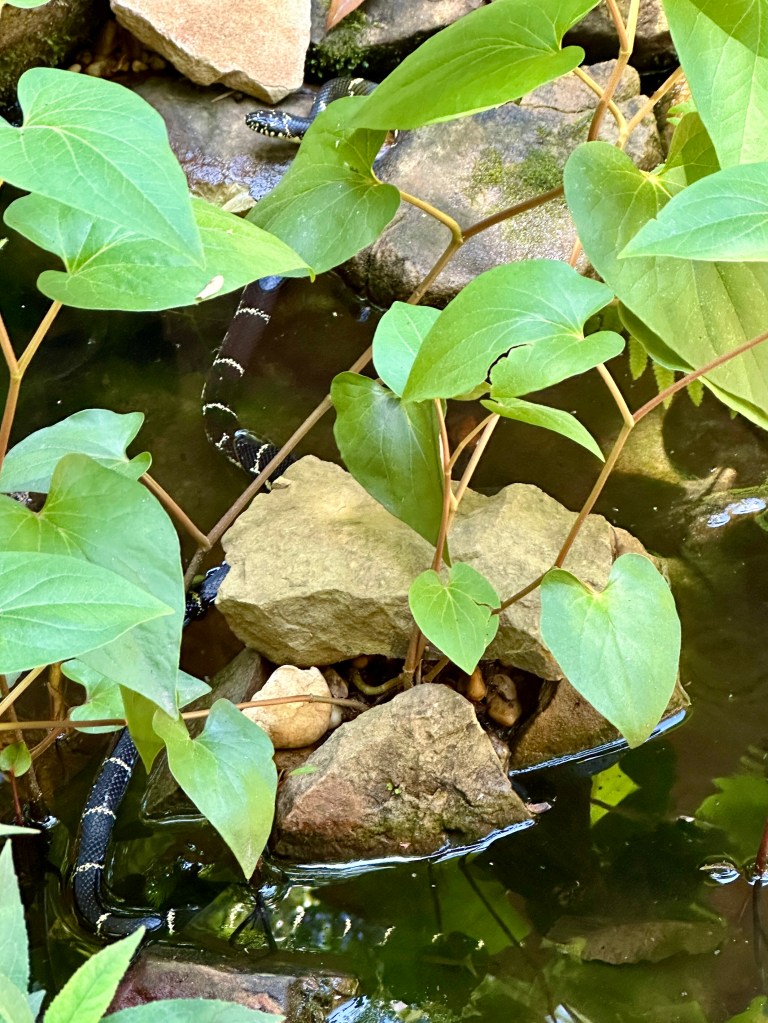
June brought several weeks of drought. No clouds inhibited the scalding solstice sun. Without rain to replenish the water lost to evaporation and the transpiration of the thirsty marginal plants, the pond level kept declining.
Towards the end of this dry spell, the remaining bronze frog disappeared. I had grown accustomed to his periodic croaking, which I could hear inside the house.
The new quietness saddened me. I took the departures personally. Had I been a bad caretaker to my amphibian wards?
“How can I persuade the frogs to stay?” I asked Sergey.
He sighed and told me what I already knew: “You can’t. They’re wild animals; it’s natural for them to move around. Detach.”
In me is a desire to make these creatures into pets, low-maintenance versions of dogs or cats, ornaments to my life to provide companionship and entertainment. But they have an existence wholly apart from their amniotic neighbors, and they won’t comply with the human urge to collect and control. I am reminded of a cautionary tale about a wild fawn made into a pet whose coddling led to his demise. I try to accept their wildness, their lives as hunters and hunted, so far from the domesticity of the house that is so close to their home.
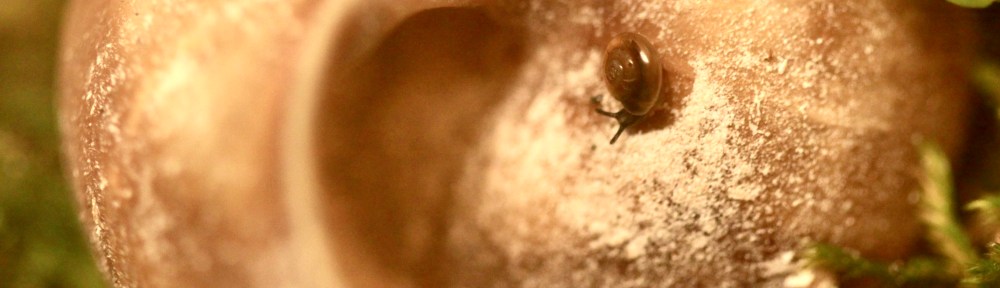
In that house live some actual pets: minute snails that, unbeknownst to me, were embedded in moss I collected for a plant terrarium. I assembled the terrarium shortly after reading The Sound of a Wild Snail Eating by Elisabeth Tova Bailey, so I was primed to be fascinated by these tiny gastropods.
Once in the terrarium, several snails began to crawl up the glass, which I interpreted as a bid for freedom, so I released them outdoors. A few stayed, apparently satisfied with my offerings of ground-up eggshells, which provide the calcium necessary for their shells, and decaying plants for sustenance. The live-plant aspect of the terrarium has met with mixed results, but at least the withering foliage supports a small, sluggardly herd!
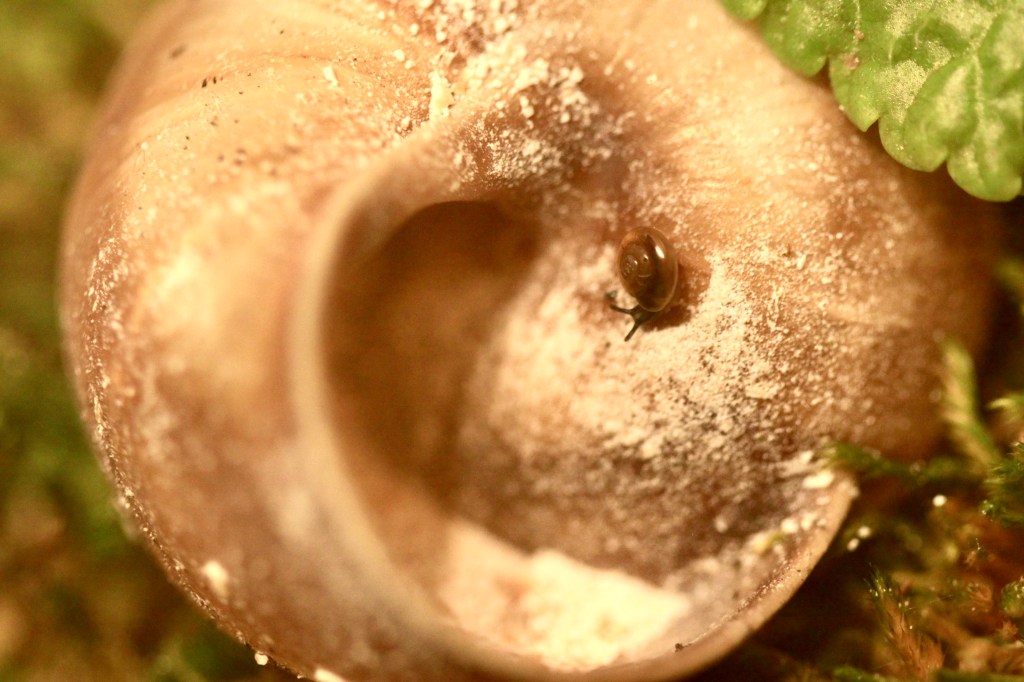
I keep an eye on the terrarium windows, ready to return my captives to wildness, should they ask.
 Layli Maria Miron
We have big ambitions for our small new yard: frog pond…prairie…vegetable garden…trees! We’ll see what we can actually fit!
I wonder, are you installing a new pond?