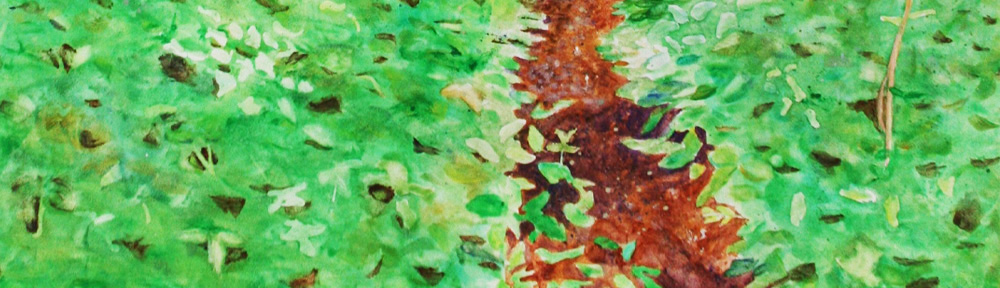
In Sea-Tac Airport, hectic and congested, one gate opens a serene vision. Rising 33 feet across vast windows, “I Was Dreaming of Spirit Animals” introduced me to the folkloric glass painting of Cappy Thompson. I happened upon another of her installations, “Stars Falling on Alabama,” at the Montgomery Museum of Fine Arts. And our most recent visit to the Seattle area brought me to the Museum of Glass, where I encountered her “Gathering the Light.” These bejeweled stories make me wish I could step inside.
In the Pacific Northwest, sojourners can step inside kingdoms of mossy forests and majestic mountains. A delicate balance kept these systems thriving for millennia. Salmon, for instance, feed other animals, people, and even trees with the nitrogen they bring inland from the ocean. The fish’s remains nourish not only predators and scavengers, but the roots of ancient plants.
Industrial forces—timber, dams—disrupted many such relationships. Now, at the Issaquah Salmon Hatchery, workers extract eggs from these marine migrants to repair the population. We witnessed the salmon at the end of their lives; they had swum upstream from the ocean to their natal creek to breed. Some floundered, exhausted; others had already died, their flesh feeding eager birds.
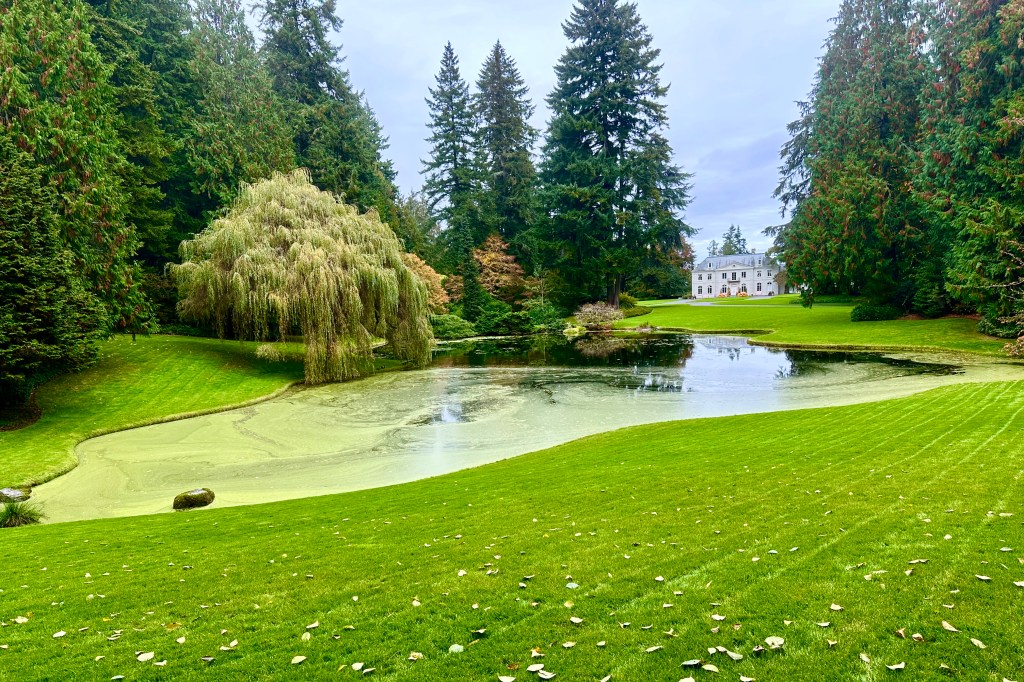
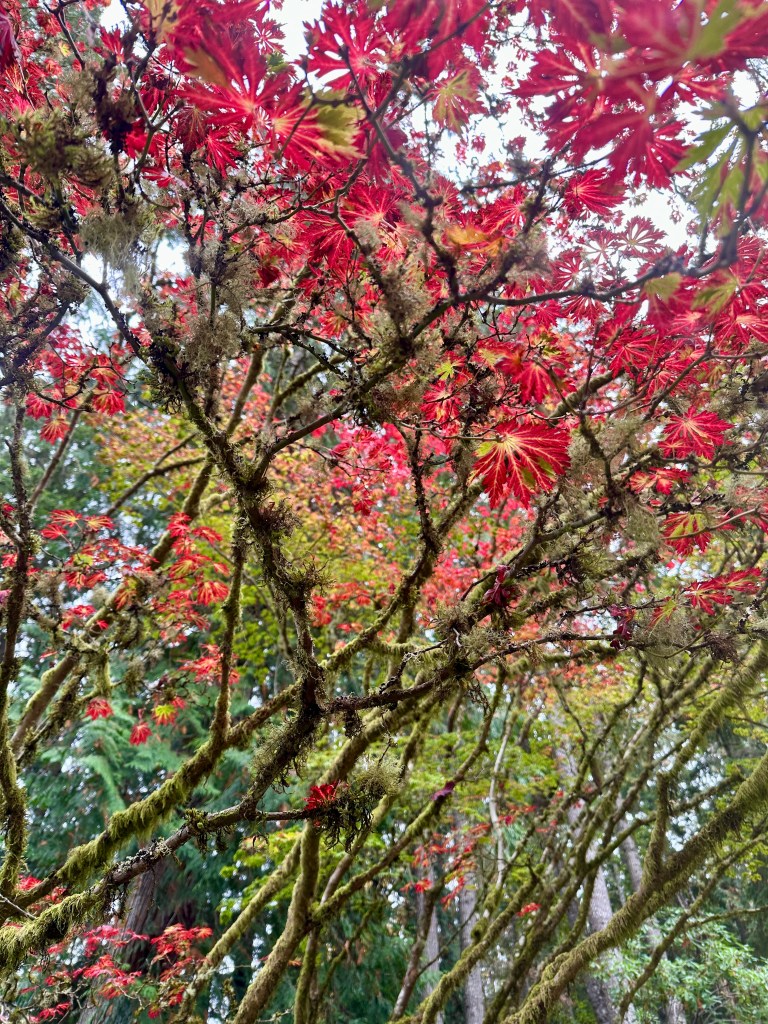
The region’s resources have sated human hunger for thousands of years, but with the arrival of American capitalists, extraction ramped up. Where did the wealth of the trees go? One startling answer is the Bloedel Reserve, a series of gardens crafted by timber heir Prentice Bloedel. Perhaps he sought to repay the Earth for the damage of his forefathers’ clearcuts by building this botanical retreat.

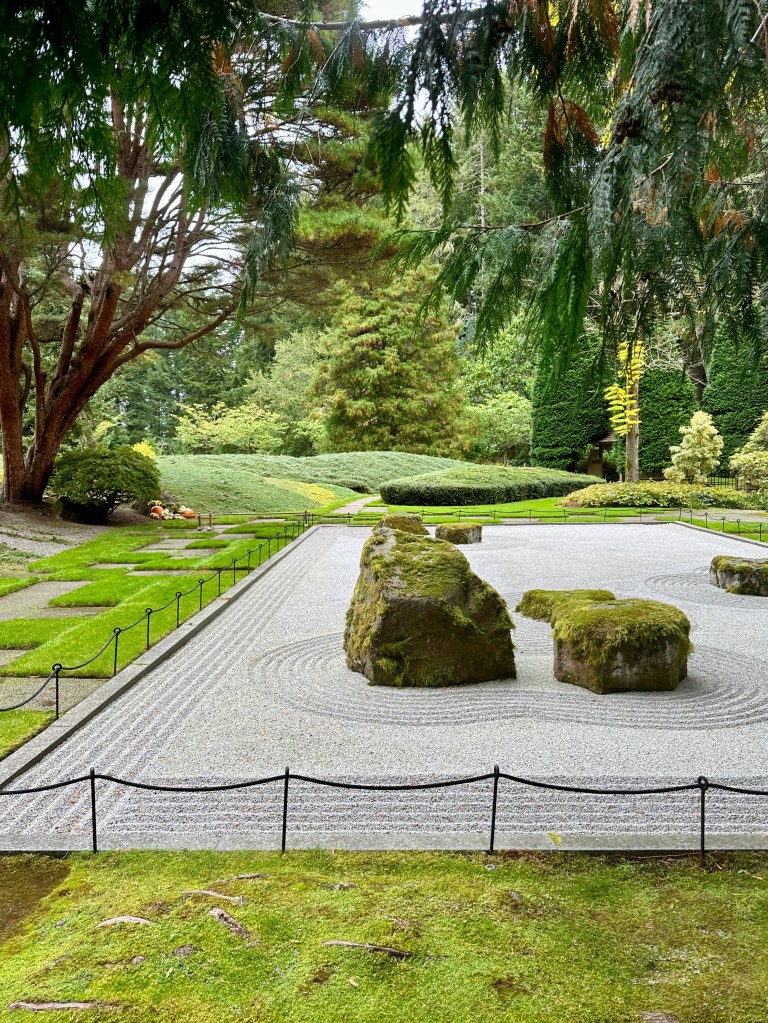
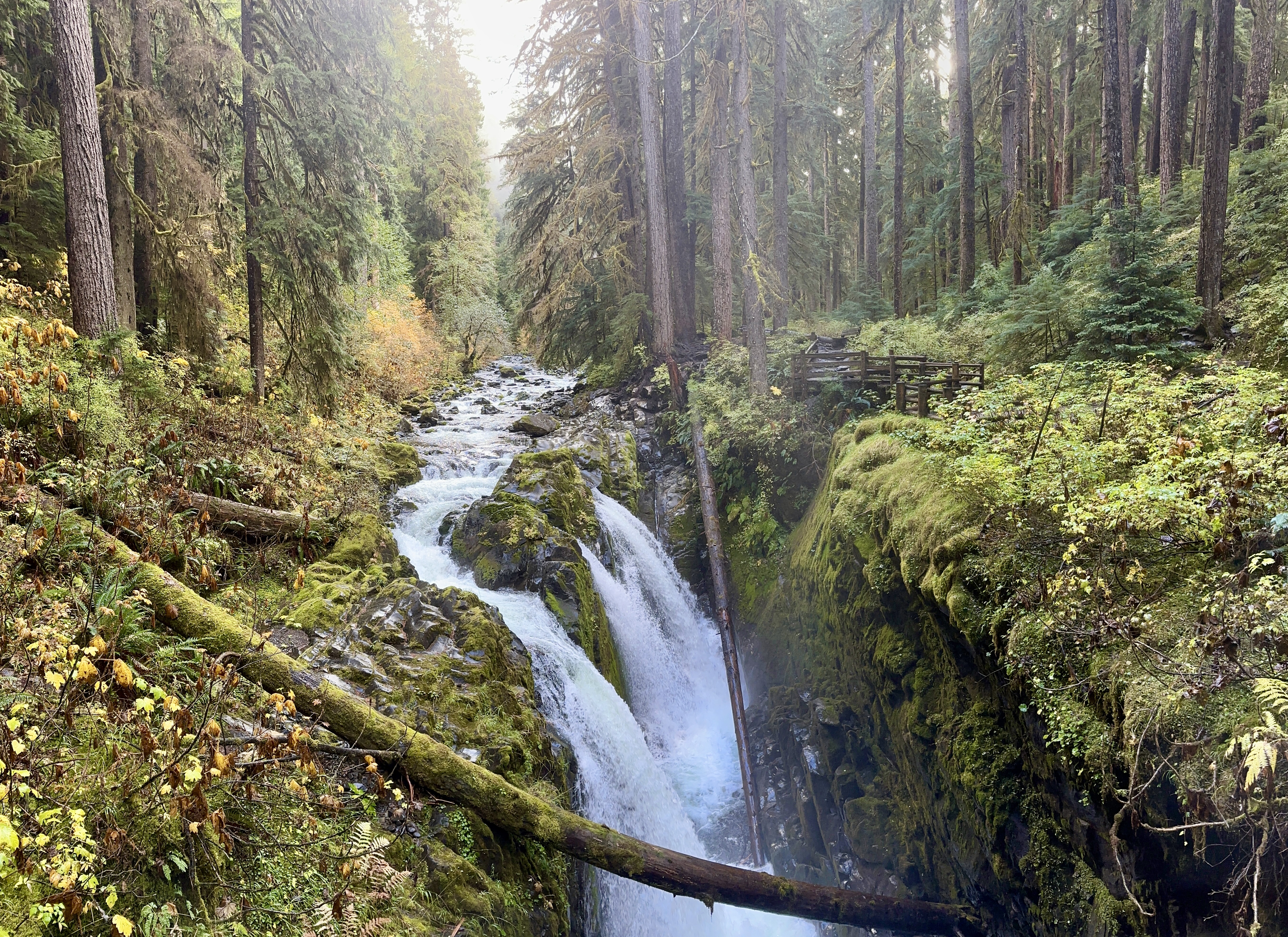
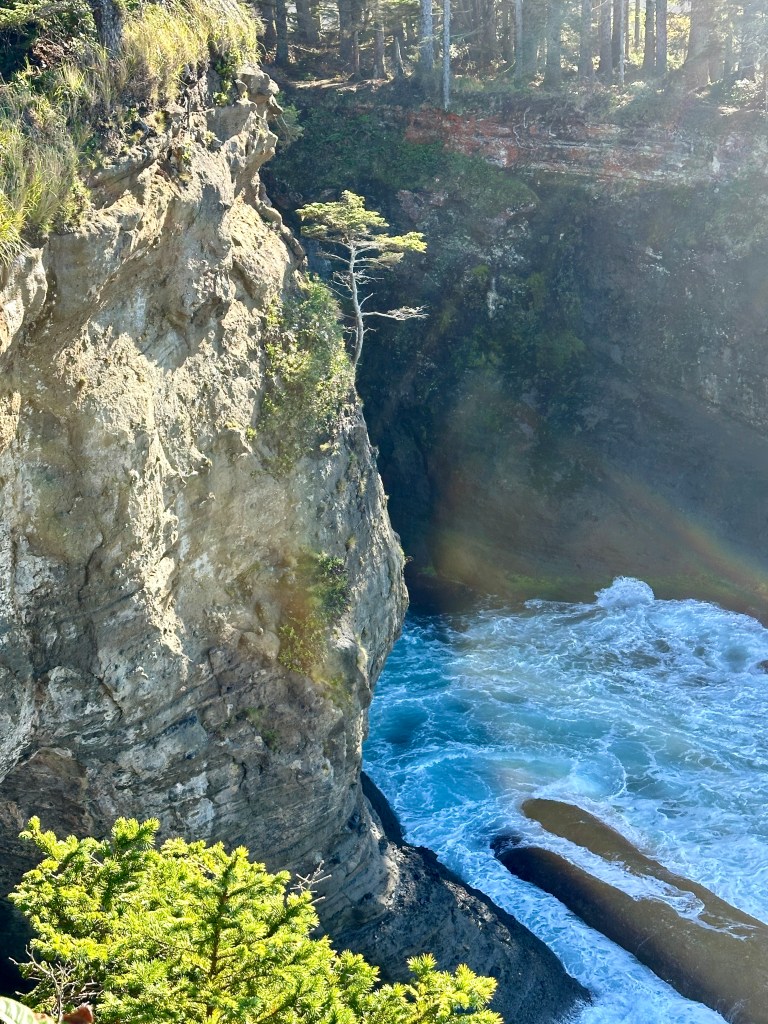
Further west lies the Olympic Peninsula, made up of National Park land, Native reservations, scattered towns and farms, logging sites, and a lot of water—ocean, rivers, sea, creeks, waterfalls, strait. For some years, I had wanted to soak in this place that I often see in stunning photos. It did not disappoint.
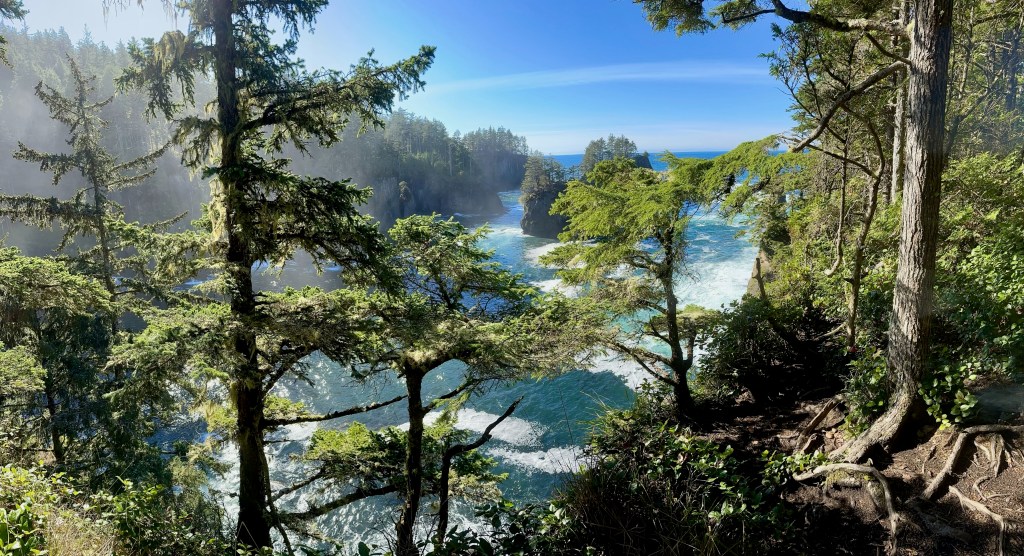
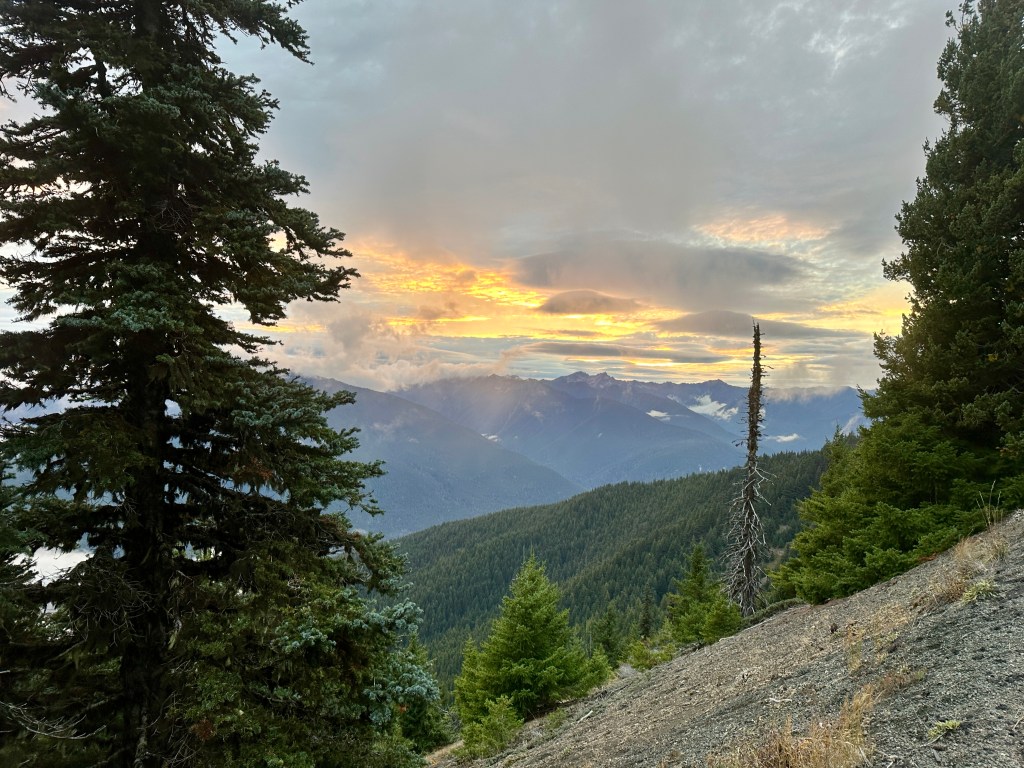
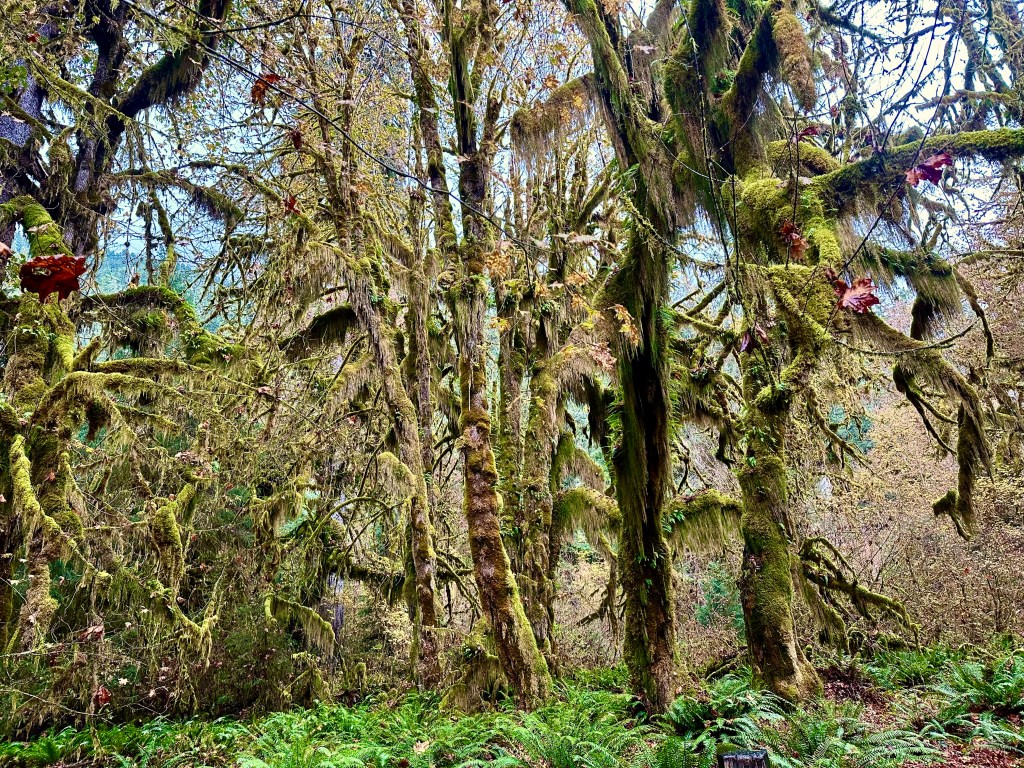
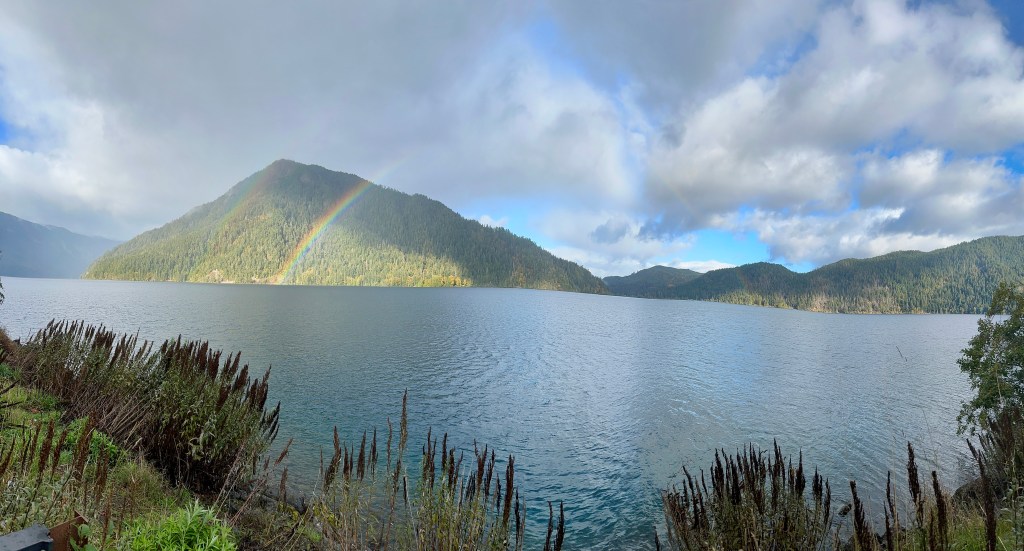
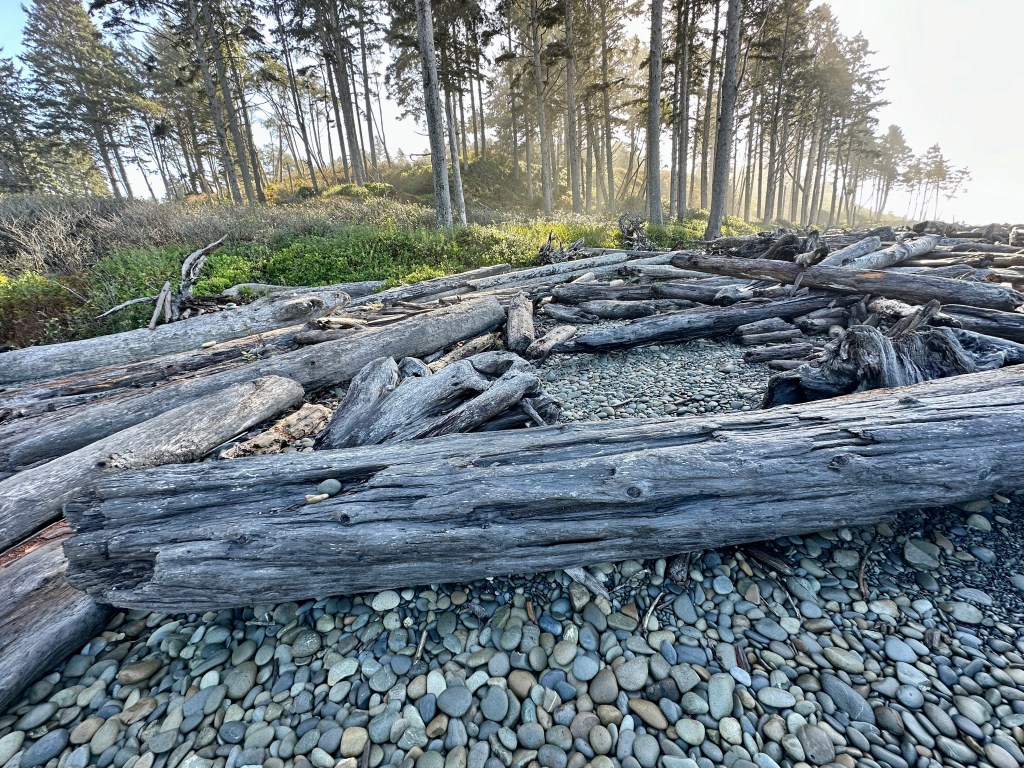
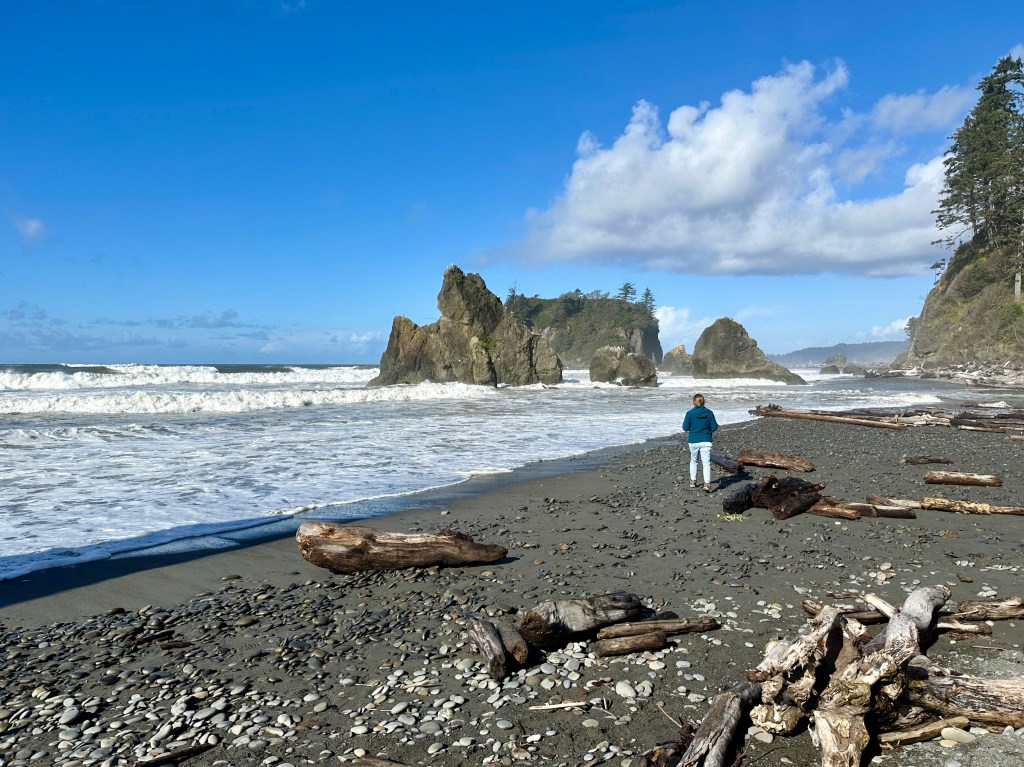
The movement of water from the sky, over the land, and against the shore defines the peninsula. Sergey filmed this ceaseless motion; the song, “Onyx Oasis,” is his own.
Back in Indianapolis, on a visit to the Eiteljorg Museum, the Pacific Northwest coast unexpectedly beckoned again. Preston Singletary, an artist of Tlingit descent, represents an Indigenous myth in “Raven and the Box of Daylight.” Human and animal worlds mix in the tale, with a divine raven shifting into a human boy. Although the styles of Preston Singletary and Cappy Thompson look little alike, these Seattle poets of glass both illuminate a primeval holism.
 Layli Maria Miron
Thank you for reading, Enid; I agree about Sergey’s audiovisual artistry!
Wow! The photos and descriptions bring right to the pacific northwest and Sergey’s music and video – Bravo! Wonderful.