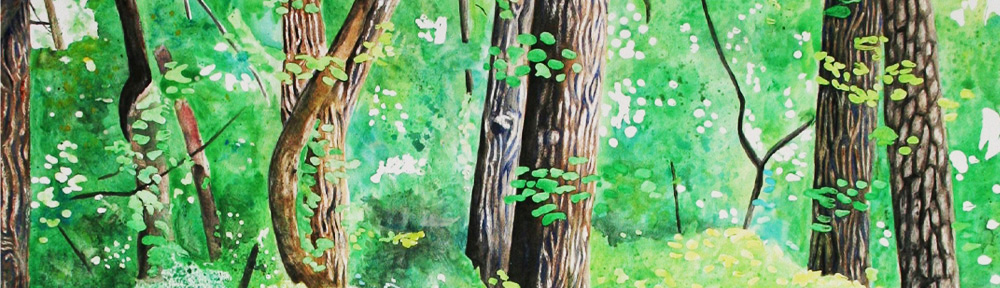
April brings not only the loon on the retention pond, but the ephemeral woodland wildflowers in the Indiana parks. These flowers emerge before the trees have leafed out, and mostly disappear by summer, dormant until the following spring.
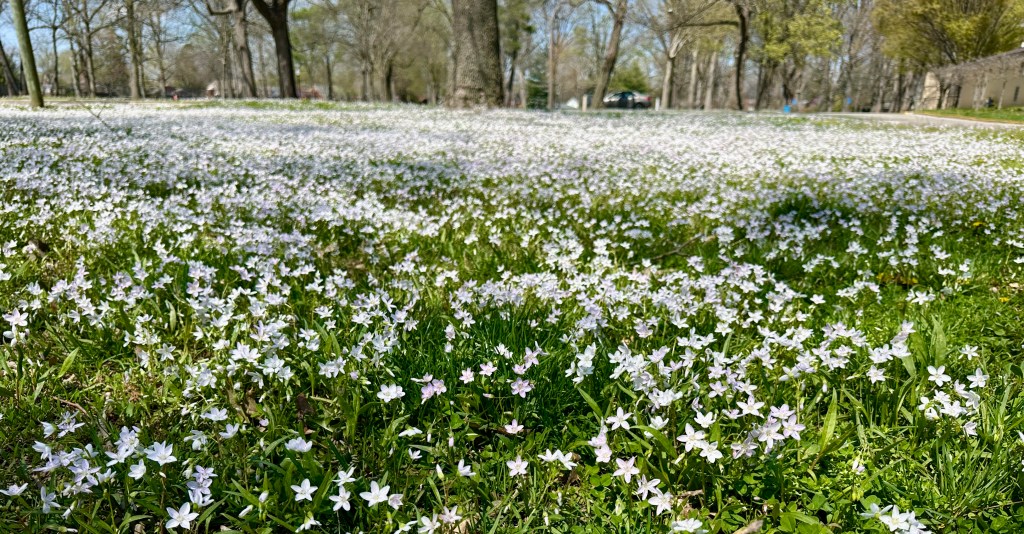
In my Alabama garden, I had planted one tiny ephemeral, Virginia spring beauty, admiring the pink pollen and stripes adorning the minute blooms. And then this spring I happened upon a field of thousands of spring beauties. Wandering through Columbus, Indiana, Sergey and I came upon a handsome park with mature trees towering over a lawn. Within the lawn grew endless spring beauties and violets.
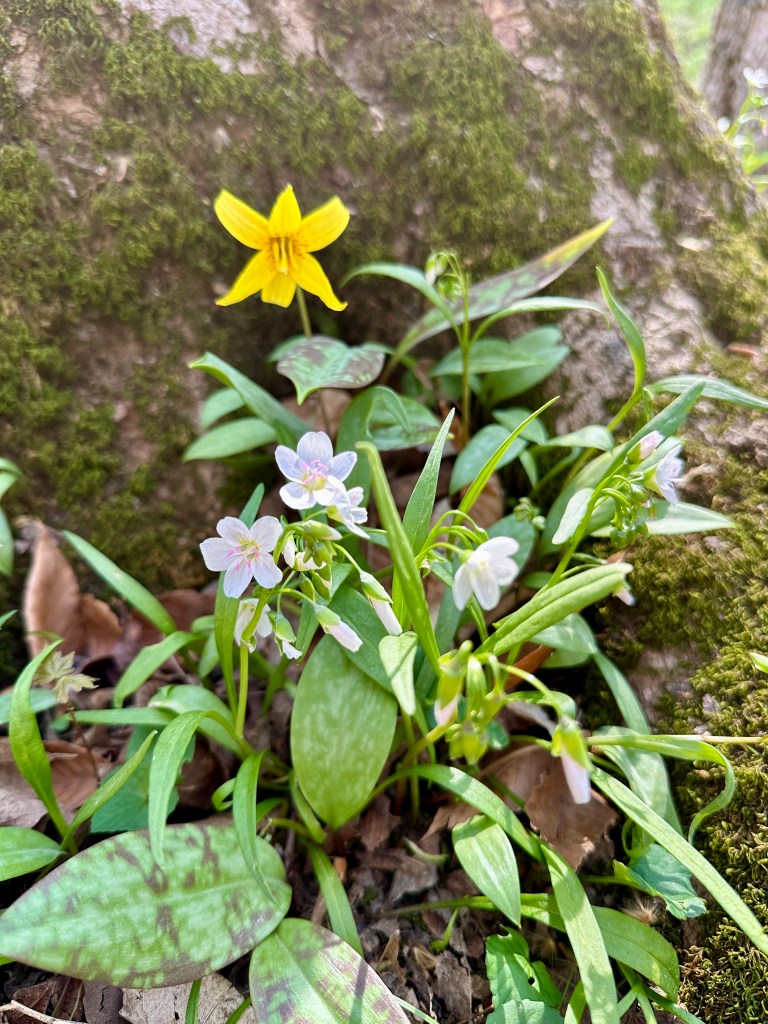
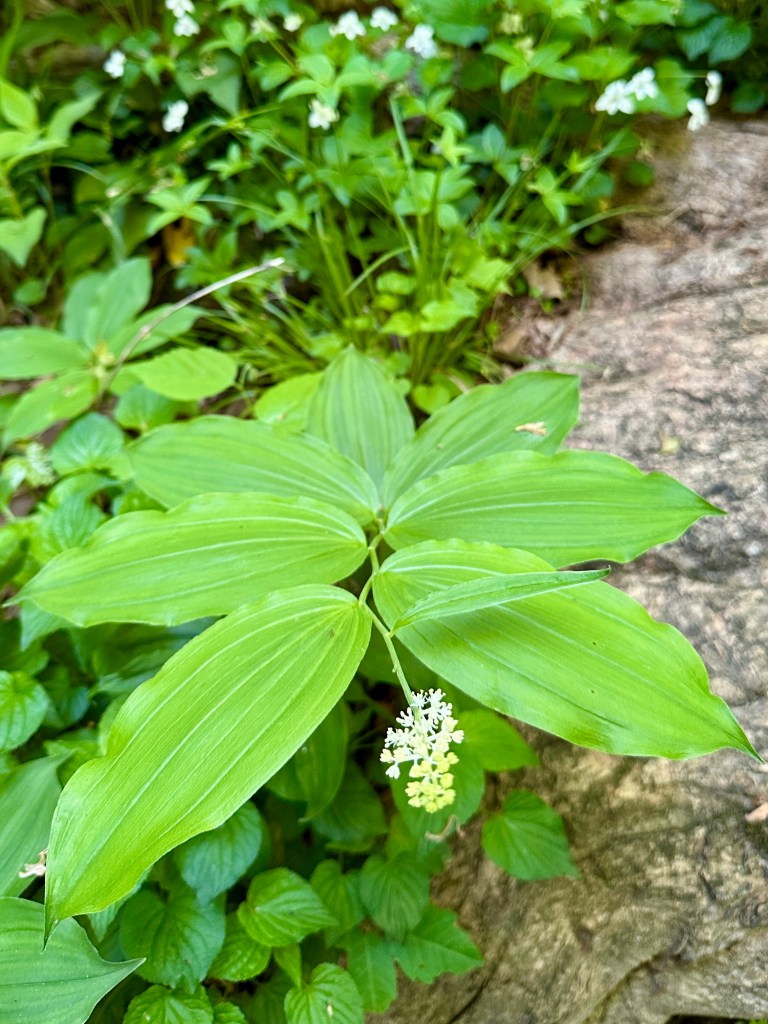
On another April excursion, a hike through a forested Indianapolis park, an even greater diversity of ephemerals grew under the sleeping trees: trillium, phlox, mayapple, trout lily, Dutchman’s breeches, spring beauty, and undoubtedly others too far from the path for me to photograph.
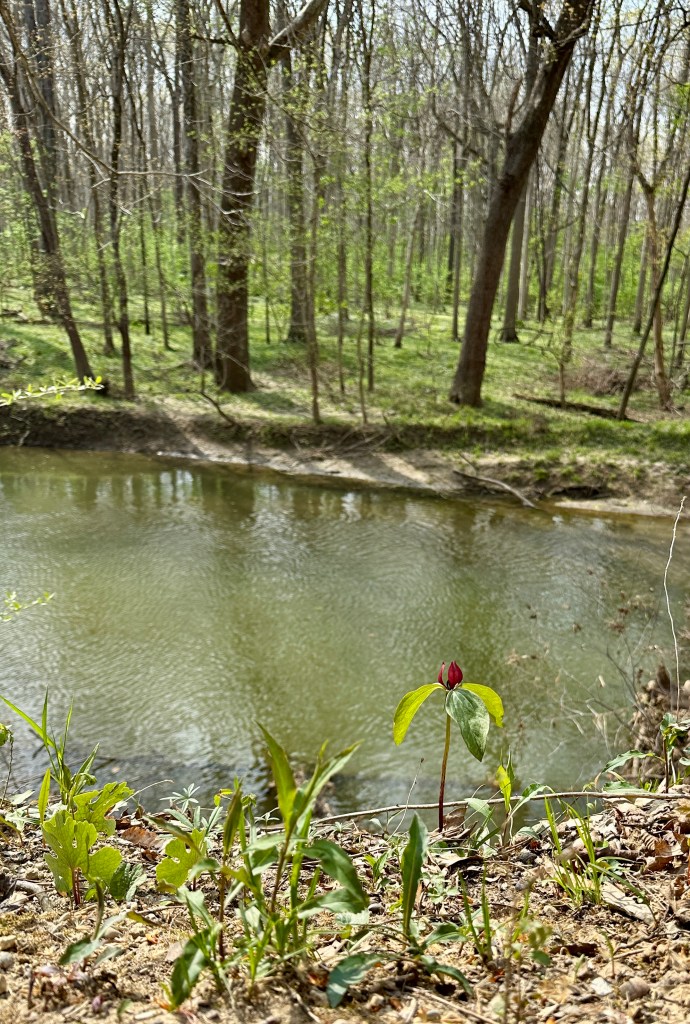
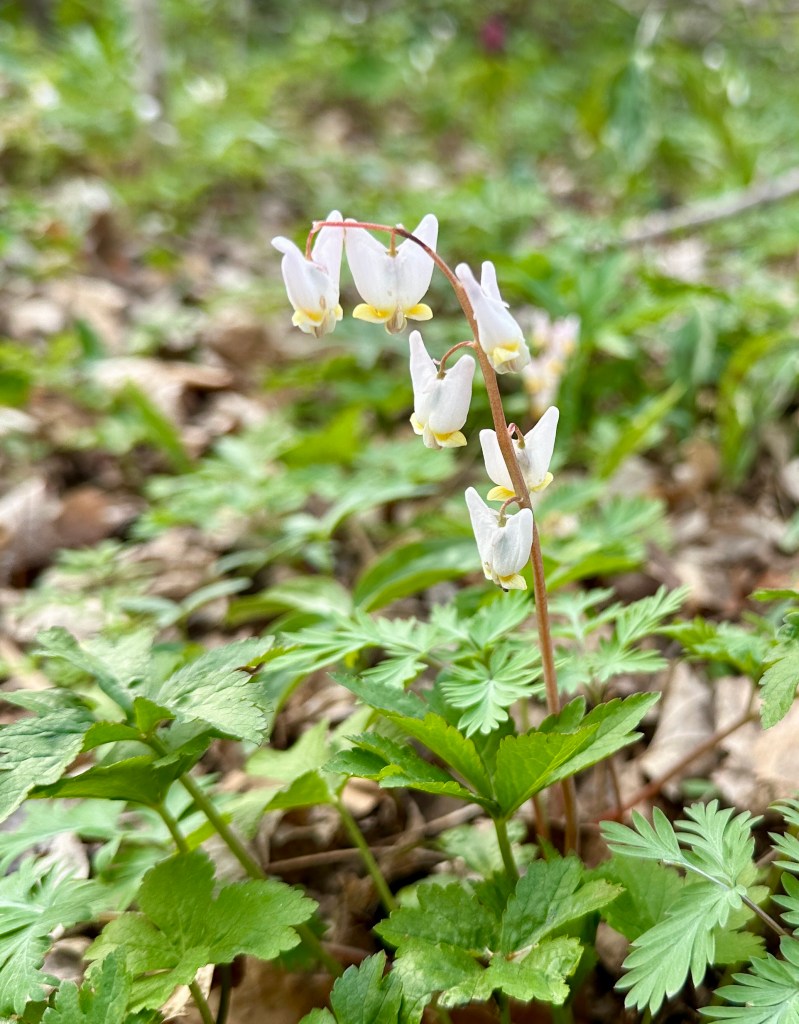
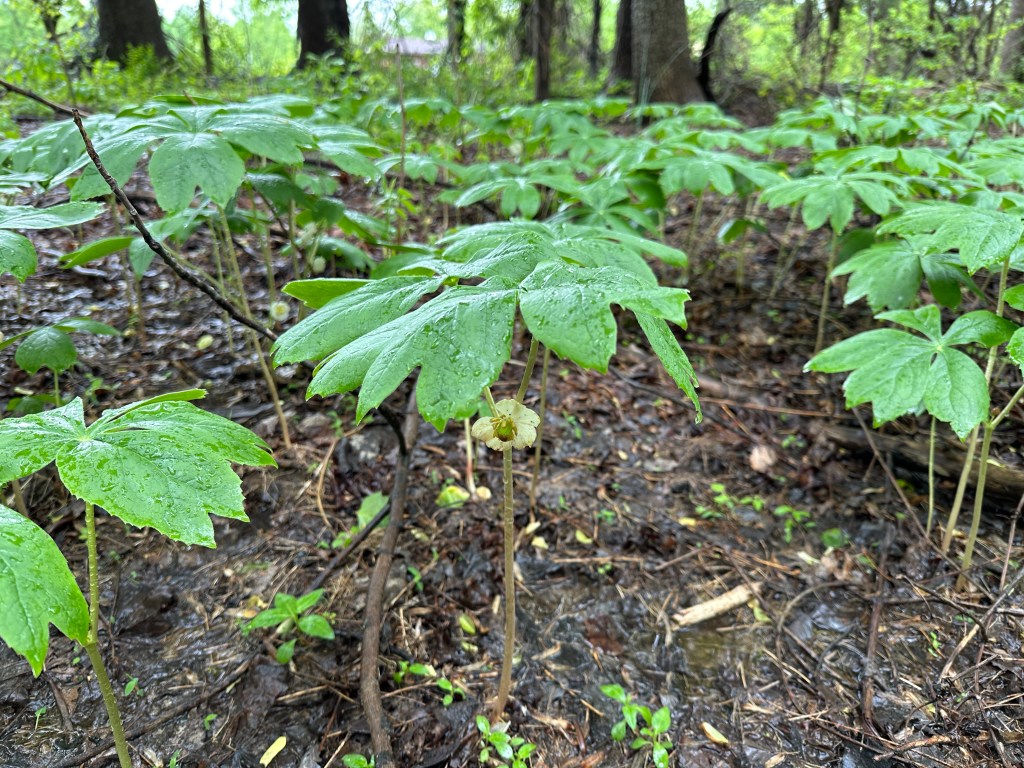
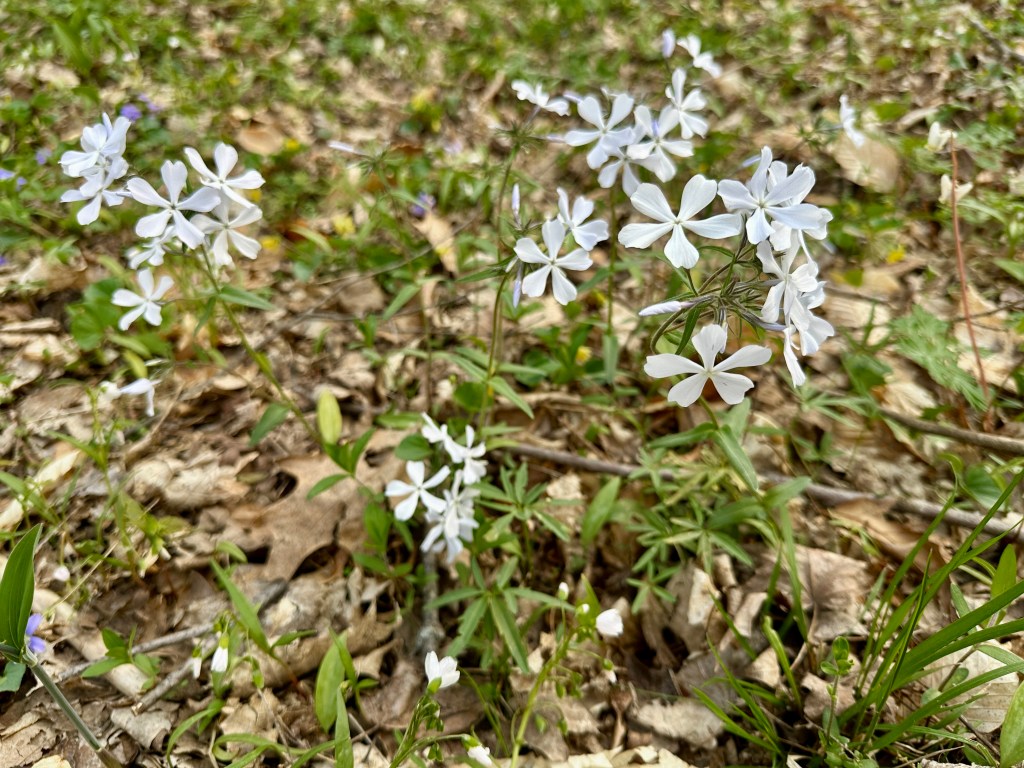
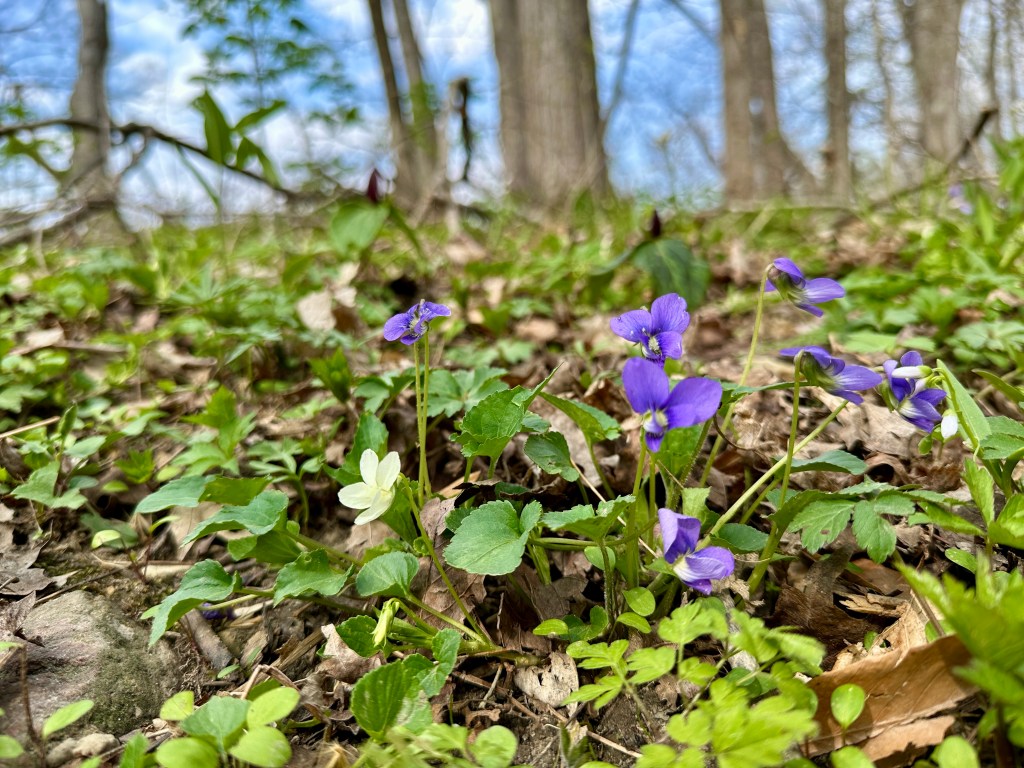
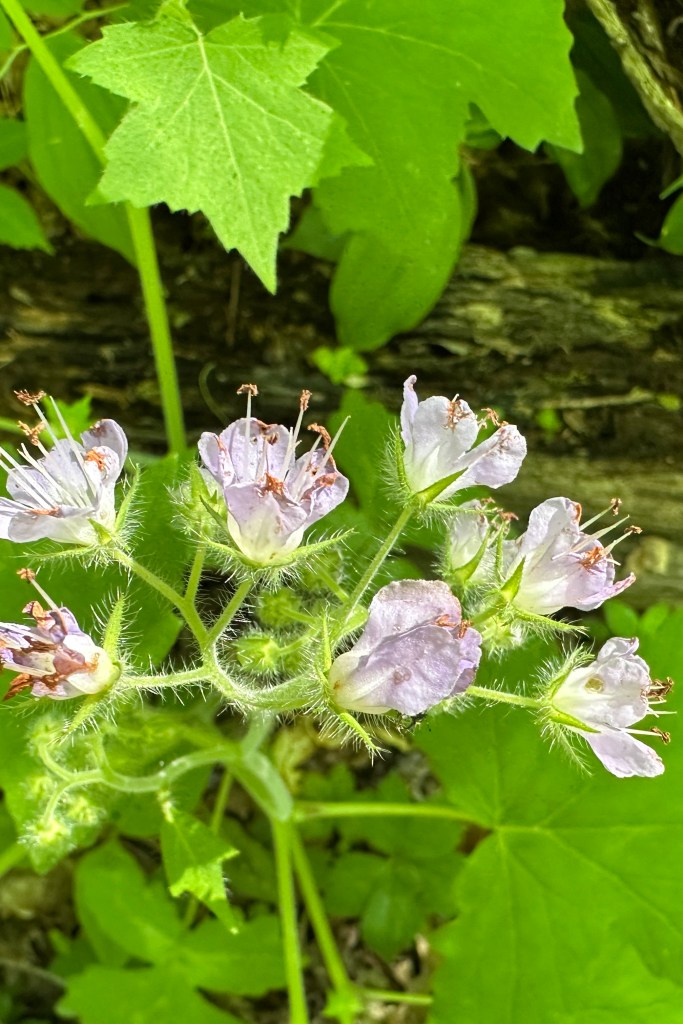
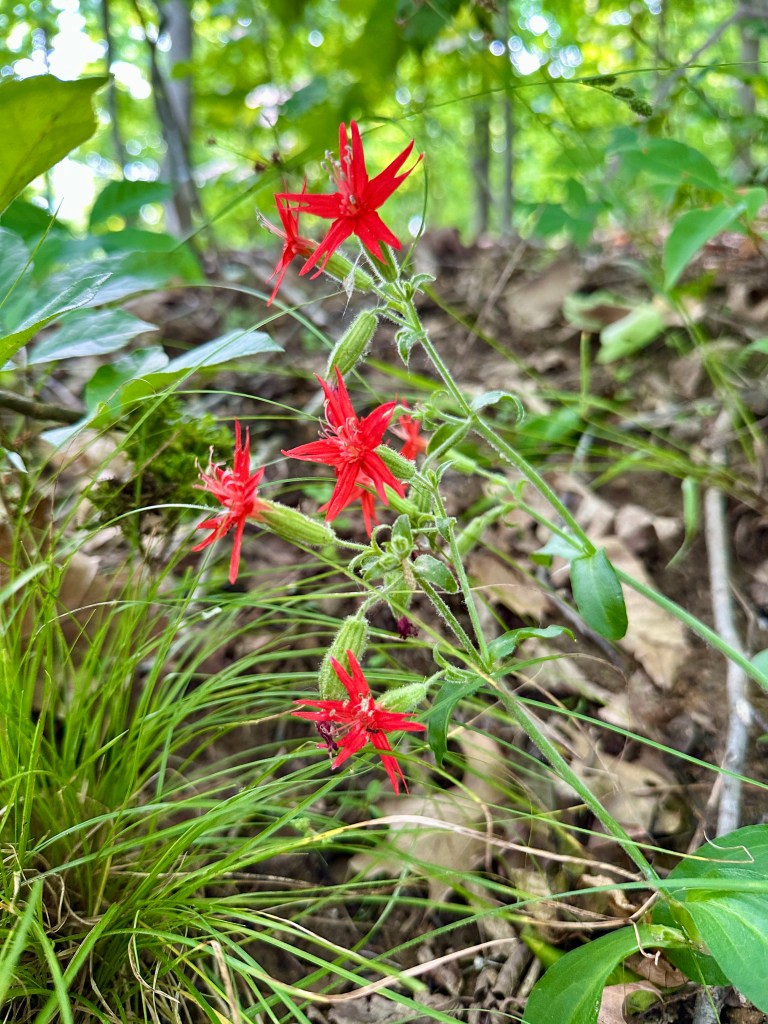
Returning to this park a mere three weeks later, the forest had entirely changed. Where sunlight had warmed the ground in April, now in May was in cool lush darkness. Bare branches had been replaced with a thick canopy. The ephemerals had faded, already preparing for their long sleep. Some late spring wildflowers were blooming—waterleaf, treacle-berry, fire pink—but now had to compete with a dense tangle of herbaceous plants on the forest floor.
While I take delight in the apparently unmanaged lives of wildflowers, the human caretakers of this park may well play a role in tending these delicate plants. Wildness, life fully apart from human intervention, may be an illusion, especially given our species’ exponential growth and spread. This idea was driven home by a visit to Clifty Falls State Park, situated on the Indianan side of the Ohio River, just across from Kentucky.
As we approached the park lodge, we saw giant smokestacks rising nearly a thousand feet. Had I done research beyond reserving a room, I would have known that the park is next to a coal plant, which uses the river for cooling and for the barges that lug coal from nearby Appalachia.
Underscoring the irony, I had booked a room with a balcony looking out on the Ohio River, envisioning relaxing in quietude, breathing the fresh forest air, watching the river in its slow flow. Instead, the view was of an immense velvety black mountain of coal, billowing smoke, and coal barges, with an incessant hum from the power plant. We stayed off the balcony, concerned about breathing in emissions. So much for my dream of a weekend of nature therapy, a break from climate anxiety…

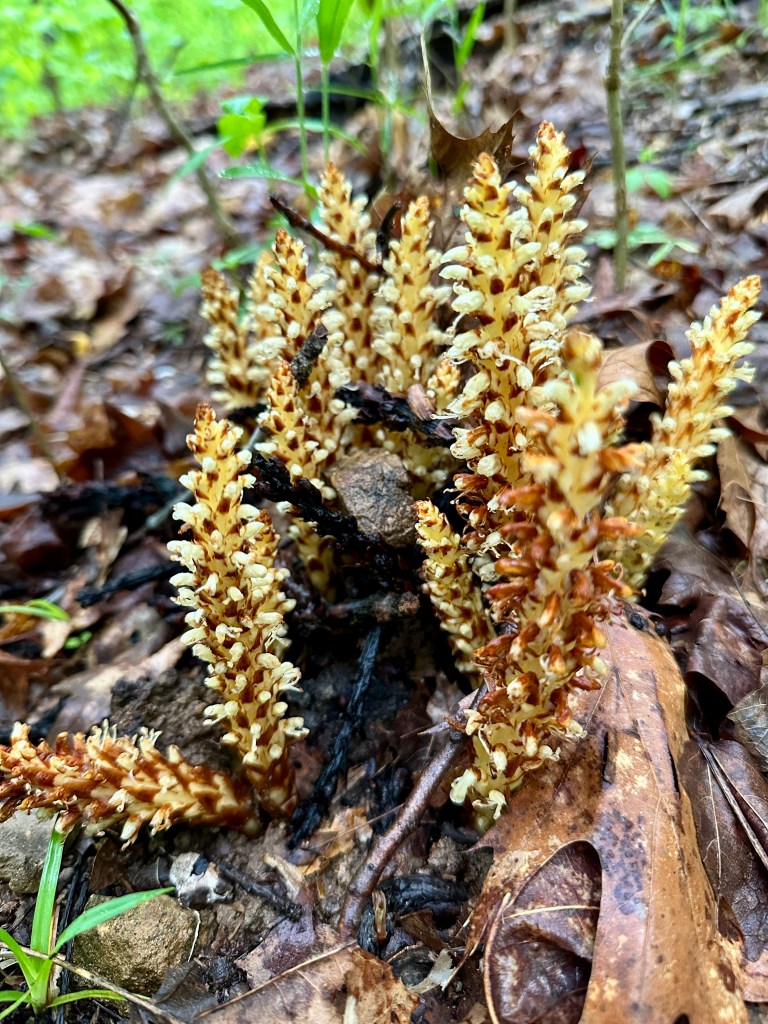
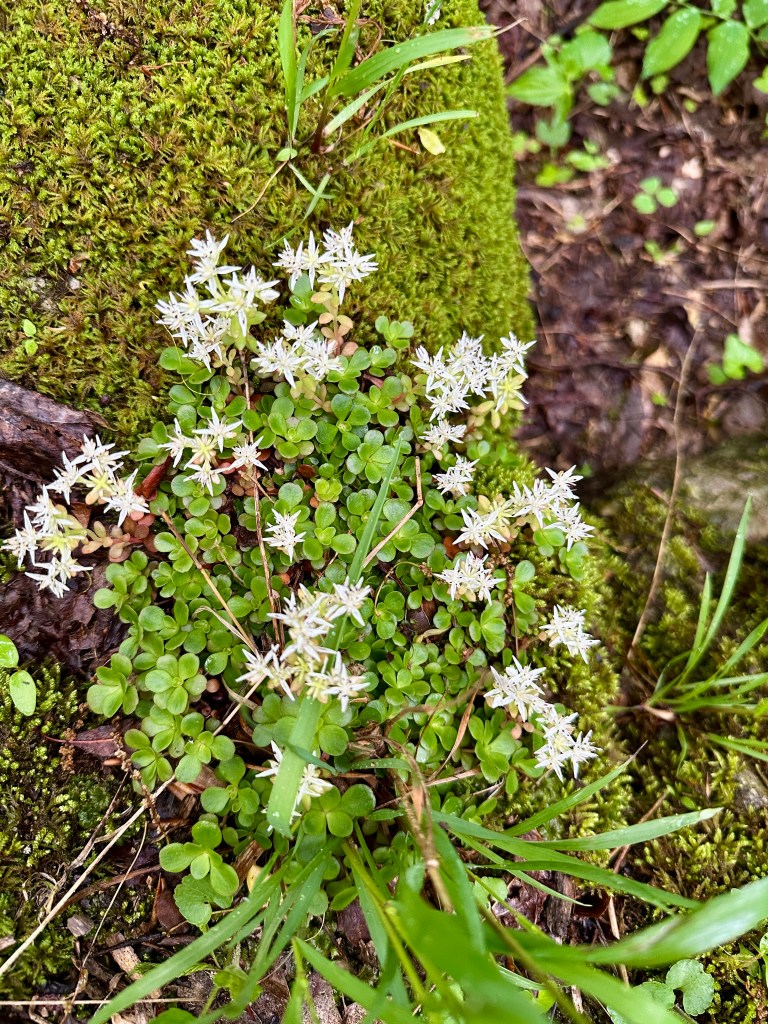
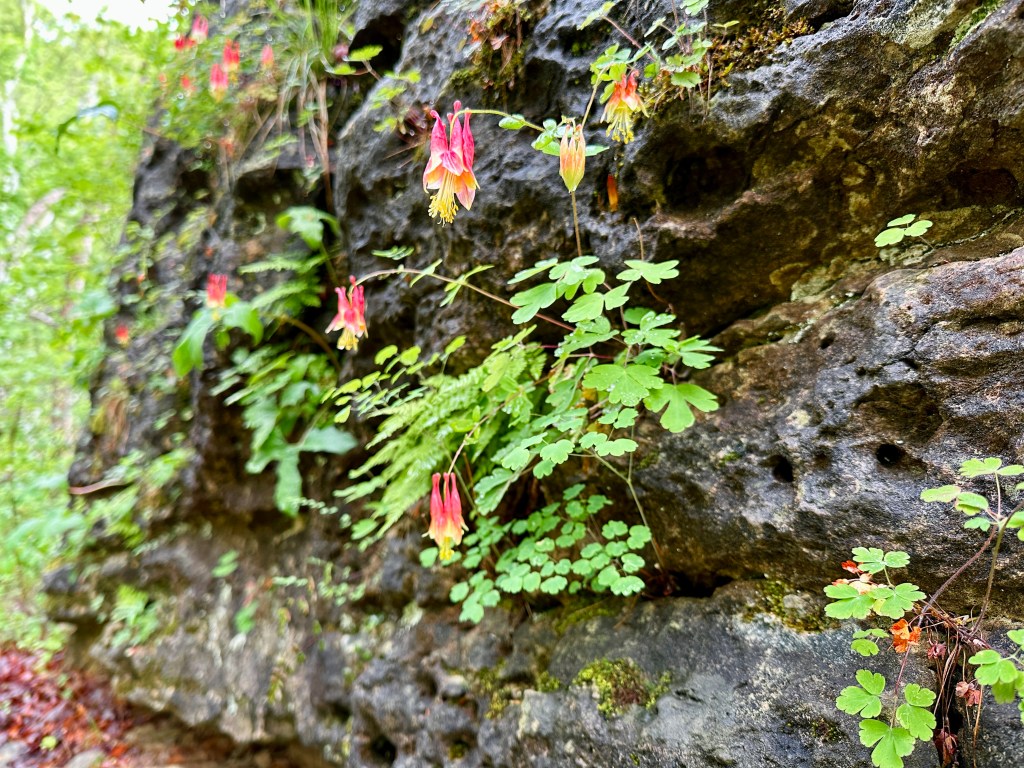
Yet, all was not lost. The near-constant rain paused long enough to allow us one forest hike to see some of the famed waterfalls. The setting sun made the falls and the rain-jeweled trees glow. From our position atop a ravine, we could observe the forest canopy. On the tallest tulip-tree I’d ever seen, a pair of summer tanagers flitted and flirted. Deeper in the woods, we discovered more gifts of spring. A parasitic oddity, only flowers with no leaves, called cancer-root. Asters and sedums. Columbines growing on hulking boulders. Weaving through the petals, the call of a wood thrush.
 Layli Maria Miron
Me too; I was elated to come across them!
What beautiful flowers. That’s the first time I’ve seen Columbine growing on a cliff!
What beautiful flowers. This is the first time I’ve seen Columbine growing on a cliff!