
In Alabama, where at least a hundred trees inhabited our lot, one of my favorite activities was lying on the porch swing, gazing up at the leaves as they danced in the breeze. Once, a Caroline wren landed on me as I lounged, perhaps mistaking the motionless tree-gazer for a log.
It’s taken some getting used to our yard in suburban Indianapolis, where lawn predominates.
To be fair, it’s not entirely treeless: three cherry trees were presumably planted about a decade ago when the house was built. Besides the cherries, the landscaping included clematis, daisies, daylilies, daffodils, hydrangeas, hostas, and weigela. Each of these ornamentals is an exotic, generally with origins in Eurasia, so, while beautiful, they don’t do much for the ecosystem.
Of course, the majority of the quarter-acre lot is covered by lawn, which was a pristine, sterile monoculture when we arrived, thanks to the prior owner’s fastidious attentions. We heard they killed voles to keep the grass safe.
Replacing the lawn with native plants, as well as vegetable beds, became a project to keep my mind on constructive work within my control instead of—well, you know, the maelstrom of 2025. Nurturing biodiversity remains my best antidote to despair.
A quarter-acre of lawn in full sun presents a blank canvas to be gradually painted with blossoms—and gradually is key, since, as I have learned, every new planting, even with hardy natives, requires vigilant watering and weeding in its first year. So, I started with this goal for Year 1: converting a strip of lawn at the back of the backyard to a bed with shrubs and trees interplanted with flowers.
With my, er, scholarly physique, I rely on Sergey to bring these garden fantasies into reality. Once we consulted on the Year 1 plan and got HOA approval, we were off: procuring a few woody plants and dozens of herbaceous ones, killing that part of the lawn, ordering a mountain of mulch, and getting the plants in the ground. To encourage constant blossoms throughout the bed, I made a planting plan, mixing flowers that bloom in spring, summer, and fall, benefiting aesthetes and pollinators alike.
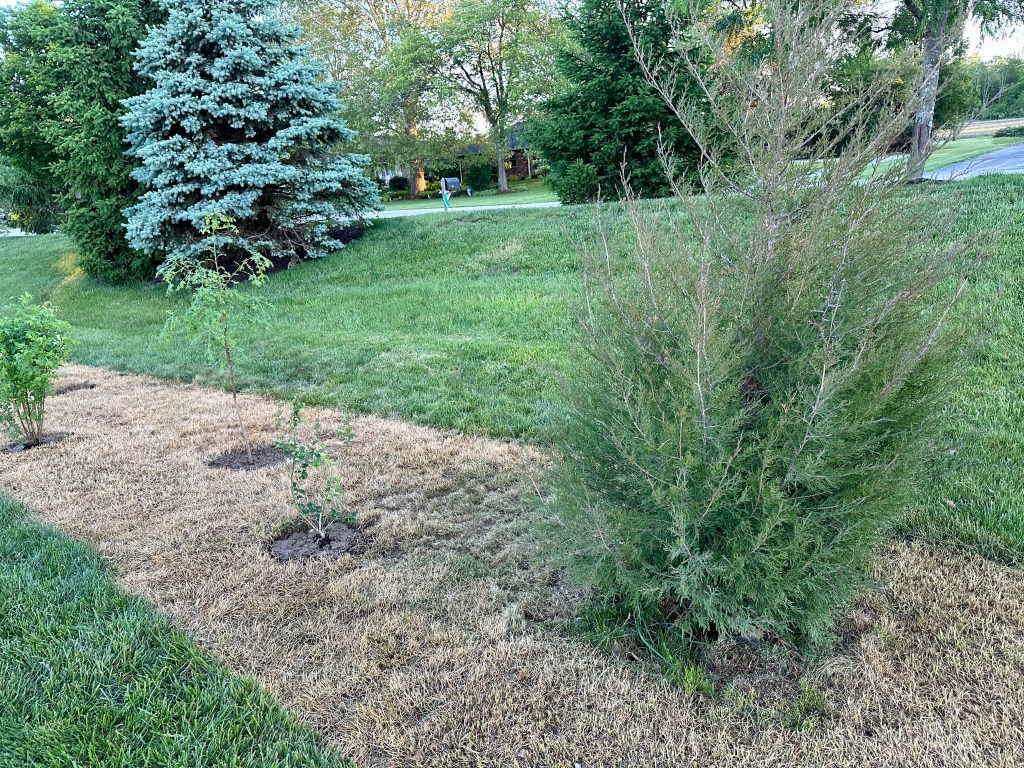
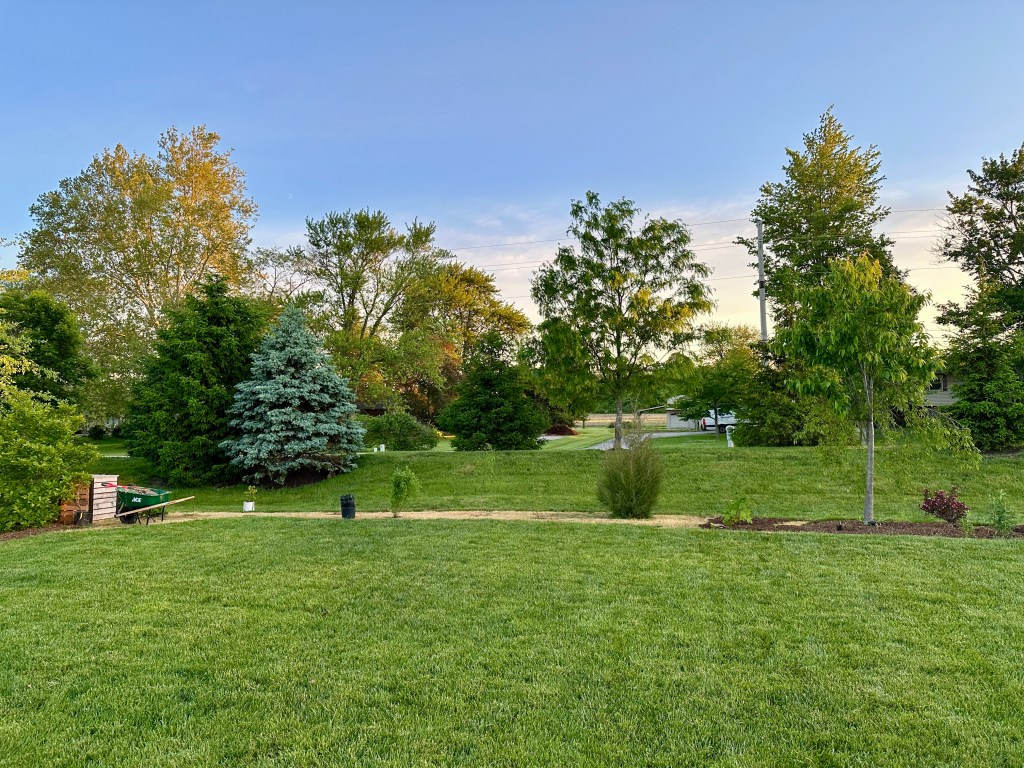
A few of the new plantings died off, but most have survived their first three months, despite temperatures often surpassing ninety degrees starting in June. I hope these plants have the wherewithal to withstand the even hotter summers to come.
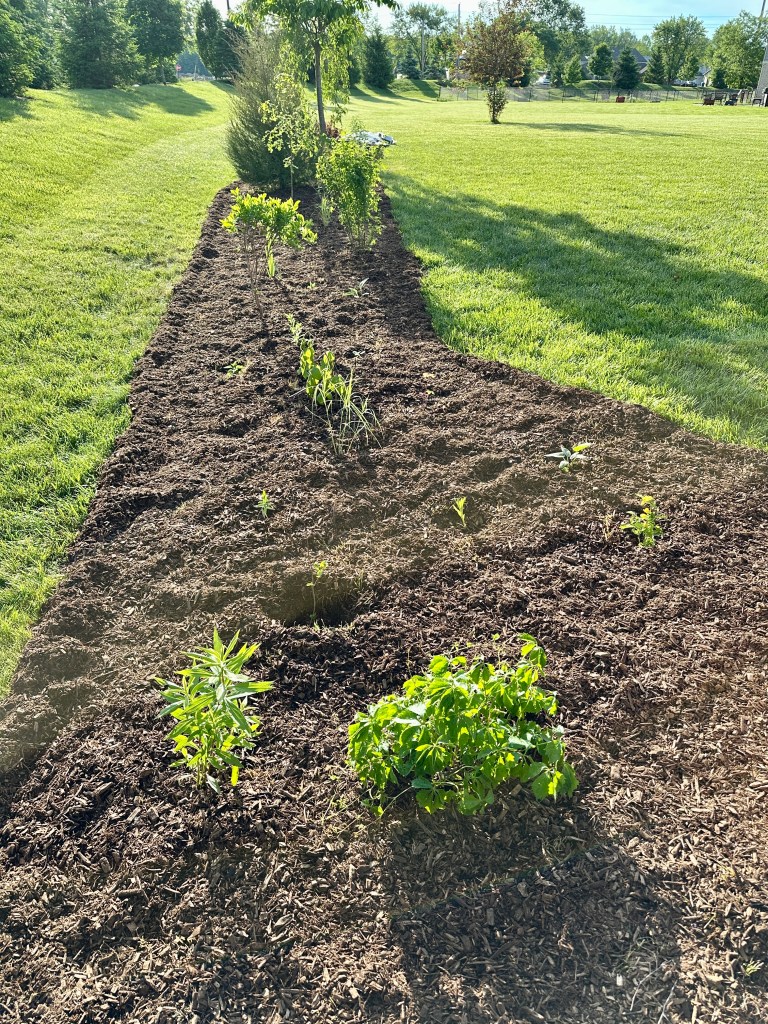
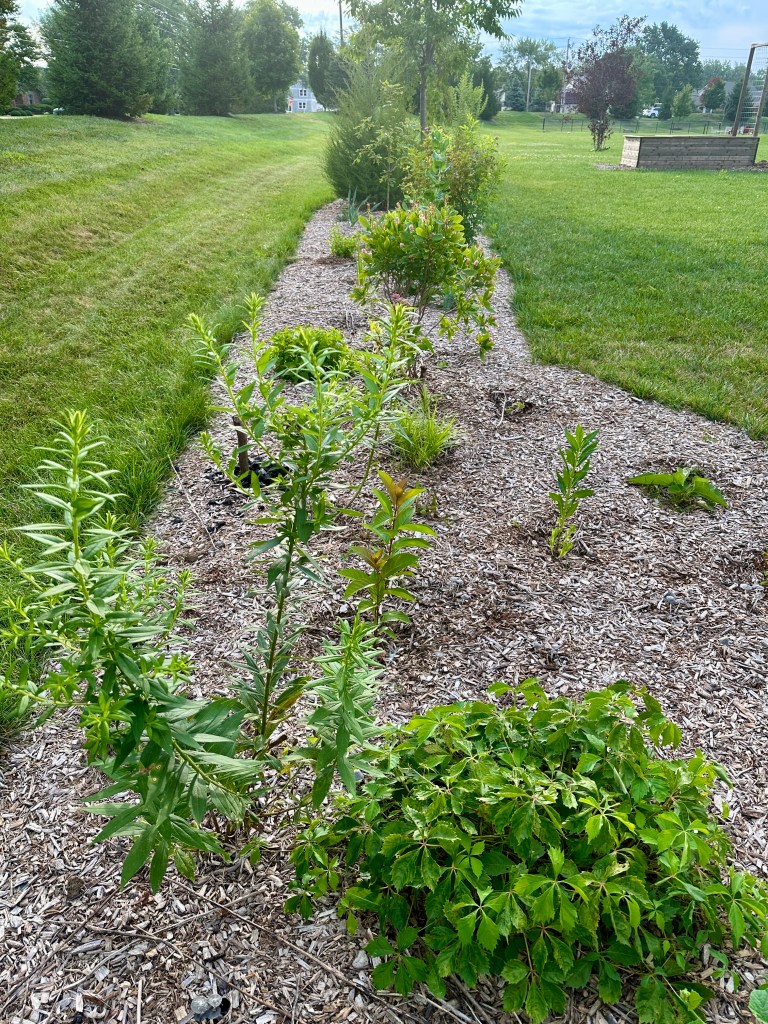
Not everyone bloomed this first summer, but to my delight, many have.
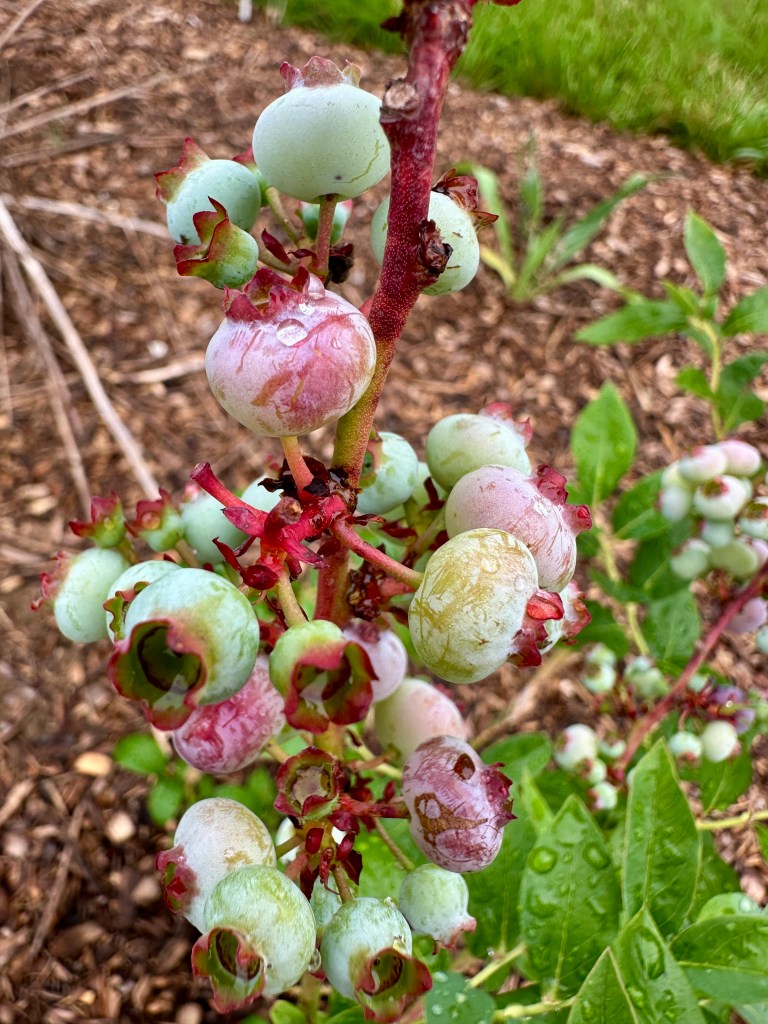
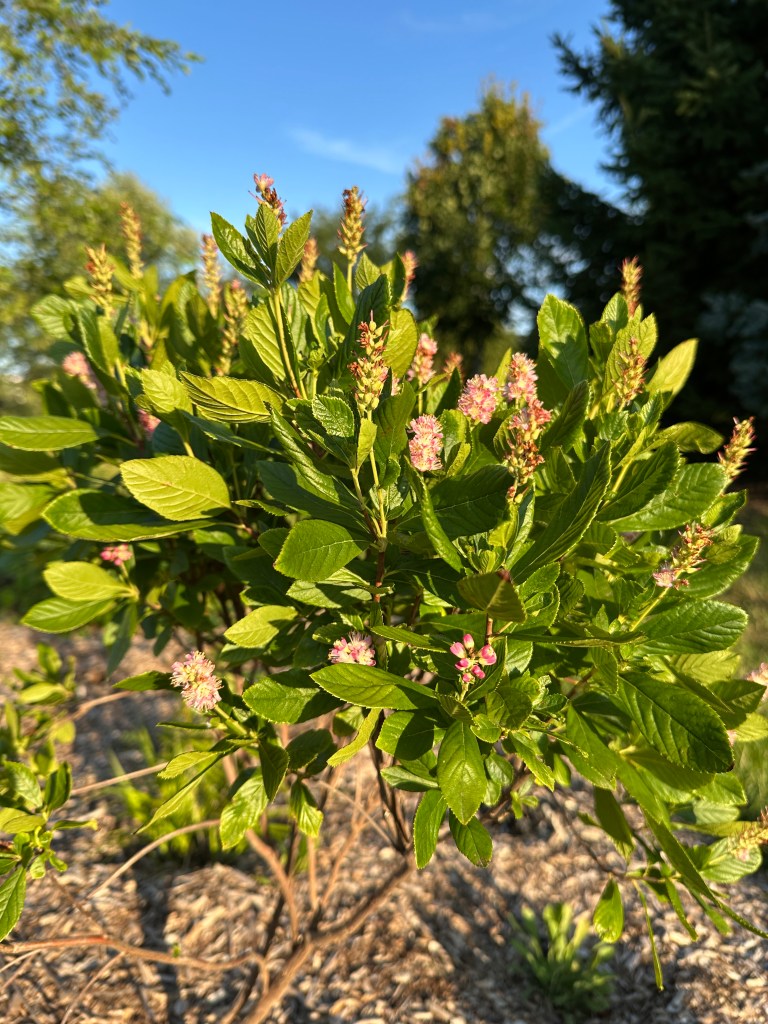
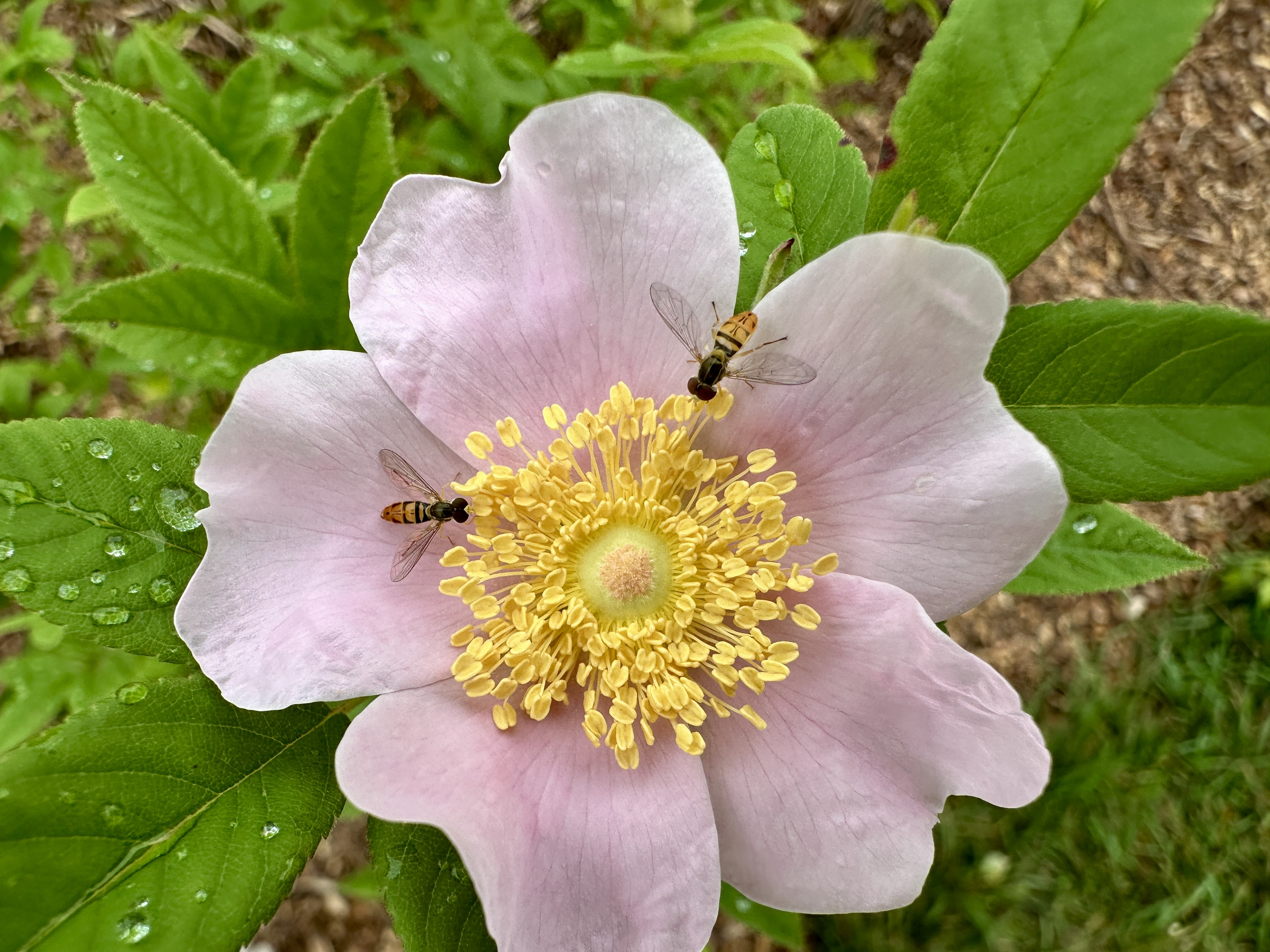
Of the shrubs we planted—purple-flowering raspberry, buttonbush, highbush blueberry, Carolina rose, and summer sweet—the latter three flowered. Most of the blueberries have been enjoyed by robins.
Many herbaceous plants have flowered, too, and the fall-flowering ones may bloom once cooler temperatures arrive. I evidently prefer purples, though I promise other colors are represented!
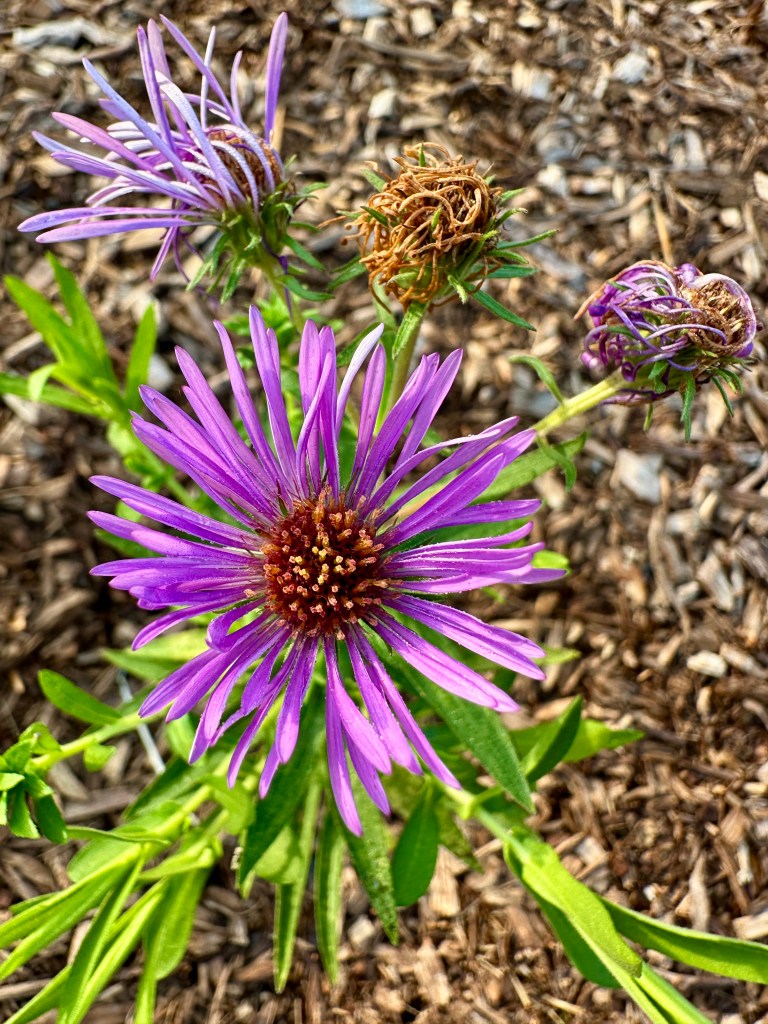
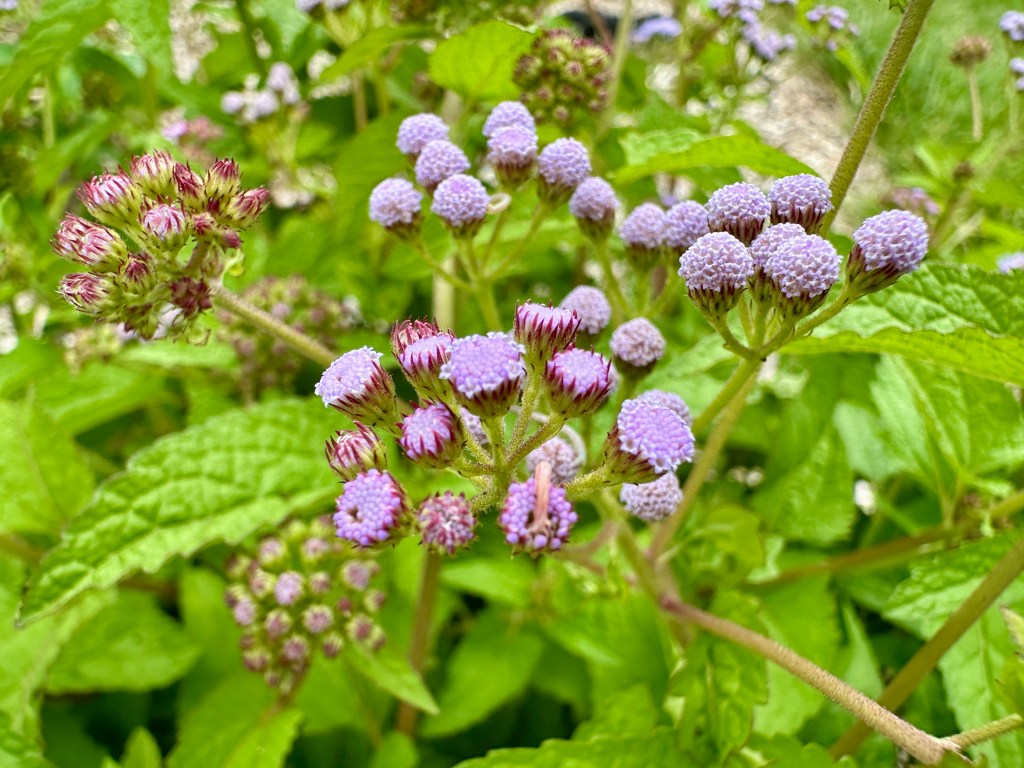
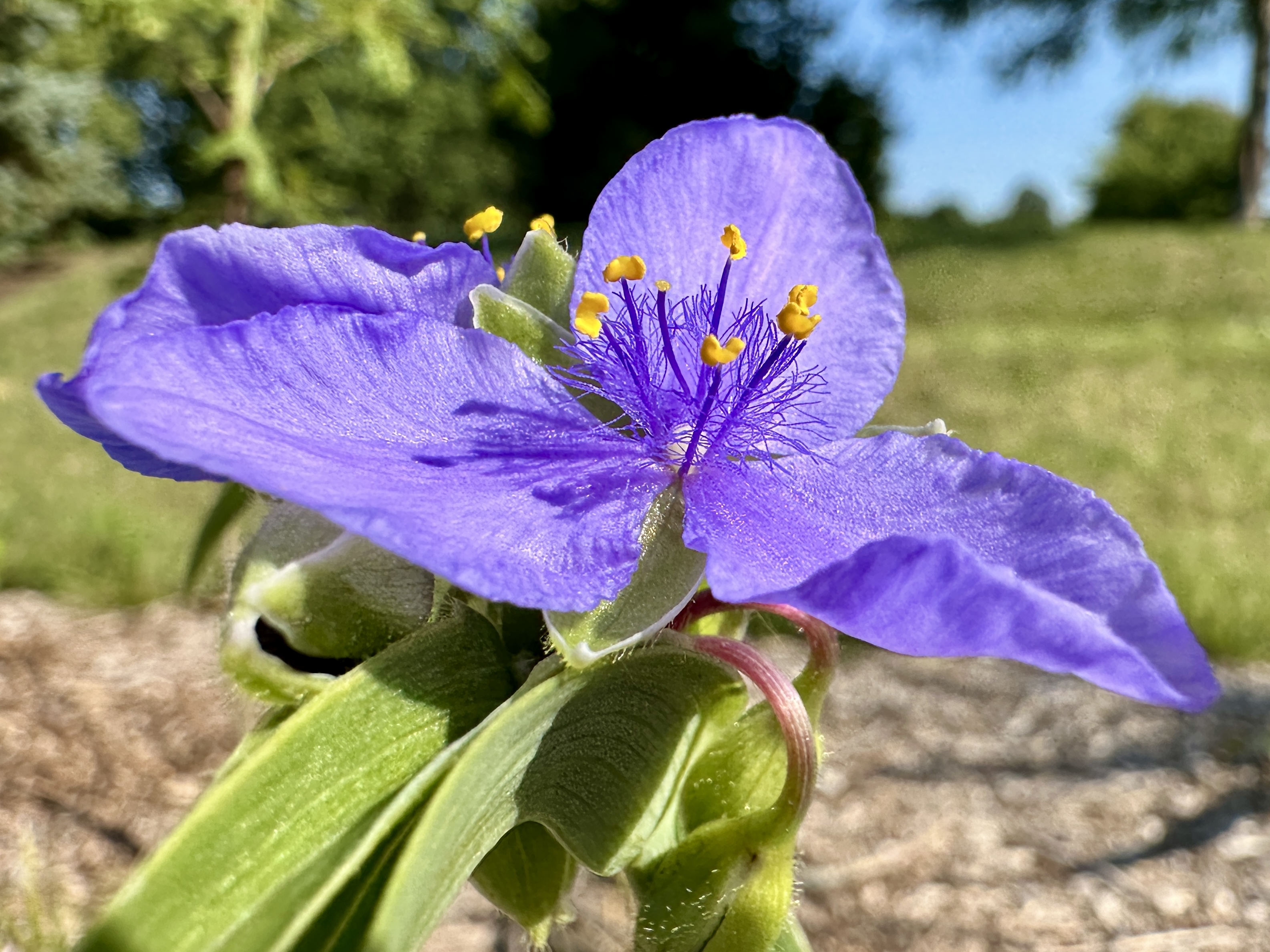
Now, the most exciting thing is to see these plants getting used by wildlife. Unlike in traditional horticulture, in wildlife gardening, caterpillars of beneficial butterflies and moths are cause for celebration, and plants are valued as much for serving as larval hosts to native pollinators as for their beauty.
Perhaps no caterpillar earns as much reverence as the monarch. Within my lifetime, human disturbance has caused their population to plummet by 80 to 95 percent, making every sighting of their orange fluttering a special delight.
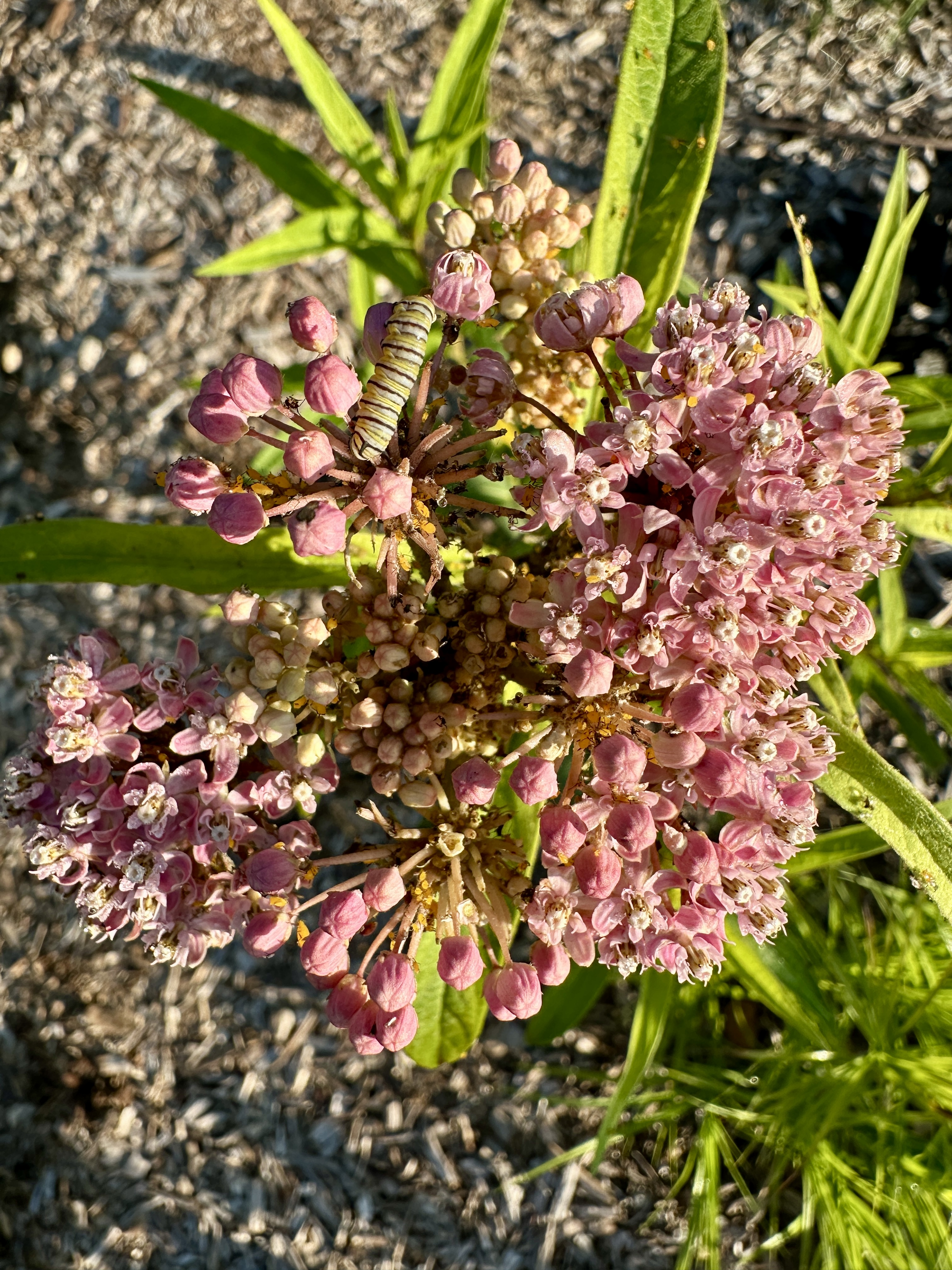
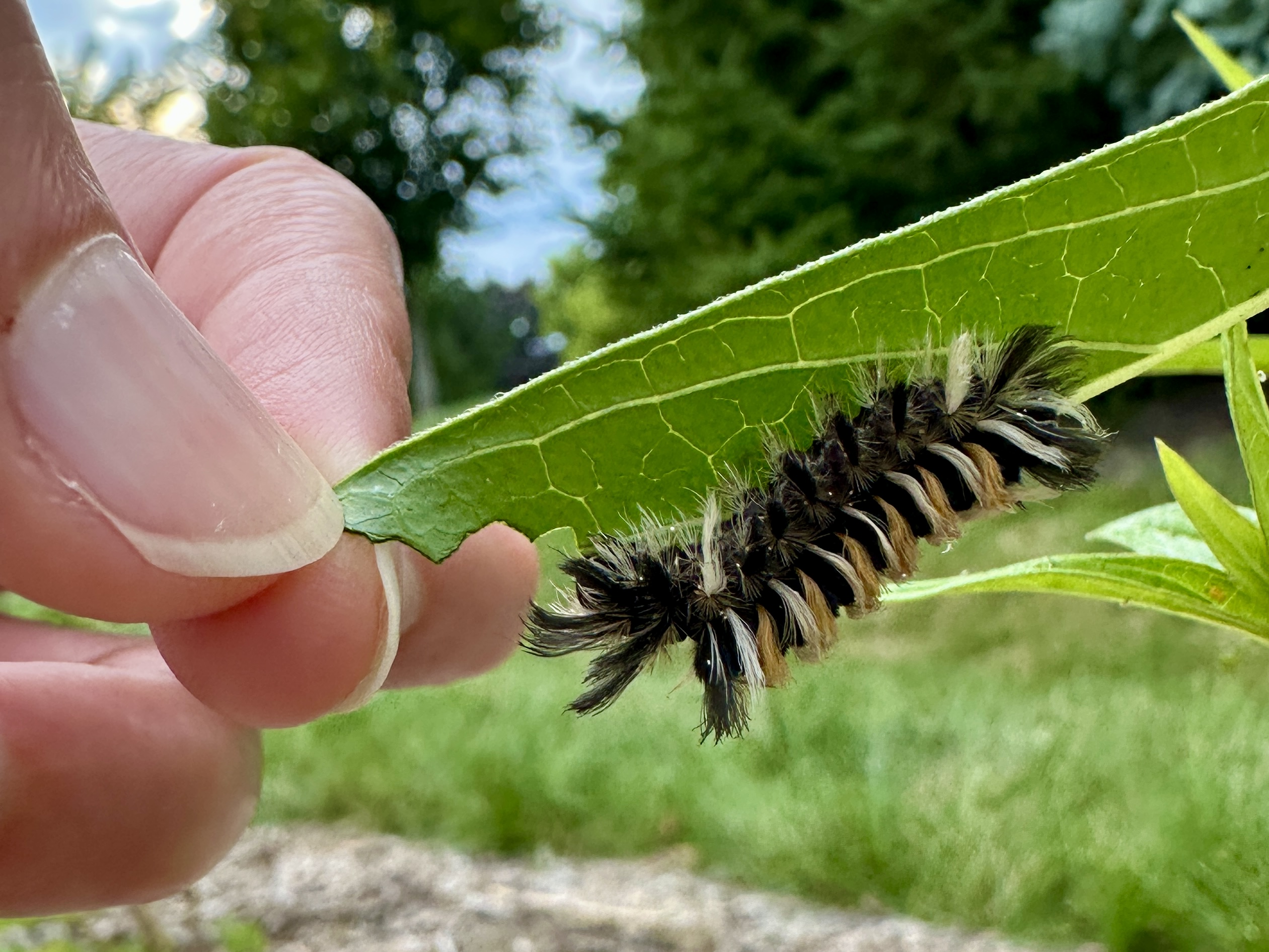
Early in August, I spotted a monarch caterpillar on our young swamp milkweed. He grew fat, then disappeared—hopefully, pupating. Then, four more appeared. This single Asclepias incarnata also supports milkweed tiger moth caterpillars and hundreds of aphids.
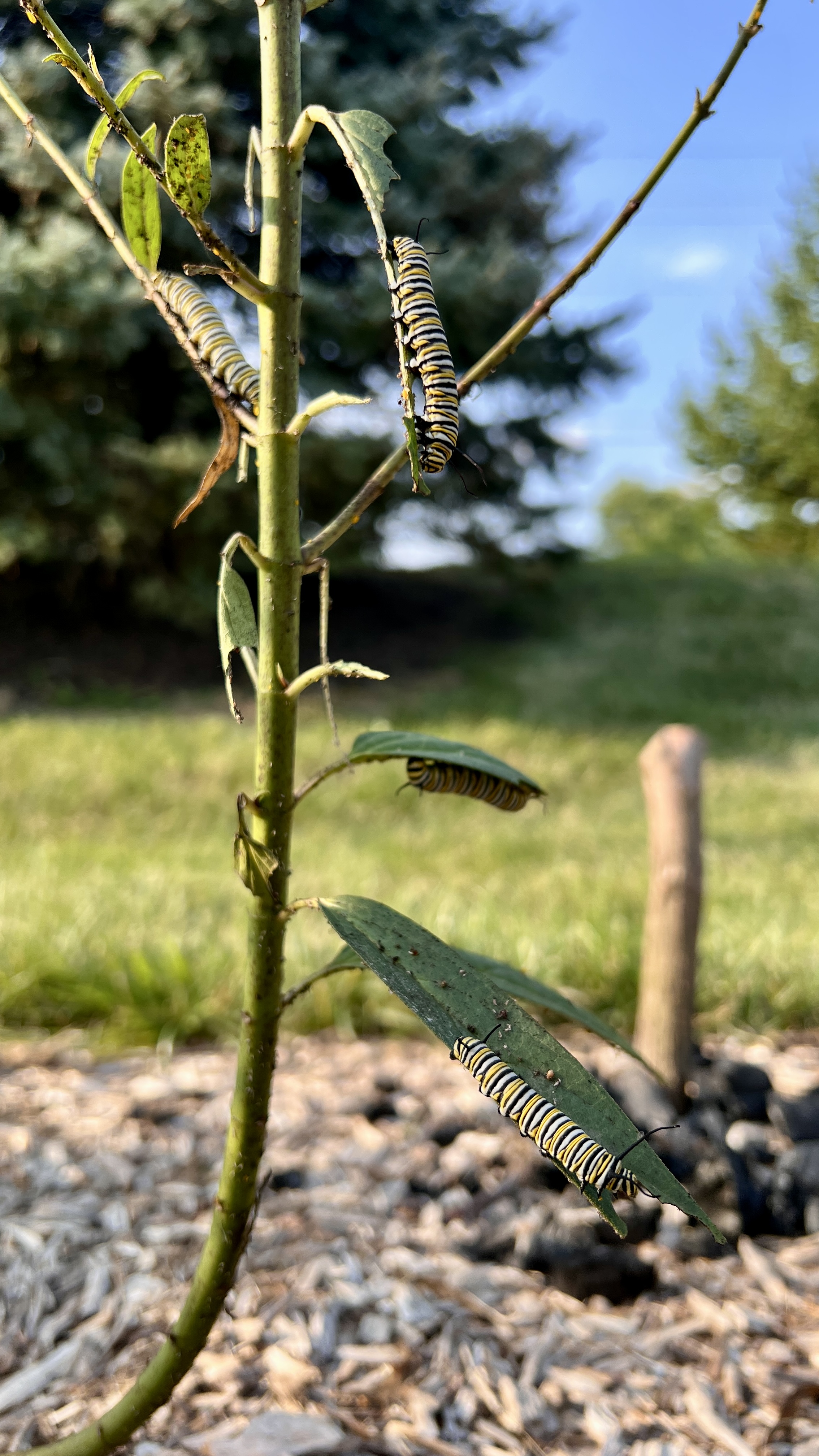
In fact, it got completely defoliated, and I transferred the remaining two caterpillars to the butterfly weeds (Asclepias tuberosa) my sister and brother-in-law planted several years ago—proving that for admirers of lepidoptera, the more milkweeds, the better!
 Layli Maria Miron
Pingback: Metamorphosis: An Ode to Bugs | Layli Maria Miron