
October. It’s been a couple weeks since I’ve seen my summertime favorites, hummingbirds and monarchs, which have no doubt departed on their southward migrations.
Looking back on the warmer months, watching caterpillars enjoy my plantings was a highlight—with one exception.
A bunch of twiggy cocoons appeared on a newly planted eastern red cedar: bagworms. After pondering these strange moths’ ecological contributions versus those of the sapling, I dispatched the cocoons. The red cedar already shelters a variety of beneficial insects, so its health ultimately won in this ethical quandary.

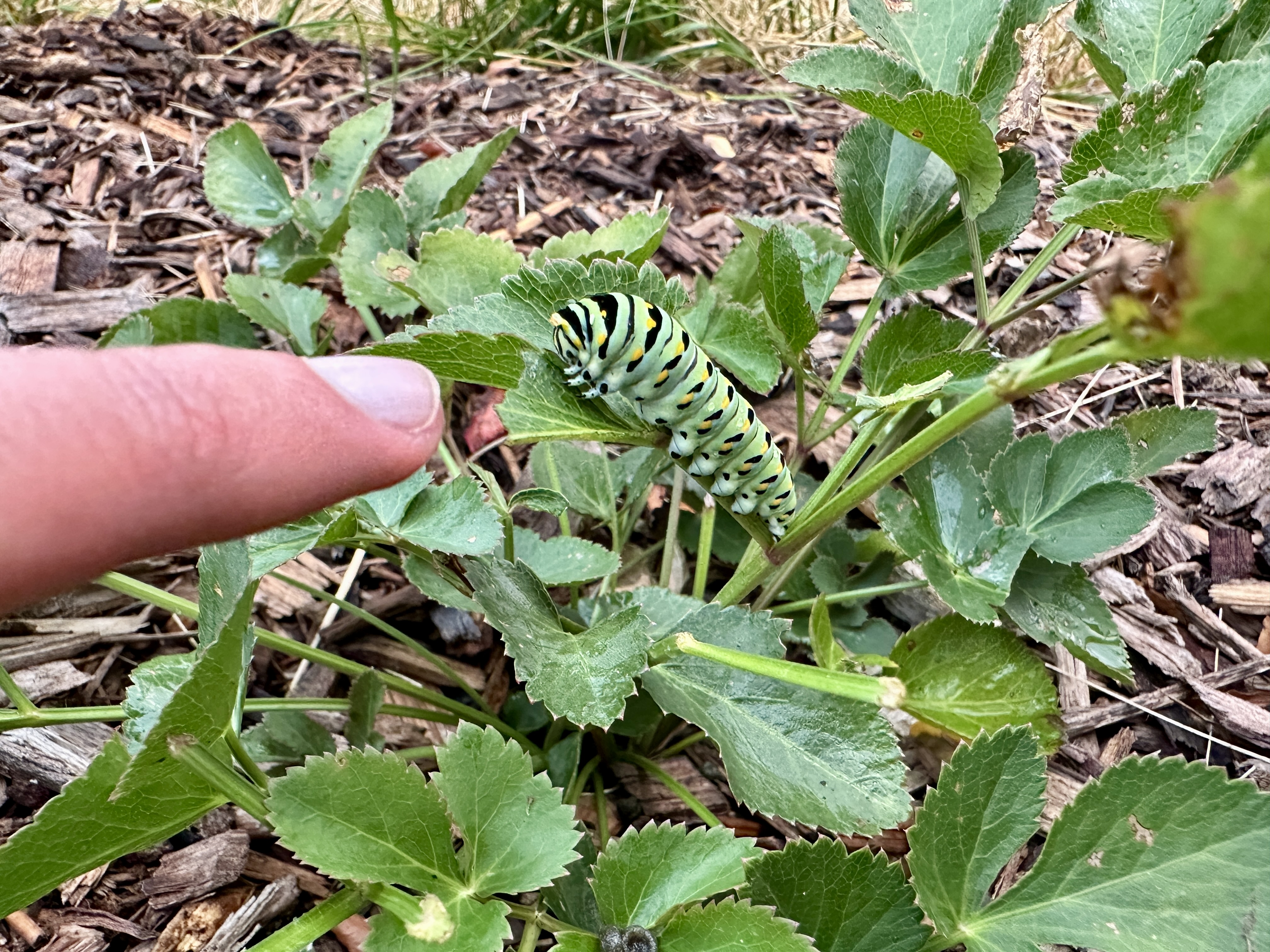
Bagworms aside, as caterpillars enjoyed the garden, I enjoyed watching their incredible growth. Over a couple weeks, I observed the gradual fattening of a black swallowtail butterfly caterpillar munching on the lone golden alexander plant we installed in spring. Isn’t he magnificent?
From chonky caterpillar to belle of the bower: the intermediate step piques my curiosity. How do caterpillars select the site to attach their chrysalis or cocoon? What happens inside? How does it feel to emerge in a completely transformed body? Some online browsing about metamorphosis turned up further invitations to wonder, such as the existence of “imaginal discs,” like seeds for the adult parts, within the bodies of caterpillars.
In late August, at lunch on the patio, my sister noticed a monarch butterfly on the nearby trumpet creeper vine. We realized the butterfly was sitting beside its chrysalis, evidently newly emerged. The caterpillar must have traversed about forty feet of lawn between its milkweed food and pupation site—a huge journey on stubby legs.
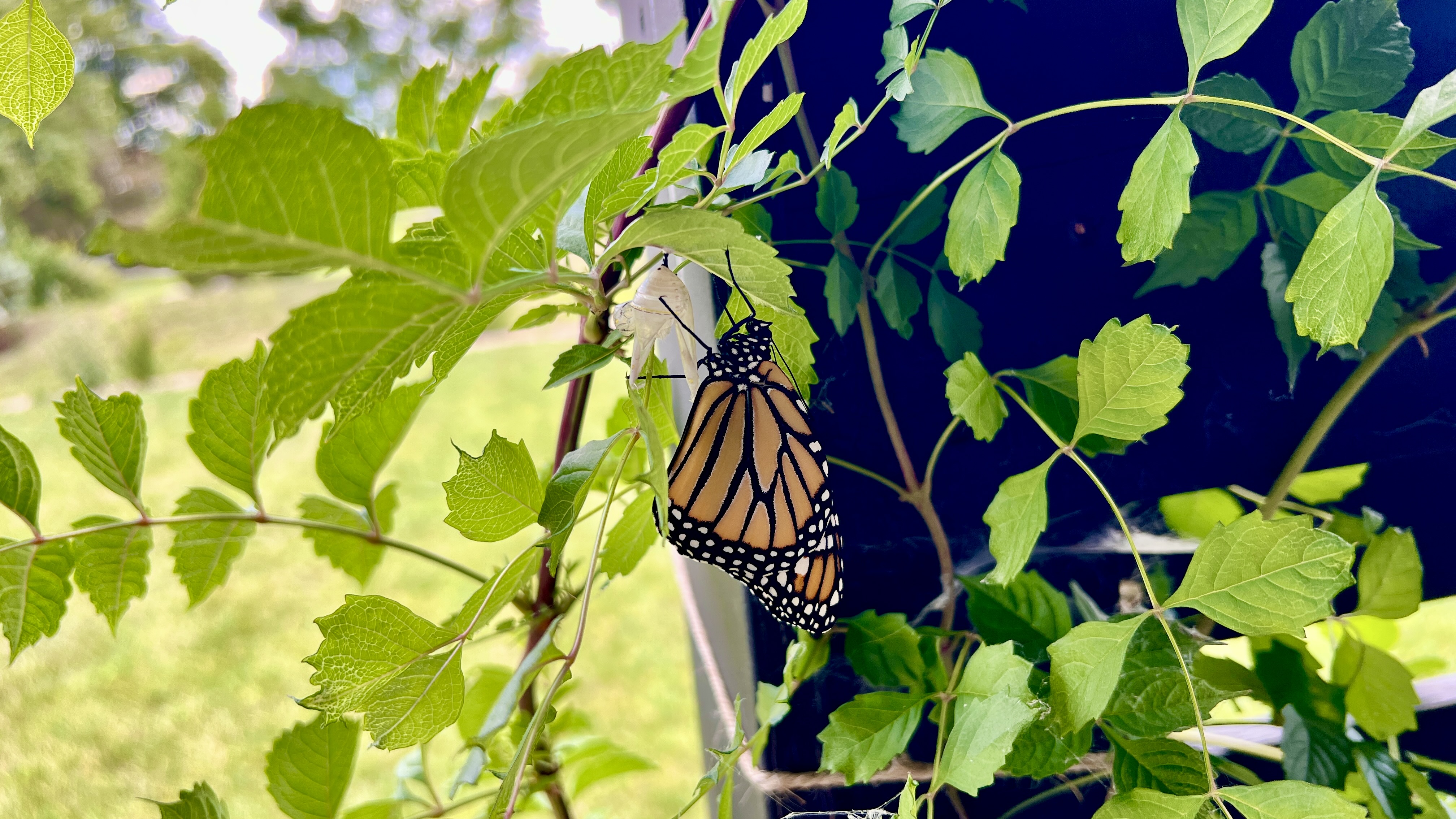
The still-limp wings bent weirdly in the wind. Very gradually, the butterfly worked on pumping fluid into its wings.
It was a Sunday afternoon, so Sergey and I were able to stay on the patio for several hours to watch the butterfly’s progress—a slow search for warming sunlight, a first flight that was more of a gentle fall onto foliage below, and finally, by late afternoon, liftoff.
Finding a chrysalis before the butterfly emerges is meant to be hard, I suppose. But I wished I could see one to complete the cycle. I’d seen the monarch caterpillars on our milkweeds, and I’d seen the butterflies.
A few weeks later, Sergey and I were looking at the flowerbed (I had invited him to see the amazing swallowtail caterpillar). He spotted something out of place on the Carolina rosebush—it was a monarch chrysalis!
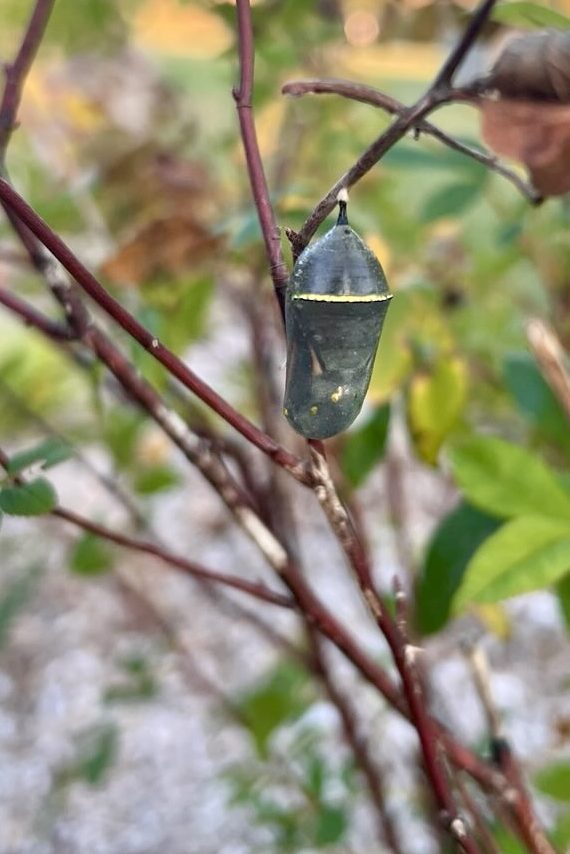
They remind me of jewelry, a jade green pendant touched with gold. I must have passed by this chrysalis many times over the pupation period without noticing it, for I could see it was close to emerging: it was dark, and the distinctive wing pattern was visible through the translucent case.
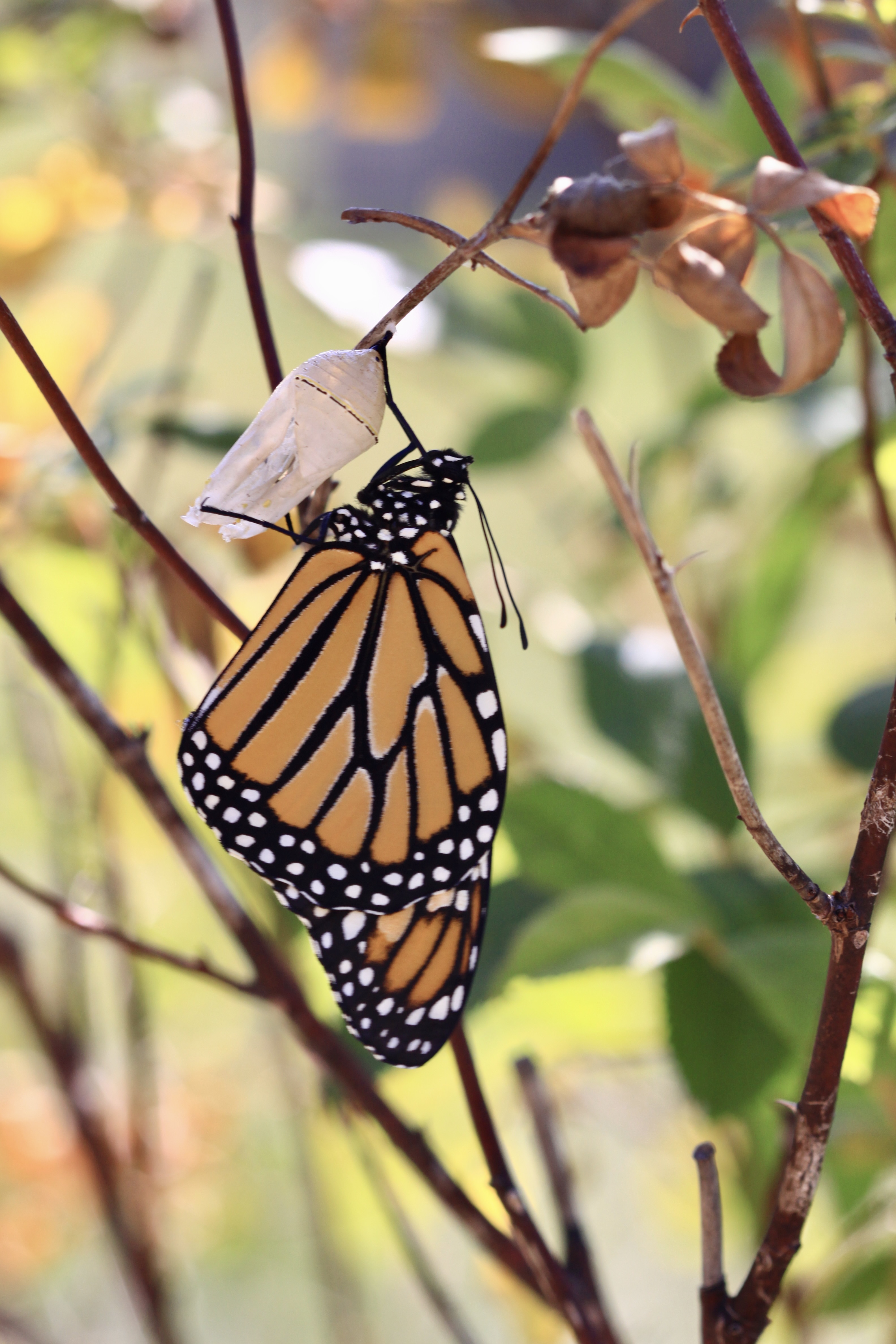
Indeed, the next morning, there was the butterfly: one more sign of hope for monarchs’ recovery.
 Layli Maria Miron