Looking back…and forward


Sculpey hearts I gave to World Centre friends upon my departure.

I gave these polymer clay hearts to friends upon my departure. (No, they are not edible!)

While I prepared for my departure from the BWC for months, it still felt strange to leave. I realized that up until now, graduations have marked the endings and beginnings in my work–saying farewell to fair Verona to go to Mount Holyoke, four years later leaving Mount Holyoke to fly to Israel. With those commencements, I shared the ritual of departure with hundreds of others. But of course, in real, non-academic life, there aren’t usually huge ceremonies to mark goodbyes. So leaving despite work bustling along as usual felt kind of like stepping out of a room thrumming with people–and then flying 6,000 miles away.

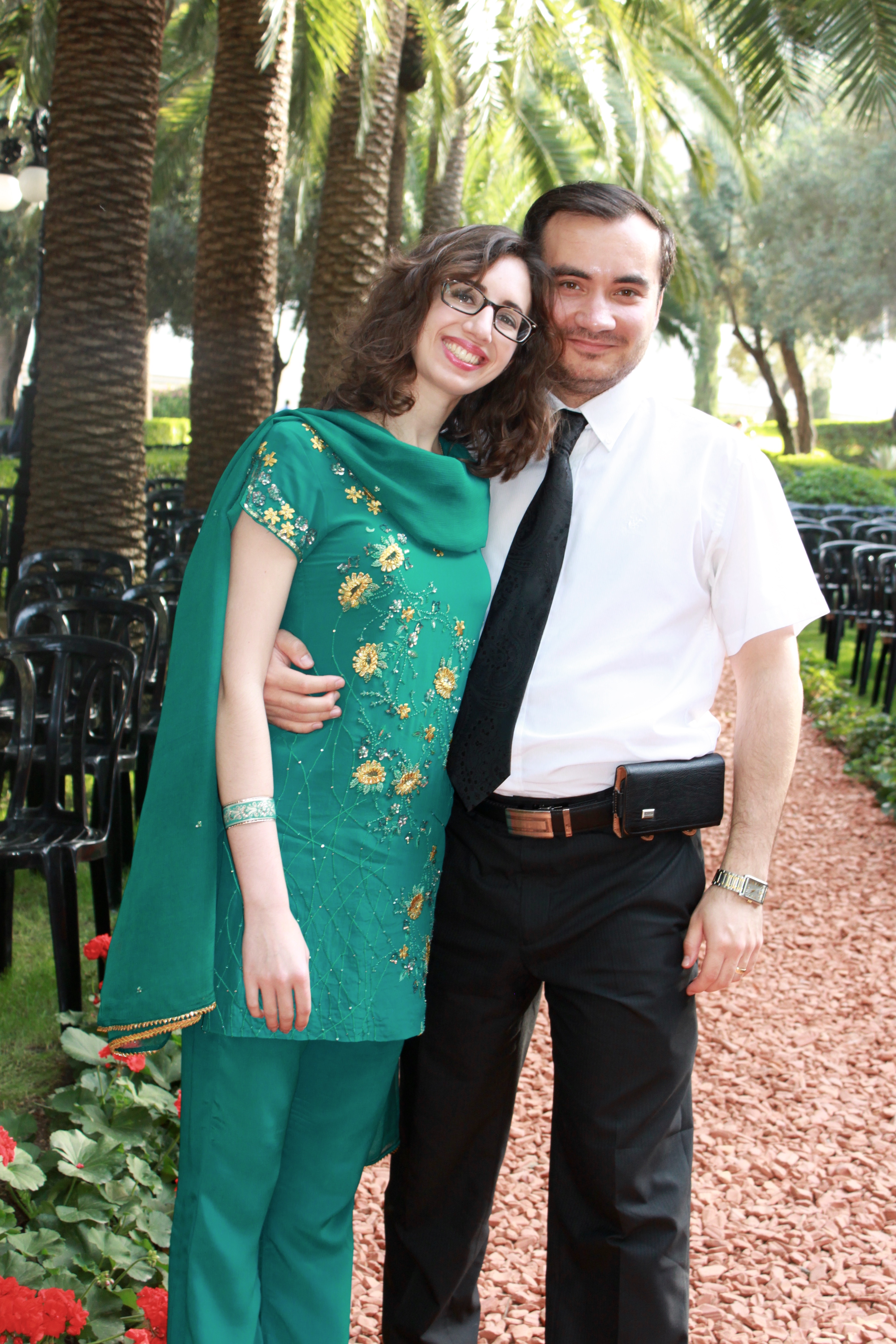
In those final two weeks, I was asked a few times about my experiences over the past two years. What had I learned? I found it hard to articulate, though marriage obviously topped the list. My relationship with Sergey defines my memories. Indeed, I re-read all my posts here, and stories of Sergey started to dominate in November 2013, a few months after we met.

Through experience in my office, I have also learned about–and hopefully improved–certain qualities. Humility and self-discipline proved indispensable in my daily work, and I found excellent exemplars of those qualities in my colleagues.

As I sought to connect my experience with my upcoming studies in rhetoric and composition, I realized that I actually was almost constantly writing in my office. Sure, I wasn’t composing beautiful works of prose analyzing Shakespeare or Dickinson–I was doing “transactional” composition, writing letters, emails, instructions, and memos to accomplish tasks. I suspect that my firsthand experience with business and technical writing will benefit me as I start teaching college composition (in a few weeks!). I’ll have a grasp of what awaits students destined for white collar careers. Further, I think I’ve learned to clarify and simplify my writing, knowing that many coworkers in our super-diverse organization were not native English speakers.

Speaking of which, one thing I failed to learn was a new language. I started with Farsi, which after a few months became an excuse for getting to know Sergey (we have now given my colleague’s Farsi class a reputation for matchmaking)…and our study habits deteriorated. Then together we thought, well, we couldn’t stick with Farsi, so let’s go for an even more complicated language–Arabic! I wish we could have stayed in the class, but I simply could not muster the energy for the required nightly studying. And what about Hebrew? The class started around the time of our wedding, so I was in no state to participate. Now I am trying to learn Russian, though given my track record…well, for this one I have a special motivation: to make Sergey smile with my clumsy attempts to sound out Russian words.

Needless to say, it is impossible to summarize these years of my life, but luckily, I don’t have to! This blog serves as a depository of my memories, a growing memoir; since memories will continue to be made in the new chapter of my life, I’ve decided to stick with writing it. So, I hope you will stick with reading!

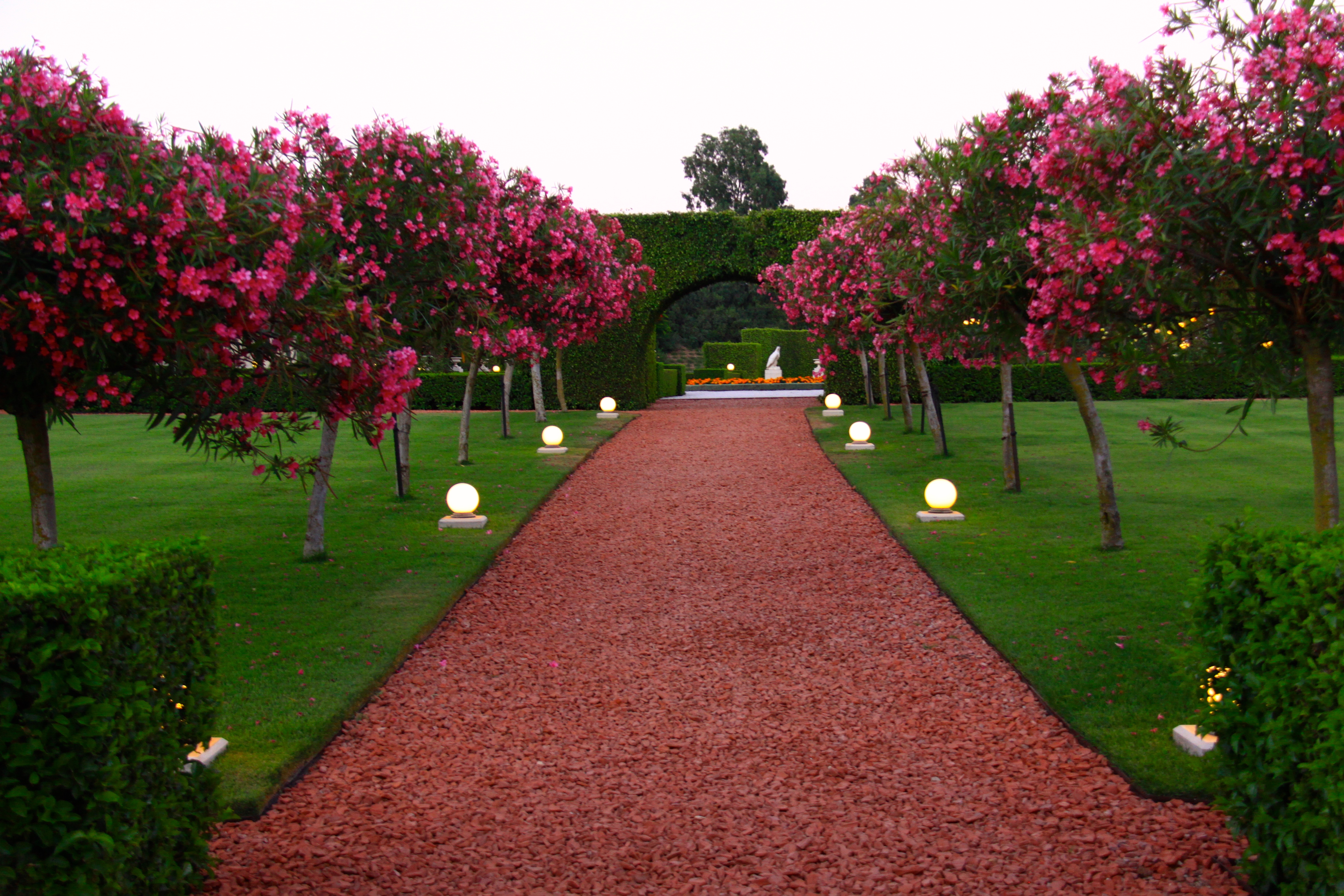
Path at Bahjí

Like a cat in water

Admission: over the last month, I fell woefully behind in writing. There was so much to do before leaving the World Centre–boxes to pack, projects to complete, farewells to bid–that I simply could not make the few hours needed to complete this blog. So, these last entries are being written from within the purple walls of my home in Wisconsin, not from the Holy Land.

***

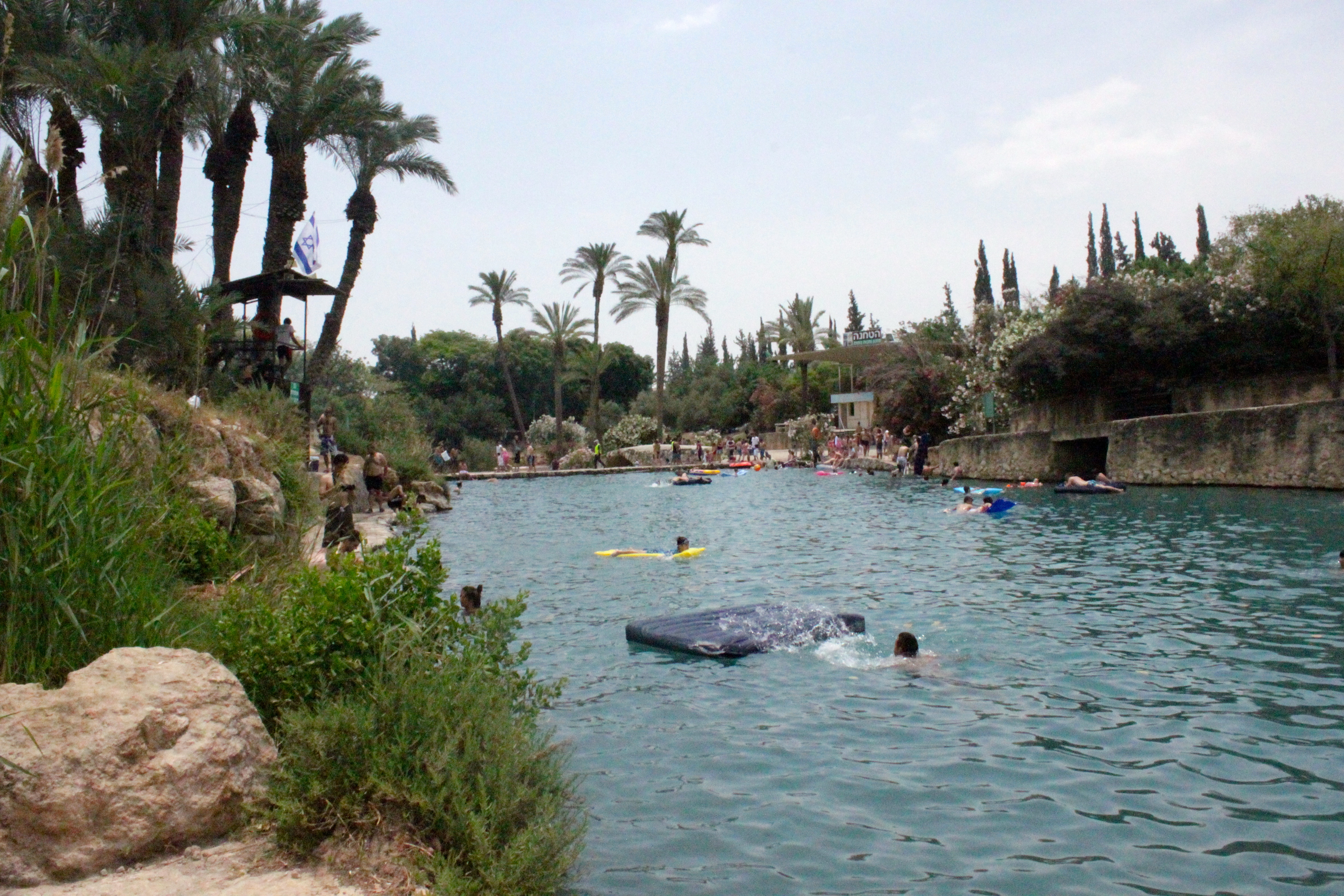
It might seem illogical for a couple with little interest in swimming to travel to a swimming hole, but once in a while, it comes time to explore something beyond the confines of our street. So, Sergey and I signed up for a trip to Gan HaShlosha National Park, more commonly known as Sakhne. People flock to HaShlosha from all over to shlosharound–I mean, slosh around–in the unusual turquoise waters of the pools, which are supposedly colored by natural minerals. So, after driving to the eastern edge of Israel, past vast sunflower fields bordered by low purple mountains, we found ourselves idling in a long line of cars, mostly filled with smoking Arab men ready to spend a smoky day with their grills, hookahs, and oh yeah, the crystalline waters.

After what felt like several hours of waiting, we finally made it to the parking lot. 9:00 AM on a Saturday and nearly no open spaces. Israelis take their weekends seriously, whether that means observing Shabbat or finding water to play in. We unfolded a towel and laid it on the dead grass on a hill beside the pool, from which point I surveyed the surroundings. Again, the main denizens of the water were Arab men, who had brought all manner of floating devices, including air mattresses. I had never realized that air mattresses could be seaworthy. The young men frolicked in the water, vying for spots atop the floaties, reminding me of walruses fighting for territory on an iceberg. Sergey remarked on the boyishness of their play–some of the men looking to be in their mid-twenties and above. Maybe the lack of women freed the men from putting on a display of savoir faire. Or maybe their playful jousting was actually for the benefit of the onlookers.

Hey look, an unmanned mattress waiting to be claimed!

Hey look, an unmanned mattress waiting to be colonized!

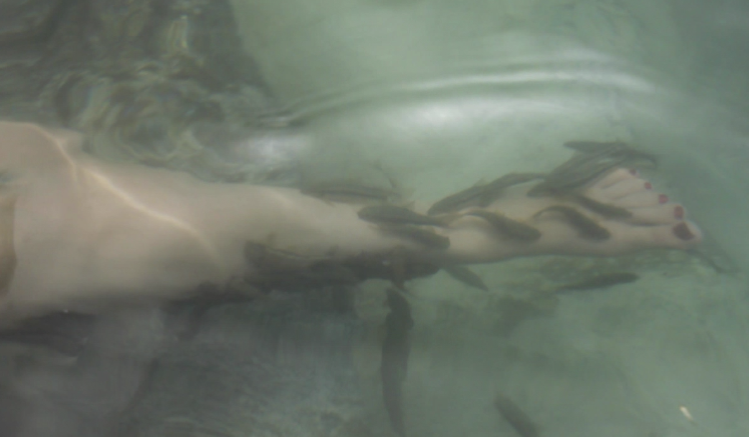
In almost all parts of the interconnecting pools, the water was over my head, and the shallows had other dangers (dead leaves, dirt, splashing kids). So, I spent most of my time perched midway down the steps into the water, letting my legs float like dead wood in the hopes of attracting the “piranhas,” as Sergey called them. These minnow-like fish enjoy snacking on dead skin, and they seem to get plenty of it from the hordes of swimmers, as it took a while for me to finally attract some. But once they came, they flocked. At the peak feeding time, I had at least fifteen fish giving me a pedicure. Their small beaky mouths tickled, but I stayed strong and still. (I can’t say the same for Sergey, who was reduced to giggling and squirming.) The fish were easily spooked. The slightest movement would scare them away, so keeping my legs immobilized became my mission. Of course, I couldn’t control the rambunctious people around me, who insisted on swimming, disturbing my piscine idyll. The fish seemed to sense even impending impacts–in the time between a boy’s leap and him hitting the water, they would race away from me.

Hungry fish

Just wearing my fashionable fish boot…

After I had my fill of the crowded park and the fish had full tummies, we headed home.

So, what do cats have to do with this story? Well, they also relate to our recreational activities.

When we moved into our apartment last summer, we became acquainted with several adolescent cat siblings, all with the same gray and white spots as their mama. Over the winter, they grew up, got hitched, and come springtime they were all pregnant. After they had their litters, we found a new hobby: kitten-watching. (Lest you scoff at our interest in strays, please remember that Haifa lacks cute rodents to observe–no rabbits, squirrels, or chipmunks…just rats, and once in a blue moon, a mongoose. Also, the feline families served pretty well as a compost solution for excess leftovers.)

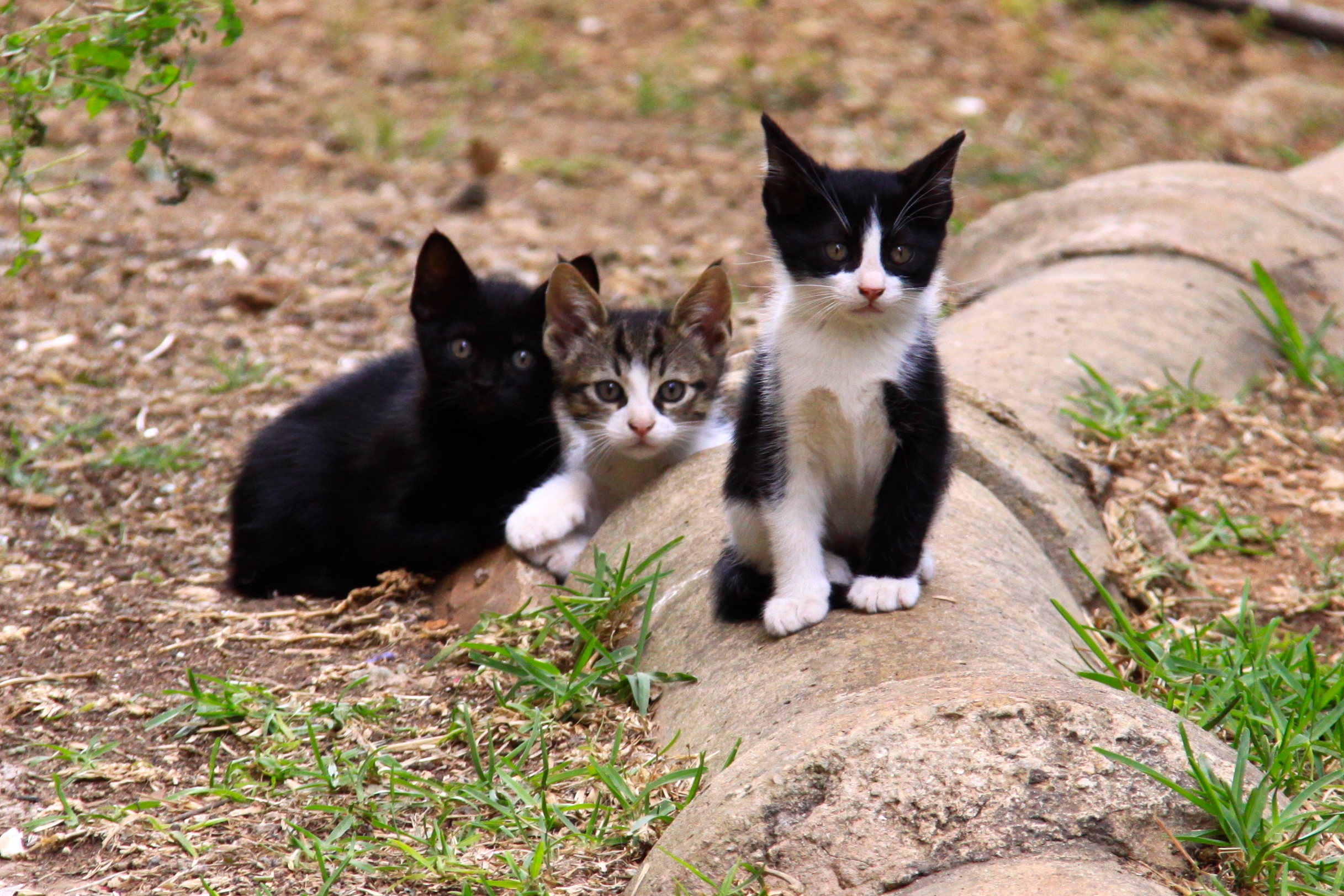
One cat mama birthed a brood of three tabbies, and another had three distinct kittens: one completely black, one black and white, and one gray and white. If only she had an all white kitten, she would have covered the whole monochromatic spectrum!

Israeli wildlife

Israeli wildlife

I think the tiny black kitten was my favorite. It looks like a surprised bush baby, all shining eyes.

Feline bush baby

Feline bush baby

Summer comes swiftly

It seems a pair of swifts have moved in with us. They apparently found a hole in the area where our window blinds roll up, and so their shrieks emanate from a corner of our kitchen. Swifts are from the same bird order as hummingbirds, called “apodiformes,” “apod” meaning “footless.” True to the name, I have never seen a swift’s feet, since they never perch–they seem to spend their days in constant flight, and even zoom directly into their nest at full speed. While at first their screeches, which are comparable to a coach’s whistle, annoyed me, I’ve grown accustomed to the daylight-dictated rhythm of their days, with most noise coming at sunset when they bunk down, and occasional squawks afterwards–perhaps sleep-talking?

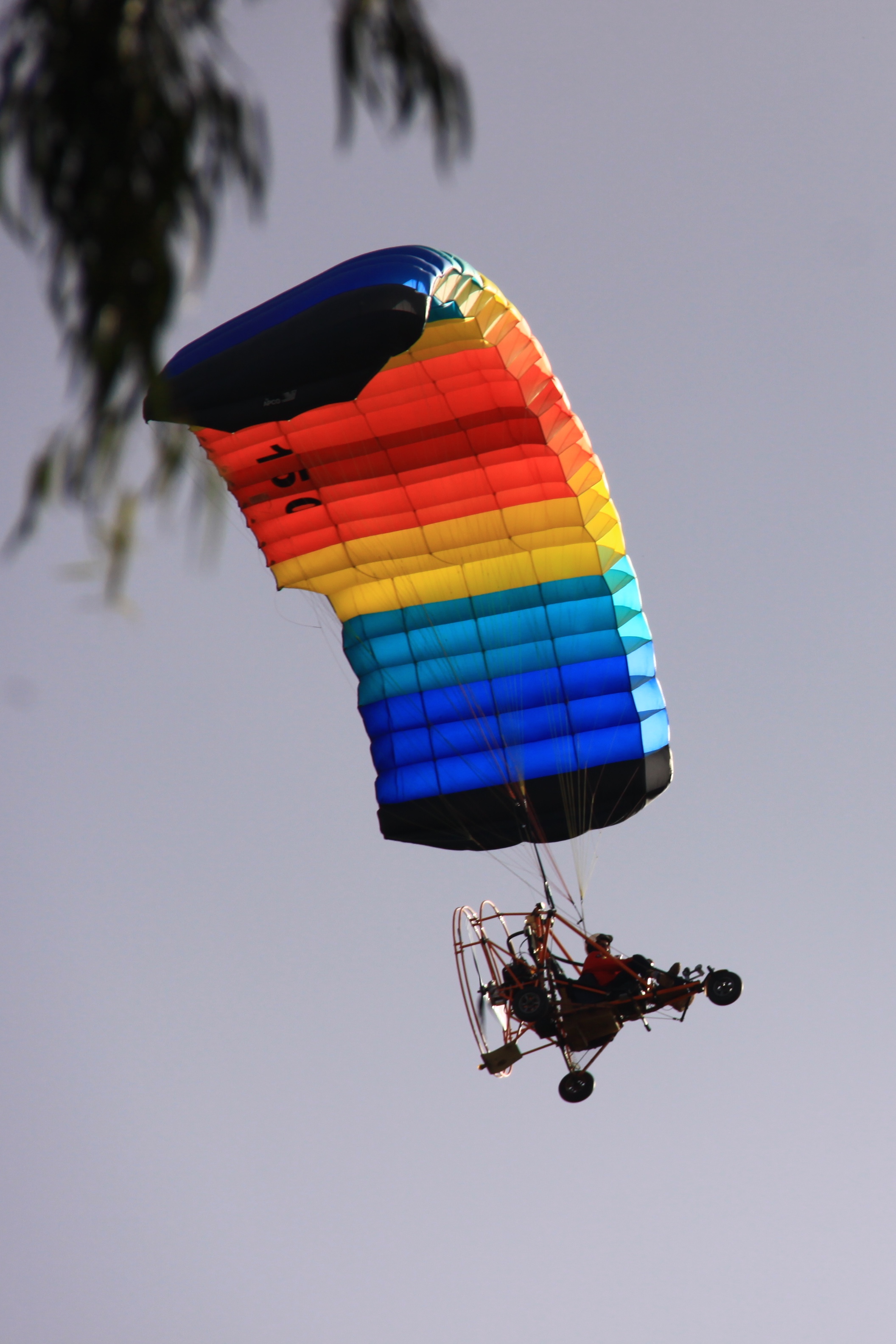
Speaking of noise, Sergey and I had a cacophonous weekend recently. We went to Saturday dawn prayers at Bahjí, something we rarely do since I depend on the weekends to catch up on sleep, and as we sat in the Shrine, a noisy motor sound filled the air, as if an aircraft was heading directly for us. This was, as it turned out, quite nearly the case, except the aircraft was not the plane I had pictured–it was a flock of what was described as “Go-Karts with parachutes and fans.” But I think a photo would best demonstrate these contraptions:

Flying Go-Kart

Flying Go-Kart

There must have been about 15 of these noisy machines taking an aerial tour of the gardens. While it must have been a beautiful ride as they gazed down at the perfection of the paths radiating around bright flowers and trees–and the curious earthbound Bahá’ís snapping photos of them–their coincidence with the usually quiet and reverent dawn prayers was rather ironic.

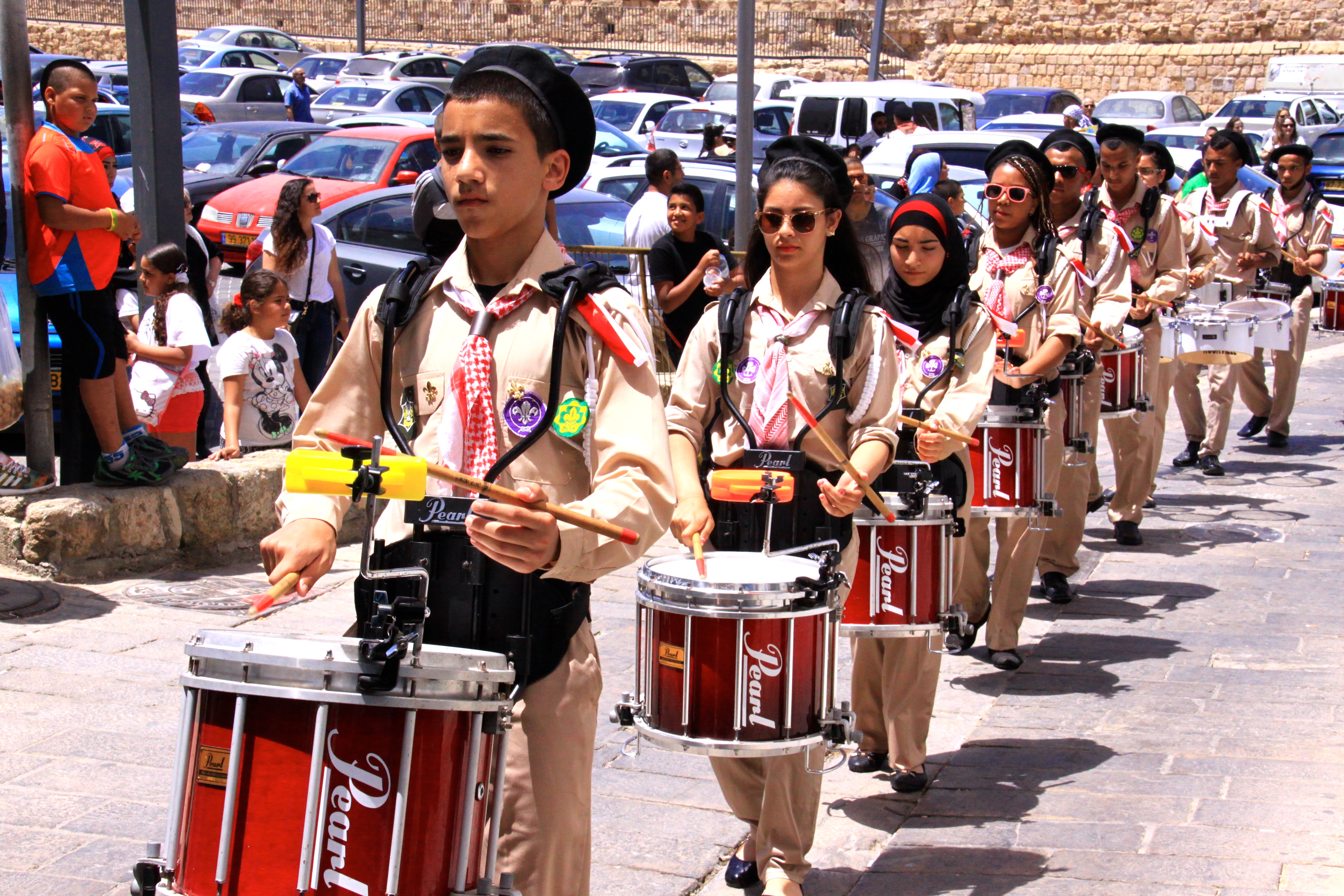
Later, in Akka, we were visiting one of the Bahá’í Holy Places where Bahá’u’lláh lived, which is near the heart of the crowded old city. It seemed we were bound to have our meditations disturbed that day. What had seemed to be merely a boisterous fair outside one end of the house soon turned into a procession of marching bands that filed directly under the windows, the drums and horns banishing all hope of focusing. If this was a test of my concentration, I think I failed–after the visit, we ended up joining the throngs below to watch the uniformed youth play their stirring songs.

Celebrating something or other!

Akka schoolchildren 

Museuming

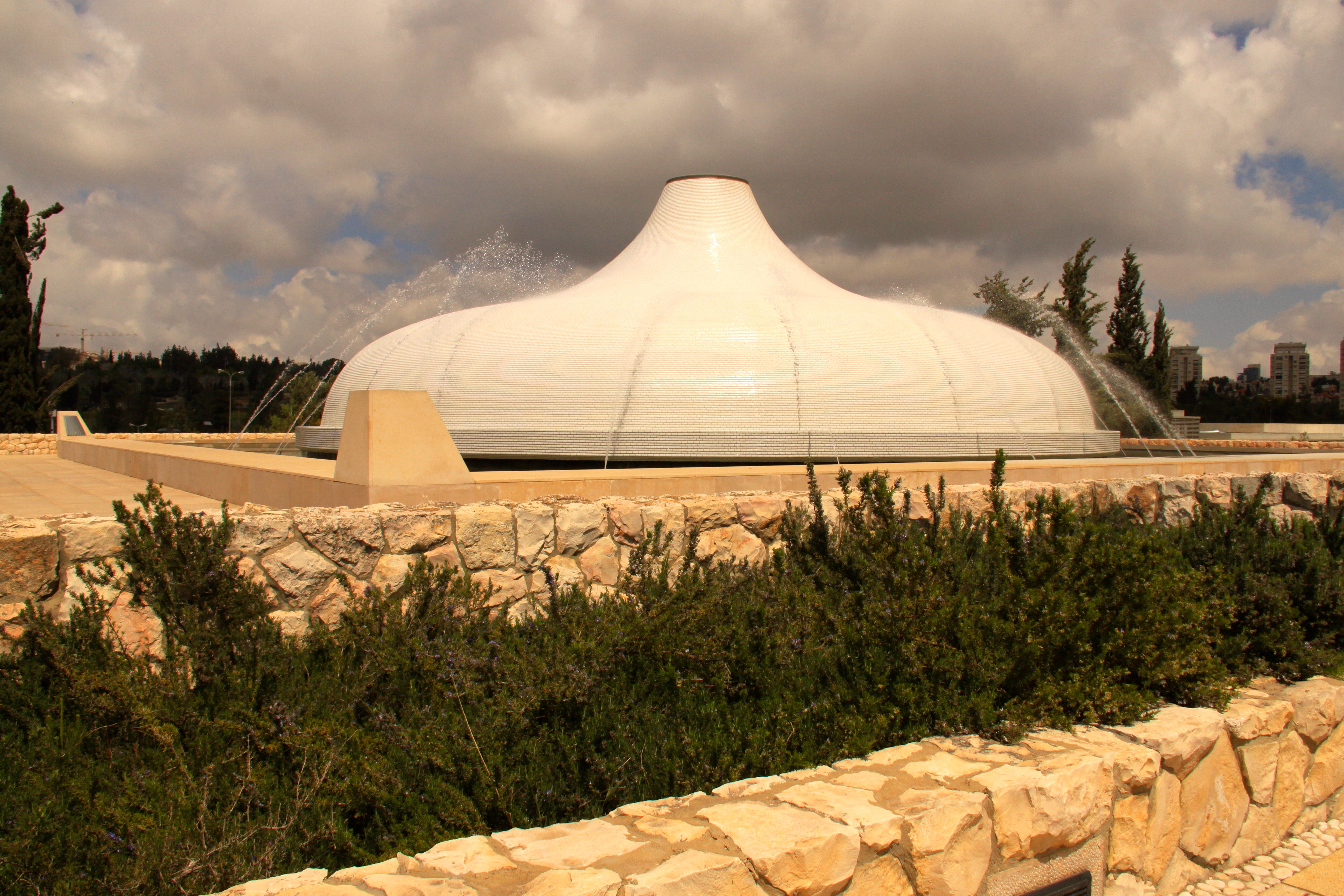
The Shrine of the Book, which houses the Dead Sea scrolls

The Shrine of the Book, which houses the Dead Sea scrolls

Since I arrived, I’d been hearing about the Israel Museum in Jerusalem, home of the fabled Dead Sea scrolls. While I wasn’t sure exactly what the scrolls were, I knew the story about a Bedouin shepherd boy stumbling across the treasure trove of history in some desert caves. So, I knew this museum had to go on my Israel bucket list, and Sergey and I arranged a sherut trip to visit it.

Now, I’ve been in some pretty huge museums before—the Met, the Louvre, the Prado—places where you can easily spend an entire day walking through galleries and still see only a fraction of the collection. While surely smaller than those museums in square footage, the Israel Museum was still giant in scope, covering not only the history of humanity in its archaeological section, but also artwork ranging from the Renaissance to contemporary times with a surprisingly substantial impressionist exhibit, and of course, being the Israel Museum, a series of galleries displaying aspects of Jewish culture, including reconstructed synagogues from around the world.

Suffice it to say, Sergey and I felt like we had run a six-hour marathon running from the Paleolithic to the present by the time we finished!

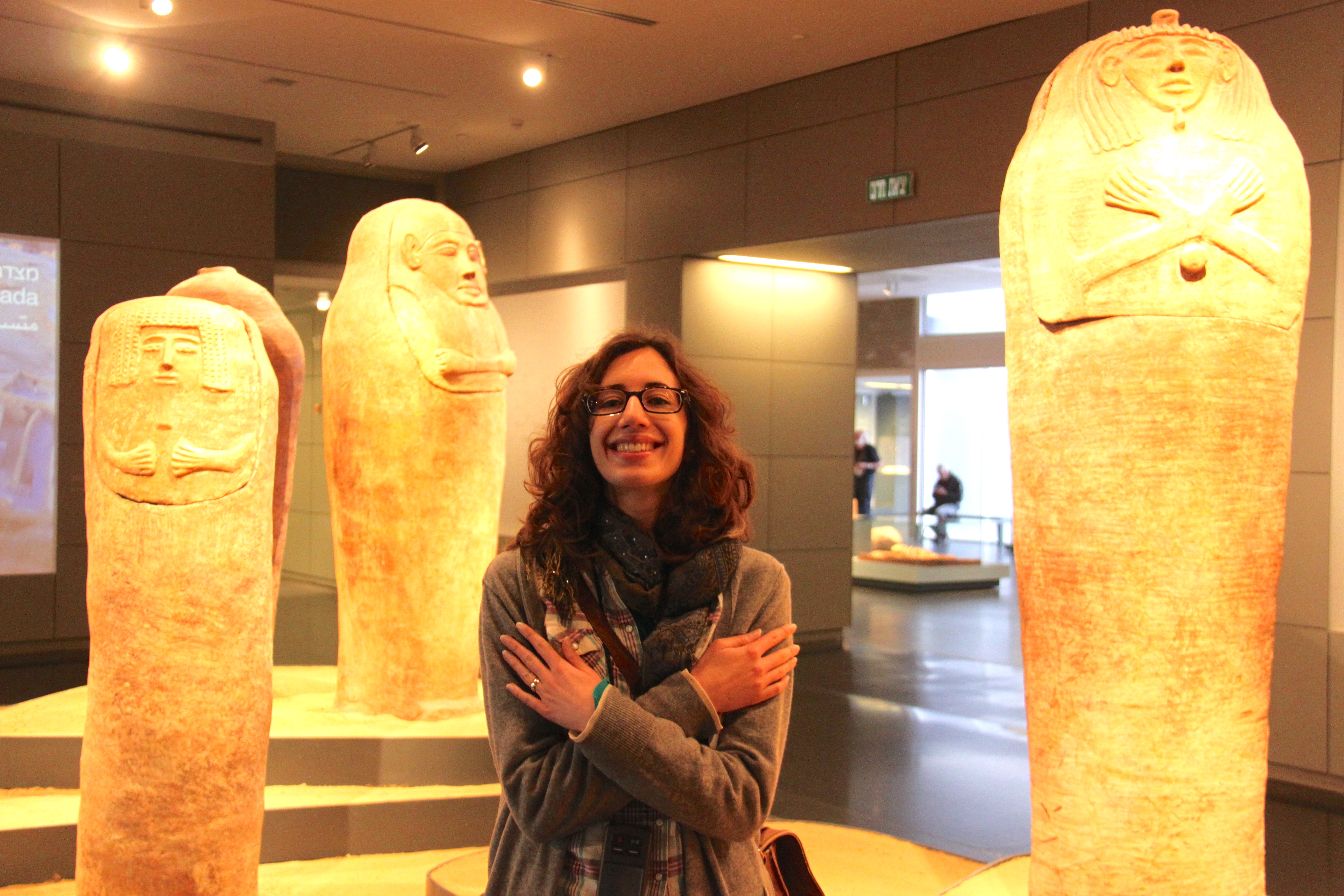
Making new friends

Making new friends

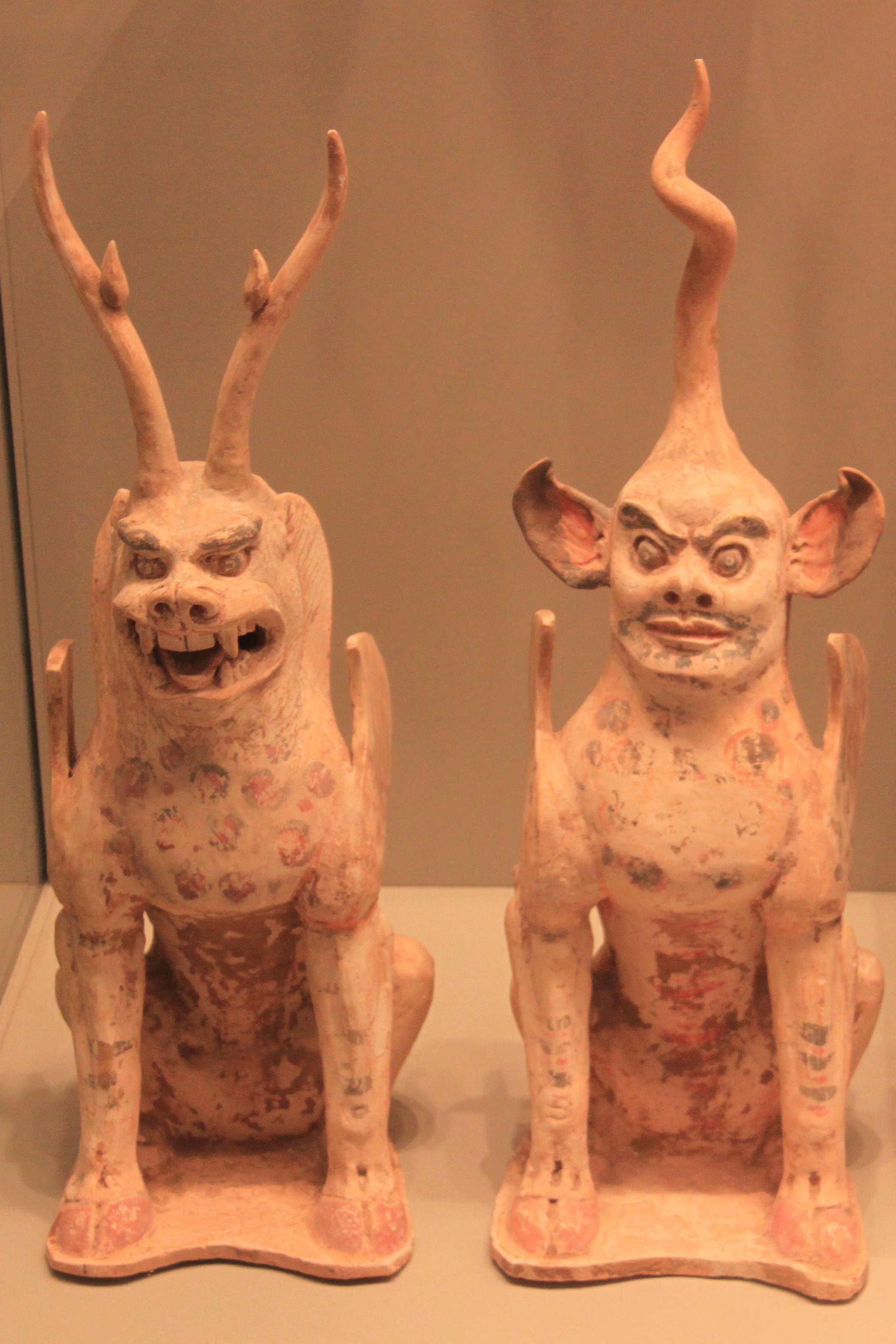
From the blur of fertility figurines, sarcophagi, and pottery, stone, and glass vessels, we drew two conclusions:

  1. Humanity has progressed incredibly fast over the last 200 years compared to the rest of our history, when it took thousands of years for simple advancements in technology, like the transition from stone to metal tools.
  2. Popular souvenir motifs in the Middle East, like the eye beads and pomegranate sculptures you can find in many bazaars and stores here, have not changed for the past few millennia. (One of my favorites from the glass gallery where we saw these popular decorations were small date-shaped glass vials.)

Next up was the Shrine of the Book, the amphora-shaped building that houses the display of some of the Dead Sea scrolls. Here I learned that current theory holds that the scribes of the scrolls belonged to the Essene sect, which had left Jerusalem and moved near the Dead Sea, where they established a sort of farming commune and bathed a lot (one of their tenets was ritual immersion). Moving to the Dead Sea to farm today would be a fool’s errand, unless you had a sort of crop that enjoyed growing in rocks and thrived on saltwater, but at that time, the climate of the Negev Desert was wetter. Seeing the delicate parchment, torn and tattered samples of the collection of almost a thousand such scrolls, made me marvel at how long they have lasted. For adherents of the Hebrew Bible, it must have been an extraordinary find to discover such ancient versions of the chapters still read today. And the scrolls had to survive not only the caves for thousands of years, but also the greed of discoverers—we read a story of a man who smuggled several scrolls to the US and tried to sell them…by posting an ad in the newspaper. They were returned to Israel, thankfully.

Sort sort of cute demons

Sort sort of cute demons

Finally, we raced through the art galleries, past Monets and odd contemporary installations, and soon we were on the highway back to Haifa, mulling over the past hundred millennia.

The Festival

Dressed up for the Holy Day commemoration

Dressed up for the Holy Day commemoration

Today is the last day of the Festival of Ridván, a twelve-day celebration commemorating the Declaration of Bahá’u’lláh in 1863. Ridván has given us the gift of some free time with two days off, and we’ve used that time to get re-acquainted with nature.

At Bahjí, we’ve been observing the peculiar behavior of some spur-winged lapwings. These birds are usually goofy and noisy with their long-legged prancing and squeaky squawks, but lately we noticed them acting more settled, sitting still beneath olive trees. We learned that they nest on the ground, so this was their location of choice for raising their new families. The female birds tranquilly incubated while the males squeaked threateningly at other birds that wandered too close, like the oblivious cattle egret whose itinerant grazing aroused the wrath of one ferocious daddy bird. The poor egret clearly just wanted to eat in peace, not to bother anyone’s chicks. After a few weeks, we saw that the baby birds had hatched. While we didn’t get too close so as not to disturb the brood or provoke the father’s sharp-spurred ire, we enjoyed watching the little dots of fuzz bob around their mother on their stilt-like legs and then scoot beneath her. (I don’t have any presentable photos, but I suggest searching “spur-winged lapwing chick” if you want your heart to melt!)

On the first day of Ridván, we headed up the mountain to hike around Carmel Forest. It was my first time visiting on a weekday, and it was beautifully unpeopled. We were practically the only visitors besides a man in an ice cream truck who seemed to have pulled into the park just to take a nap, since the first sign of him that we saw was his bare feet against the windshield.

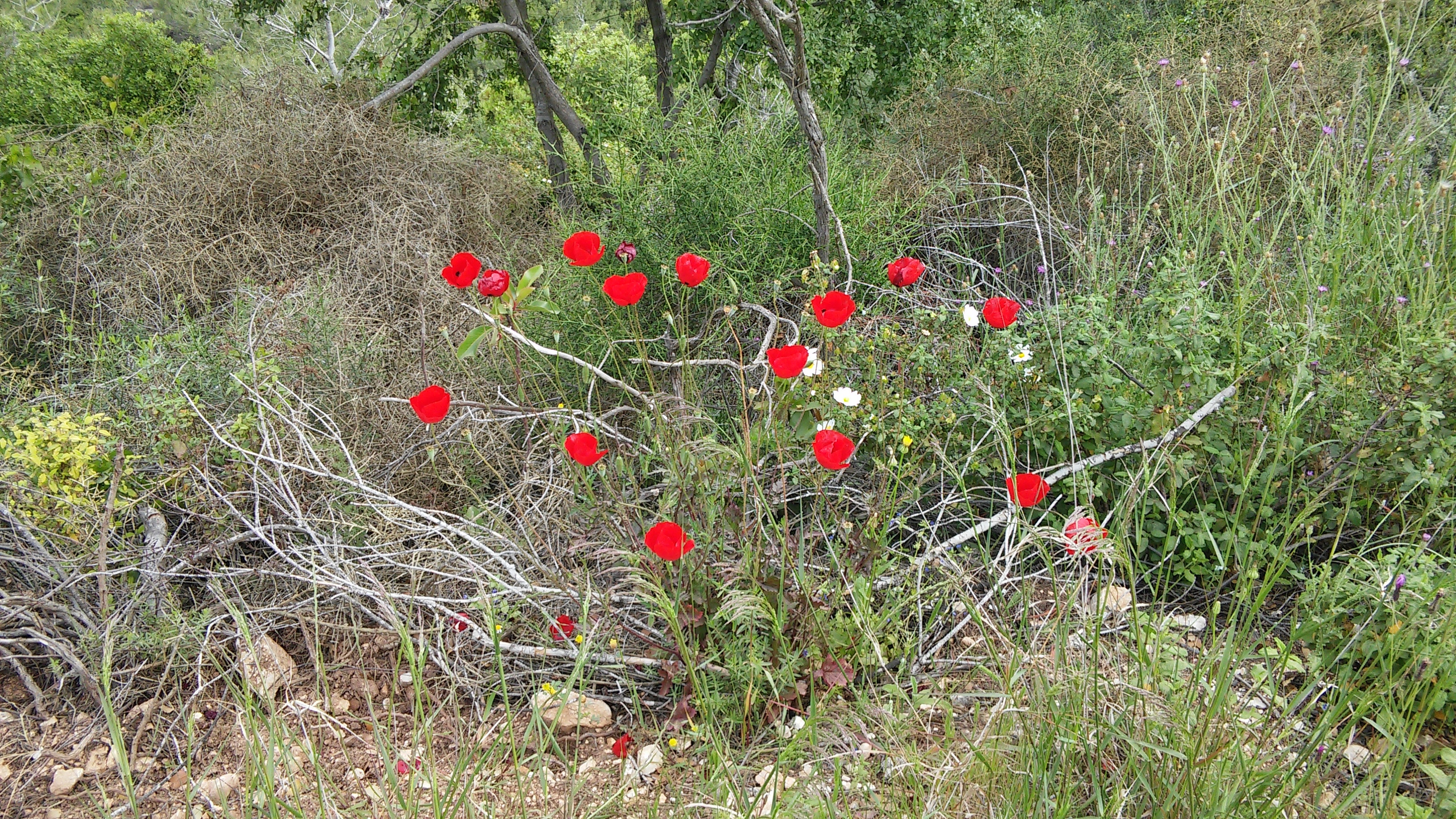
The wildflowers were in bloom, from the red poppies to white Queen Anne’s Lace to a host of purple, yellow, and pink flowers I can’t name. We spent a pleasant hour hiking the paths of Little Switzerland.

Vibrant wild poppies in Carmel Forest

Vibrant wild poppies in Carmel Forest

Then, last weekend, we went on a stroll to Stella Maris, a promontory with a monastic history overlooking the sea, and discovered that the cable car from there down to the beach was working—a surprise since it was Shabbat. So, in a moment of spontaneity, we bought tickets and hopped aboard an orange bubble that wafted down the steep slope. After a walk along the windy seashore that compelled me to deploy my hood to avoid my hair blowing away, we located the Cave of Elijah (closed due to Shabbat).

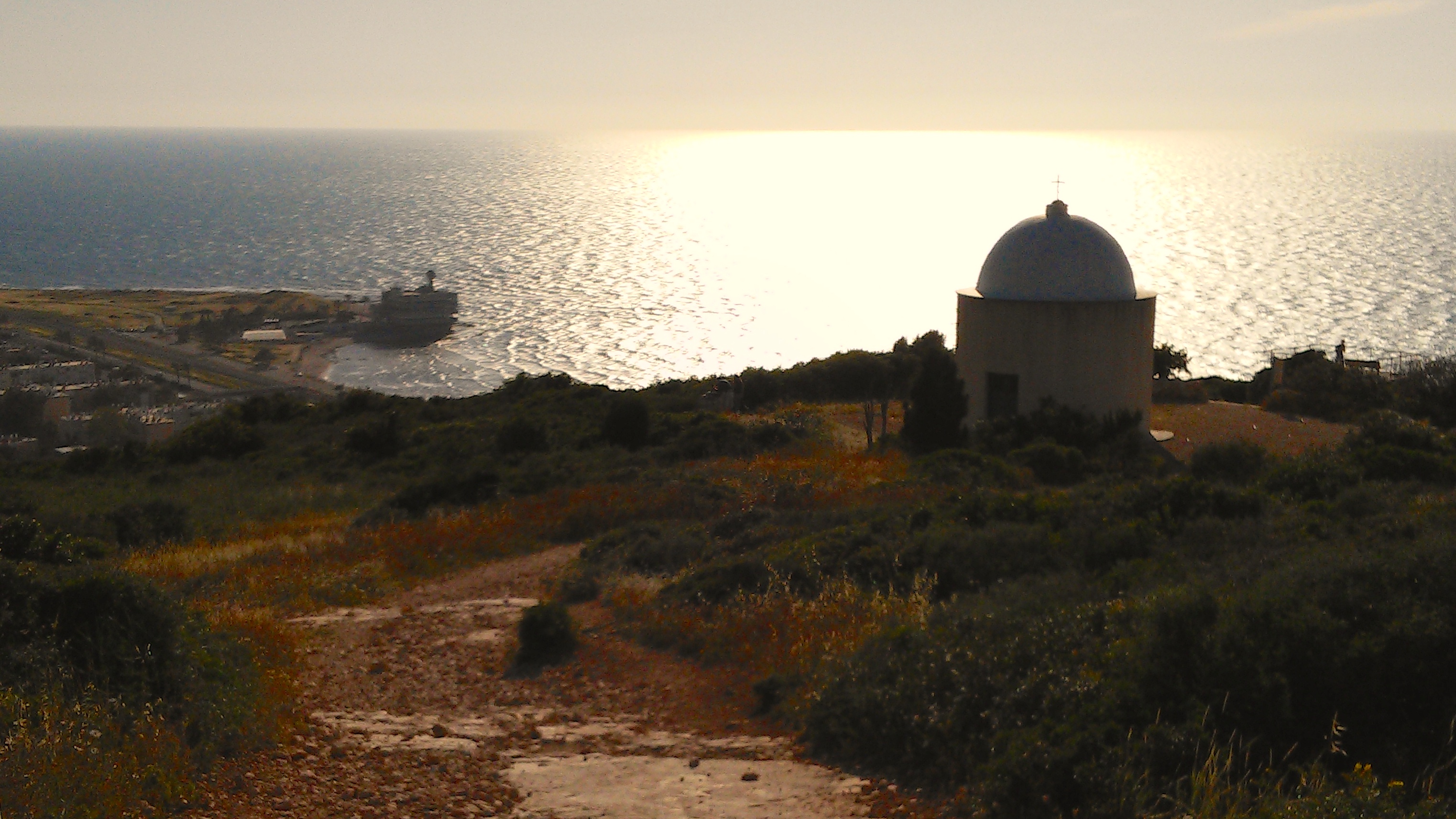
We returned up the mountain in the funicular and decided to do a bit more exploring. A few hours earlier, we had seen an acquaintance walk down a path behind a parking lot, so we wanted to see what his destination was. The path led to a picturesque meadow with wild grasses and windblown trees, and further along, a small round white chapel that used to be a windmill.

The picturesque windmill-cum-chapel

The picturesque Holy Family Chapel

What a surprise to discover a wild place in the middle of the city, just a short walk down from the bustle of Stella Maris’s restaurant scene. Standing on the edge of Carmel on a small platform housing a single bench, we stretched out our arms in the strong wind and felt ready to take off.

Sluggish ekphrasis

Recently, Sergey and I visited the Tikotin Museum, which is quite possibly the only Japanese art museum in Israel. We were practically the only visitors and enjoyed having the place to ourselves, from Zen ink paintings to netsuke to imaginative woodblock prints.

Speaking of Zen ink painting, the concept is to not plan out the painting–to let it come naturally, to accomplish it with just a few quick strokes of the brush. In high school painting class, we were supposed to make this kind of painting. Just a brush, ink, and a single paper board–no sketching. I recall I was dissatisfied with my first painting of birds lined up on a branch and did a second one as well, defeating the Zen point. Oh well.

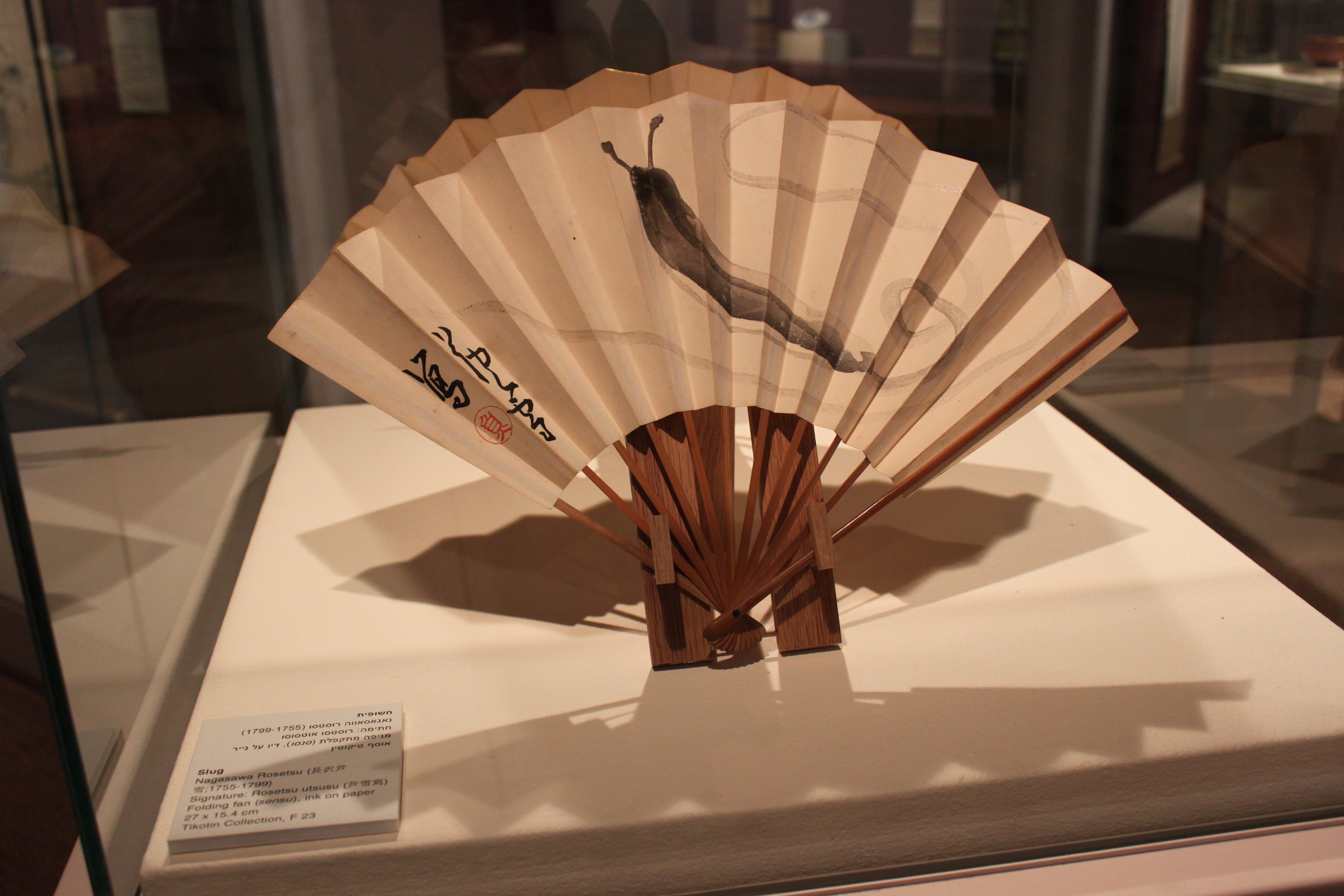
In any event, the Zen paintings at the museum ranged from scribbles and blobs to fully formed scenes involved cheerful little gods and skinny monks. But one struck my fancy (hehe, fancy) in particular, and it inspired the following ekphrastic poem.

Slug fan


A gray slug pulls its sticky trail

across the undulating folds:

an ink painting on paper fan.


What fingers waved this fan?


Did a courtesan twirl it

to cool her swan neck,

painted white to the nape?


Or a Zen monk under the red sun

oxygenating his contemplation

of the non-essence (the nonsense)

that flows through the universe?


Or a ruddy, readied warrior

bristling with weapons like a sea urchin

prepared to impale whatever soggy ghosts

emerge from the lace-winged waves?


Or a virtuous woman

idling upon her coastal balcony

and swatting the mosquitoes from the air

as she waits patiently for her warrior to return?


What floating world

was stirred by the delicate indelicacy

of a slug-painted fan?

Springing!

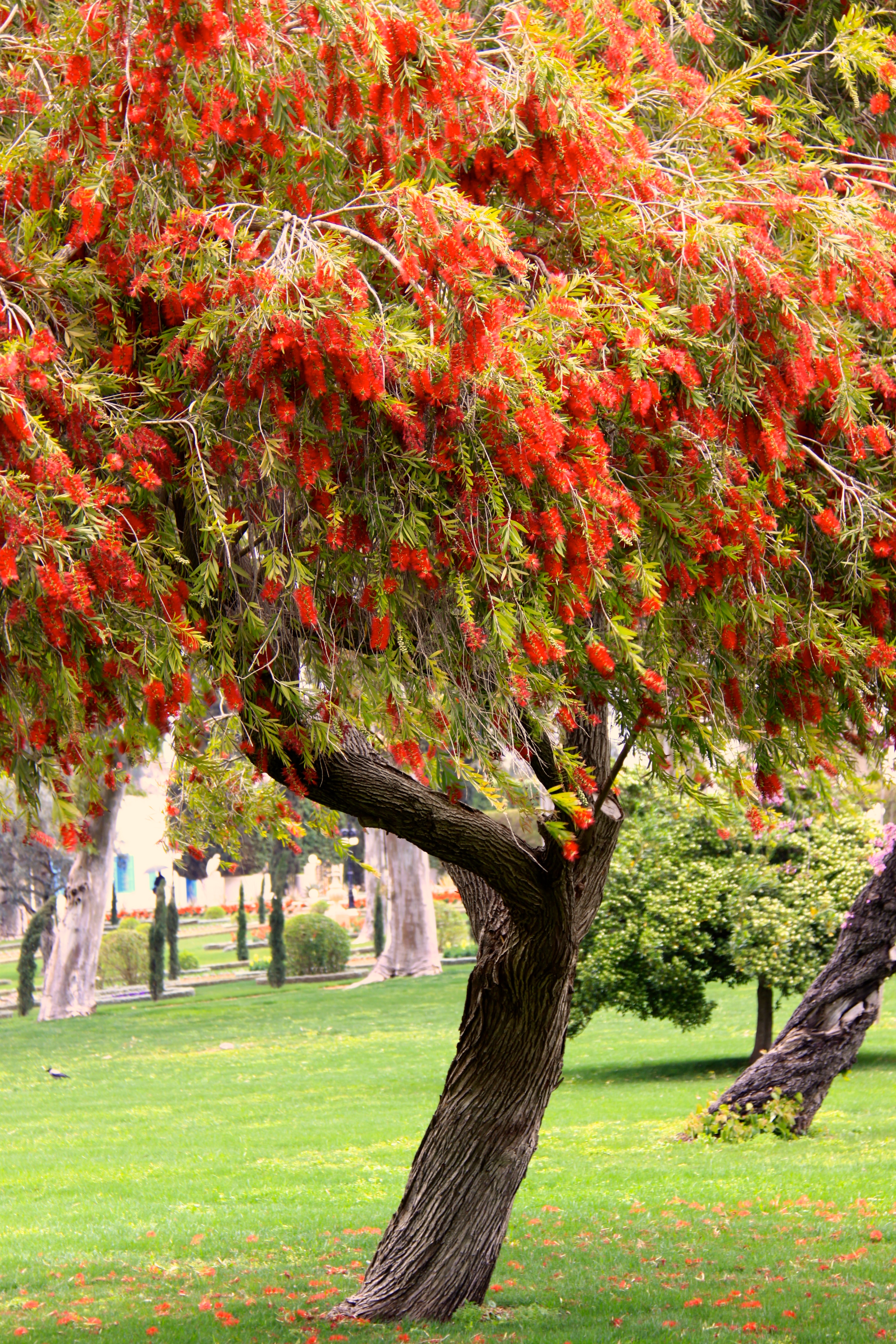
Spring is in the air–quite literally, as birds migrate and trees lift their blossoms.

Tree in bloom at Bahjí

Tree in bloom at Bahjí

Spring has brought both excitement and challenges.

There was, of course, the pre-spring challenge of the Fast. This year, my colleagues upped the ante of “mutual support” during these nineteen days. When we passed through usual morning teatime or entered the afternoon slump, they would dispatch group emails with goading subject lines like “Help yourself!” filled with photos of delicious banquets, caffeinated beverages, and mouthwatering desserts. One colleague, remaining in the office past the usual start of her lunchtime break, explained that she was assembling an email to send later, replete with tempting dishes, now that she had figured out how to insert photos directly into the emails. It was kind of adorable. These emails were always met with sighs from me, and from others, either wistful yearning–“I would choose the marzipan!”–or gentle teasing–“Oh, is this what you’re cooking for us tonight?”

I chose the final day of the Fast, the spring equinox and “new year’s eve” for Bahá’ís, to make that very consequential decision about graduate school–in other words, picking where Sergey and I will settle for the next six years. The journey leading to that decision had taken me from my senior thesis in which I explored the field of composition and rhetoric, through grueling GRE studies and work on the applications…and finally ended rewarding me with acceptance letters and offers. It was a relief for us to finally choose Penn State, where, besides the studying and teaching, I look forward to strolling through autumn leaves hand-in-hand with Sergey and a cup of hot cider.

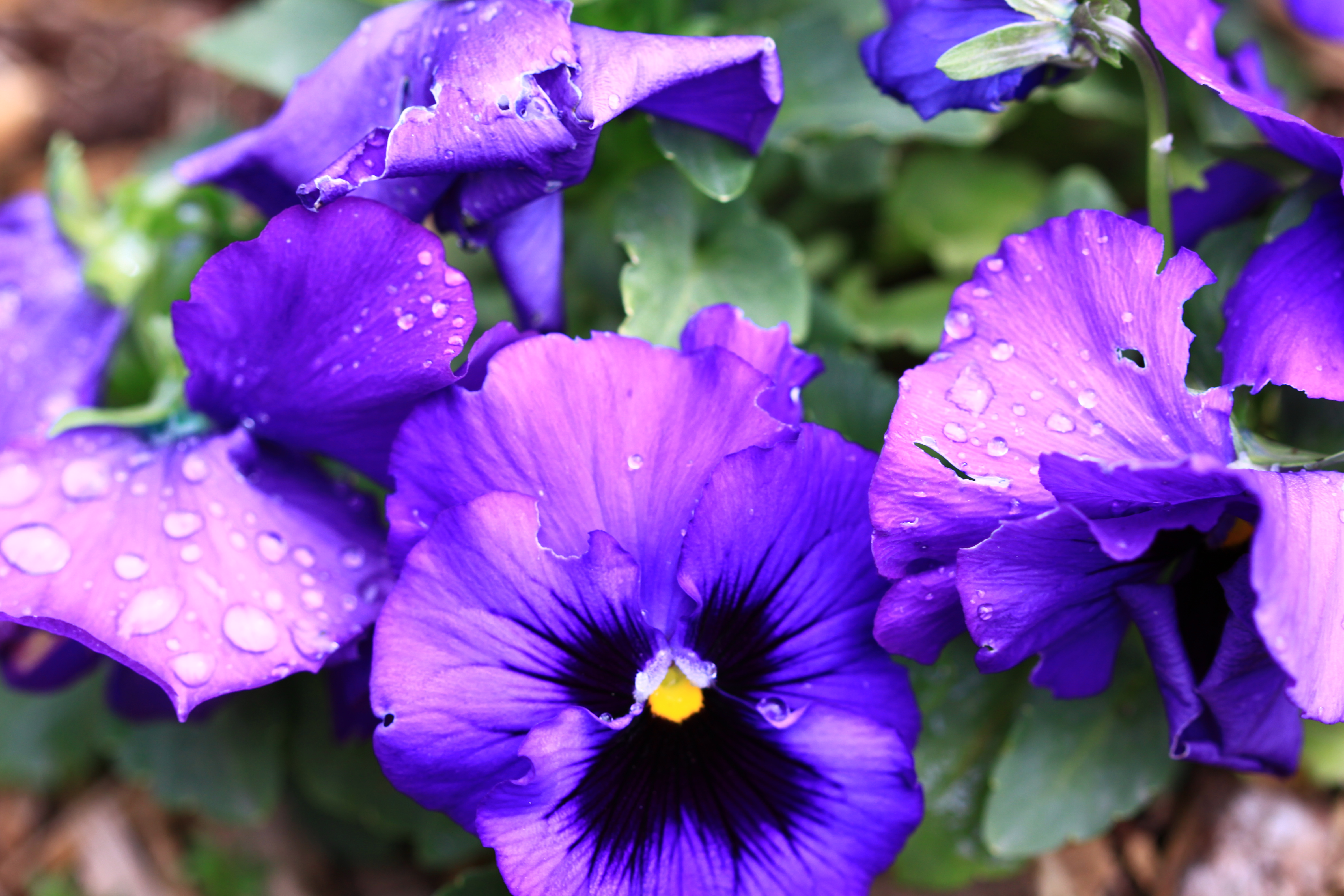
Pansies after rain

Pansies after rain

On Naw-Rúz, we were invited to dinner with some Ukranian pilgrims. While I was expecting them to be a bit subdued from the chaos their country is undergoing, they surprised me with their joviality, greeting the host and us by bursting into a hearty song. As the sole non-Russophone in attendance, I relied on Sergey to interpret for me throughout the evening. Thankfully, what did not need interpretation was that they liked the German chocolate cake I had made. The funny thing is that several of the women asked if the cake was “from an American concentration.” I started to say no, not entirely understanding their wording, but then realized that yes, the cake was indeed from a box of Betty Crocker cake mix!

***

Several weeks ago, as we were preparing to leave our flat, I sidled up to the window and noticed the sky peppered with birds. These were white storks, returning north from their summer homes in Africa. Israel serves as a crossroads for many species that migrate between Africa and Europe, explaining why for that one weekend, we spotted hundreds of storks silently cruising above us. There was something fascinating about the way they seemed to float as if weightless, holding their long curved wings still, making no sound. Just floating. We saw them again flying over Junayn Garden in Nahariyya, and over Bahjí.

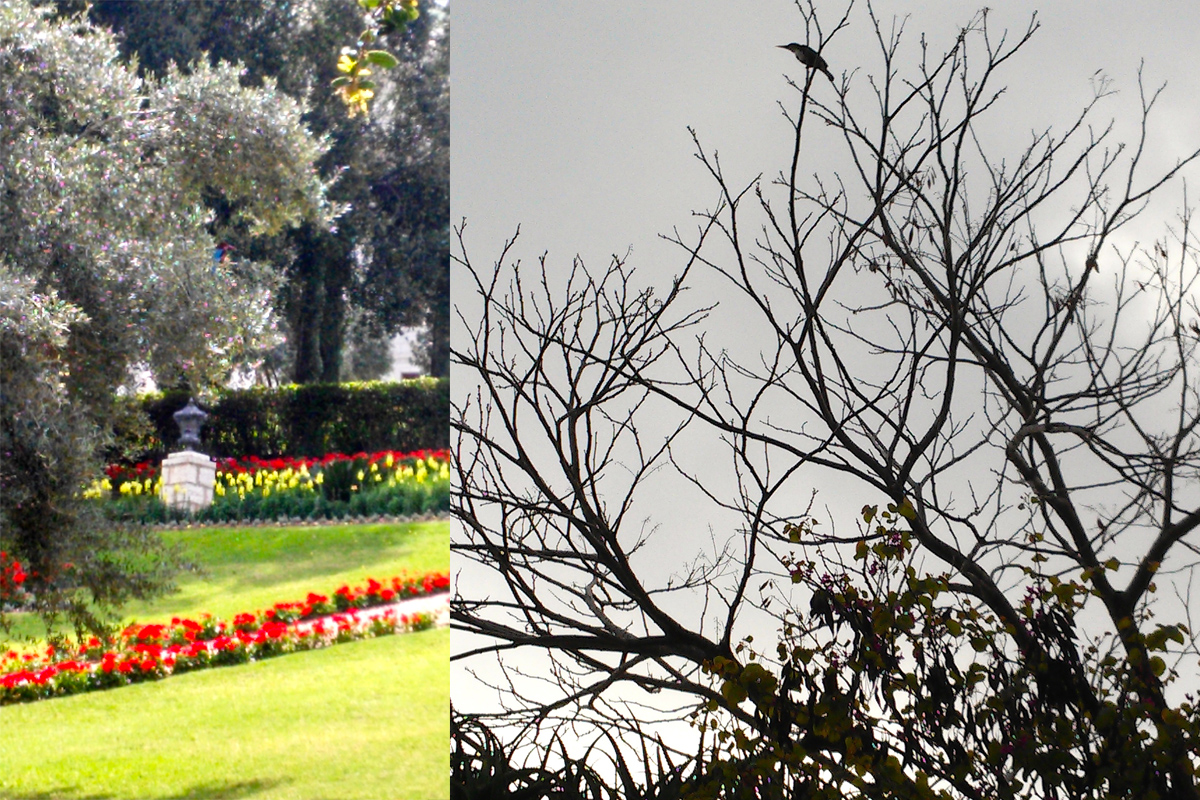
Of course, sometimes the birds come to our offices–or the Arc, actually. The kingfisher has been teasing me by prolonging his poses on statuary in the gardens, seeming to mock me when my phone completely fails to capture his stunning looks. In fact, I’ve become something of a stalker with him. If only my phone came with a mini telephoto lens, then I would have some photos to show you other than the clusters of pixels I’ve managed to gather thus far.

Vision test: can you spot the kingfishers?

Vision test: can you spot the kingfishers? (Hint: on the right, it is above the statue, perched in the tree.)

***

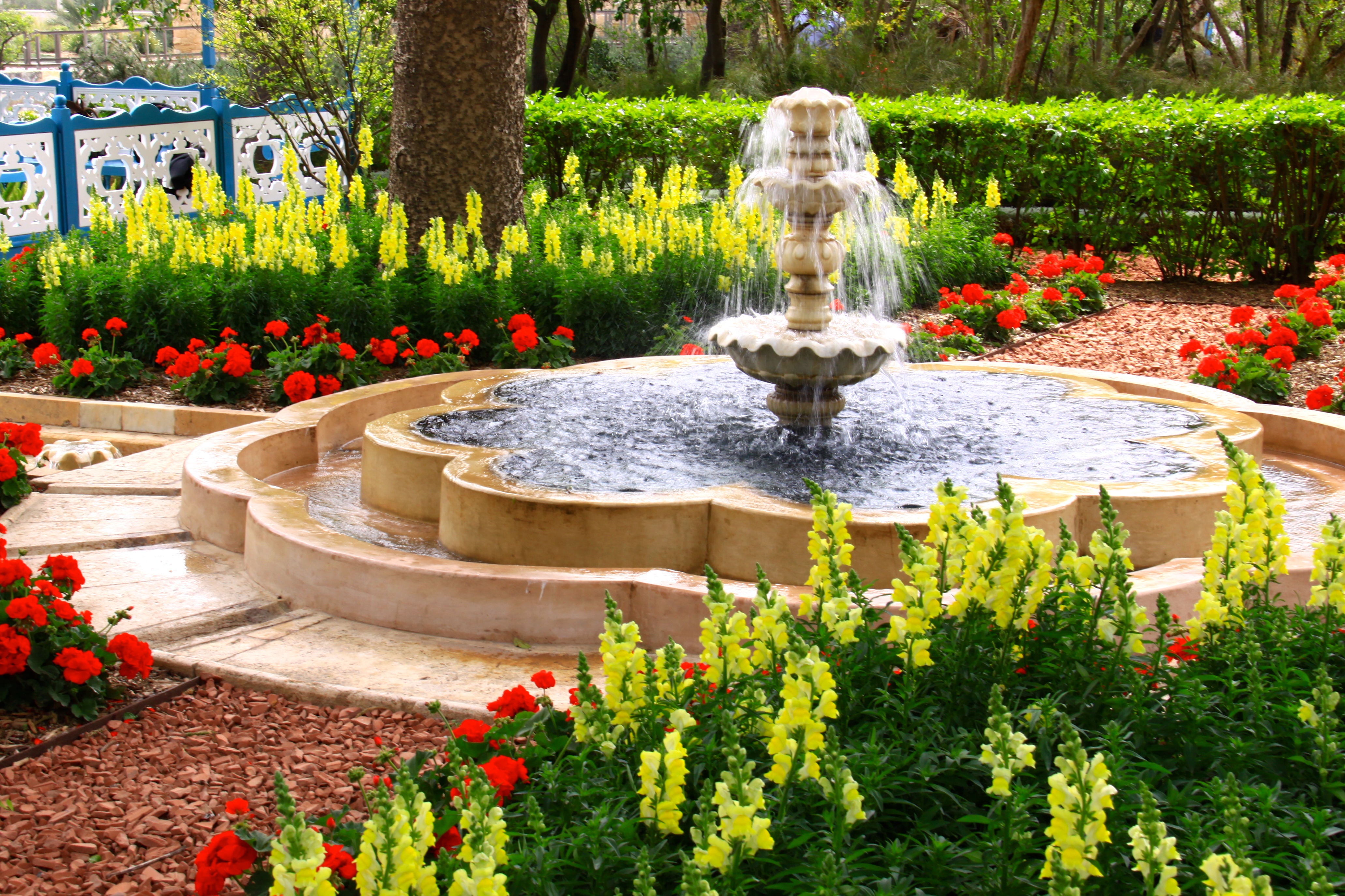
We had a visit to the Ridván Garden a few weeks ago. The scent of orange blossoms, heady and sweet, surrounded us, and we were entranced by the splashing fountain that I’m sure figures in many Bahá’ís’ visions of paradise.

Ridván Garden

Ridván Garden, replete with snapdragons.

The garden’s custodians told a story about how the gardener in the time of Bahá’u’lláh had been horrified to see a plague of locusts descend upon the garden, and ran to Him to ask for help. He replied along the lines of “let the locusts eat, they must have their food too.” I must have absorbed this story into my bloodstream, because by the time our visit ended, I had assembled at least fifteen itchy bites from letting the mosquitoes eat. I looked like I’d developed a sudden bout of chicken pox centered primarily on my right leg. I was rather embarrassed by it and regretted not thinking ahead enough to pack backup stockings. Ah, the pain of vanity!

***

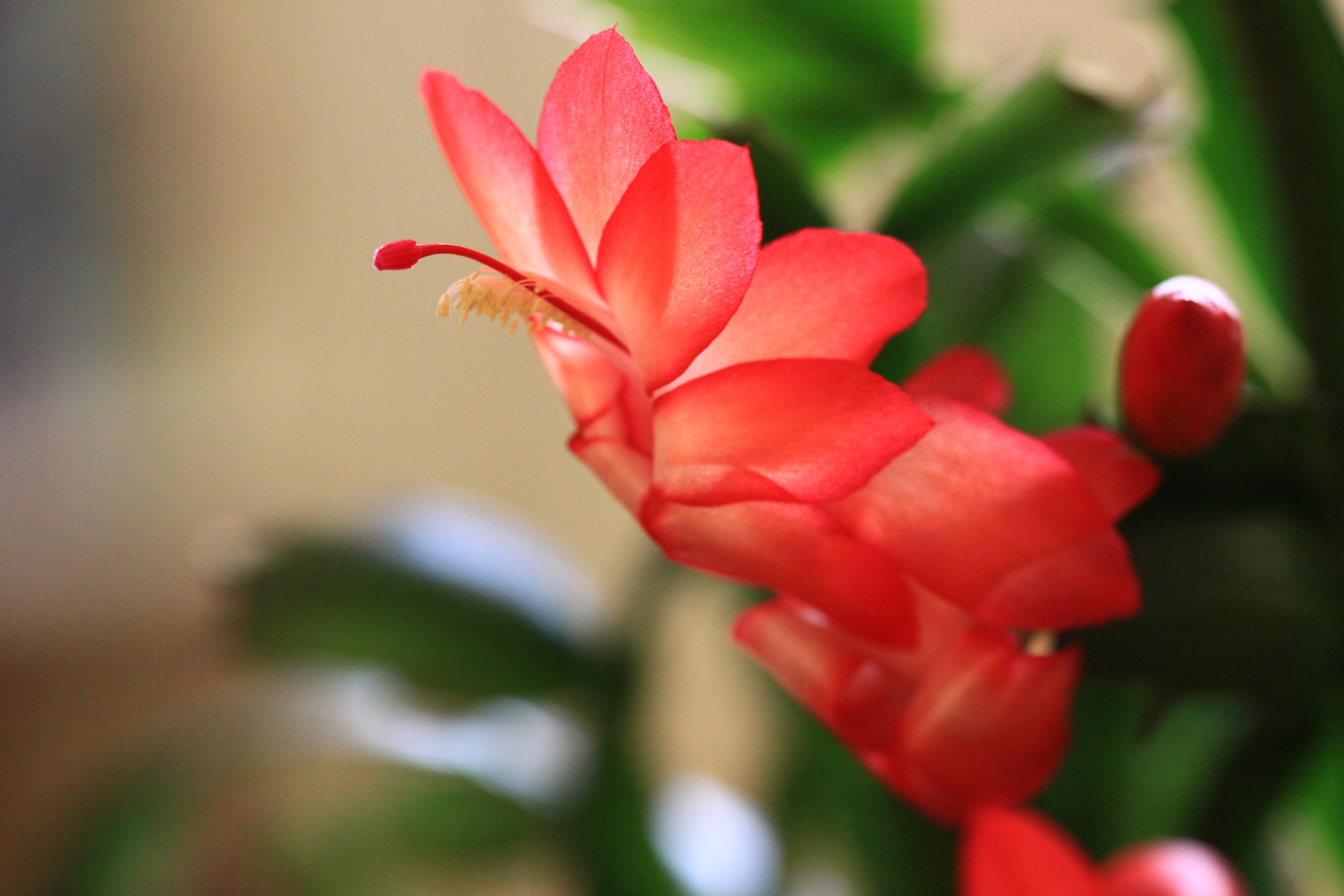
My Christmas cactus is in bloom. It budded around Naw-Rúz and is now bursting with flowers. I’ve been enjoying gazing at it whenever I can–I love the waving arms of the cactus with their petaled, bright hands.

Cactus

PS: This is my 75th post!

Day 6: A palace and a dervish

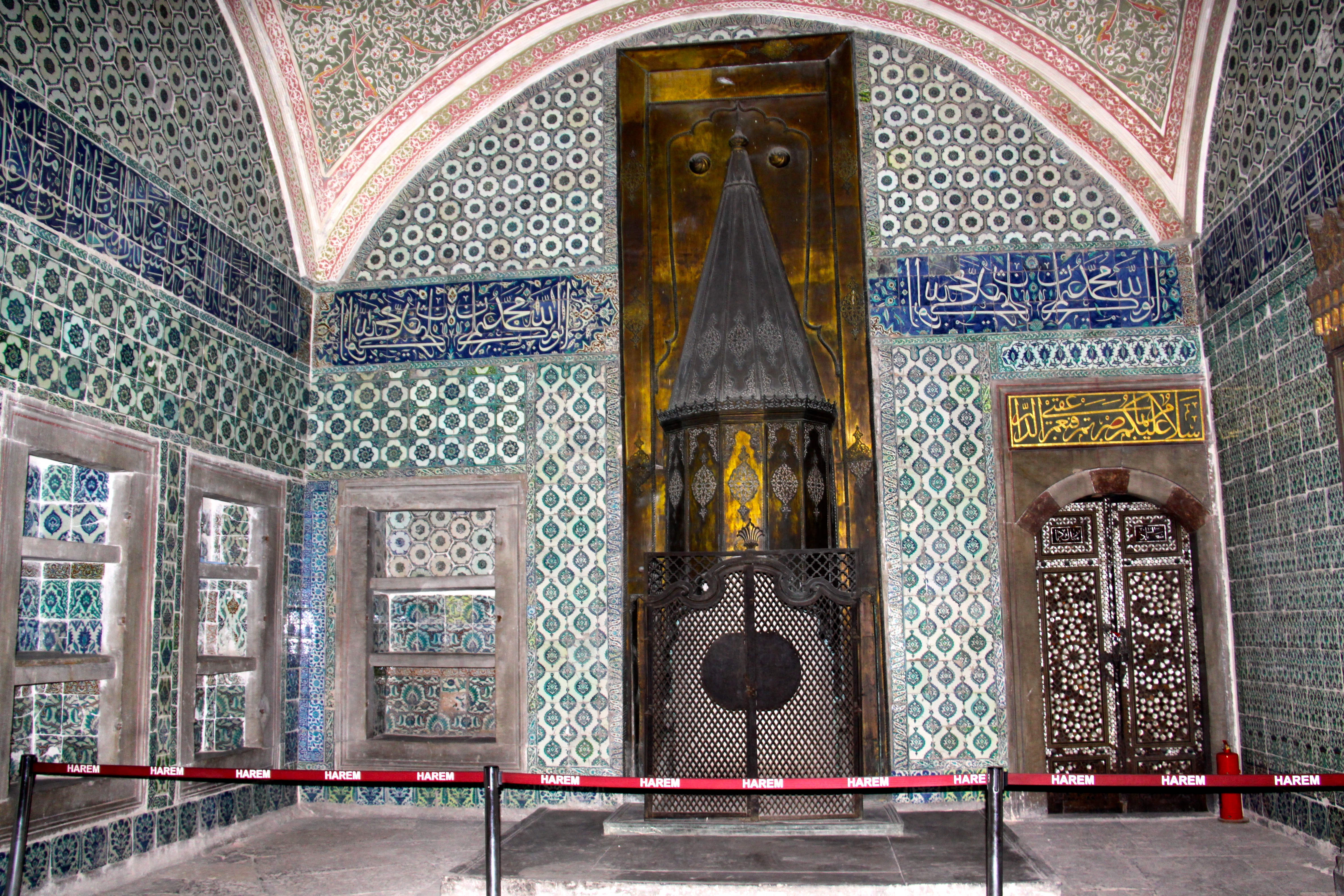
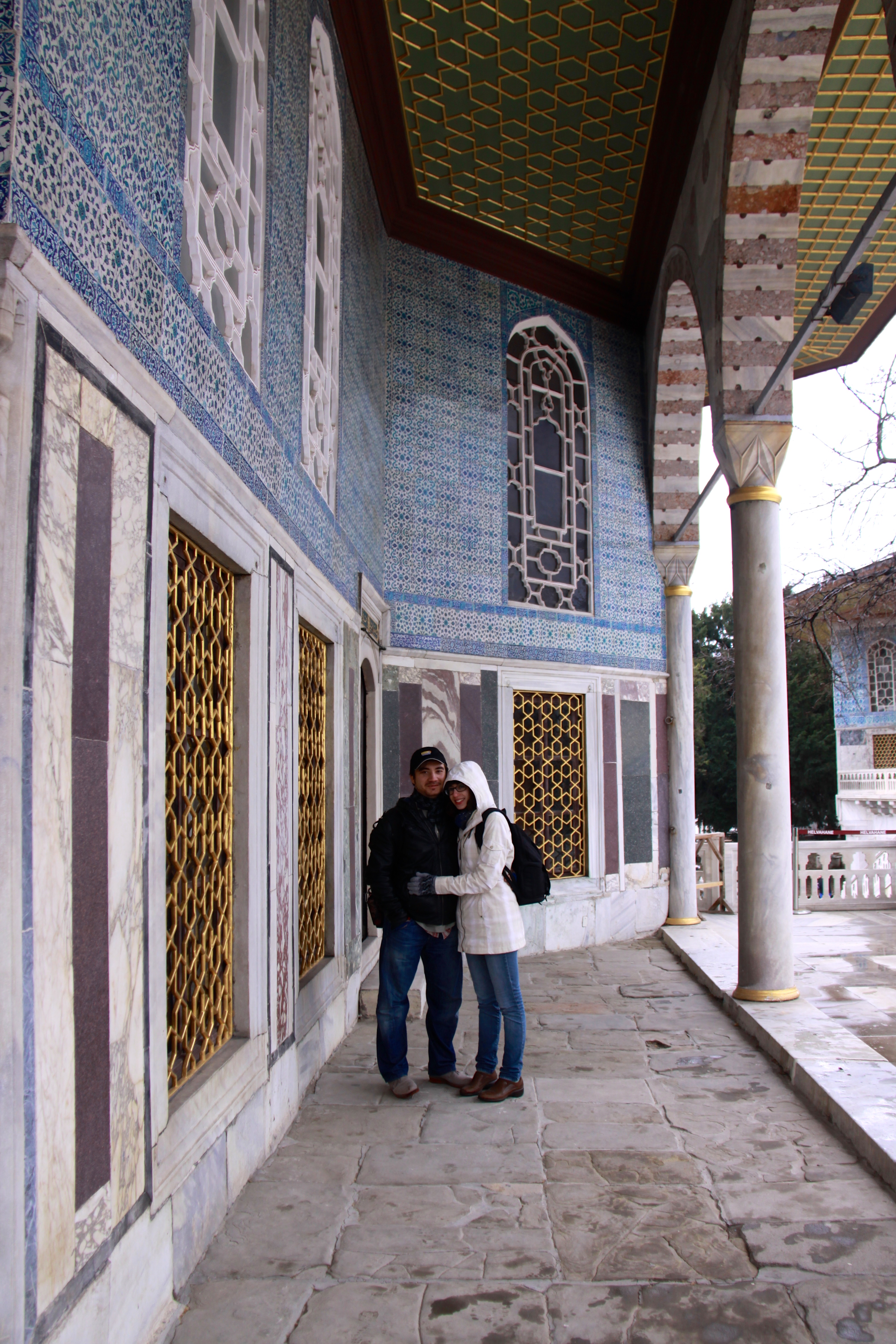
A few days after leaving Turkey, I had a dream that I was wandering in a vast palace covered with Iznik tiles. I think this was the result of our tour of the Harem of the Topkapi Palace and Tiled Pavilion of the Archaeological Museum, both of which demonstrated an artistic obsession with these intricately painted tiles.

Tiled walls in the Sultan's room

Tiled walls featuring calligraphy surround an ornate fireplace in the Harem.

The day had already turned gray and rainy by the time we got to the palace grounds. The palace is not a single building, but rather a giant complex of buildings around four courtyards. Every sultan made his addition to the complex as new needs arose. At one point 10,000 people lived and worked in the compound, so I suppose the crush of tourists actually helped us imagine how busy this place was when it functioned.

We started with the Harem, the section of the complex where the sultan’s wives and mother lived along with the eunuchs and concubines who tended to the women. Contrary to Western notions, the harem was primarily an administrative establishment, carefully designed to ensure there would be no squabbles over succession because of heirless sultans.

The Harem is the most decorated part of the palace, with many of those Iznik tiles coating chamber after chamber. After touring that part, we began our grueling expedition through sopping courtyards to see the treasury (lots of shiny jewels), the kitchen (unfortunately foodless today), and the armory. In the armory, I found myself suddenly intrigued by a thin sword on display and desperately needing to examine it up close for several minutes, which I assure you was not at all because there was a heat vent below the vitrine. We were amused to find the weapons arranged under signs such as Stabbing, Slicing, Smashing, etc. There were a fair share of funny elements to the palace besides the weapons: the sultan’s throne in his reception chamber appeared big enough to fit ten men side-by-side, the council chamber where the ministers consulted had a window grille above it through which the sultan could listen like a literal eavesdropper, and his mom’s room was located strategically between his room and the rest of the harem. Ah, the tough life of a sultan!

"So...cold..."

“So…cold…”

Hungry and wet from the drizzle, we proceeded to our next stop, the archaeological museum, which is actually a set of three museums. The visit started on a happy note when we found coffee that didn’t cost $10 a cup, approximately the palace price. Now, the café where we lunched had a decent selection with entrees, salads, and sandwiches—but once we had decided on our picks, stomachs growling, we were informed that out of the 20 choices on the menu, they actually only had dolma and pistachio cake in stock.

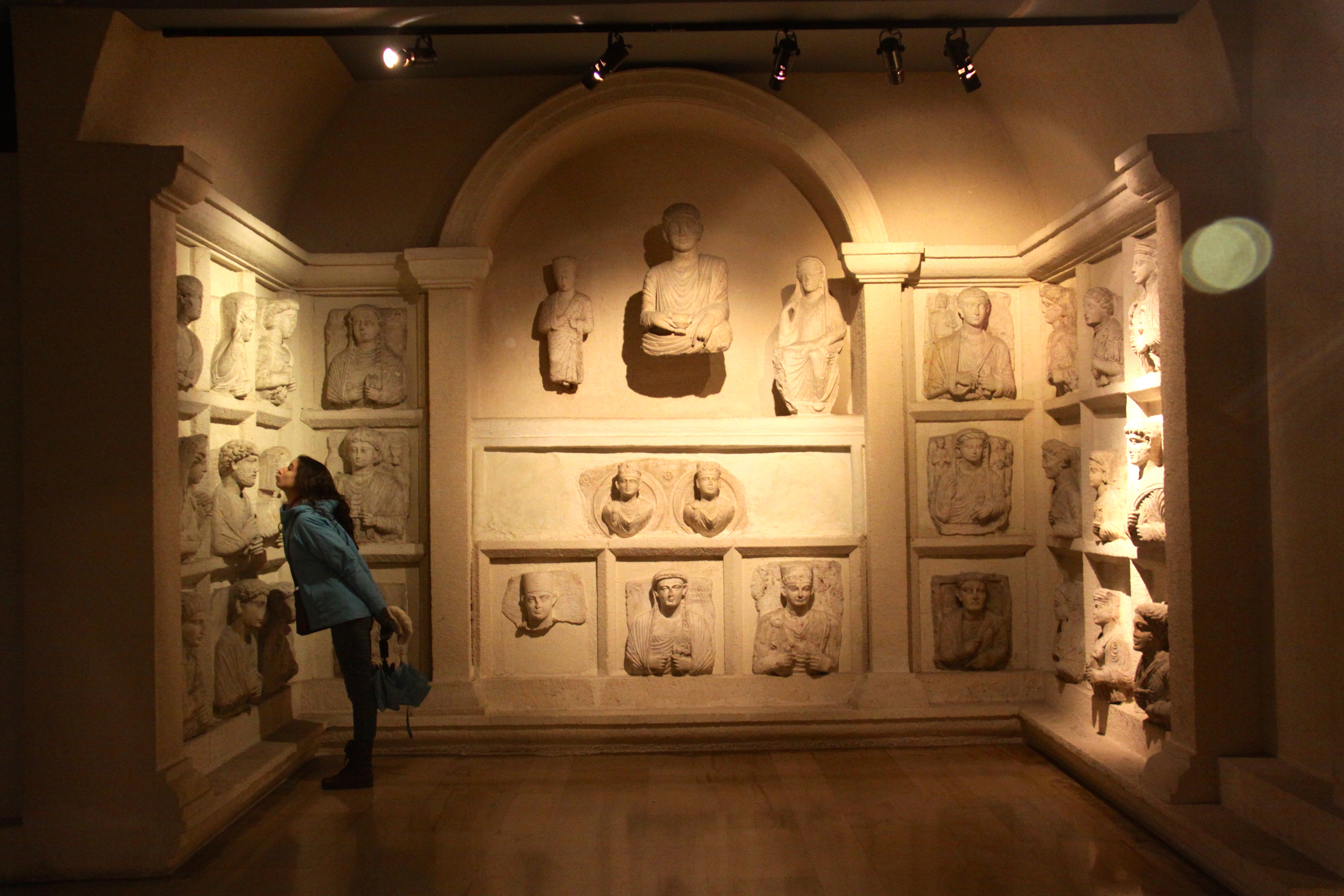
I guess this was a preview of the rest of the museum, which was under—you guessed it—restoration, and the starring items, such as the famed Alexander Sarcophagus, were off display. A bit perturbed, we made the most of the remaining sarcophagi and their occasionally belligerent inscriptions (e.g. “If any man disturbs this tomb, let him be smashed and his whole family crushed”).

We love history!

Up close and personal with ancient history.

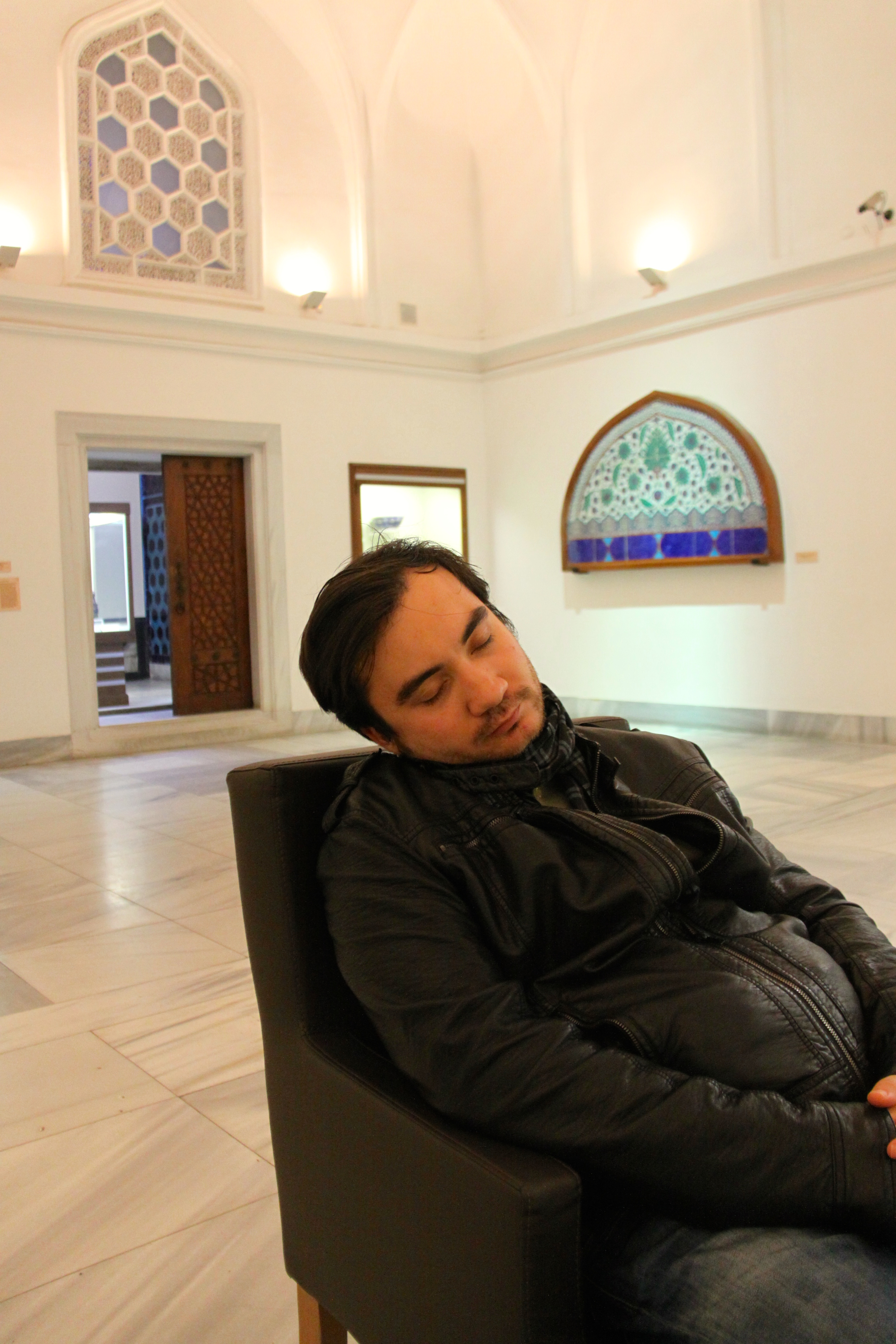
We walked over to the museum next door where we saw…more tiles! In fact, this small museum is called the “Tiled Pavilion.”

Excited to see tiles!

Or “the Tired Pavilion”

Finally, after a detour in the sculpture garden, which is where the disenfranchised statues are left to suffer the elements, we went to the last museum: the “Ancient Orient.” Upon my approaching the entrance, I was greeted by a guard clearly communicating that my entry was unwelcome. Apparently, they chase everyone out 20 minutes before the museum actually closes. I convinced her to let us in for “one minute,” and after we cruised through Babylon, the lights went off. But I could not leave without seeing at least one famous item, the Treaty of Kadesh, the world’s oldest known peace treaty. The guards relented and flicked on the lights for us to get a brief look at the tiny cuneiform tablet.

And that concluded our day of odd museums.

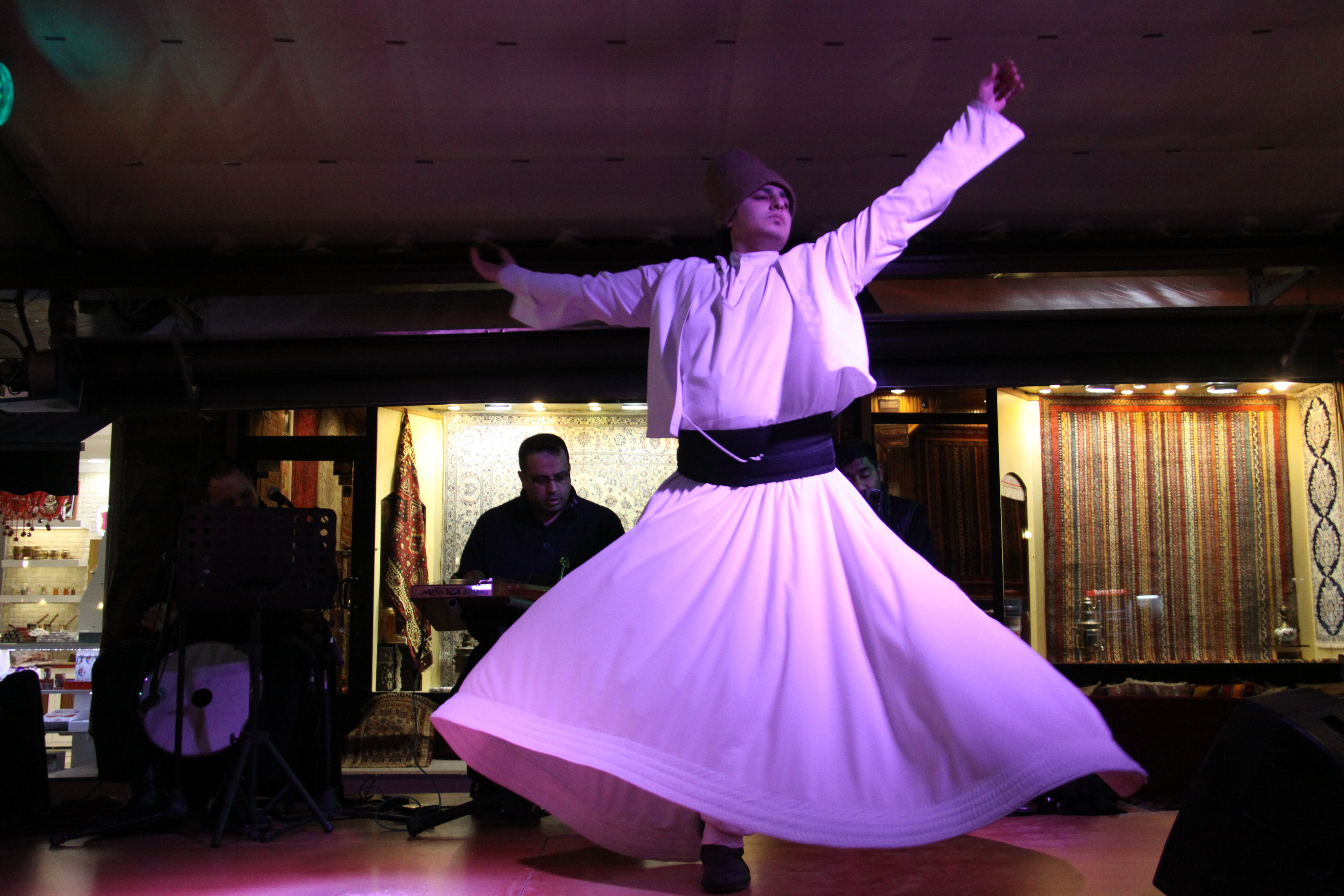
With only a few hours left in Istanbul, we headed to the Arasta Bazaar, where Jasmine purchased a beautiful inlaid box and Sergey and I drank the shopkeeper’s apple tea. Then we happened upon an outdoor restaurant where a trio was performing—and, most excitingly, a whirling dervish was whirling!

Dervish

Whirling dervish, Sufi dancer, your skirts are a sheltering canopy, your eyes, divine ecstasy.

Entranced, we watched from the sidewalk, and then decided it was worth eating a freezing al fresco dinner to see him whirl. While I’m always skeptical of the authenticity of “cultural” activities in a tourist district, he seemed to be legitimately meditating as he spun, eyes nearly closed, apparently unconscious of his audience, including the paparazzi in the front row seats (us).

Finally, it was time to say “good night” to Istanbul. Our journey had reached its end.

Near Divan Yolu

City of 10 million people

burqa-clad women, bohemian men,

fish sandwiches scenting thousands of fingers.

East meets West

almost

separated by the strait of the Bosphorus

marble tongue of Marmara licking the cold cup of the Black Sea

and Black Sea pouring its dark contents into Marmara’s mouth.

Day 5: Pilgrims Again

In Istanbul, we had made the first leg of our “mini-pilgrimage,” backtracking in Bahá’í history from the pilgrimage in the Holy Land described in a previous post. After the Holy Family was banished from their homeland of Iran to Baghdad, they were once again banished first to Constantinople then Adrianople before final exile to Akka. While Bahá’u’lláh’s original residence in Istanbul (Constantinople) no longer exists, a house was rebuilt on the spot, located in a strange quarter where women clad in black chadors walk past endless shops selling poofy wedding dresses. We were welcomed by the custodian and visited the upstairs quarters, where some artifacts are displayed. While visiting this house, we met a group of Bahá’ís from Beijing who were stopping briefly in Turkey to visit this house and Edirne before going to Israel. They described their working lives: 12 hours per day for 6 days a week year-round. They were using their scant vacation days to make this journey. The next day, we hopped on a bus that took us on the three-hour trip from Istanbul north to Edirne (Adrianople). I passed the time by working on reading Five Quarters of an Orange, a novel set in the French countryside, which in my mind blended with the damp flatlands we were driving through.

Snowdrops and raindrops in Edirne.

Snowdrops and raindrops in Edirne.

Edirne, Land of Mysteries, was cold and rainy. We beelined to the visitors’ center for the Holy Places, where once again we were met by the custodian and a guide who took us to the House of Bahá’u’lláh across the street, one of three places the Holy Family lived in this city. This was where Bahá’u’lláh’s family moved after He was poisoned at the hands of His jealous half-brother.

The backyard and rear wall of the House of Bahá'u'lláh.

We are standing in the backyard of the House of Bahá’u’lláh.

After our visit, our guide walked us to the nearby ruins of another house, reduced to foundation stones in a grassy meadow. The elderly custodian gave us some aromatic leaves as a keepsake—and I found my own keepsake, a snail shell.

The remains of another House of Bahá'u'lláh in Edirne.

The remains of another House of Bahá’u’lláh in Edirne.

With our remaining time, we visited the famed Selimiye Mosque, designed by the architect Sinan, who also designed the Suleimaniye Mosque that we had visited the day before. First, we surveyed the small, attached bazaar, which was built to support the mosque financially. Then we walked up some steps to the mosque, which won our Prettiest Mosque Award with its airy, bright interior and elegant decorations.

Part of the gorgeous courtyard of the Selimiye Mosque.

Soon enough, we had to leave the Land of Mysteries and catch our bus back to Istanbul. Our last day was nigh upon us.

Day 4: Mosques galore

Interior of the Blue Mosque

Dome of the Blue Mosque, which earns its moniker from the blue tones of its interior decor.

While mosques only require a single minaret from which the muezzin can voice the call to prayer, to show off his wealth and power, the sponsoring sultan of the Blue Mosque—Sultan Ahmet, who gave his name to both the mosque and the district—built six.

We visited Istanbul in “low season” for tourism, the time when the government implements its renovations and restorations of the various historical sights before the influx of visitors begins again with the return of warm weather. Indeed, nearly everywhere we went, we found huge tarps wrapped around walls and covering entire buildings, printed with explanations of the history of the place underneath and the plans for its restoration. The Spice Market from afar looked like an enormous tent, thanks to its veiling tarp. Hagia Sofia featured massive scaffolding inside, and the Blue Mosque featured a mere 5.5 minarets. The remaining 0.5 was undergoing reconstruction.

One minaret, two minaret...scaffolded sixth minaret is outside the frame.

Minaret #6 is currently in hiding.

The Blue Mosque might be the most renowned, but I have to be a mosque snob and say that of the three we entered, it was actually the least impressive. That should give you an idea of just how many gorgeous mosques populate Turkey, thanks to the sultans’ combined religiosity and profligacy!

Inside the Mosque of Suleyman the Magnificent.

Inside the Mosque of Suleyman the Magnificent. Note the giant chandeliers.

Our next mosque was the truly magnificent Mosque of Suleyman the Magnificent. The architect Mimar Sinan made massive and heavy structures appear buoyant and graceful. Like the heavenly ambience created by the stained glass windows and elaborate décor of Gothic cathedrals in Europe, it was clear that the beauty of these mosques was designed to lift the spirits of worshippers to paradisiacal heights.

Mosques were usually surrounded by other establishments like bazaars and kitchens. We had lunch in a restaurant housed in the mosque’s former soup kitchen. When we walked from the stone-paved courtyard into a lofty chamber filled with untenanted tables draped in crisp white linen, we saw that we were the only customers. While I appreciate the quietness of an empty restaurant, at a fancier establishment like this, I prefer having at least a few other customers to distract the flock of attentive waiters from my plebeian etiquette.

“They’re giving us water for free!” I whispered to Sergey and Jasmine after the waiters had filled our glasses before we ordered. “Drink a lot!”

Our experience at this restaurant demonstrated the heights of excellence that a meatball can attain. In Turkey, “koftecisi” or meatballs are oblong patties of ground meat mixed with spices and herbs, then grilled.

We ordered meatball soup followed by meatball dishes. The meatball soup was a creamy blend of lentils, vegetables, and bits of meatball—just what we needed to warm us up after being buffeted by the damp wind. Then came our main course: Sergey got tender cutlets, and Jasmine and I shared…kebab sushi. The filling was made with meat and finely chopped pistachio, which had apparently been formed into a roll, then wrapped with a pastry. This roll is then sliced and the slices are grilled. The end result was delectable!

Alas, our little glasses of apple tea were soon finished and the meatballs gone; we had to exit our culinary cocoon. Yet, the restaurant was not the only gem around the mosque. We found some artisans making their goods–engraved platters and other metal trinkets. Their workshop also functioned as their shop, and after watching them demonstrate their craft, we bought several dishes engraved with gleaming floral patterns.

Artisan drilling through layers of colored metal to make an etched platter,

Artisan drilling through layers of colored metal to make an etched platter.