Day 3: Boating down the Bosphorus

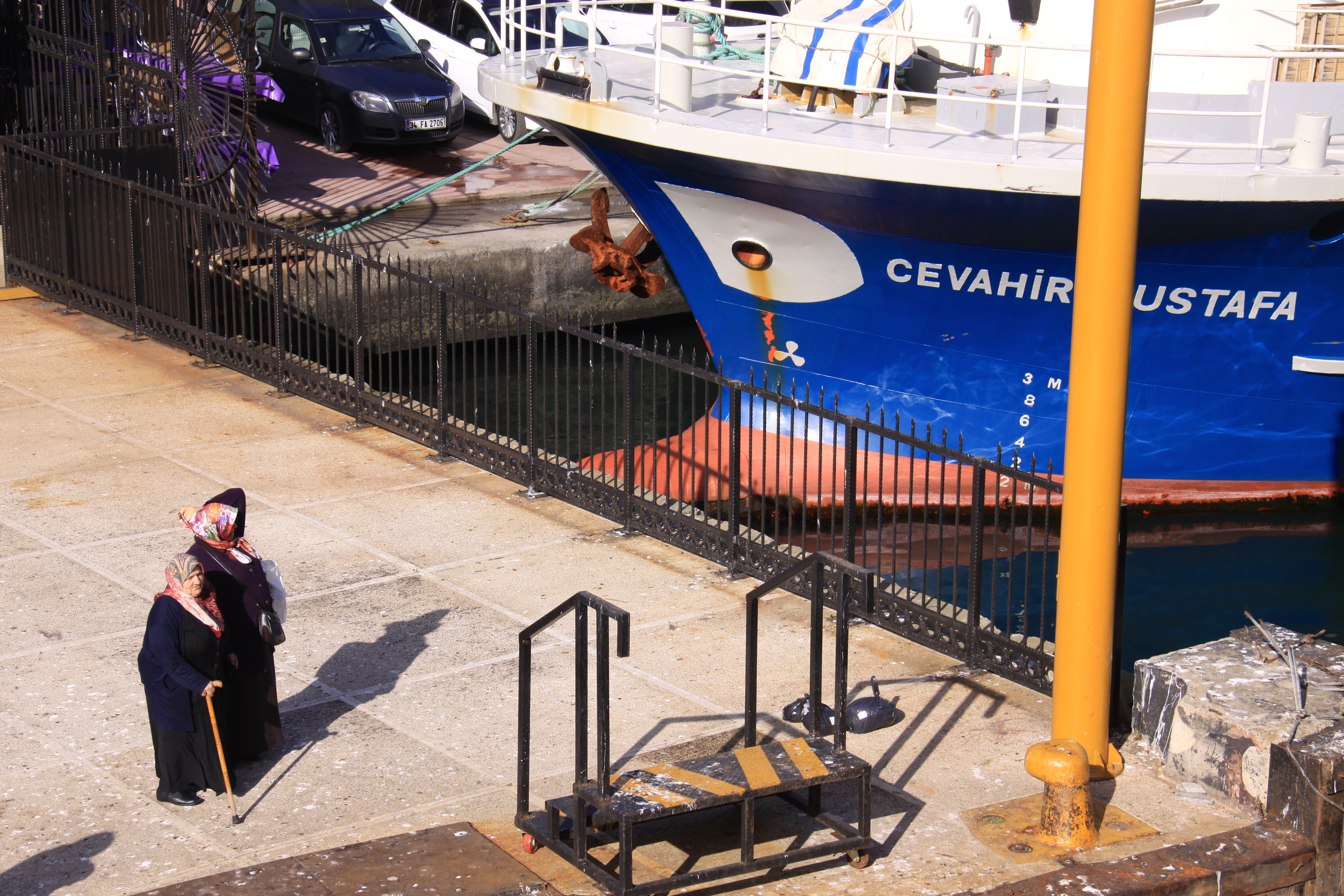
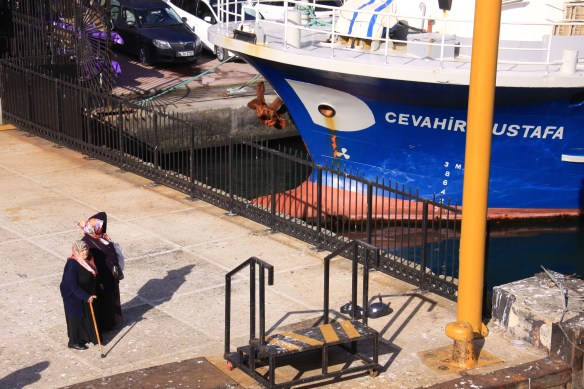
Turkish women wait at a dock.

Turkish women wait at a dock.

Istanbul straddles Europe and Asia, with the Bosphorus Strait splitting the European side, which has most of the tourist attractions and commerce, from the Asian side, which is largely residential. We decided to devote a day to seeing more of this important strait, which offers the nations around the Black Sea their sole path of entry and exit to the Mediterranean via the Marmara and Aegean Seas—crucial for trade and navies.

We boarded the ferryboat that would take us on a 1.5 hour journey from the old city up the strait, past the bankside sprawl of Istanbul, to a fishing village called Anadolu Kavağı situated near the mouth of the Black Sea. After claiming seats on the topmost level where we could enjoy the warm sun and chilly wind, we peered down into the waters of the inlet, where cormorants plunged into the depths, and impassive, translucent jellyfish wobbled through the water, almost indistinguishable from the plastic debris that floated on the surface. Seagulls silently swooped above us.
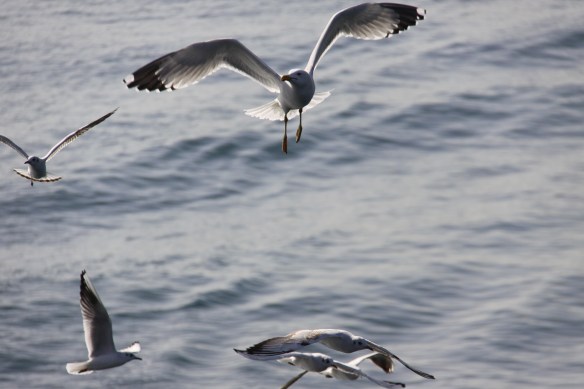
I have way too many photos of seagulls!

I have way too many photos of seagulls…

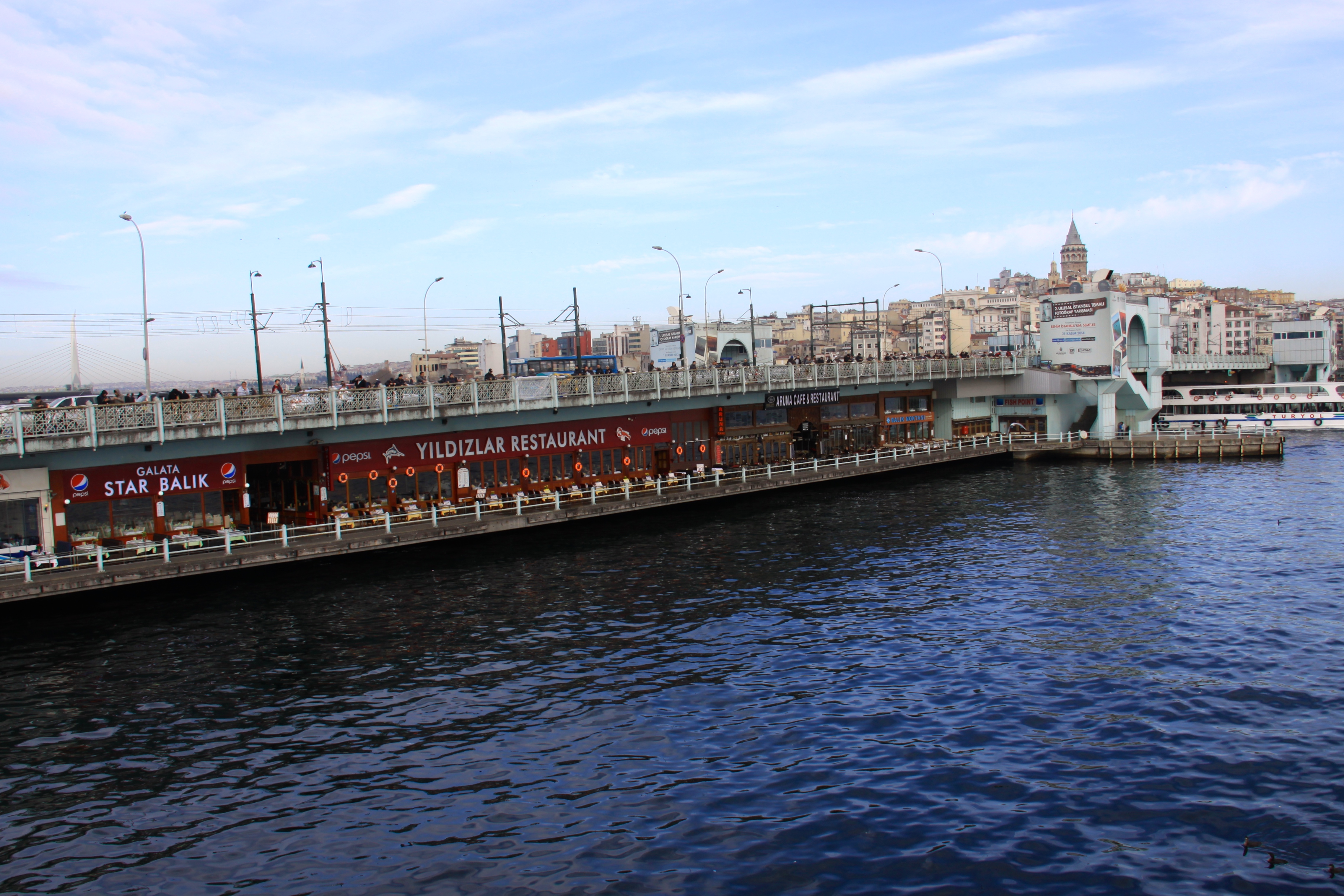
The boat was docked near the bridge across the Golden Horn, over which the tram passes back and forth to the New District. Below the traffic on the lower, pedestrian level of the bridge, there is a row of seafood restaurants. At 10:00 AM their staff were just starting to clean and prepare for a day of customers, and we watched in amusement as they hauled up water from the strait below to swab the decks of their outdoor seating. In that act, I was reminded of how provident the sea and its estuaries are to coastal cities. Little wonder then that successive empires made this area the focus of their empires, surrounded as it is by a natural moat of generous and protective waters.

The bridge looks like it is buoyed by restaurants.

The bridge with its undergirding of restaurants.

After some time, the engine started purring and the boat pulled away from the dock. As we moved along, we followed the tour in our guidebook, spotting such sights as the European wannabe Dolmabahce Palace and its nearby mosque and clocktower, the Rumelian fortress dating from the 15th century, and several towering bridges across the strait, one for city traffic and one for “intercontinental transit.”

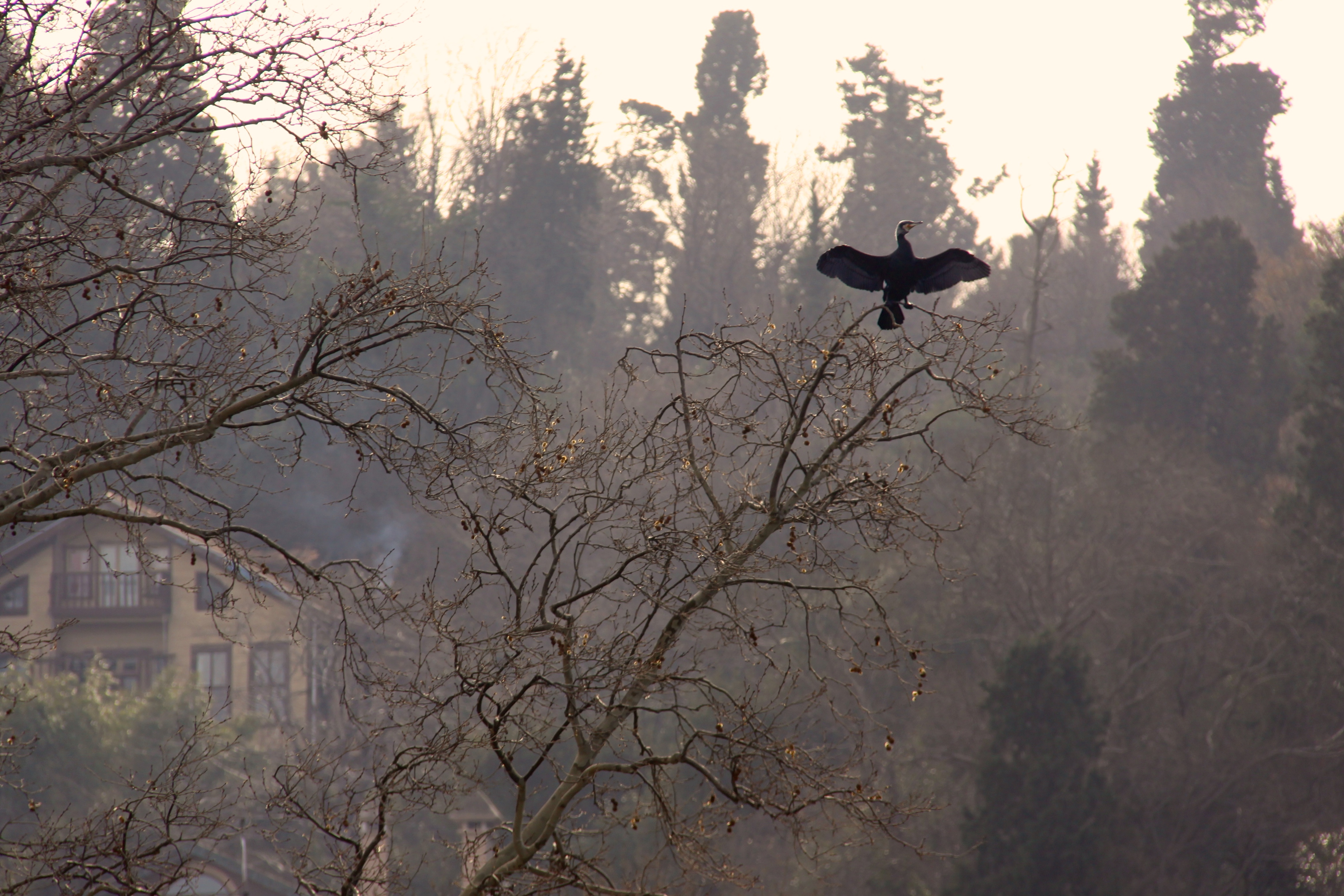
Eventually, the crowded urban area thinned out into areas of mansions with tall trees. In one such tree we saw a cormorant worshipping the sun, wings outstretched.
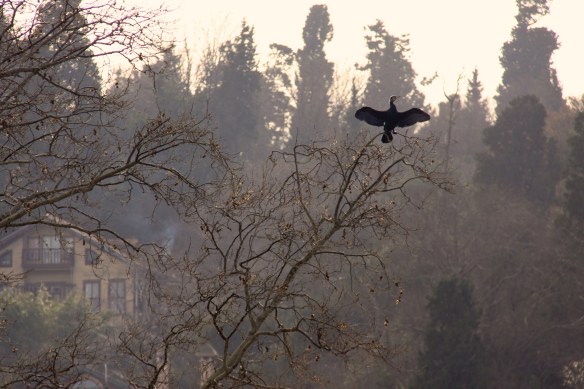
Sunbathing cormorant

Sunbathing cormorant on the bank of the Asian side.

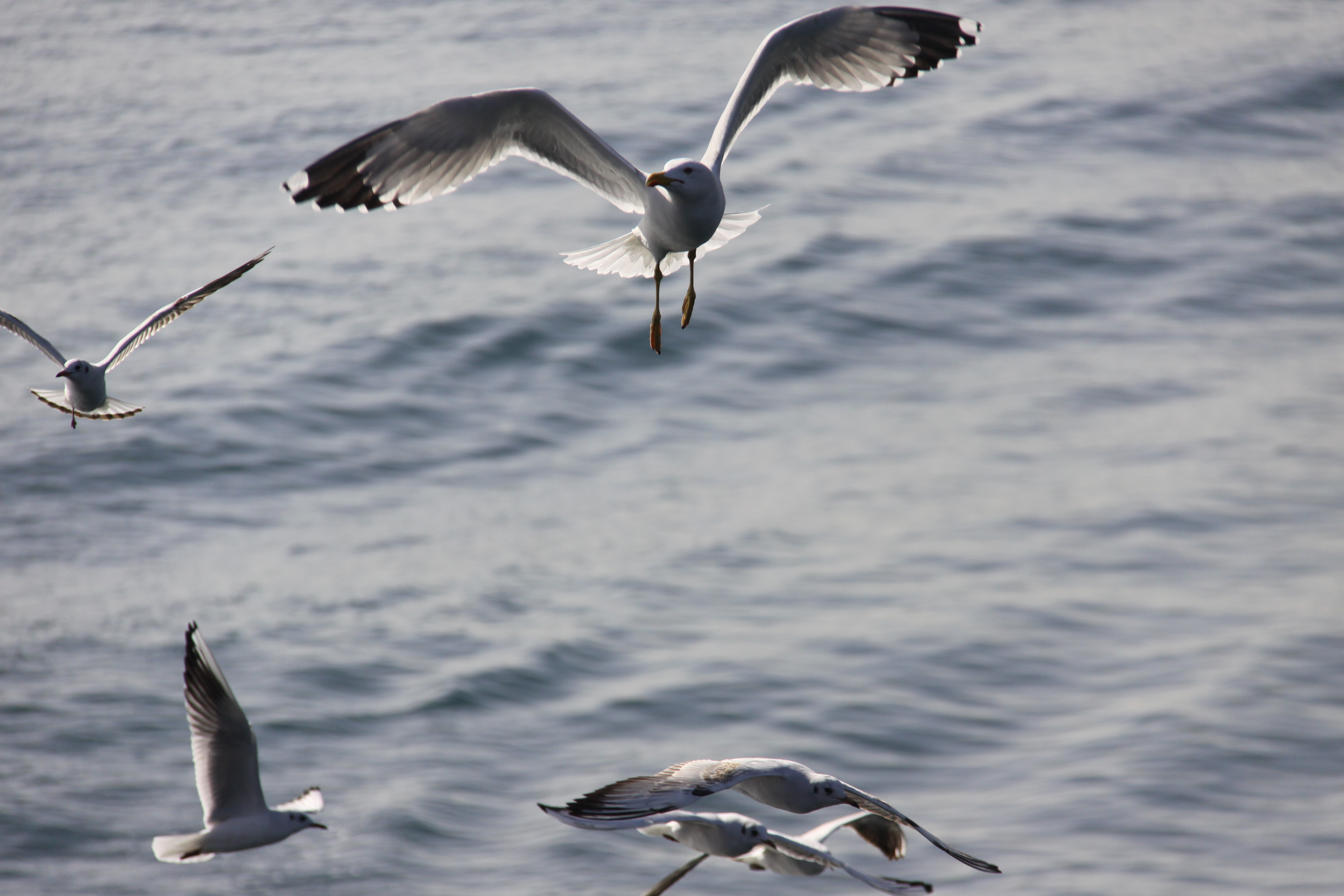
When we would approach the shore to pick up more passengers, flocks of seagulls would attach as if magnetically to our boat and hover around. Perhaps the wake of the boat stirred up small creatures for their lunch, or maybe they hoped we would jettison our own food—in any case, Jasmine encouraged me to get some action shots of these birds. There were, in fact, several species of seagulls, ranging from a long-winged pterodactylesque breed with harsh eyes to a chubbier, smaller variety with the charm of a flying porpoise.

Magnetic seagulls that orbited our boat.

Magnetic seagulls that orbited our boat.

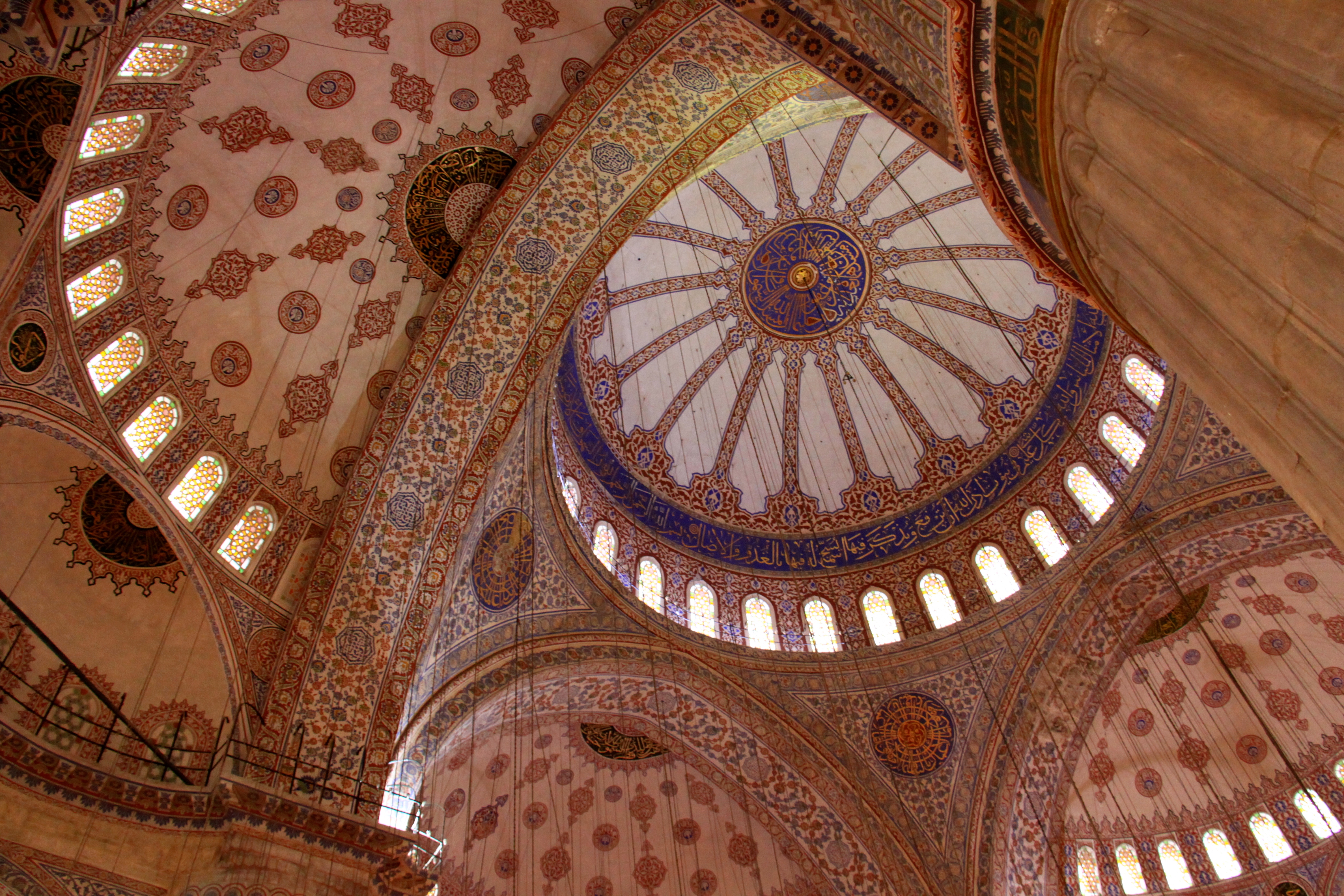
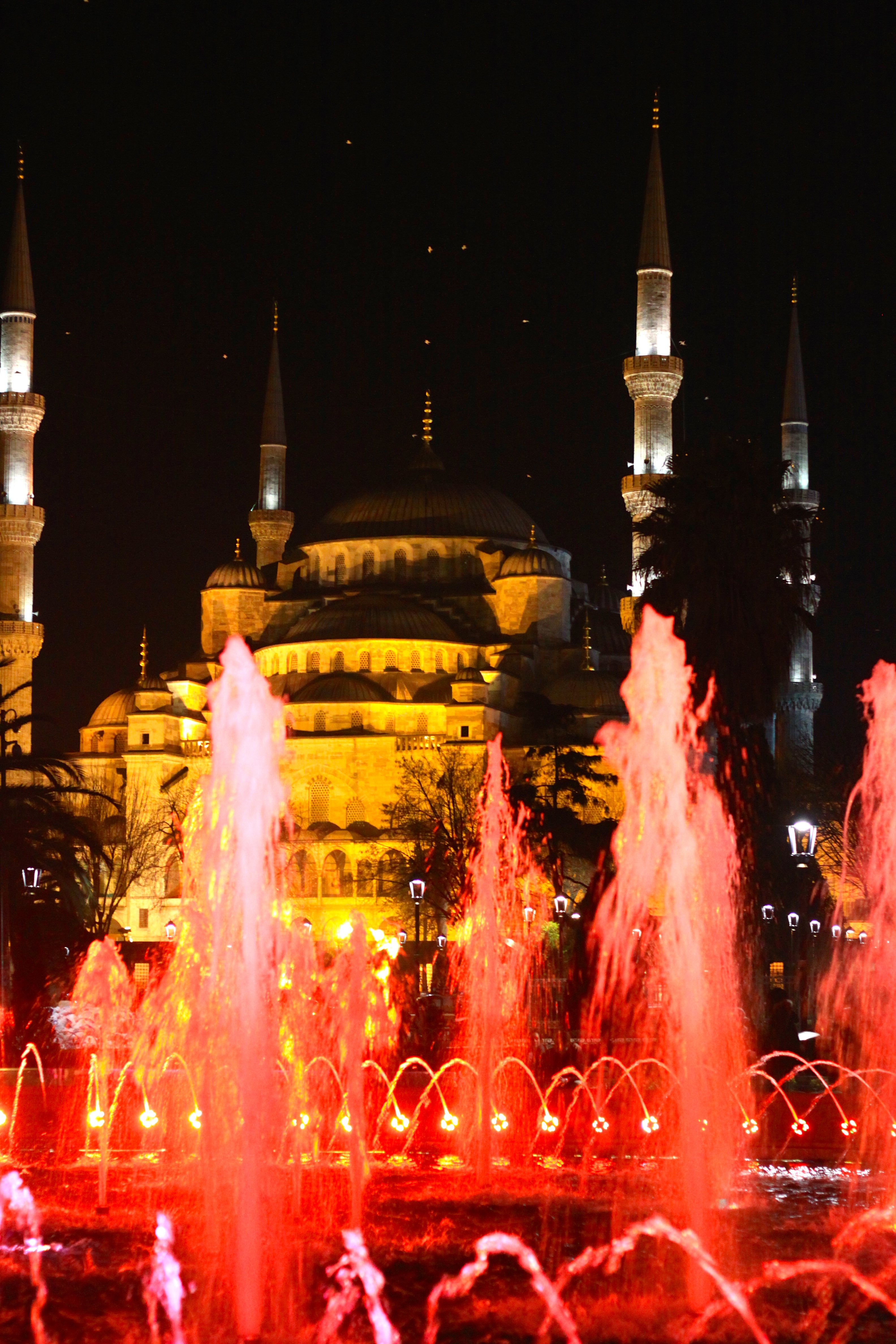
Now that I’ve started on seagulls, I must digress to another scene. Seagulls were not only present above the Bosphorus, but also all over the Sultanahmet. They careened past the eaves of our hotel as we ate breakfast on the enclosed terrace. More hauntingly, one night as we strolled around the park between the Hagia Sofia and the Blue Mosque, we observed scores of gulls weaving like ghosts above the domes—like moths tethered to lights.

It's hard to see, but the white specks above the dome of the Blue Mosque are seagulls.

The white specks above the dome of the Blue Mosque (which looks like a yellow mosque at night) are seagulls.

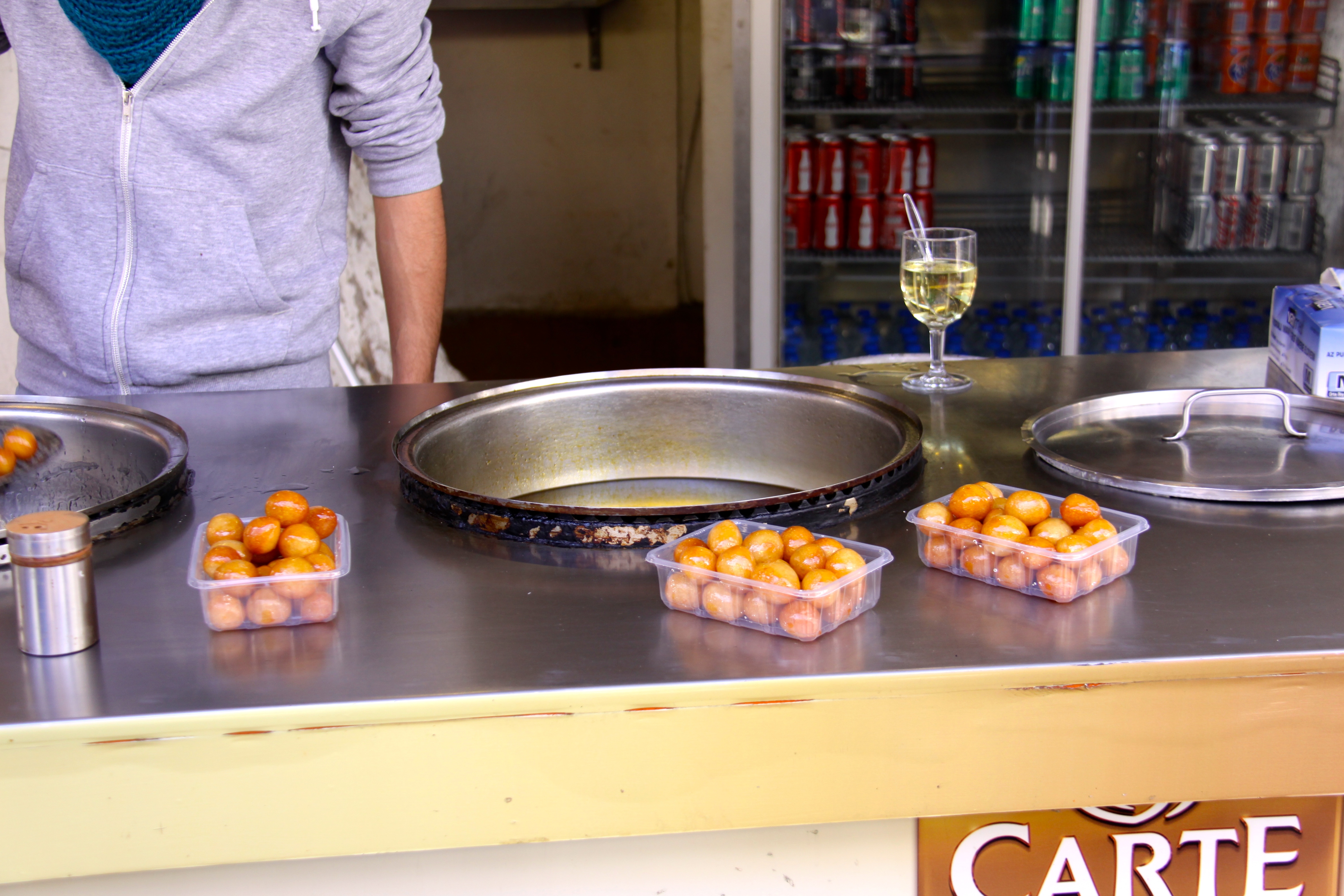
Back on the strait, we arrived at the village. As we approached, we noticed two things: the ruins of Yoros Castle, our destination, on the peak of a hill, and the black-and-white clad waiters standing in front of their seafood restaurants flagging us down. As none of us care for seafood, we skipped the daily catch in favor of the village’s other specialty, lokma, which are syrupy balls made of a light dough deep-fried to golden perfection and sprinkled with cinnamon.
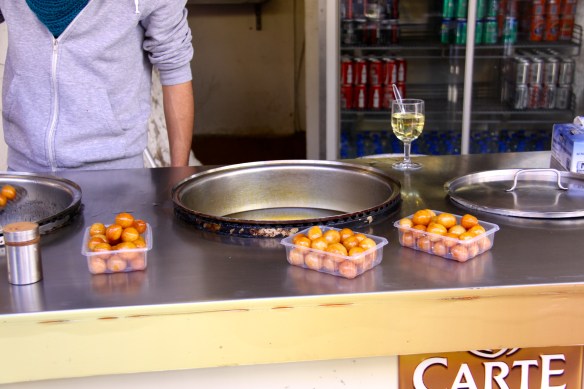
Deep-fried deliciousness.

Sticky and sweet deliciousness.

“Mmmm!” was our unanimous reaction to lokma. Yet this treat soon met a tragic end: as we walked away from the bevy of restaurants and hawkers in pursuit of the castle, I flung out my arm to point at a sign saying “Yoros,” just as Sergey was proffering the container of lokma to me. In the ensuing collision, the lokma scattered over the street like sticky marbles. I felt quite crushed by my role in this accident—as crushed as the lokma were soon to become under the tires of passing cars—but luckily, we were still close to the stand and purchased a refill.
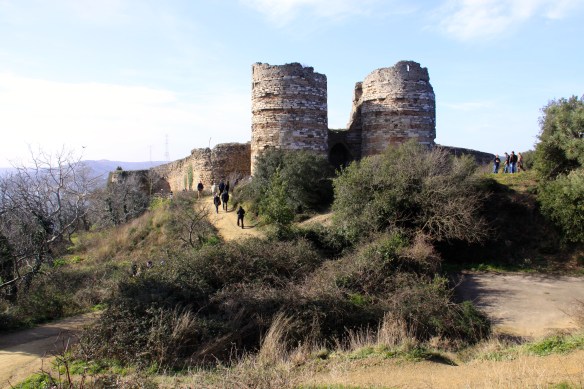
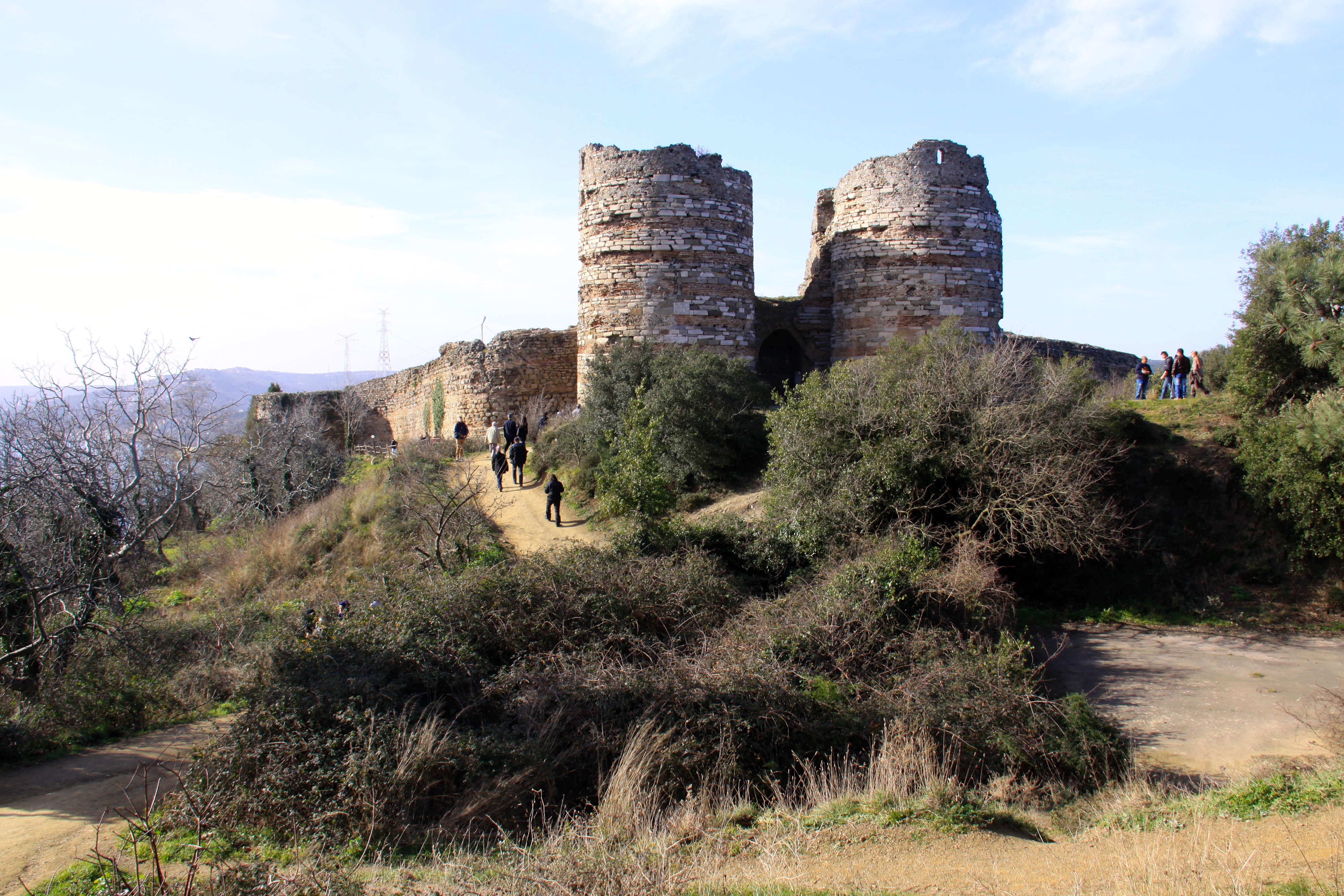
Yoros Castle in Andalu Kavagi

The remains of Yoros Castle.

Up the steep hill we hiked, passing by a military zone protected by a high fence, higher and higher until we reached the surprisingly commercialized ruins of the Byzantine castle. We had to pass by another bevy of restaurants to reach our destination. While the castle was admittedly dull since we could not enter (unless we defied the law and scaled its crumbling walls, which some boys did), the summit of the hill did afford a striking view toward the Black Sea.

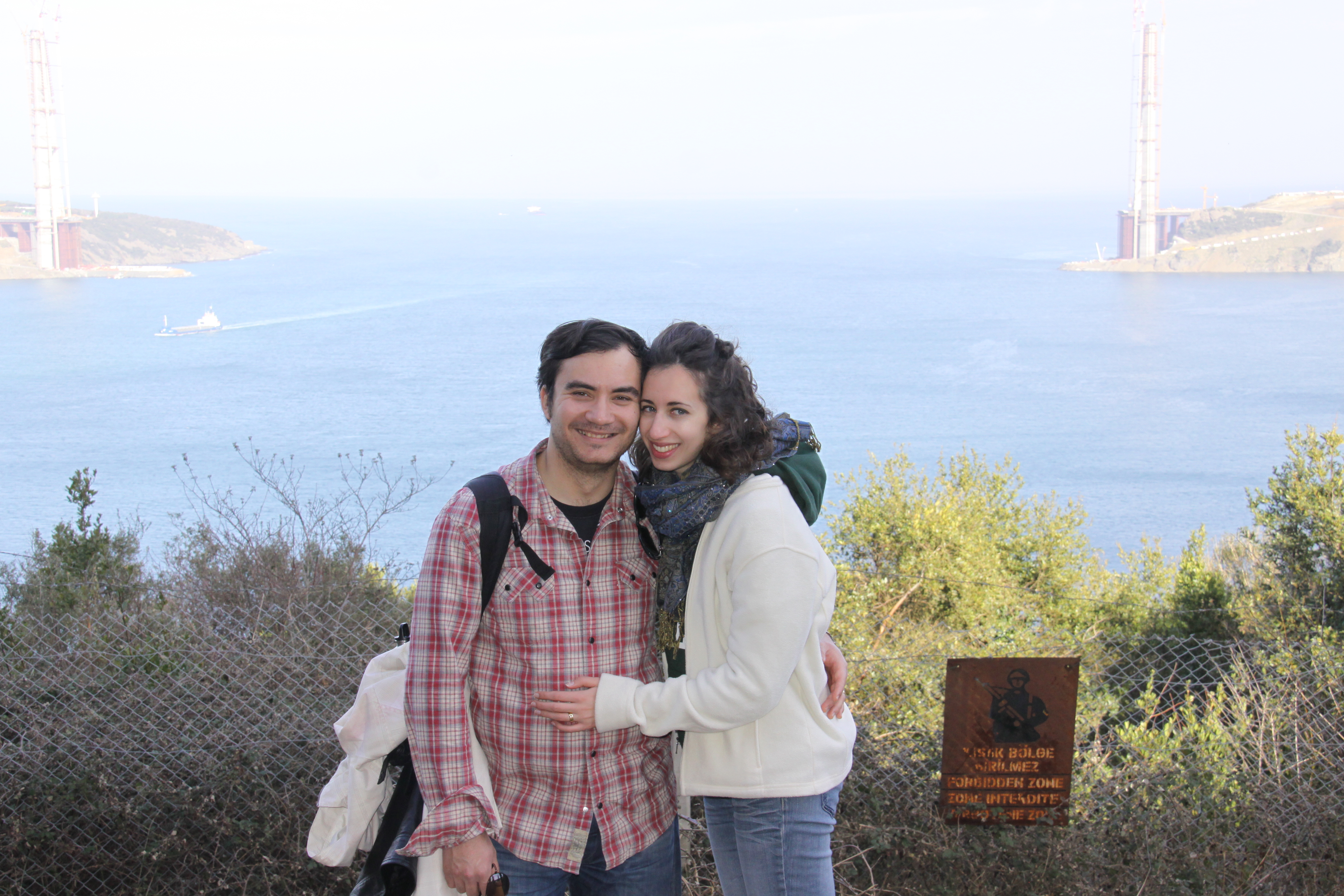
“Can you see Moldova from here?” I asked Sergey.
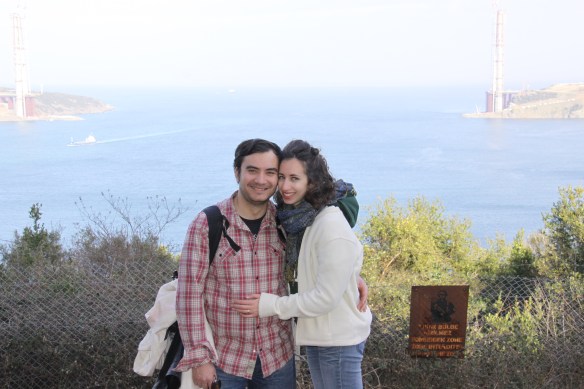
We are posing in front of the mouth of the Black Sea. If you look super hard and use your imagination, you can even spot Sergey's hometown of Chisinau (Kishinev)!

We are posing in front of the mouth of the Black Sea. If you look hard and use your imagination even harder, you can spot Sergey’s hometown of Chisinau (Kishinev) behind us!

Soon enough, our time on the Asian side was over, and we re-boarded our boat, which felt tranquil after our return hike through the surprisingly traffic-congested lanes of the village. We chose indoor seats and spent most of the return voyage in a half-stupor.
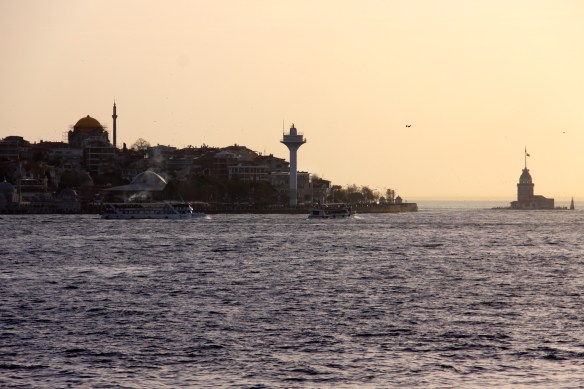
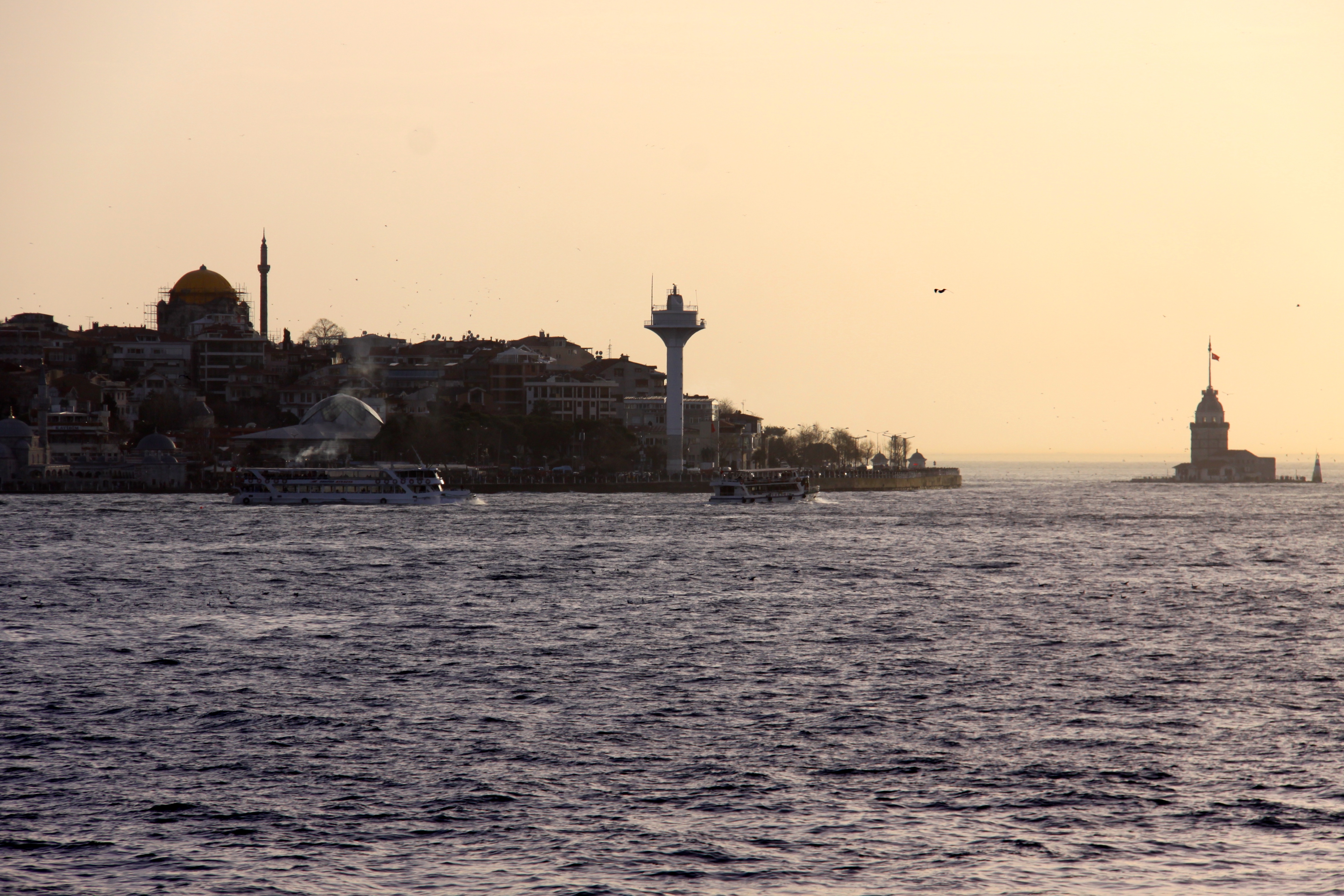
Maiden's Tower seen on the right.

Maiden’s Tower seen on the right.

Towards the end, though, I decided I had to go to the top so I could finally photograph one of Istanbul’s well known sights, Maiden’s Tower, which sits upon a small island. As we neared the European side, the setting sun set the cityscape aglow, smears of saffron light upon the minarets of countless mosques…and neon light upon the signs of countless seafood eateries.

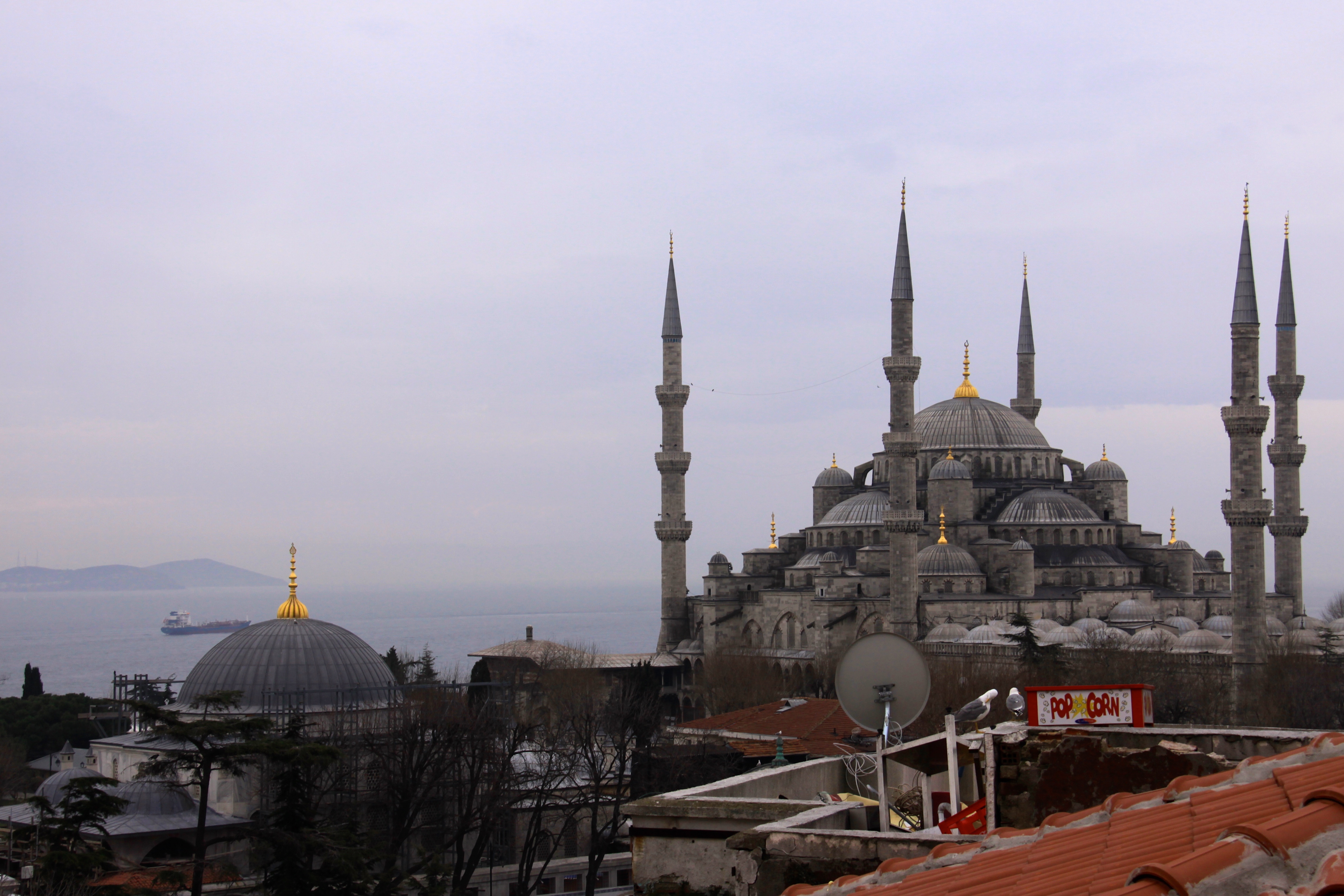
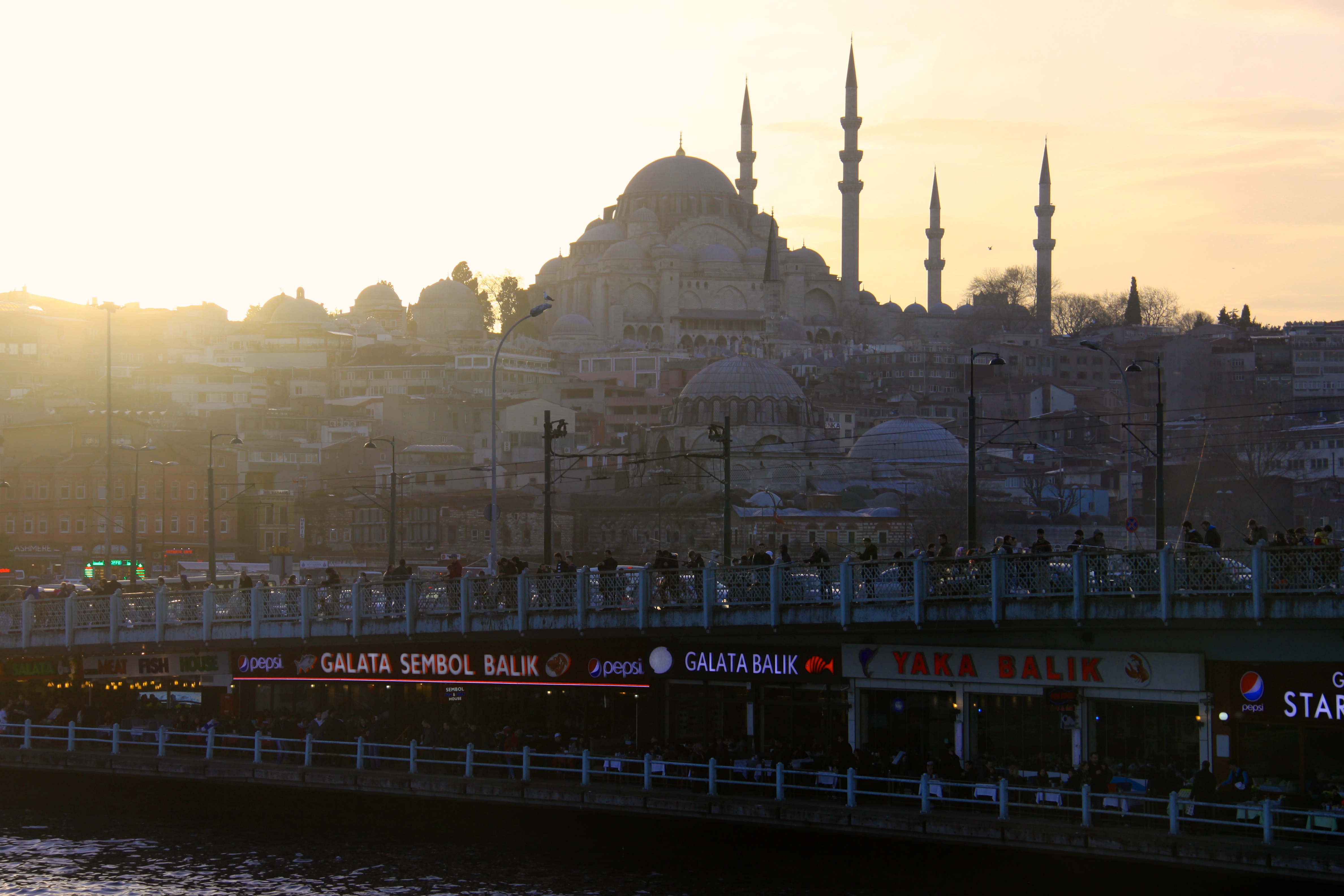
Cityscape centered on Mosque of Suleiman the Magnificent.

Cityscape centered on the Mosque of Suleyman the Magnificent.
Day 2: Time travel

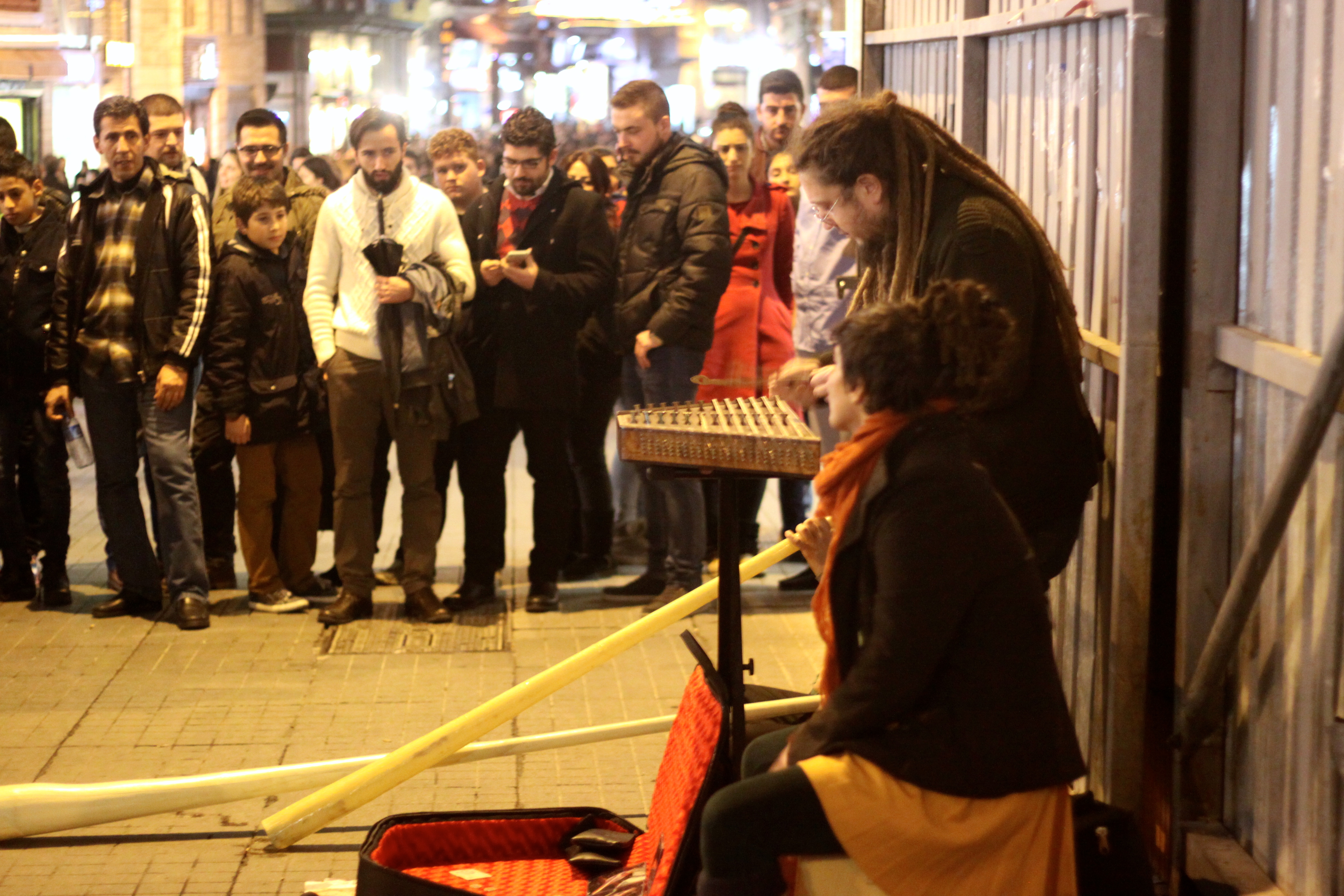
Buskers on Istiklal Street playing percussion, something like a sitar, and of course a didgeridoo.

Dreadlocked buskers on Istiklal Street playing percussion, something like a sitar, and of course some didgeridoos

From the ancient buildings of the Sultanahmet area, we traveled across the inlet called the Golden Horn to the so-called New District. If you recall the protests that rocked Turkey a few years ago, you probably remember that Taksim Square was the site of demonstrations and police crackdowns. That square is at the end of Istiklal Street, where we took our tour of modern Istanbul.

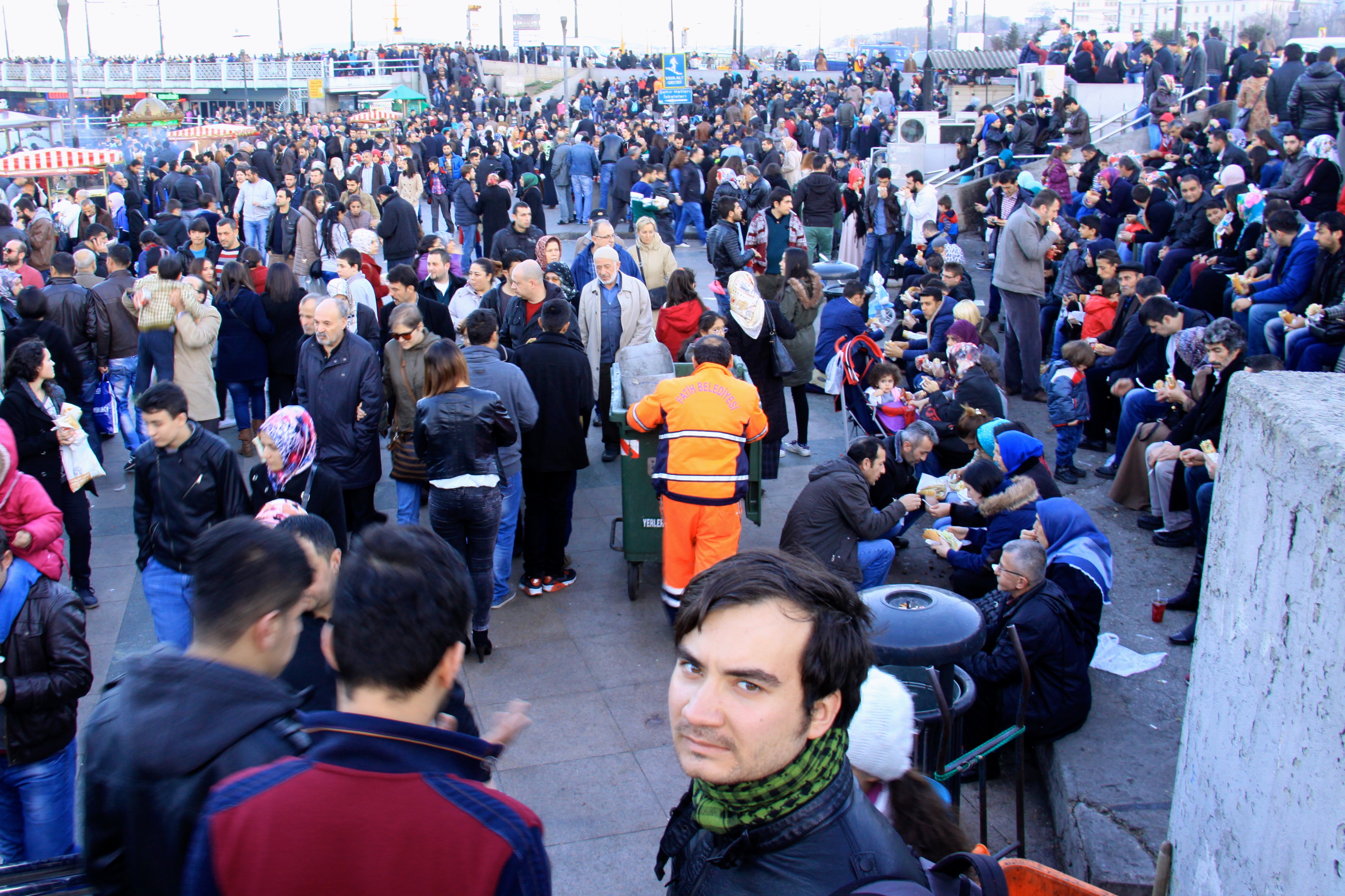
Not actually taken on Istiklal Street, but this is a fair representation of its crowdedness.

Not actually taken on Istiklal Street, but this is a fair representation of its crowdedness.

Looking down Istiklal Street from the comparatively quiet square, we saw a river of people. This river only grew denser as the day progressed, reaching flooding point after dark. Occasionally, a trolley would part the crowd, but usually pedestrians packed the entire street. Clearly, Istiklal Street is the place to be on a Saturday. With the exception of a sartorial detour to a silk shop where I ended up with a green shawl, our walk primarily gravitated toward sweet shops, including Haci Bekir, which has apparently been in business for as long as the US has been a nation. There, we sampled pastries and stocked up on mini pizzas and, more importantly, Turkish delight.

Now, I haven’t always harbored much love for this cubic dessert, which has a chewy, gummy texture and traditionally features double-roasted pistachios. But there ain’t nothing like the real thing, and the stuff we get stateside is a mere shadow of actual Turkish Turkish delight, which the Turks call “lokum.”

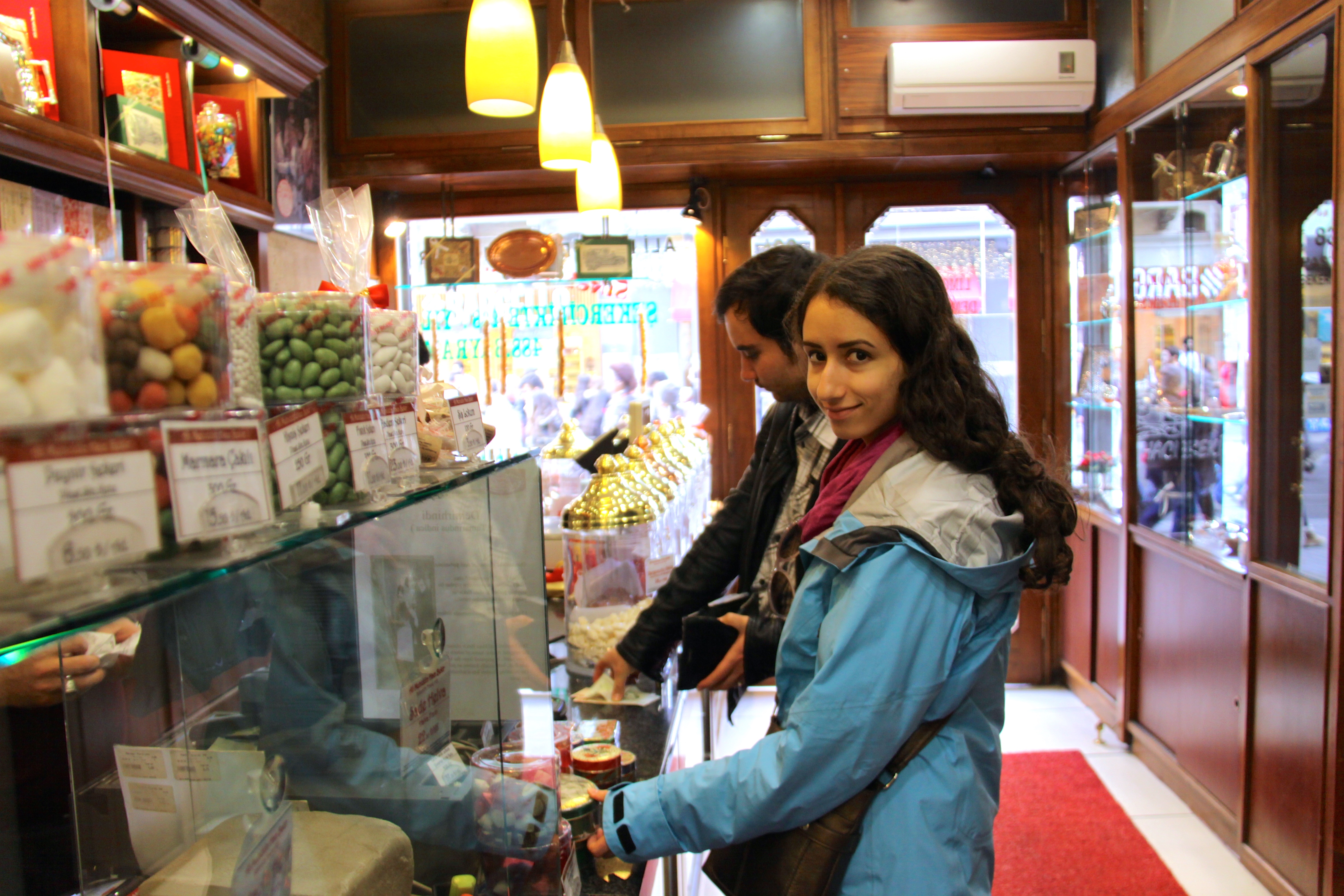
Choosing lokum at the renowned Haci Bekir patisserie

Choosing lokum at the renowned Haci Bekir patisserie

After that, we tried Turkish ice cream, made with goat milk and some orchid product that is probably the same that goes into salep. Then we sampled almond paste and rose-flavored hard candy. Then we had to go to the dentist (kidding!).

Our healthy lunch completed, we finished Istiklal Street and walked further to see Galata Tower, which was constructed by Genoese merchants to assert their tower-building powers. Finally, we ended up beside the Golden Horn, where fishermen flicked their lines in and out of the dusky water.

Fishing on the New District side of the Golden Horn

Fishing on the New District side of the Golden Horn

The next day, we were able to get to know these waters even better.

Day 1: Hagia Sofia, Hippodrome, Cistern, and Grand Bazaar

Check out that apse!

Check out that apse!


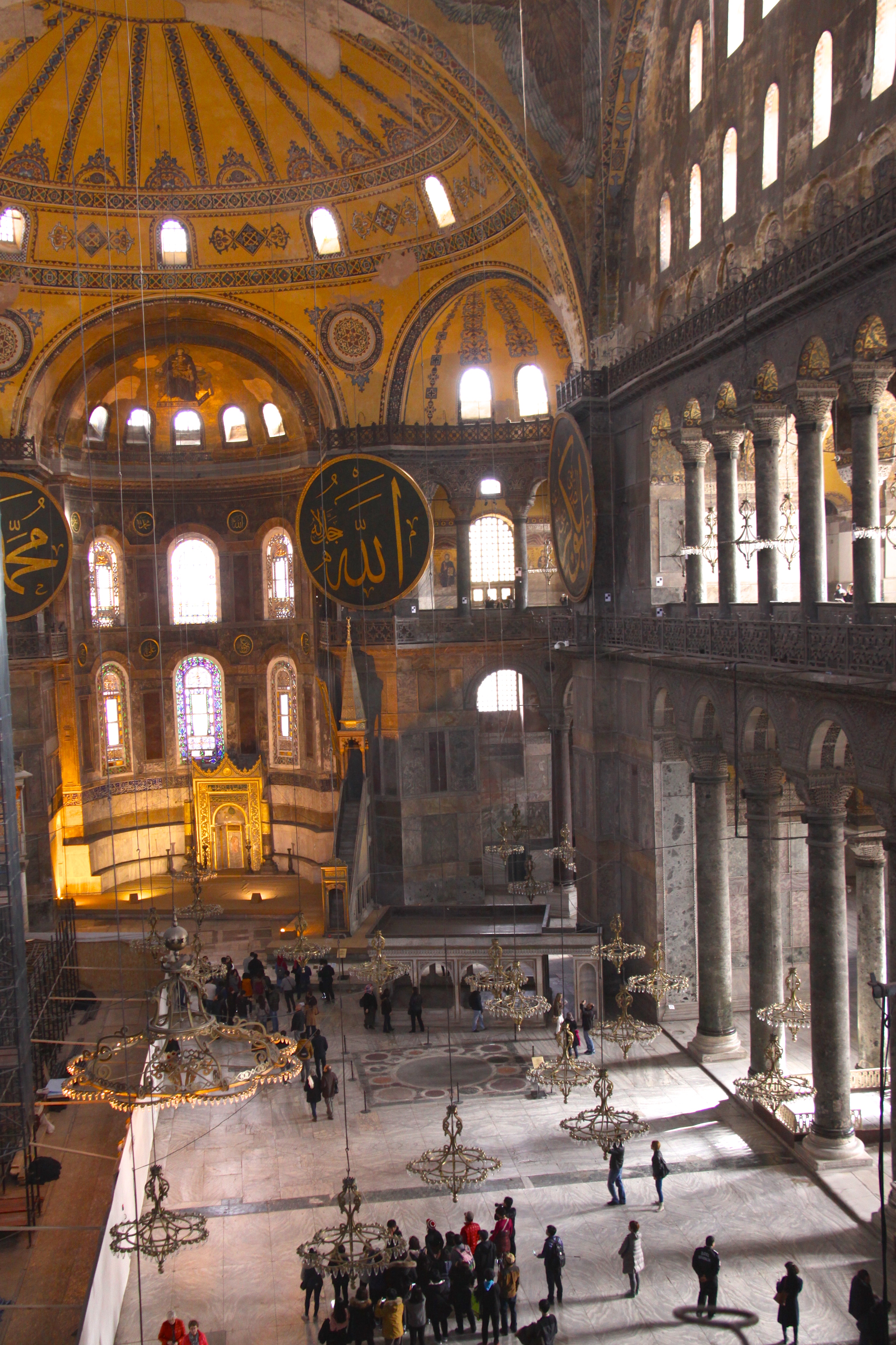
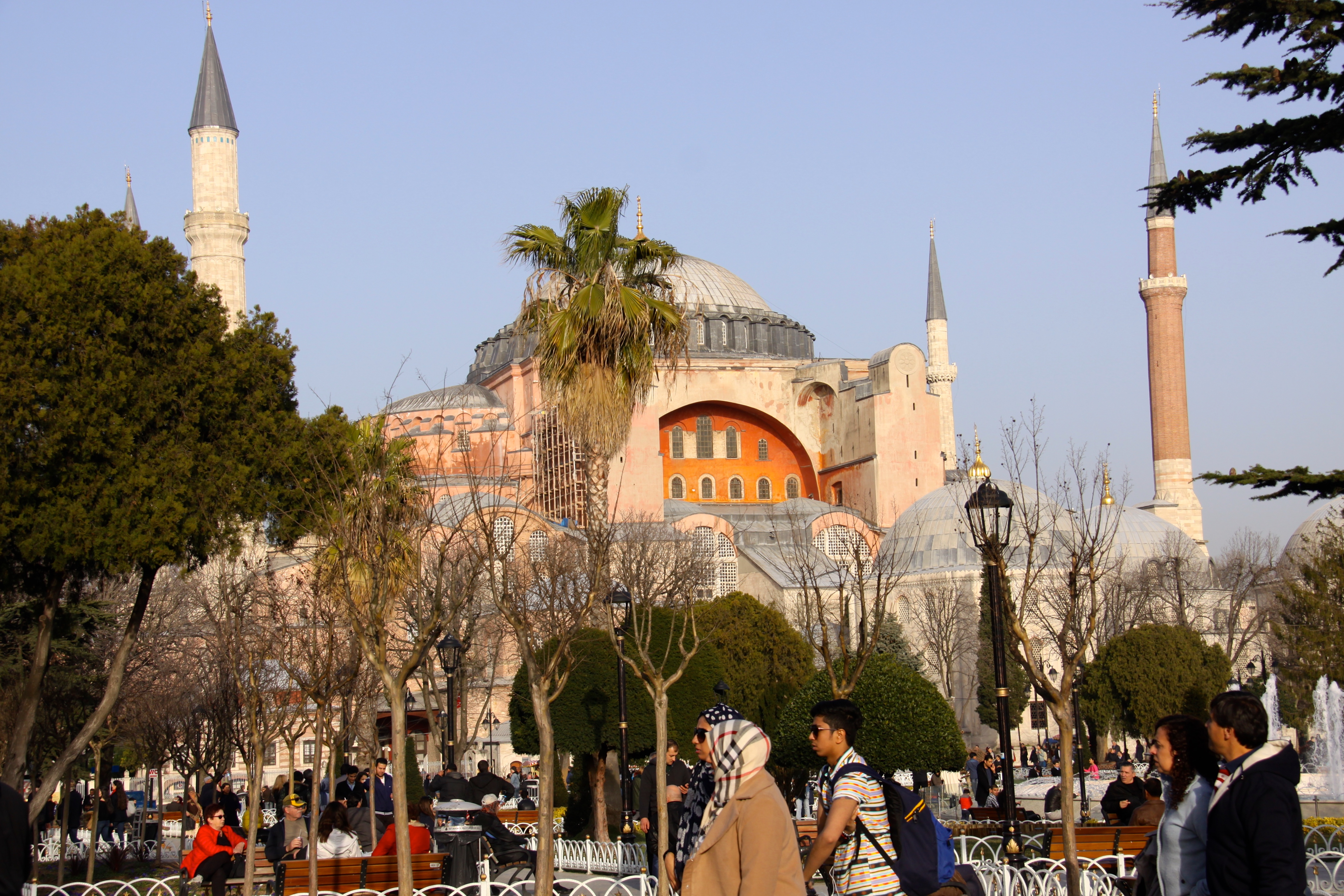
The Hagia Sofia (pronounced “Eye-Ah Sofia”) exemplifies how excellent architecture and sturdy materials can last scores of generations beyond their builders—it has stood tall and proud for nearly 1,500 years. One sign of its age are its enormous front doors through which the emperor would have entered: today, they are frozen in open paralysis, their bottoms locked in place beneath ground level by the buildup of renovations. After the Byzantines fell to the Ottomans in 1453, Hagia Sofia switched over from basilica to mosque, and today it features a pastiche of Christian mosaics and seraphim and huge Islamic calligraphy medallions. All three are visible in the photo above. For many centuries, the Christian art was covered under whitewash due to the Islamic prohibition of figurative depictions in mosques. In some cases, the whitewash actually preserved the artwork underneath.

Exterior view

Exterior view

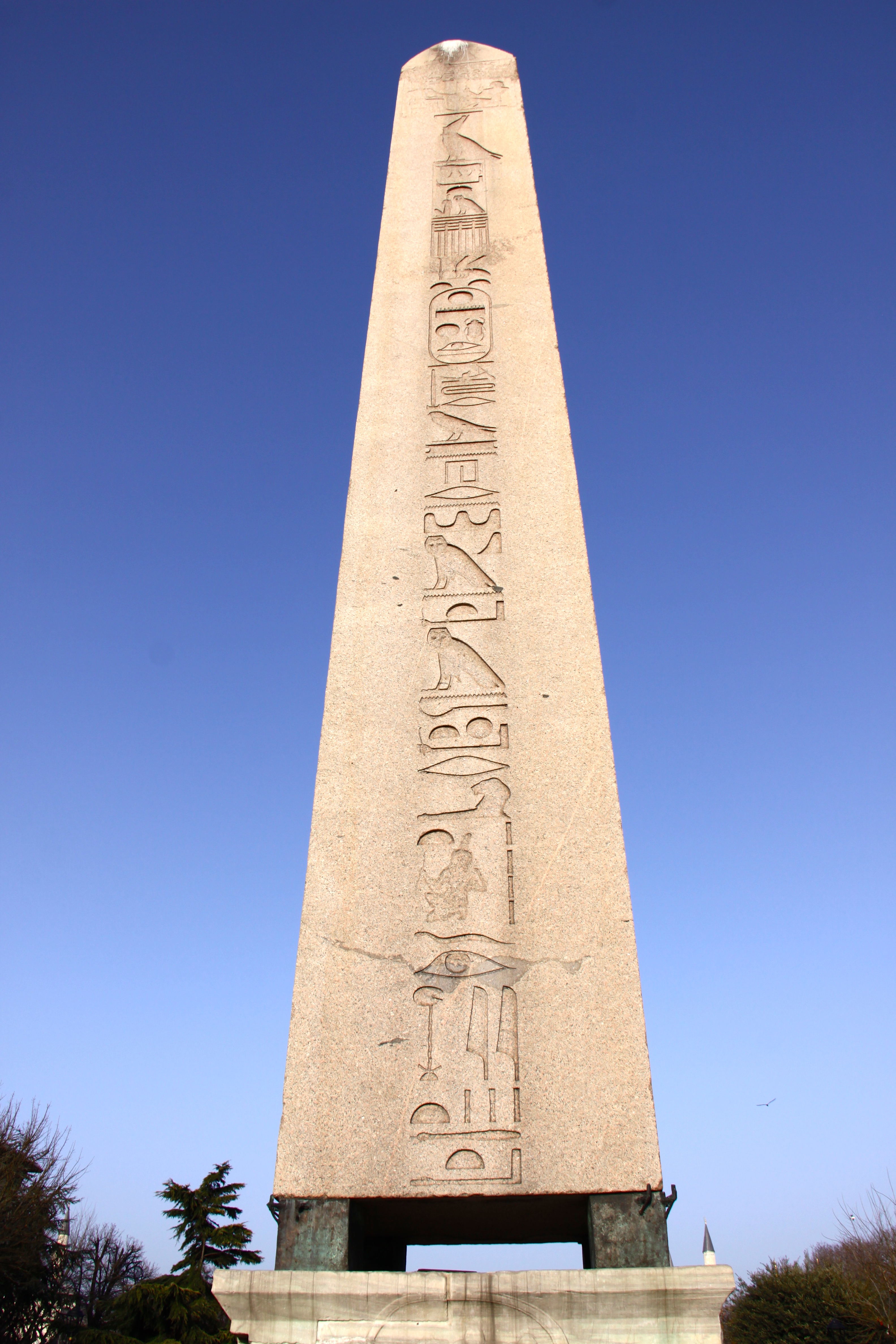
In the Hippodrome, the former stadium where Roman chariots raced and plebeians occasionally rioted, we once again saw the layers of history that characterize the Sultanahmet district. Several obelisks of various origins, including one taken from Egypt eons ago covered with beautifully clear hieroglyphics, were partially sunken into the ground a number of feet. After its glory days, the Hippodrome was demoted to a quarry/dumpsite. The accumulation of dirt raised its level many feet.

A brief side trip to Egypt. Now, who speaks hieroglyph?

A brief side trip to Egypt. Now, who speaks hieroglyph?

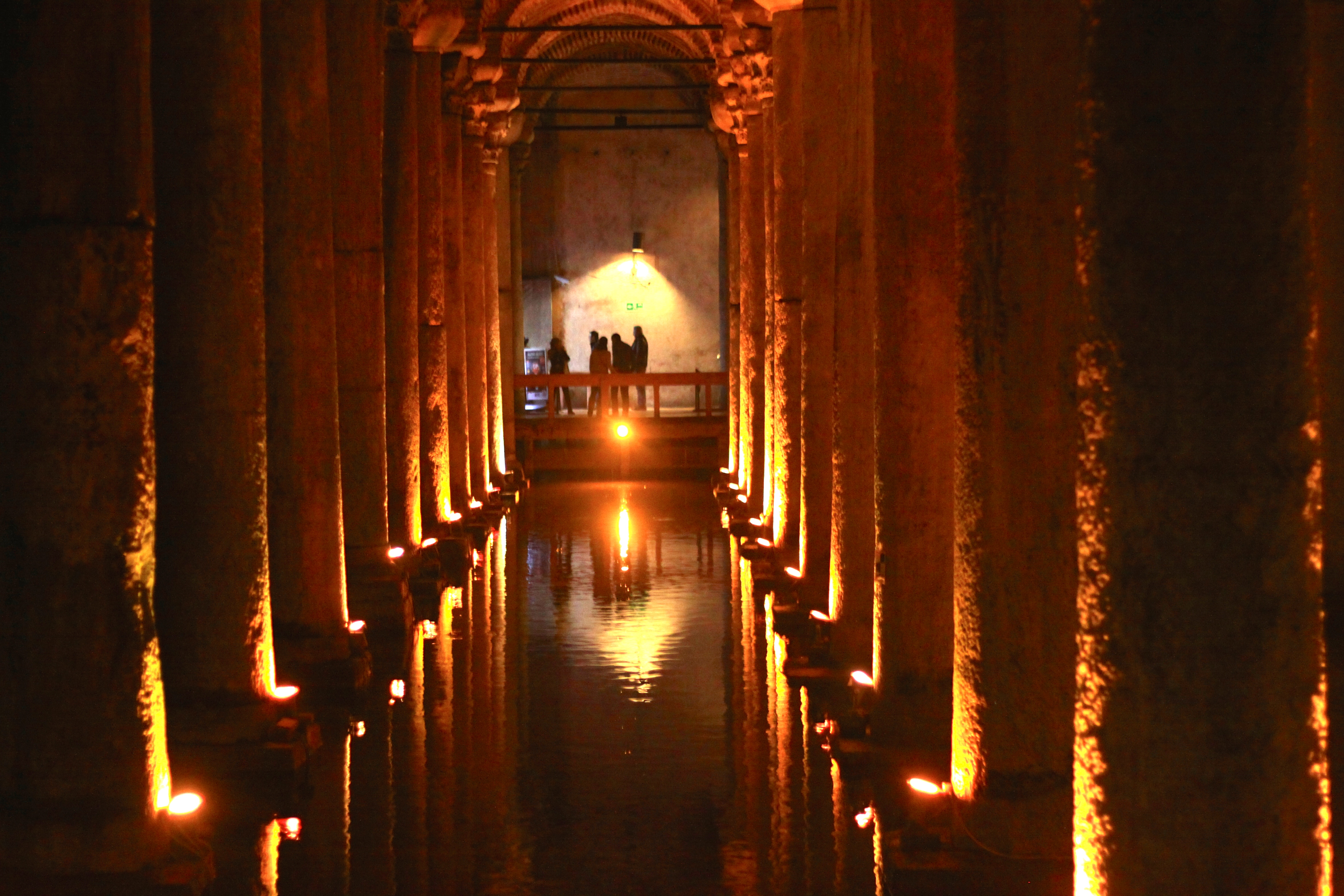
Speaking of glory days, I found the story of the so-called Basilica Cistern rather amusing. The great Byzantine emperor Justinian, who sponsored the construction of Hagia Sofia, also built a huge cistern under the city, supported by hundreds of columns. In later years, the Ottomans somehow forgot that this giant reservoir was there, and concluded that they were simply specially blessed because their wells were mysteriously always full. Today, the cistern is a drippy tourist trap. Just imagine a gigantic flooded basement and you’ll get the general picture!

Basilica Cistern

Or you can look at the specific picture.

Next we headed over to the Grand Bazaar. I felt a peculiar draw toward the place, because it’s half-dream, half-nightmare. Sometimes I’ll awake from wonderful dreams where I’m shopping in a splendid chocolate shop or picking out beautiful clothes from a heavenly Macy’s. Yet, in real life, malls cause me anxiety, and shopping tends to be a chore. In the Grand Bazaar, the tantalizing possibility of finding something rare and exotic meets the stressful reality of pushy merchants and thronging crowds. We found it nearly impossible to navigate so we definitely left some routes unexplored, but we did find a coffeeshop where we tried Turkish coffee (i.e. hot coffee sludge) and also salep, which we received more favorably. This hearty drink combines flour made from starchy orchid tubers with sugar and milk or water and comes dusted with cinnamon. As a winter beverage, it’s a good alternative to hot chocolate for warding off the cold.

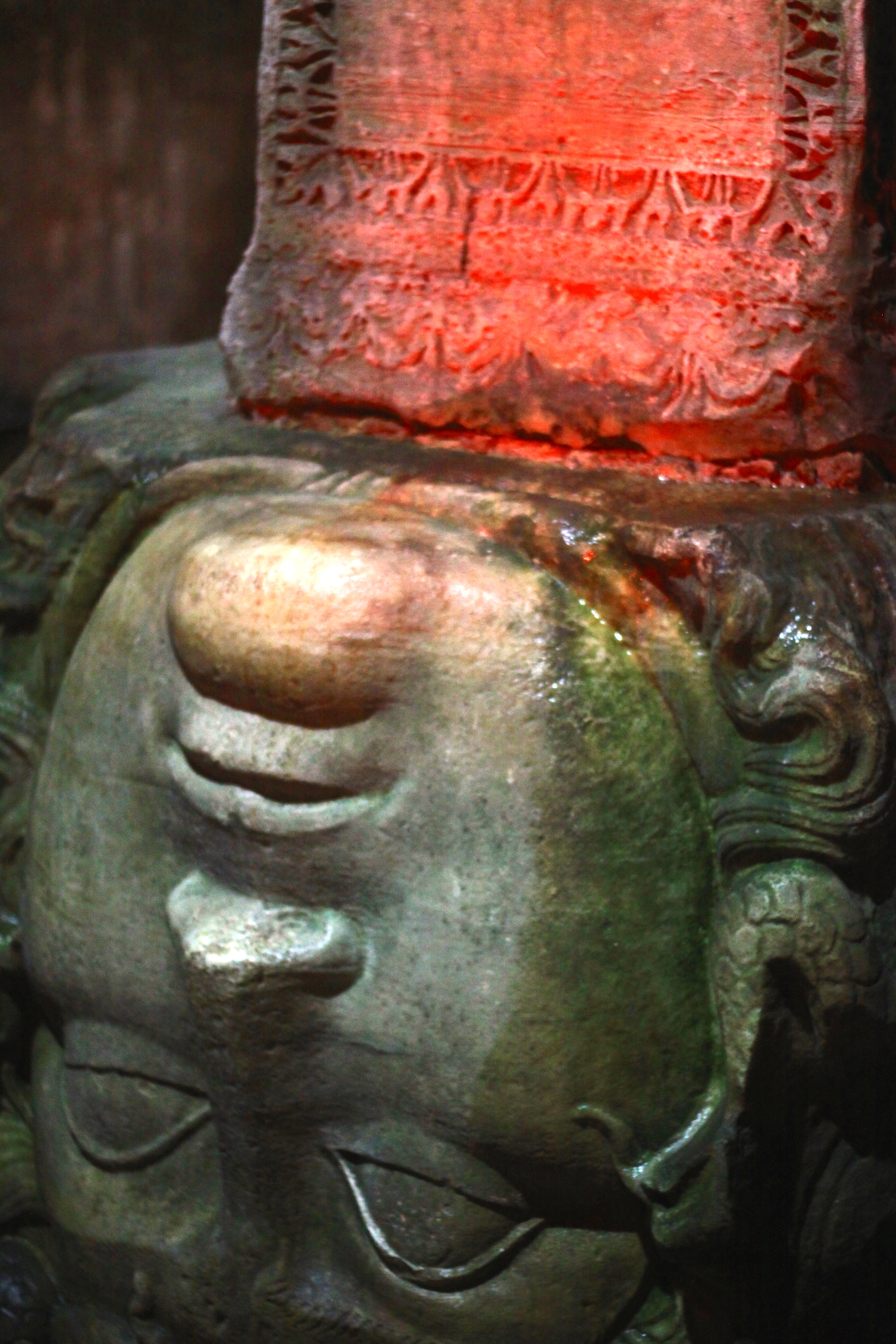
I don't have a photo of Turkish coffee, but I think Medusa is a decent substitute.

I don’t have a photo of Turkish coffee–but here’s Medusa! She looks like she could use some salep…

Well, I’ll see you in day 2!

Turkey for three

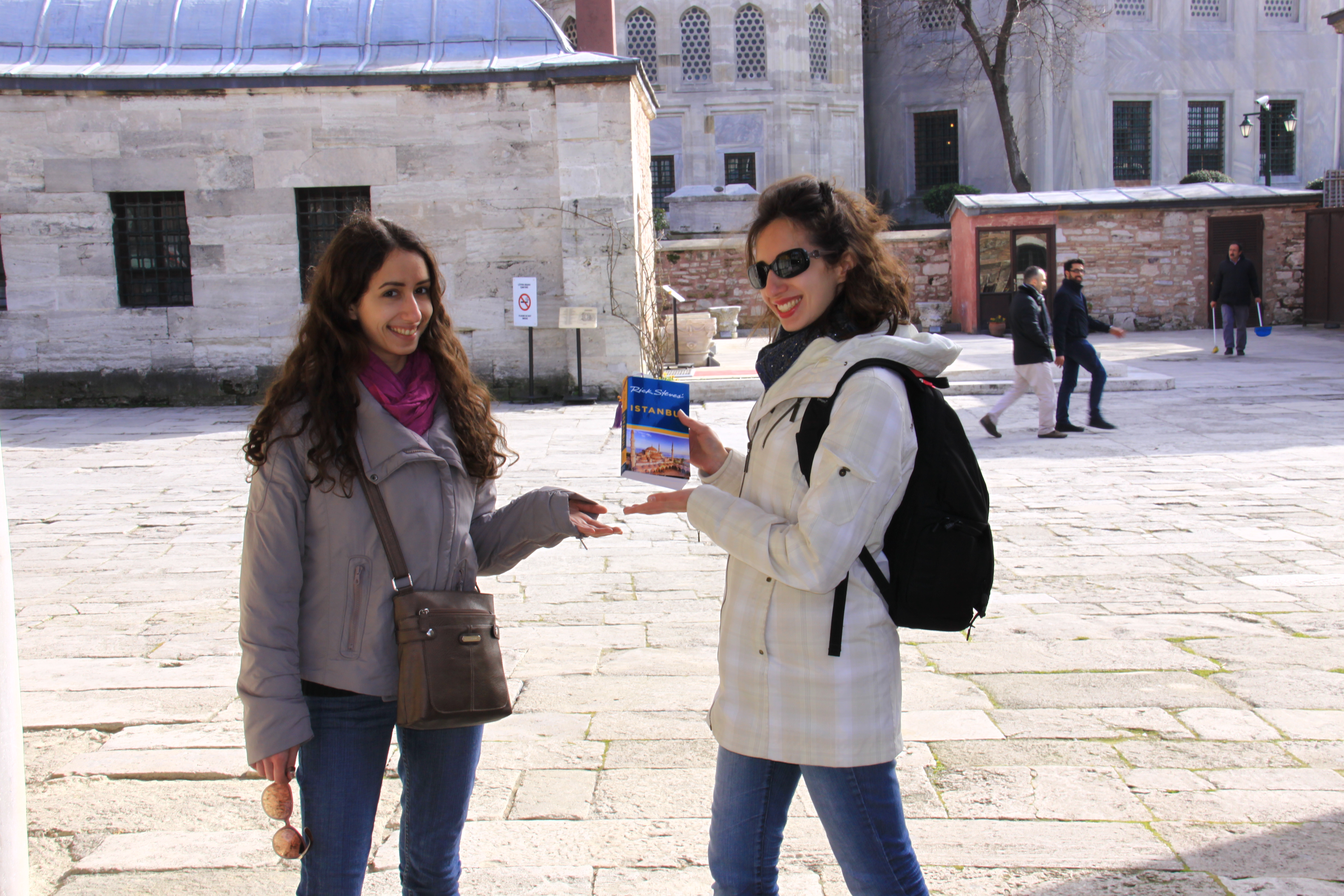
Last month, Sergey, Jasmine, and I set off to Turkey for a whirlwind adventure. After reading Rick Steves’ guidebook nearly cover to cover, I had put together a brutal itinerary that would test anyone’s traveling mettle—there were just so many things to see in so little time! And now so much to write about! If I get a book offer, then I’ll be sure to include every single detail in the manuscript, but for now I’ll stick with the abridged version of our six days in this ancient land, starting with…

Day 0: After a two-hour flight from Tel Aviv, on which we were treated to Turkish Airline’s “gourmet” airplane food, which they even allowed us to preview by passing out menus before serving us as if we were attending a fancy wedding, we arrived in the Istanbul airport. That was when I knew we had officially entered a different country: rather than the drafty buildings of Israel, which apparently chooses to ignore winter rather than react to it, the terminal was heated to the point of discomfort.

We met a person working for the airport transfer company, which manages rides from the airport to hotels, and noticed an apparent typo in his information: we were going to be taken to “Hotel Nomade” rather than the place we’d reserved, “Noah’s Ark.”

“Maybe that’s its Turkish name?” I speculated. Turkish is all Greek to me.

So, after informing him of the mistake, we got into a big van with a silent driver. Well, he was silent aside from phlegmy coughs and wheezes. In the old city, we pulled up in front of the correct hotel, with its “Noah’s Ark” sign, but something was clearly awry as shutters covered its entrance.

Wordlessly, the driver pulled away then backed his giant van all the way down another street, where he got out and removed our luggage.

“I guess that’s our cue?”

We disembarked. No hotel was in sight, just a restaurant packed with night owls, but then a man appeared and helped us with our luggage into a small building beside the restaurant.

“Did Noah’s Ark tell you about the situation?” he asked.

“The…situation?”

“They closed. Out of business—two days ago. They rebooked you in this hotel.”

At this point it was 1:00 AM, and we weren’t about to start researching another hotel, so we accepted the room. The triple was fairly tiny and bare, and one patch of the fake wood floor felt like it was going to collapse every time we stepped on it, but at least there were beds.

Then we noticed the bathroom. It had glass doors. Right in front of the toilet.

We did some research and found that this hotel was recently renovated under the guidance of a French designer. So, apparently this designer valued classy touches like glass doors over boring orthodoxies like privacy. In my humble design opinion, glass doors are good for places where you’d like a clear view, such as a garden or yard—not, you know, the toilet.

(Also, to compound the bathroom problem, through a vent near the sink, we could clearly hear our neighbor’s conversations when they spoke in or near their own bathroom. Nothing scandalous, but still–what did they hear us talking about? …Probably about the bathroom.)

Long story short, we spent nights one and two at this hotel after redesigning the door by draping it with the closet’s curtain, then moved to a better hotel a few blocks away. Never before had we been so happy to behold a blessedly solid, opaque door to the bathroom!

The Pilgrims

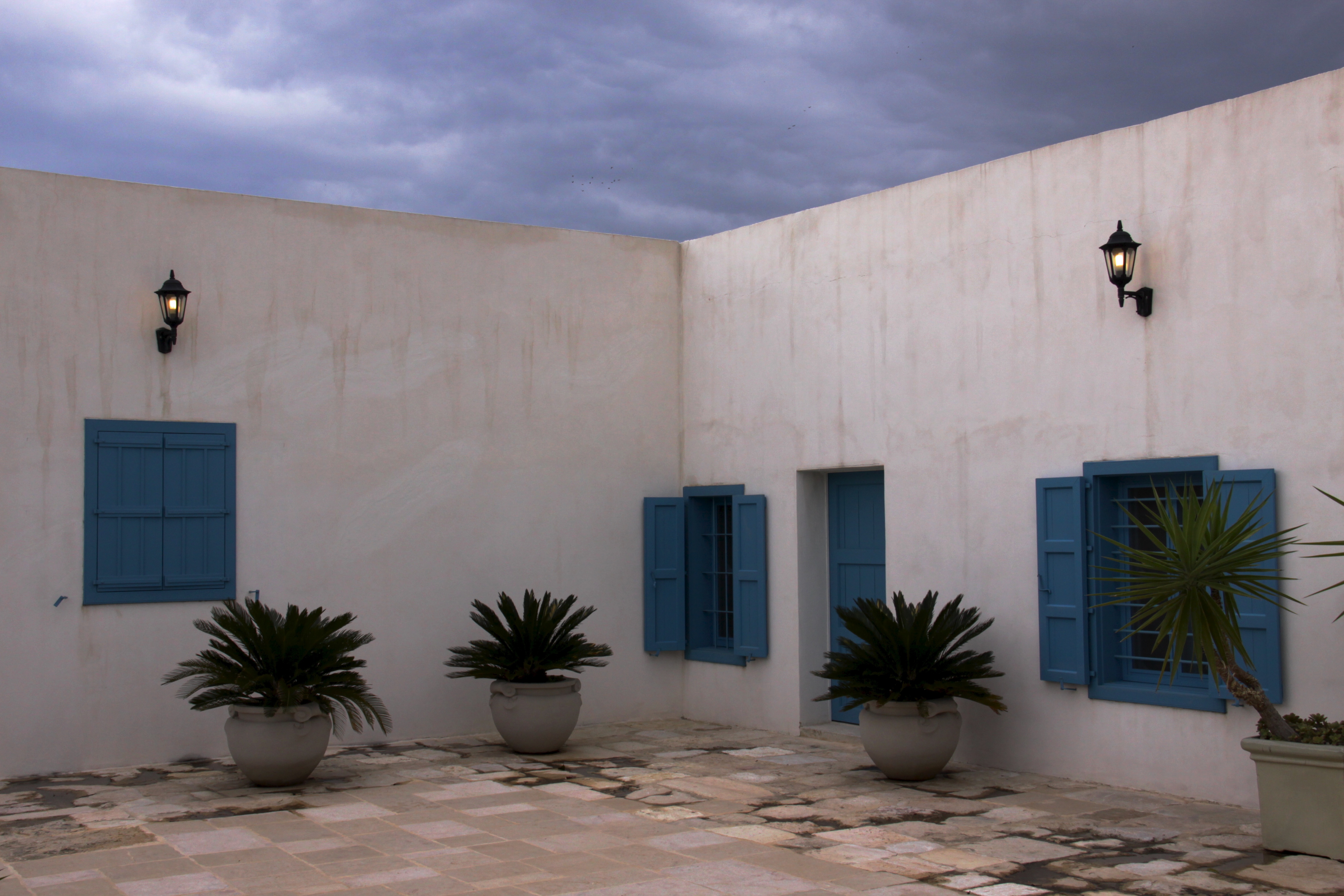
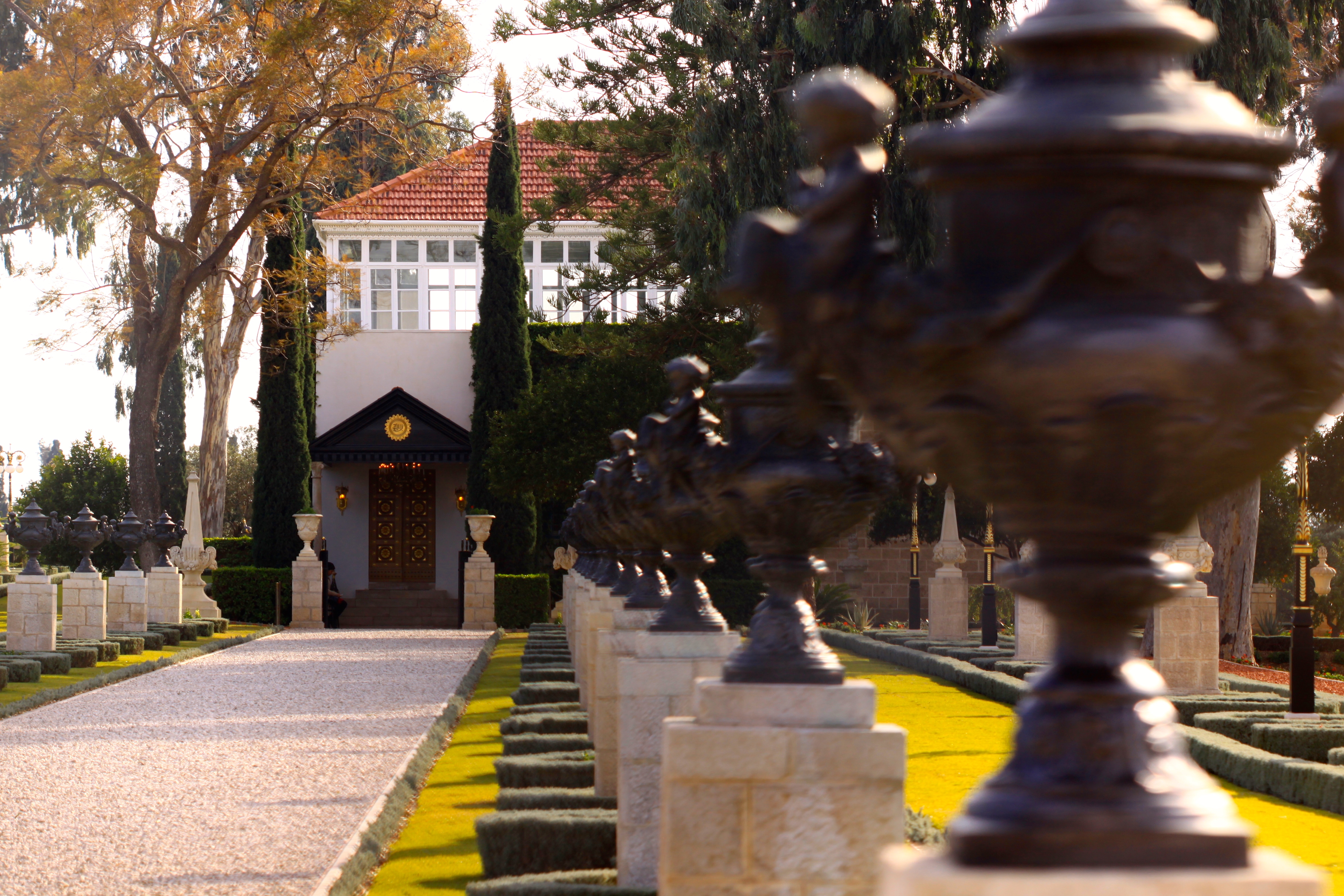
Courtyard of building at Junayn Garden in Nahariyya, Israel

Courtyard of building at Junayn Garden in Nahariyya, Israel

As I sit here writing, wind buffets the windowpanes, driving rain against our building. It howls like a banshee. It gusts, it moans, it wails, it whines. This is the second night of this storm. This morning, after a night of half-sleeping to the thudding sounds of the wind banging against our windows, we awoke to find Haifa coated in dirt, apparently the result of a marriage between a rainstorm and dust storm. Now it continues to rain, but just water without the dirt. This long-lived storm reminds me of the one that made our Pilgrimage so memorable.

A few days into our nine-day Pilgrimage, a strong thunderstorm drove sheets of rain down so hard that our windows leaked, inspiring us to batten down the hatches—or in this case, to lower our plastic shutters over the glass, partially to block out the water, partially because we feared the wind would smash our windows. This was the first time my mom and sister got to experience the full volume of a storm as heard from our flat. It sounded like the world was ending, as thunder coupled with the thudding of wind on windowpane. With the storm came the insidious damp cold that seeps into every pore. The storm started in the evening and was still going strong in the morning, when we went to visit some of the sites in Akká associated with Bahá’u’lláh.

Akká boasts a vast and varied history, oscillating between glory and ruin depending on the ruler, which we had learned about the previous weekend on our visit to the underground crusader city. Yet, by the time of Bahá’u’lláh in the 19th century, it had become a penal colony of the ailing Ottoman Empire. Along with His family and some followers, He was banished there from the previous place of exile in Adrianople (today’s Edirne, Turkey).

The nasty weather was an appropriate reminder that the Akká of that time was a far cry from the bustling touristy city we see today. Wrapped in many layers and carrying umbrellas like lances to battle the storm, we stepped off our bus into the gray day and walked through the old city gate to the prison cells where Bahá’u’lláh’s family lived after their arrival. Chilled to the bone even within the stone walls of the prison citadel, it was hard to imagine surviving for two years in these barren quarters. Outside the windows, the sea crashed against the city ramparts, foaming angrily.

I had the same feeling in the next house the family occupied. Although surely an improvement over the desolate prison, the house still bore an aura of oppression about it. Looking out the window of a room upstairs upon the block of cold stone houses and the leaden sky above, with nary a tree or creature in sight to relieve the harsh view, I could begin to imagine the pain of living as a prisoner.

That was the dark part of Pilgrimage, which helped us appreciate its lighter times: our time spent together, and the eventual return of the sun for our visits to Bahjí, Junayn Garden, and Holy Places in Haifa.

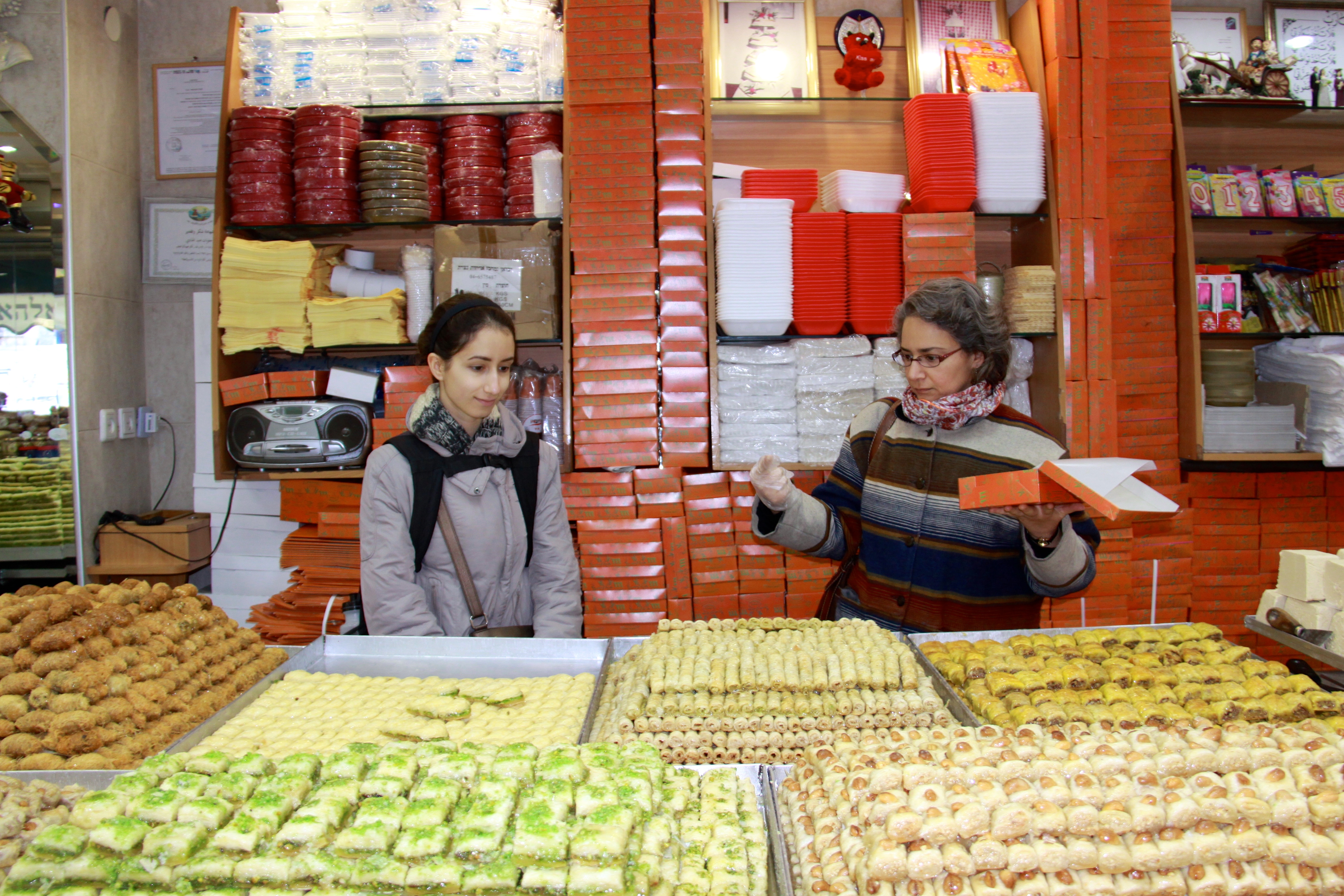
Light moments had to include a trip to the big baklava mountain, where the nutty pastry naturally accumulates in waist-high drifts.

Light moments had to include a trip to the big baklava mountain, where the nutty pastry naturally accumulates in waist-high drifts.

NB: Bahá’í pilgrimage consists of nine days during which pilgrims visit the Holy Places in Akká, Haifa, and Nahariyya associated with the history of the Faith in the Holy Land—and most importantly pray at the Shrines built at the resting-places of our Central Figures: Bahá’u’lláh, the Báb, and ‘Abdu’l-Bahá. If a Bahá’í has the financial resources, he is supposed to make pilgrimage at least once in his life as a means of spiritual deepening.

Shrine of Bahá'u'lláh at Bahjí, the most holy place on earth for Bahá'ís

Shrine of Bahá’u’lláh at Bahjí, the most holy place on earth for Bahá’ís

Animal Farm

One weekend, Sergey and I were invited to accompany some colleagues to a place called Hamat Gader. This destination boasts stinky hot springs that fill a giant bathing pool. Now, marinating myself along with flocks of sweaty strangers is not my usual cup of tea, but we figured this was a good chance to see some of the Galilee region.

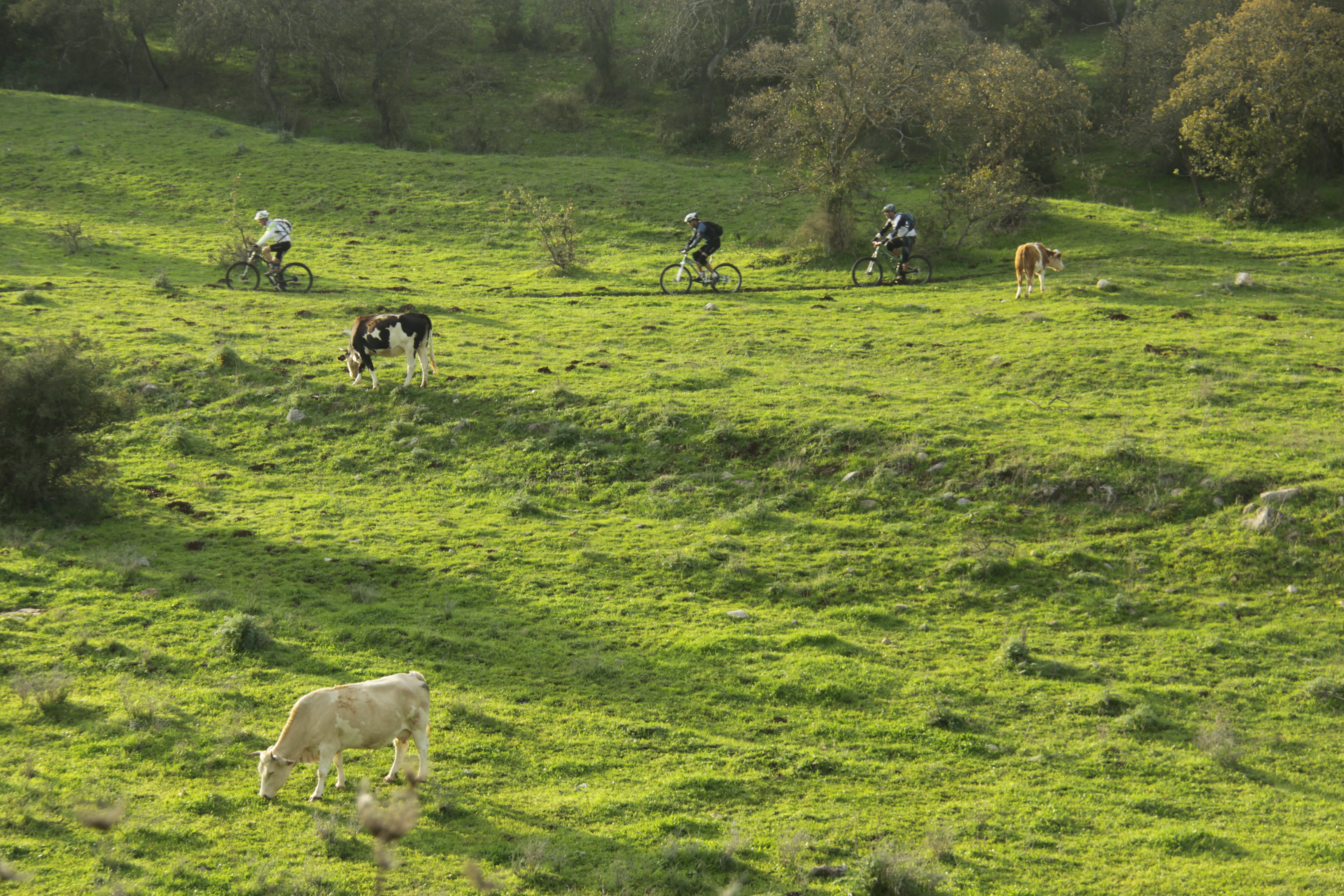
We were right. The winter rains had turned the hills and valleys of Galilee a vibrant green, shining like an emerald in the morning light. En route to our destination, we stopped at the most scenic gas station I’ve encountered. The station overlooked a field where cows grazed peacefully beside white cattle egrets. Occasionally this pastoral scene was interrupted by groups of bikers who zoomed down a path through the field, startling the cattle.

Cows and bikers

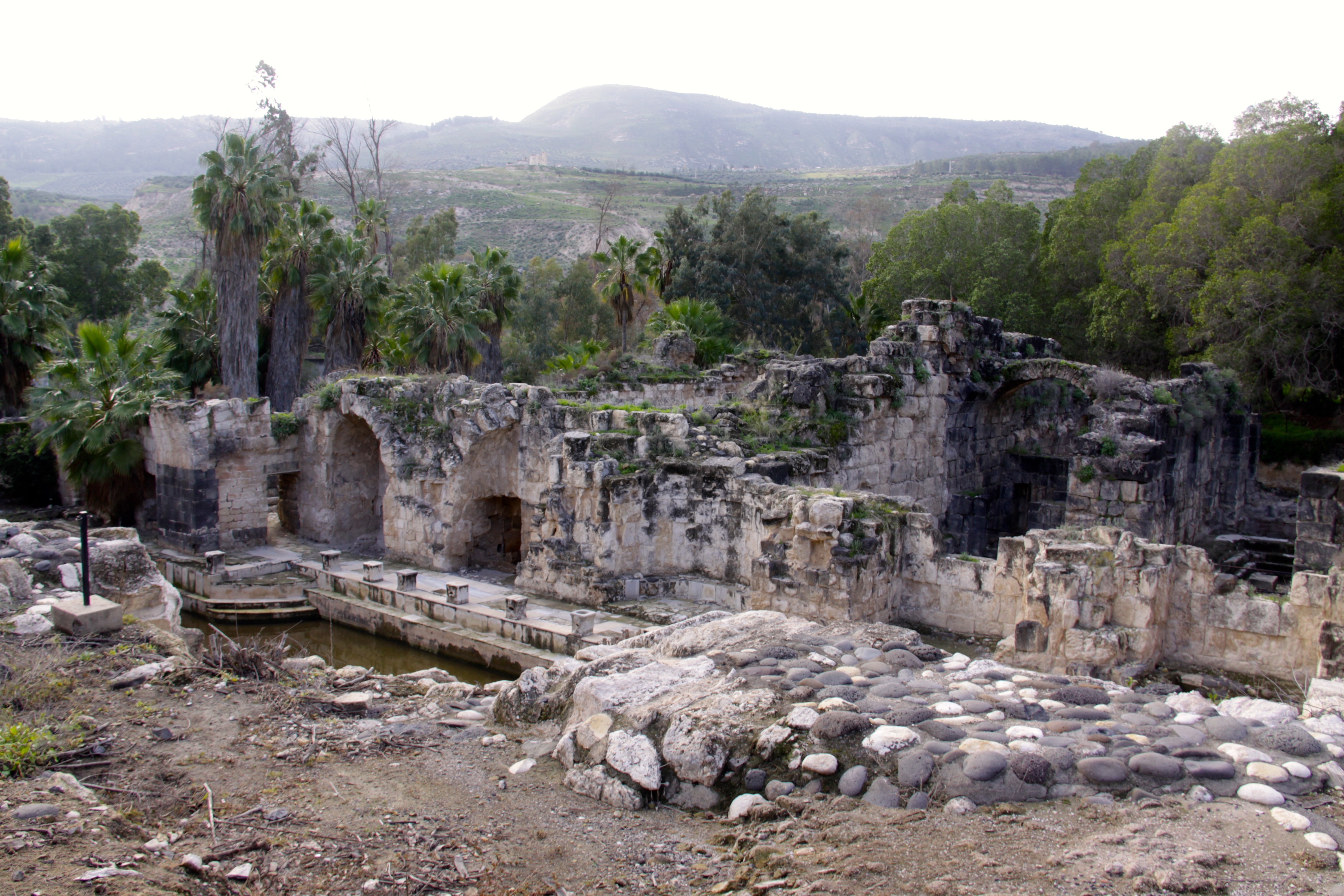
Back on the road, after driving along the border with Jordan, we arrived at Hamat Gader. Sergey and I set off to explore the flora and fauna of the park. We found the predecessor of today’s pool, the ruin of a Roman bath.

Roman bath

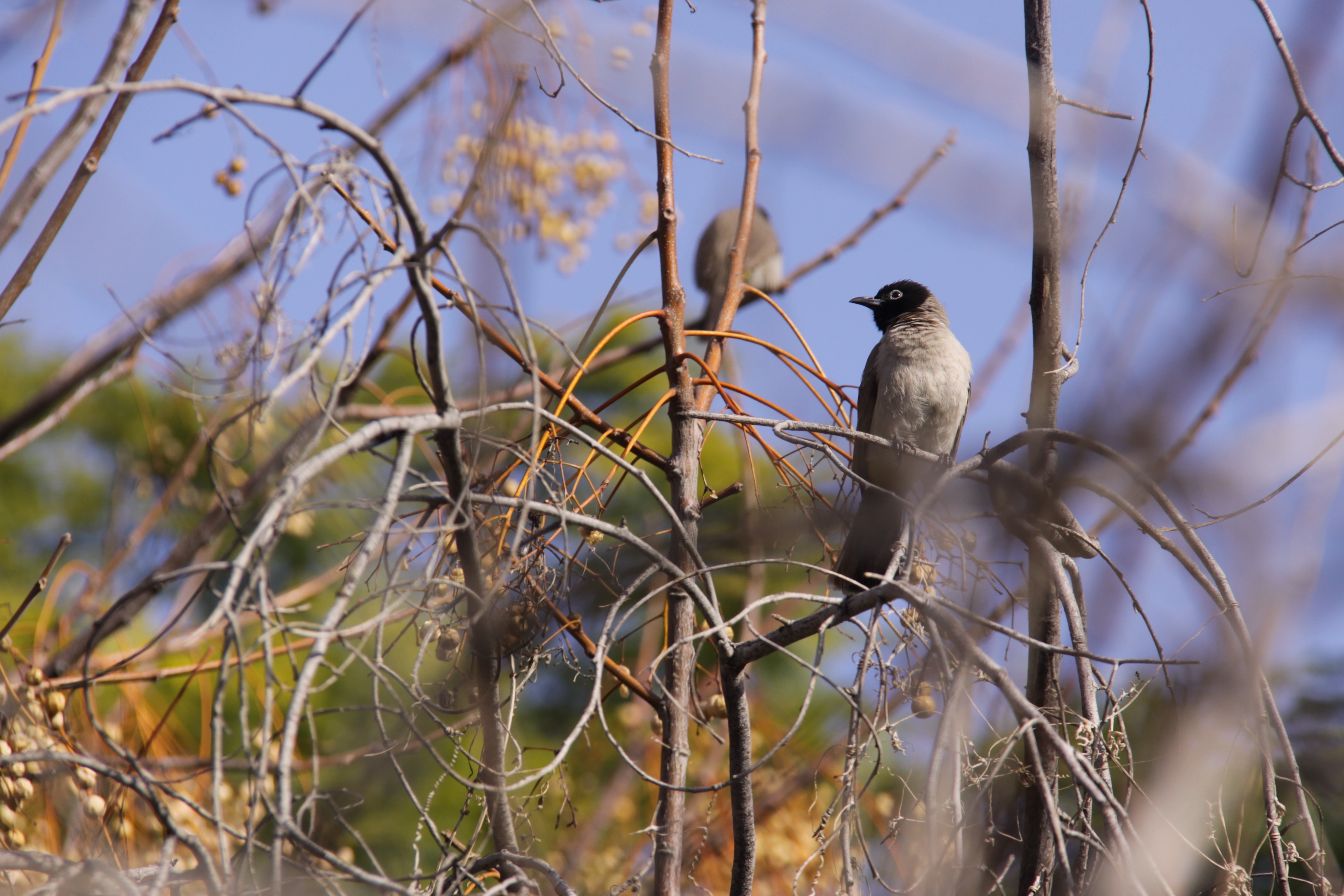
After documenting the ancient bath, I was distracted by a flock of birds: white-spectacled bulbuls twittering upon some trees near the ruin. Beyond them, I could just make out the shape of a mysterious green parrot, gazing impassively into the surrounding hills.

Bulbul

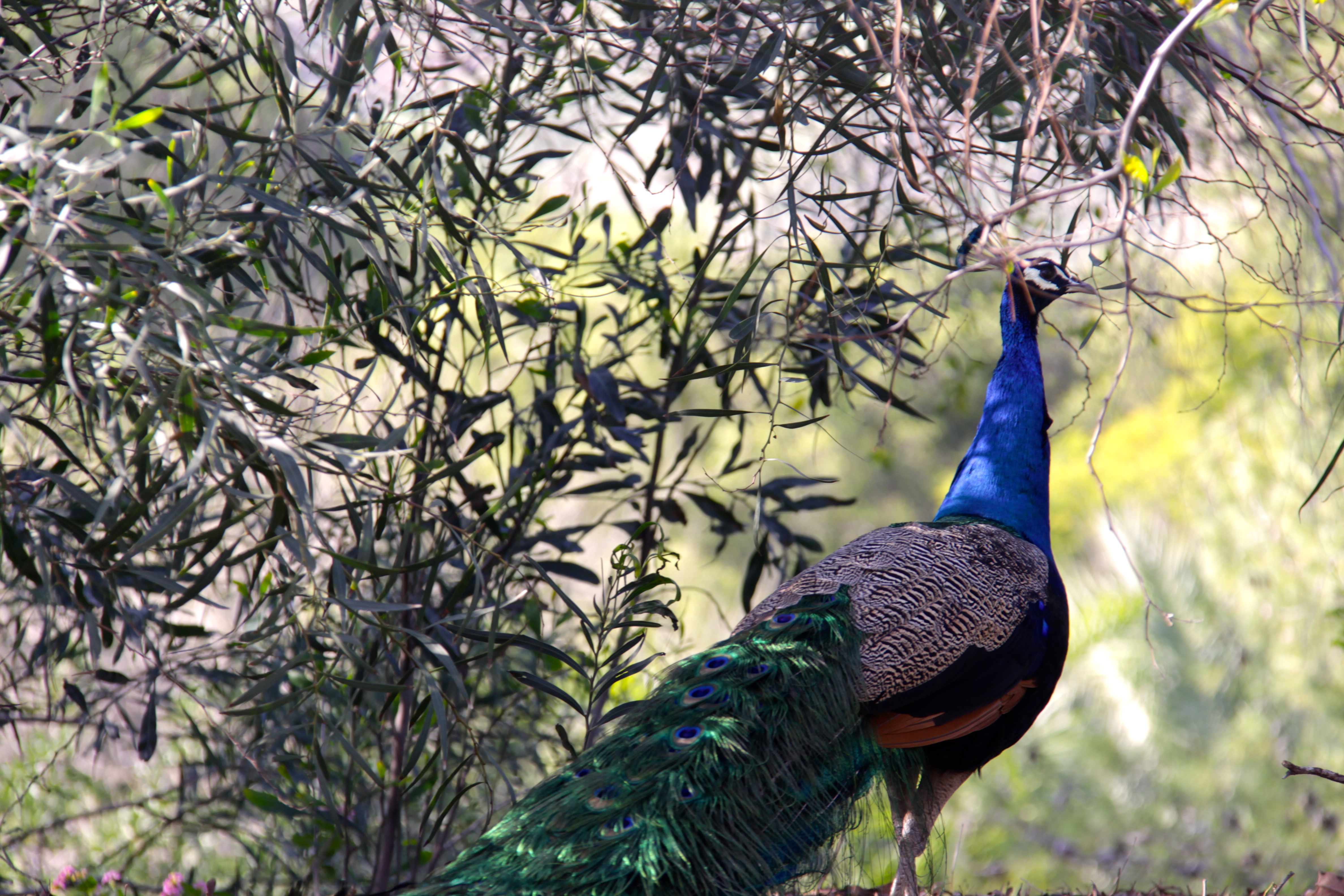
Then came the unmelodic squawk of an itinerant peacock. We gave chase. Above the ruins of a Roman amphitheater, we stalked him in pursuit of the perfect photo. He was not particularly interested, and gave us a final look of disdain before disappearing over the crest of the hill.

Peacock

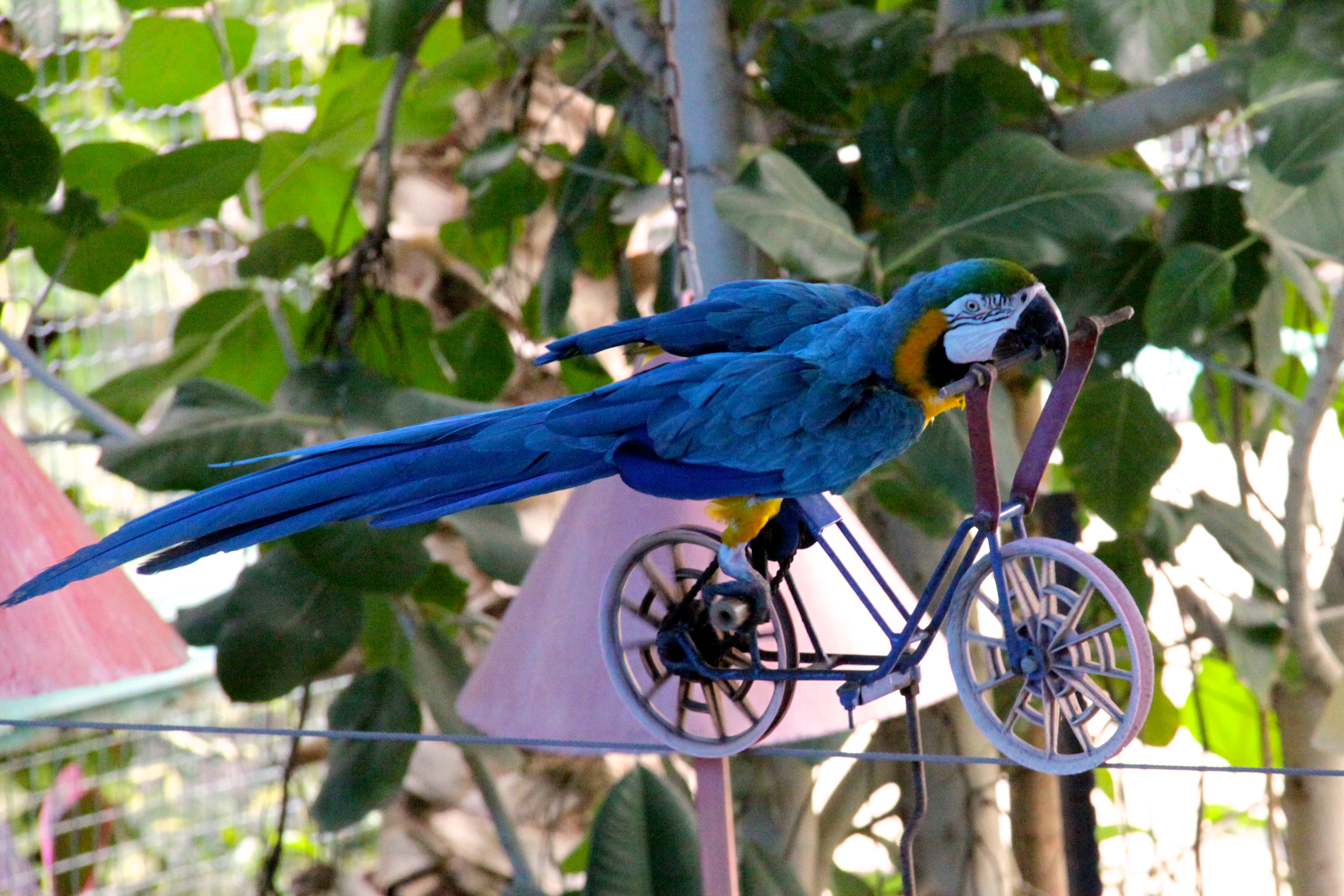
After our nature experience, we had a decidedly unnatural visit to the park’s “zoo,” which seemed more like a hapless mess of cramped terrariums and odd combinations of chickens and gazelles. Actually, perhaps that mysterious green parrot I saw was an escapee of the zoo’s tacky attraction, a parrot show. Sergey and I sat among hordes of tired parrots—I mean parents—and their shrieking children to watch parrots, macaws, and cockatiels perform tricks like pedaling a bicycle across a tightrope.

And a parrot biking across a tightrope.

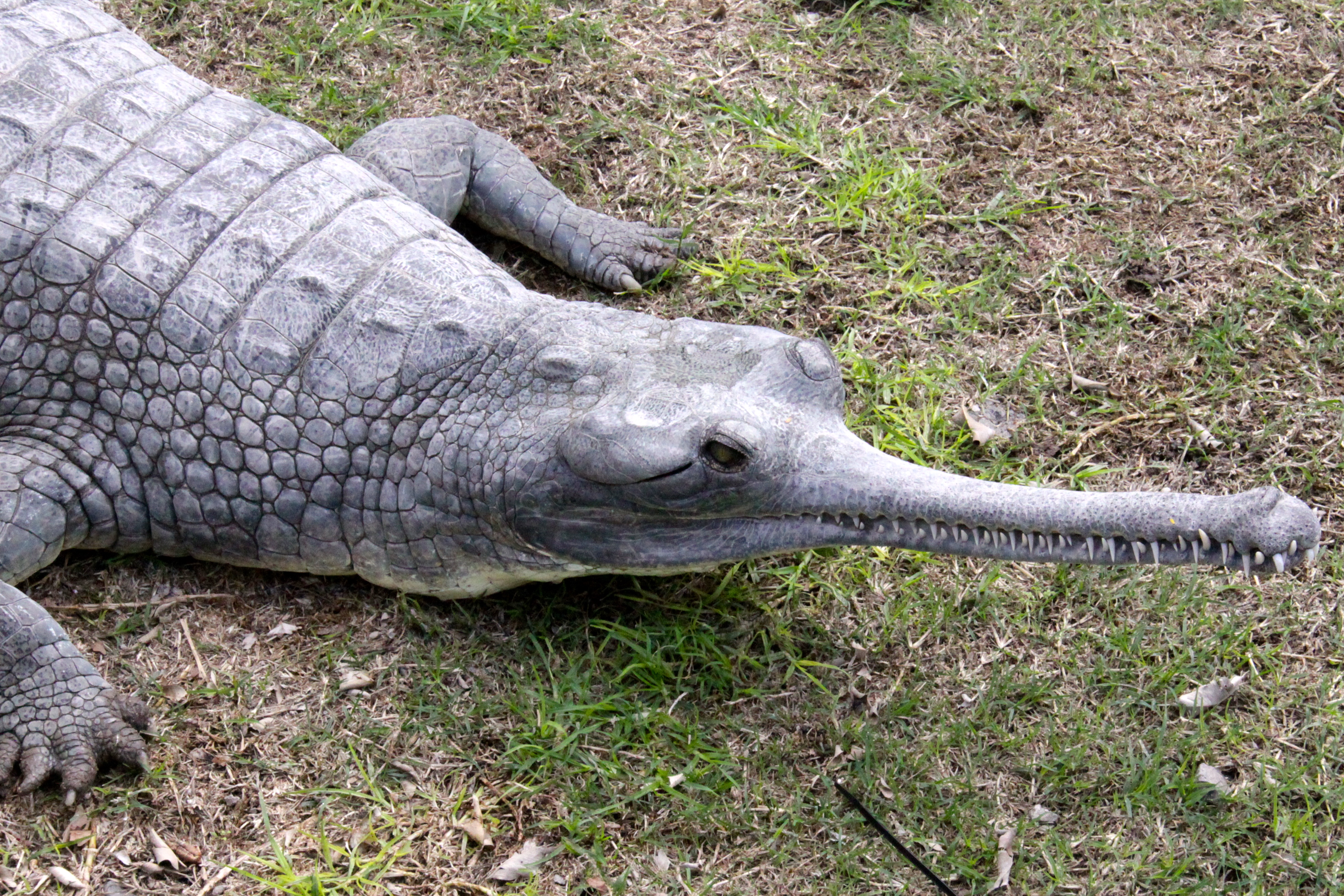
But the weirdest part was yet to come: the Alligator Farm. The farm consists of a series of enclosures tightly packed with alligators, crocodiles, caimans, and, strangest of all, gharials.

Pretty guy

These thin-snouted creatures look like something out of Dr. Seuss (especially the males, which sport a “sexy” bulb on the tip of their noses), but actually, they come from India, where they are extremely endangered. While at first their slender jaws seem like an evolutionary mistake, apparently the shape enables them to effectively hunt fish, and even to stun them with underwater jaw claps.

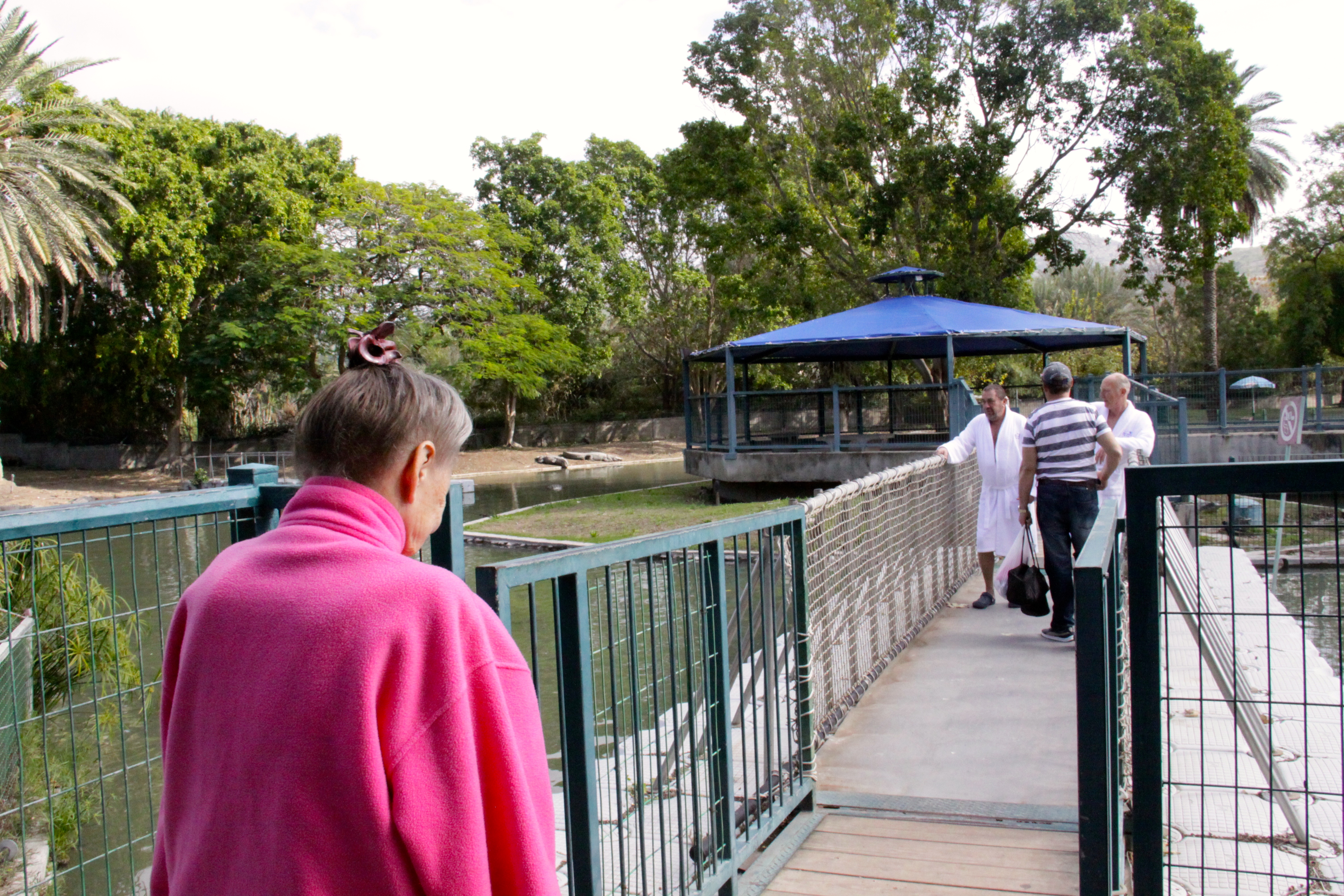
Rivaling the crocodilians in strangeness were our fellow visitors, who, clothed in bathrobes and flip-flops, apparently had emerged from the hot pool to cool down by strolling through the farm. I wonder what the crocs think of these oddly clad bipeds. Would he look good as a handbag?

Bathrobes

Soaking in the pool was…sulfuric. I was disappointed that afterwards my skin failed to sprout yellow crystals. What I will remember from this day are these comical snapshots of human-animal coexistence: spandexed bikers shepherding cows aside, and pink-skinned bathers walking between some of Earth’s oldest predators.

Dailyat al-Karmel

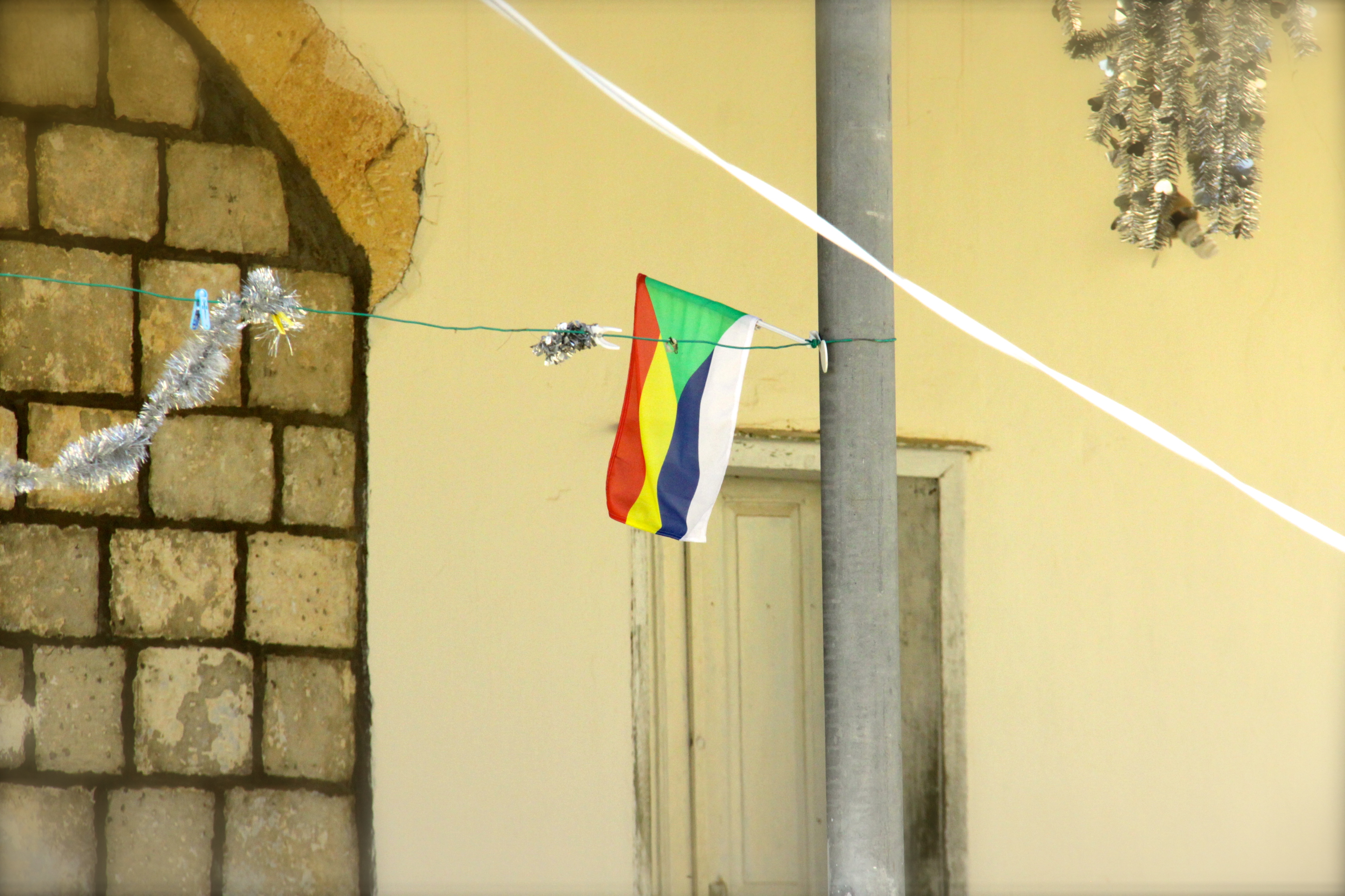
Druze five-color flag representing their five prophets.

Druze five-color flag representing their five prophets.

Frequently I hear reference to the “Druze village” on Mount Carmel, which summons a bunch of quaint huts in which the Druze peacefully paint pottery and bake their distinctive flatbread, which they serve topped with lebaneh (like sour cream cheese), tart zatar spice mix, olive oil, and fresh parsley. Driving through the sprawling “village” with its endless modern concrete apartments and houses, I realized my concept of a village didn’t quite match reality. We got off on the commercial strip, surrounded by souvenir shops and restaurants.

Dailyat al-Karmel is a town situated at the top of Mount Carmel, populated by Druze people. The Druze are a group that broke off from Islam over a thousand years ago to form their own syncretic religion. One of their tenets is obedience to and respect of the government wherever they reside, explaining why the Druze have fully participated in Israeli society, including serving in the military in the various wars. They are also known for their hospitality, which we experienced firsthand.

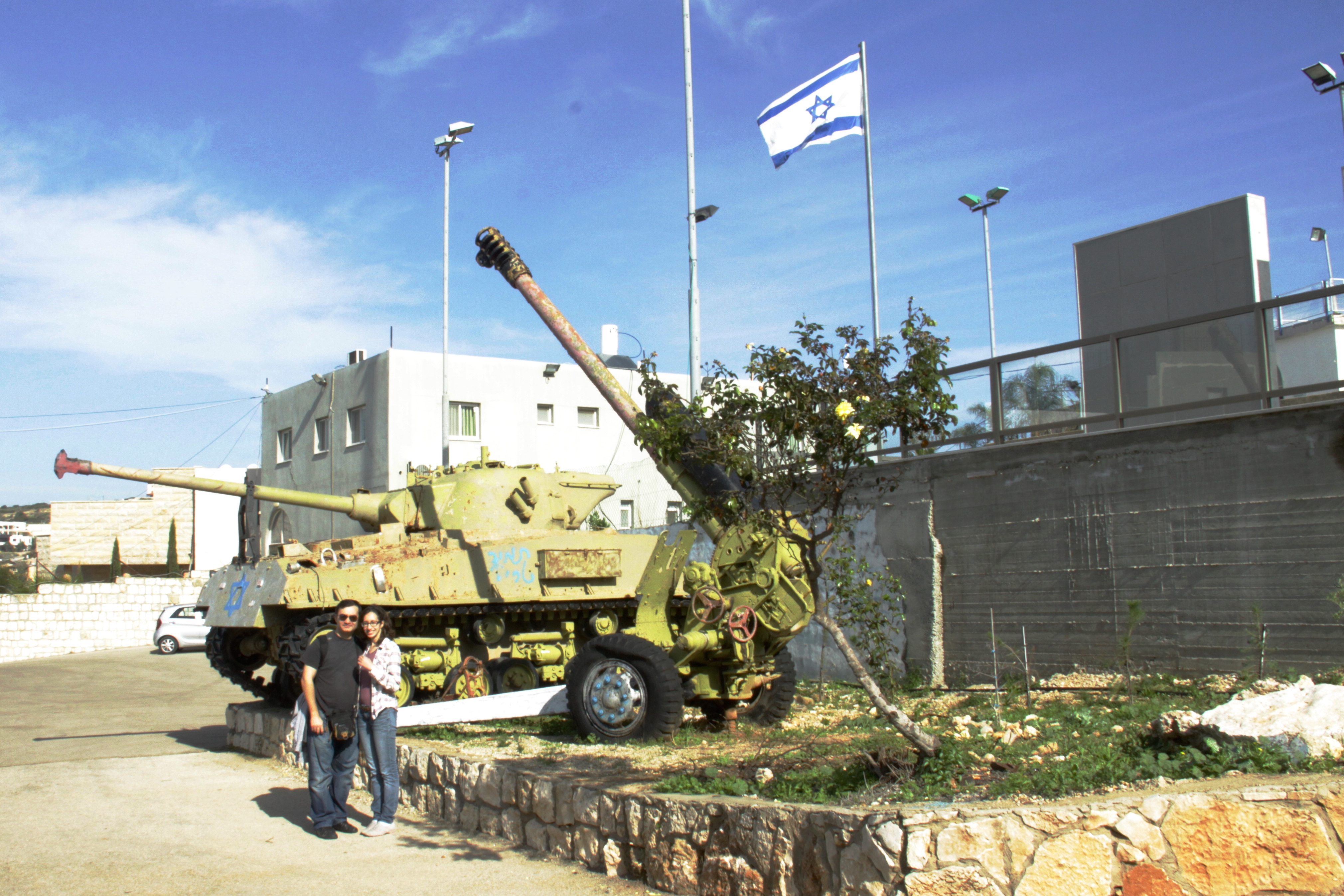
After walking up the commercial street, where you can find colorful textiles sold beside tacky statues (most notably a figurine of a seductively posed alien), we wandered onto a side street and found ourselves in front of a massive concrete domed structure. What was this place–a bomb shelter? A religious structure? No, it was a basketball court, as explained by the maintenance man who appeared to either guide us or shoo us off the property. Beside this odd dome were several tanks, apparently part of a war memorial. Sergey found this to be a romantic photo op.

Tanks near the giant dome

Tanks near the giant dome

Continuing our wanderings, I spotted a sign advertising Arabic coffee and we approached the building. To our surprise, rather than a café, we seemed to have stepped into someone’s living room. Sundry chairs stood around a large room, including stiff-backed chairs, armchairs, and couches. “Do you serve coffee?” we asked the man at the door, whose name was Zeedan. “Yes, yes,” he said, ushering us in. We sat down in some wicker armchairs and he poured us coffee in the usual miniature paper cups. Next came strawberries (in Israel, winter is strawberry season), and then baklava. Then he sat down beside us. This was unusual restaurant behavior, but he seemed to want to greet and talk to us. Unfortunately, the language barrier made conversation difficult beyond communicating where we were from, but at least we were able to write our names and notes in the gigantic guestbook he handed us, which had the notes of people from all over the world. It was strange to think that this sleepy town would be a crossroads for so many travelers, but nevertheless, the photographs cluttering the walls evidenced the acclaim of this town and this restaurant. One showed the president of Israel shaking Zeedan’s hand.

After some time chatting among ourselves, we decided to depart. When we asked for the bill, we were told it was all on the house. How very strange we felt not paying for our snack, and how charmed to be hosted so graciously, strangers as we were to Zeedan and his family! I guess that is wherein lies the secret to why this town can still be dubbed a “village”–despite the SUVs wending through its narrow lanes and the modernity all around, it retains a neighborly, hospitable culture.


Applied!

My four-month saga of grad school applications is finally at a close! I’ve benefitted from a great deal of support en route. My parents reviewed every single one of my ten statements of purpose, and Sergey took on most of the housework while I was at work. Well, at least now I feel like I’ve retroactively justified the position I held in my senior year of college as “grad school application essay writing mentor”–having taken my own advice and used some of the handouts I designed in that role, I’d say most of my tips were pretty solid.

During my time as a mentor, I met with a young woman who was applying to 20 law schools to help her with the statements of purpose. I thought she was kind of crazy to apply to so many programs. Now I know that even 10 is pushing the limits of sanity. I can either feel very idealistic about the potential of higher education or cynical about the game of admissions. After trying to tailor so many boilerplate statements to make each program feel special–and calculating my GPA three different ways, obsessing over my CV formatting, trying to make part of my thesis work as a 20-page paper, and so on, I’m definitely feeling on the cynical side, as in, “Come on! I’m paying you $75 just to review this application, shouldn’t that tell you I’m actually interested in your program?” I think (and hope) that by the time the admissions decisions arrive a few months from now, I’ll have returned to the idealistic side!

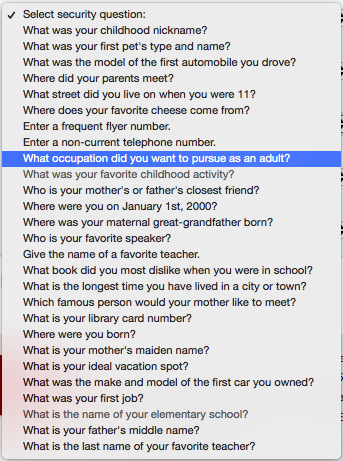
The applications were not without their humor. For example, the password security questions got quite creative:

Security questions

What famous person would my mom want to meet? Where does my favorite cheese come from? Do I even have a library card? WHO AM I???

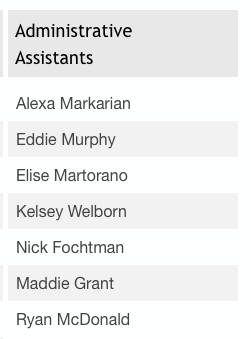
And did you know that in an effort to increase their publicity, many universities recruit celebrities as administrative assistants?

Eddie Murphy

Some application forms offered a very long list of possibilities for degrees obtained. I had some fun looking through the hundred names. I think my favorite choice was “Bachiller,” the degree awarded to very chill graduates of Surfer Dude U.

Mount Holyoke should offer this degree.

Mount Holyoke should offer this degree.

When I said humor, I also meant “frustration.” After editing my statements and writing sample until I was questioning every preposition, not to mention befuddled about the distinction between “like” and “such as,” I couldn’t help but feel a bit irked when the English department websites had obvious mistakes. I mean, just look at this horrendously unnecessary comma between “consistent” and “cooperative”! That is not a coordinating conjunction! Go watch Schoolhouse Rock!

Uncoordinated conjunction

And then there were the choices of interests, which often took the form of checkboxes in the application form. One school had the bright idea of limiting choices to only three interests, presumably because taking on students with wider-ranging curiosities would be too much work.

3 interests


Now I am left feeling that I omitted one key element of my experience from my CV: professional applicant. I hope that at some point, grad schools can unify around a single common application.

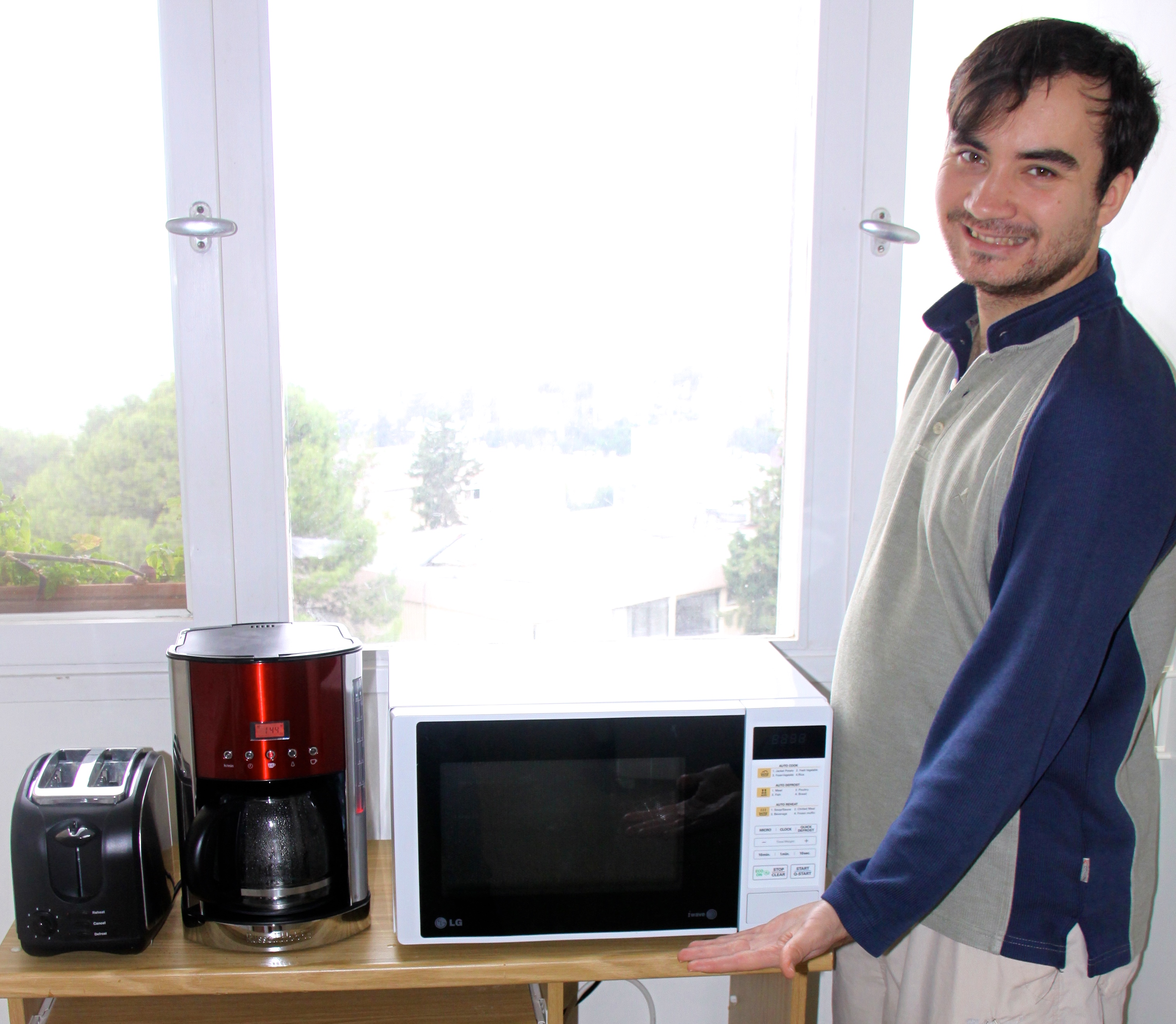
On a different topic from applications–appliances! Sergey and I have finally invested in some kitchen appliances, like the recent technological breakthrough known as “micro-waver.” I think that’s what it’s called, at least… We’re also quite excited about our new coffeemaker, a step forward from our current simple drip filter. This coffeemaker has a timer, so it can automatically start brewing coffee while we’re struggling to wake up at 6:30. Now when I stumble into the kitchen, bleary-eyed and foggy-headed, I will be guided by the comforting gurgles and familiar scent of percolation.

My Vanna White

My Vanna White

We are ready to make coffee for up to 12 guests, or a few caffeine-addicted ones (Mommy and Jasmine?).

Tests and tribulations, trials and travails

Boy, there are sure a lot of synonyms for “tribulations” that start with “t.” Thank you, English language, for offering so many opportunities for alliteration (and assonance).

I had to take a break from filling out applications to fill you in, dear reader. Life has been proceeding routinely since I last wrote, with a few exceptions:

1) Both my dad and Sergey had birthdays this month; Sergey is embarking on the first year of the third decade of his life. That is a complicated way of saying he turned 29. I wanted to get him flowers, but the shopkeeper sympathetically informed me that those are only sold on holidays, so I got him chocolate praline hearts and a Kinder egg instead. Out of the Kinder egg hatched a plastic bracelet ornamented with lion face stickers, which I believe has been re-gifted to me. It fits perfectly!

2) I was made co-emergency manager for the staff in my neighborhood zone because I am an excellent runner and would surely do well pulling people out of rubble. In my acceptance speech, I quoth, “Are you sure you wouldn’t rather ask Sergey?” So, more than ever before, I am really hoping Israel and Palestine cool down their tensions. At least I now boast the qualification of knowing the difference between vacuum cleaner noise and missile sirens.

3) The GRE. This forms my central subject (and the reason for the title of the post), so bear with me–I promise to make standardized testing entertaining!

Once upon a Tuesday, Sergey and I set out for our relaxing day-trip early. From crowded bus to crowded train to crowded bus we went until we reached the testing center in the Ramat Gan district of Tel Aviv. The Prometric site is located in a college that looks like it hasn’t undergone much change since the 1960s. Can I note that college students are starting to look pretty young to me? Goodness, how I’ve aged. Just preparing to eventually be an out-of-touch silver-haired professor…by the time I’m 30.

We poked our heads into the small facility, and the test proctor came to get my information. She was a lady in her early 60s, perhaps, who gave me an affectionate squeeze and told me that my scores would be good. I have to give this woman kudos. I don’t imagine that proctoring tests and interacting with nervous test-takers full time is an especially stimulating job, but she showed a good deal of human kindness. On my break, she handed me half of a clementine she had just peeled, for example. Also, now that I think of it, the bus driver en route to the college also went out of his way to help us. Sergey had asked about our destination when we boarded, and as he was about to pull away from one stop, the driver remembered this and communicated that we should get off.

Anyway, at the test center, I underwent an interesting bevy of checks. First I had to write out an affirmation of ethics–in cursive. It took me five minutes to write two sentences, clutching the pen like a tot just learning how to form letters. Thankfully, ETS is not scoring me based on the quality of my cursive. Then I was of course scanned with a metal detector, which is standard procedure in Israel. But the crowning ritual in this strange ceremony involved the Stripping of Worldly Attachments and the Turning of the Pockets. I was informed that my analog wristwatch and my packets of facial tissues, indispensable due to my constant allergies, had to remain in my locked cubby. After removal, I showed off my bare, ethical wrists to the video camera, in accordance with instructions. (I got a Prometric-approved tissue to replace my packets, don’t worry. And at the end of the test I disposed of this tissue in front of the watchful eye of the camera to prove I hadn’t transcribed test questions on it.) Then, in front of the video camera, I had to demonstrate that my pockets were totally empty. This raised profound questions I had never before confronted: how does one turn the butt pockets on jeans inside out? Or decorative breast pockets on flannel shirts? And is someone on the other end of the video feed laughing at my performance? For what it’s worth, the proctor let me know she personally hated this particular requirement.
I can’t say much about the test, both because it’s all a blur of 35-minute periods passing too quickly yet four hours dragging on and on, and because I swore to full confidentiality in that cursive statement. Sorry. I know you were really looking forward to hearing some sample math problems.
What I can advise is this. Make cookies part of your test prep. I had a ten-minute break in the middle of the test, during which I stuffed my face with as many homemade oatmeal raisin cookies as possible. These cookies offer the tester two benefits: a lot of calories and a bit of protein, and fond memories of Mommy’s cookies. During a time like the GRE, any fond memory is useful!

So, with the test over, Sergey and I spent the rest of our day in Jaffa, the charming old city of Tel Aviv, where we had what was probably our most delicious restaurant meal post-US trip and contemplated the dark waters of the Mediterranean. And then, as must happen to every vacation, our relaxing time off drew to a close, and we made our way back north.

The Wild Kingdom

Bad hair day

Now that my brain has melted into a soup in which float the ratio of the legs of a 30-60-90 degree triangle (1 to the square root of 3), the application requirements for various graduate programs, faculty profiles with photos that blur into a smiling, silver-haired, bespectacled amalgam, and fancy terms to describe my academic interests in teaching and writing (I mean “pedagogy” and “composition studies”), I feel the time has come for a return to the blog. Somehow, writing timed 30-minute practice GRE essays cannot compare with free writing–and I must say, my newfound ability to churn out two 700-word essays in one hour leaves little excuse for my lack of entries.

Well, I could go on, but I’d rather not ramble. While I’d prefer to be less of a GRE hermit and thrall to my applications, I know these applications and the revival of math skills for the GRE are probably making me smarter and forcing me to evaluate my history and purpose. So, no complaining–let’s talk about my favorite therapeutic topic, animals!

In the rolling hills of south-central Wisconsin roam camelids hailing from further south–South America, that is. At the honeymoon B&B, Sergey and I encountered a pair of alpacas. Alpacas are much like llamas, but more docile. One of the alpacas fit this description; white-furred like a lamb, it appeared uninterested in anything besides chewing its cud. The other, however, acted as the guardian of the pen. When we approached the enclosure, this redhead came charging at us. When I commented on his aggression to Sergey, he defended the beast. “He just wants to say hi!”
There are some animals who run at you when they truly just want to say hi. Actually, the only ones I can think of are dogs. But the gleam of anger in the eyes of this creature convinced me that his goal was not one of establishing a relationship with these visitors; it was to keep us out of his territory. Or he was really mad about his bad haircut, which left his body shorn but his head poofy.
Sergey optimistically persisted in trying to approach the Alpha Alpaca. Thankfully, no spitting resulted, but I swear it was a close call.

Alpaca eagerly sprinting toward his beloved Sergey

Alpaca eagerly charging toward his beloved Sergey

Over here in Haifa, our neighborhood offers three main forms of wildlife:

1. Kittens

2. Cats

3. Jackals

Around when Sergey and I moved to our current building, a family of kittens also took up residence. There are four striped ones and one spotted, plus a mom lurking around. They are excellent beggars, turning their innocent kitten faces toward us as we pass by, mewing hungrily. While I’ve always sided with dogs over cats, I have to say, this cat herd is pretty darn cute. My favorite is the cockeyed one.

Cats, while less adorable than their younger counterparts, offer their share of entertainment. In particular, there is a black cat that likes to roost on a tree stump outside our building. As we pass by, he lets out his strange cry of “meh, meh, meh.” No energetic “meow” for this feline; it is as if, world-weary or profoundly bored, all he can muster is a half-meow. He needn’t worry about a lack of cat voices in the world, though, since our days are often interspersed with sudden bursts of caterwauling.

At last we come to the jackals, the invisible neighbors who provide the canine counterpart to the caterwauling. Some nights, we will hear their chorus as a pack of them howls and yelps together. It’s a bit creepy, and it’s also odd to hear a sound I associate with wolves gathered in the middle of a forest so close to the heart of the city. Of course, this territory was theirs long before Haifa started expanding across the slopes of Mount Carmel.