The sea wall

IMG_1232

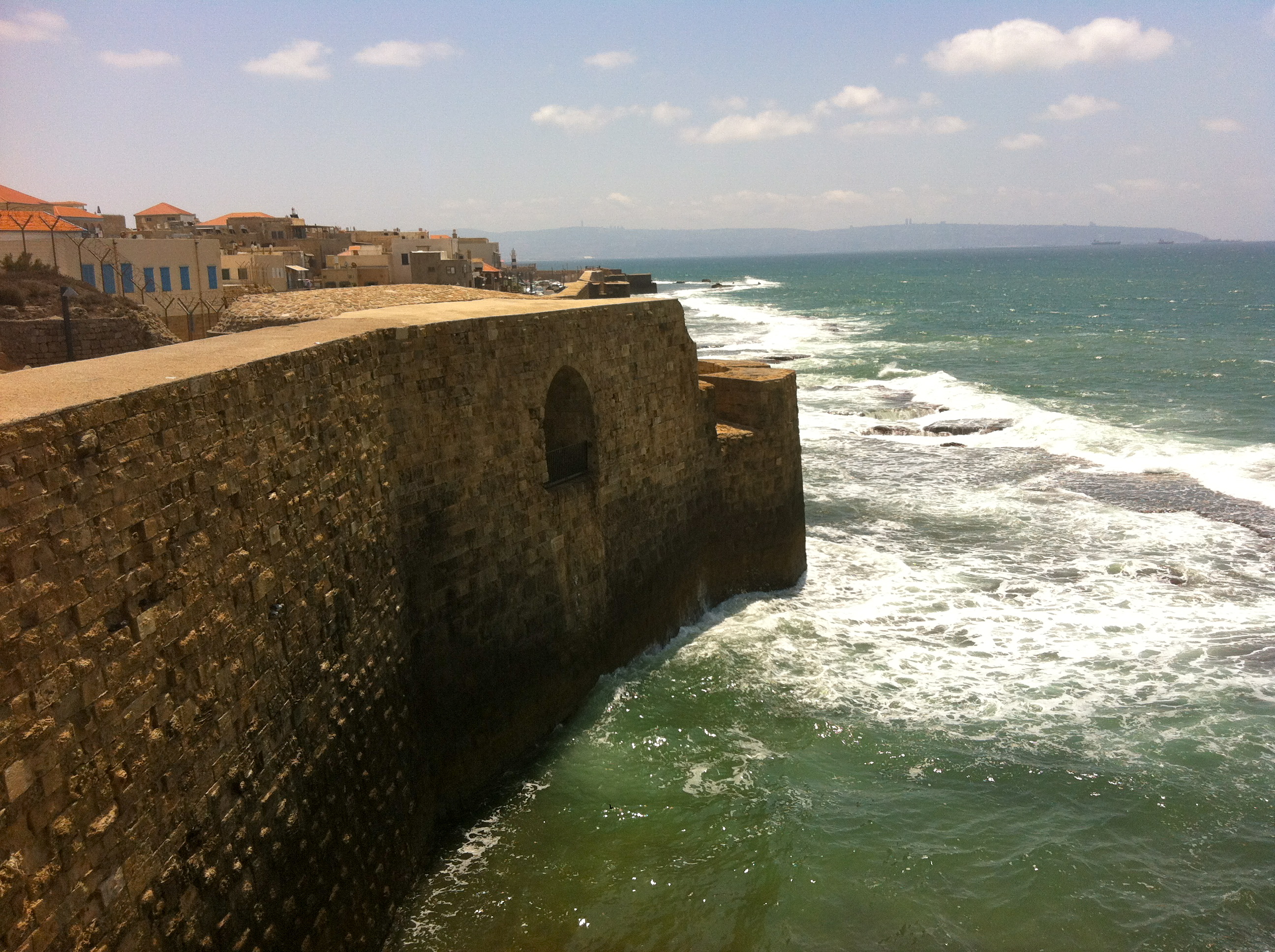
It started as a Wisconsinite reunion, because there are five of us here.  We met up at Bahjí, the most holy place for Bahá’ís, and afterwards three of us traveled into Akko.  That brief journey was complicated by missing our stop on the sherut, which resulted in us hiking toward the old city through an apparent construction zone covered with sand and the occasional concrete amalgamation.  But the important thing is that we got there and counted forty waves.

At the end of Bahá’u’lláh’s Epistle to the Son of the Wolf, there’s a passage in which Bahá’u’lláh quotes proverbs about Akko attributed to Muhammad, including:

The Apostle of God—may the blessings of God and His salutations be upon Him—hath also said: “He that looketh upon the sea at eventide, and saith: ‘God is Most Great!’ at sunset, God will forgive his sins, though they be heaped as piles of sand. And he that counteth forty waves, while repeating: ‘God is Most Great!’—exalted be He—God will forgive his sins, both past and future.”

So we clambered up a steep path to the top of the sea wall, hoping to have our sins forgiven, and counted the forty waves.  Waves are more difficult to count than I anticipated–judging when they’ve broken is pretty subjective.  Maybe if I had paid more attention in Oceanography class sophomore year…

Walking back along the sea wall, I appreciated the occasional sea breeze that would rush in through an opening.  Under the oppressive sun, it wasn’t so hard to imagine how suffocating the city must have been when the Holy Family arrived.

***

Today, I was talking to someone about journaling.  “It’s easy to keep up a daily journal when you’re in a new place, a new situation,” I said, “but once you get into a routine, it’s harder to find something to write. ‘Today I did the same as yesterday.'”  She contemplated, and said, “That’s an interesting question–how to make every day special?”

I don’t know that every day can be special–special cannot be the norm, can it?–but I try to appreciate the small experiences of each day, whether that means a lizard rescue (this one escaped but left behind his tail), a scoop of cardamom ice cream, fuchsia bougainvillea arching overhead, or the haunting song of my Peruvian friend, intoning in Arabic as she wipes down the banisters of a staircase I happen to enter.

Not every day will find me praying at the seaside, but there will always be windows in the wall offering fresh breezes.

B(re)aking

Maybe I just need a cute apron.

Maybe I just need a cute apron.

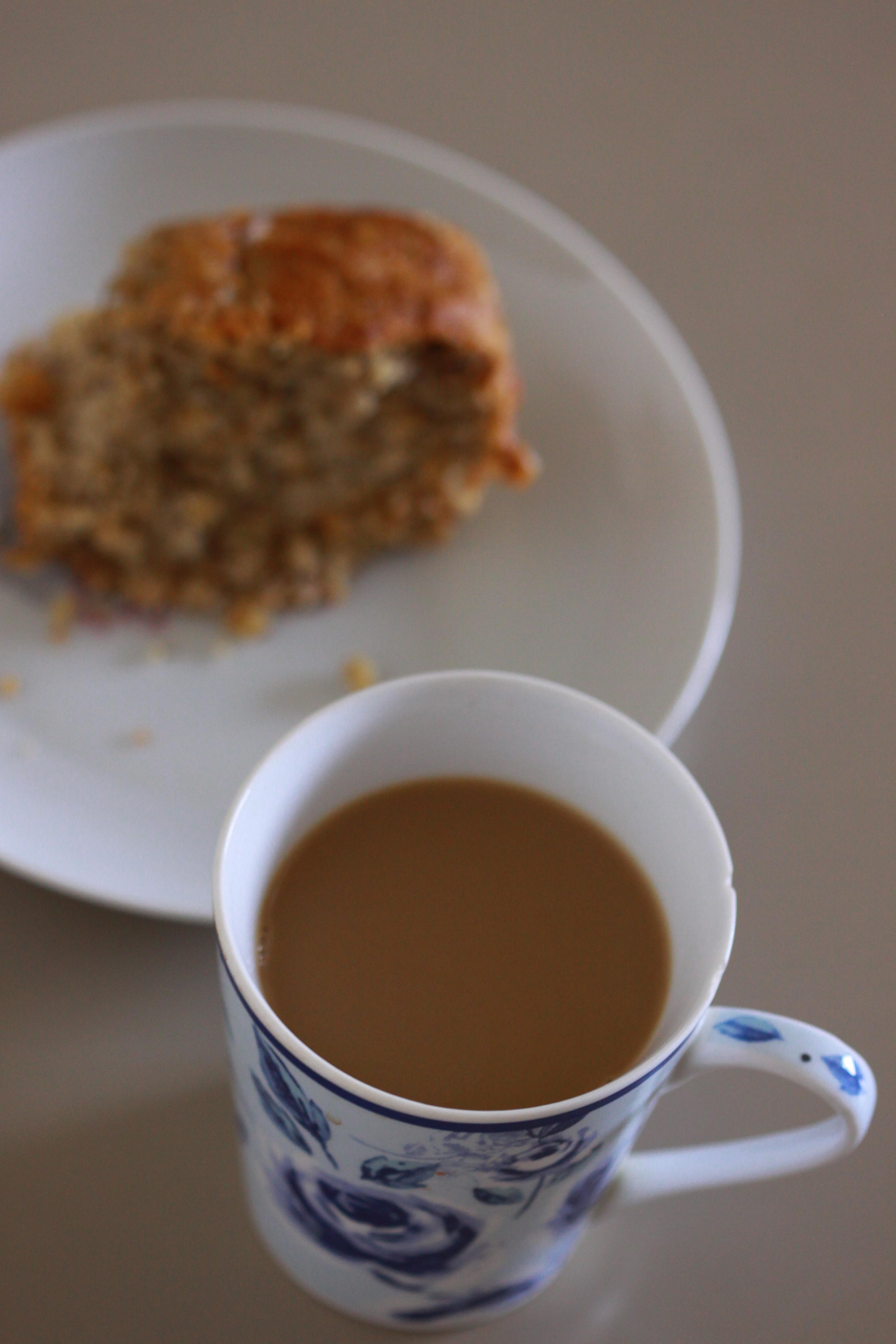
There’s nothing like baking to make a place feel (and smell) homey.  I was so proud when I successfully baked banana bread, despite the inscrutable dials on our oven and lacking measuring spoons.

Best served with coffee

Best served with coffee

Too proud, it turns out, because the goddesses of domesticity decided to punish me for my hubris.

It began with good intentions (which I hear pave a certain road).  I wanted to bake oatmeal raisin cookies for my Serving the Divine Plan group, which meets every Monday night to get our spirituality on.  By the time I started, I was already tired from cooking several pounds of my special peanut noodles, but I was determined.  Three mistakes ensued.

  1. THE EGG. The batter seemed too dry.  “Hm,” I thought to myself, “maybe the eggs here are smaller than at home.”  I stared at an egg.  It looked small. I cracked a third egg into the batter. Now, I know cooking can be an art, but baking must be a science.  Exact proportions of ingredients are key to success.  I knew it was wrong to add that egg, but knowing and knowing are very different.
  2. THE COOKIE SHEET. After dolloping my gooey, lumpy batter onto a cookie sheet, I ran into my second obstacle.  The  sheet did not fit into our oven.  Now, why we have a cookie sheet that can never be used is way beyond me.  My flatmate Deirdre, amused by my consternation, helped me to transfer the batter to two smaller sheets.
  3. THE HEAT. I had been preheating the oven for an hour (yeah, I know).  This was unintentional; I’m just a very slow baker.  By the time I was ready, the oven had reached a temperature somewhere between a kiln and foundry.  The racks inside had turned a threatening red.  In fact, even the oven dials were scorching hot.  Concerned about burning down my apartment building, I shut it off to let it cool down.  And then tried to turn it back on.  Nothing happened.  I tried again.  Nope.  Desperate, I sunk to my haunches, fiddling madly with the dials, a protective dishrag wrapped around my fingers, to no avail.

“I broke it,” I whined to Deirdre. “I told you I break everything I touch.”  When she tried to comfort me but couldn’t help but chortle at my fiasco, I played stoic.  “There are worse tragedies in the world than me not being able to make my cookies,” I said.  She paused to genuinely consider this point, then convinced me to use the neighbors’ oven.  I did.  She recommended putting all the dough on two sheets to make two giant cookies.  I did.

This was the result.  Please keep in mind that I was aiming for 30 cookies.

IMG_2533

In the words of Prospero, “This thing of darkness, I acknowledge mine.”  I’m still trying to figure out what utensil to use with my thing of darkness.  A small jackhammer would be useful.

Seriously, who else sets out to bake cookies and ends up breaking the oven?

Postscript:  No worries, the oven has been repaired.  I plan to bake some brownies soon–at a very low heat.

A whirr of iridescence

You know, that last post was supposed to be about the dinner I attended this week.  Perhaps you’ve noticed my writing strategy: I start with an anecdote, then transition to my bigger point.  The formula I’ve advocated to many applicants to grad programs in the humanities struggling to hack out a personal statement, in fact.  Occasionally, however, that anecdote drives me to distraction.  (Hm, I wonder if I could take a sherut there?)

Here goes.  After lunch, I step out of the building into the bright heat of noontime, and spot a glimmer before me.  It’s a whirr of iridescence: a hummingbird, purple and green, dipping its beak, then settling on a branch only to ascend once again, frenetic, gorgeous.  If I had my camera, I would have stood there snapping away like I did upon finding a veritable flock of colibrís on Cerro Santa Lucia in Santiago.

But I don’t, so I just stop and stare.  It’s just the two of us for this moment.  Then a group comes out behind me, loud and gregarious.  I start, then depart.  I can hear them exclaiming at the hummingbird–oh, look!–and also wishing they had their cameras.

This may come as a shock to you, but I’m not much of a socialite.  Put me in a room where I’m expected to mingle with a bunch of acquaintances and strangers, and I will keep an eye fixed on the nearest exit.  Even slightly formal dinner gatherings pose a series of challenges, particularly the threat of mistakenly feeding my lap instead of my mouth.

But even I couldn’t help but get a little excited at an invitation to dine with a large group of colleagues.

So, after descending the terrace stairs down to Ben Gurion street (which perturbed my leg muscles, making them tremble in protest), with a sheen of perspiration over the makeup I’d applied eleven hours earlier, I found myself in a tastefully appointed flat in the company of about thirty coworkers.

After we finished eating with plates delicately balanced upon our knees (I am proud to say that the only food that escaped me was a shred of spinach that jumped onto my foot), it was proposed that we go around and introduce ourselves, and say how our position contributed to our common mission of preservation.

I listened to the professional, expansive responses of a few veteran staff members, racking my brain as to how to shape my sundry jobs into a coherent statement. I came up with a simple response, and several days later, I’m still trying to figure out what exactly it is I do!

Commuter

Warning: Not designed for twenty-somethings.

Warning: Not designed for twenty-somethings.

Once again, I have forgotten the cardinal rule of life without a car: gradual grocery shopping. I find myself expanded to twice my normal width, with my two reusable shopping bags (one of them features Big Bird’s grinning face) hanging off my shoulders, clutching a 32-pack of toilet paper.  I think it’s the toilet paper that convinces me I will never be a cool urbanite.  No one else on the bus which I’ve just waddled onto has so much toilet paper, or actually any at all.  Nor do the Israelis seem to bring a carryon bag stuffed with dirty laundry as I do every two weeks.

It is at times like this when I, the plodding commuter, feel like the most mundane creature in the world.

But then, as I shlep my laundry toward the machines, I look up and see the Seat of the Universal House of Justice, majestic white columns shooting upward, or I look ahead to see the dome of the Shrine, or I look across the bright blue bay toward Akko.  And it’s so dissonant: my mundane self, this holy place.

I think it’s time for some etymology.  You all know how I love my words.  Once an English major, always an English major.*

When it comes to describing the daily grind, mundane, pedestrian, and prosaic are close contenders.  “Mundane,” from the Latin mundus or world, in its astrological sense means of the earthly world rather than the heavenly one, more than applicable to my situation.  “Prosaic”–I usually dwell in a house of prose, infrequently one of poetry.  “Pedestrian” as an adjective evokes its noun counterpart, the unglamorous person in T-shirt, jeans, and sneakers waiting at the crosswalk.  And it’s fun to be a pedestrian pedestrian.  For the word-snobs among us, “quotidian” works as well, stemming from the same root as the Spanish cotidiana, meaning everyday.  Funny, all these terms are latinate.  A professor renowned as the strictest faculty member in the English Department taught me that English is a bifurcated language, pulling its vocabulary both from the sophisticated palate of Latin and from the earthy mouth of Germanic.   It would seem better to go Germanic to express the commonplace.

Even “commuter” finds its roots in Latin: com=together + mute=change.  Changing together.

Nice, isn’t it?  Six days a week, I change along with my fellow passengers.  Now that’s poetical.

*Thank your lucky stars that since graduating from Mount Holyoke I no longer have access to the Oxford English Dictionary online, or this post would be thrice as long.

Steppin’ out

I’m walking home on Hana Senech, one of the few streets here that’s fairly level. Sometimes I like to walk home in the evening, when the sun’s rays are getting lower and the air could be described as “balmy.” (Nevertheless, about five minutes into the uphill hike, I’ve usually sweated through my dress clothes, losing whatever veneer of dignity business formal endows. Some of my more hardy coworkers walk to work in the steamy morning; I couldn’t help but feel a secret camaraderie with one such colleague who came in with epaulets of sweat on his shirt from his backpack.) Usually my eyes are trained on the sidewalk, which offers the pedestrian an array of potholes, bumps, and urban detritus. But today, I’m examining the neighborhood. In my area, tall, pale apartment buildings tower like desert palms. There doesn’t seem to be much else besides flat upon flat upon flat (I’m still getting used to the British lingo used over here). The city is maxed out, every inch of level earth developed, paved and built up. For my Wisconsin readers, Haifa and Madison have about the same population, but Haifa occupies less than a third of the space that Madison does. The tightness of everything makes me miss the suburbs, the big yards and wide streets of Midwestern sprawl. Hey, I’ve never been a city girl.

While most of my life here occurs either in my office or my flat, I do occasionally step out.

A few days ago, I visited the House of ‘Abdu’lláh Páshá in Akko. I was there on pilgrimage seven years ago, but my memory of it had eroded to the striking geometry of the staircase. Long before Led Zeppelin, early pilgrims talked of these steps as the stairway to heaven, for at the top would be ‘Abdu’l-Bahá.

Stairway

Today’s pilgrims walk up that same staircase to the rooms occupied by the Holy Family over a century ago. It is said that ‘Abdu’l-Bahá could watch the progress on the mausoleum of the Báb from this house, and indeed, looking out a window I could faintly see the golden dome across the bay, suspended like a medallion on a ribbon of green, the terraces.

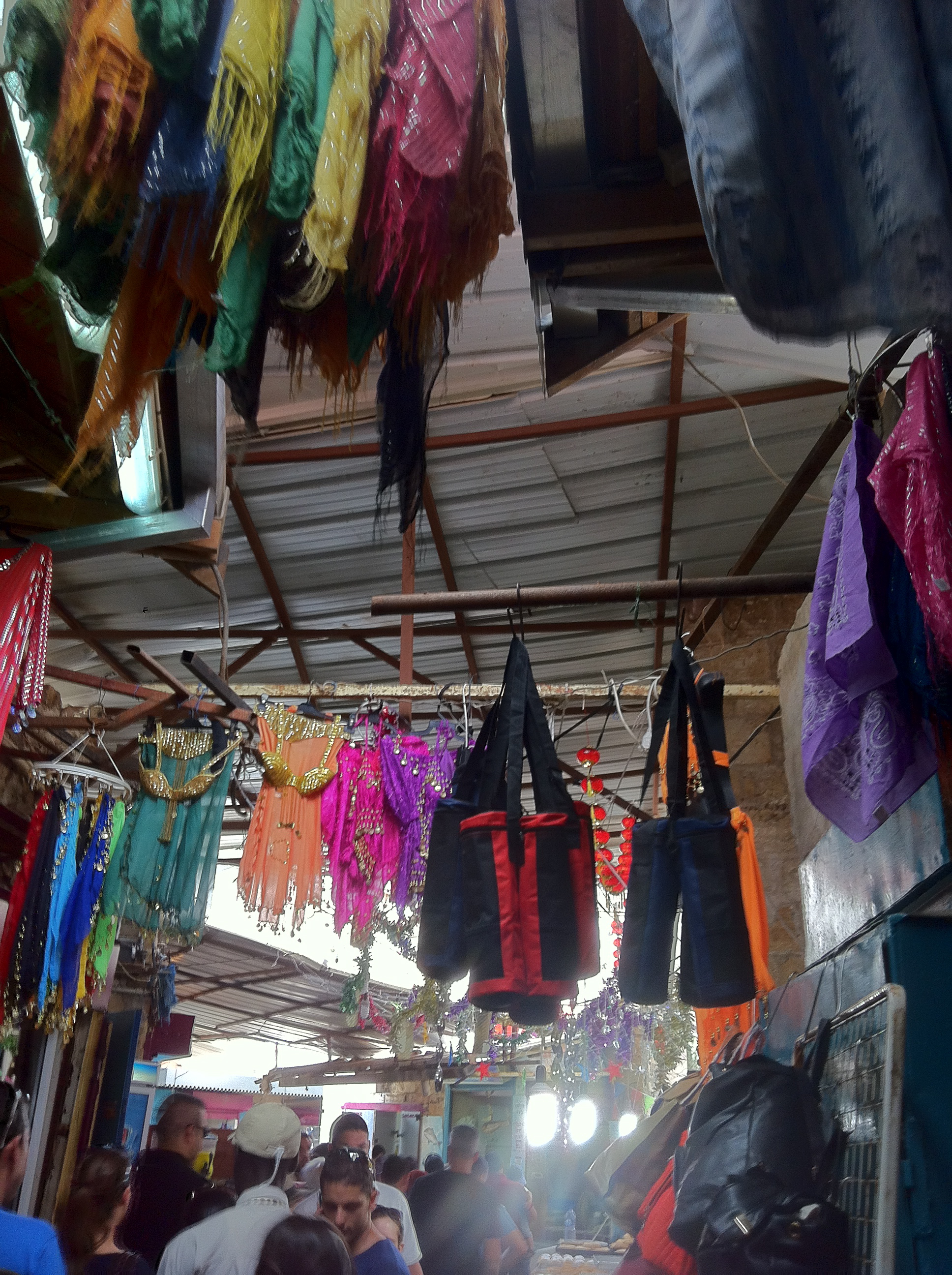
After the visit, I followed some acquaintances into Old Akko. I know in olden times this was a dreaded prison city, but for my touristic sensibilities, this district’s dusty stone archways and minarets seemed romantic, like the backdrop for an orientalist painting by Gerome.  We passed one bazaar and entered another where belly dancing skirts hung above fresh fish.

IMG_1213


IMG_1212

At the end of the day, I’m still an incurable homebody. There’s no excursion better than arriving on floor 13 and entering that bit of territory I can call my own.

Oily lizard

One of my tasks is checking bug traps to assess the building’s number of silverfish, which eat anything with protein, including the glue used in book bindings and paper sizing. On my patrol, I discovered creatures of the six- and eight-legged varieties and one (four-legged) lizard.

That’s right, a small lizard, stuck in the peanut butter scented glue.

At first I took the poor fellow for dead. Every part of him was stuck fast, his little fingers splayed at odd angles. But then I noticed a flickering at his abdomen. Breathing! He was still alive!

I rushed to grab the cooking oil that my predecessor had showed me, labeled “for rescuing lizards.” Outside, I doused him, then carefully pulled up his tail–he started wriggling–then his head, and those delicate digits. Finally, after a second oil-dousing, he was free. I caught the dazed creature and carried him into the shade underneath a bush.

And that is how I accidentally fulfilled my goal of catching a lizard.

Lost in translation

The world is governed by competing forces. There is the force of construction and there is the force of destruction. And then there is the force of confusion.

I. Constructive force

Annie is lying unconscious on the ground, and I’m supposed to revive her. First I call her name, then I squeeze her shoulders. No response. I unfasten her shirt and start chest compressions, counting to thirty. Then it is time for the breath. I pause from my frantic work to unwrap my mouth shield. Once secured over Annie’s inert features, I tilt her head back to extend her windpipe, hold her nostrils shut, and breathe. Nothing happens. Adjustments are made. I’m not squeezing the nose properly. I try again; still her lungs fail to fill with my air. I blow harder. Nope. I tilt her head back more, surprised at the flexibility of her vertebrae. Finally her chest rises, once, twice.

This is my first CPR training, and although both the dummies and the instructors are admirably patient with me, I can’t help but think that multiple redo’s would be less than desirable with a real victim. I picture myself pausing in the midst of a rescue to try to remember the mnemonic, DR CAB, or asking  Annie to just hang on, I’ll get the breaths right this time around.

Maybe someday I will be in a position to save someone’s life. I hope not.

2. Destructive force

Do you remember the gentle animal lover who has been making posts on this blog? She’s gone.

The transformation happened on the third day that, while standing shod in my flip-flops at the kitchen sink, I felt a tickle pass over my toe. Then another. Ants were once again exploring my feet, and they were also mapping the entire kitchen floor. Now, I have allowed all sorts of bugs to crawl on me. I remember one summer day, reclining on the swing in the backyard, I watched with fascination as a honeybee landed on my elevated foot and wove its body between my toes, perhaps assessing the crevices’ resemblance to a honeycomb. Then I went inside and wrote a poem about it. Spiders, roly-polys, gnats, ladybugs, lightning bugs, the rare butterfly–all have been my playmates. Darwin practiced entomology as a hobby, and I like to think that I do too.

Yet I find myself spraying some K1000 poison onto these ants, feeling little remorse. The ants are discomfited by the chemical shower, but generally scatter and survive. It’s the wrong kind of poison, of course, but the intention was there, and I will not be thwarted. I sweep, then I mop with a cleaning fluid that supposedly kills cockroaches. I am hoping it also works for ants.

That former animal lover is still here, don’t worry. I observe a pigeon outside the window and coo at it in the way Dianne showed me. It cocks its head. I coo again, then set some chunks of stale bread on the windowsill, an offering to the animal kingdom at large.

3. Confustive farce

Maybe I have that disorder Chuck Close has where he can’t recognize people’s faces. Except unlike him, I haven’t been making any brilliant art lately. I found out that I’ve been calling one coworker by the wrong name for a week now. I was calling him Jamal…perhaps he simply dismissed my mistake as a flattering nickname, as Jamal means beauty. In any case, he didn’t correct me. Yesterday I encountered an acquaintance on the staircase, smiled at him, and said, “Hey Jake.” Except it wasn’t Jake; it was a stranger who bemusedly smiled back. At least I’ve gotten assertive when it comes to my own name. No longer will I accept “Layla,” “Lali,” or other variations. My soft (mumbly) voice makes things difficult, though–upon first introduction, I become Haile or most recently Nelly, anglicized beyond repair.

Then, once introductions are past, there is the actual conversation. The wonderful diversity at the World Center means that English is spoken with every imaginable accent. In theory, I believe that responsibility for communication lies with both the (nonnative English) speaker and the (native English) listener. The latter needs to learn to recognize unfamiliar inflections and pronunciations and understand nonstandard constructions, just as the former learns the new language. In practice, I’m decent at understanding most accents, but add in a noisy background or multiple speakers, and I become an echo: What? Sorry, what? What?

It’s lunchtime, and this guy is telling me about some upcoming plans to go to the American consulate. I’m not entirely sure what happens at a consulate…maybe passports? Consuling? I ask him why he’s going, but don’t understand his answer. “So, where is the consulate?” “It’s in Tel Aviv,” he says. Eventually I discover that he’s going to “a metal concert,” where I’m sure he’ll get his passport issue worked out.

Even my friend the written word poses problems. As I’ve mentioned before, I’m surrounded by two alphabets I can’t read, Hebrew and Farsi. So I joined a Farsi class as a latecomer. I studied a few letters on my own beforehand. After the other students had settled in, I realized they spoke at least basic Farsi. It would seem the teacher took me as a charity case into a class intended to teach Farsi speakers how to write. As I struggled to sound out words, my head felt a little cold, like it wanted a dunce cap. I needed to remind myself that it had been many years since I had last learned a new alphabet (the English one), and that was back when my brain was young and agile. So please, if you say anything in Farsi, don’t be surprised when I respond invariably with “Esme man Layli ast” (My name is Layli).

Baklava & Coffee

Synagogue

If I were to make a soundtrack for Haifa, it would include the Muslim call to prayer and the Jewish songs that spill through the windows of the apartment. There is a synagogue that I can see from the living room. Adherents in long black robes and big furry black caps come in and out. Yesterday it broadcast a soulful choral song, presumably during the Shabbat service. While I cannot understand the words to either the call to prayer or the Jewish music, it’s pretty special that people here observe their religion so audibly. Although the Bahá’ís don’t sing prayers over loudspeakers, I think the Shrine and gardens play a comparable role as a visible, artistic manifestation of our faith.

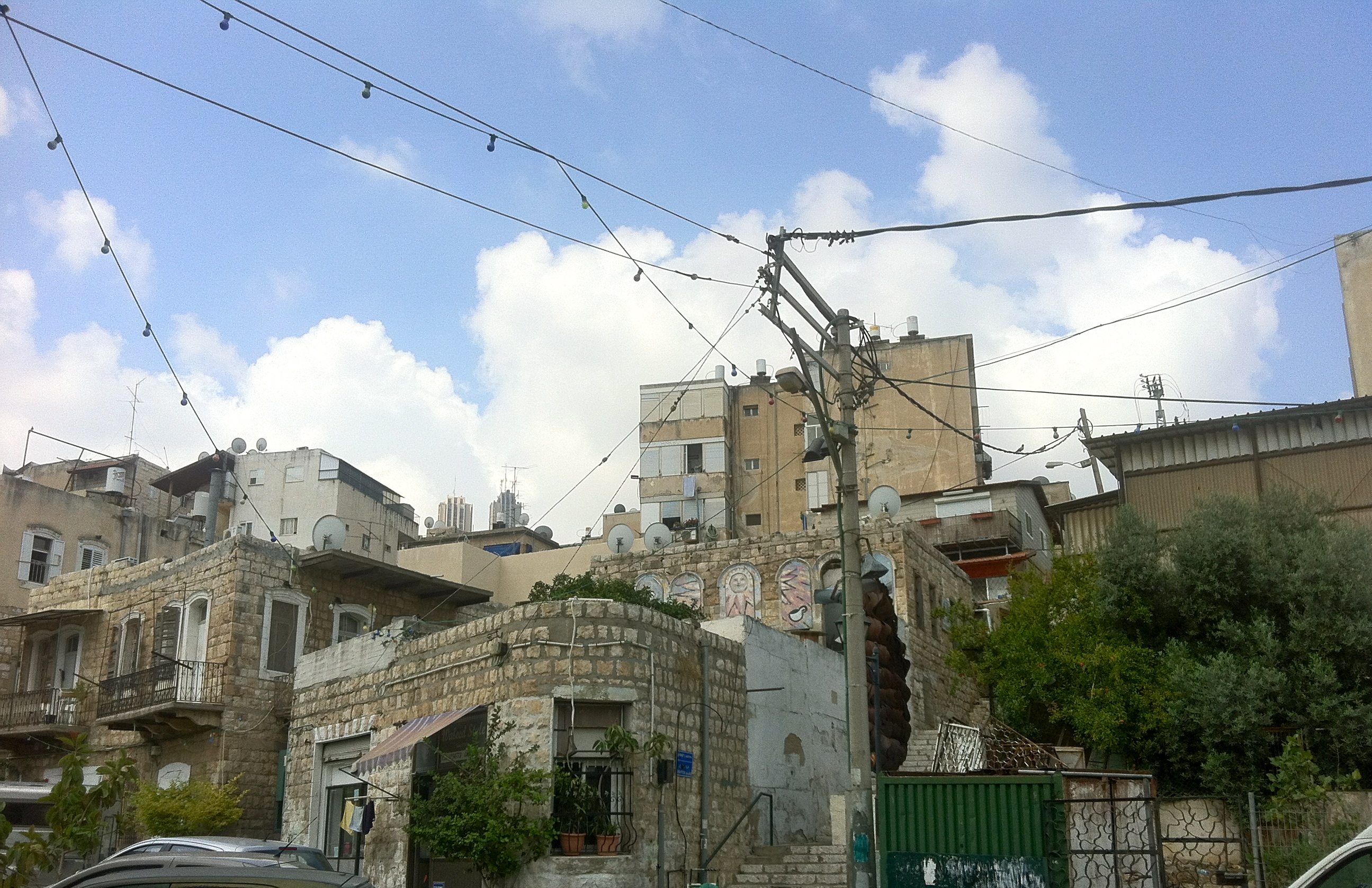
My orientation group took a walking tour of Haifa yesterday. We walked from the Bahá’í property down to the German colony, the old pilgrim houses, the resting place of Ruhiyyih Khanum, the House of the Master, and then to Wadi Nisnas, the Hadar, and Carmel Center. These districts offer distinct shopping experiences, with the Hadar and Carmel Center offering a more typically Western experience with stores resembling Forever 21 and restaurants like McDonalds, whereas Wadi Nisnas boasts the limestone architecture and colorful marketplace of Old Haifa. This is where the Arab Christian community lives.

IMG_1177

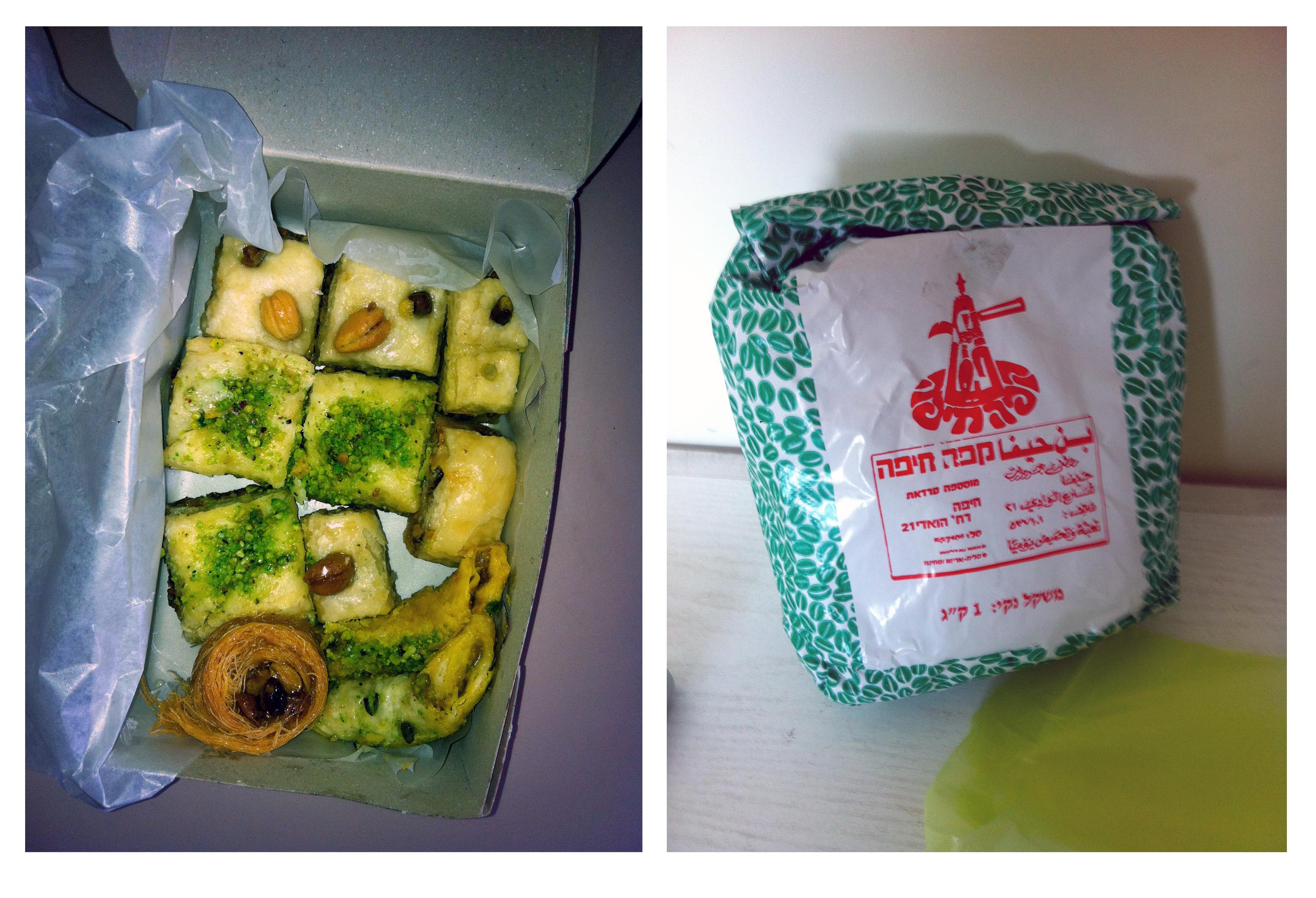
I enjoyed walking down the narrow streets of Wadi Nisnas, looking at the rainbow of fresh produce. There is a bakery that sells mountains of baklava in every imaginable shape. I couldn’t resist buying a box—anyone want to help me eat it? I also invested in some Arabic coffee, which is brewed on the stovetop. It smells delicious, with bits of cardamom sprinkled around the fine powder.

Food

True to form, I must write a little about the wildlife of the city. Yesterday I made a new friend: a teeny yet burly yellow jumping spider who sat politely on my laptop for half an hour. I swear he was watching my screen, reading an online article along with me. Or maybe he mistook my cursor for a yummy ant.

Procrastinating roosters

In the mornings when I wake up, I hear distant crowing. It must be roosters. Yet all of my chicken knowledge says that roosters crow punctually at the crack of dawn, which is before 5:00 AM. So what’s going on? Am I actually hearing roosters? Where are these roosters living–in the middle of the city? And why are they procrastinating?

I had my first day in the office today. I work with four Persian ladies. I’m not sure if I count as an honorary Persian lady because of my quarter ancestry, which was in fact our first topic of conversation, probably because of my name. At my one previous office position as an intern for a ballet company, I ate lunch at my desk and my breaks involved sitting at my computer reading New York Times articles. So imagine my delight when I found out that my officemates take two short breaks daily, during which they convene in the kitchen to chat and share fruits, nuts, and fragrant Persian tea. Even as I adjust to living in Israel, I’m surrounded by all things Persian, especially the food. The lunchroom is the first (and most likely the last) cafeteria I’ve encountered that serves heaping trays of saffron chicken, steamed rice with plentiful tadik, and yogurtlu patlican (technically that last one’s Turkish, but still delicious). Maybe learning Farsi would be just as useful as Hebrew! I’ve already learned to read the numbers in Persian–I think five is my favorite. Two and three confound me.

Persian_Numbers_1_10

Orientation

There is a single ant running in circles between my arms right now. No wait, he’s crazily scrambling across my keyboard…now exploring my power cord… A small contingent of ants recently left the kitchen to reconnoiter my room. Maybe this one is monitoring my computer habits.

Orientation is nearly over. I’m not sure that I can call myself oriented, at least in the geographical sense, considering that today as the bus sped down an unfamiliar street I assured my friends that this was merely a shortcut (it was not). For that matter, I got lost yesterday too when I went on a mission to see the Shrine of the Báb at sunset. Thank goodness for my map.

IMG_1151

(It was totally worth getting lost! And we spotted a jackal going down a staircase in the gardens, so cool! I have yet to see the wild boars that apparently roam around…)

There are now two ants scurrying across my laptop. Time to invest in some traps.

I had lunch with my supervisor today, and afterwards got a glimpse at the office where I’ll work. There it was–my desk, resplendent, in a room with windows! I can’t wait to decorate it with paperclip necklaces and pictures of my kids…or whatever adults usually do.