Ephemera of Spring

April brings not only the loon on the retention pond, but the ephemeral woodland wildflowers in the Indiana parks. These flowers emerge before the trees have leafed out, and mostly disappear by summer, dormant until the following spring.

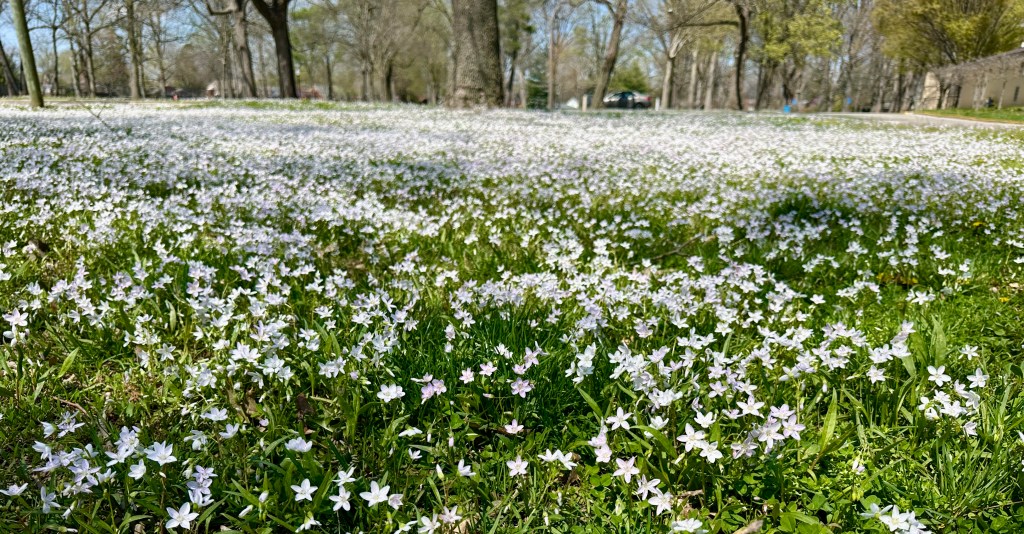
In my Alabama garden, I had planted one tiny ephemeral, Virginia spring beauty, admiring the pink pollen and stripes adorning the minute blooms. And then this spring I happened upon a field of thousands of spring beauties. Wandering through Columbus, Indiana, Sergey and I came upon a handsome park with mature trees towering over a lawn. Within the lawn grew endless spring beauties and violets.

Tiny white flowers fill a field.
Spring beauties blossom in Columbus, Indiana.
Continue reading

The Loon

Dogwood blossoms kiss wafting clouds. The sun now is strong enough to burn me after winter has left me pallid. April is a month of special wonder.

Branches of a dogwood tree in blossom are juxtaposed with an old building with a clock tower.
A dogwood blooms in Bloomington, Indiana.

En route to the zoo, I saw on a retention pond surrounded by duplexes a bird at once familiar and unfamiliar. I asked Sergey and Jasmine, did they think it was a loon? They thought it was more likely a duck because why would a loon, denizen of wild lakes and singer of an eerie song, have chosen this spot surrounded by Indianapolis’s web of highways to rest? 

But Jasmine offered to turn the car around so we could investigate the bird. We parked, she grabbed her binoculars wisely stowed in the car for just such moments, and we carried my nephew. 

The visitor was indeed a loon. 

Continue reading

Glass and Water in the Pacific Northwest

In Sea-Tac Airport, hectic and congested, one gate opens a serene vision. Rising 33 feet across vast windows, “I Was Dreaming of Spirit Animals” introduced me to the folkloric glass painting of Cappy Thompson. I happened upon another of her installations, “Stars Falling on Alabama,” at the Montgomery Museum of Fine Arts. And our most recent visit to the Seattle area brought me to the Museum of Glass, where I encountered her “Gathering the Light.” These bejeweled stories make me wish I could step inside. 

In the Pacific Northwest, sojourners can step inside kingdoms of mossy forests and majestic mountains. A delicate balance kept these systems thriving for millennia. Salmon, for instance, feed other animals, people, and even trees with the nitrogen they bring inland from the ocean. The fish’s remains nourish not only predators and scavengers, but the roots of ancient plants.

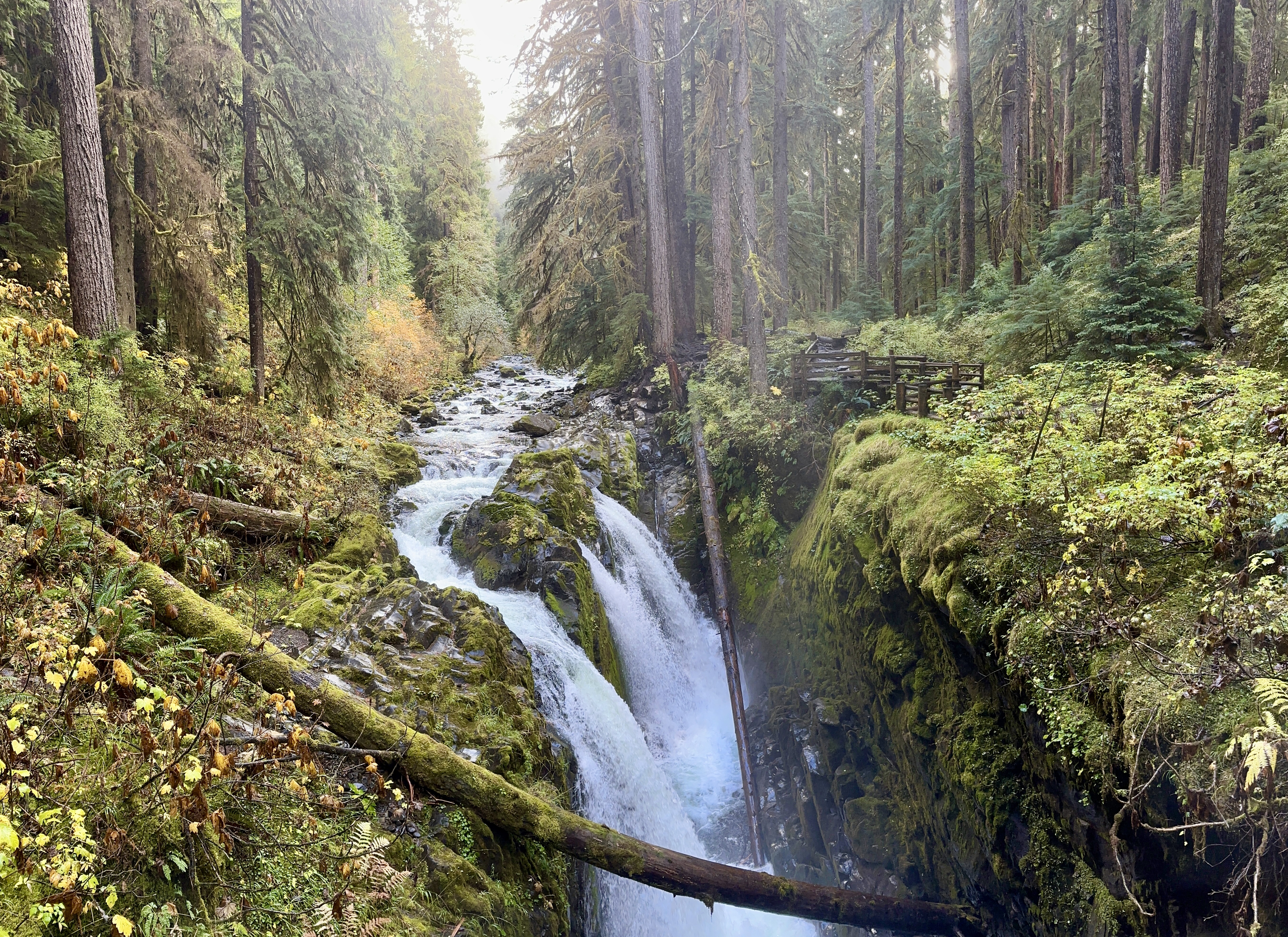
A waterfall cascades between mossy banks and tall evergreen trees.
Sol Duc Falls in Olympic National Park
Continue reading

Journey to My Husband’s Homeland

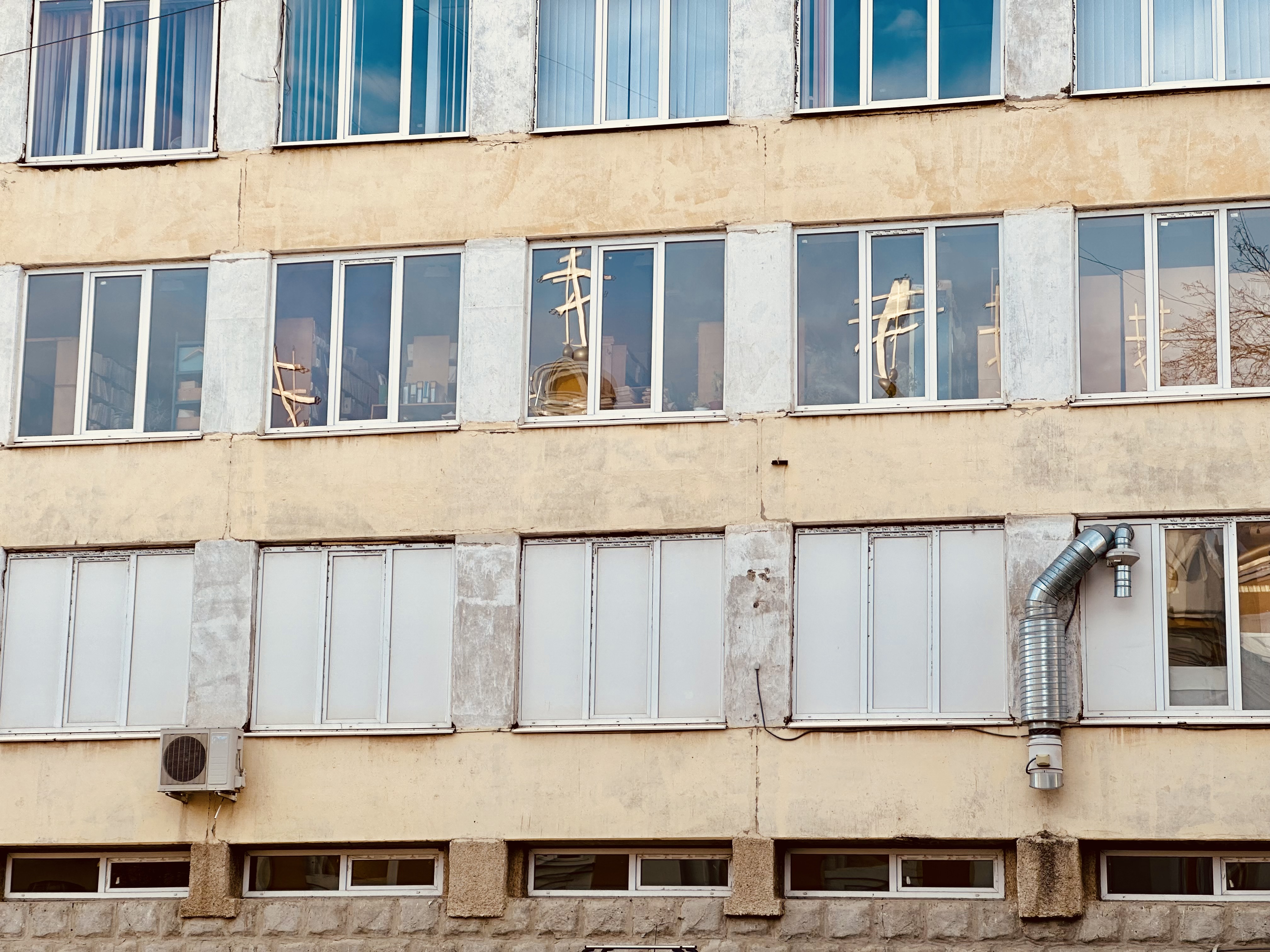
In an academic building's windows, the crosses and golden domes of an Orthodox Christian church reflect.
An academic building reflects a church on the campus of Moldova State University.

My husband, Sergey, is from Moldova, though it has now been more than a decade since he lived there. Before he left, his few family members also emigrated—his brother to Russia and his mother to the United States. Until recently, I hadn’t had the opportunity to meet his brother. We had planned to visit Russia while I was in grad school, but then the pandemic began, and then the terrible war in Ukraine, and the prospect of setting foot in Russia dimmed. So, when Sergey heard that his brother, sister-in-law, and their children would be coming to Moldova, we took the rare opportunity to see them. Given the effort of getting to Eastern Europe, it only made sense to add stops so Sergey could visit Moldovan friends who had emigrated to Romania and Germany.

In the midst of time with Sergey’s family and friends, and on days when I wasn’t in bed contending with the foodborne bacteria and airborne virus that in quick succession welcomed me to Eastern Europe, I limned some word portraits of the three cities where we stayed: Bucharest, Chisinau, and Munich.

Continue reading

The Land, My Nurturer

In every place I live, I find my strongest sense of connection comes from observing the environment. 

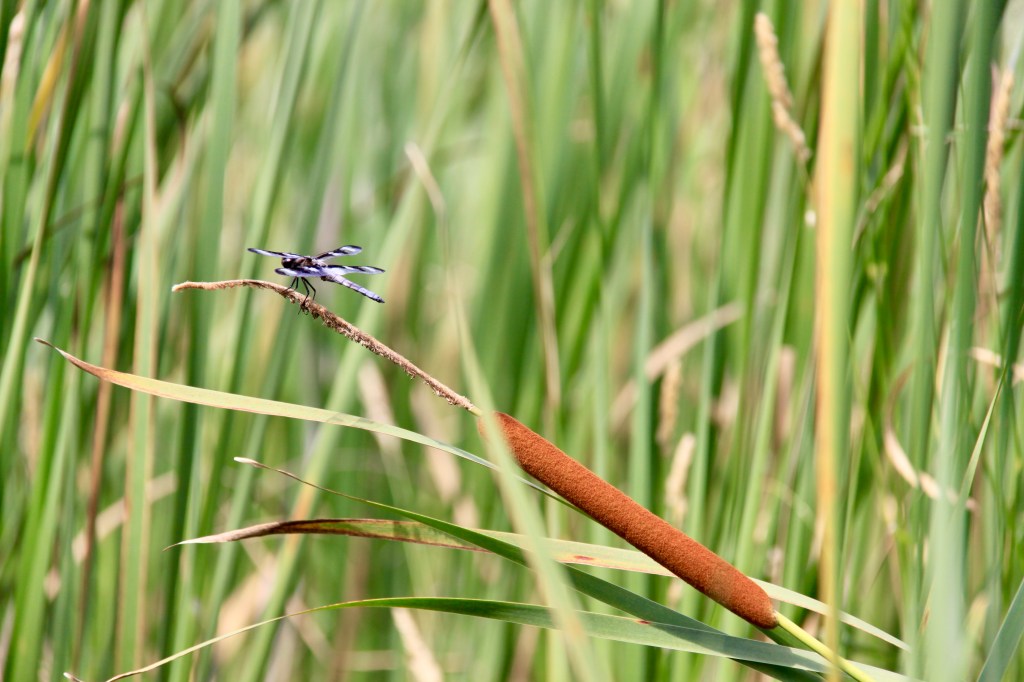
In Wisconsin, I had nearly all my growing-up years to do so, starting from childhood nature walks with my parents. When we moved into a house that bordered a small-but-vibrant restored prairie, I had plentiful opportunities to watch the birds and insects that benefited from the native wildflowers and grasses. I recall walking to a small pond next to that prairie to watch hundreds of dragonflies swooping predatorily over cattails.

A dragonfly with striped wings sits on the end of a cattail. In the background are many cattail leaves.
A dragonfly rests on a cattail in Verona, Wisconsin. All photos here are my own.
Continue reading

Back to school

I have now been in State College for a few weeks. The first week was a whirl of getting the apartment stocked and shopping for furniture. I also ventured onto campus for the first time; my previous tour had been a virtual one online while I was in Israel. Penn State’s campus forms a large rectangle; at its south end is the downtown. Campus has two major attractions: Old Main and the Nittany Lion Shrine. The Shrine is apparently the second most photographed place in Pennsylvania, after the Liberty Bell. I have yet to pay homage to the Nittany Lion, but I have nearly circumambulated Old Main, which is a handsome replica of the university’s first building. A lawn stretches from Old Main to downtown, and I found that a flock of ducks likes to dawdle on the very edge of campus, near people waiting at the bus stop. (One day I was sitting at the bus stop and a lame duck—yes, a literal lame duck, not a congressperson—was quacking behind me. I wish I had a crutch to give it, but I’m no doctor, just a quack.) I would add a third attraction, which is the popular Berkey Creamery, serving locally produced ice cream and dairy products.

Week two was orientation, which involved the fearful task of meeting new people and trying to make friends. I did try to push myself in that regard. I have attended a grand total of four grad events requiring mingling, at which I’ve been able to show off both my lack of mingling prowess and my teetotalism. The first event was bowling night. It had probably been over a decade since I last stepped foot in a bowling alley. While I remembered the important aspects of the game—pick up ball, release ball, knock down pins—putting it into practice proved difficult. I was invited to join a team (alas, unfortunate team to recruit me). On my first few turns I managed to knock down nothing besides my self-esteem, but eventually, by developing my own method of tossing the ball, I managed to knock down a decent number. I think I might have even gotten a spare! While initially, I was thinking that it was unfortunate for the older grad students’ first impression of me to be my terrible hand-eye coordination, I realized the next evening that bowling had given me the opportunity to engage in short conversations with fellow bowlers with the option of watching the action when we reached a lull.

At dinner the next evening, there were no distractions. People broke into groups, impenetrable to a shy person, so I found myself frequently pouring myself cups of Coke to look like I was occupied. And I missed out on an apparently popular conversation topic sparked by the presence of lots of bottles of wine and beer, namely, alcohol. One acquaintance asked me what drink I would recommend…well, soda, of course. I have made one friend in the program thus far, and afterward, she told me I look very elegant even when standing alone awkwardly. (She didn’t say “awkwardly,” but it’s the truth.)

As an act of divine mercy, I was struck with a cold that weekend, which excused me from yet another mingling event, a party involving pizza and…a keg. The invitation said to bring your own drink if you didn’t want beer, and so I had anxious visions of myself clinging to my water bottle and hiding in a corner, the only sober partygoer. Instead, I had a quiet evening alone with my box of tissues.

This weekend, I again confronted my distaste for alcohol-centered events. My friend invited me to join the cohort (the group of first-year English MA students, of which there are seventeen) at a bar—we could get soda. And soda we did get, ginger ale in fact, in a very noisy bar where I could only hear the person next to me speak. My friend, who is from Taiwan, asked why people in America enjoy going to bars. “You are asking the wrong person!” I replied.

Finally, I attended a gathering of English MA students. This involved a brief bout of horseshoe throwing (before I gave up) and several hours of attempted mingling. Also, I made the mistake of assuming dinner would be ready when I arrived and showing up hungry. It was ready about two hours later, so in the meantime, I dominated a bowl of kale chips that happened to be in front of me.

Besides stabs at socializing with grad students, I have actually started grad school! While Mount Holyoke prepared me well for the academics, I’m still getting used to having all my classes in the three-hour, once per week seminar format, and spacing out the heaps of reading properly. Plus trying to learn Russian on the side in preparation for Cold War 2 (jk, just trying to get in touch with my husband’s roots).

The following is somewhat representative of the transition to life as a commuter grad student. One of my classes runs from 6:30-9:30, so around 5:45, I went to wait for the bus. As I was heading out, I heard some thunder, so I grabbed my umbrella. Then I was waiting by the bus stop…and waiting…the air was growing thick and hazy with the expectation of rain. And then it started to sprinkle. And then the heavens emptied themselves! I ran under a tree with my umbrella, but my legs and feet were immediately soaked, as was my poor backpack. I thought I saw my bus in the distance, but then I looked back, and it was gone. At this point I figured it would be difficult to attend class in my drowned rat condition, so I ran back to my apartment, changed, zipped up my raincoat, ran to my car, tried to figure out the windshield wipers, which I have never used in this car, and then drove downtown through the deluge to a parking garage, from whence I walked to campus as fast as I could. Somehow I made it only about a minute late! I think I disappointed my professor by my timeliness, because I had emailed an apology for being late after my bus fiasco. He actually arrived a few minutes after I did, and when he saw me, he said, “You’re here! I saw your email and I thought ‘good, I won’t be the latest one to class because of the rain.’”

Next time, I shall stick to my word and be late!

Like a cat in water

Admission: over the last month, I fell woefully behind in writing. There was so much to do before leaving the World Centre–boxes to pack, projects to complete, farewells to bid–that I simply could not make the few hours needed to complete this blog. So, these last entries are being written from within the purple walls of my home in Wisconsin, not from the Holy Land.

***

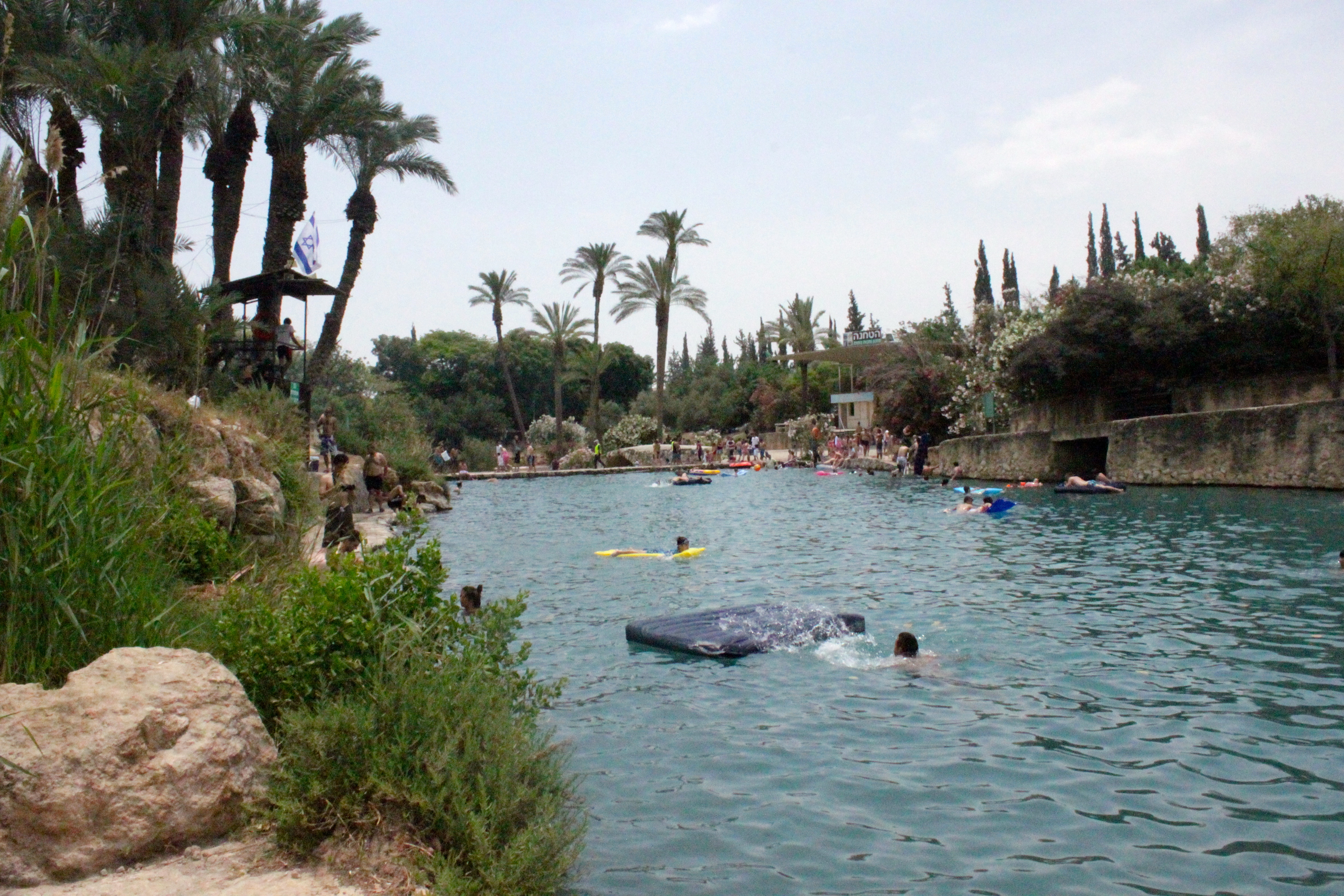
It might seem illogical for a couple with little interest in swimming to travel to a swimming hole, but once in a while, it comes time to explore something beyond the confines of our street. So, Sergey and I signed up for a trip to Gan HaShlosha National Park, more commonly known as Sakhne. People flock to HaShlosha from all over to shlosharound–I mean, slosh around–in the unusual turquoise waters of the pools, which are supposedly colored by natural minerals. So, after driving to the eastern edge of Israel, past vast sunflower fields bordered by low purple mountains, we found ourselves idling in a long line of cars, mostly filled with smoking Arab men ready to spend a smoky day with their grills, hookahs, and oh yeah, the crystalline waters.

After what felt like several hours of waiting, we finally made it to the parking lot. 9:00 AM on a Saturday and nearly no open spaces. Israelis take their weekends seriously, whether that means observing Shabbat or finding water to play in. We unfolded a towel and laid it on the dead grass on a hill beside the pool, from which point I surveyed the surroundings. Again, the main denizens of the water were Arab men, who had brought all manner of floating devices, including air mattresses. I had never realized that air mattresses could be seaworthy. The young men frolicked in the water, vying for spots atop the floaties, reminding me of walruses fighting for territory on an iceberg. Sergey remarked on the boyishness of their play–some of the men looking to be in their mid-twenties and above. Maybe the lack of women freed the men from putting on a display of savoir faire. Or maybe their playful jousting was actually for the benefit of the onlookers.

Hey look, an unmanned mattress waiting to be claimed!

Hey look, an unmanned mattress waiting to be colonized!

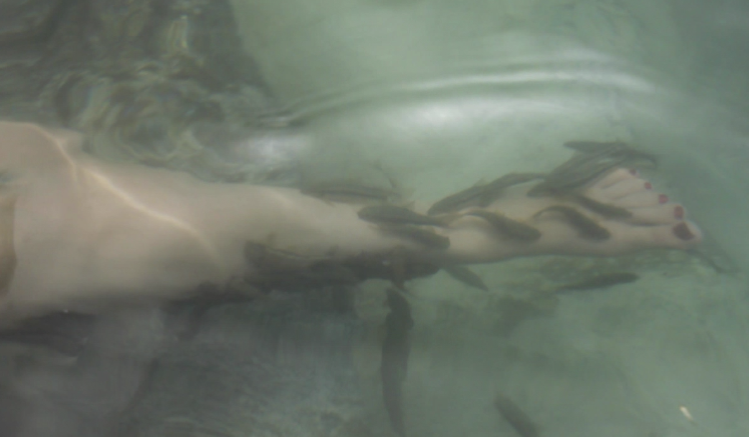
In almost all parts of the interconnecting pools, the water was over my head, and the shallows had other dangers (dead leaves, dirt, splashing kids). So, I spent most of my time perched midway down the steps into the water, letting my legs float like dead wood in the hopes of attracting the “piranhas,” as Sergey called them. These minnow-like fish enjoy snacking on dead skin, and they seem to get plenty of it from the hordes of swimmers, as it took a while for me to finally attract some. But once they came, they flocked. At the peak feeding time, I had at least fifteen fish giving me a pedicure. Their small beaky mouths tickled, but I stayed strong and still. (I can’t say the same for Sergey, who was reduced to giggling and squirming.) The fish were easily spooked. The slightest movement would scare them away, so keeping my legs immobilized became my mission. Of course, I couldn’t control the rambunctious people around me, who insisted on swimming, disturbing my piscine idyll. The fish seemed to sense even impending impacts–in the time between a boy’s leap and him hitting the water, they would race away from me.

Hungry fish

Just wearing my fashionable fish boot…

After I had my fill of the crowded park and the fish had full tummies, we headed home.

So, what do cats have to do with this story? Well, they also relate to our recreational activities.

When we moved into our apartment last summer, we became acquainted with several adolescent cat siblings, all with the same gray and white spots as their mama. Over the winter, they grew up, got hitched, and come springtime they were all pregnant. After they had their litters, we found a new hobby: kitten-watching. (Lest you scoff at our interest in strays, please remember that Haifa lacks cute rodents to observe–no rabbits, squirrels, or chipmunks…just rats, and once in a blue moon, a mongoose. Also, the feline families served pretty well as a compost solution for excess leftovers.)

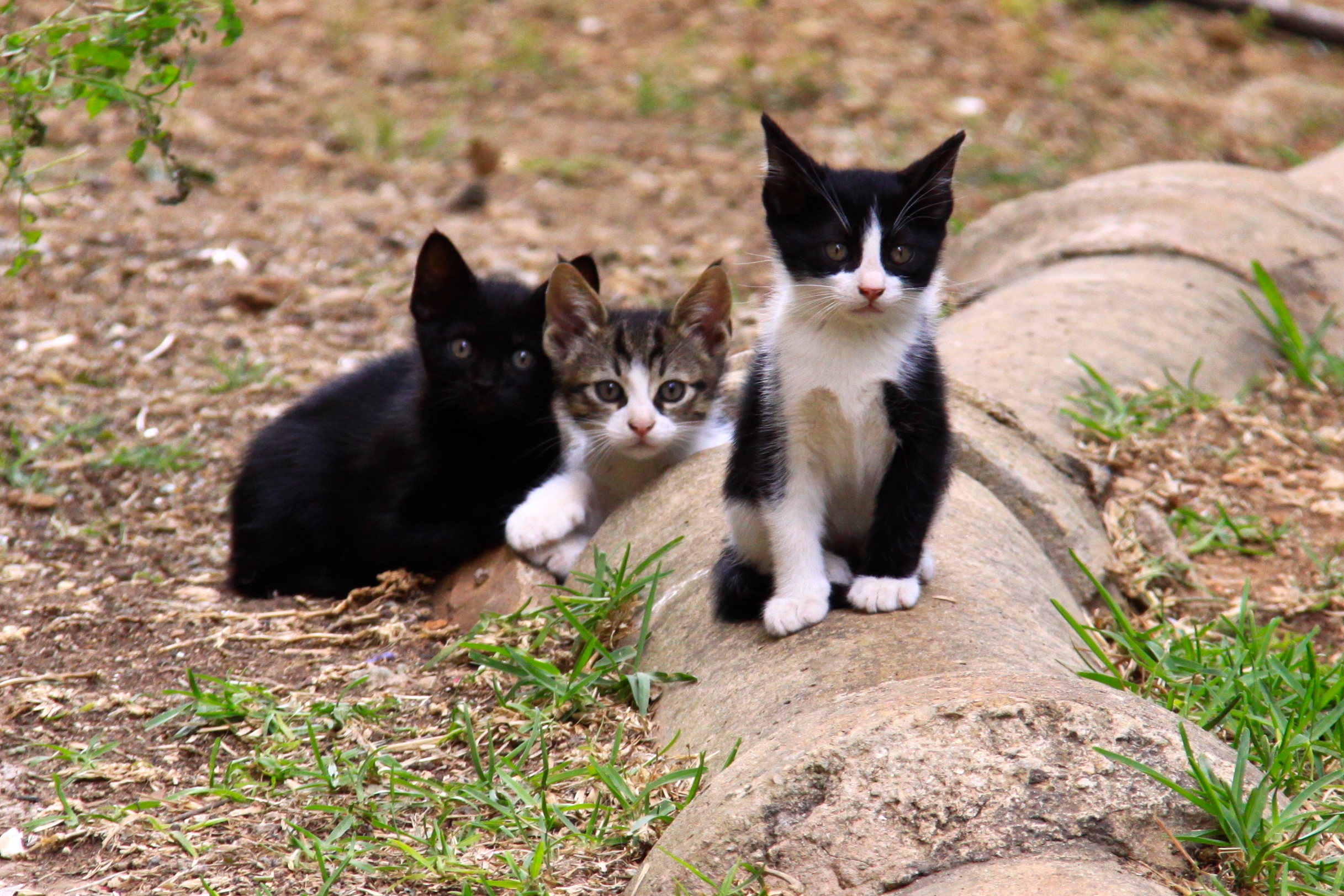
One cat mama birthed a brood of three tabbies, and another had three distinct kittens: one completely black, one black and white, and one gray and white. If only she had an all white kitten, she would have covered the whole monochromatic spectrum!

Israeli wildlife

Israeli wildlife

I think the tiny black kitten was my favorite. It looks like a surprised bush baby, all shining eyes.

Feline bush baby

Feline bush baby

Day 6: A palace and a dervish

A few days after leaving Turkey, I had a dream that I was wandering in a vast palace covered with Iznik tiles. I think this was the result of our tour of the Harem of the Topkapi Palace and Tiled Pavilion of the Archaeological Museum, both of which demonstrated an artistic obsession with these intricately painted tiles.
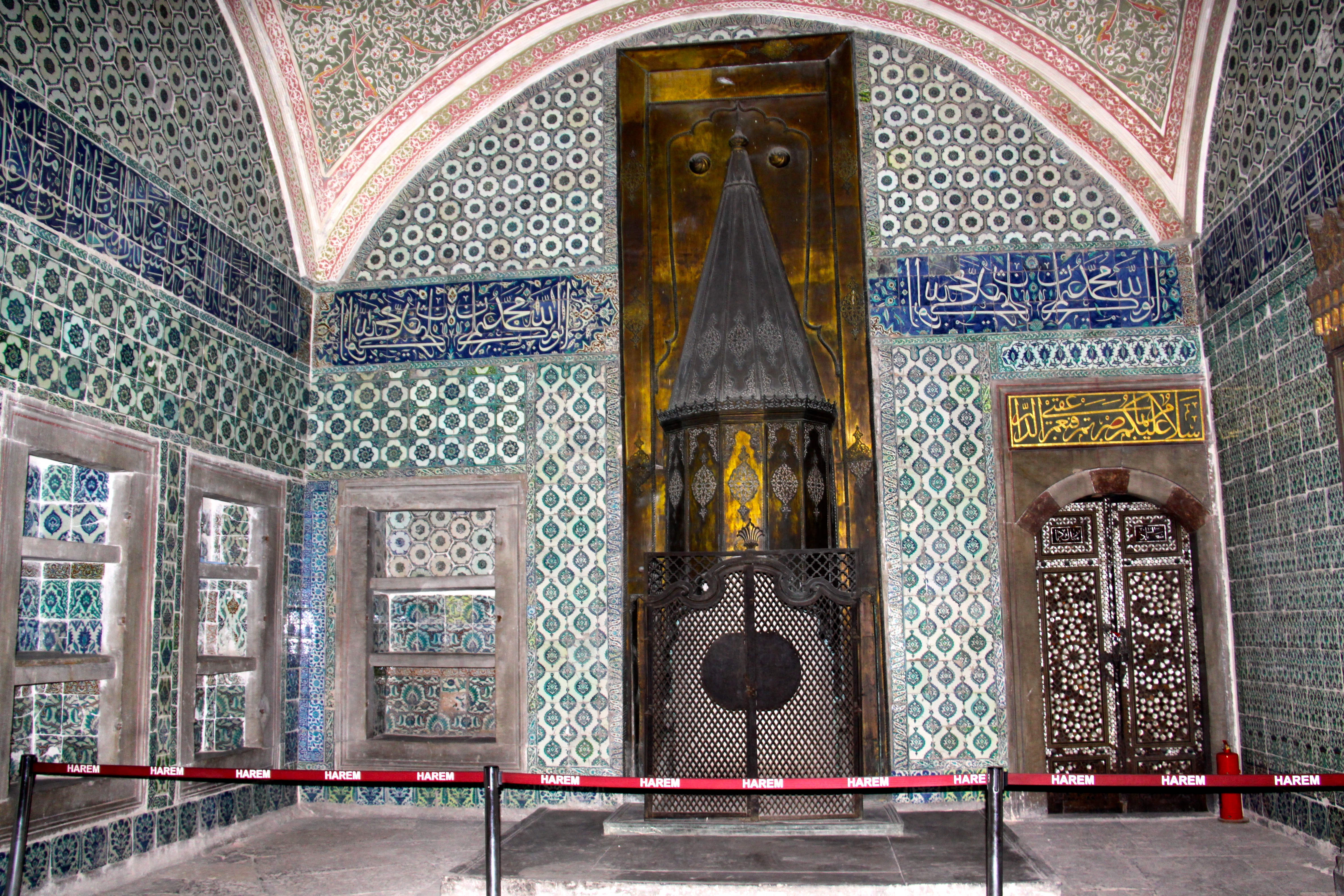
Tiled walls in the Sultan's room

Tiled walls featuring calligraphy surround an ornate fireplace in the Harem.

The day had already turned gray and rainy by the time we got to the palace grounds. The palace is not a single building, but rather a giant complex of buildings around four courtyards. Every sultan made his addition to the complex as new needs arose. At one point 10,000 people lived and worked in the compound, so I suppose the crush of tourists actually helped us imagine how busy this place was when it functioned.

We started with the Harem, the section of the complex where the sultan’s wives and mother lived along with the eunuchs and concubines who tended to the women. Contrary to Western notions, the harem was primarily an administrative establishment, carefully designed to ensure there would be no squabbles over succession because of heirless sultans.

The Harem is the most decorated part of the palace, with many of those Iznik tiles coating chamber after chamber. After touring that part, we began our grueling expedition through sopping courtyards to see the treasury (lots of shiny jewels), the kitchen (unfortunately foodless today), and the armory. In the armory, I found myself suddenly intrigued by a thin sword on display and desperately needing to examine it up close for several minutes, which I assure you was not at all because there was a heat vent below the vitrine. We were amused to find the weapons arranged under signs such as Stabbing, Slicing, Smashing, etc. There were a fair share of funny elements to the palace besides the weapons: the sultan’s throne in his reception chamber appeared big enough to fit ten men side-by-side, the council chamber where the ministers consulted had a window grille above it through which the sultan could listen like a literal eavesdropper, and his mom’s room was located strategically between his room and the rest of the harem. Ah, the tough life of a sultan!
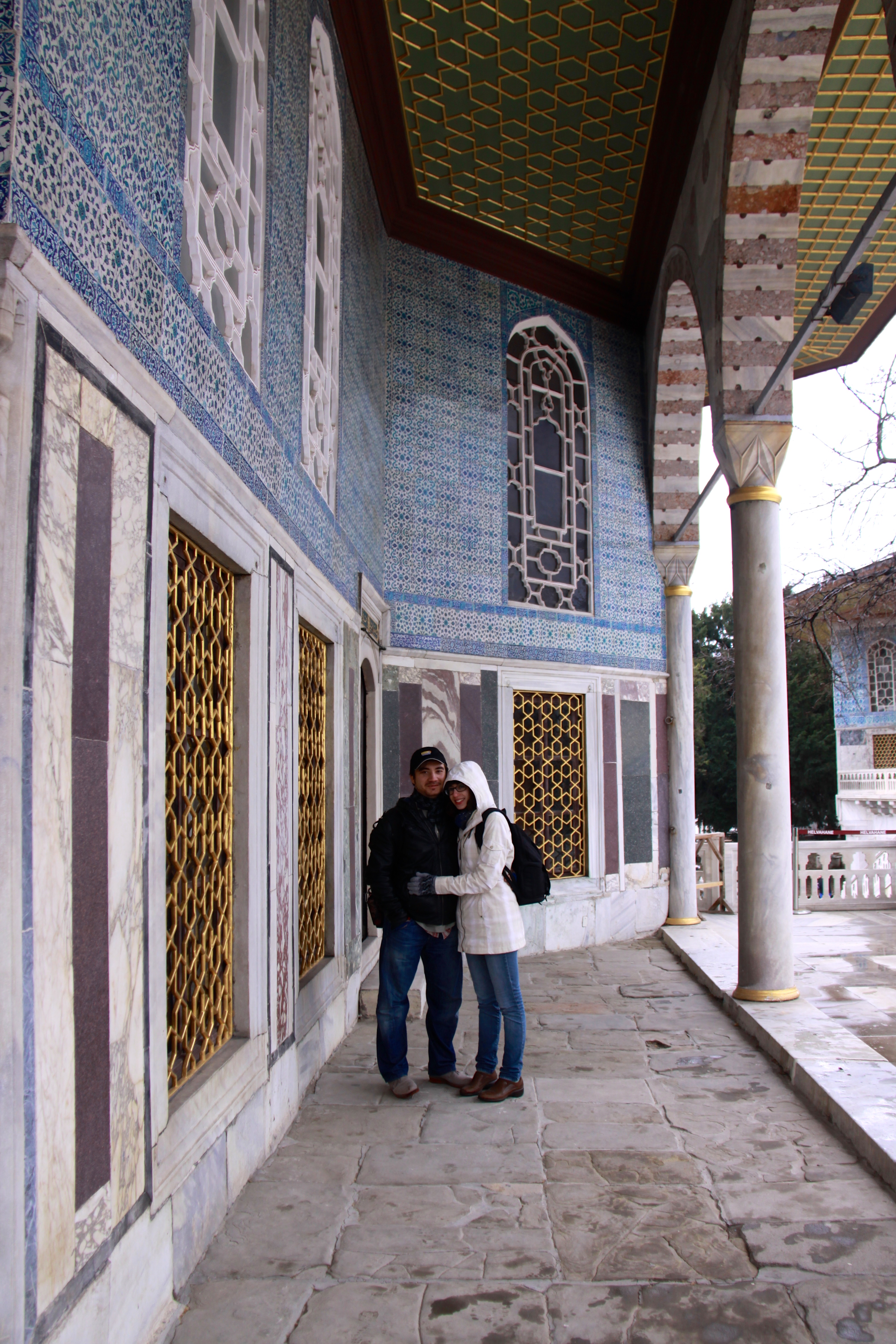
"So...cold..."

“So…cold…”

Hungry and wet from the drizzle, we proceeded to our next stop, the archaeological museum, which is actually a set of three museums. The visit started on a happy note when we found coffee that didn’t cost $10 a cup, approximately the palace price. Now, the café where we lunched had a decent selection with entrees, salads, and sandwiches—but once we had decided on our picks, stomachs growling, we were informed that out of the 20 choices on the menu, they actually only had dolma and pistachio cake in stock.

I guess this was a preview of the rest of the museum, which was under—you guessed it—restoration, and the starring items, such as the famed Alexander Sarcophagus, were off display. A bit perturbed, we made the most of the remaining sarcophagi and their occasionally belligerent inscriptions (e.g. “If any man disturbs this tomb, let him be smashed and his whole family crushed”).
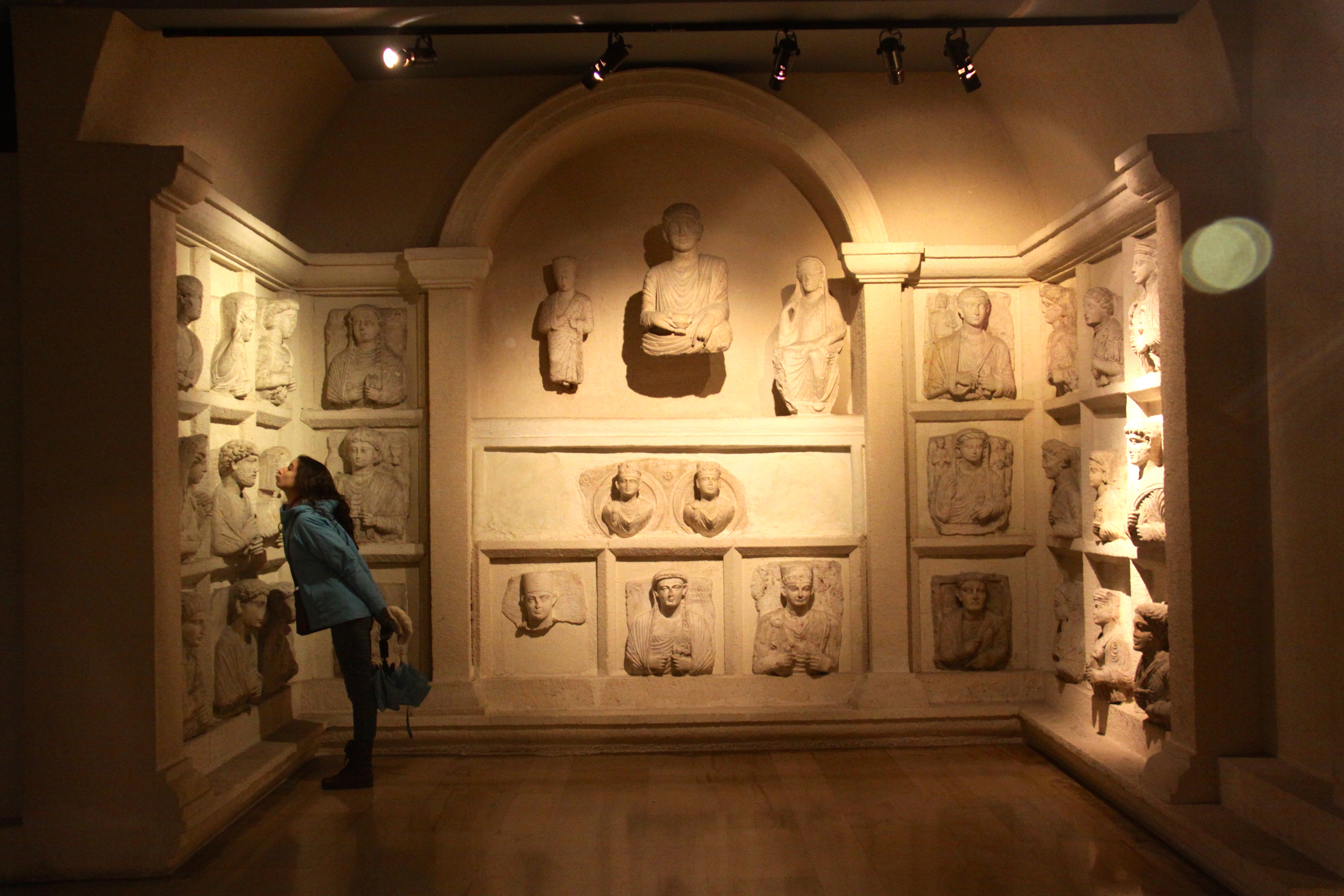
We love history!

Up close and personal with ancient history.

We walked over to the museum next door where we saw…more tiles! In fact, this small museum is called the “Tiled Pavilion.”
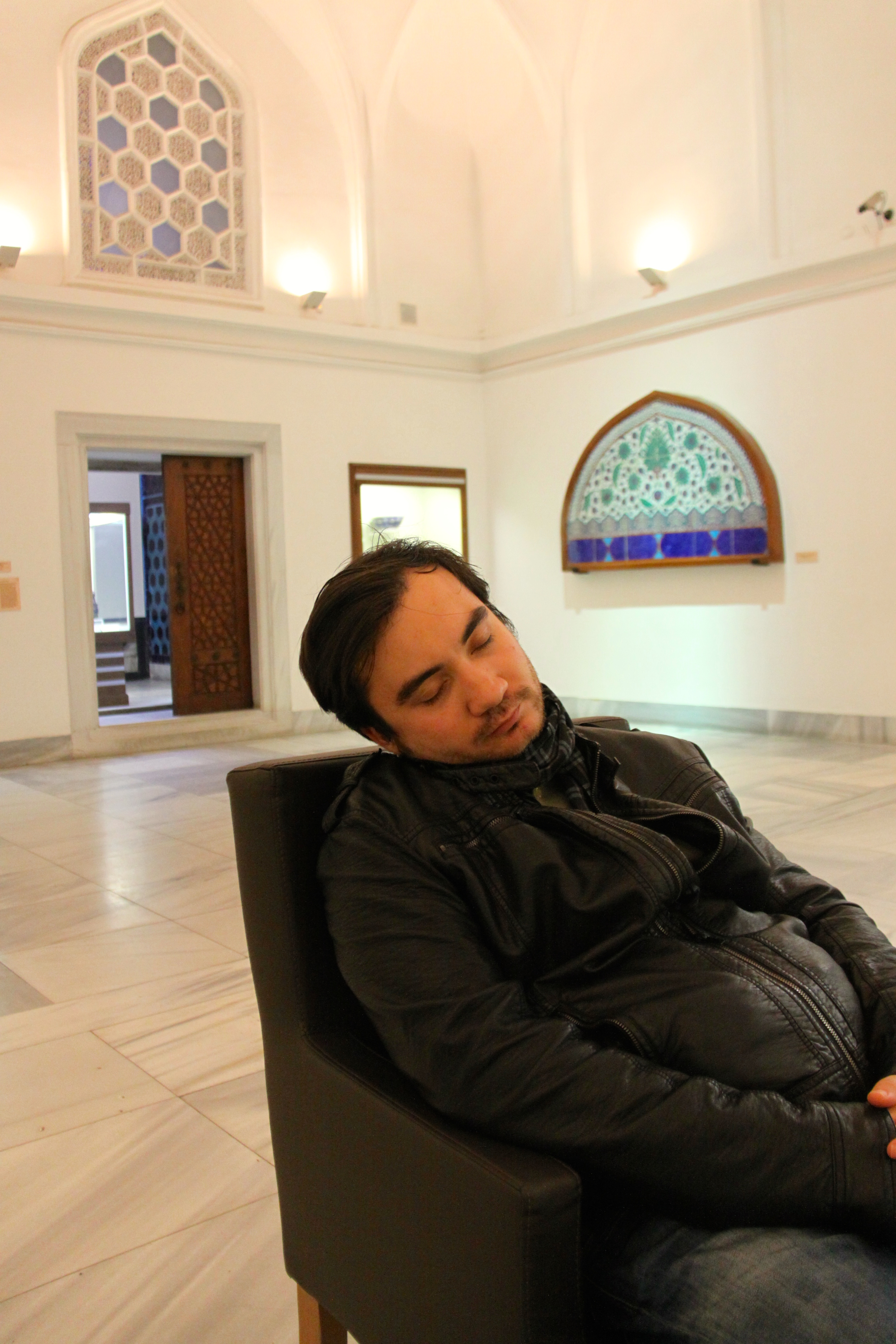
Excited to see tiles!

Or “the Tired Pavilion”

Finally, after a detour in the sculpture garden, which is where the disenfranchised statues are left to suffer the elements, we went to the last museum: the “Ancient Orient.” Upon my approaching the entrance, I was greeted by a guard clearly communicating that my entry was unwelcome. Apparently, they chase everyone out 20 minutes before the museum actually closes. I convinced her to let us in for “one minute,” and after we cruised through Babylon, the lights went off. But I could not leave without seeing at least one famous item, the Treaty of Kadesh, the world’s oldest known peace treaty. The guards relented and flicked on the lights for us to get a brief look at the tiny cuneiform tablet.

And that concluded our day of odd museums.

With only a few hours left in Istanbul, we headed to the Arasta Bazaar, where Jasmine purchased a beautiful inlaid box and Sergey and I drank the shopkeeper’s apple tea. Then we happened upon an outdoor restaurant where a trio was performing—and, most excitingly, a whirling dervish was whirling!
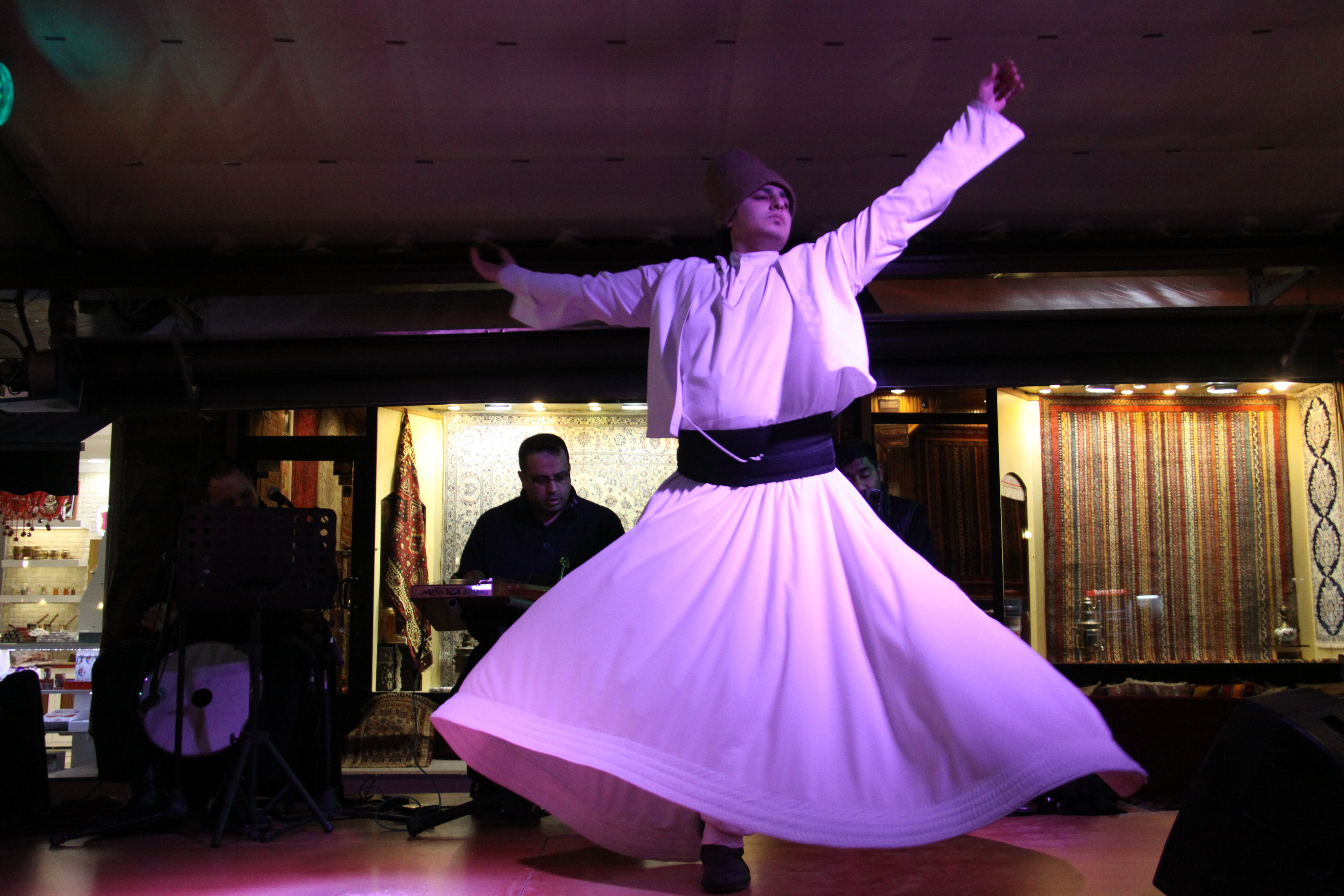
Dervish

Whirling dervish, Sufi dancer, your skirts are a sheltering canopy, your eyes, divine ecstasy.

Entranced, we watched from the sidewalk, and then decided it was worth eating a freezing al fresco dinner to see him whirl. While I’m always skeptical of the authenticity of “cultural” activities in a tourist district, he seemed to be legitimately meditating as he spun, eyes nearly closed, apparently unconscious of his audience, including the paparazzi in the front row seats (us).

Finally, it was time to say “good night” to Istanbul. Our journey had reached its end.
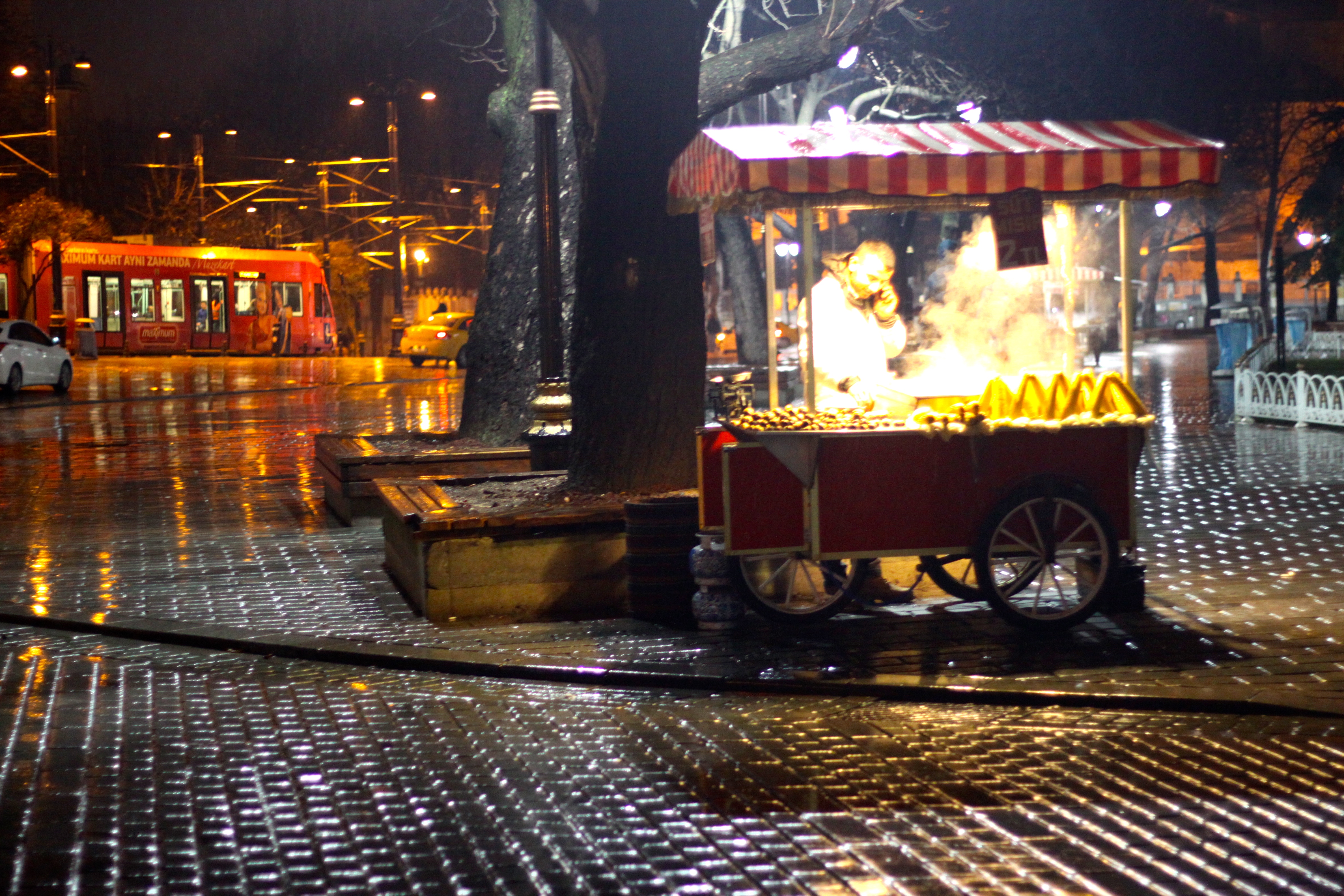
Near Divan Yolu

City of 10 million people

burqa-clad women, bohemian men,

fish sandwiches scenting thousands of fingers.

East meets West

almost

separated by the strait of the Bosphorus

marble tongue of Marmara licking the cold cup of the Black Sea

and Black Sea pouring its dark contents into Marmara’s mouth.
Day 4: Mosques galore

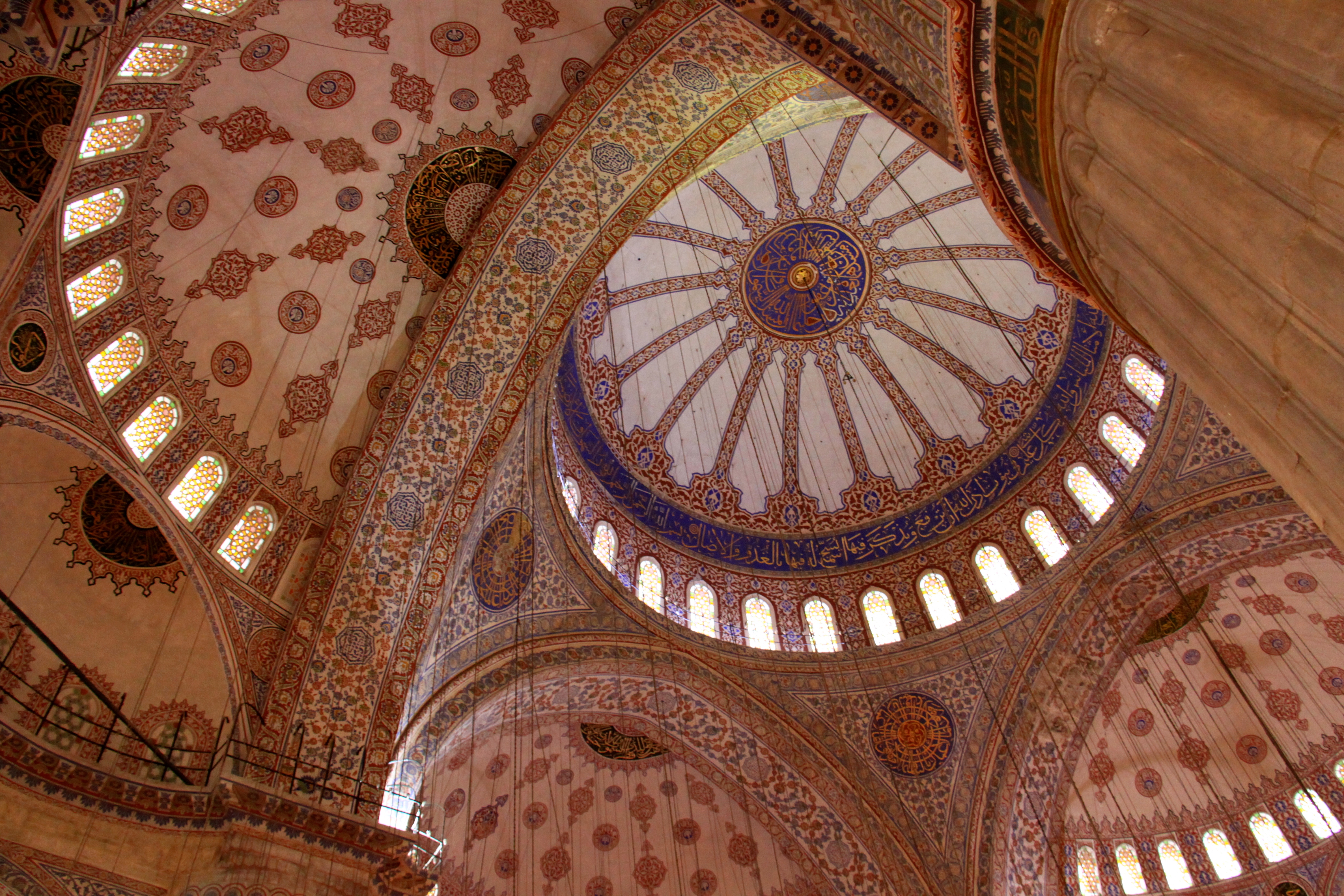
Interior of the Blue Mosque

Dome of the Blue Mosque, which earns its moniker from the blue tones of its interior decor.

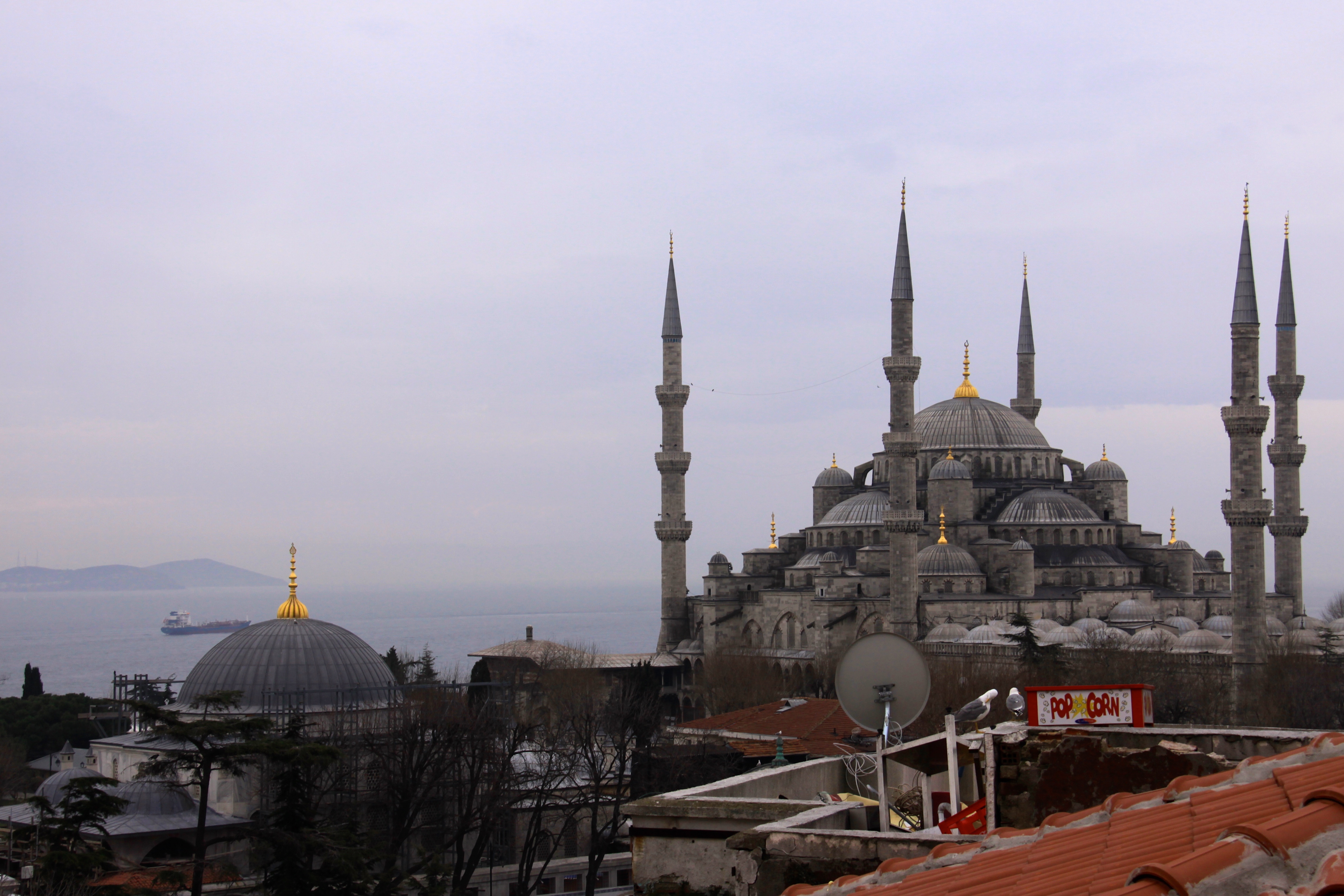
While mosques only require a single minaret from which the muezzin can voice the call to prayer, to show off his wealth and power, the sponsoring sultan of the Blue Mosque—Sultan Ahmet, who gave his name to both the mosque and the district—built six.

We visited Istanbul in “low season” for tourism, the time when the government implements its renovations and restorations of the various historical sights before the influx of visitors begins again with the return of warm weather. Indeed, nearly everywhere we went, we found huge tarps wrapped around walls and covering entire buildings, printed with explanations of the history of the place underneath and the plans for its restoration. The Spice Market from afar looked like an enormous tent, thanks to its veiling tarp. Hagia Sofia featured massive scaffolding inside, and the Blue Mosque featured a mere 5.5 minarets. The remaining 0.5 was undergoing reconstruction.

One minaret, two minaret...scaffolded sixth minaret is outside the frame.

Minaret #6 is currently in hiding.

The Blue Mosque might be the most renowned, but I have to be a mosque snob and say that of the three we entered, it was actually the least impressive. That should give you an idea of just how many gorgeous mosques populate Turkey, thanks to the sultans’ combined religiosity and profligacy!

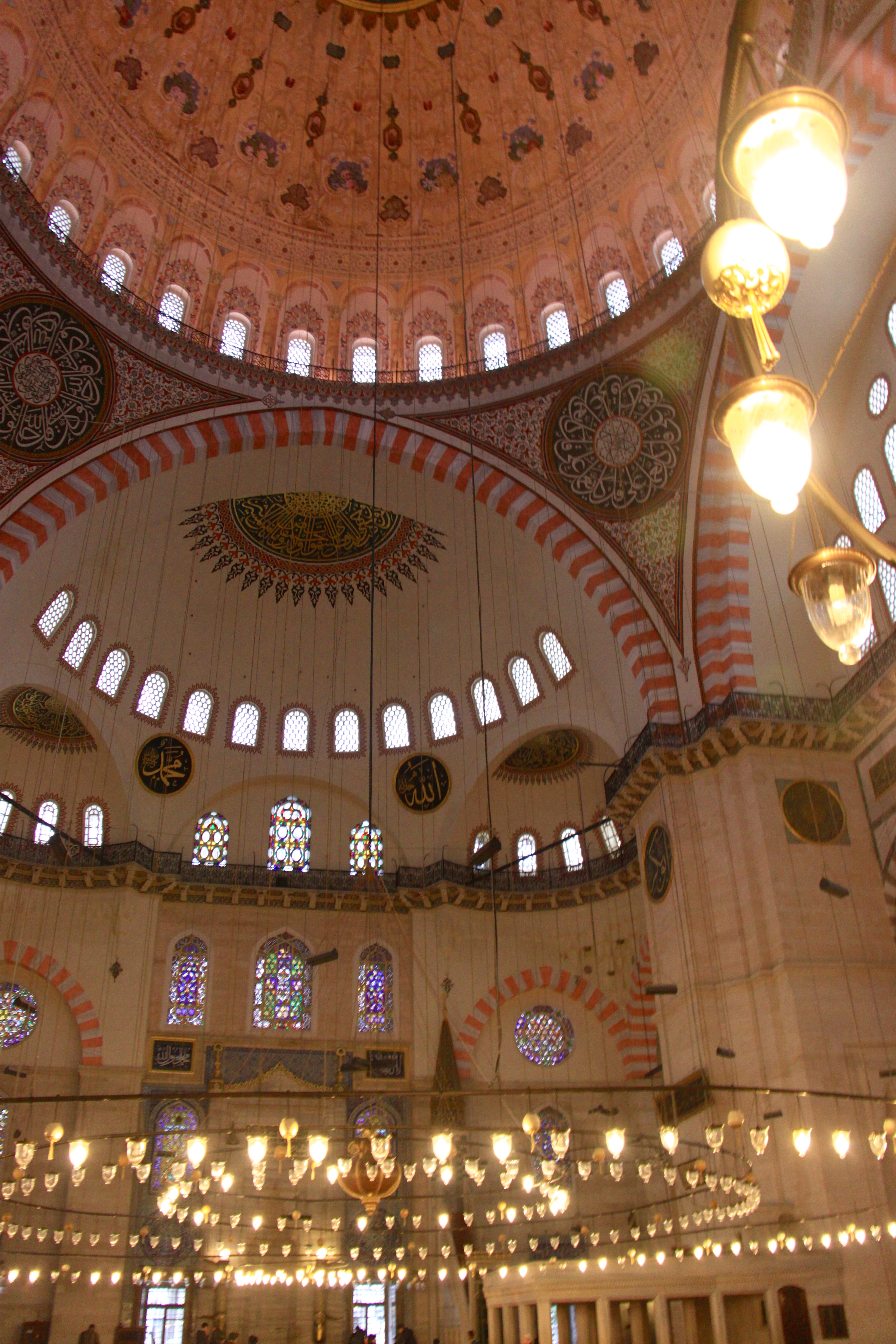
Inside the Mosque of Suleyman the Magnificent.

Inside the Mosque of Suleyman the Magnificent. Note the giant chandeliers.

Our next mosque was the truly magnificent Mosque of Suleyman the Magnificent. The architect Mimar Sinan made massive and heavy structures appear buoyant and graceful. Like the heavenly ambience created by the stained glass windows and elaborate décor of Gothic cathedrals in Europe, it was clear that the beauty of these mosques was designed to lift the spirits of worshippers to paradisiacal heights.

Mosques were usually surrounded by other establishments like bazaars and kitchens. We had lunch in a restaurant housed in the mosque’s former soup kitchen. When we walked from the stone-paved courtyard into a lofty chamber filled with untenanted tables draped in crisp white linen, we saw that we were the only customers. While I appreciate the quietness of an empty restaurant, at a fancier establishment like this, I prefer having at least a few other customers to distract the flock of attentive waiters from my plebeian etiquette.

“They’re giving us water for free!” I whispered to Sergey and Jasmine after the waiters had filled our glasses before we ordered. “Drink a lot!”

Our experience at this restaurant demonstrated the heights of excellence that a meatball can attain. In Turkey, “koftecisi” or meatballs are oblong patties of ground meat mixed with spices and herbs, then grilled.

We ordered meatball soup followed by meatball dishes. The meatball soup was a creamy blend of lentils, vegetables, and bits of meatball—just what we needed to warm us up after being buffeted by the damp wind. Then came our main course: Sergey got tender cutlets, and Jasmine and I shared…kebab sushi. The filling was made with meat and finely chopped pistachio, which had apparently been formed into a roll, then wrapped with a pastry. This roll is then sliced and the slices are grilled. The end result was delectable!

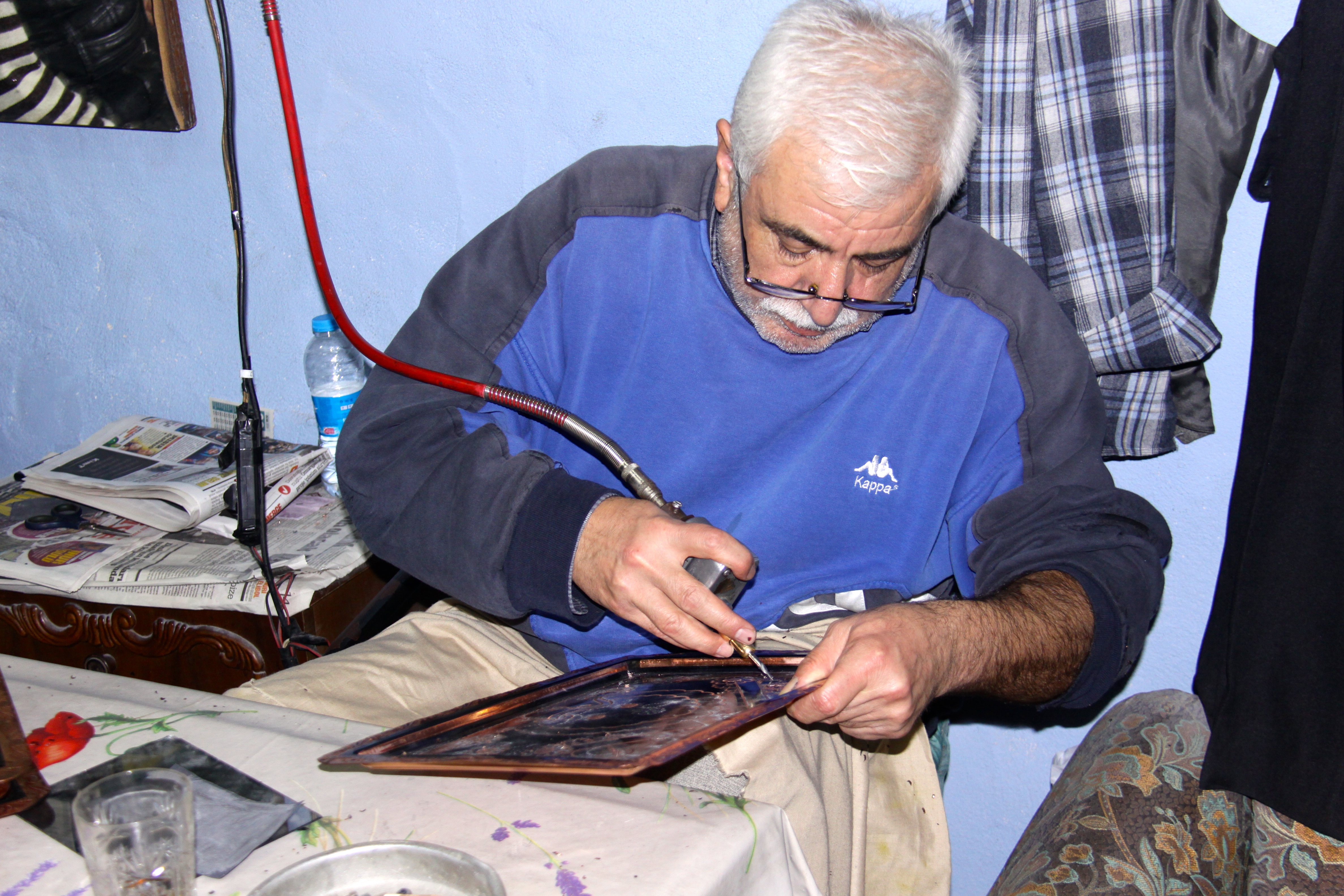
Alas, our little glasses of apple tea were soon finished and the meatballs gone; we had to exit our culinary cocoon. Yet, the restaurant was not the only gem around the mosque. We found some artisans making their goods–engraved platters and other metal trinkets. Their workshop also functioned as their shop, and after watching them demonstrate their craft, we bought several dishes engraved with gleaming floral patterns.

Artisan drilling through layers of colored metal to make an etched platter,

Artisan drilling through layers of colored metal to make an etched platter.