Wildness and Pets

A year ago, I enjoyed witnessing two of the tadpoles I’d been given develop into froglets and then big, beautiful frogs. Come winter, evidently, they managed to hibernate at the bottom of the pond, surviving even when a January cold snap coated the surface with an inch of ice.

By this spring, we’d had a year and a half together—me watching intently and hoping for their wellbeing, them tolerating my presence. I was intrigued when, one day, I noticed the two frogs wrestling. Shortly thereafter, while I sat on the porch in a rainstorm, I saw one of them hop away from the pond and across the yard—and that was that. Not so much as a parting ribbit.

Continue reading
Frog Pond at Half a Year

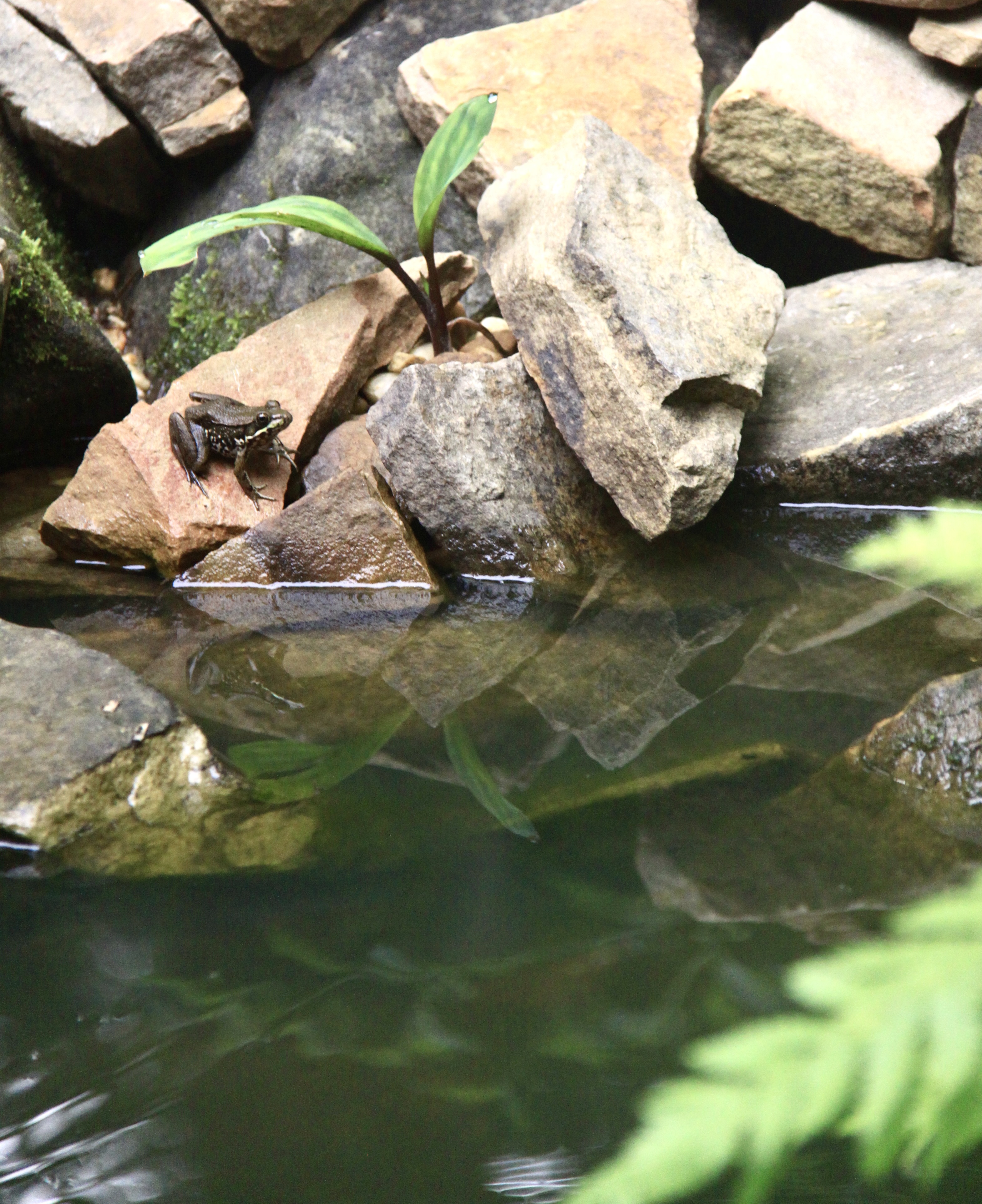
A brown frog sits on a stone next to water.
A Southern leopard frog sits under a golden club plant in my pond.

For a while, the tadpoles made themselves invisible. But gradually, as winter turned to spring, they began showing themselves. Tiny legs grew, then lengthened. 

By late spring, they’d metamorphosed into frogs. Now, breathing air and warming their cold-blooded bodies in the sun, the frogs perched atop stones, allowing me to count them: four tadpoles had survived to froghood.

Continue reading

Permeable Skins

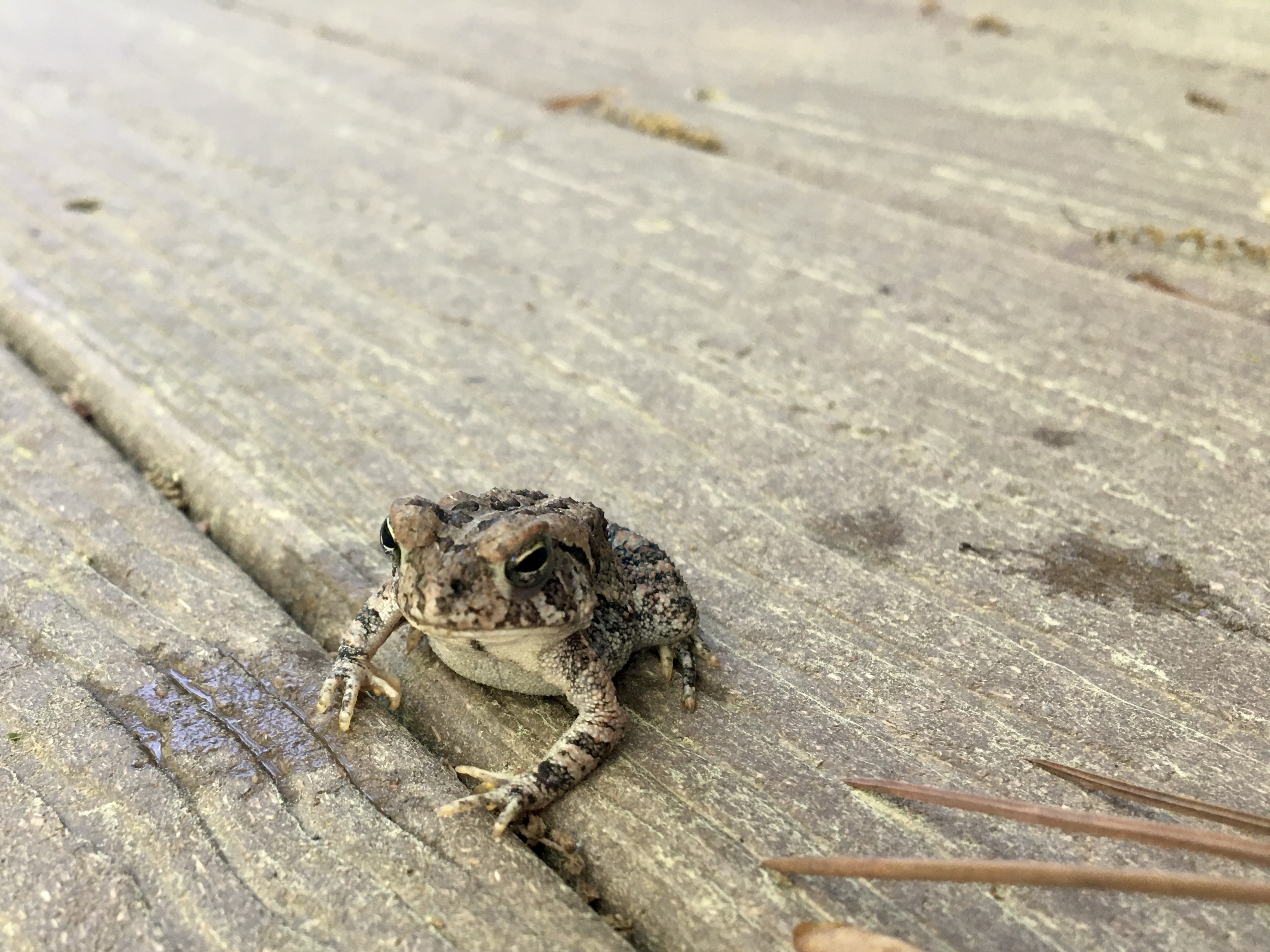
A brown toad with black stripes.

It might seem overzealous for me to worry about our own yard providing habitat given that dozens of species, or probably hundreds or thousands if we’re counting microbial life, already use it, and that at least a hundred native trees—oaks, sweetgums, tulip poplars, dogwoods, loblolly pines, etc.—call it home. But even this habitat could be better. 

Continue reading