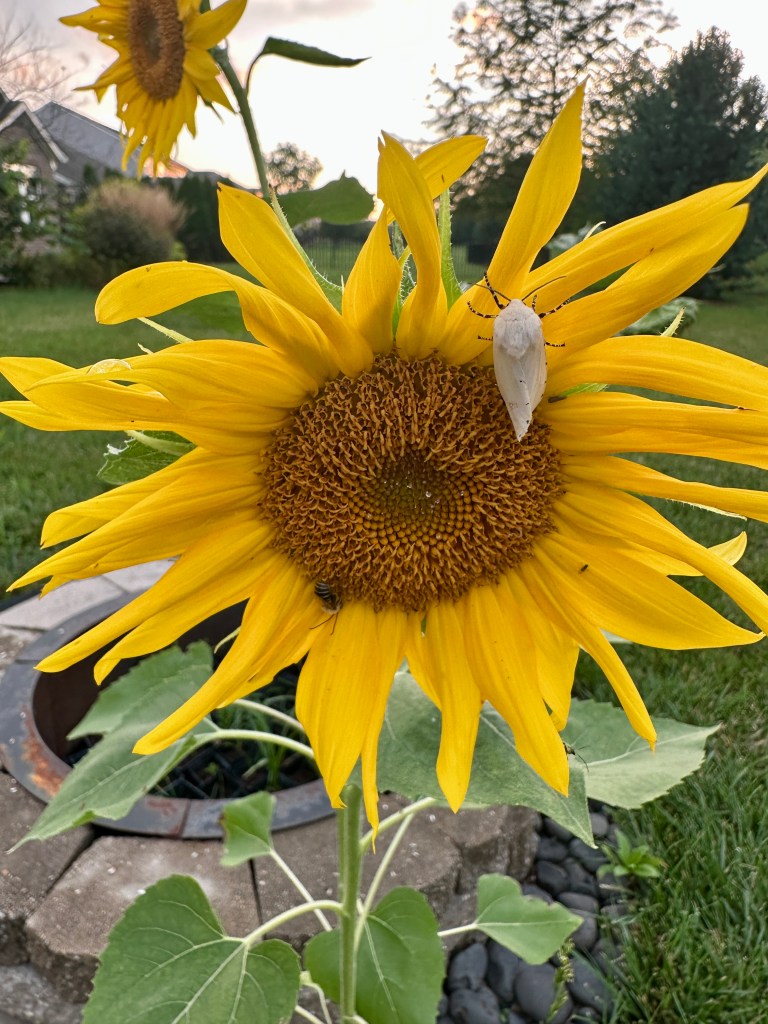
Salt marsh moth caterpillar feeding on mistflowerSalt marsh moth resting on sunflower
October. It’s been a couple weeks since I’ve seen my summertime favorites, hummingbirds and monarchs, which have no doubt departed on their southward migrations.
Looking back on the warmer months, watching caterpillars enjoy my plantings was a highlight—with one exception.
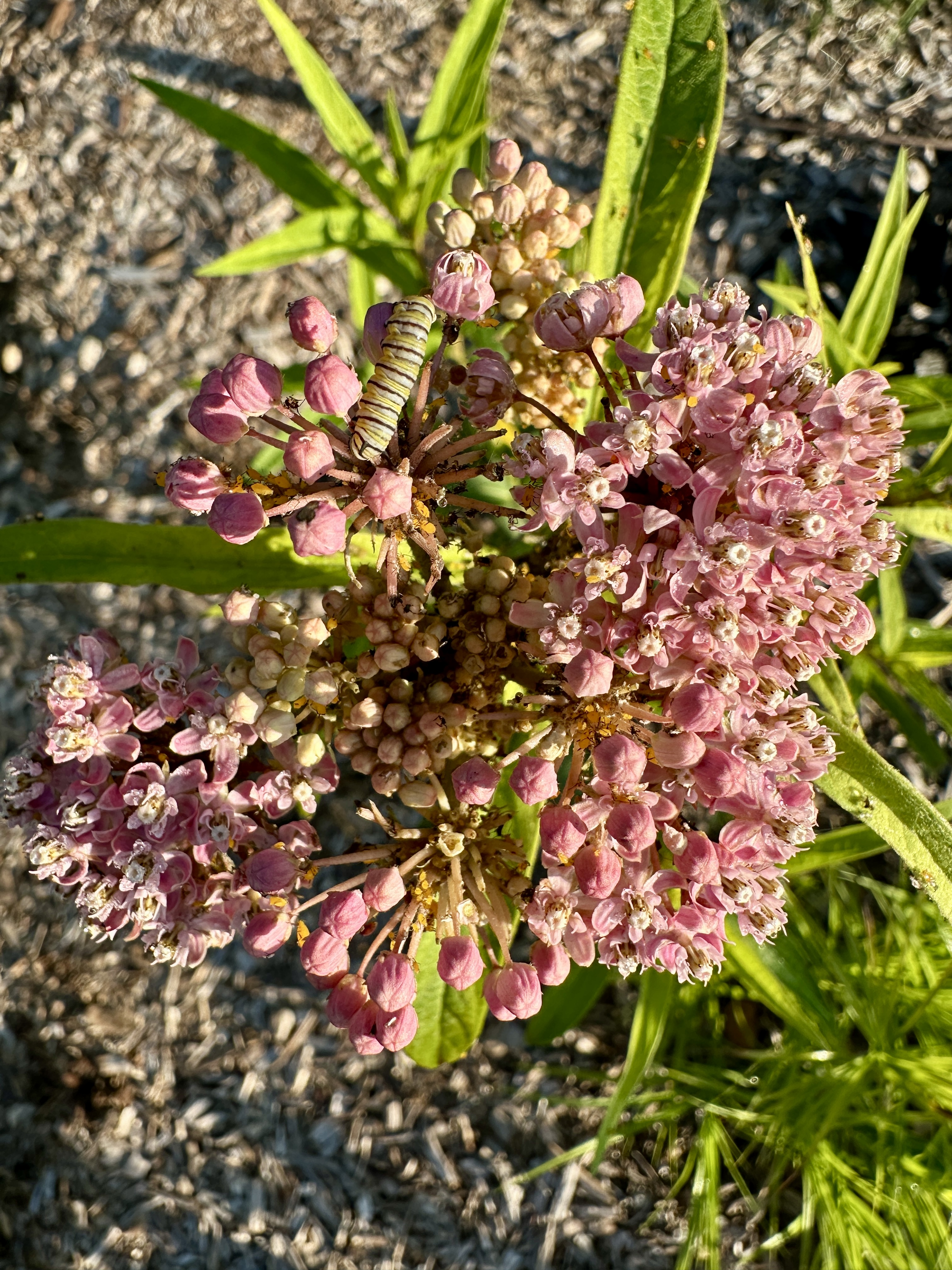
A tiny monarch caterpillar rests on milkweed flowers, seen in our yard earlier this month.
In Alabama, where at least a hundred trees inhabited our lot, one of my favorite activities was lying on the porch swing, gazing up at the leaves as they danced in the breeze. Once, a Caroline wren landed on me as I lounged, perhaps mistaking the motionless tree-gazer for a log.
It’s taken some getting used to our yard in suburban Indianapolis, where lawn predominates.
To be fair, it’s not entirely treeless: three cherry trees were presumably planted about a decade ago when the house was built. Besides the cherries, the landscaping included clematis, daisies, daylilies, daffodils, hydrangeas, hostas, and weigela. Each of these ornamentals is an exotic, generally with origins in Eurasia, so, while beautiful, they don’t do much for the ecosystem.
Of course, the majority of the quarter-acre lot is covered by lawn, which was a pristine, sterile monoculture when we arrived, thanks to the prior owner’s fastidious attentions. We heard they killed voles to keep the grass safe.
Last year, I heard a birdsong that astounded me with its melody. The Merlin app’s Sound ID told me it was a wood thrush, describing the call as haunting and flute-like. This spring, I was thrilled to hear the trill again: the wood thrush had made it back from his wintering grounds in Central America. I’ve never laid eyes on this bird since he stays in the most forested parts of the neighborhood, heightening the mystery of his wordless ballad.
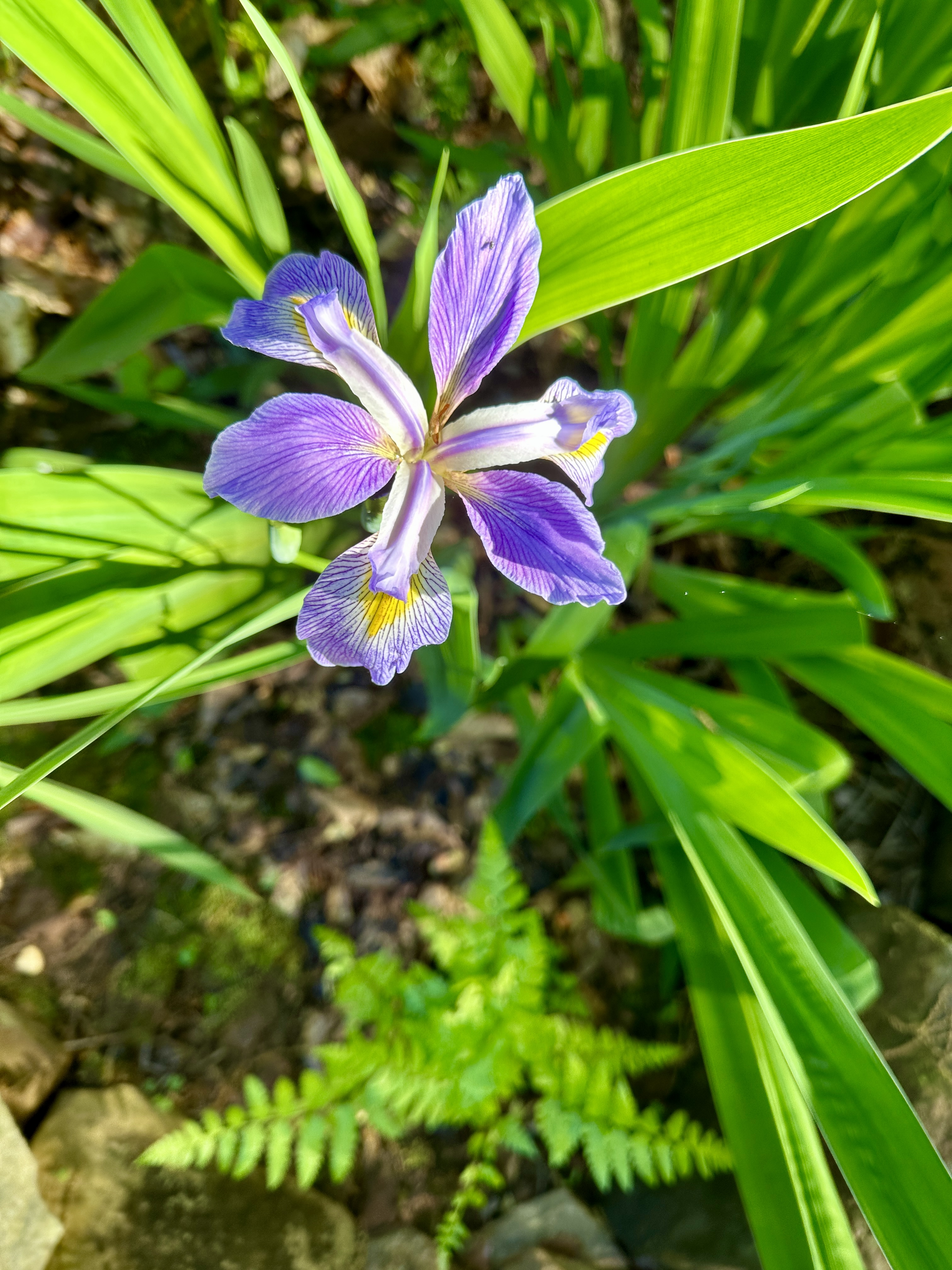
Southern blue flag iris rises above a Dixie wood fern in our tiny rain garden.Continue reading →
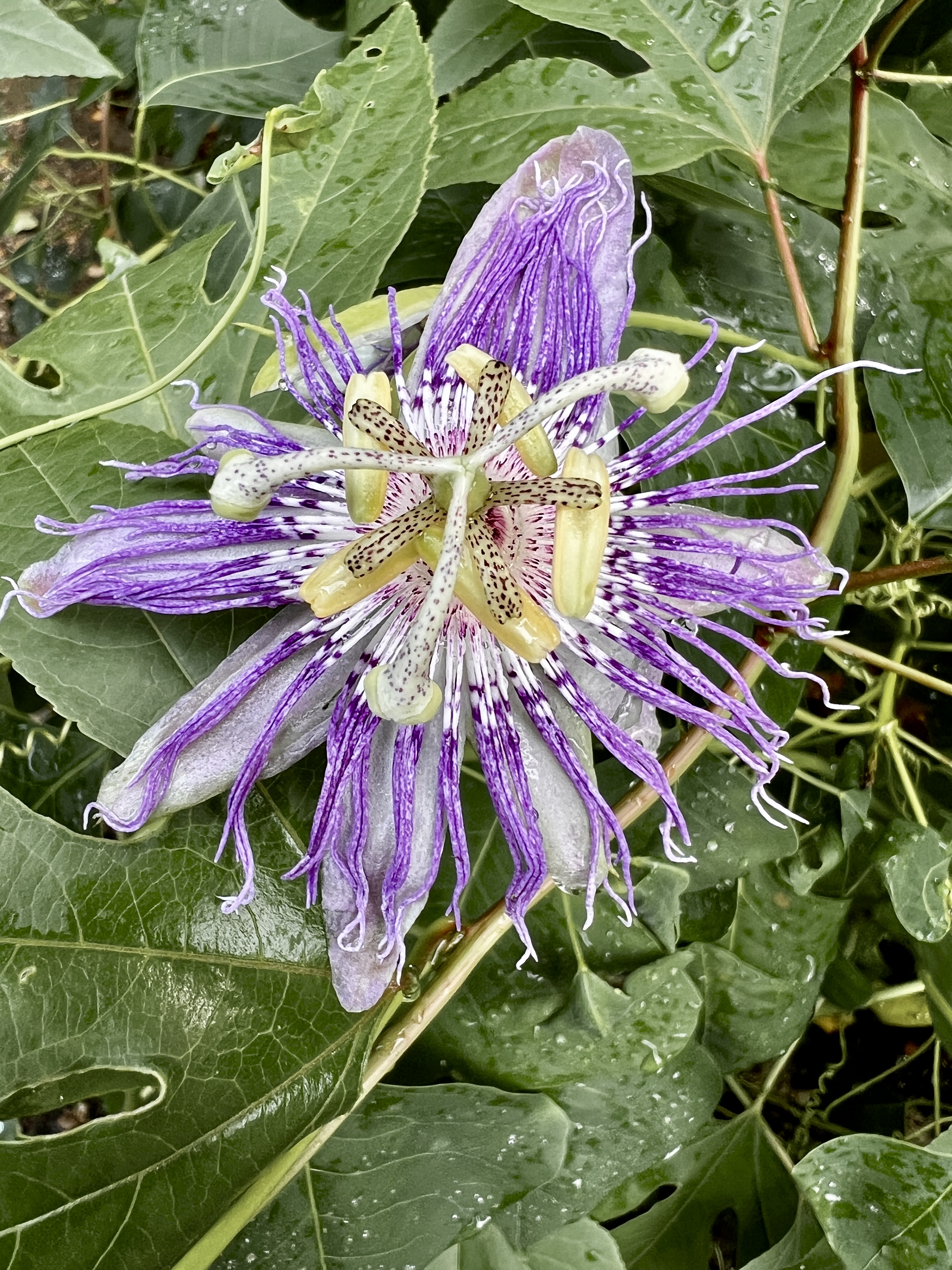
After a June rainstorm, a magical flower blooms. It is exuberantly layered, an extravagant purple wedding cake on a vine by the side of the road. Petaled, fringed, striped, spotted—hypnotic. Bees feel as I do, transfixed, drawn to this short-lived blossom. This is maypop or purple passionflower, Passiflora incarnata, native to the Southeastern United States, though it looks like the kaleidoscopic creation of an otherworldly jungle.
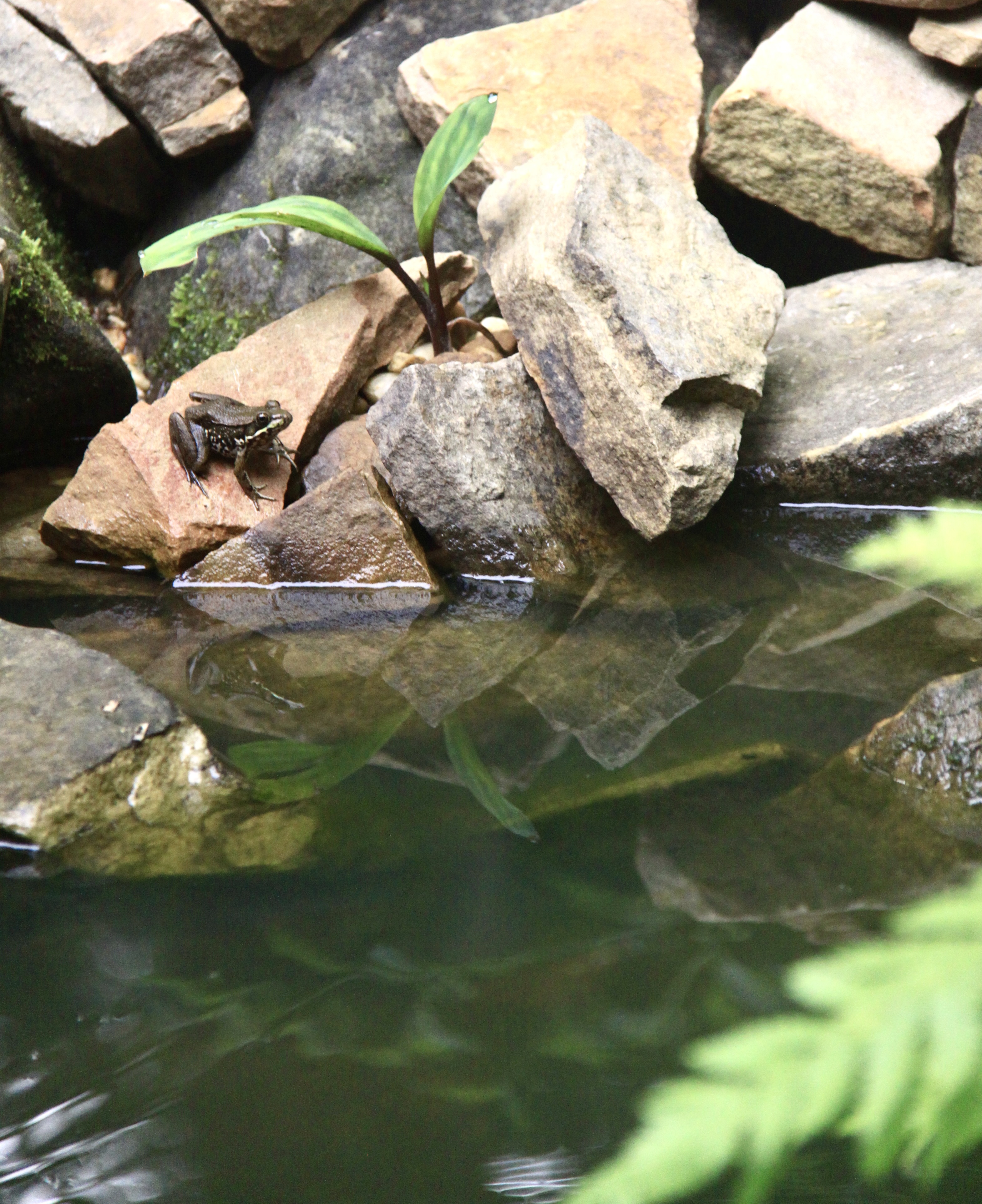
A Southern leopard frog sits under a golden club plant in my pond.
For a while, the tadpoles made themselves invisible. But gradually, as winter turned to spring, they began showing themselves. Tiny legs grew, then lengthened.
By late spring, they’d metamorphosed into frogs. Now, breathing air and warming their cold-blooded bodies in the sun, the frogs perched atop stones, allowing me to count them: four tadpoles had survived to froghood.
Water and stones alone do not make a healthy pond. It needs plants, which provide habitat for animals and filter nutrients out of the water, keeping it clearer and resistant to algal blooms. Plus, when you fill a pond with plants, you can call it a “water garden,” conjuring images of fragrant blossoms nodding at their reflections in limpid pools. Ideally, a pond will have both plants that live fully in the water—submerged plants rooted to the bottom as well as floating ones—and marginal (or “emergent”) plants that live on the banks in perpetually damp soil.
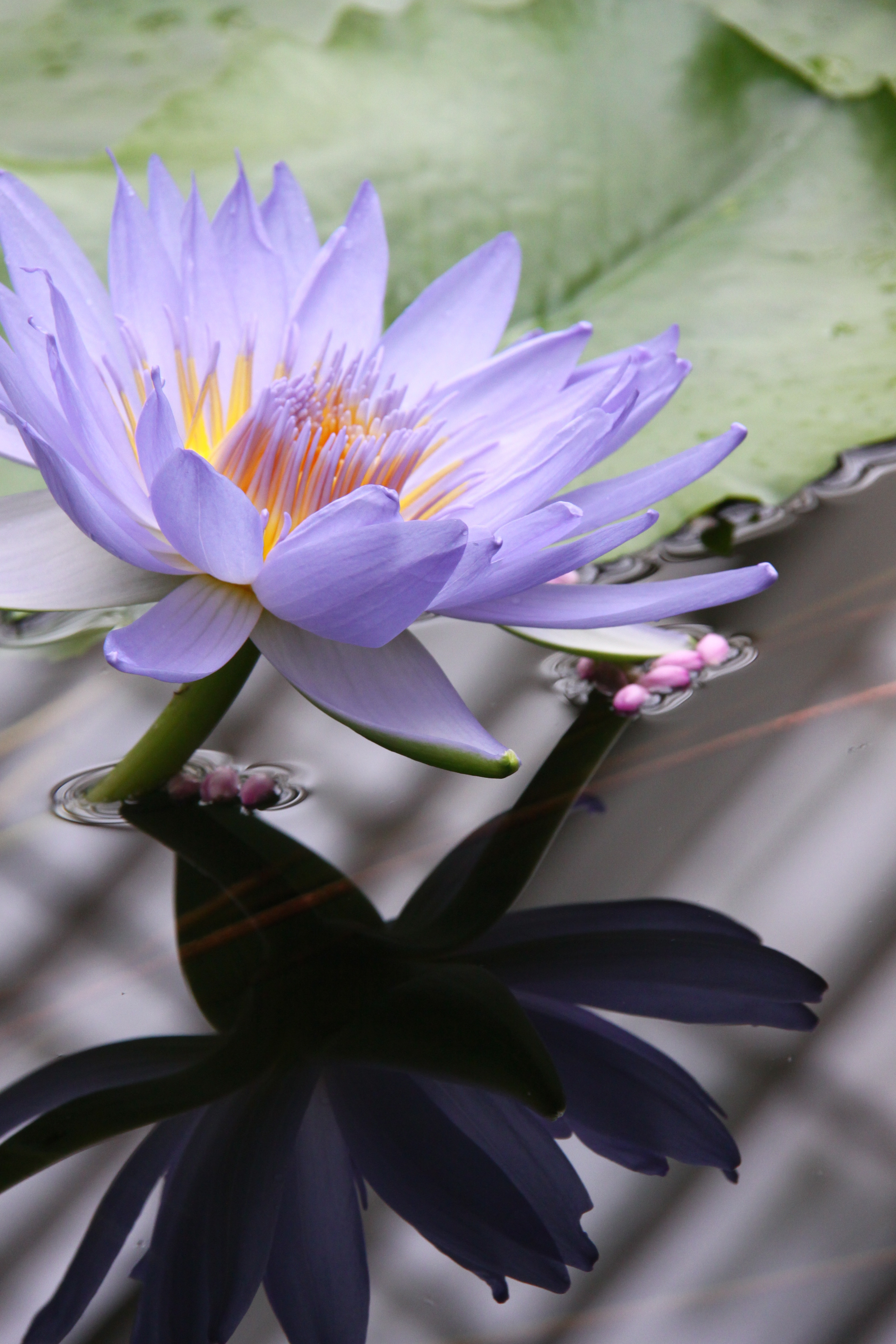
A tropical waterlily I admired in the San Francisco Conservatory of Flowers.Continue reading →