Of Birdsongs, Blossoms—and Beets

Last year, I heard a birdsong that astounded me with its melody. The Merlin app’s Sound ID told me it was a wood thrush, describing the call as haunting and flute-like. This spring, I was thrilled to hear the trill again: the wood thrush had made it back from his wintering grounds in Central America. I’ve never laid eyes on this bird since he stays in the most forested parts of the neighborhood, heightening the mystery of his wordless ballad.

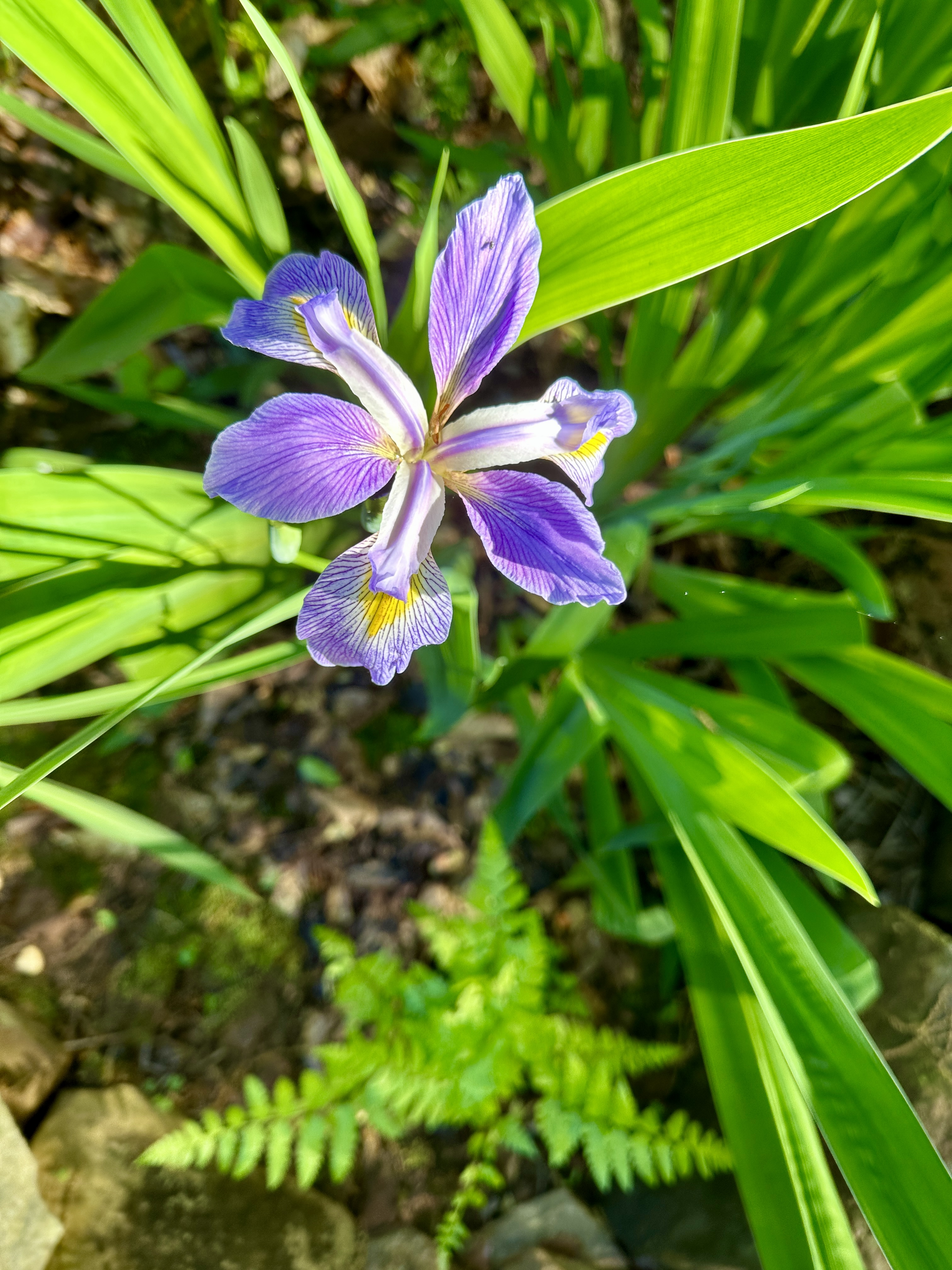
Greenery surrounds a purple iris flower.
Southern blue flag iris rises above a Dixie wood fern in our tiny rain garden.
Continue reading

Maypop Meditation

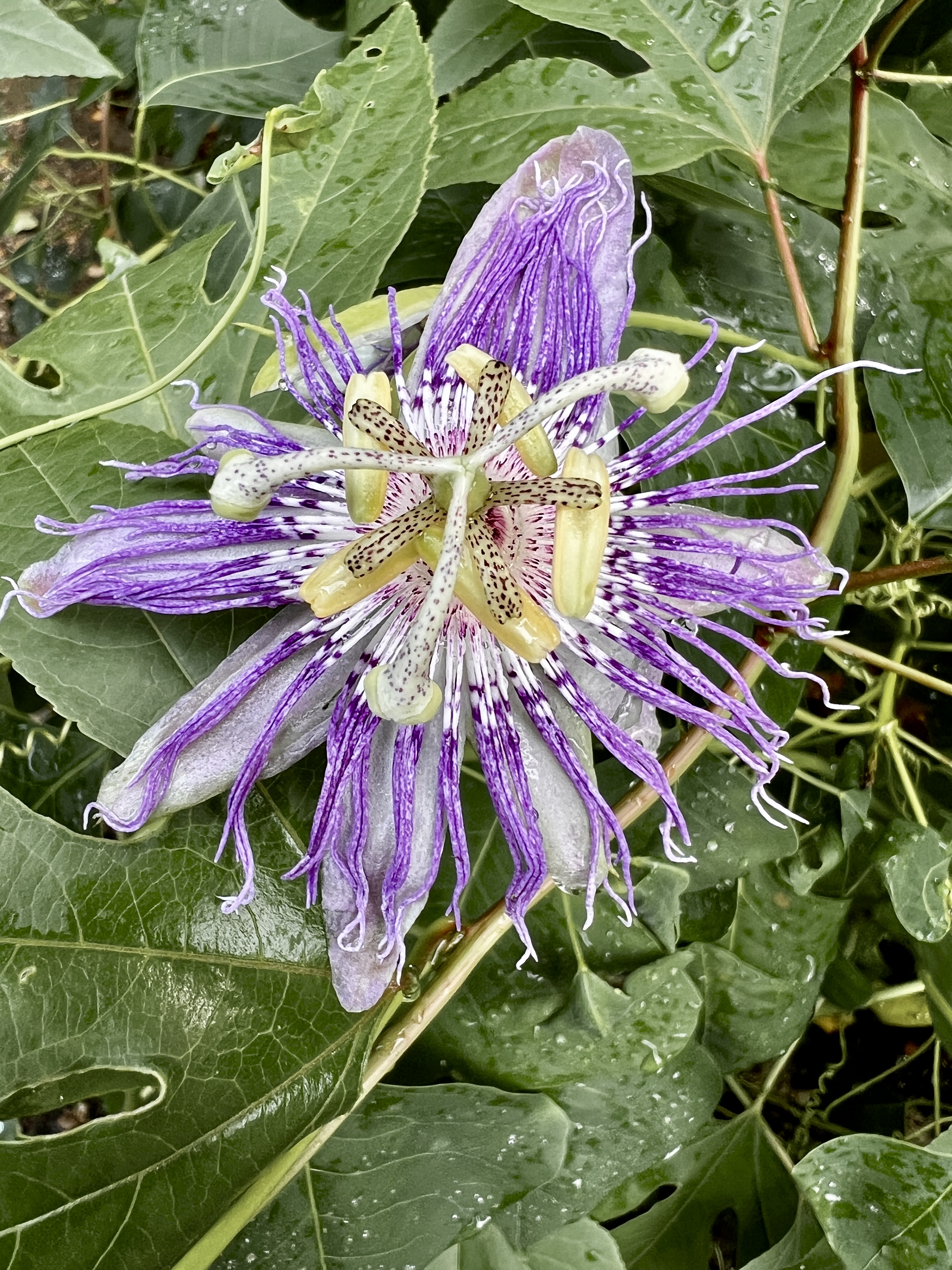
After a June rainstorm, a magical flower blooms. It is exuberantly layered, an extravagant purple wedding cake on a vine by the side of the road. Petaled, fringed, striped, spotted—hypnotic. Bees feel as I do, transfixed, drawn to this short-lived blossom. This is maypop or purple passionflower, Passiflora incarnata, native to the Southeastern United States, though it looks like the kaleidoscopic creation of an otherworldly jungle.

A passionflower in bloom.
Continue reading

Frog Pond at Half a Year

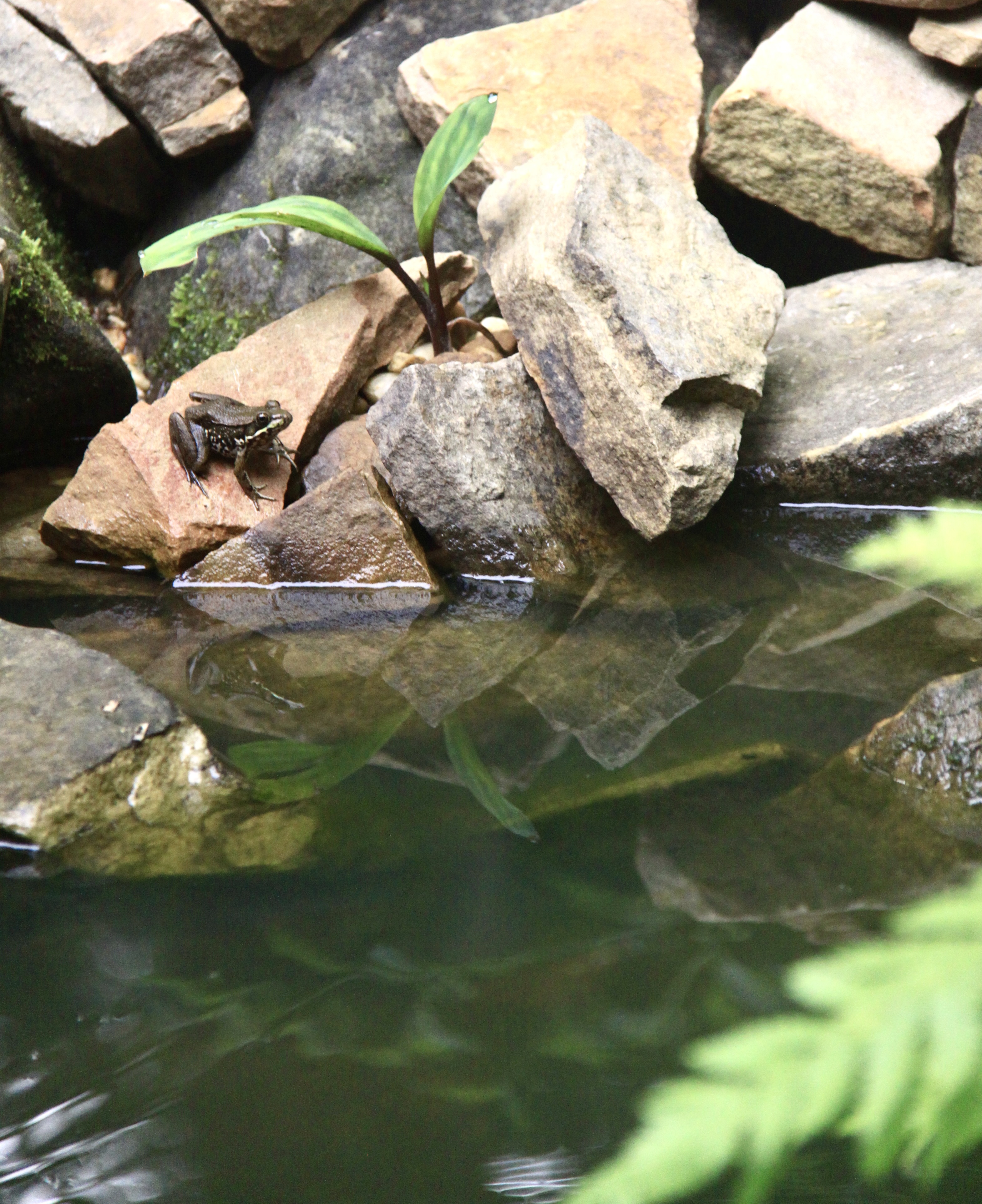
A brown frog sits on a stone next to water.
A Southern leopard frog sits under a golden club plant in my pond.

For a while, the tadpoles made themselves invisible. But gradually, as winter turned to spring, they began showing themselves. Tiny legs grew, then lengthened. 

By late spring, they’d metamorphosed into frogs. Now, breathing air and warming their cold-blooded bodies in the sun, the frogs perched atop stones, allowing me to count them: four tadpoles had survived to froghood.

Continue reading

Water Gardening

Water and stones alone do not make a healthy pond. It needs plants, which provide habitat for animals and filter nutrients out of the water, keeping it clearer and resistant to algal blooms. Plus, when you fill a pond with plants, you can call it a “water garden,” conjuring images of fragrant blossoms nodding at their reflections in limpid pools. Ideally, a pond will have both plants that live fully in the water—submerged plants rooted to the bottom as well as floating ones—and marginal (or “emergent”) plants that live on the banks in perpetually damp soil.

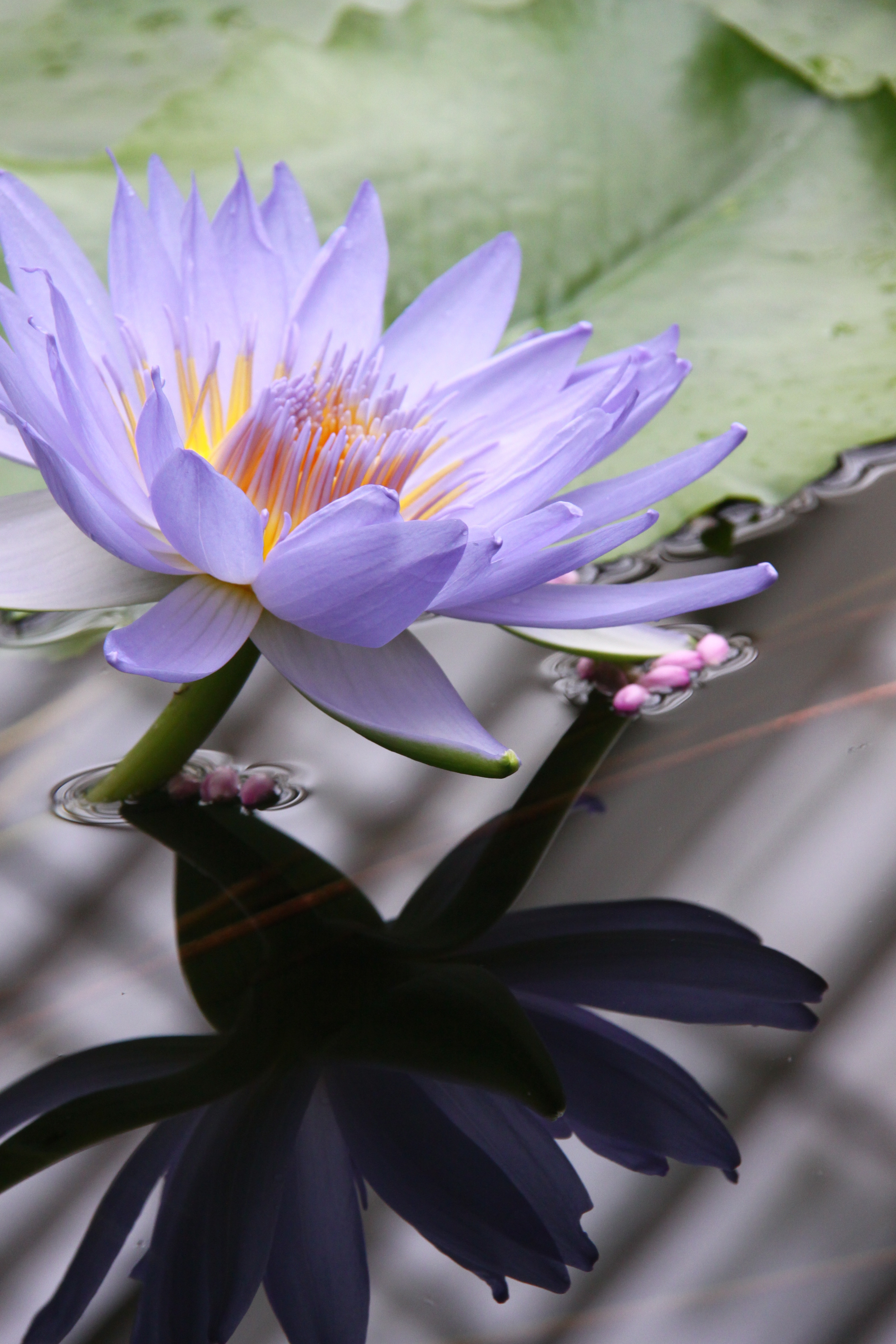
A large purple flower with yellow highlights rises out of the water. Behind it are lily pads. Below it is its own reflection.
A tropical waterlily I admired in the San Francisco Conservatory of Flowers.
Continue reading

Building a Pond

I’d announced to the backyard my intention to make a pond there, but no frogs had volunteered to serve as architects. So, it was up to Sergey and me to design and build it. A lot of online reading about wildlife ponds, frog ponds, toad ponds, amphibian ponds, etc. ensued.

After what felt like years’ worth of moonlighting as a pond researcher, I finally convinced Sergey that our creation wouldn’t become a cesspool populated by breeding mosquitos and venomous snakes. Or, more accurately, his naturally kind-hearted desire to support my hopes and dreams outweighed his many qualms. It was now time to start procurement.

Continue reading

Permeable Skins

A brown toad with black stripes.

It might seem overzealous for me to worry about our own yard providing habitat given that dozens of species, or probably hundreds or thousands if we’re counting microbial life, already use it, and that at least a hundred native trees—oaks, sweetgums, tulip poplars, dogwoods, loblolly pines, etc.—call it home. But even this habitat could be better. 

Continue reading

A Backyard Safari

We have witnessed a slew of wildlife in the yard, a reminder that “our property” belongs to many beings besides humans. 

Mammals: Gray squirrels and chipmunks make their homes in the yard. Nocturnal visitors include white-tailed deer, raccoons, and opossums—and most likely armadillos. I once saw a red fox run through the yard.

The does here give birth in September, so each fall, we have the pleasure of seeing big-eyed, gangly-legged fawns exploring the yard, which compensates for my annoyance at the deer for sampling nearly everything I plant!

Two fawns, one standing and the other lying down, next to several trees.
Twin fawns rest in the front yard.
Continue reading

The Land, My Nurturer

In every place I live, I find my strongest sense of connection comes from observing the environment. 

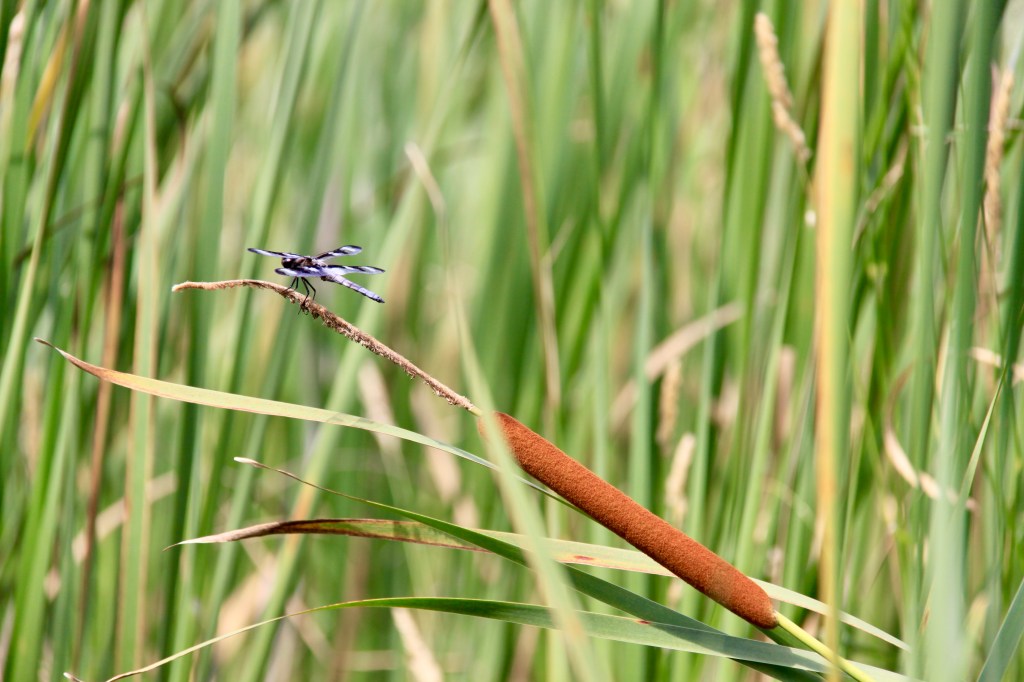
In Wisconsin, I had nearly all my growing-up years to do so, starting from childhood nature walks with my parents. When we moved into a house that bordered a small-but-vibrant restored prairie, I had plentiful opportunities to watch the birds and insects that benefited from the native wildflowers and grasses. I recall walking to a small pond next to that prairie to watch hundreds of dragonflies swooping predatorily over cattails.

A dragonfly with striped wings sits on the end of a cattail. In the background are many cattail leaves.
A dragonfly rests on a cattail in Verona, Wisconsin. All photos here are my own.
Continue reading

The Festival

Dressed up for the Holy Day commemoration

Dressed up for the Holy Day commemoration

Today is the last day of the Festival of Ridván, a twelve-day celebration commemorating the Declaration of Bahá’u’lláh in 1863. Ridván has given us the gift of some free time with two days off, and we’ve used that time to get re-acquainted with nature.

At Bahjí, we’ve been observing the peculiar behavior of some spur-winged lapwings. These birds are usually goofy and noisy with their long-legged prancing and squeaky squawks, but lately we noticed them acting more settled, sitting still beneath olive trees. We learned that they nest on the ground, so this was their location of choice for raising their new families. The female birds tranquilly incubated while the males squeaked threateningly at other birds that wandered too close, like the oblivious cattle egret whose itinerant grazing aroused the wrath of one ferocious daddy bird. The poor egret clearly just wanted to eat in peace, not to bother anyone’s chicks. After a few weeks, we saw that the baby birds had hatched. While we didn’t get too close so as not to disturb the brood or provoke the father’s sharp-spurred ire, we enjoyed watching the little dots of fuzz bob around their mother on their stilt-like legs and then scoot beneath her. (I don’t have any presentable photos, but I suggest searching “spur-winged lapwing chick” if you want your heart to melt!)

On the first day of Ridván, we headed up the mountain to hike around Carmel Forest. It was my first time visiting on a weekday, and it was beautifully unpeopled. We were practically the only visitors besides a man in an ice cream truck who seemed to have pulled into the park just to take a nap, since the first sign of him that we saw was his bare feet against the windshield.

The wildflowers were in bloom, from the red poppies to white Queen Anne’s Lace to a host of purple, yellow, and pink flowers I can’t name. We spent a pleasant hour hiking the paths of Little Switzerland.

Vibrant wild poppies in Carmel Forest

Vibrant wild poppies in Carmel Forest

Then, last weekend, we went on a stroll to Stella Maris, a promontory with a monastic history overlooking the sea, and discovered that the cable car from there down to the beach was working—a surprise since it was Shabbat. So, in a moment of spontaneity, we bought tickets and hopped aboard an orange bubble that wafted down the steep slope. After a walk along the windy seashore that compelled me to deploy my hood to avoid my hair blowing away, we located the Cave of Elijah (closed due to Shabbat).

We returned up the mountain in the funicular and decided to do a bit more exploring. A few hours earlier, we had seen an acquaintance walk down a path behind a parking lot, so we wanted to see what his destination was. The path led to a picturesque meadow with wild grasses and windblown trees, and further along, a small round white chapel that used to be a windmill.

The picturesque windmill-cum-chapel

The picturesque Holy Family Chapel

What a surprise to discover a wild place in the middle of the city, just a short walk down from the bustle of Stella Maris’s restaurant scene. Standing on the edge of Carmel on a small platform housing a single bench, we stretched out our arms in the strong wind and felt ready to take off.