Water Gardening

Water and stones alone do not make a healthy pond. It needs plants, which provide habitat for animals and filter nutrients out of the water, keeping it clearer and resistant to algal blooms. Plus, when you fill a pond with plants, you can call it a “water garden,” conjuring images of fragrant blossoms nodding at their reflections in limpid pools. Ideally, a pond will have both plants that live fully in the water—submerged plants rooted to the bottom as well as floating ones—and marginal (or “emergent”) plants that live on the banks in perpetually damp soil.
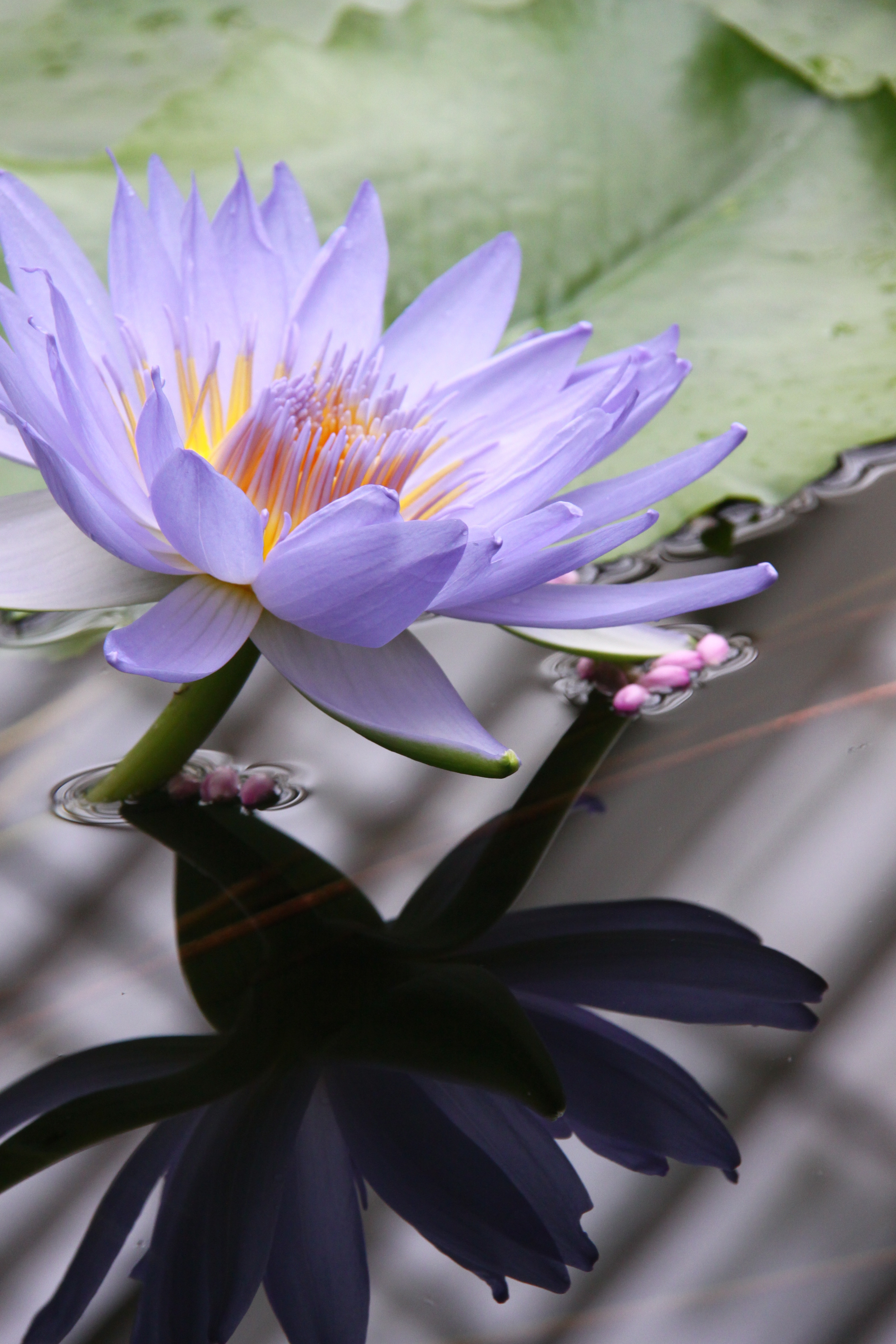
A large purple flower with yellow highlights rises out of the water. Behind it are lily pads. Below it is its own reflection.
A tropical waterlily I admired in the San Francisco Conservatory of Flowers.
Continue reading

A Backyard Safari

We have witnessed a slew of wildlife in the yard, a reminder that “our property” belongs to many beings besides humans. 

Mammals: Gray squirrels and chipmunks make their homes in the yard. Nocturnal visitors include white-tailed deer, raccoons, and opossums—and most likely armadillos. I once saw a red fox run through the yard.

The does here give birth in September, so each fall, we have the pleasure of seeing big-eyed, gangly-legged fawns exploring the yard, which compensates for my annoyance at the deer for sampling nearly everything I plant!

Two fawns, one standing and the other lying down, next to several trees.
Twin fawns rest in the front yard.
Continue reading