The Loon

Dogwood blossoms kiss wafting clouds. The sun now is strong enough to burn me after winter has left me pallid. April is a month of special wonder.

Branches of a dogwood tree in blossom are juxtaposed with an old building with a clock tower.
A dogwood blooms in Bloomington, Indiana.

En route to the zoo, I saw on a retention pond surrounded by duplexes a bird at once familiar and unfamiliar. I asked Sergey and Jasmine, did they think it was a loon? They thought it was more likely a duck because why would a loon, denizen of wild lakes and singer of an eerie song, have chosen this spot surrounded by Indianapolis’s web of highways to rest? 

But Jasmine offered to turn the car around so we could investigate the bird. We parked, she grabbed her binoculars wisely stowed in the car for just such moments, and we carried my nephew. 

The visitor was indeed a loon. 

Continue reading
Wildness and Pets

A year ago, I enjoyed witnessing two of the tadpoles I’d been given develop into froglets and then big, beautiful frogs. Come winter, evidently, they managed to hibernate at the bottom of the pond, surviving even when a January cold snap coated the surface with an inch of ice.

By this spring, we’d had a year and a half together—me watching intently and hoping for their wellbeing, them tolerating my presence. I was intrigued when, one day, I noticed the two frogs wrestling. Shortly thereafter, while I sat on the porch in a rainstorm, I saw one of them hop away from the pond and across the yard—and that was that. Not so much as a parting ribbit.

Continue reading

Frog Pond at Half a Year

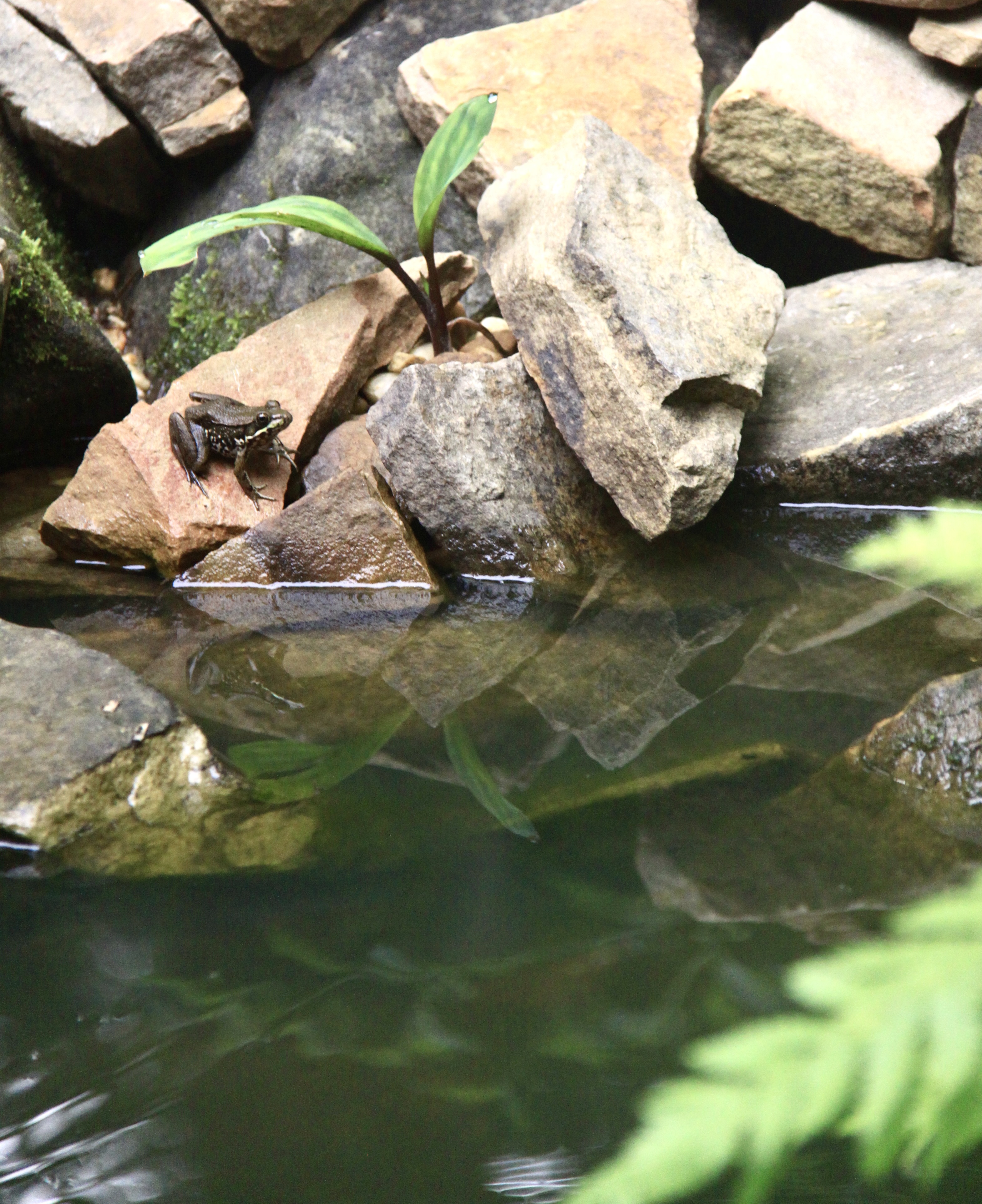
A brown frog sits on a stone next to water.
A Southern leopard frog sits under a golden club plant in my pond.

For a while, the tadpoles made themselves invisible. But gradually, as winter turned to spring, they began showing themselves. Tiny legs grew, then lengthened. 

By late spring, they’d metamorphosed into frogs. Now, breathing air and warming their cold-blooded bodies in the sun, the frogs perched atop stones, allowing me to count them: four tadpoles had survived to froghood.

Continue reading

Water Gardening

Water and stones alone do not make a healthy pond. It needs plants, which provide habitat for animals and filter nutrients out of the water, keeping it clearer and resistant to algal blooms. Plus, when you fill a pond with plants, you can call it a “water garden,” conjuring images of fragrant blossoms nodding at their reflections in limpid pools. Ideally, a pond will have both plants that live fully in the water—submerged plants rooted to the bottom as well as floating ones—and marginal (or “emergent”) plants that live on the banks in perpetually damp soil.

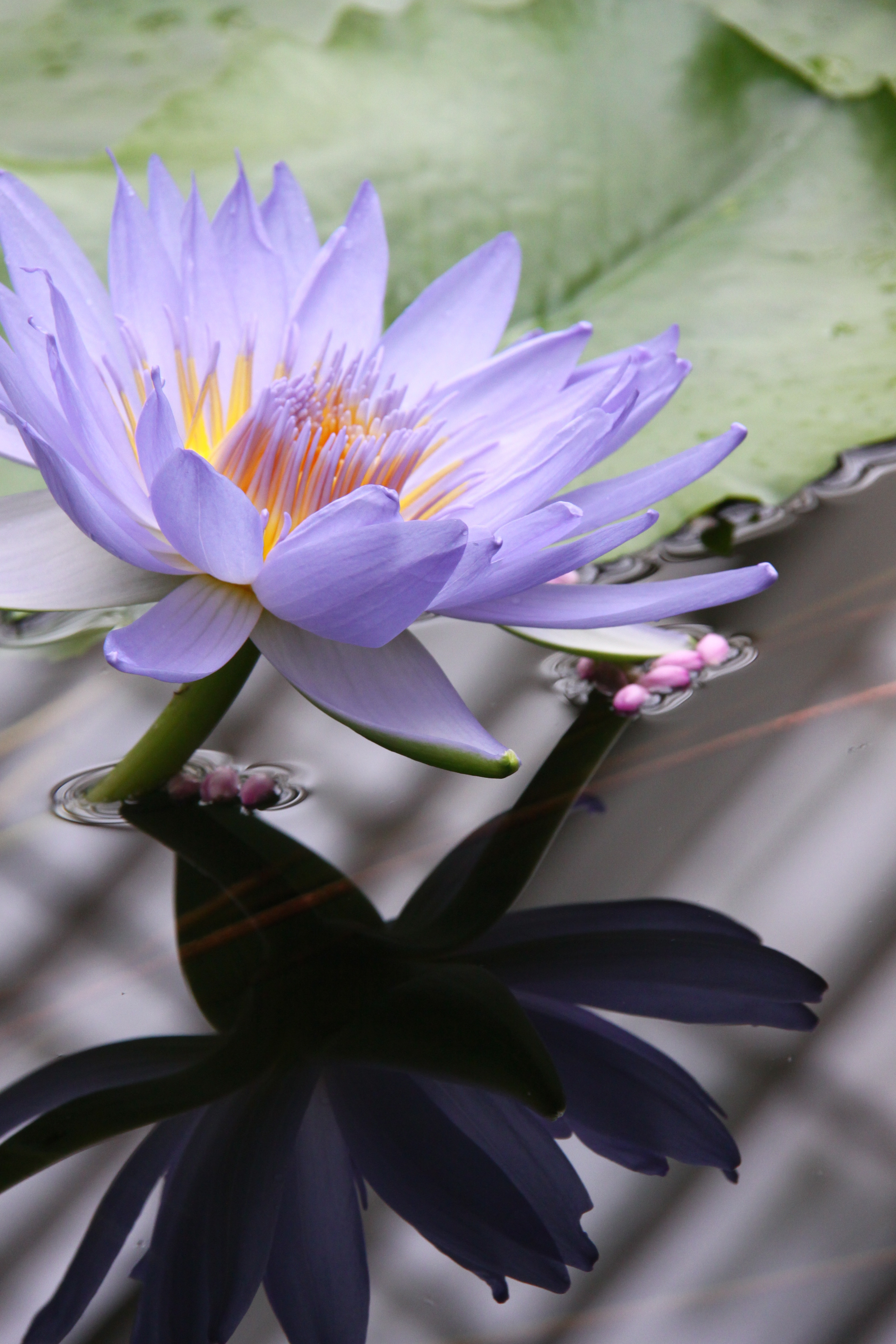
A large purple flower with yellow highlights rises out of the water. Behind it are lily pads. Below it is its own reflection.
A tropical waterlily I admired in the San Francisco Conservatory of Flowers.
Continue reading

Building a Pond

I’d announced to the backyard my intention to make a pond there, but no frogs had volunteered to serve as architects. So, it was up to Sergey and me to design and build it. A lot of online reading about wildlife ponds, frog ponds, toad ponds, amphibian ponds, etc. ensued.

After what felt like years’ worth of moonlighting as a pond researcher, I finally convinced Sergey that our creation wouldn’t become a cesspool populated by breeding mosquitos and venomous snakes. Or, more accurately, his naturally kind-hearted desire to support my hopes and dreams outweighed his many qualms. It was now time to start procurement.

Continue reading