Day 3: Boating down the Bosphorus

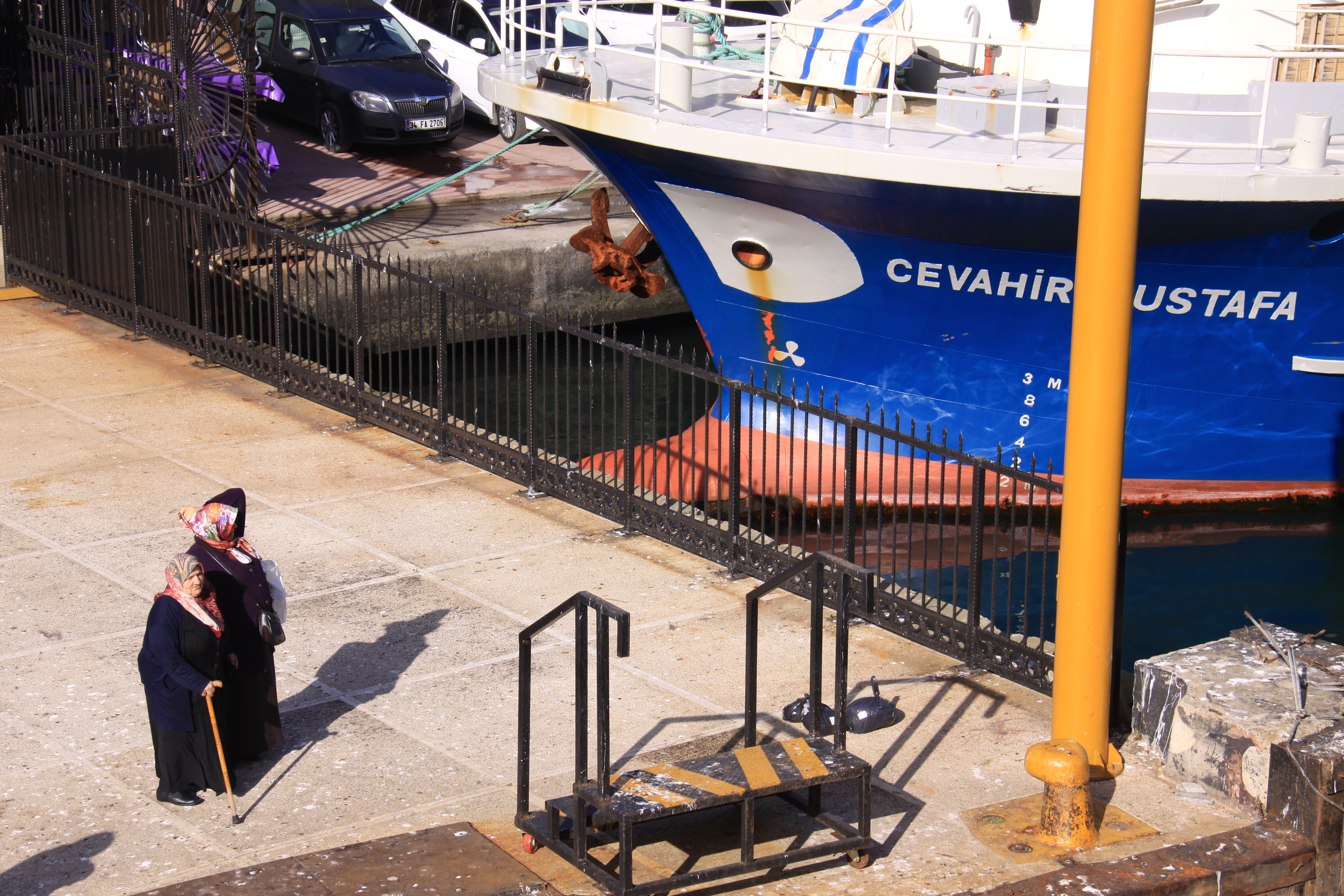
Turkish women wait at a dock.

Turkish women wait at a dock.

Istanbul straddles Europe and Asia, with the Bosphorus Strait splitting the European side, which has most of the tourist attractions and commerce, from the Asian side, which is largely residential. We decided to devote a day to seeing more of this important strait, which offers the nations around the Black Sea their sole path of entry and exit to the Mediterranean via the Marmara and Aegean Seas—crucial for trade and navies.

We boarded the ferryboat that would take us on a 1.5 hour journey from the old city up the strait, past the bankside sprawl of Istanbul, to a fishing village called Anadolu Kavağı situated near the mouth of the Black Sea. After claiming seats on the topmost level where we could enjoy the warm sun and chilly wind, we peered down into the waters of the inlet, where cormorants plunged into the depths, and impassive, translucent jellyfish wobbled through the water, almost indistinguishable from the plastic debris that floated on the surface. Seagulls silently swooped above us.

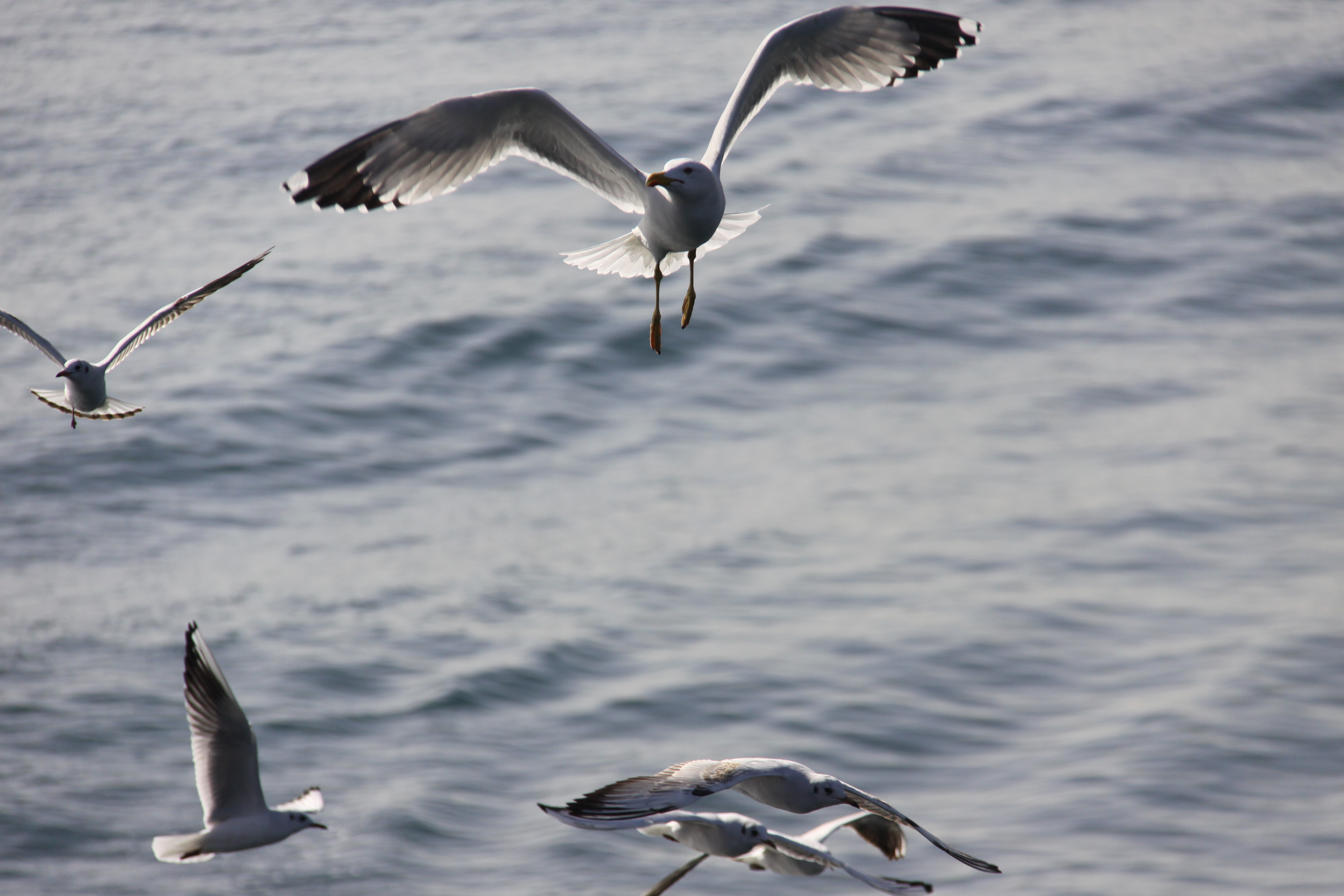
I have way too many photos of seagulls!

I have way too many photos of seagulls…

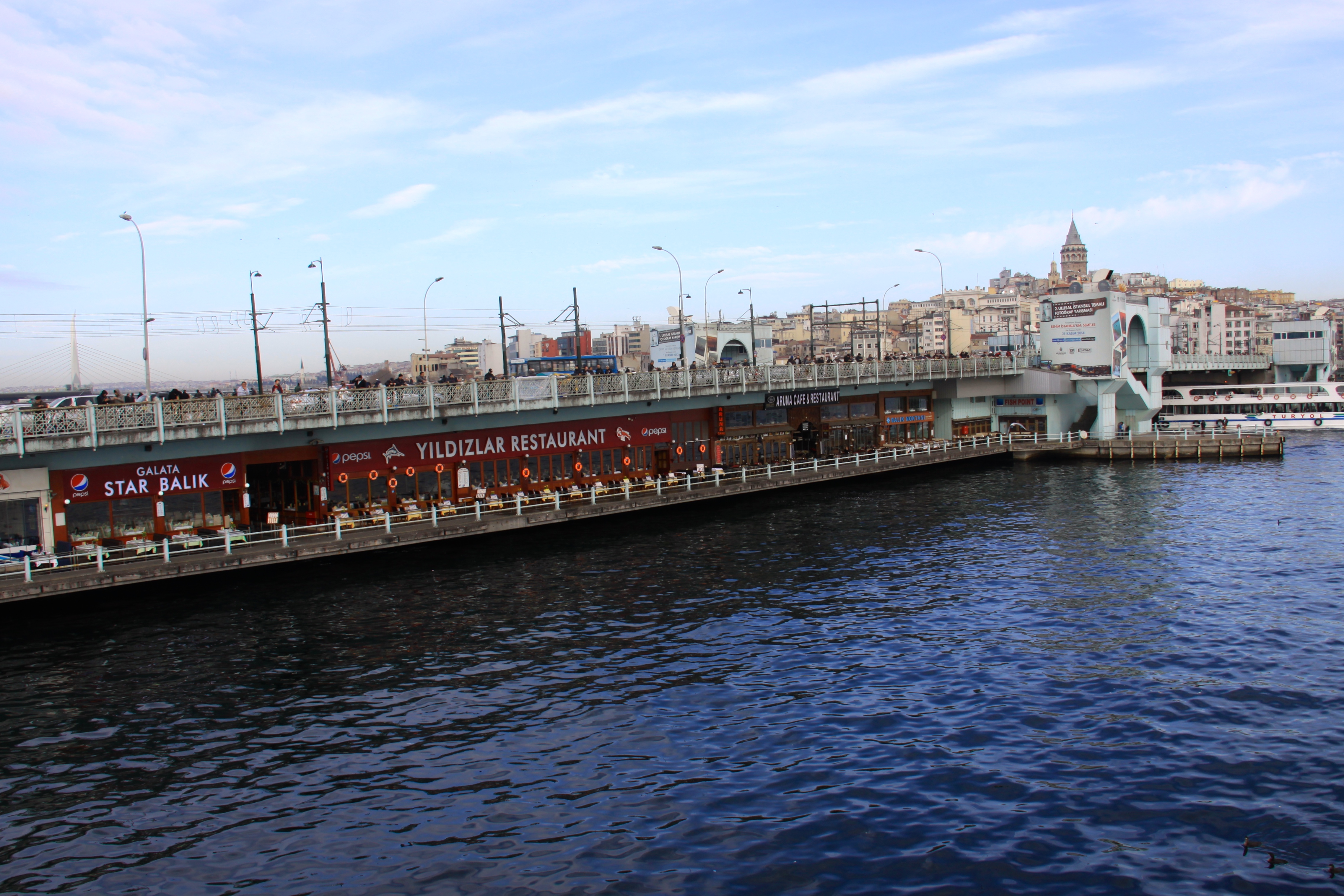
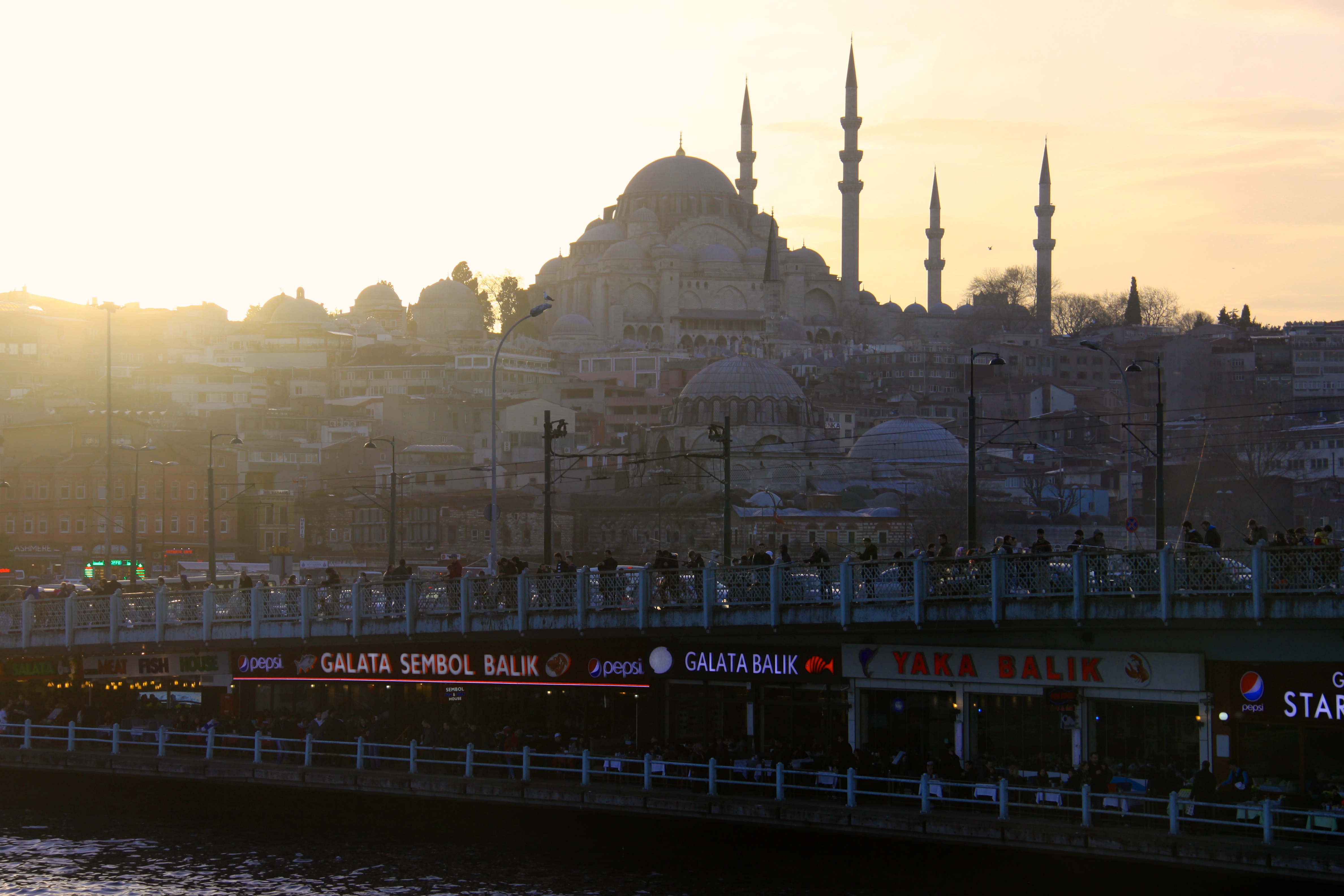
The boat was docked near the bridge across the Golden Horn, over which the tram passes back and forth to the New District. Below the traffic on the lower, pedestrian level of the bridge, there is a row of seafood restaurants. At 10:00 AM their staff were just starting to clean and prepare for a day of customers, and we watched in amusement as they hauled up water from the strait below to swab the decks of their outdoor seating. In that act, I was reminded of how provident the sea and its estuaries are to coastal cities. Little wonder then that successive empires made this area the focus of their empires, surrounded as it is by a natural moat of generous and protective waters.

The bridge looks like it is buoyed by restaurants.

The bridge with its undergirding of restaurants.

After some time, the engine started purring and the boat pulled away from the dock. As we moved along, we followed the tour in our guidebook, spotting such sights as the European wannabe Dolmabahce Palace and its nearby mosque and clocktower, the Rumelian fortress dating from the 15th century, and several towering bridges across the strait, one for city traffic and one for “intercontinental transit.”

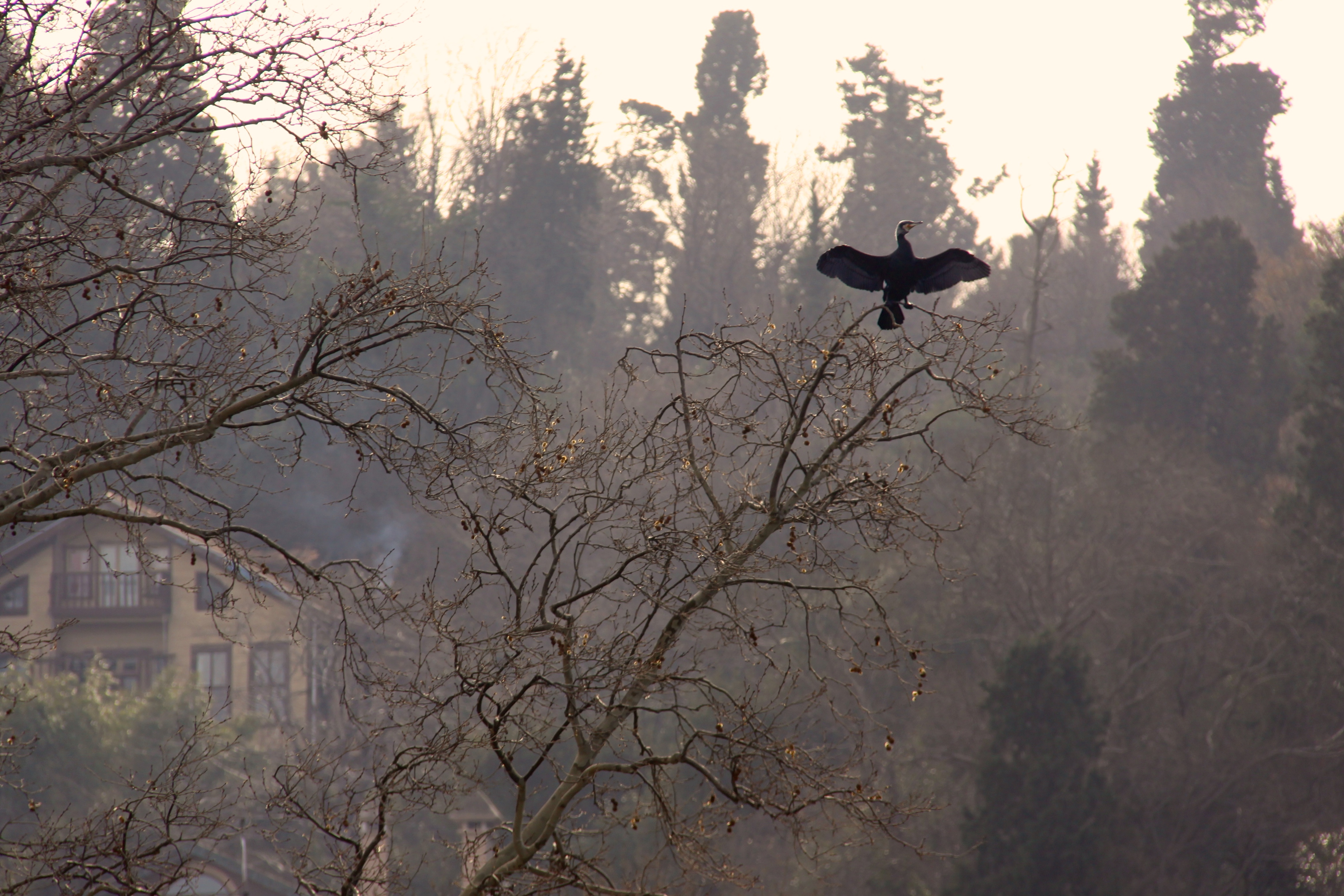
Eventually, the crowded urban area thinned out into areas of mansions with tall trees. In one such tree we saw a cormorant worshipping the sun, wings outstretched.

Sunbathing cormorant

Sunbathing cormorant on the bank of the Asian side.

When we would approach the shore to pick up more passengers, flocks of seagulls would attach as if magnetically to our boat and hover around. Perhaps the wake of the boat stirred up small creatures for their lunch, or maybe they hoped we would jettison our own food—in any case, Jasmine encouraged me to get some action shots of these birds. There were, in fact, several species of seagulls, ranging from a long-winged pterodactylesque breed with harsh eyes to a chubbier, smaller variety with the charm of a flying porpoise.

Magnetic seagulls that orbited our boat.

Magnetic seagulls that orbited our boat.

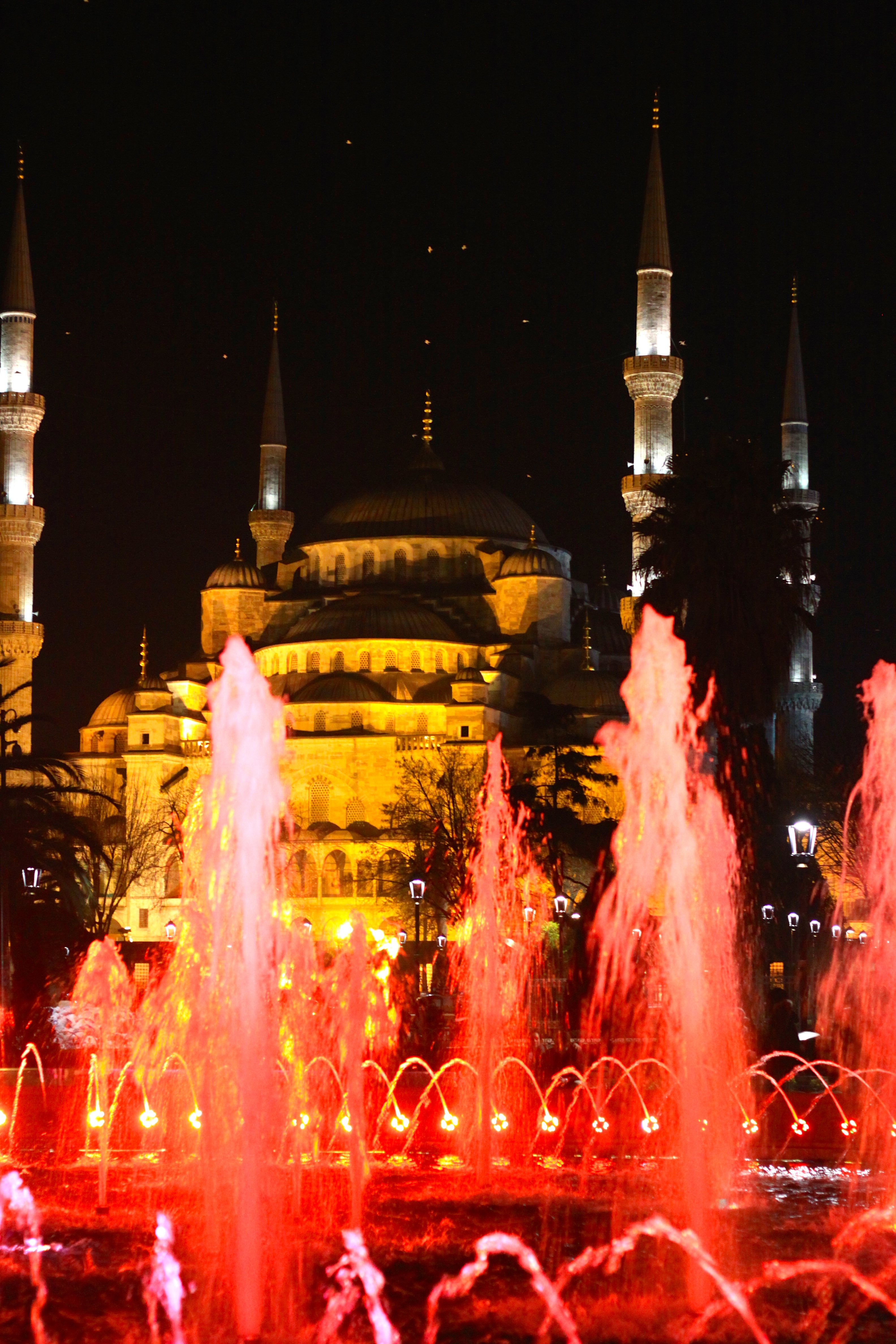
Now that I’ve started on seagulls, I must digress to another scene. Seagulls were not only present above the Bosphorus, but also all over the Sultanahmet. They careened past the eaves of our hotel as we ate breakfast on the enclosed terrace. More hauntingly, one night as we strolled around the park between the Hagia Sofia and the Blue Mosque, we observed scores of gulls weaving like ghosts above the domes—like moths tethered to lights.

It's hard to see, but the white specks above the dome of the Blue Mosque are seagulls.

The white specks above the dome of the Blue Mosque (which looks like a yellow mosque at night) are seagulls.

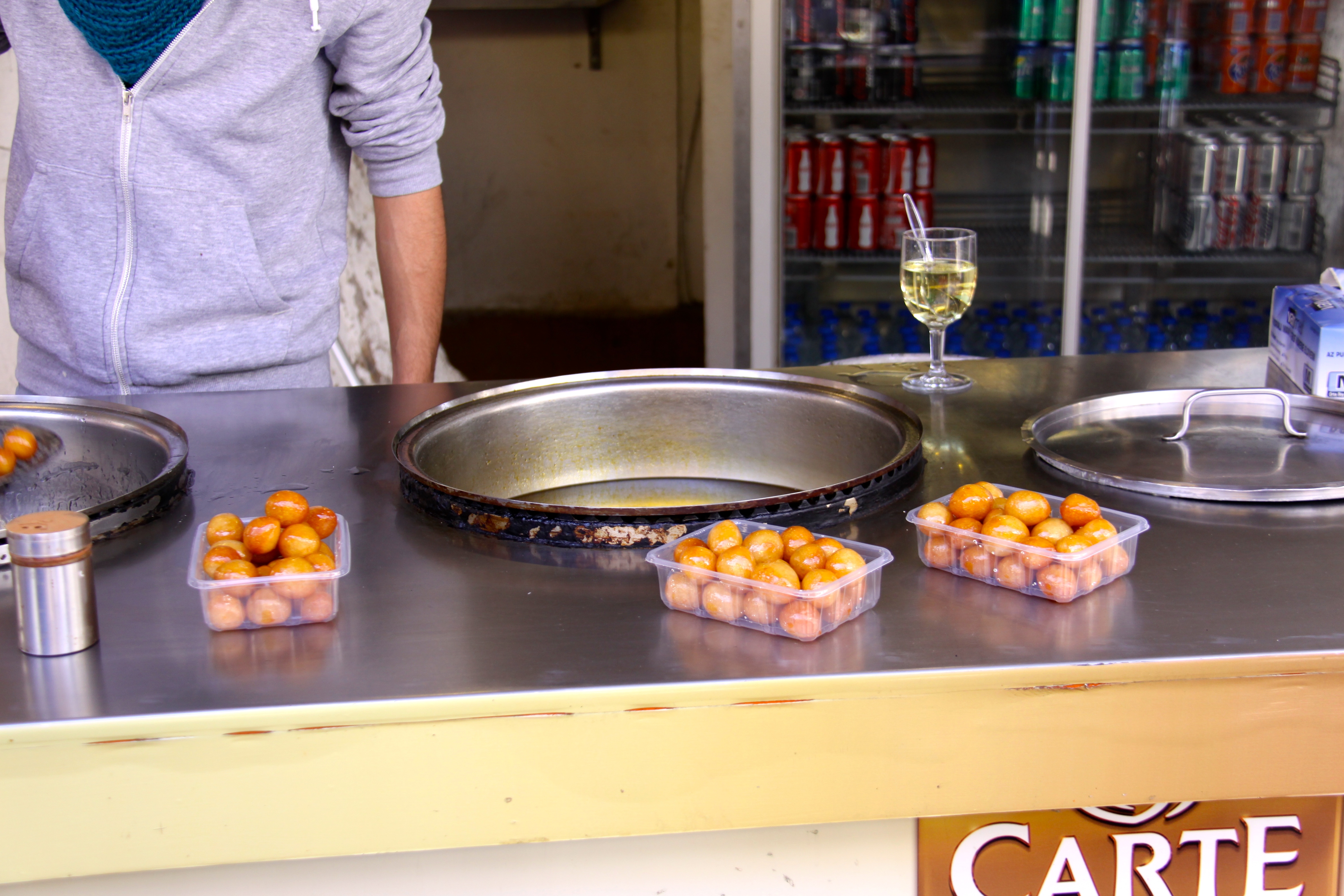
Back on the strait, we arrived at the village. As we approached, we noticed two things: the ruins of Yoros Castle, our destination, on the peak of a hill, and the black-and-white clad waiters standing in front of their seafood restaurants flagging us down. As none of us care for seafood, we skipped the daily catch in favor of the village’s other specialty, lokma, which are syrupy balls made of a light dough deep-fried to golden perfection and sprinkled with cinnamon.

Deep-fried deliciousness.

Sticky and sweet deliciousness.

“Mmmm!” was our unanimous reaction to lokma. Yet this treat soon met a tragic end: as we walked away from the bevy of restaurants and hawkers in pursuit of the castle, I flung out my arm to point at a sign saying “Yoros,” just as Sergey was proffering the container of lokma to me. In the ensuing collision, the lokma scattered over the street like sticky marbles. I felt quite crushed by my role in this accident—as crushed as the lokma were soon to become under the tires of passing cars—but luckily, we were still close to the stand and purchased a refill.

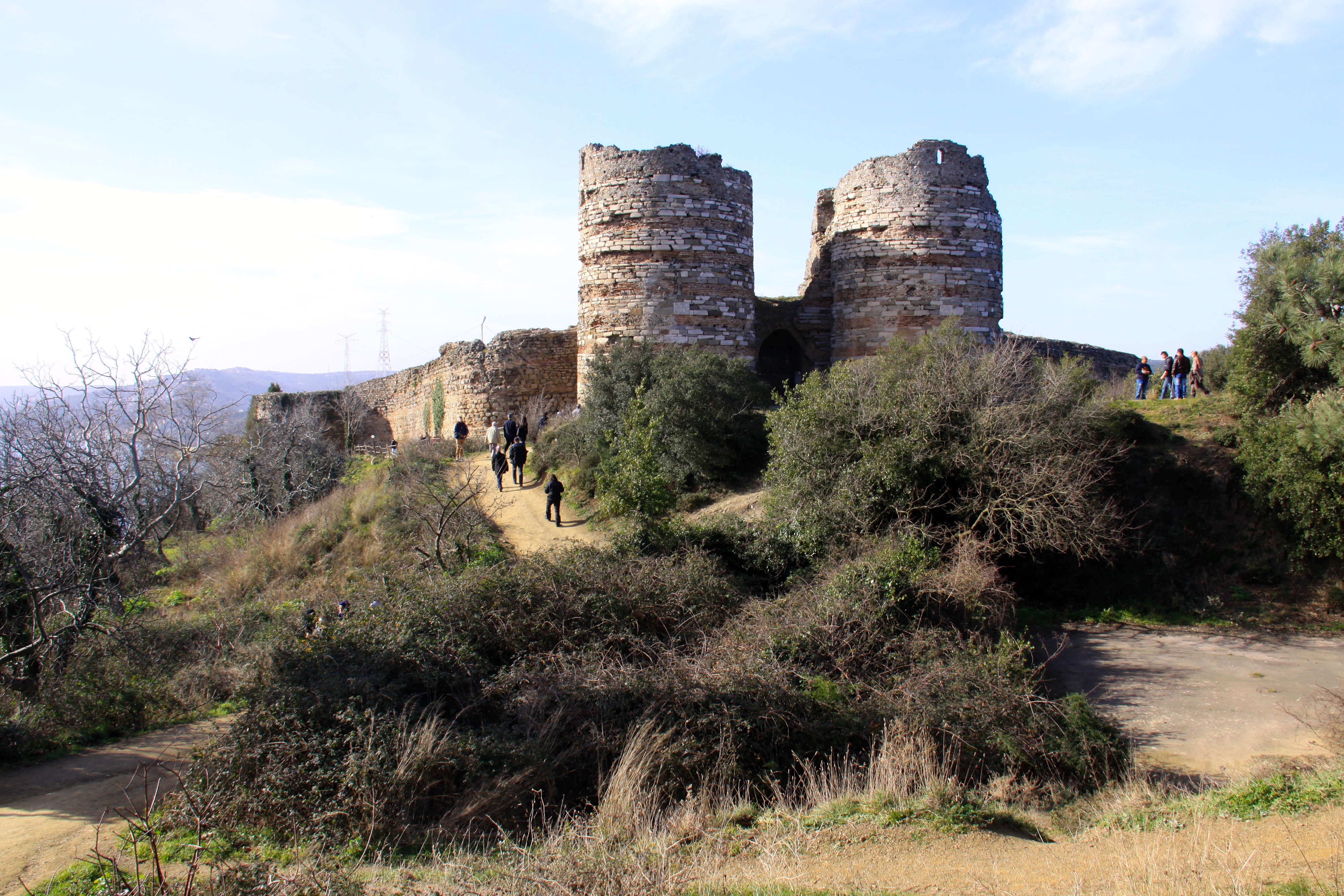
Yoros Castle in Andalu Kavagi

The remains of Yoros Castle.

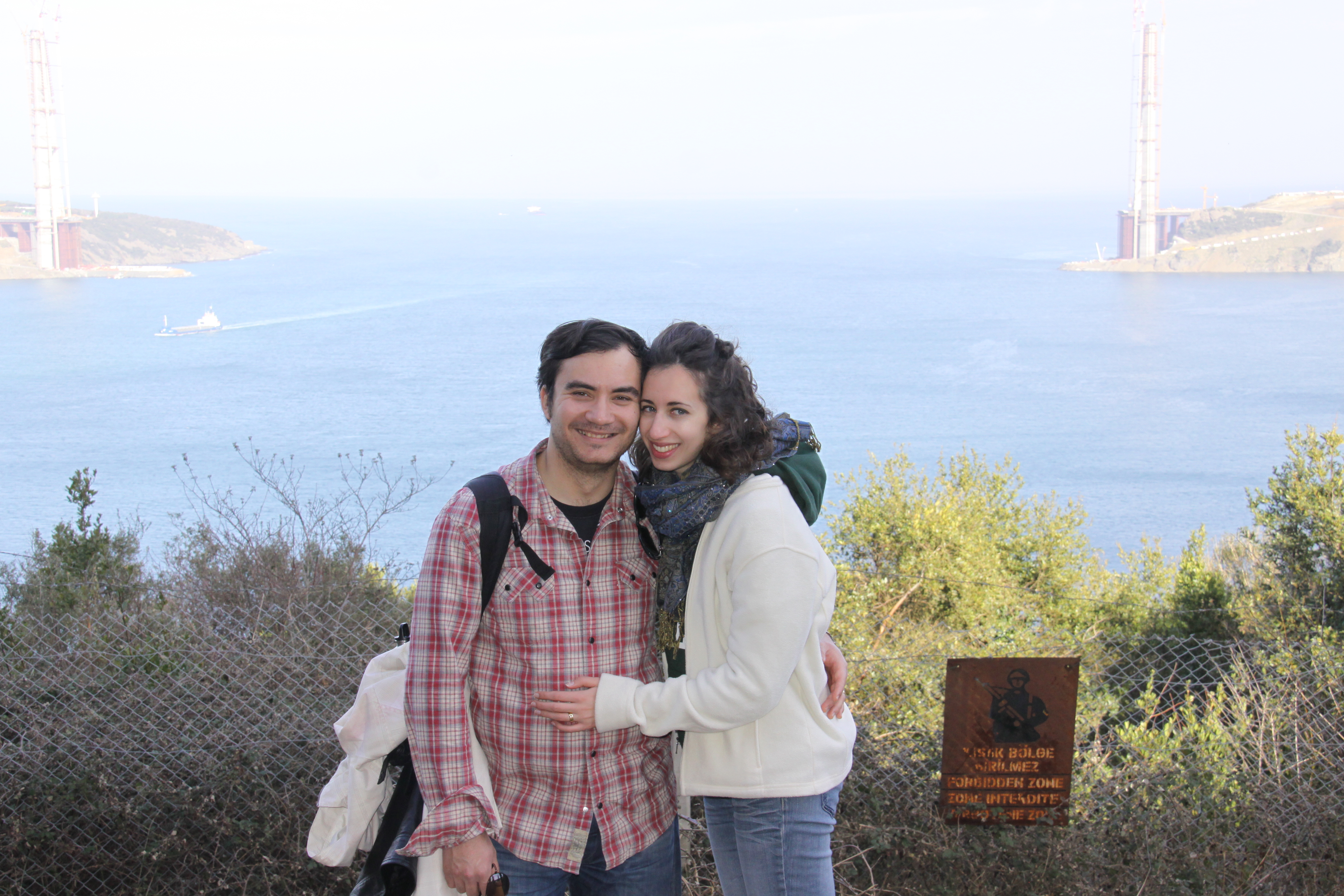
Up the steep hill we hiked, passing by a military zone protected by a high fence, higher and higher until we reached the surprisingly commercialized ruins of the Byzantine castle. We had to pass by another bevy of restaurants to reach our destination. While the castle was admittedly dull since we could not enter (unless we defied the law and scaled its crumbling walls, which some boys did), the summit of the hill did afford a striking view toward the Black Sea.

“Can you see Moldova from here?” I asked Sergey.

We are posing in front of the mouth of the Black Sea. If you look super hard and use your imagination, you can even spot Sergey's hometown of Chisinau (Kishinev)!

We are posing in front of the mouth of the Black Sea. If you look hard and use your imagination even harder, you can spot Sergey’s hometown of Chisinau (Kishinev) behind us!

Soon enough, our time on the Asian side was over, and we re-boarded our boat, which felt tranquil after our return hike through the surprisingly traffic-congested lanes of the village. We chose indoor seats and spent most of the return voyage in a half-stupor.

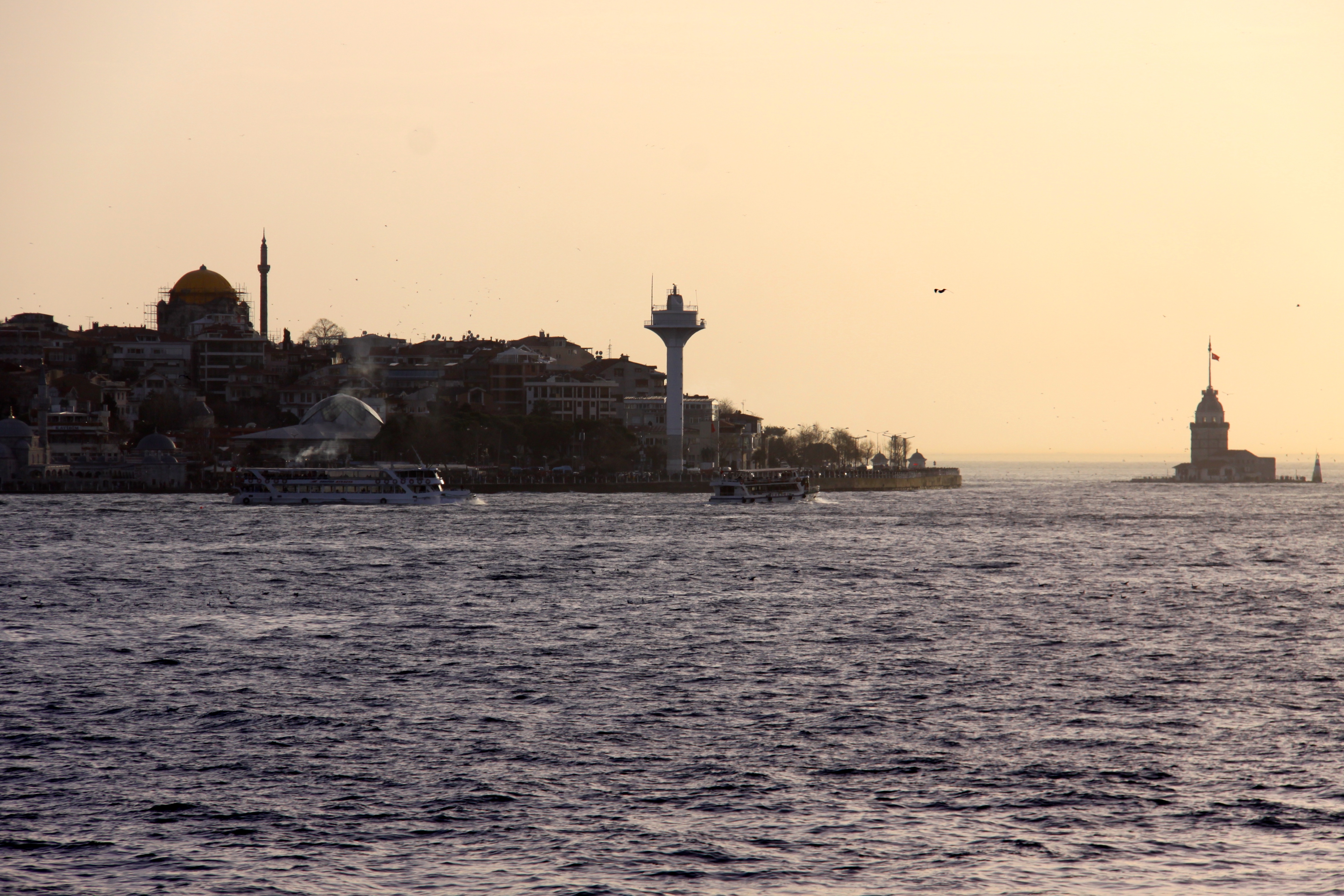
Maiden's Tower seen on the right.

Maiden’s Tower seen on the right.

Towards the end, though, I decided I had to go to the top so I could finally photograph one of Istanbul’s well known sights, Maiden’s Tower, which sits upon a small island. As we neared the European side, the setting sun set the cityscape aglow, smears of saffron light upon the minarets of countless mosques…and neon light upon the signs of countless seafood eateries.

Cityscape centered on Mosque of Suleiman the Magnificent.

Cityscape centered on the Mosque of Suleyman the Magnificent.

Animal Farm

One weekend, Sergey and I were invited to accompany some colleagues to a place called Hamat Gader. This destination boasts stinky hot springs that fill a giant bathing pool. Now, marinating myself along with flocks of sweaty strangers is not my usual cup of tea, but we figured this was a good chance to see some of the Galilee region.

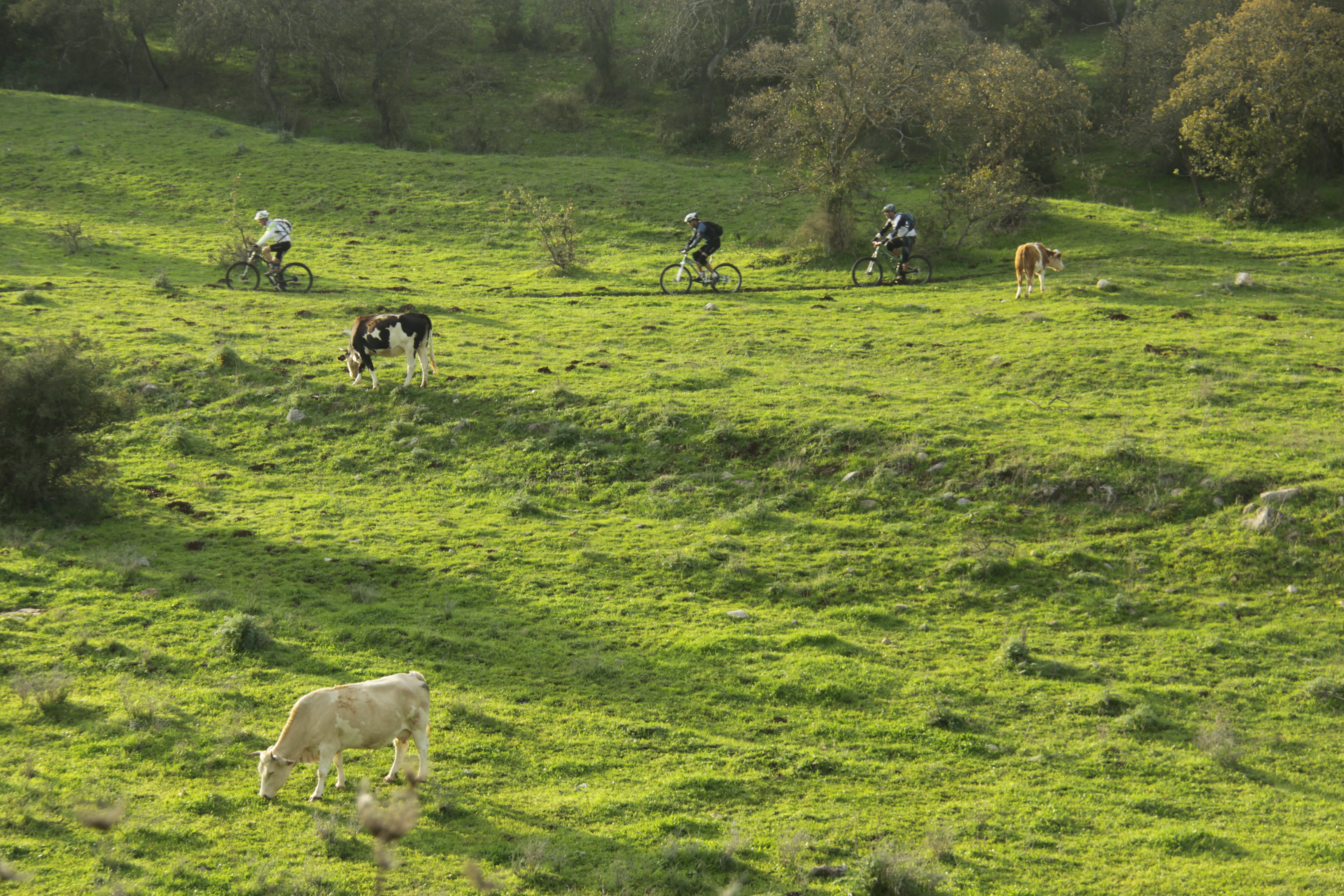
We were right. The winter rains had turned the hills and valleys of Galilee a vibrant green, shining like an emerald in the morning light. En route to our destination, we stopped at the most scenic gas station I’ve encountered. The station overlooked a field where cows grazed peacefully beside white cattle egrets. Occasionally this pastoral scene was interrupted by groups of bikers who zoomed down a path through the field, startling the cattle.

Cows and bikers

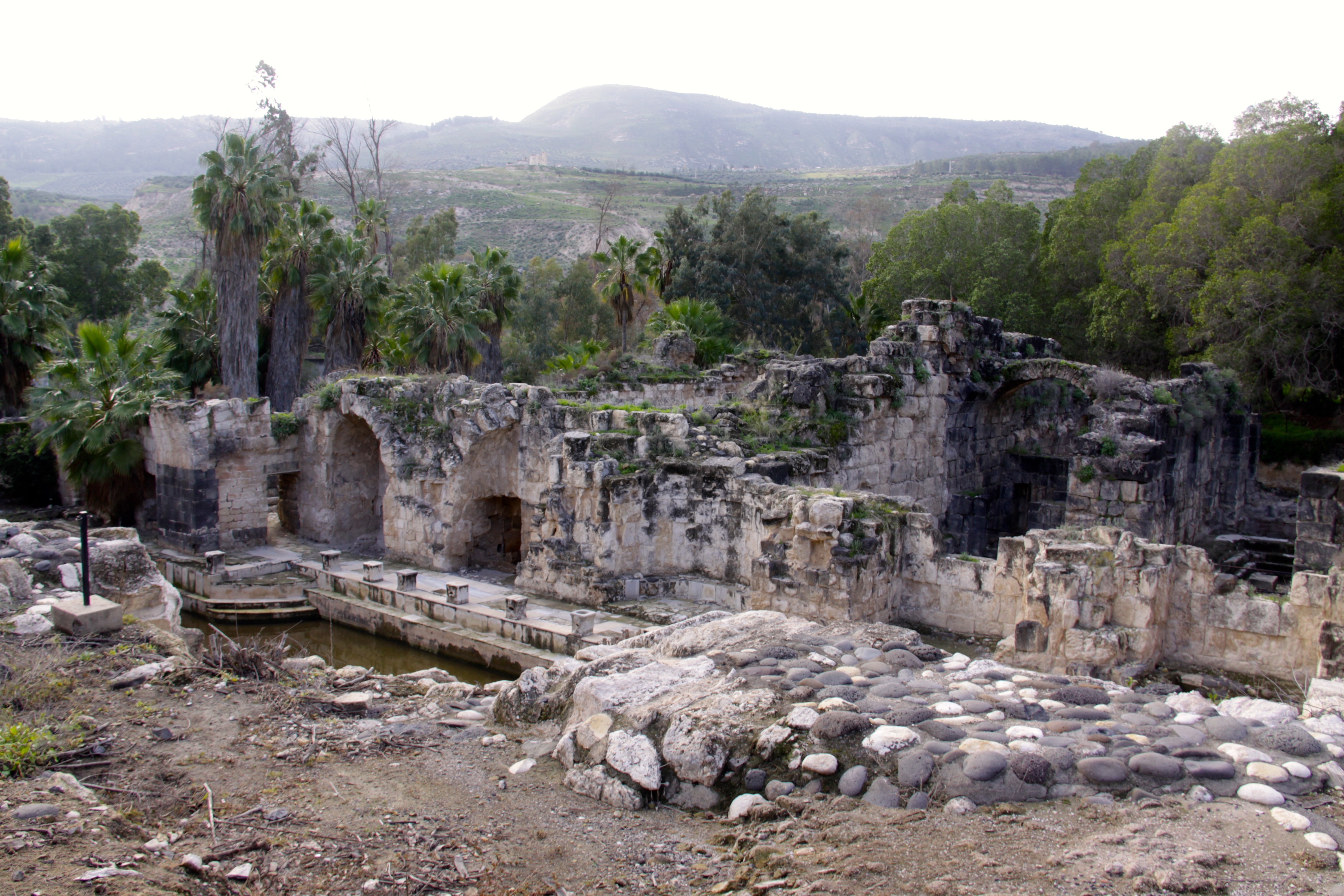
Back on the road, after driving along the border with Jordan, we arrived at Hamat Gader. Sergey and I set off to explore the flora and fauna of the park. We found the predecessor of today’s pool, the ruin of a Roman bath.

Roman bath

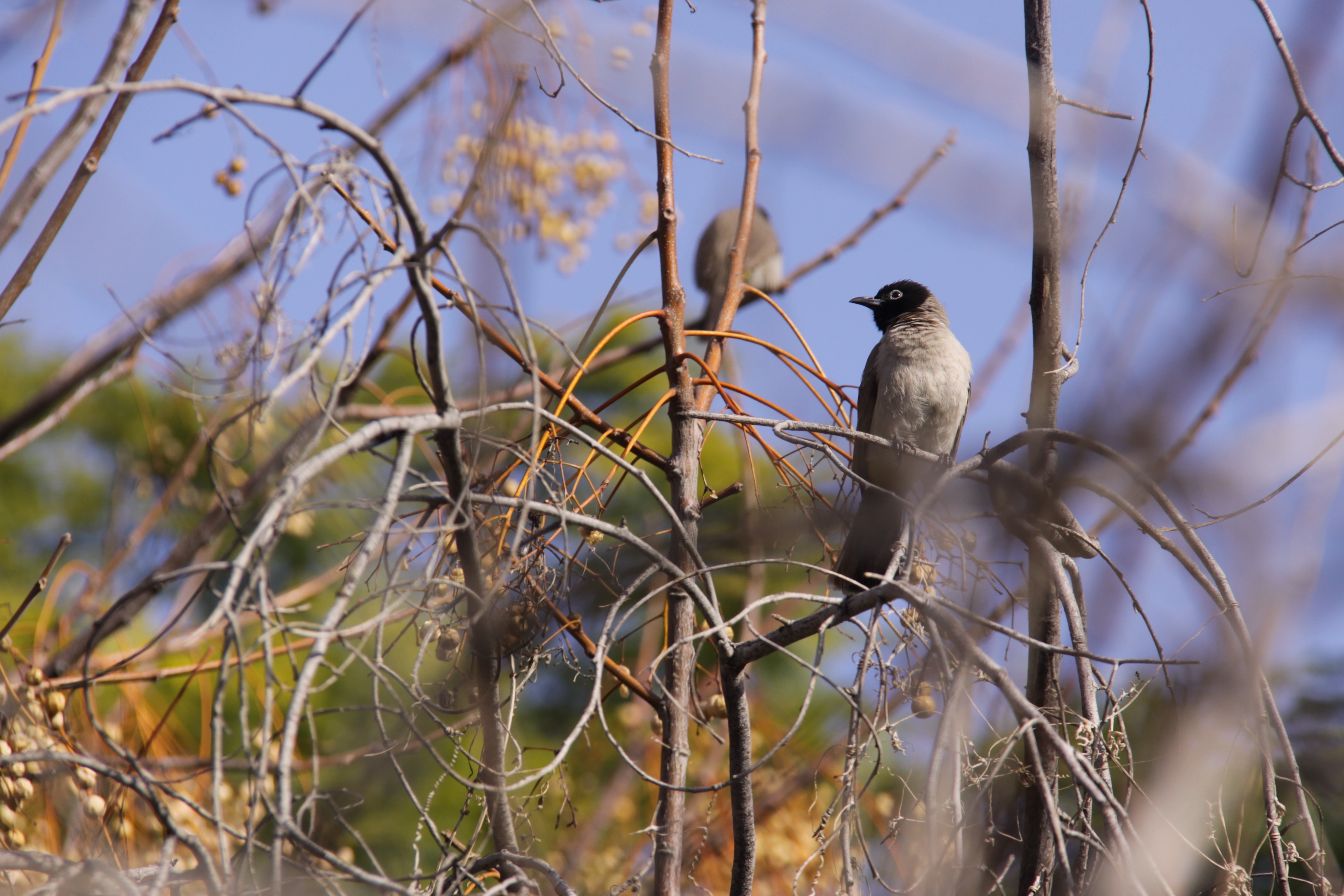
After documenting the ancient bath, I was distracted by a flock of birds: white-spectacled bulbuls twittering upon some trees near the ruin. Beyond them, I could just make out the shape of a mysterious green parrot, gazing impassively into the surrounding hills.

Bulbul

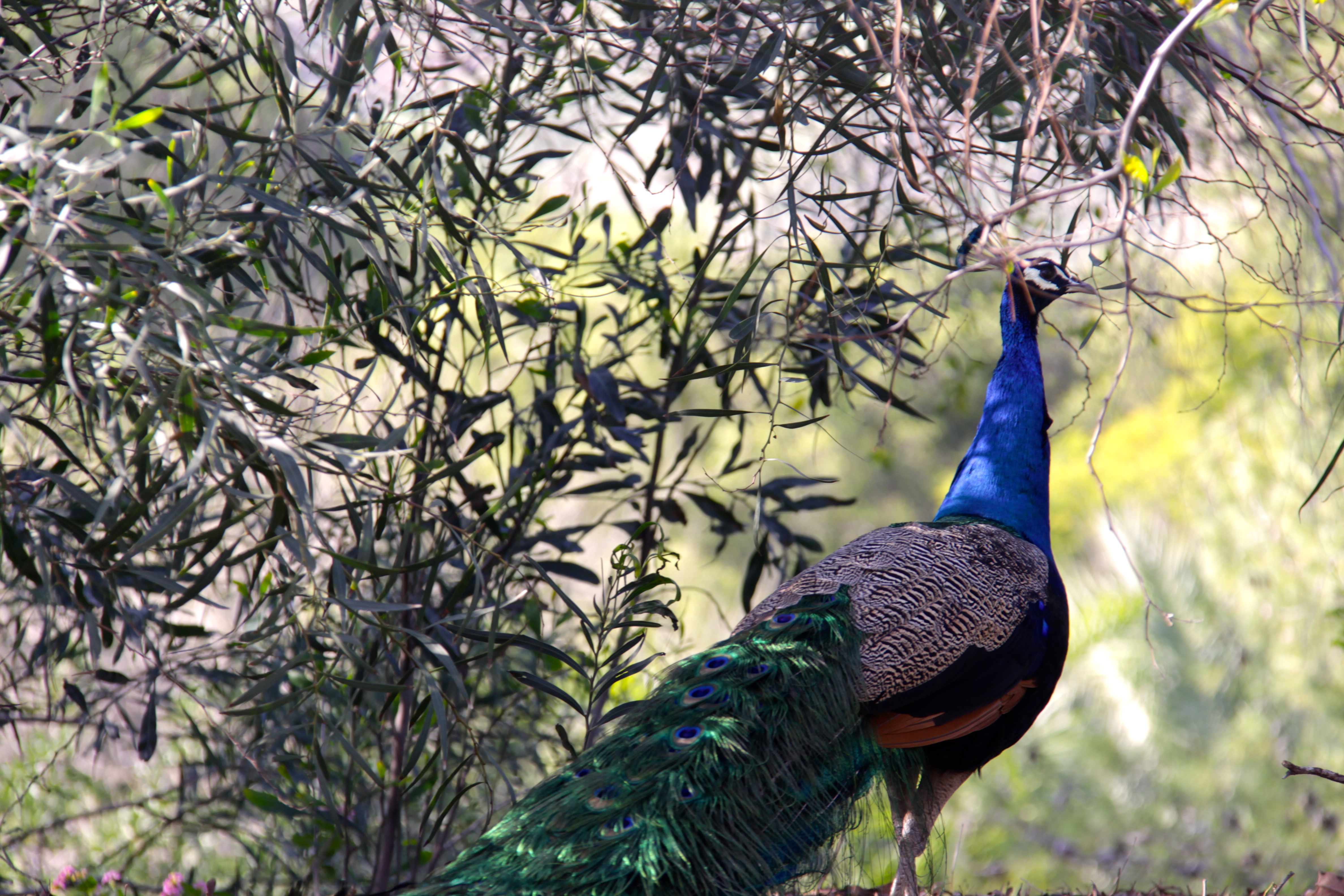
Then came the unmelodic squawk of an itinerant peacock. We gave chase. Above the ruins of a Roman amphitheater, we stalked him in pursuit of the perfect photo. He was not particularly interested, and gave us a final look of disdain before disappearing over the crest of the hill.

Peacock

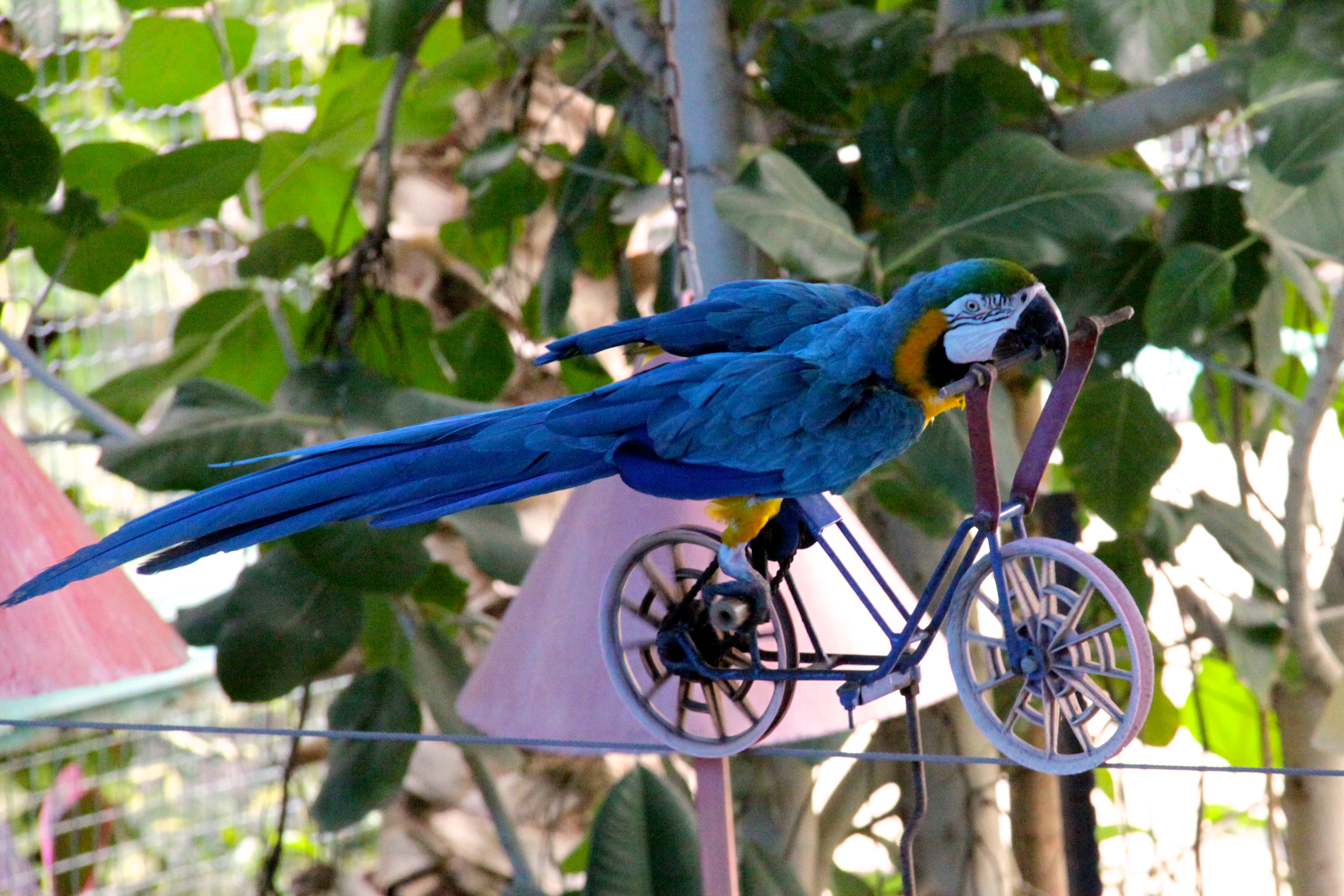
After our nature experience, we had a decidedly unnatural visit to the park’s “zoo,” which seemed more like a hapless mess of cramped terrariums and odd combinations of chickens and gazelles. Actually, perhaps that mysterious green parrot I saw was an escapee of the zoo’s tacky attraction, a parrot show. Sergey and I sat among hordes of tired parrots—I mean parents—and their shrieking children to watch parrots, macaws, and cockatiels perform tricks like pedaling a bicycle across a tightrope.

And a parrot biking across a tightrope.

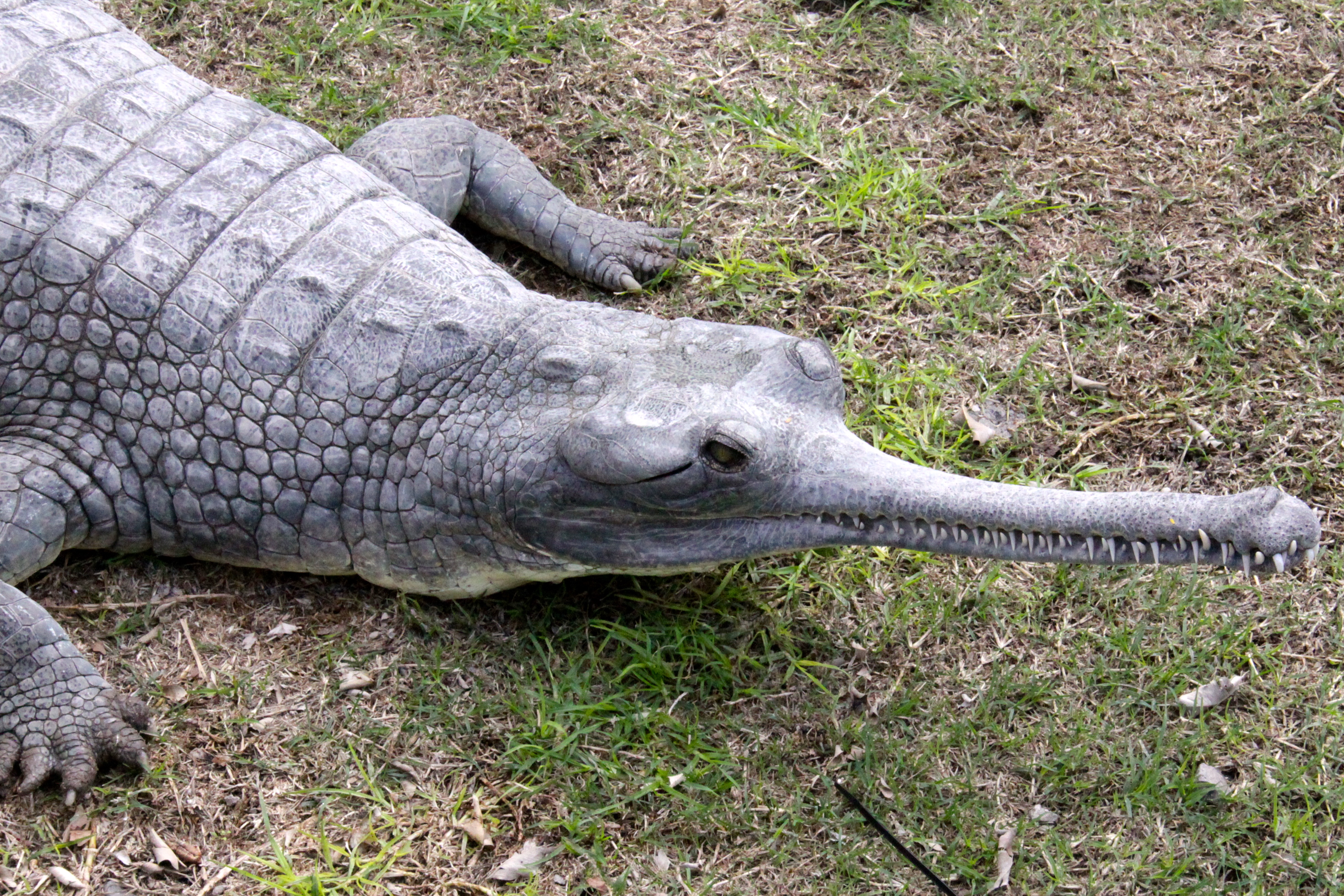
But the weirdest part was yet to come: the Alligator Farm. The farm consists of a series of enclosures tightly packed with alligators, crocodiles, caimans, and, strangest of all, gharials.

Pretty guy

These thin-snouted creatures look like something out of Dr. Seuss (especially the males, which sport a “sexy” bulb on the tip of their noses), but actually, they come from India, where they are extremely endangered. While at first their slender jaws seem like an evolutionary mistake, apparently the shape enables them to effectively hunt fish, and even to stun them with underwater jaw claps.

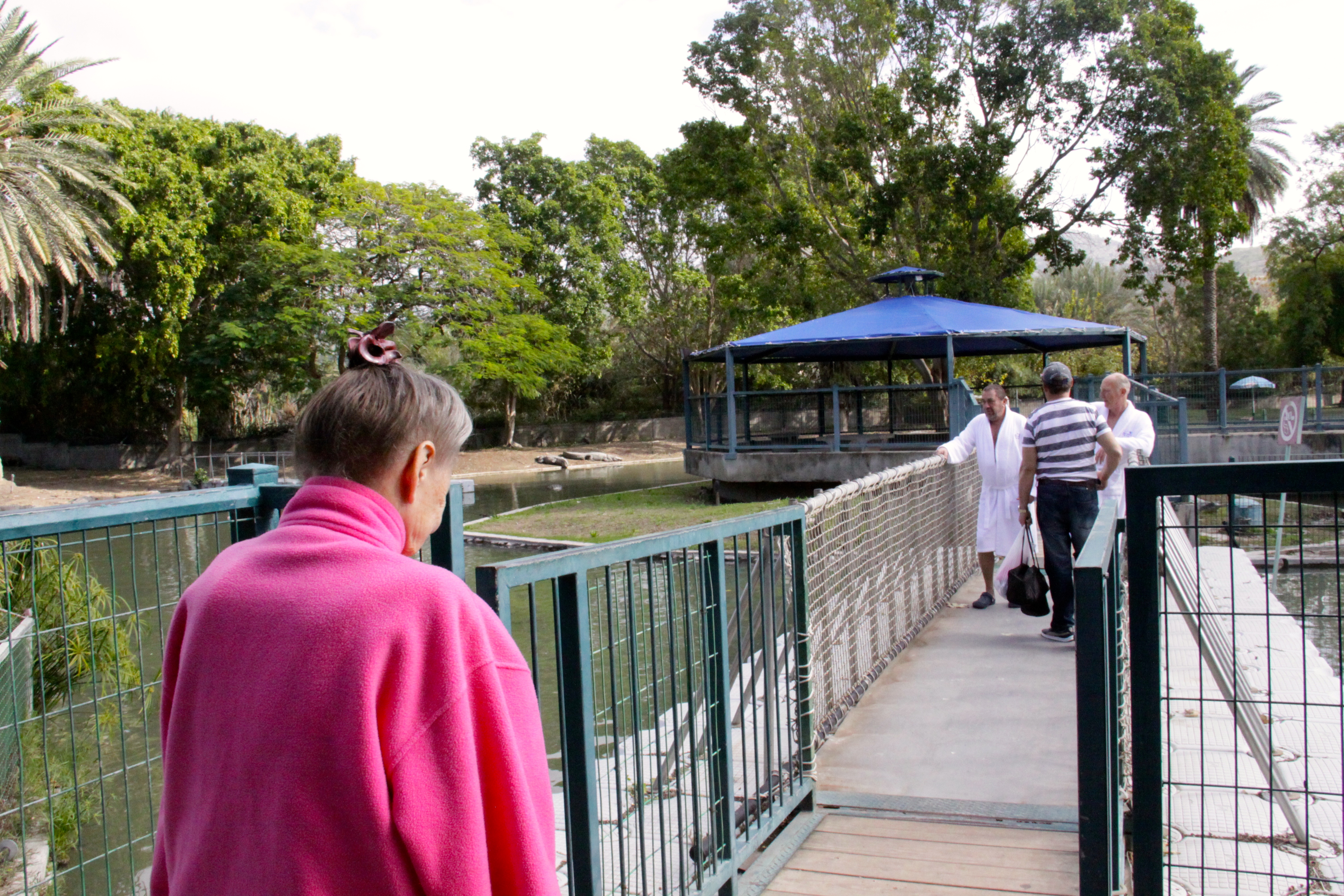
Rivaling the crocodilians in strangeness were our fellow visitors, who, clothed in bathrobes and flip-flops, apparently had emerged from the hot pool to cool down by strolling through the farm. I wonder what the crocs think of these oddly clad bipeds. Would he look good as a handbag?

Bathrobes

Soaking in the pool was…sulfuric. I was disappointed that afterwards my skin failed to sprout yellow crystals. What I will remember from this day are these comical snapshots of human-animal coexistence: spandexed bikers shepherding cows aside, and pink-skinned bathers walking between some of Earth’s oldest predators.

The tamarins of Tel Aviv

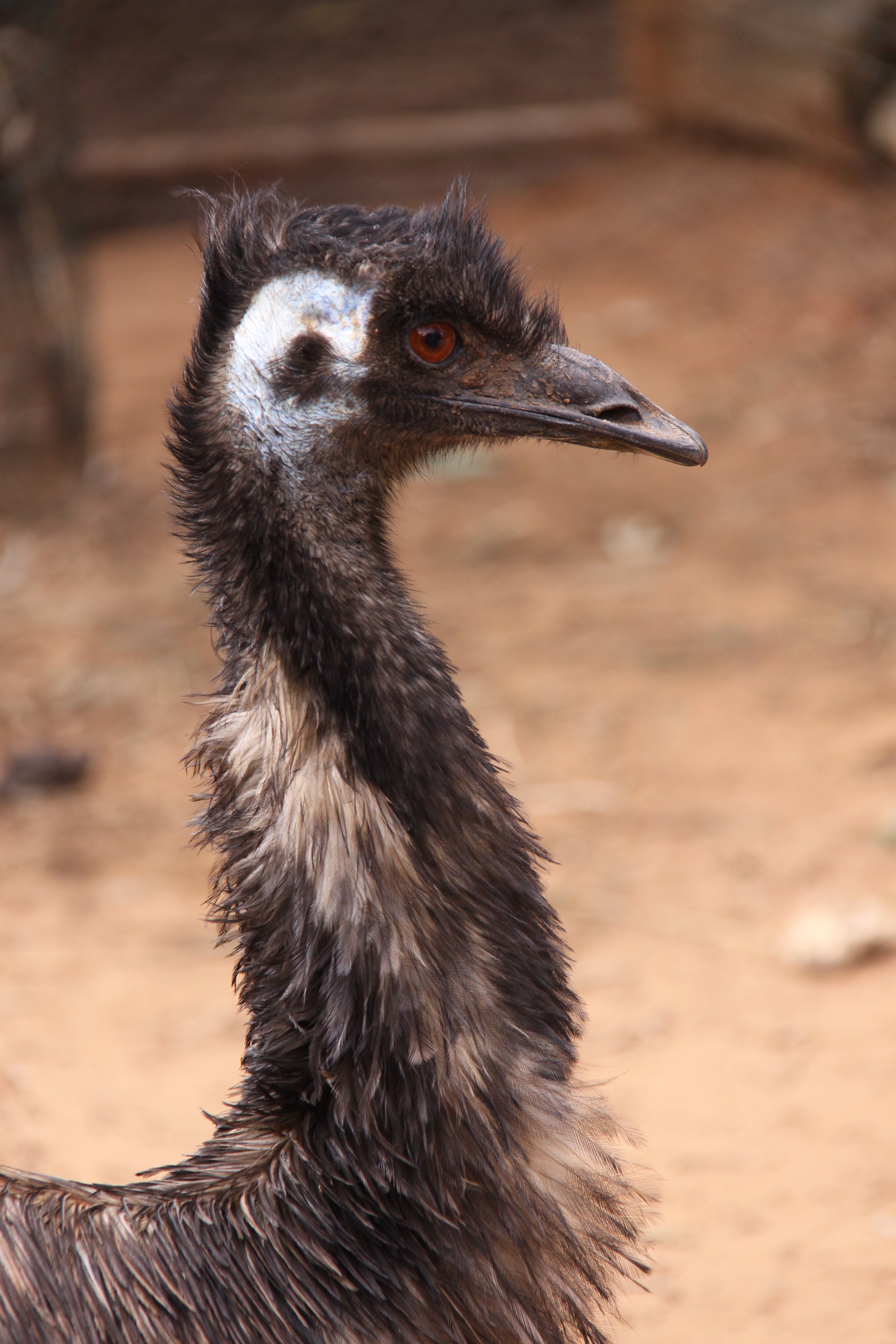
Rhea!

Blue sky, warm sun.  The burbling hum of hundreds of excited children, the pungent musk of animals.

This is the second zoo I’ve been to in Israel.  The other is in Haifa.  My clearest memory of it is the single honey badger pacing furiously in its small enclosure, swinging its head back and forth, all in an eternal oscillating search for an exit.  Oh, and the hobo kittens living with the otters.  Then there were the pop songs pumping over speakers, because apparently listening to the sounds of the animals would be much too boring for zoo patrons.  Needless to say, I wasn’t overly impressed, and I left feeling guilty about all those trapped creatures.

The Tel Aviv zoo, Ramat Gan Safari, however, provided a far happier vista.  It boasts the largest collection of animals in the Middle East, a Noah’s ark in the midst of an urban sea.

To enter the zoo, we first drove through an expansive park where herds of African savannah animals roam–zebras, antelopes, elands, wildebeest, scimitar horned oryx, hippos, and rhinos, among others, including the greedy ostriches that poked their bald heads toward the drivers’ windows of the passing cars.  It was pretty neat to watch a whole herd of hippopotami nap standing up like boulders in the sun.

Sleeping in, hippo style

Sleeping in, hippo style

The most impressive scene was, of course, the lions, which played, stalking and ambushing each other, even leaping over one another, in an exhilarating game of big cat tag.

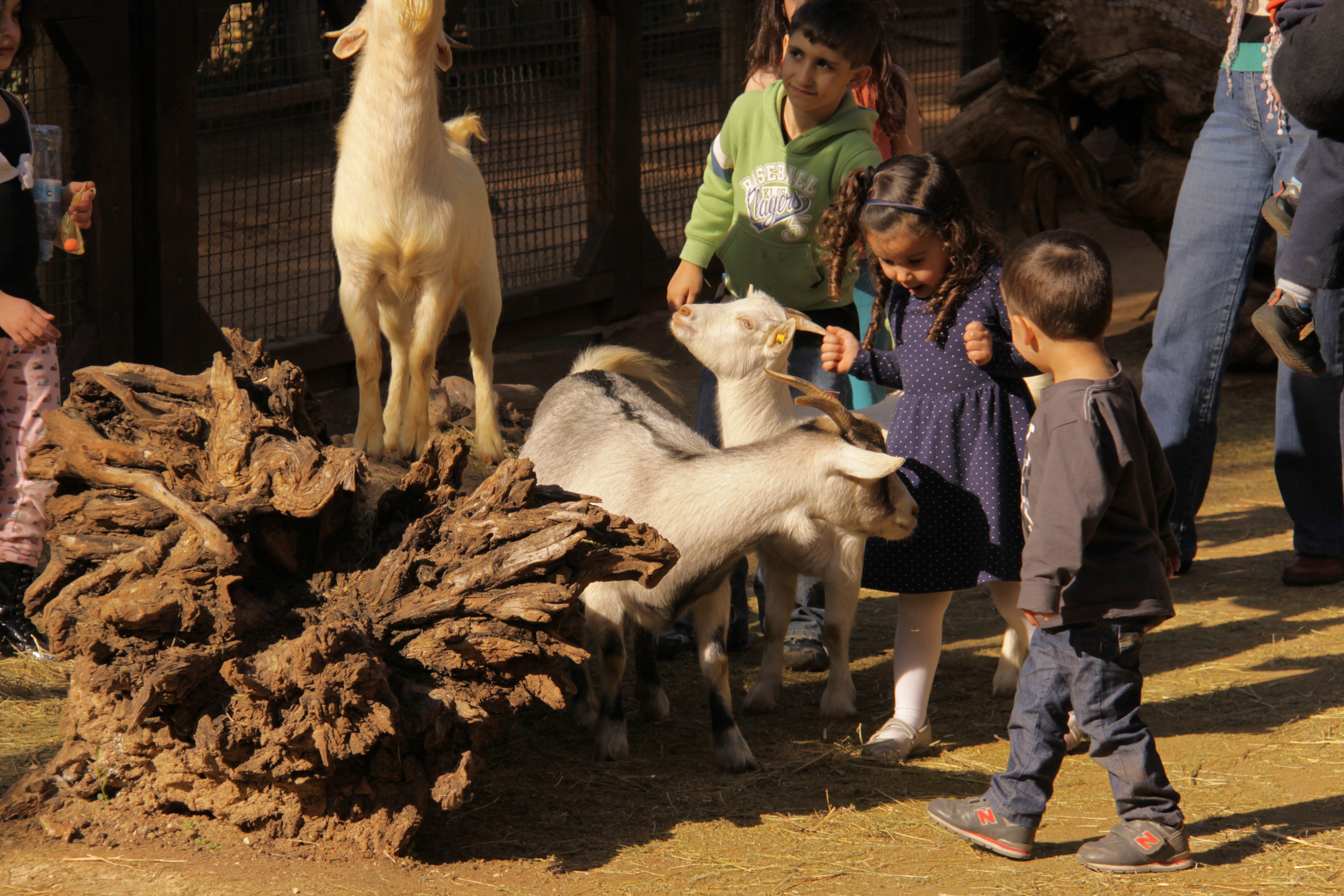
Within the zoo, the most striking exhibit was Israeli family life.  The paths were flooded with children and their parents to the point that I was concerned about moving too fast for fear of accidentally trampling a toddler.  Then there were the frequent stroller traffic jams.  I felt a bit out of place without a child, or at least a stroller, in tow.

The kids...haha, pun!

The kids…haha, pun!

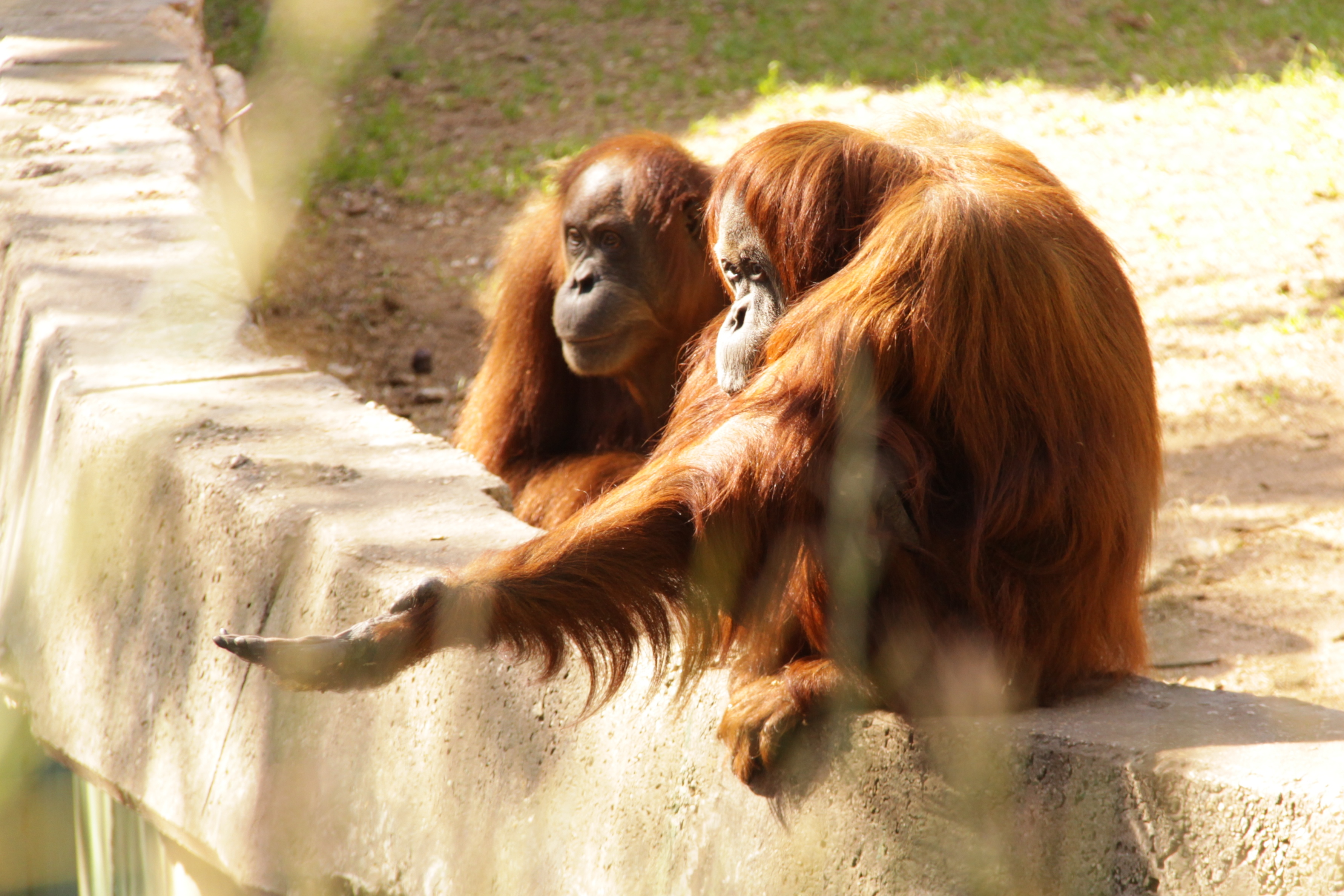
Besides the impressive collection of homo sapiens cubs, there were the monkeys–so many primates!  Tamarins, baboons, capuchins, orangutans, gorillas, lemurs, colobus, monkey A, monkey B, monkey see, monkey do…  One orangutan sat still on the edge of his enclosure’s moat with a hand outstretched as if waiting for a long overdue gift.  On the whole, they were better behaved than the children.

Hand it over…

It was an apt time for me to visit a zoo, having finally finished an excellent book my mom recommended to me years ago called The Zookeeper’s Wife.  The prose in this vividly written history was so delicious, I wanted to slurp it up.  The story, on the other hand, is one of sorrow and struggle, as it follows the true story of a zookeeping couple in Warsaw through World War II as they survive the destruction of their city at the hands of the Nazis and help to hide Jews on the grounds of their zoo.  I shan’t say more, because you should really just read it yourself, but Diane Ackermann’s painstaking research introduced me to the complex politics of zoos.  For instance, even this Ramat Gan Safari has some involvement in the ongoing Israel-Palestine conflict.  After a Palestinian zoo in the West Bank, Kalkilya Zoo, lost three of its zebras to violence, Safari gave it several animals in a gesture of peacemaking.  Animals are not spared in war, but their return can, it seems, help to rejuvenate a nation.

The Birds of Bahjí

Speaking of birds, here’s a poem I wrote last month.

Gardens at Bahjí

I want to know all your names
for if I can pin your species
maybe I’ll evolve wings like you
to ascend on this sacred air.
 
Some I know:
the crows who skulk and swoop heavily
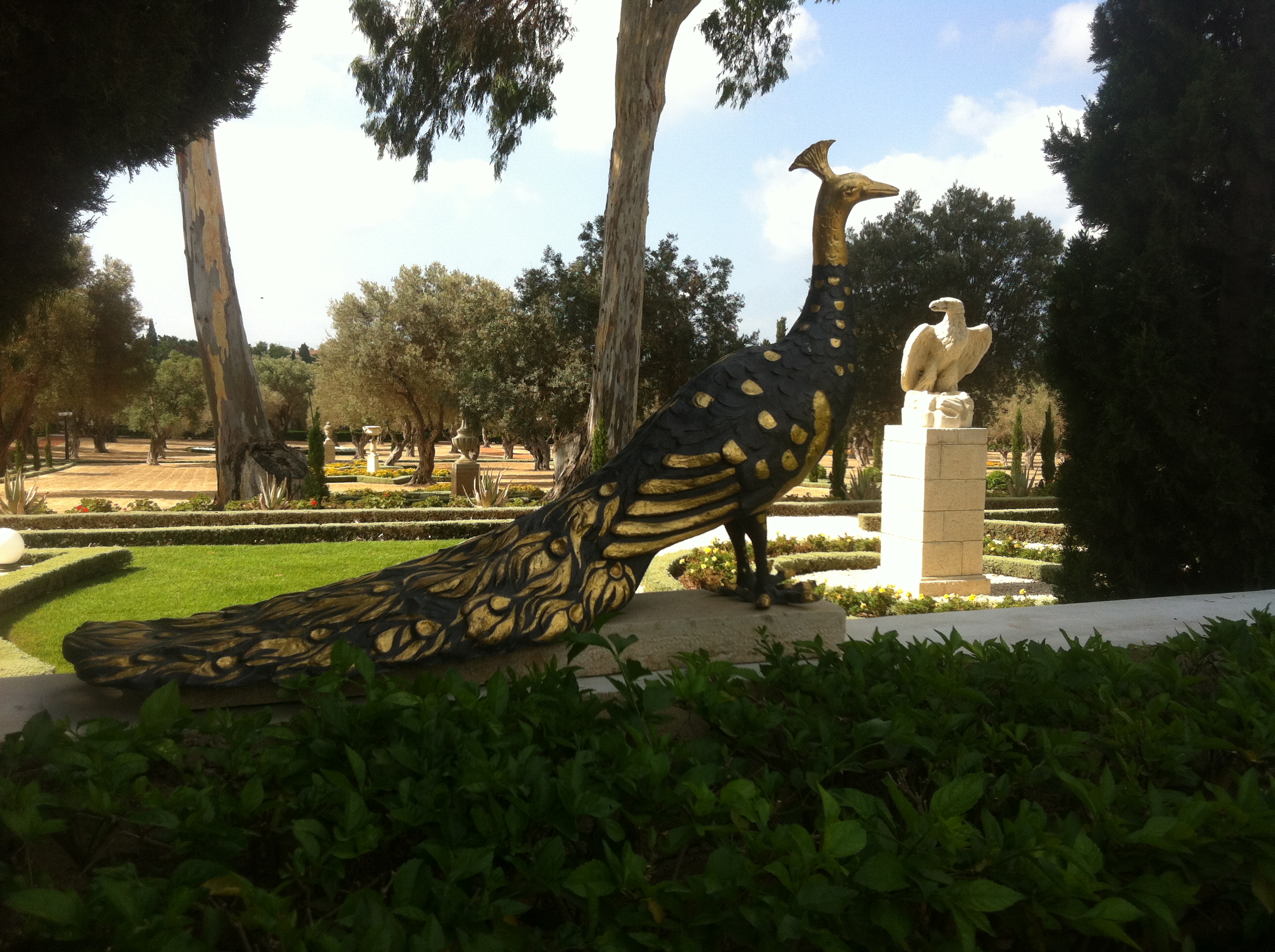
the gilt peacocks and stone eagles
            perched steadfastly
the parrots, the hummingbirds,
and a Nightingale—
                        this is Paradise—
 
But you long-legged careless ones
that squawk and hop across the lawn
and you, bird of prey, dagger eyes.
            You have to be a peregrine falcon,
            A pilgrim like me.
 
Give me all your names,
            you birds of Bahjí,
            and let me collect your brilliant feathers
            here, in the kingdom of my heart.

When birds need passports

When I walk across the arc around 6:00, there are dozens of crows feeding on the pristine lawns.  One friend compared this daily descent to a scene from The Birds.  So far, though, these birds don’t seem as bent on world domination as Hitchcock’s were.   I watch one sip from an irrigation pipe, and another carry a piece of gravel in his beak.  I wanted to see what he was going to do with it, but then I got self-conscious about my very public birdwatching and continued on my way.

Animals are a frequent subject in break time conversation.  That, and food.  (Recent topics: the healthiness of peanut butter, the popularity of Nutella in the US, and how the effects of eating pomegranate vary by your blood type.)   But let’s stick with animals.

The other day, one of my colleagues was telling us about a talk ‘Abdu’l-Baha gave in California to the Materialists Club.  According to the dictionary, the philosophy of materialism holds that “nothing exists except matter and its movements and modifications.”  Or, that “consciousness and will are wholly due to material agency.”  Basically, to my understanding, it denies spirituality.  So, ‘Abdu’l-Baha joked with these materialists that while they had spent decades thinking and studying and researching to arrive at the conclusion that there’s only a material world, cows know this from birth.  To paraphrase, “The cow is superior!”  He recommended that a cow be brought to give the club a lecture. The audience roared with laughter.

Then the break time conversation turned to birds and the freedom they represent.  While human mobility is limited by national borders and natural boundaries, birds can transcend that all.

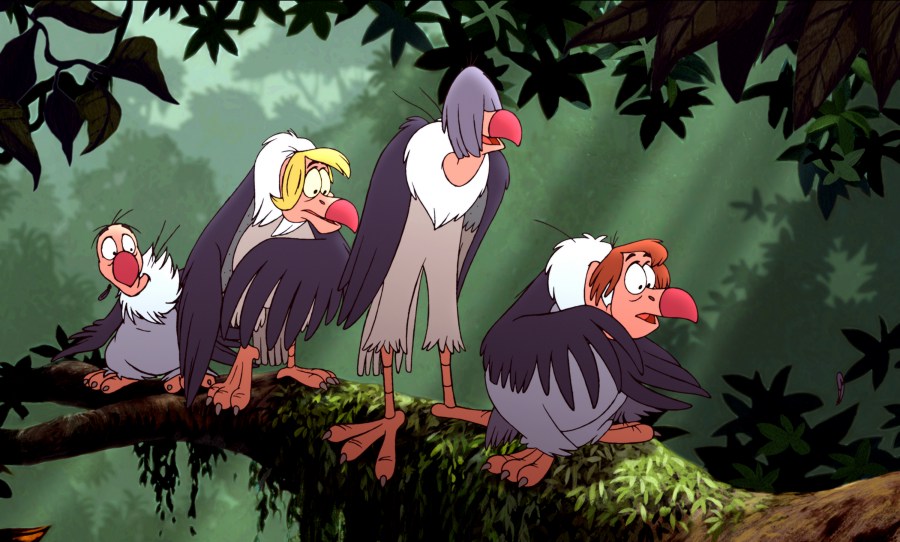
Or can they?  I had to be a contrarian on this point and relate a story I heard from an Israeli zoologist, Avinoam Lourie, when he gave a talk in Madison.  There has been an effort to reintroduce vultures into the wild in Israel.  The challenges to this project abound.  For instance, farmers will lace the carcasses of livestock with poison to kill the predators that attack their flocks.  Vultures, as they eat carrion, find these carcasses, consume this poison, and die.  The zoologists track these birds with little computers strapped to their bodies.  Now, as has been pointed out, birds don’t respect national borders, and these vultures have a habit of exiting Israel and entering neighboring countries.  I don’t have to tell you about the less than friendly relationship between Israel and its neighbors.

So, some vultures, winging their way into diplomatic history, flew into Lebanon, where their suspicious-looking tracking devices were spotted.  The Lebanese assumed these birds were spies for Israel, taking aerial footage, and shot them down.

So do we smuggle ourselves through customs, or what?

“So do we smuggle ourselves through customs, or what?”


It’s a reminder of how pervasive our system of borders has become.  The walls, the security forces, the bureaucratic obstacle course to crossing–well, don’t get me started.  But someday–yes, someday, vultures won’t need passports to take a trip north, and bovines will earn tenure in philosophy departments.

A whirr of iridescence

You know, that last post was supposed to be about the dinner I attended this week.  Perhaps you’ve noticed my writing strategy: I start with an anecdote, then transition to my bigger point.  The formula I’ve advocated to many applicants to grad programs in the humanities struggling to hack out a personal statement, in fact.  Occasionally, however, that anecdote drives me to distraction.  (Hm, I wonder if I could take a sherut there?)

Here goes.  After lunch, I step out of the building into the bright heat of noontime, and spot a glimmer before me.  It’s a whirr of iridescence: a hummingbird, purple and green, dipping its beak, then settling on a branch only to ascend once again, frenetic, gorgeous.  If I had my camera, I would have stood there snapping away like I did upon finding a veritable flock of colibrís on Cerro Santa Lucia in Santiago.

But I don’t, so I just stop and stare.  It’s just the two of us for this moment.  Then a group comes out behind me, loud and gregarious.  I start, then depart.  I can hear them exclaiming at the hummingbird–oh, look!–and also wishing they had their cameras.

This may come as a shock to you, but I’m not much of a socialite.  Put me in a room where I’m expected to mingle with a bunch of acquaintances and strangers, and I will keep an eye fixed on the nearest exit.  Even slightly formal dinner gatherings pose a series of challenges, particularly the threat of mistakenly feeding my lap instead of my mouth.

But even I couldn’t help but get a little excited at an invitation to dine with a large group of colleagues.

So, after descending the terrace stairs down to Ben Gurion street (which perturbed my leg muscles, making them tremble in protest), with a sheen of perspiration over the makeup I’d applied eleven hours earlier, I found myself in a tastefully appointed flat in the company of about thirty coworkers.

After we finished eating with plates delicately balanced upon our knees (I am proud to say that the only food that escaped me was a shred of spinach that jumped onto my foot), it was proposed that we go around and introduce ourselves, and say how our position contributed to our common mission of preservation.

I listened to the professional, expansive responses of a few veteran staff members, racking my brain as to how to shape my sundry jobs into a coherent statement. I came up with a simple response, and several days later, I’m still trying to figure out what exactly it is I do!

Lost in translation

The world is governed by competing forces. There is the force of construction and there is the force of destruction. And then there is the force of confusion.

I. Constructive force

Annie is lying unconscious on the ground, and I’m supposed to revive her. First I call her name, then I squeeze her shoulders. No response. I unfasten her shirt and start chest compressions, counting to thirty. Then it is time for the breath. I pause from my frantic work to unwrap my mouth shield. Once secured over Annie’s inert features, I tilt her head back to extend her windpipe, hold her nostrils shut, and breathe. Nothing happens. Adjustments are made. I’m not squeezing the nose properly. I try again; still her lungs fail to fill with my air. I blow harder. Nope. I tilt her head back more, surprised at the flexibility of her vertebrae. Finally her chest rises, once, twice.

This is my first CPR training, and although both the dummies and the instructors are admirably patient with me, I can’t help but think that multiple redo’s would be less than desirable with a real victim. I picture myself pausing in the midst of a rescue to try to remember the mnemonic, DR CAB, or asking  Annie to just hang on, I’ll get the breaths right this time around.

Maybe someday I will be in a position to save someone’s life. I hope not.

2. Destructive force

Do you remember the gentle animal lover who has been making posts on this blog? She’s gone.

The transformation happened on the third day that, while standing shod in my flip-flops at the kitchen sink, I felt a tickle pass over my toe. Then another. Ants were once again exploring my feet, and they were also mapping the entire kitchen floor. Now, I have allowed all sorts of bugs to crawl on me. I remember one summer day, reclining on the swing in the backyard, I watched with fascination as a honeybee landed on my elevated foot and wove its body between my toes, perhaps assessing the crevices’ resemblance to a honeycomb. Then I went inside and wrote a poem about it. Spiders, roly-polys, gnats, ladybugs, lightning bugs, the rare butterfly–all have been my playmates. Darwin practiced entomology as a hobby, and I like to think that I do too.

Yet I find myself spraying some K1000 poison onto these ants, feeling little remorse. The ants are discomfited by the chemical shower, but generally scatter and survive. It’s the wrong kind of poison, of course, but the intention was there, and I will not be thwarted. I sweep, then I mop with a cleaning fluid that supposedly kills cockroaches. I am hoping it also works for ants.

That former animal lover is still here, don’t worry. I observe a pigeon outside the window and coo at it in the way Dianne showed me. It cocks its head. I coo again, then set some chunks of stale bread on the windowsill, an offering to the animal kingdom at large.

3. Confustive farce

Maybe I have that disorder Chuck Close has where he can’t recognize people’s faces. Except unlike him, I haven’t been making any brilliant art lately. I found out that I’ve been calling one coworker by the wrong name for a week now. I was calling him Jamal…perhaps he simply dismissed my mistake as a flattering nickname, as Jamal means beauty. In any case, he didn’t correct me. Yesterday I encountered an acquaintance on the staircase, smiled at him, and said, “Hey Jake.” Except it wasn’t Jake; it was a stranger who bemusedly smiled back. At least I’ve gotten assertive when it comes to my own name. No longer will I accept “Layla,” “Lali,” or other variations. My soft (mumbly) voice makes things difficult, though–upon first introduction, I become Haile or most recently Nelly, anglicized beyond repair.

Then, once introductions are past, there is the actual conversation. The wonderful diversity at the World Center means that English is spoken with every imaginable accent. In theory, I believe that responsibility for communication lies with both the (nonnative English) speaker and the (native English) listener. The latter needs to learn to recognize unfamiliar inflections and pronunciations and understand nonstandard constructions, just as the former learns the new language. In practice, I’m decent at understanding most accents, but add in a noisy background or multiple speakers, and I become an echo: What? Sorry, what? What?

It’s lunchtime, and this guy is telling me about some upcoming plans to go to the American consulate. I’m not entirely sure what happens at a consulate…maybe passports? Consuling? I ask him why he’s going, but don’t understand his answer. “So, where is the consulate?” “It’s in Tel Aviv,” he says. Eventually I discover that he’s going to “a metal concert,” where I’m sure he’ll get his passport issue worked out.

Even my friend the written word poses problems. As I’ve mentioned before, I’m surrounded by two alphabets I can’t read, Hebrew and Farsi. So I joined a Farsi class as a latecomer. I studied a few letters on my own beforehand. After the other students had settled in, I realized they spoke at least basic Farsi. It would seem the teacher took me as a charity case into a class intended to teach Farsi speakers how to write. As I struggled to sound out words, my head felt a little cold, like it wanted a dunce cap. I needed to remind myself that it had been many years since I had last learned a new alphabet (the English one), and that was back when my brain was young and agile. So please, if you say anything in Farsi, don’t be surprised when I respond invariably with “Esme man Layli ast” (My name is Layli).

Procrastinating roosters

In the mornings when I wake up, I hear distant crowing. It must be roosters. Yet all of my chicken knowledge says that roosters crow punctually at the crack of dawn, which is before 5:00 AM. So what’s going on? Am I actually hearing roosters? Where are these roosters living–in the middle of the city? And why are they procrastinating?

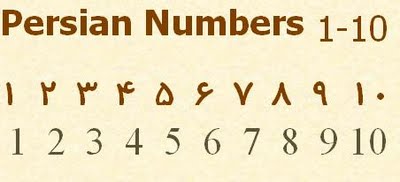
I had my first day in the office today. I work with four Persian ladies. I’m not sure if I count as an honorary Persian lady because of my quarter ancestry, which was in fact our first topic of conversation, probably because of my name. At my one previous office position as an intern for a ballet company, I ate lunch at my desk and my breaks involved sitting at my computer reading New York Times articles. So imagine my delight when I found out that my officemates take two short breaks daily, during which they convene in the kitchen to chat and share fruits, nuts, and fragrant Persian tea. Even as I adjust to living in Israel, I’m surrounded by all things Persian, especially the food. The lunchroom is the first (and most likely the last) cafeteria I’ve encountered that serves heaping trays of saffron chicken, steamed rice with plentiful tadik, and yogurtlu patlican (technically that last one’s Turkish, but still delicious). Maybe learning Farsi would be just as useful as Hebrew! I’ve already learned to read the numbers in Persian–I think five is my favorite. Two and three confound me.

Persian_Numbers_1_10