Over thousands of years, much of what we now call Indiana was flattened by glaciers, and when they left, they buried the land’s topography under massive deposits as they gave up the earth they’d dragged under their bellies. Gradually, vegetation returned, then forests arose.
When, millennia later, settlers felled Indiana’s forests, they created the contemporary landscape, where endless farm fields stretch their monocultures to the horizon. But the land still holds surprises.
Imagine the catastrophic floods unleashed by the melting glaciers when the last Ice Age ended. In some places, the raging meltwater swept away debris and even sliced into the bedrock, leaving behind dramatic ravines and hills. Shades State Park and Turkey Run State Park preserve the resulting beauty and unique ecology.
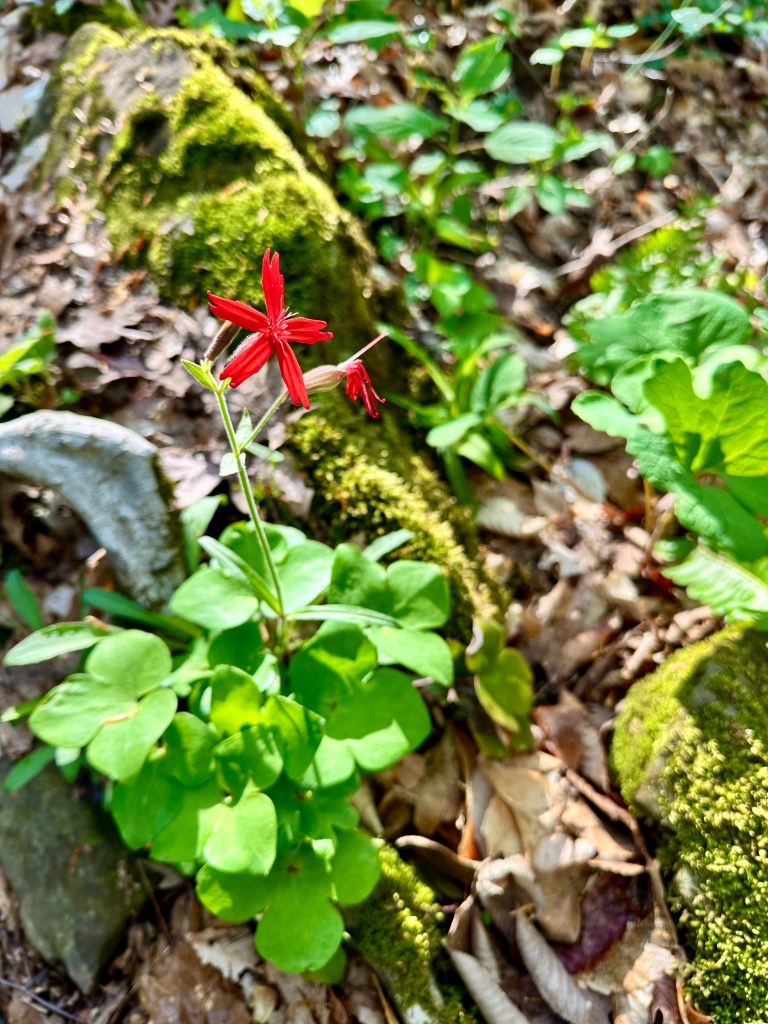
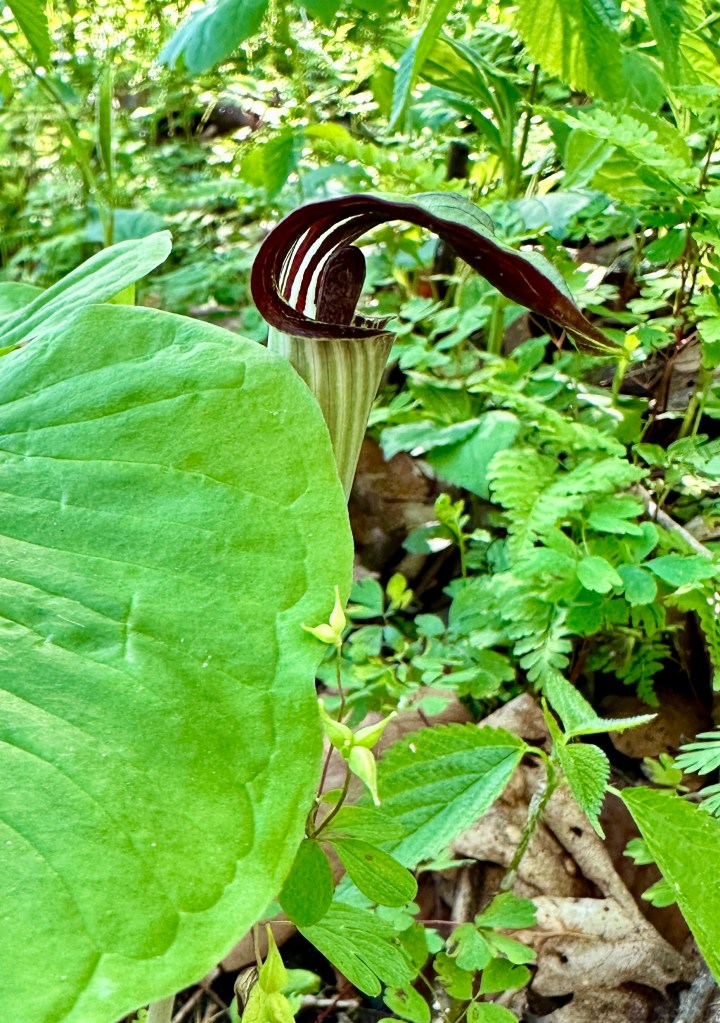
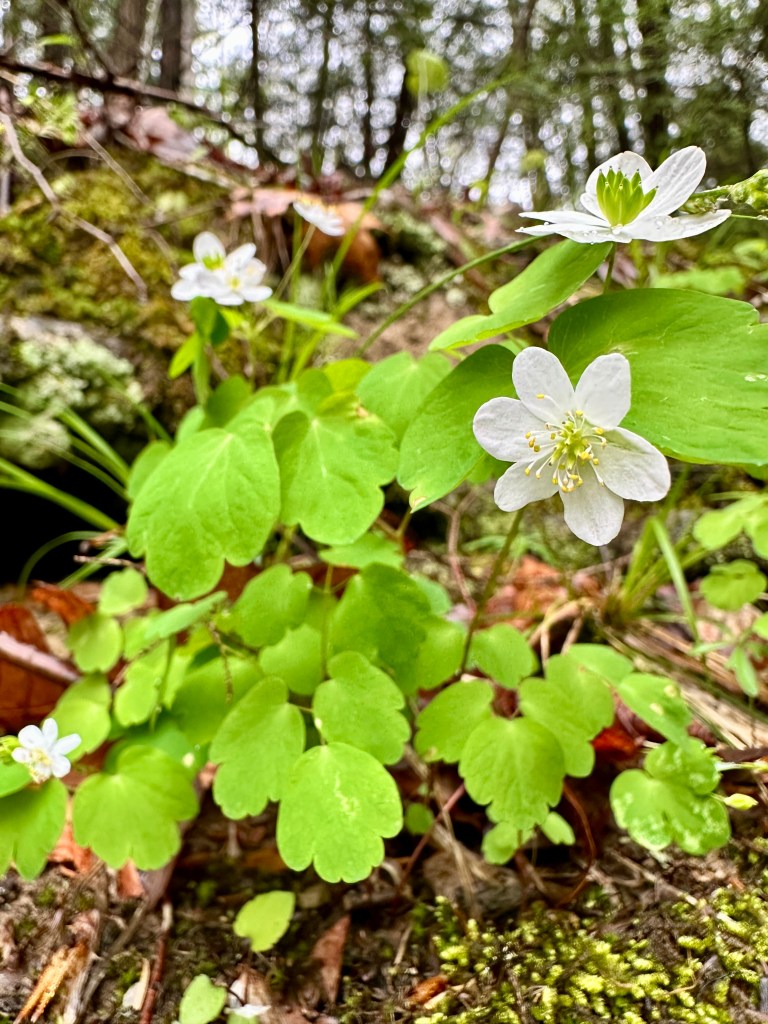
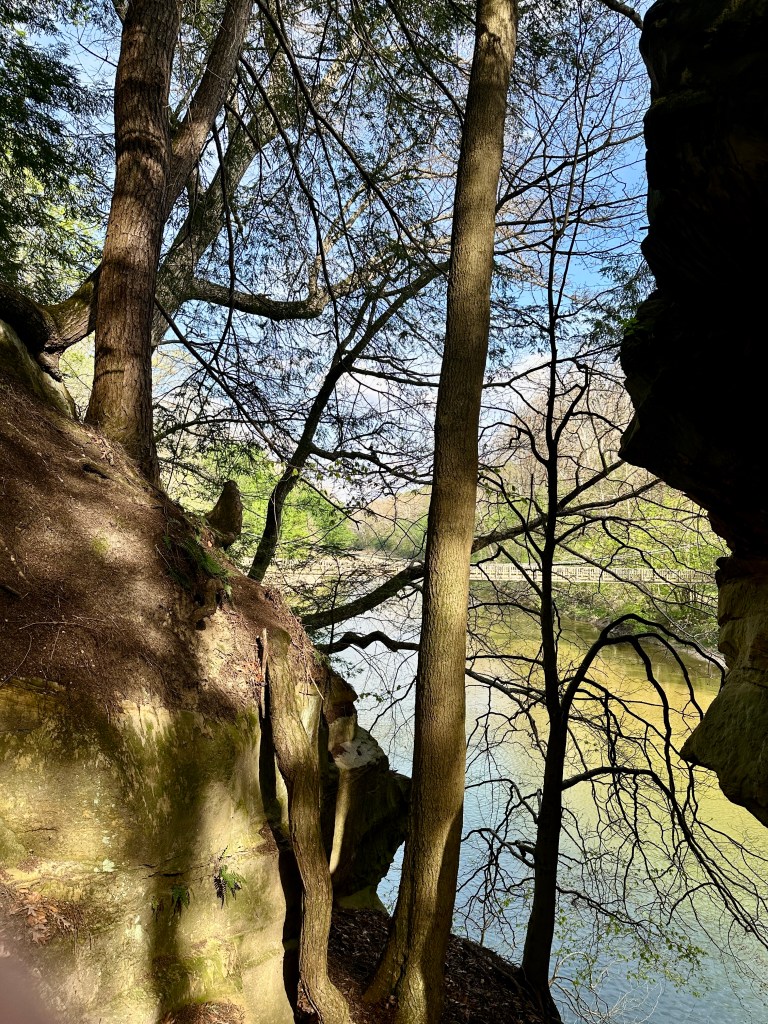
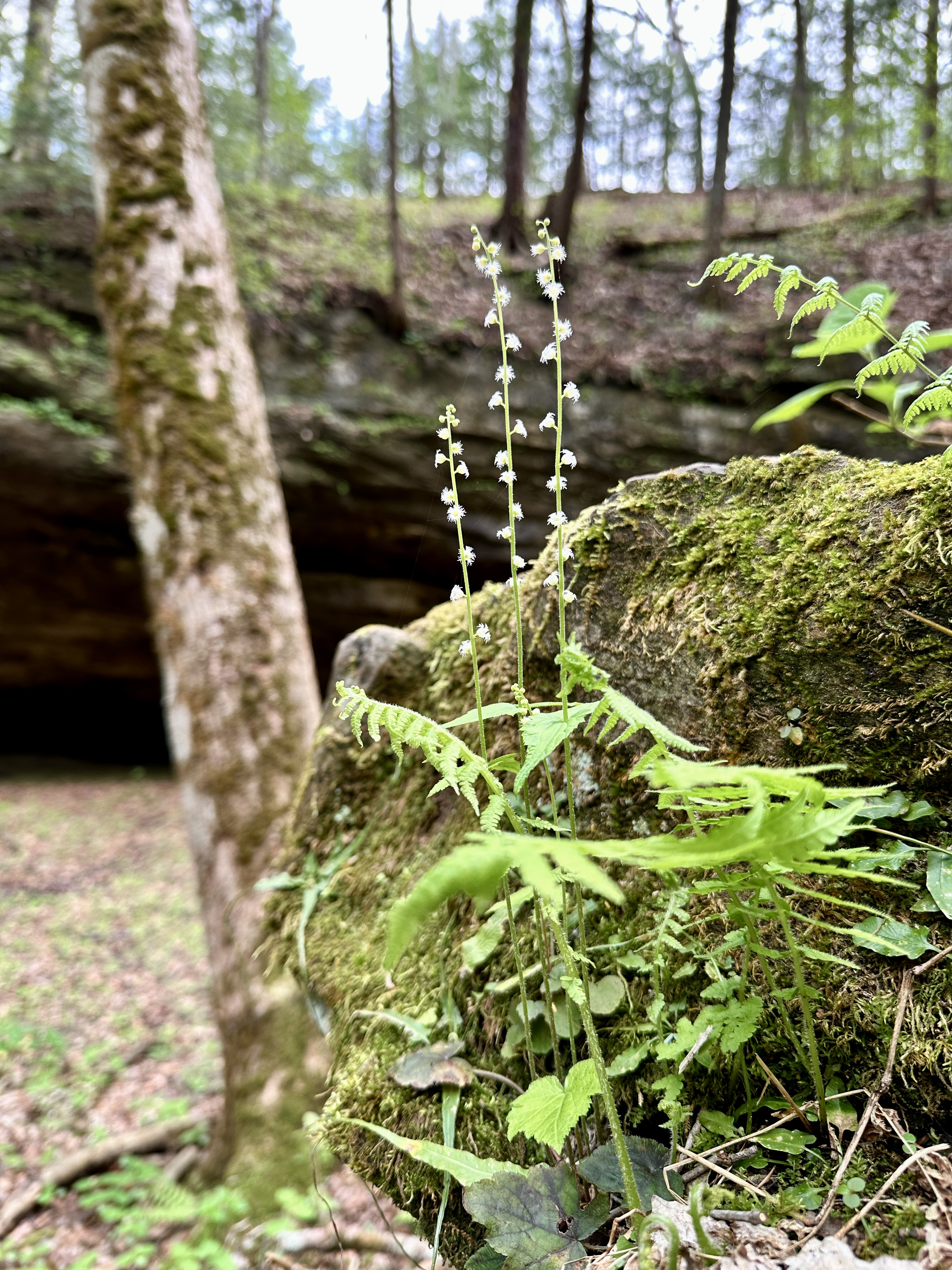
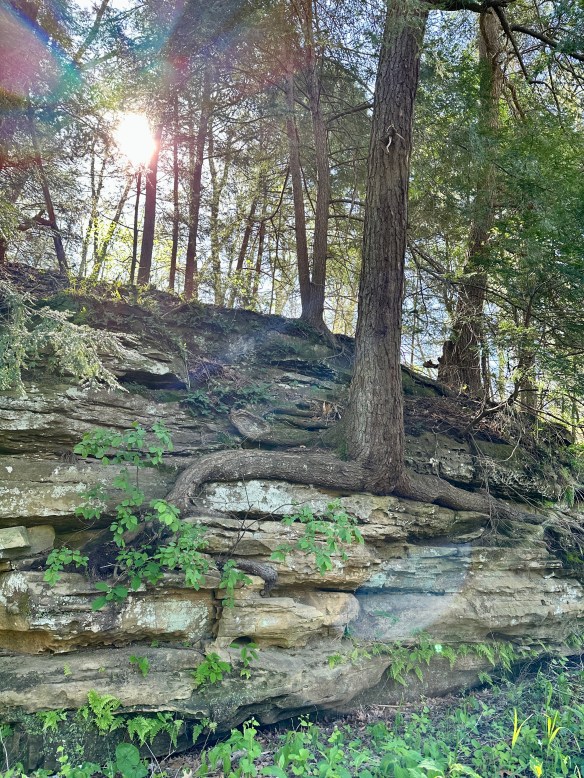
Sergey and I took a spring sojourn to Turkey Run, timed with the ephemeral wildflowers. Our hikes took us through the many forest types the park encompasses: beech-maple and oak-hickory on the hilltops, sycamores in the floodplain. In between, a rarity in this region: sandstone ravines filled with hemlocks, yews, ferns, and mosses.
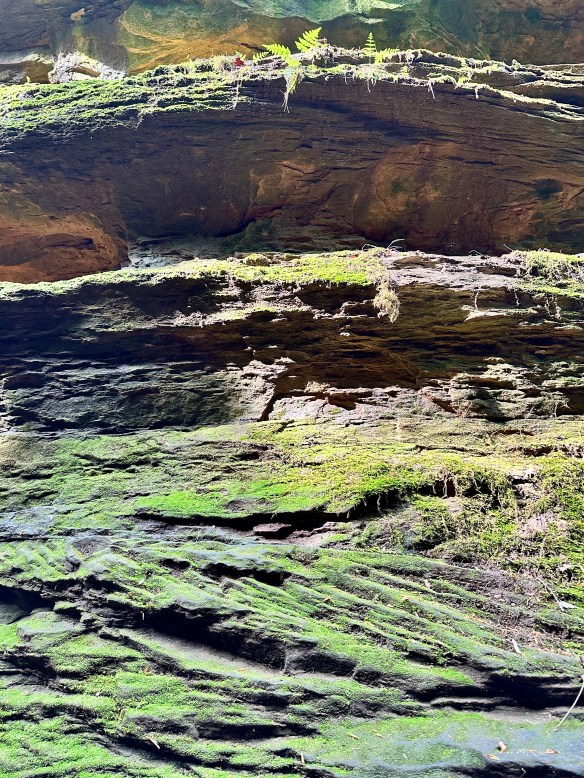
The signage repeatedly warned us that this park is getting loved to death, with off-trail hiking eroding the fragile vegetation. Some of the mosses and liverworts in the park’s Rocky Hollow Canyon only live in a few other places.
Even on the gray April weekend when we visited, hordes of hikers filled the paths. I got annoyed when I couldn’t hear the forest over other people’s conversations or their music played aloud. I got angry when I saw hikers going off trail, smashing plants and contributing to the hillsides’ erosion. Loved to death, indeed.
I found myself needing to wrestle with my disdain for these hikers. Where is their way of engaging with the natural world coming from? It must emanate from American culture. Aggressive individualism in asserting ownership of shared soundscapes. Imperialism in insisting on walking off trail.
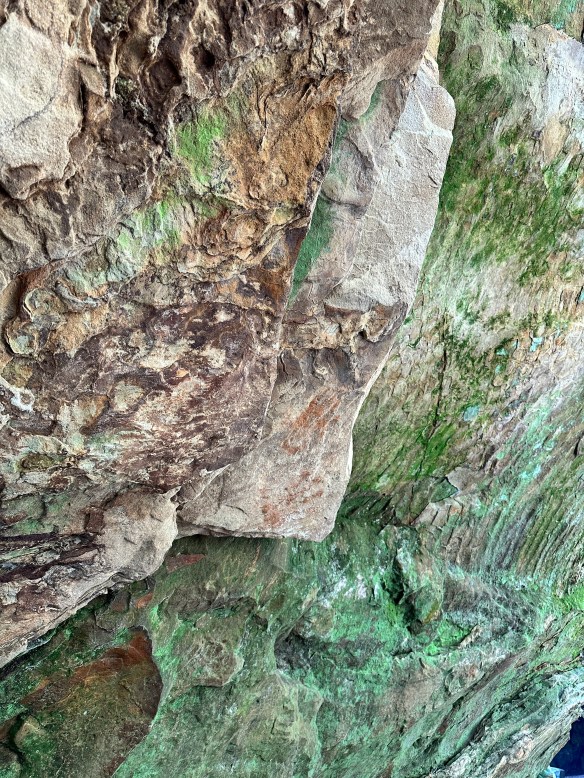
As I lament to Sergey, he posits that the offending behaviors stem from a lack of education—not necessarily the school kind, but the heart kind: respect for other beings, awareness of how we affect the world around us. I wonder, then, how the attuned, respectful engagement I value can be inculcated? How can the song of the woods reach a visitor tethered to music blaring from their phone?
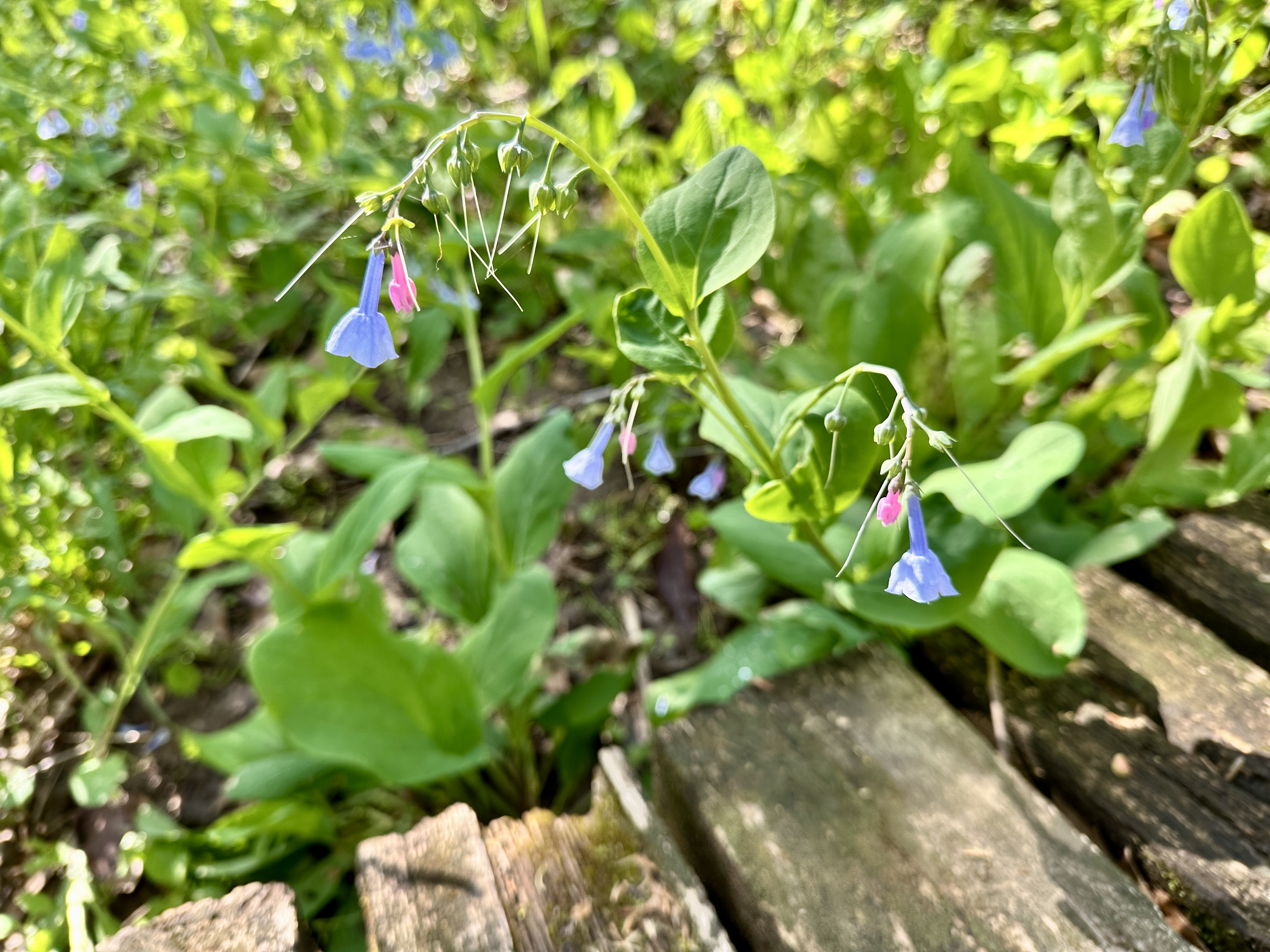
On our final morning in the park, we got onto a trail that winds through ravines and sidles beside Sugar Creek. For a good long while, we were the only humans in sight, and we could finally hear the lives that speak in quiet voices. Feathery hemlocks swaying overhead. Enormous trilliums waving at us. Pawpaws pawing the air with scraggly branches. Columbines glowing on a boulder. A bald eagle perching in a snag beside the creek.