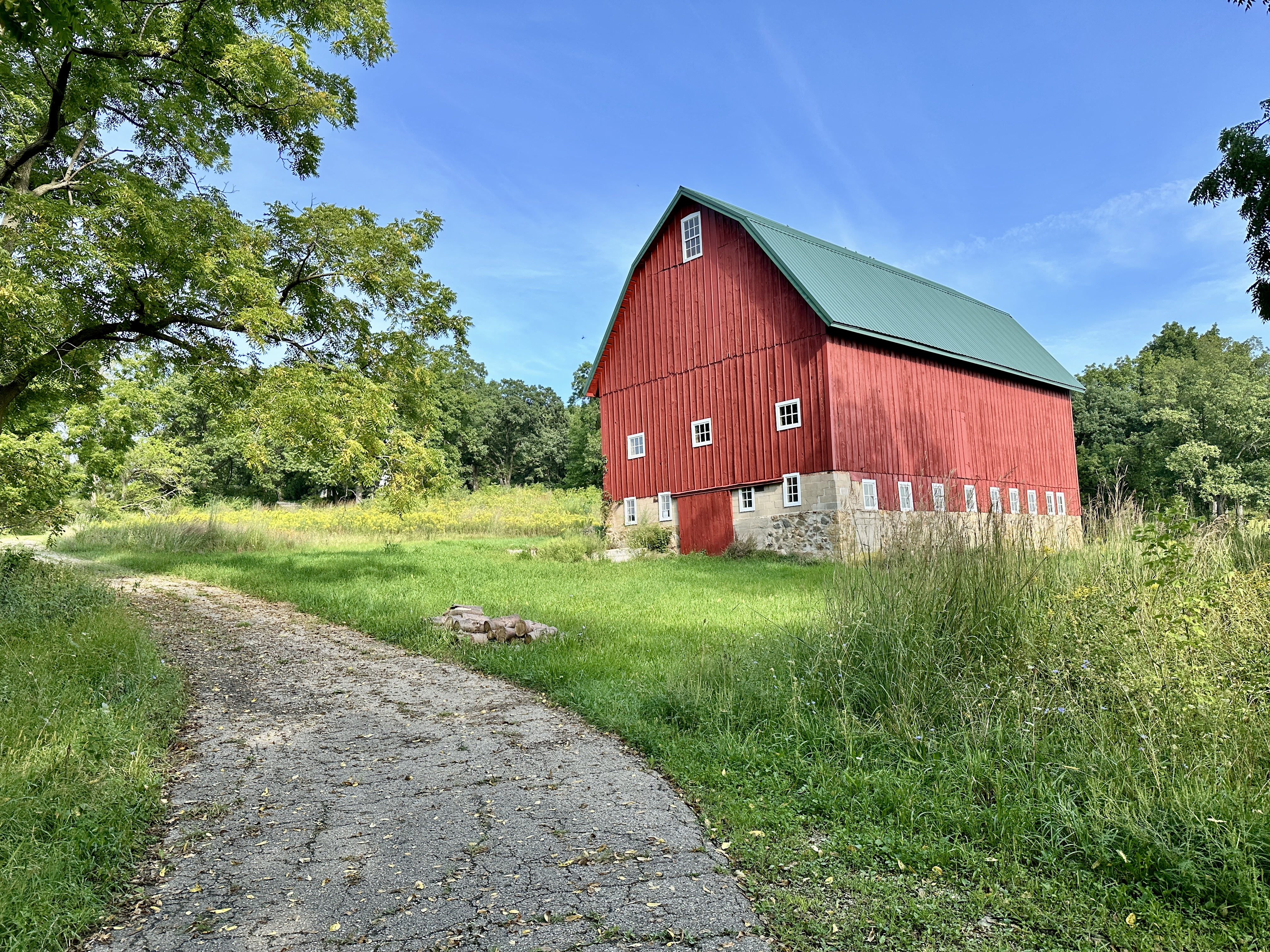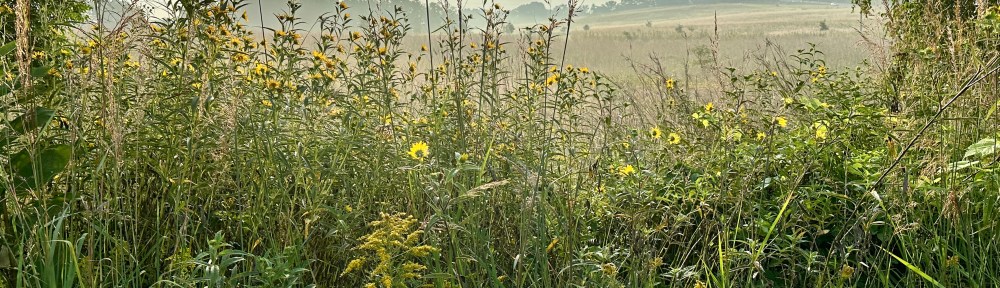
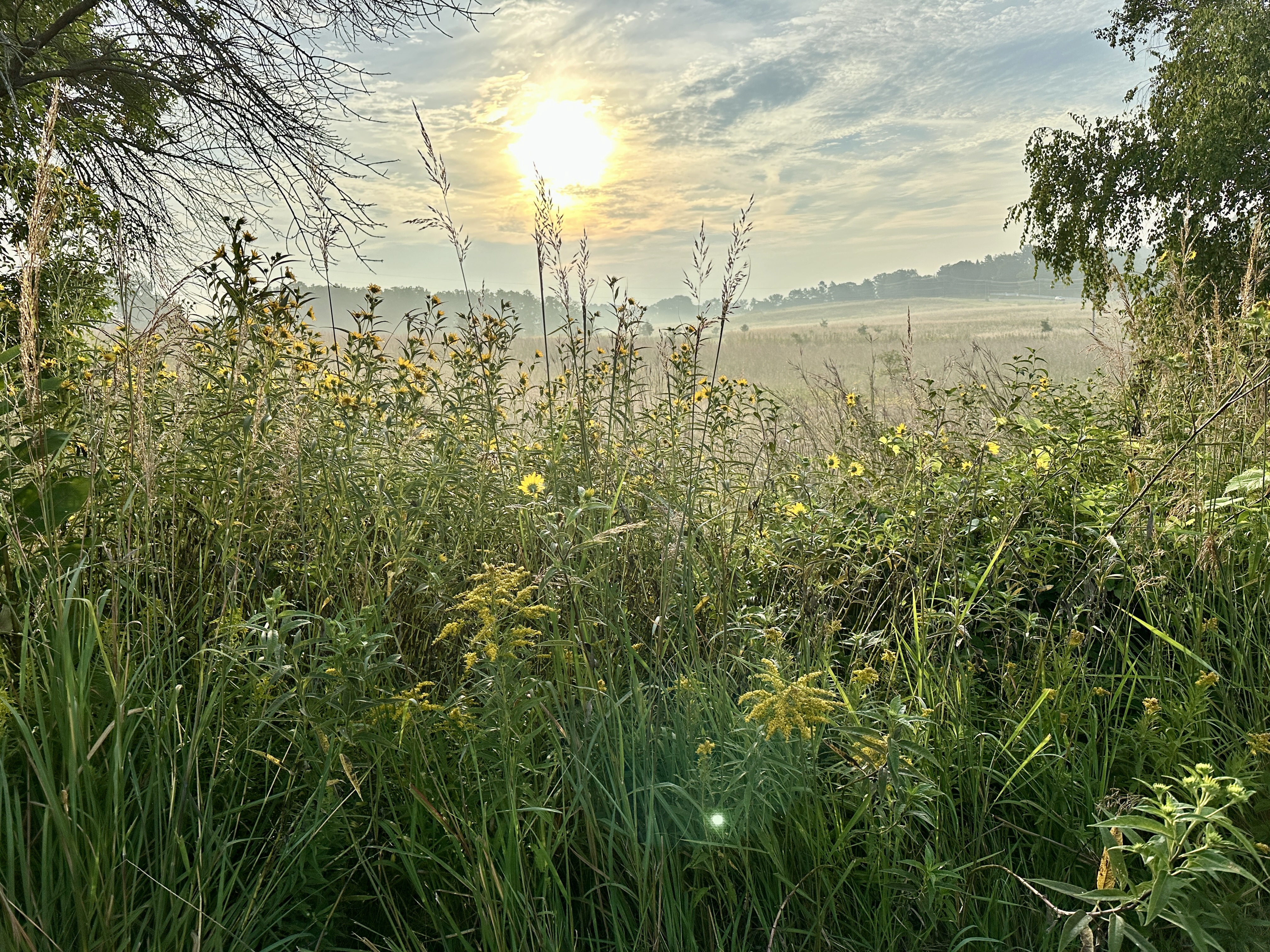
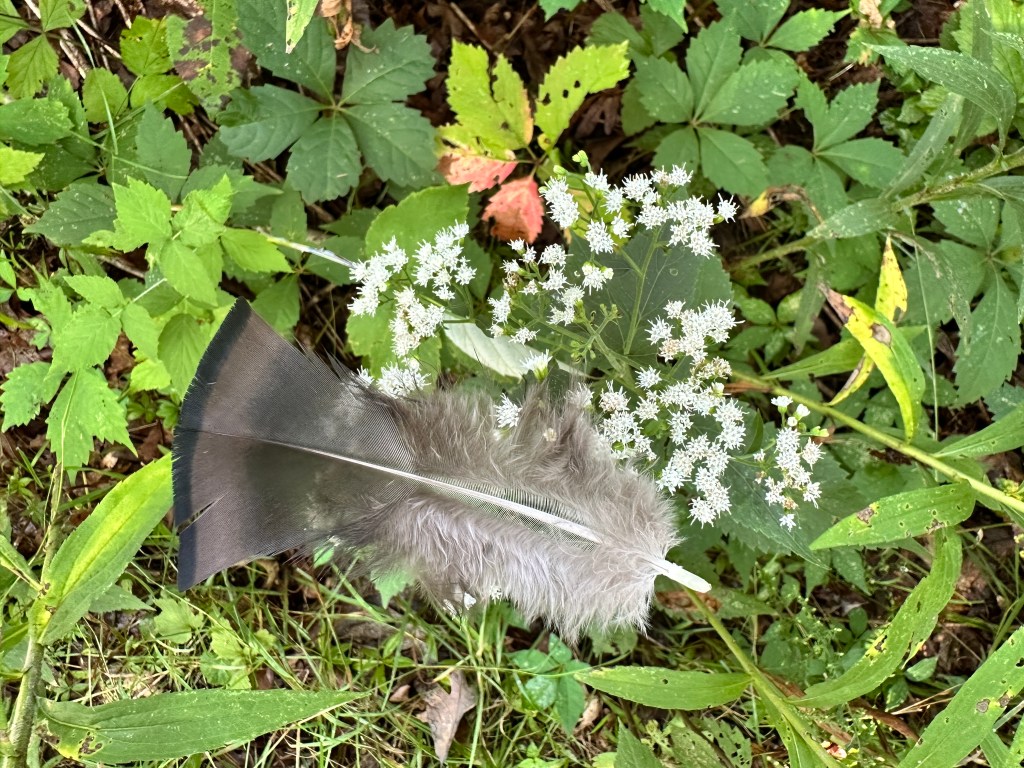
A cascade of goldfinches pours from walnut to thistle and back. A beetle explores the harlequin collars of spotted beebalm. Crickets pop through tallgrasses as I pass. A garter snake and I startle each other under pines. Nine wild turkeys march single file. Severed turkey legs on a path startle me far more than did the snake, signaling the presence of coyotes.
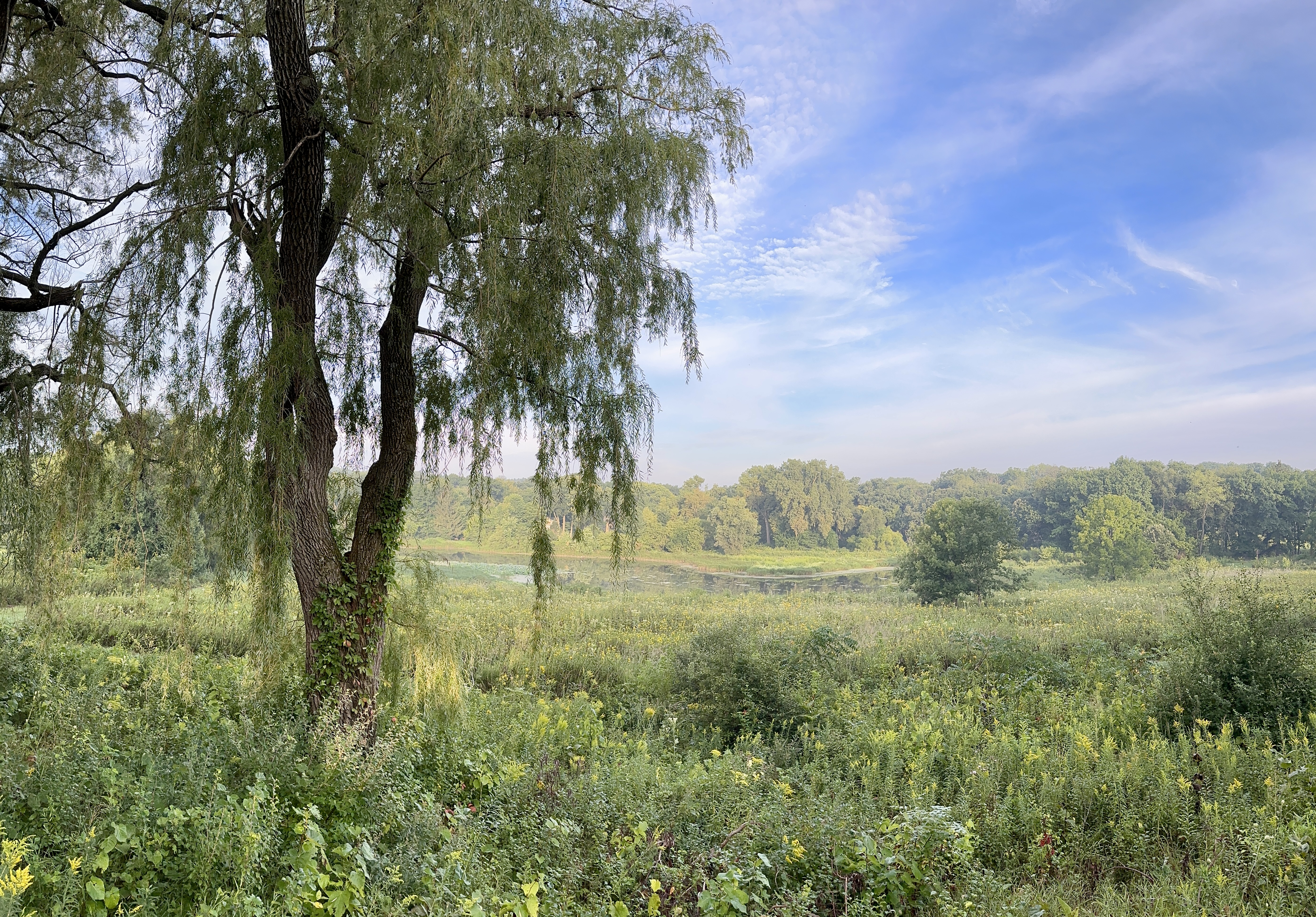
Few reminders of the once-dominant tallgrass prairie remain in Wisconsin, with most land having been converted to agriculture or housing. I’d always heard that Wisconsin had rich soil, but until my most recent visit to my birthplace, I did not realize that the soil resulted from the tallgrass prairie that had long been stewarded by the Indigenous people. European settlers plowed the prairie under (and a lot of the topsoil got swept into waterways without the native plants’ deep roots to hold it in place). Nor did I realize that the first major prairie restoration project was carried out in Madison nearly a century ago at the university arboretum.
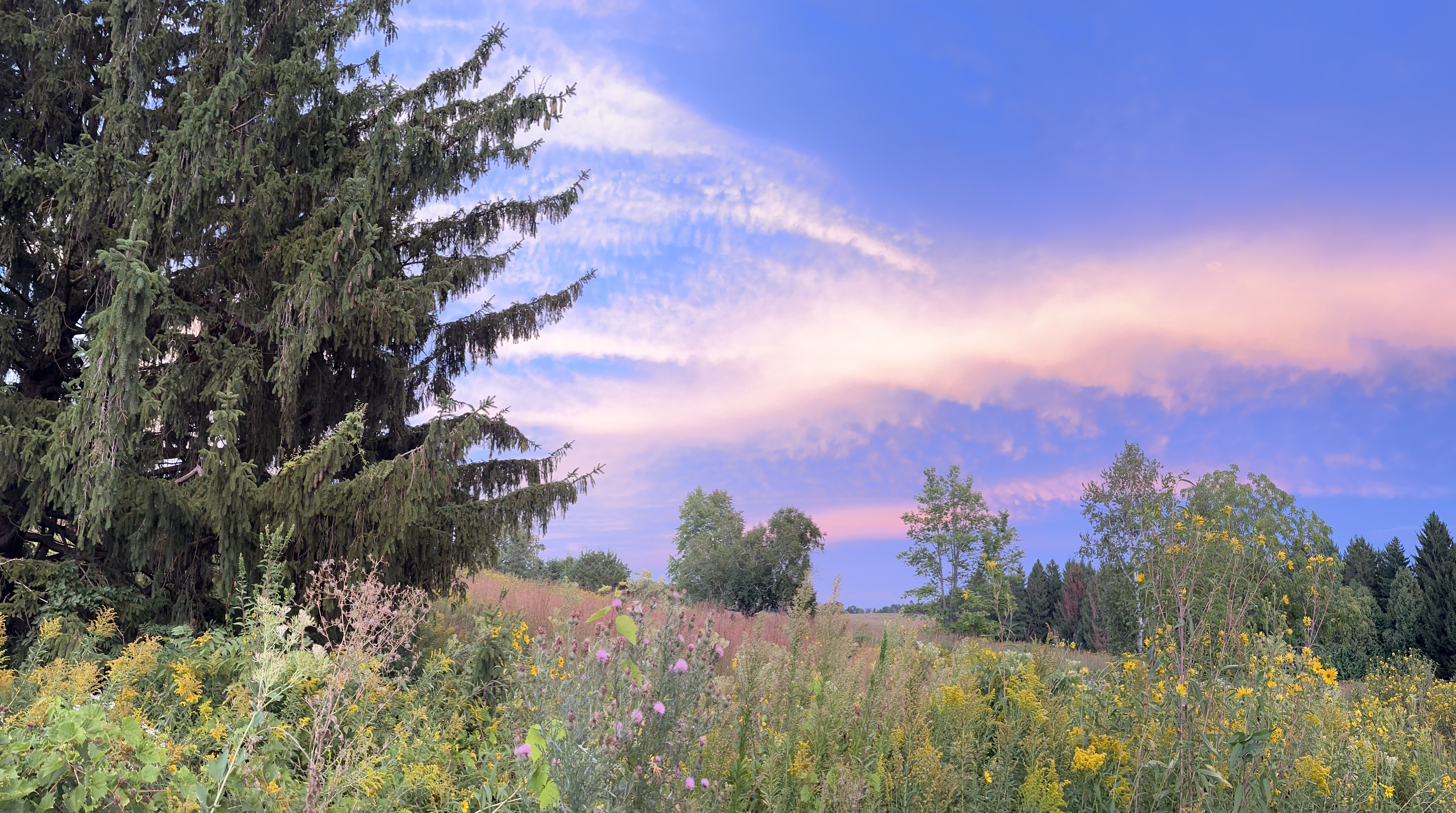
For this visit, I stayed in a cabin or “hermitage” surrounded by the restored prairie land at Holy Wisdom Monastery. The land the Benedictine sisters acquired in the 1950s, once in the countryside, is now a fragment of wildlife habitat surrounded by housing and roads in Middleton, a rapidly populating suburb of Madison. From the highest hill of the monastery grounds, the busy isthmus of Madison, crowned by the capitol building, is visible across Lake Mendota.
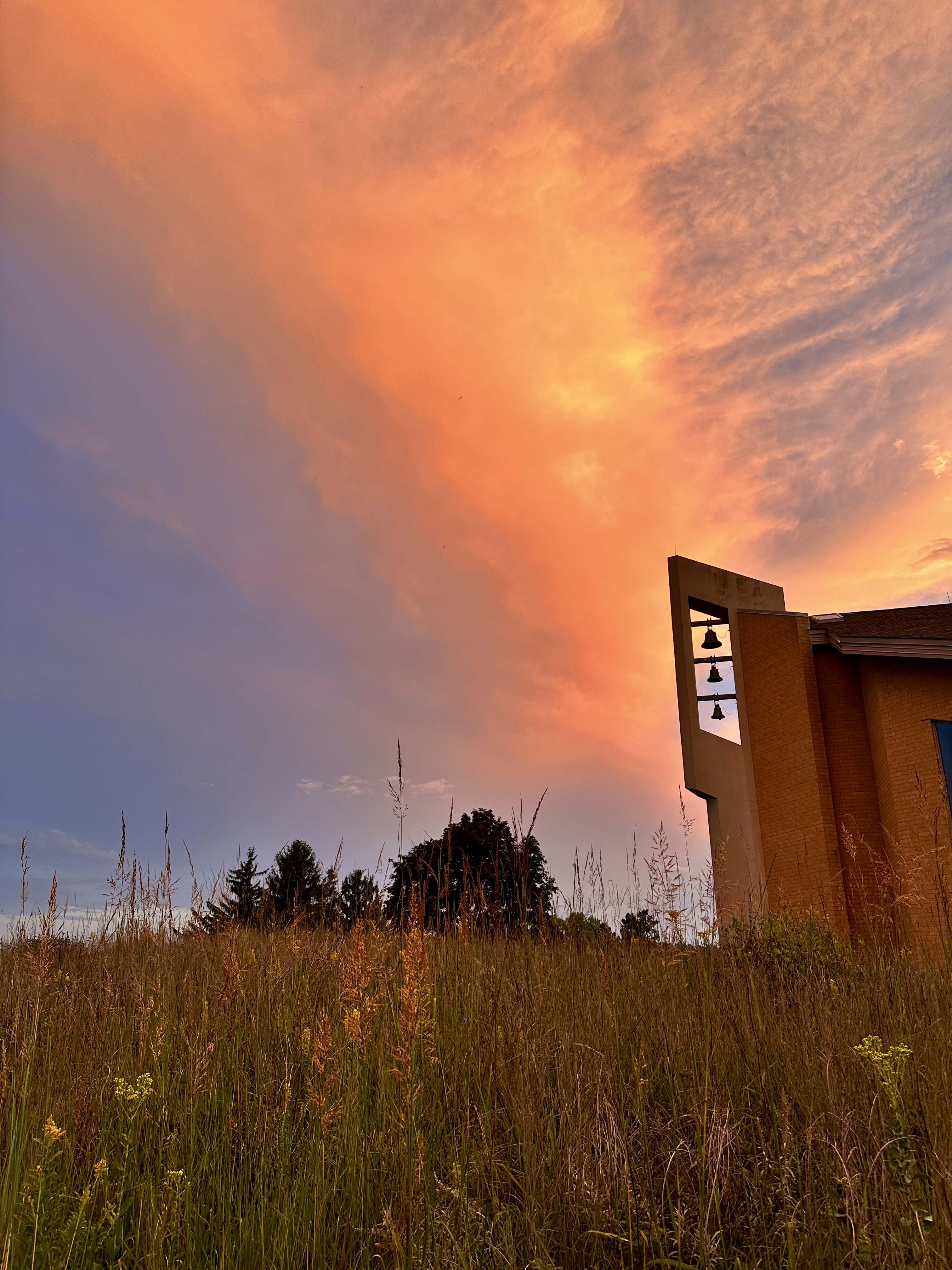
In Alexandra Horwitz’s On Looking, she points out that usually, our sense perception focuses on the visual, so I try to tune in to the prairie sounds on my walks (and to tune out the traffic hum). I hear, I think for the first time, a wild turkey gobble. I also hear the bugling of sandhill cranes visiting the restored Lost Lake. Countless insects chitter in the tallgrass. The breeze whooshes. Indoors, the wind unleashes a patter of falling acorns on the roof. I am doubtlessly missing innumerable sounds too subtle for my ear: the munching of the numerous rabbits and deer, the stealthy step of hunting coyotes, the muffled music of the growing roots and miniscule creatures in the soil.
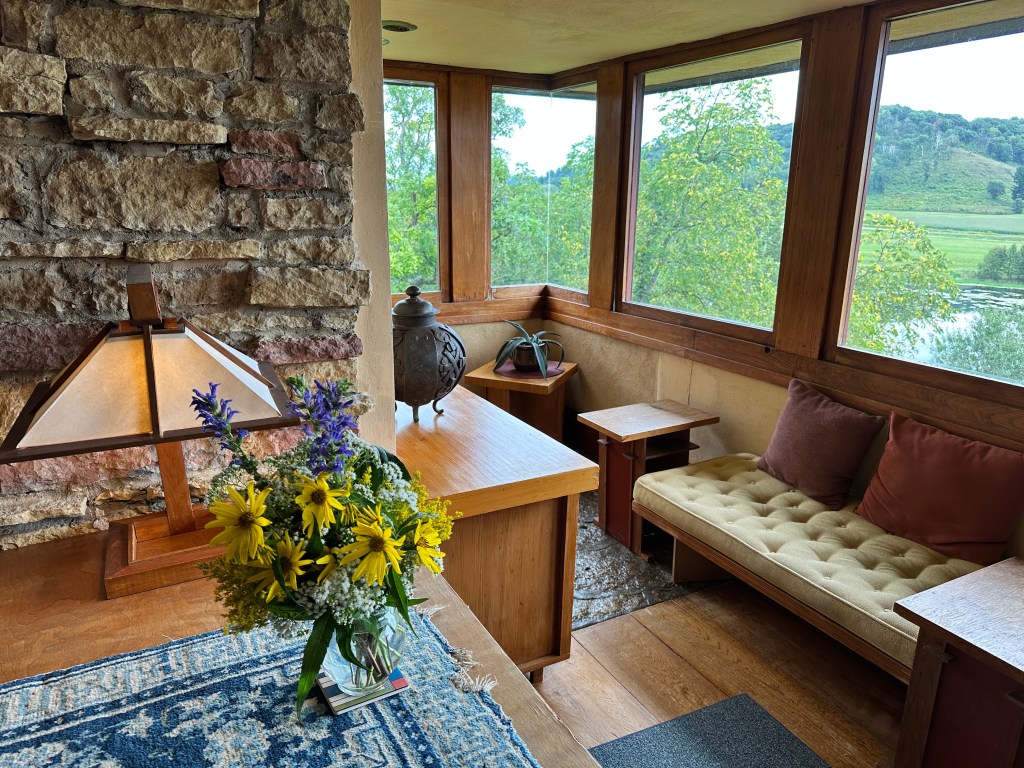
“More dramatic elsewhere, perhaps more strange, more thrilling, more grand, too, but nothing that picks you up in its arms and so gently, almost lovingly, cradles you as do these southwestern Wisconsin hills,” wrote Frank Lloyd Wright of his birthplace. My parents and I visited the home he designed in those hills, Taliesin. It is a sprawling complex, yet designed to blend into the land. Even the Guernsey cows that Wright kept here he selected for their earth tones. Holsteins were too distracting with their bold black and white pattern!
Wright ran an architectural school here unlike those at universities. Its curriculum featured manual farmwork and lasted as long as students wanted to stay. In fact, the spouse of one of his students still lives at Taliesin, almost seventy years after Wright died. Coming from contemporary higher education, with its emphasis on structured, outcome-driven curricula, I was struck by the whimsy of Wright’s approach to teaching. When a student was ready to graduate, for example, they built a large puzzle box that Wright would open on his birthday.
I wonder what an appropriately whimsical final exam would be for a week contemplating the prairie? By the end, I had finally learned to pause, look, and duck before entering the hermitage to avoid disturbing the web of an orb weaver determined to make use of the doorframe. I hope the spider would rate my performance well.