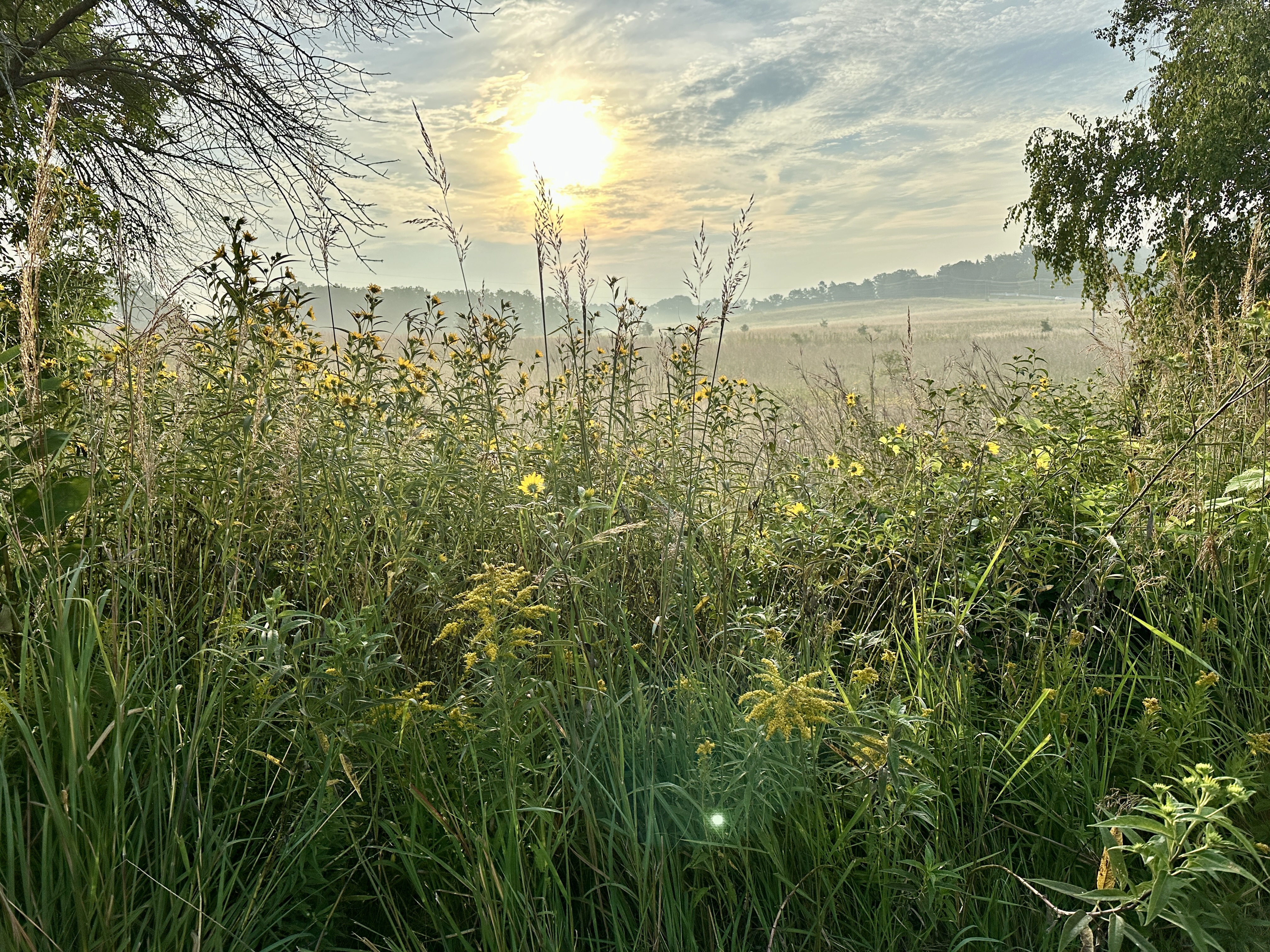
A cascade of goldfinches pours from walnut to thistle and back. A beetle explores the harlequin collars of spotted beebalm. Crickets pop through tallgrasses as I pass. A garter snake and I startle each other under pines. Nine wild turkeys march single file. Severed turkey legs on a path startle me far more than did the snake, signaling the presence of coyotes.
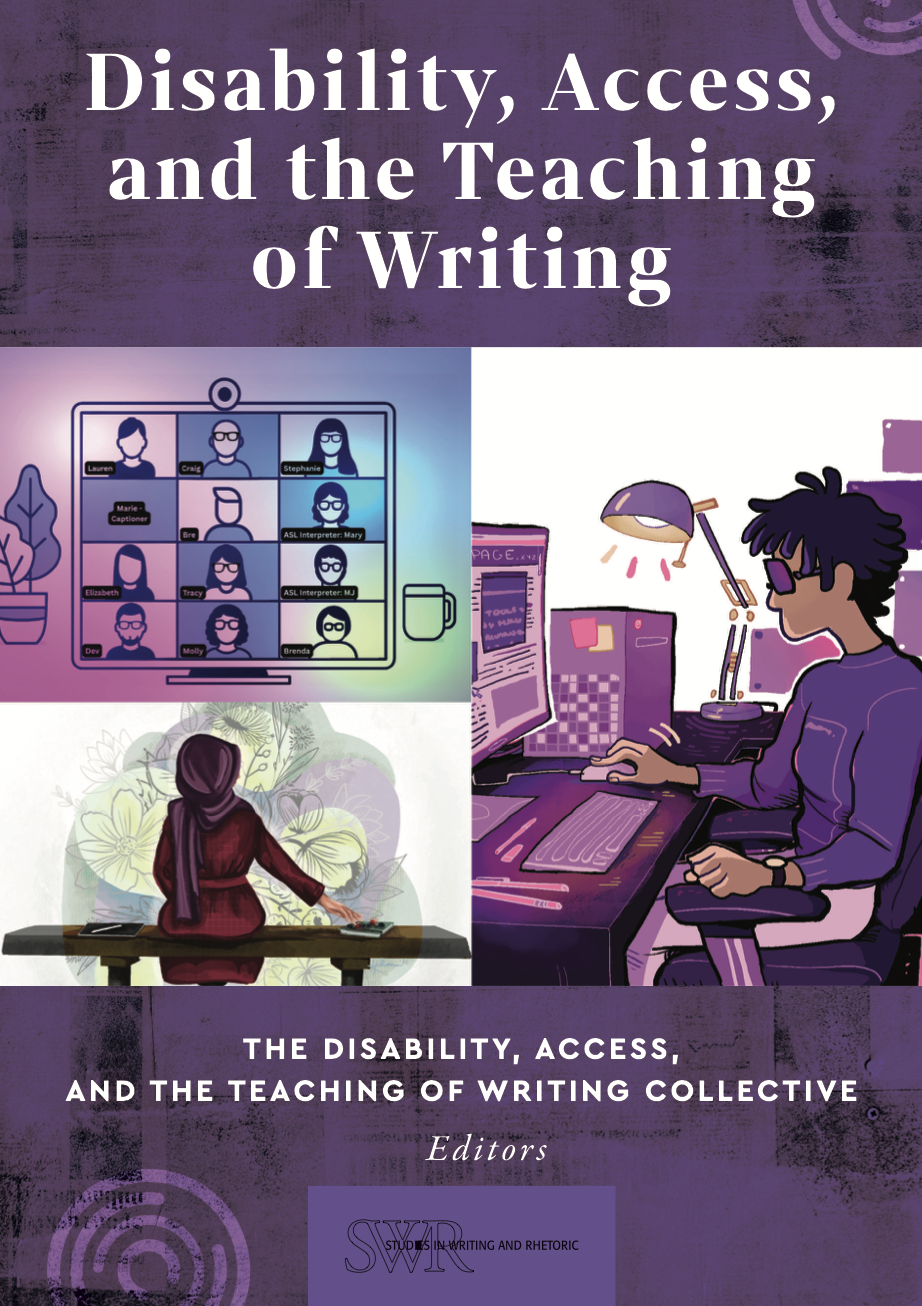
Miron, Layli, and Amy Cicchino. “Prioritizing Accessibility in Writing Program Administration.” Disability, Access, and the Teaching of Writing, edited by Stephanie K. Wheeler et al. Conference on College Composition and Communication, 2026, pp. 217–225.
My contribution with my former colleague Amy Cicchino appears as Chapter 20 in this edited collection. The editors include this note on the chapter explaining its impetus:
“Miron and Cicchino argue that WPAs [writing program administrators] have a deep responsibility to prioritize accessibility and that this prioritization is possible, even with the many competing responsibilities that come with administrative work. Their conclusion offers ways to undertake this work, starting by articulating why accessibility is important to your program. The authors also share the impressive Accessibility and Inclusion Guide they created for their program, which can be adapted for other contexts. Drawing from Miron and Cicchino’s suggestions and model, make an action plan for prioritizing accessibility in your program.” (page 225)
Smith, Zoe, Caroline LeFever, and Layli Miron. “Student-Consultant Interactions: From Single Visits to Partnerships.” The Peer Review, vol. 10, no. 1, 2025.
Abstract: What can consultants do to move students to return to the writing center? To identify strategies that accomplish this end, two undergraduate researchers and an advisor surveyed students who had repeatedly visited a single consultant. We then analyzed the data, coding consultant strategies and noting repeated occurrences. We also recorded appointments of consultants with high rates of returning clients, collecting transcripts detailing the strategies they use in first-time visits. Our research contributes to our field’s understanding of why some students return to the writing center and what students want from their consultant, intersecting with current conversations that acknowledge student writers as co-creators of writing centers and recognize peer tutors’ emotional labor. The consultation that we document and analyze may find use in consultants’ professional development.
Abstract: Most writing centers staffed by peer tutors undergo regular turnover of employees as they graduate. While a consistent training program for new tutors can ensure that the entire staff knows the essentials of one-to-one writing pedagogy, no such program can cover everything. Often, tutors continue their learning through professional development (PD) meetings that focus on more advanced topics chosen by the center’s leaders. To keep the entire staff engaged, including returning tutors, the PD curriculum must change from semester to semester. Yet, that means that some tutors will miss out on topics covered in a semester before their hiring. In contexts of high turnover, how can tutor educators sustain tutors’ knowledge? This article offers one solution: online PD modules that reward completion with badges.
Basgier, Christopher, Layli Miron, and Richard Jake Gebhardt. “Developing Consultants’ Multimodal Literacy through ePortfolios.” Praxis: A Writing Center Journal, vol. 22, no. 1, 2024, pp. 47-61.
Abstract: Writing center consultant training must account for the multiple media and modes students use as they compose on new digital platforms. While most consultants come to writing center work already confident in traditional literacies, to advise on multimodal projects, they also need to understand how elements such as visual design, navigability, and accessibility play into the rhetorical situation. Starting in 2021, our writing center assigned an ePortfolio-focused professional development curriculum to our consultants, culminating with their creation of websites that integrated and showcased their knowledge, skills, and abilities. The authors studied the consultants’ responses over the first two years of implementation, collecting data from surveys, session observations, and interviews, which we analyzed through inductive and deductive coding. Our results indicate that consultants advanced their understanding of multimodality through their participation in the ePortfolio curriculum and applied their learning in consultations not only about ePortfolios, but also about other visually rich media and application materials. Other writing centers may consider incorporating ePortfolios into their tutor development programs.
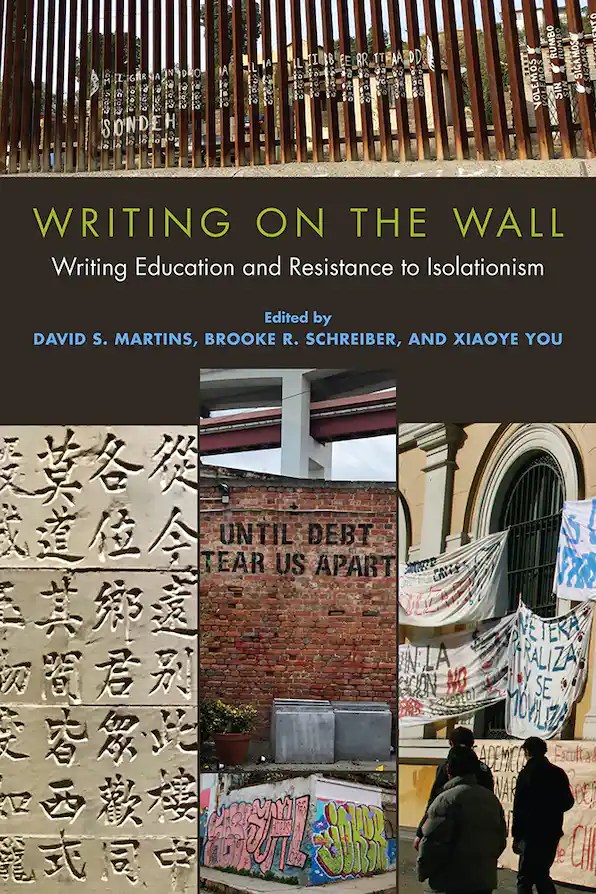
My contribution appears as Chapter 8 in this edited collection, which considers how writing educators can challenge isolationism and xenophobia. You can read the introduction to my chapter below. The essay is drawn from Chapter 4 of my dissertation.
Miron, Layli Maria. “Graduate Writing Workshops: To Generalize or to Specialize?” WLN: A Journal of Writing Center Scholarship, vol. 46, no. 5–6, 2022, pp. 27–30.
In this tutor’s column about my time as a coordinator and consultant for Penn State’s Graduate Writing Center, I discuss how to provide support to graduate students, who often need to learn the highly specialized genres and conventions of their fields. You can read the article online or by downloading it below.
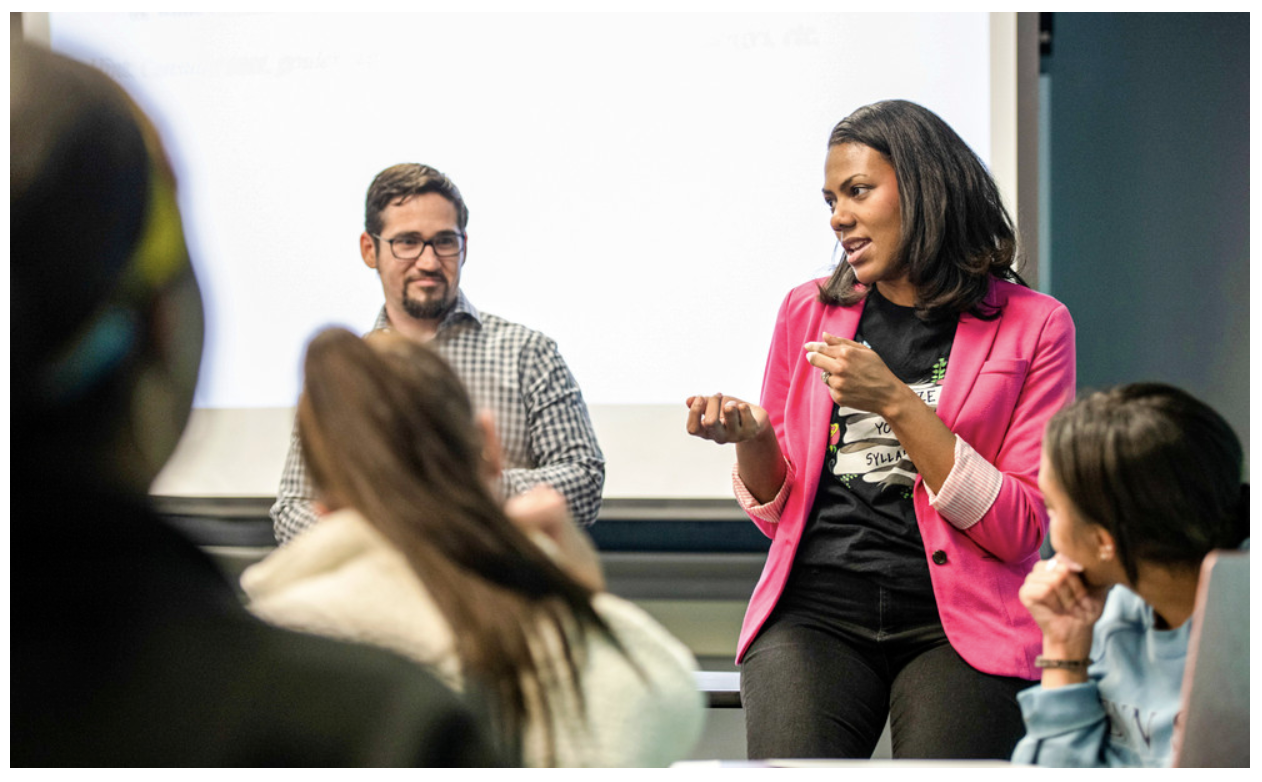
Ashley Patterson (right, standing) conducts an education class at Pennsylvania State University. Photo courtesy of Penn State News.
Recently in a class at Pennsylvania State University, the instructor, Ashley Patterson, asked the class of 25 students: How many had ever been into the house of someone of a different race? One raised a hand.
Then: How many ever had a meal with someone of a different race? Two.
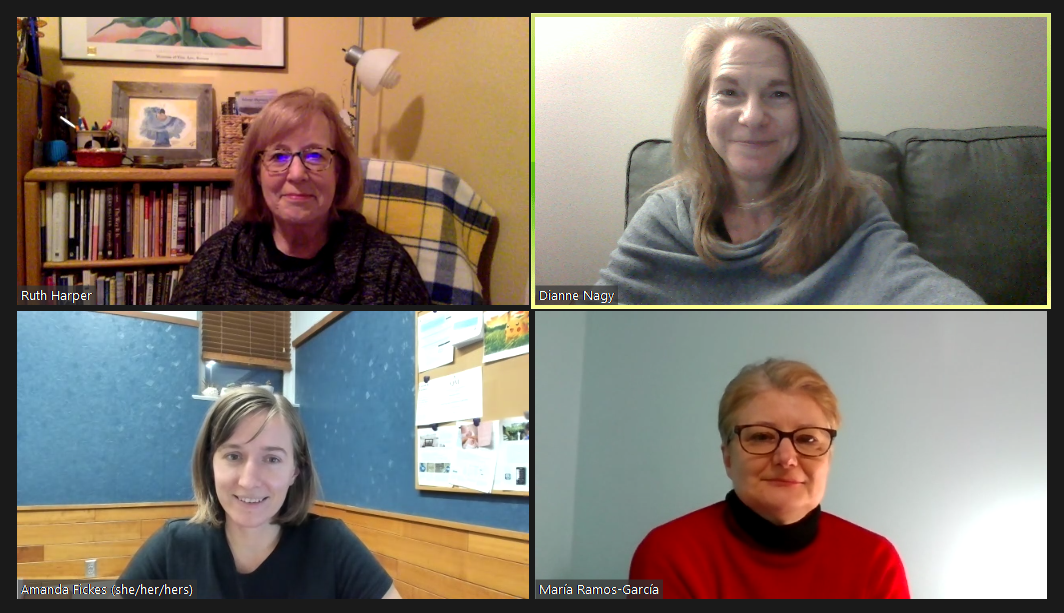
Study group participants in Brookings, South Dakota. Screenshot courtesy of Dianne Nagy.
Though it’s 200 miles from Minneapolis, the college town of Brookings, South Dakota, keenly felt the repercussions of George Floyd’s killing in May 2020, and the national turmoil surrounding race.
Dianne Nagy, a Baha’i with considerable experience in local human rights activities, immediately got to work bringing Baha’i-inspired perspectives into the conversation.
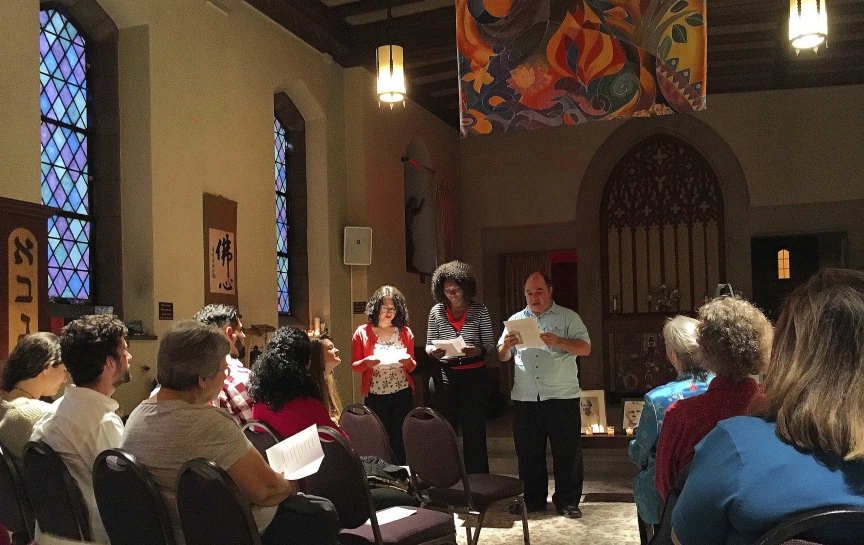
At the 2017 celebration, Vida Rastegar, Mia Taylor Chandler, and Eugenio Marcano read passages from a talk by Abdu’l-Baha. Credit: Ruijia (Rose) Wang
When Charlotte D’Evelyn stepped onto the bucolic campus of Mount Holyoke College in 1917, she was surely elated to join the faculty of the oldest institution for women’s higher education in the US. Looking around, maybe the hills of South Hadley, Massachusetts, reminded her of the steeper slopes of her hometown, San Francisco; perhaps the turrets of the Williston Memorial Library recalled the spires of buildings like the Bodleian at Oxford, where she had recently studied.