
When setting out to write this article, I felt overwhelmed: William Sears accomplished so much in his 80 years. How to distill decades of service, achievements, and adventures into a short article? Here I’ve only captured the outlines of a man who seized every opportunity to serve—who once said, “I need only to remember one thing: nothing must come between me and my responsibilities to God and to my fellow man. Glory is not his who loves his country, his family, or himself alone. Glory is his who loves his kind. This, I believe, has helped me to look upon each dawn as a new adventure.”1
Continue readingUniting the World, Two Hearts at a Time

“Each sees in the other the Beauty of God reflected in the soul, and finding this point of similarity, they are attracted to one another in love. This love will make all men the waves of one sea, this love will make them all the stars of one heaven and the fruits of one tree. This love will bring the realization of true accord, the foundation of real unity.”
Abdu’l-Baha1
In 1904, Florence Breed and Ali-Kuli Khan married in Boston. Breed was American and Khan was Iranian; their union symbolized East and West uniting in the Baha’i Faith. When Abdu’l-Baha visited the US in 1912, the Khans hosted a luncheon for Him in Washington, D.C. There, Abdu’l-Baha defied social convention by giving Louis Gregory, an African-American Baha’i, the seat of honor.
Continue readingWhen the West Comes to the East: Laura Barney’s Lessons from Persia
May 16, 1909: a gathering of New Yorkers listens to Laura Clifford Barney; one audience member jots down her words. This scribe records two talks Barney gives: the first, on her journey to Persia, and the second, on her observations of Abdu’l-Baha. To learn more about the context, please refer to my previous post, which describes the second talk.
Continue reading“What I Saw of Abdu’l-Baha”: Vignettes by Laura Barney
May 16, 1909, New York City: a group has gathered to hear Laura Clifford Barney speak. Her name is familiar to the audience from Some Answered Questions, which was published last year. This book brought Abdu’l-Baha’s commentary on subjects ranging from the New Testament to criminal justice to the newborn Baha’i community in the United States.
Continue readingMartha Root’s Interwar Lectures: Cosmic Education and the Rhetoric of Unity
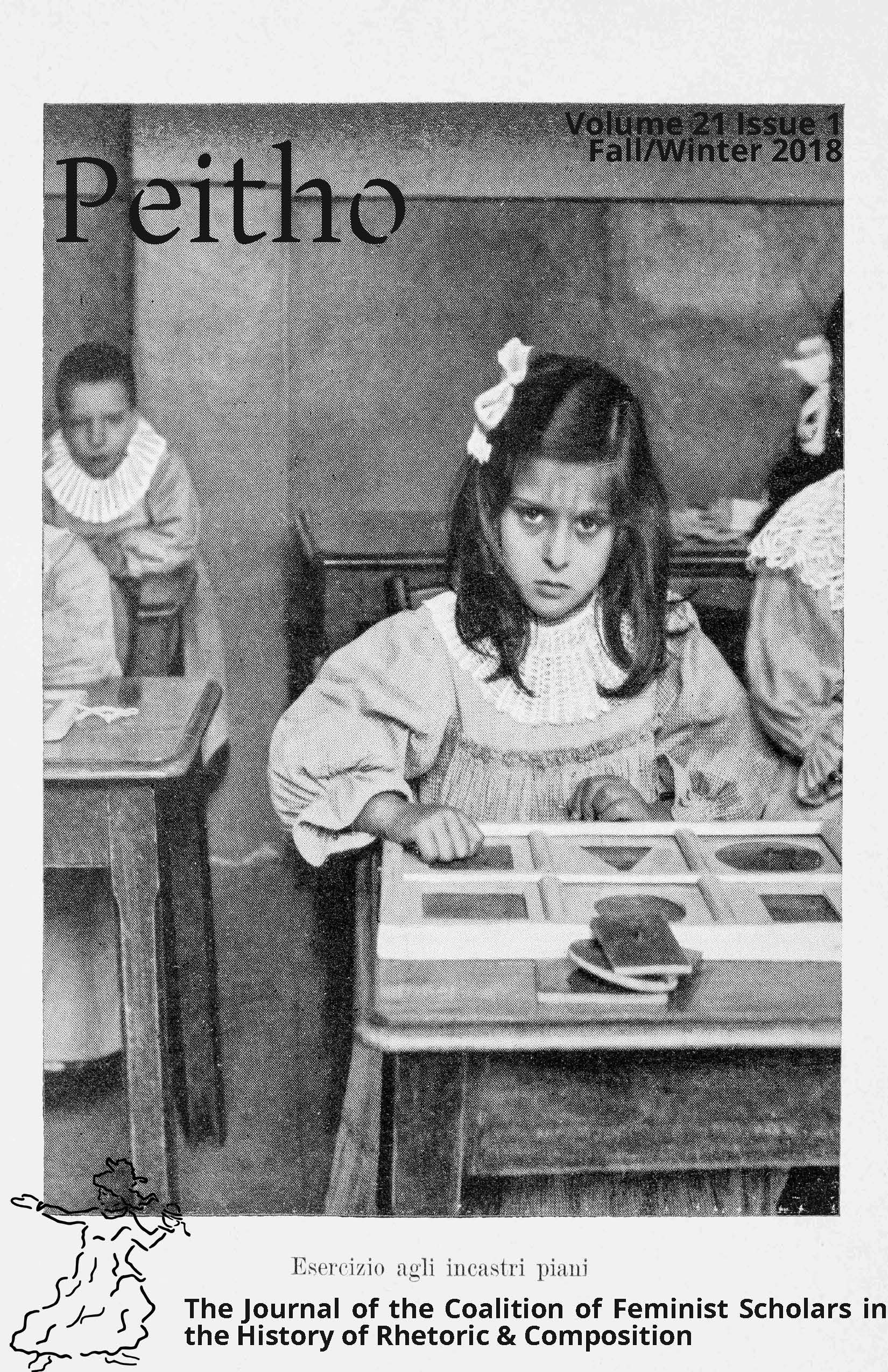
Peitho: Journal of the Coalition of Feminist Scholars in the History of Rhetoric & Composition, vol. 21, no. 1, 2018, pp. 132-157.
Abstract: This article introduces Martha L. Root’s cosmopolitan rhetoric, which exemplifies how women speaking from (religious) margins interpret traditions to create calls for social change. In lectures delivered between the world wars, Root argued for “cosmic education,” a global peacemaking program promoting openness and civic service in learners, which she distilled from precepts of the Bahá’í Faith. Root implored every listener, from her US co-nationals to audiences worldwide, to evangelize peace. Her rhetoric of unity harnessed principle with practice to animate the cycle of cosmic education, a cycle she modeled by inventing transnational sisterhood with the 19th-century Persian poet Táhirih Qurratu’l-Ayn.
Continue readingLaura Barney’s Discipleship to ‘Abdu’l-Bahá: Tracing a Theological Flow from the Middle East to the United States, 1900–1916
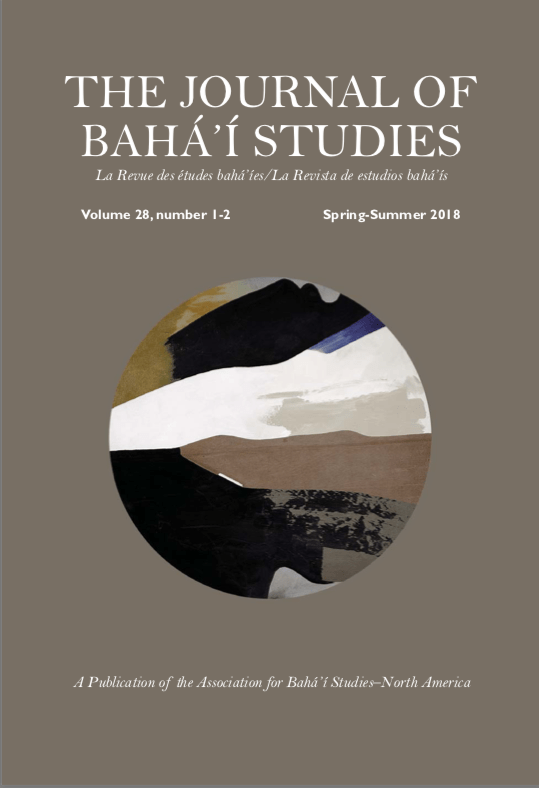
Journal of Bahá’í Studies, vol. 28, no. 1–2, 2018, pp. 7–31.
Abstract: The discipleship of the young American Laura Clifford Barney to ‘Abdu’l-Bahá in the early 1900s resulted in a flow of spiritual teachings from East to West. After several years of intense engagement with her teacher in Palestine, Barney sought to disseminate in her Western homelands what she had learned. Her private and public writings demonstrate how she employed ‘Abdu’l-Bahá’s teachings in her efforts to influence social discourse by promoting the Bahá’í Faith in Europe and the United States. Examining these teachings and Barney’s applications thereof in her rhetoric allows us to witness how a transnational channel of theological knowledge developed.
Continue readingThe Other Witnesses: Khadijih Bagum and Haji Mubarak at the Declaration of the Bab
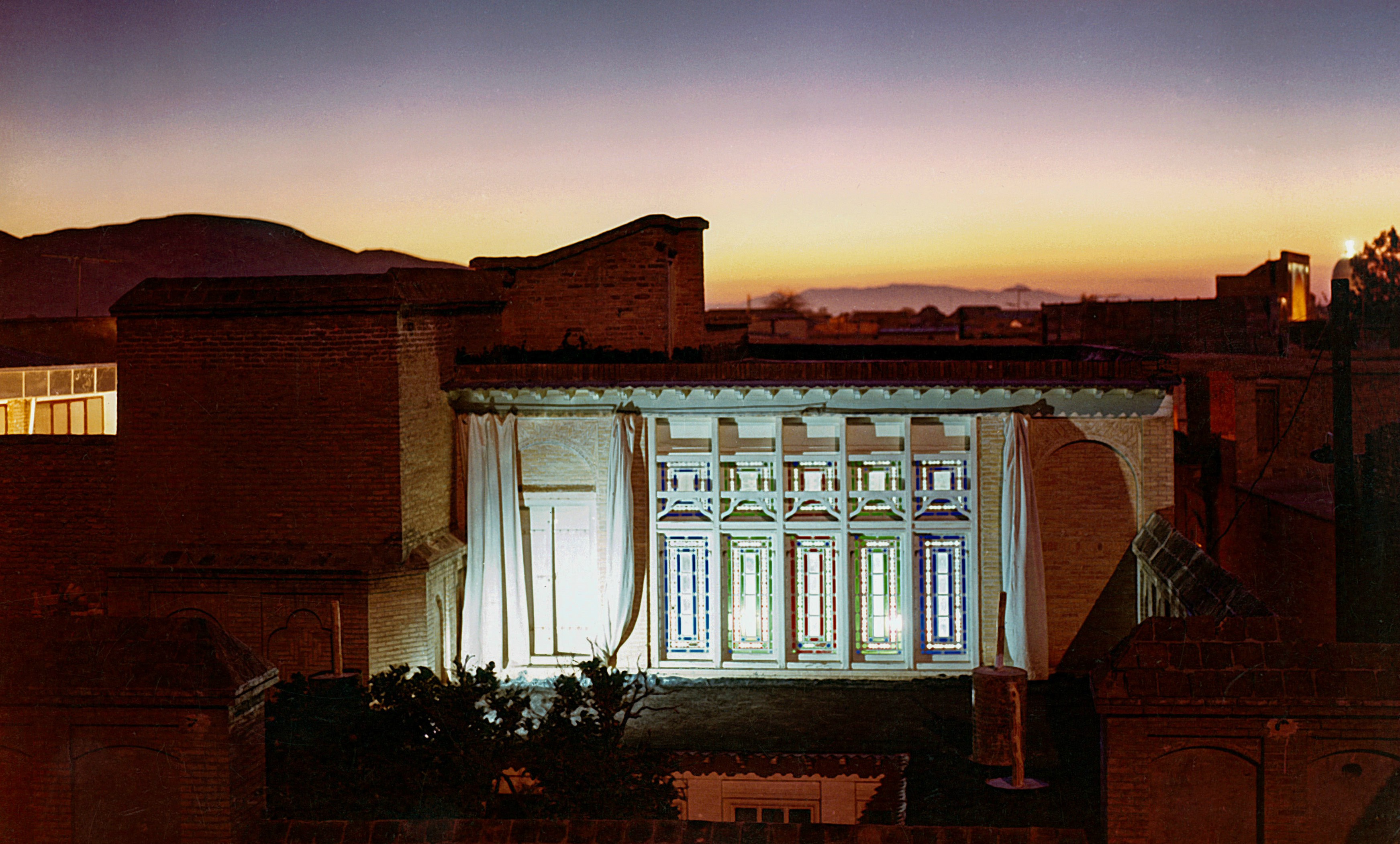
When picturing the scene of the Bab’s Declaration, I think of His house in Shiraz, quiet and dark during a spring night in 1844. I think of an upper room where He converses with Mulla Husayn, revealing His spiritual mission as the Promised One and the Prophet-Herald of a new Manifestation of God, Baha’u’llah. My mind does not travel beyond that upper chamber to explore the house’s other rooms.
Continue reading‘The Revelation of Baha’u’llah’ Books by Adib Taherzadeh
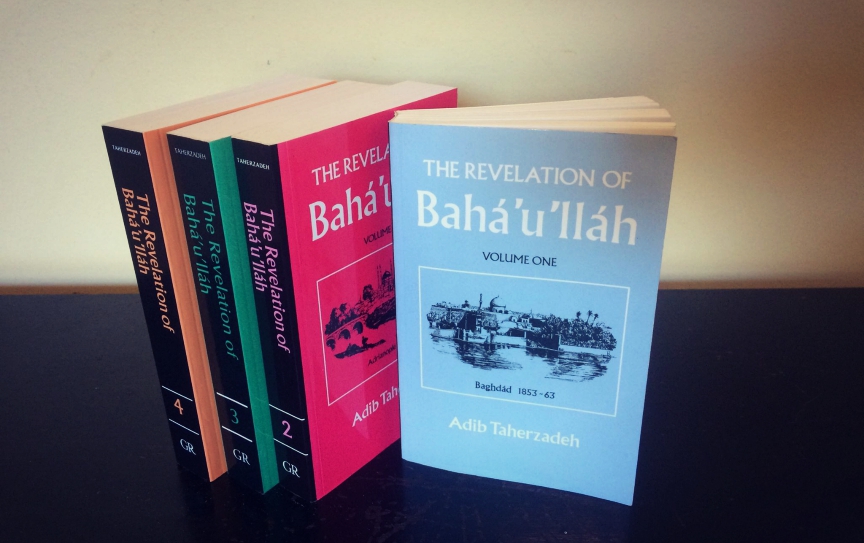
In 1974, the first volume of Adib Taherzadeh’s monumental series, The Revelation of Baha’u’llah, was published. With this publication, and the three volumes that followed, Taherzadeh brought to English-speakers rich insights into Baha’u’llah’s Writings, contextualizing them in the narrative of His unfolding ministry from 1853 to 1892.
Continue readingWomen Inspiring Women in Baha’i History: Tahirih’s Lineage
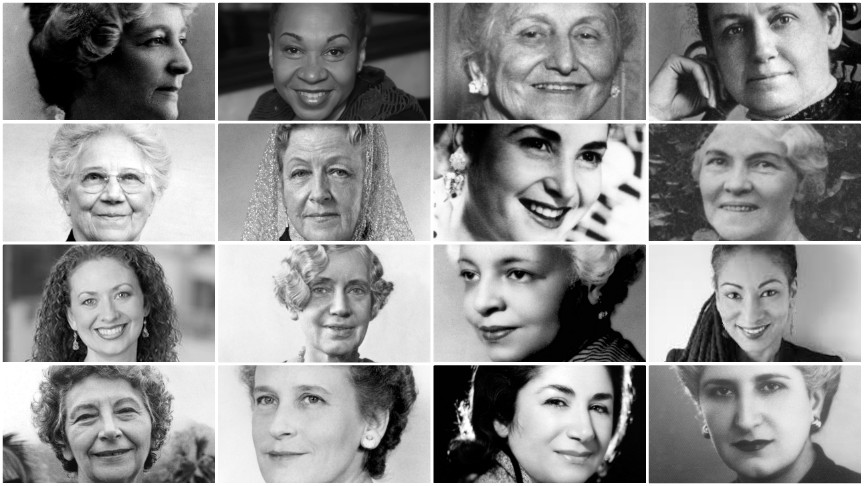
On March 8th, we celebrate “the social, economic, cultural and political achievements of women” and acknowledge the urgency of “accelerating gender parity.”1 As much as International Women’s Day is a celebration, it is also a monument to centuries of discrimination.
Continue readingFeasting in the Dark: The Month of Dominion (Mulk)
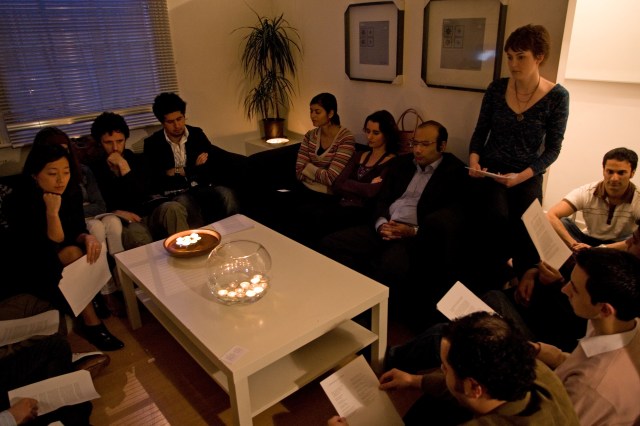
Photo copyright © Bahá’í International Community
At the latitudes where I’ve lived the longest (between 40 and 43 degrees north of the Equator, to be exact), November through March are dark and frozen. The Baha’i (Badi) calendar has no celebratory Holy Days during most of this wintry season; the Day of the Covenant falls around US Thanksgiving, and Ayyam-i-Ha comes about a month before the Spring Equinox. In between, for most of the Gregorian months December, January, and February, there are no celebrations on our calendar, in contrast to other religions’ calendars, many of which feature holidays around winter solstice, casting light on the darkest time of year.
Continue reading Layli Maria Miron
