You should appreciate this, that of all the historians of Europe none attained the holy Threshold but you. This bounty was specified unto you.1
These words Abdu’l-Baha wrote to Edward Granville Browne about his interviews with Baha’u’llah in 1890. From one of these interviews emanated the description of meeting Baha’u’llah famous in the Baha’i community, which you can listen to here.
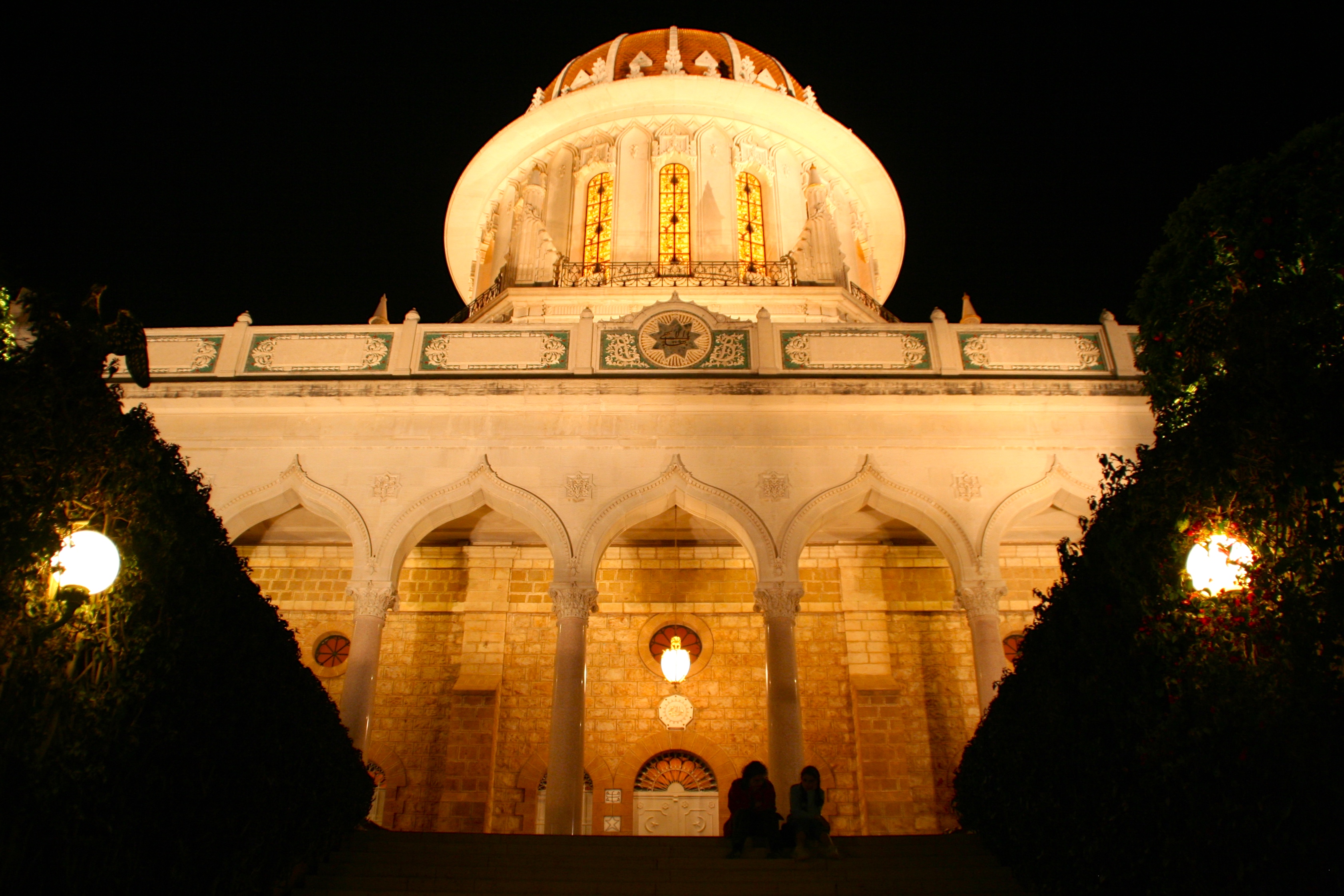
The Shrine of the Bab in Haifa Photo by the author
The Baha’i Era began 174 years ago, in 1844 CE, when the Bab announced His mission to a young Shaykhi named Mulla Husayn. How exhilarating it must have been to live during a new revelation—to have been a devotee of Buddha, an apostle of Jesus, a disciple of Muhammad, a first believer in any of the Manifestations of God, attuned to the flood of spiritual power that each divine dispensation initiated!
Shed the light of a boundless love on every human being whom you meet, whether of your country, your race, your political party, or of any other nation, color or shade of political opinion.
Abdu’l-Baha1
The security of people of Middle Eastern and South Asian descent living in the United States seems to be on thin ice: bearing brown skin and a “foreign” name are dangerous liabilities. Evidence comes in recent hate crimes like February’s Kansas killing. Engineers Srinivas Kuchibhotla and Alok Madasani were attacked by a man who told them to “get out of my country.” Kuchibhotla died. The attacker later disclosed that he thought his victims, who were natives of India, were Iranian. In March, Hasel Afshar returned to his Oregon town from vacation to discover his home ransacked and hateful messages coating the walls of his house. The messages indicated that the attackers believed Afshar to be Muslim. He is actually a Baha’i refugee from Iran. Persecuted for his faith in his homeland—attacked for his foreignness in his refuge.
Members of the Bahá’í Faith have been on the move since the religion’s earliest days. The reasons have differed: banishment, pilgrimage, persecution, pioneering.
Midwinter in the northern states, especially after the holiday lights are taken down, makes me want to hibernate. Slate skies hang low over naked trees and ragged ground. The happiness I take from nature’s changes in the other seasons now withers into weariness of the dark and cold.
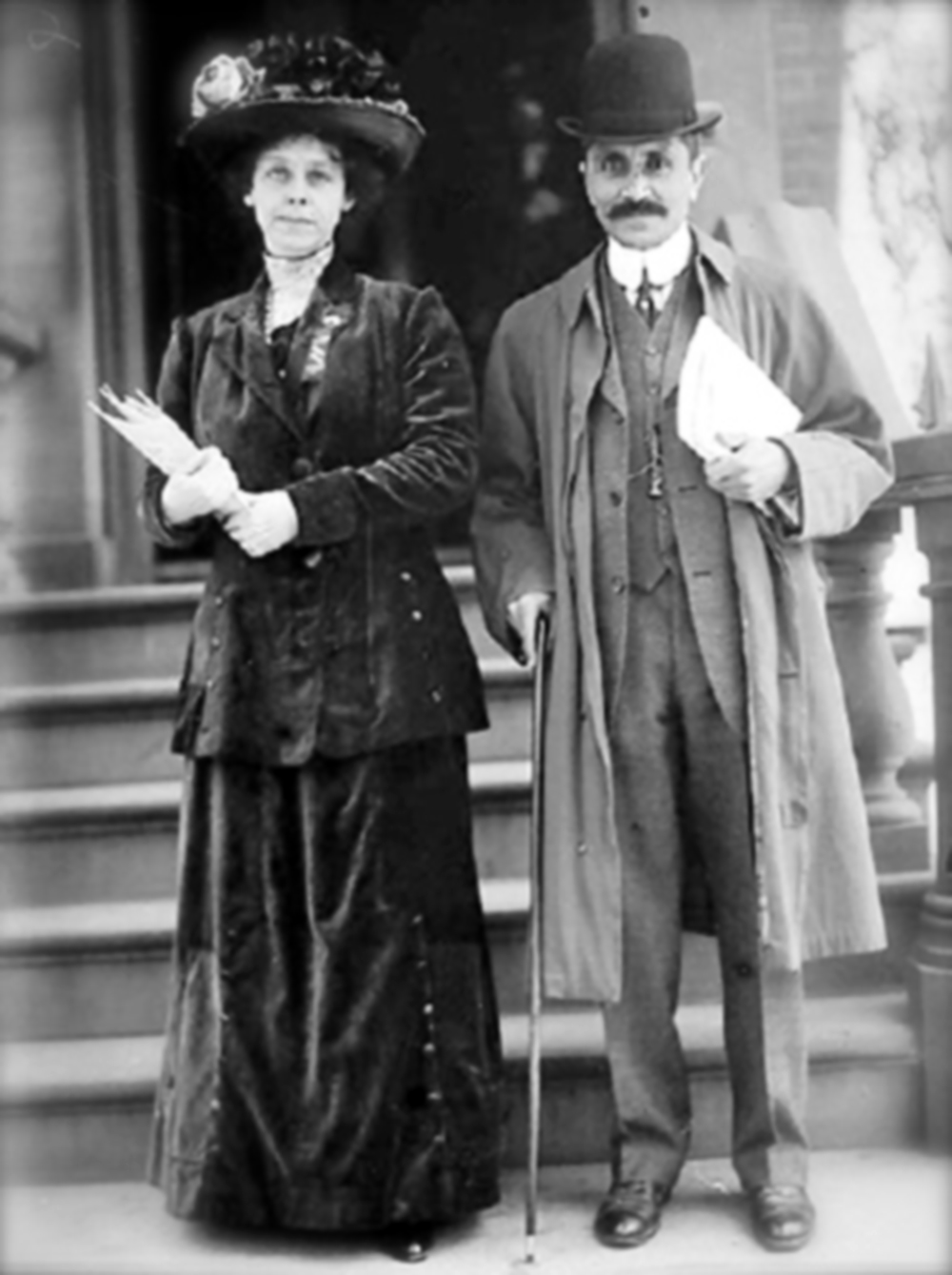
In 1904, Florence Breed and Ali-Kuli Khan married in Boston. Breed was American and Khan was Iranian; their union symbolized East and West uniting in the Bahá’í Faith. When ‘Abdu’l-Bahá, son of the Founder of the Bahá’í Faith, visited the US in 1912, the Khans hosted a luncheon for him in Washington, D. C. There, ‘Abdu’l-Bahá defied social convention by giving Louis Gregory, an African-American Bahá’í, the seat of honor.
“You can kill me as soon as you like, but you cannot stop the emancipation of women.” These are reputed to be among the last words of Táhirih before her executioner strangled her in 1852.
Rey’s ambiguous head bobbling mirrors my ambivalence toward questions I have about my life in academia.
I should explain that Rey is a bobblehead of a character from Star Wars Episode VII who stands watch over my desk. I acquired her recently at a conference on digital communication technology and college writing. A keynote speaker, Allen Brizee, used Star Wars as the theme of his talk on community engagement. He has led university programs to help community members cross the “digital divide” between those with access to digital tech and those without. At the end of his speech, he had us check under our seats for a coupon for a bobblehead Rey or Finn. To my surprise, I had the coupon for Rey!
I have been, most of the days of My life, even as a slave, sitting under a sword hanging on a thread, knowing not whether it would fall soon or late upon him.
Recently, my husband and I sat spellbound by The Prophet, a gorgeous film adaptation of the 1923 book of poems by Kahlil Gibran. In the film, the prophetic writer and artist, Almustafa (aka Mustafa), is a prisoner of an oppressive government, confined on a Mediterranean island called Orphalese. While the government is not named, various clues point to the Ottoman Empire. The only crime Almustafa has committed is using his faculty for words to advocate for the common folk—which endangers the authorities’ power.
Recently, the interfaith center at my university invited religious groups to use the lobby’s display case to feature their ceremonial items for one month each. For the Bahá’í Campus Association, the project posed a perplexing challenge, because Bahá’ís don’t have ceremonial items. We avoid ritual; each Bahá’í individual, each family, each local community, can develop their own traditions to beautify and symbolize the Holy Days. But those traditions should remain flexible and never ossify.


 Layli Maria Miron