
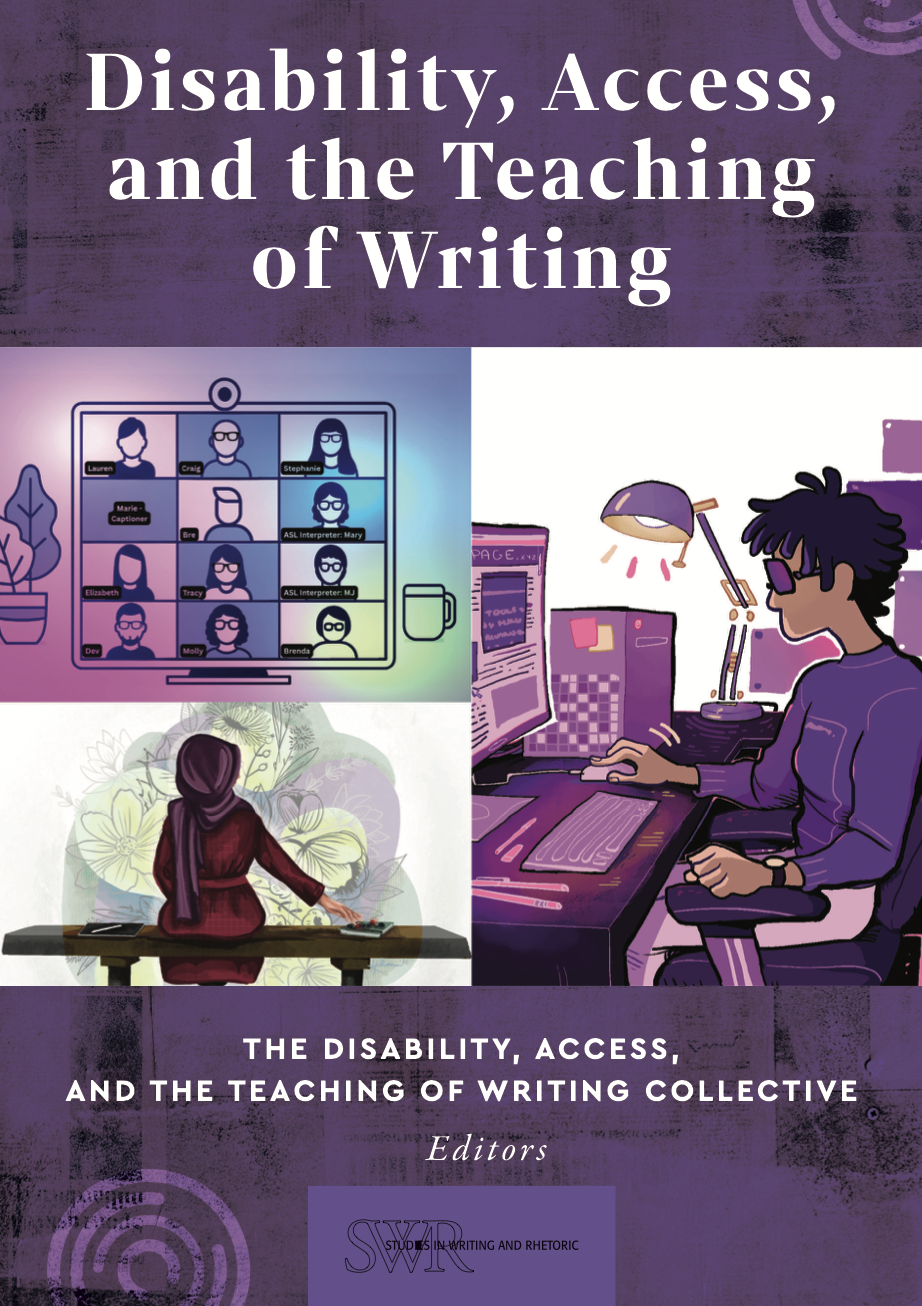
Miron, Layli, and Amy Cicchino. “Prioritizing Accessibility in Writing Program Administration.” Disability, Access, and the Teaching of Writing, edited by Stephanie K. Wheeler et al. Conference on College Composition and Communication, 2026, pp. 217–225.
My contribution with my former colleague Amy Cicchino appears as Chapter 20 in this edited collection. The editors include this note on the chapter explaining its impetus:
“Miron and Cicchino argue that WPAs [writing program administrators] have a deep responsibility to prioritize accessibility and that this prioritization is possible, even with the many competing responsibilities that come with administrative work. Their conclusion offers ways to undertake this work, starting by articulating why accessibility is important to your program. The authors also share the impressive Accessibility and Inclusion Guide they created for their program, which can be adapted for other contexts. Drawing from Miron and Cicchino’s suggestions and model, make an action plan for prioritizing accessibility in your program.” (page 225)
Full Text: You can read the chapter or peruse the full edited collection.