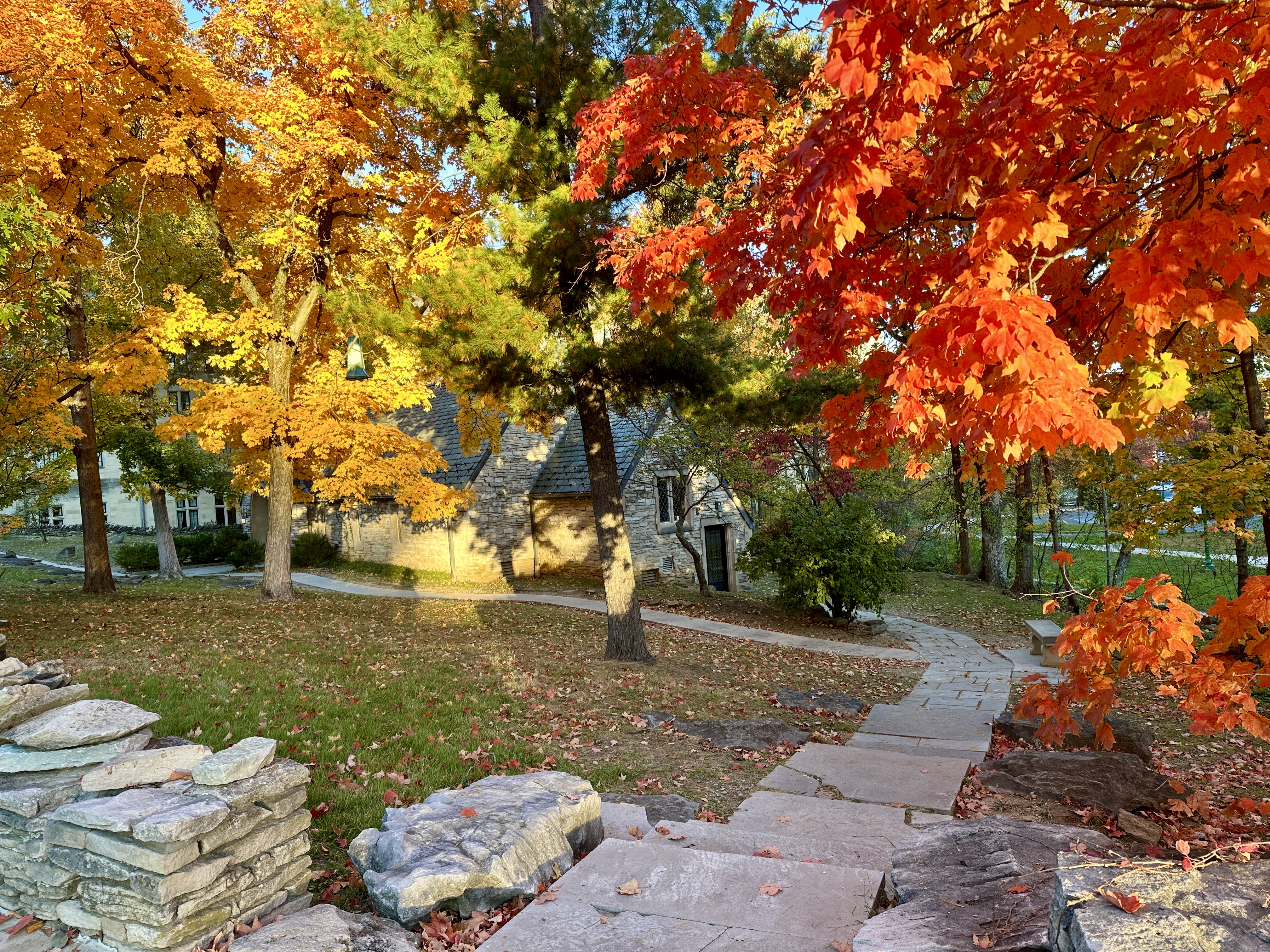
Driving to and from Bloomington, where I go to my office at Indiana University three days a week, the interstate unfurls and my mind can travel along with my body.
I see the land grow hilly and wooded as I go south. From my start date in September to December, I watch autumn advance. Days shorten: I set out before dawn and return around sundown. Leaves inflame, then drop. I like the morning drives best when mist pools in the dells of cornfields.
Some people think of history as a collection of names and dates with little relevance to their own lives. In contrast, the Corinne True Center for Bahá’í History promotes the study of religious history and scripture as a lively method for understanding spiritual teachings that can transform society.
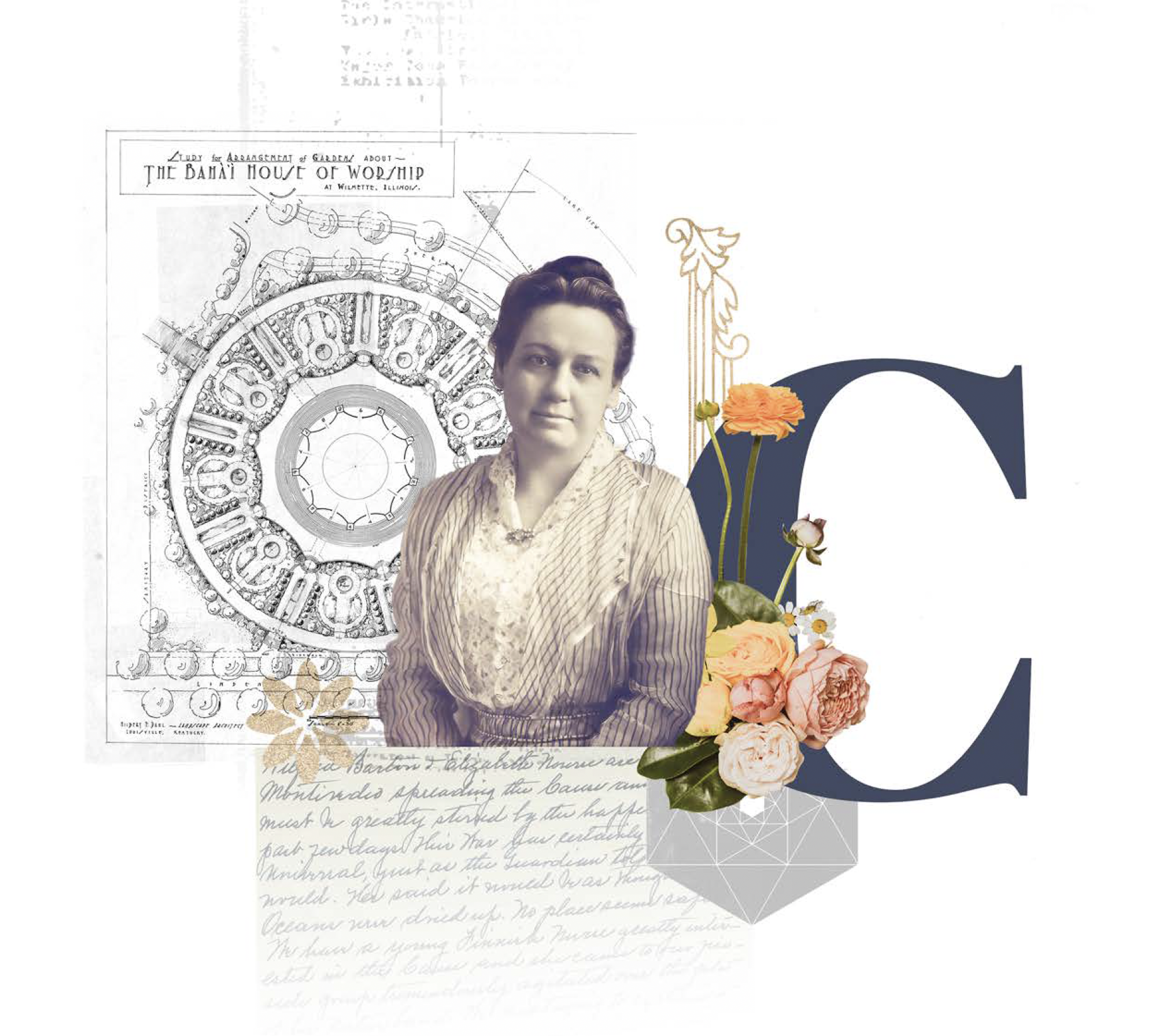
Founded in January 2024 by the National Spiritual Assembly of the Bahá’ís of the United States, the Center takes its name from Corinne Knight True (1861–1961).
Illustration courtesy of The American Bahá’í magazine (volume 55, number 5, page 36).Continue reading →
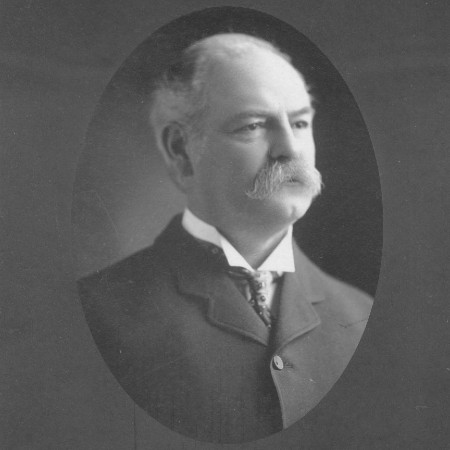
Thornton Chase (22 February 1847–30 September 1912). Photo courtesy of the US Bahá’í Archives.
A strong-willed leader and organizer, and a seeker forever pursuing the mysteries of divine love; an insurance salesman and an artist of page and stage who composed poetry and prose, sang and acted; a man who wrestled with a wariness of women and a unifier of contending personalities: this was Thornton Chase.
Journal of Communication and Religion, vol. 42, no. 4, 2019, pp. 5–27.
Abstract: During her brief life in the early nineteenth century, the Persian poet and theologian Táhirih advocated for a spiritual revolution. Authorities executed her for heresy in 1852. After death, Táhirih attracted admirers around the world; Western writers—especially women—have interpreted her history to argue for gender equality, religious renewal, and global interdependence. This Middle Eastern preacher has established a posthumous pulpit in the United States, as members of the Bahá’í Faith there have authored a dozen books about her. After introducing Táhirih’s rhetorical rebellions, this essay demonstrates her transnational influence by analyzing her afterlives in U.S. Bahá’í discourse.
Full Text: You can download the article by clicking the link below.
Many Baha’is have a copy of The Dawn-Breakers: Nabil’s Narrative of the Early Days of the Baha’i Revelation on their bookshelf. What is this book, and what is its purpose? Why is it important to Baha’is? Who was Nabil? When did he write his narrative, and when was it translated into English? This article provides basic answers to these questions, drawing primarily from Shoghi Effendi’s introduction to the English translation.
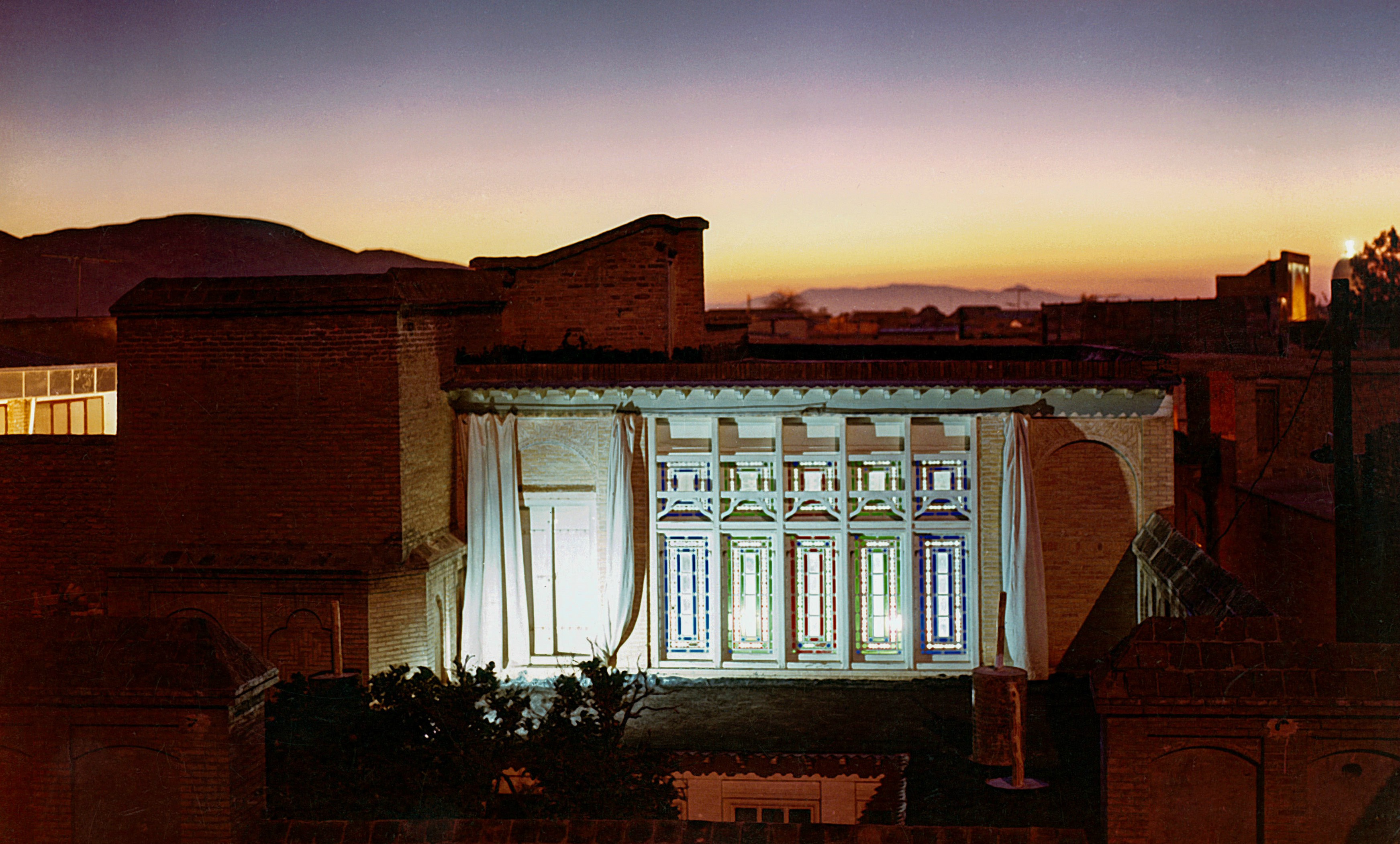
The House of the Bab in Shiraz, Iran (Image source)
When picturing the scene of the Bab’s Declaration, I think of His house in Shiraz, quiet and dark during a spring night in 1844. I think of an upper room where He converses with Mulla Husayn, revealing His spiritual mission as the Promised One and the Prophet-Herald of a new Manifestation of God, Baha’u’llah. My mind does not travel beyond that upper chamber to explore the house’s other rooms.
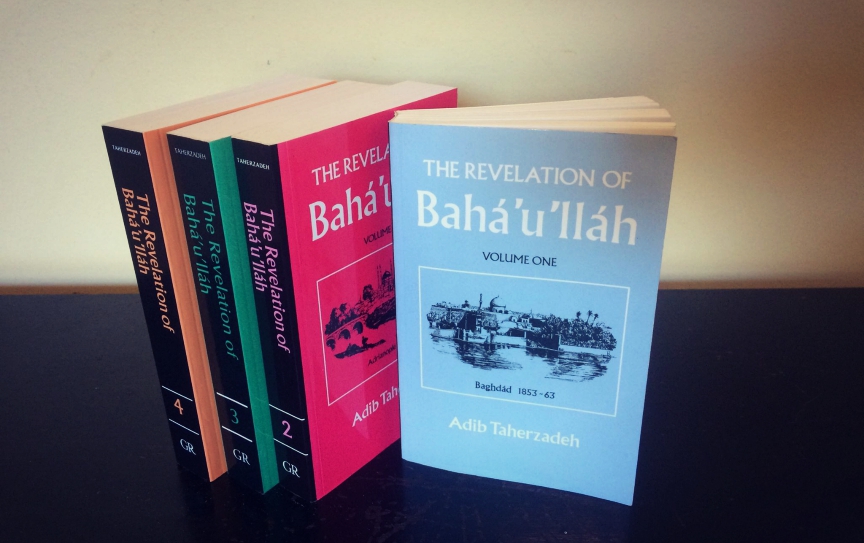
In 1974, the first volume of Adib Taherzadeh’s monumental series, The Revelation of Baha’u’llah, was published. With this publication, and the three volumes that followed, Taherzadeh brought to English-speakers rich insights into Baha’u’llah’s Writings, contextualizing them in the narrative of His unfolding ministry from 1853 to 1892.
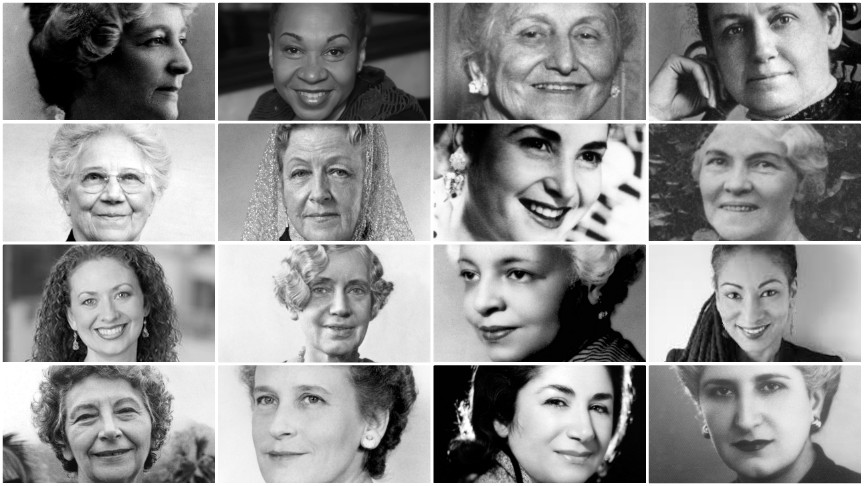
On March 8th, we celebrate “the social, economic, cultural and political achievements of women” and acknowledge the urgency of “accelerating gender parity.”1 As much as International Women’s Day is a celebration, it is also a monument to centuries of discrimination.
Interior courtyard of the House of Abbud. (Photo by the author)
In the years between the World Wars, Tuba Khanum shared with Sara Louisa Blomfield recollections of her grandfather Baha’u’llah, grandmother Asiyih Khanum (Navvab), father Abdu’l-Baha, and older sister Diya’iyyih (mother of Shoghi Effendi, who became Guardian of the Baha’i Faith).



 Layli Maria Miron
