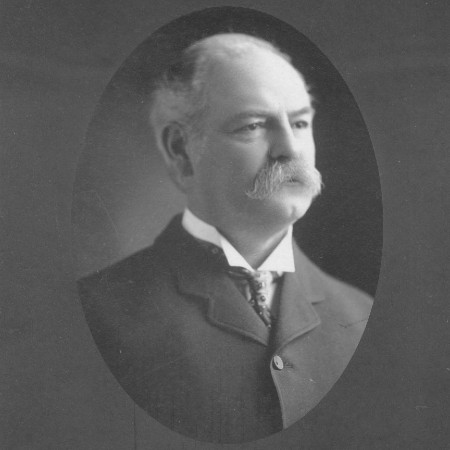
Thornton Chase (22 February 1847–30 September 1912). Photo courtesy of the US Bahá’í Archives.
A strong-willed leader and organizer, and a seeker forever pursuing the mysteries of divine love; an insurance salesman and an artist of page and stage who composed poetry and prose, sang and acted; a man who wrestled with a wariness of women and a unifier of contending personalities: this was Thornton Chase.
While winter and pandemic hibernation may seem far in the past, several initiatives originally undertaken during the previous winter months have blossomed. Though diverse in focus, these initiatives shared a common thread of building networks of people in the Midwestern states dedicated to sharing Baha’u’llah’s teachings in Minnesota, Wisconsin, Illinois and Ohio.
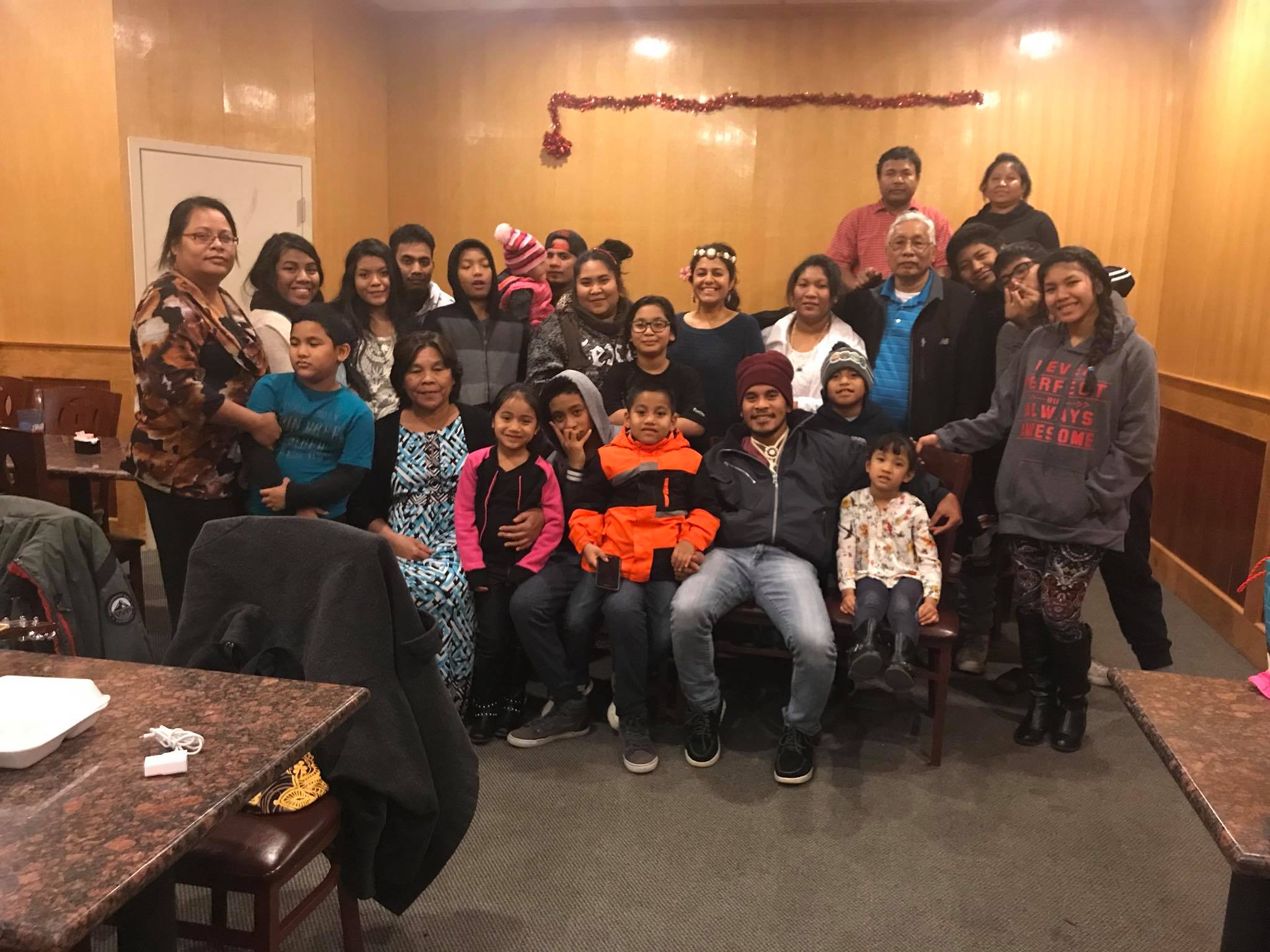
Bahá’ís in Enid, Oklahoma, pose for a portrait taken before the pandemic.
In the early 2000s Enid, Oklahoma, had no Baha’i activities. Today, many of its more than 50 Baha’is are involved alongside friends in children’s classes, junior youth groups, study circles and devotional gatherings.
What’s changed? The story starts with two Baha’i couples who each discovered the Faith on their own, along with the extended family of one of the couples.
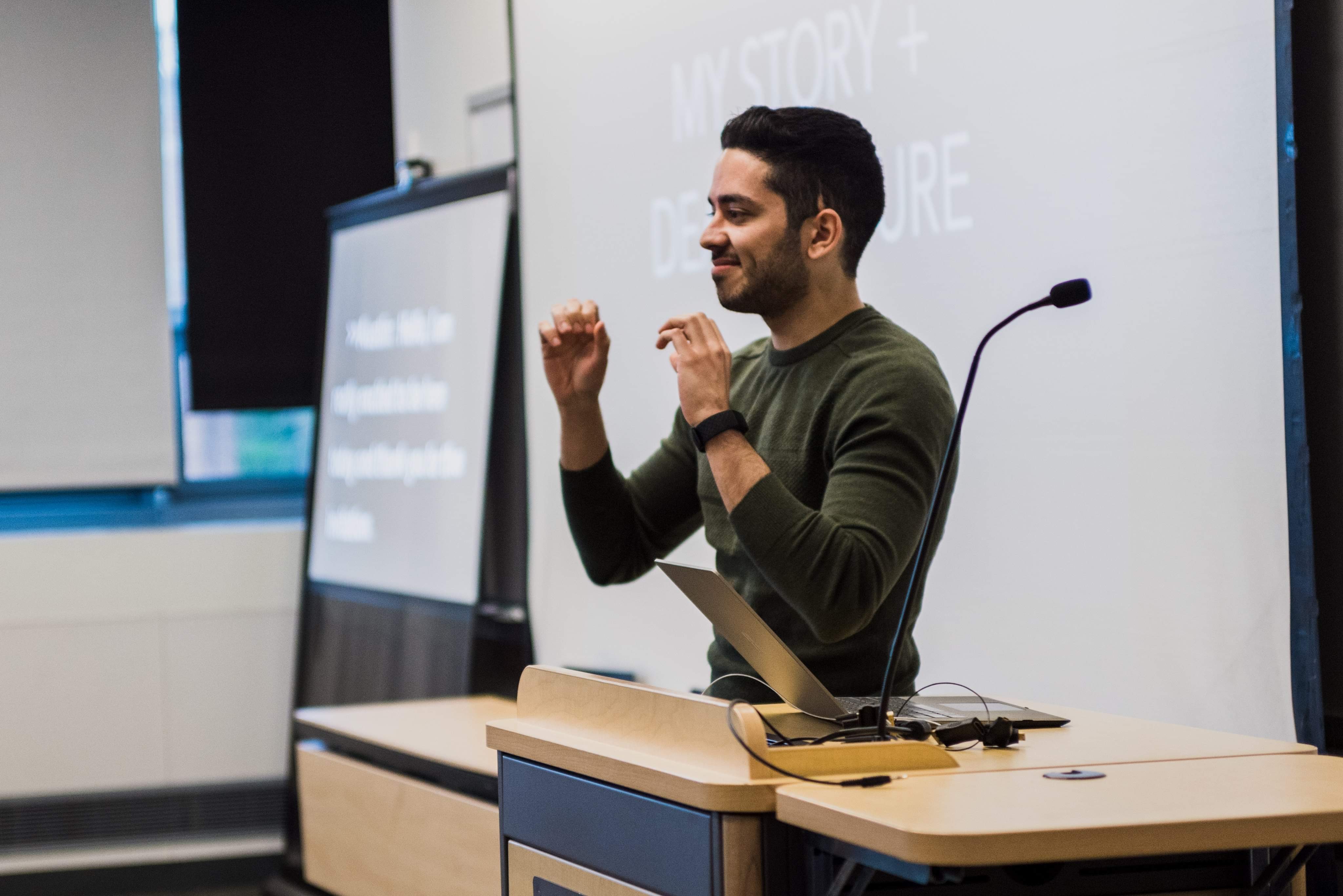
Austin Vaday signs “nothing” in American Sign Language.
Deaf and Hard of Hearing people have a great deal to contribute to Baha’i activities, and with a few accommodations can more readily take part in them to everyone’s benefit.
This is a message championed by the Deaf and Hard of Hearing Task Force for the Baha’i community. Appointed by the National Spiritual Assembly of the Baha’is of the United States, the national governing council, the task force has existed off and on since the 1980s. Today, it has four members—Naledi Raspberry, Tavoria Kellam, Jason Schwartz and Erin Salmon—who, with assistance from people like Austin Vaday, are working to educate Baha’i communities about how to improve accessibility.
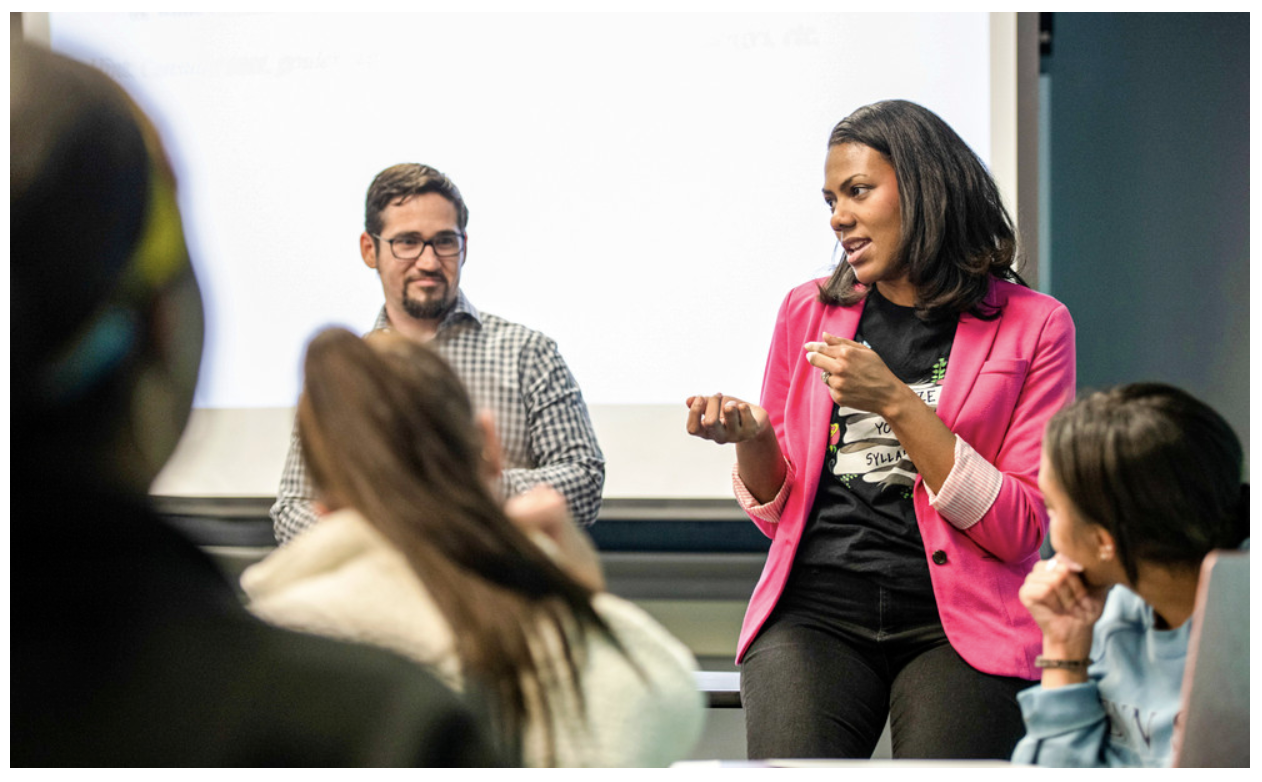
Ashley Patterson (right, standing) conducts an education class at Pennsylvania State University. Photo courtesy of Penn State News.
Recently in a class at Pennsylvania State University, the instructor, Ashley Patterson, asked the class of 25 students: How many had ever been into the house of someone of a different race? One raised a hand.
Then: How many ever had a meal with someone of a different race? Two.
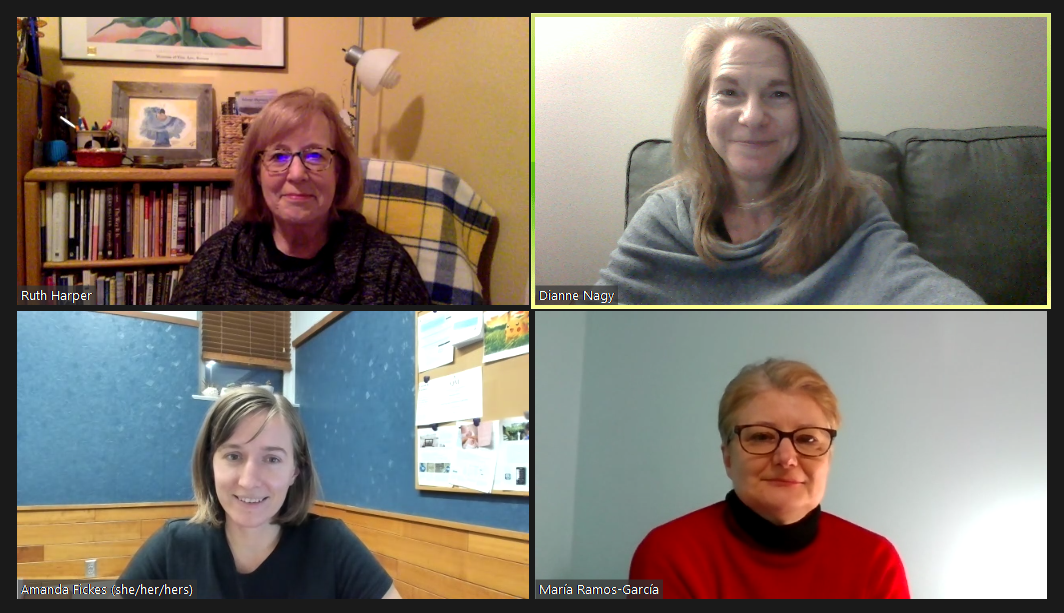
Study group participants in Brookings, South Dakota. Screenshot courtesy of Dianne Nagy.
Though it’s 200 miles from Minneapolis, the college town of Brookings, South Dakota, keenly felt the repercussions of George Floyd’s killing in May 2020, and the national turmoil surrounding race.
Dianne Nagy, a Baha’i with considerable experience in local human rights activities, immediately got to work bringing Baha’i-inspired perspectives into the conversation.
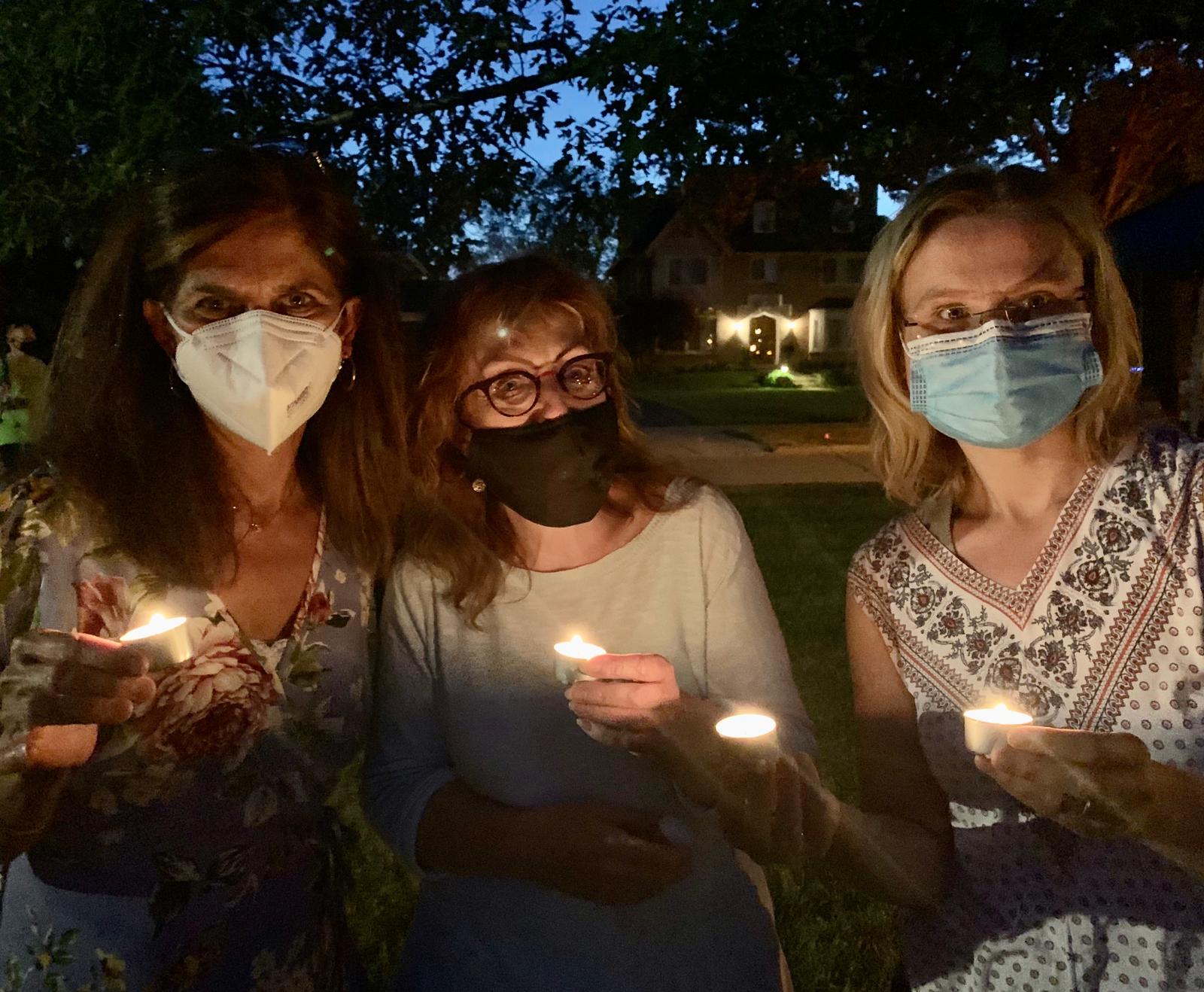
A few of the 100 or so people who attended the “Light up the Night” event in Fort Wayne. Photo courtesy of the Harrison Hill Neighborhood Association.
Harrison Hill is a historic residential neighborhood in Fort Wayne, Indiana. It is home to people of diverse ancestries — and for many that’s a cause for celebration. The decades-long marriage of two of the neighborhood’s residents, Gayle and Akinlana (“Akin”) Bevill-DaDa, exemplifies the possibilities for interracial relationships. Gayle is white and Akin is Black.
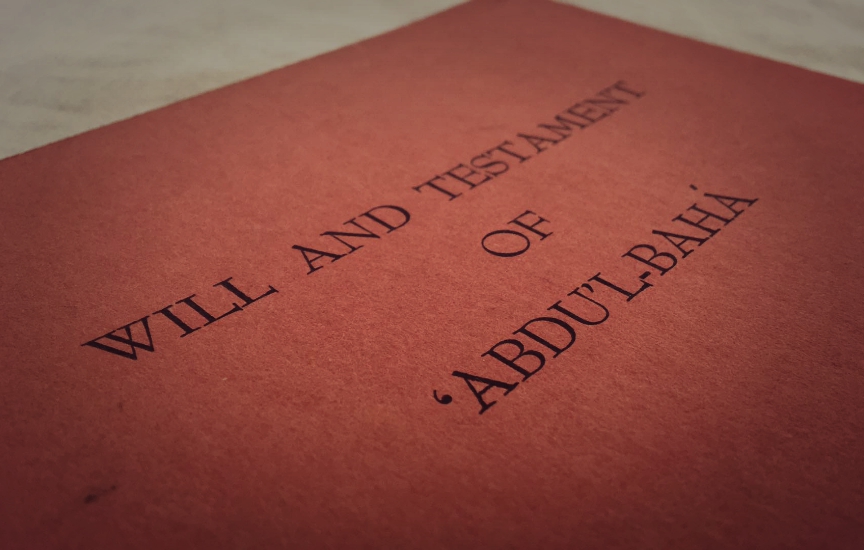
As the Baha’i world prepares to commemorate the centenary of Abdu’l-Baha’s ascension and anticipates the construction of His shrine and final resting place, the time is ripe to review His talks and writings (which you can find online here at the Baha’i Reference Library). One of His most important writings is the Will and Testament, in which He appoints a successor and provides instructions on the administration of the global Baha’i community. To aid in the study of this crucial document, this article discusses its significance, its historical context, and its main themes.
Summer 2020 will long be remembered for protests against racial injustice that filled the streets of many U.S. cities. Young people have been at the forefront of this movement, impatient with the nation’s status quo — a feeling no doubt shared by many young Baha’is.
The Midwest Youth Conference, July 18–19, sought to develop a response to this social reality. Held via online videoconference, it attracted 75 participants from Indiana, Michigan and Ohio.
Atlanta-area youth camp participants take part in one-on-one study. Photo courtesy of Jasmine Miller-Kleinhenz
Many U.S. Baha’i communities have moved nearly all activities that would usually take place indoors to online platforms since the pandemic broke out earlier this year.
Yet not everyone has access to reliable devices, digital literacy, a stable Internet connection, quiet space or other resources that make online engagement possible, as the team coordinating activities in the Indian Creek neighborhood of Stone Mountain, Georgia, discovered.



 Layli Maria Miron