Student-Consultant Interactions: From Single Visits to Partnerships

Logo saying the Peer Review, 10th anniversary, 2015 to 2025.

Smith, Zoe, Caroline LeFever, and Layli Miron. “Student-Consultant Interactions: From Single Visits to Partnerships.” The Peer Review, vol. 10, no. 1, 2025.

Abstract: What can consultants do to move students to return to the writing center? To identify strategies that accomplish this end, two undergraduate researchers and an advisor surveyed students who had repeatedly visited a single consultant. We then analyzed the data, coding consultant strategies and noting repeated occurrences. We also recorded appointments of consultants with high rates of returning clients, collecting transcripts detailing the strategies they use in first-time visits. Our research contributes to our field’s understanding of why some students return to the writing center and what students want from their consultant, intersecting with current conversations that acknowledge student writers as co-creators of writing centers and recognize peer tutors’ emotional labor. The consultation that we document and analyze may find use in consultants’ professional development.

Full Text: You can read the article or the full issue.
Columbia University’s Bahá’í Club Builds a Spiritual Community

Students at an Ivy League school face the same spiritual tests as many youth across our nation, but in an environment where personal ambition and competition are vaunted. Striving to find a higher purpose can feel like a lonely journey—unless students can connect with like-minded peers.

Ajay Mallya, a senior at Columbia University, identified as agnostic when he entered college. His family is Hindu, but Mallya did not grow up deeply immersed in Hinduism. As a teen, he attended Catholic school and found Catholicism to be intriguing. Nevertheless, Mallya felt ambivalent about religion overall. 

“I’m an applied math major who enjoys science and math. I always thought there was a huge clash between science and religion,” Mallya explains. Still, he wondered: how could his life contribute to society?

Continue reading

Houston Community Revitalizes Feast Gatherings

Every Central Figure of the Bahá’í Faith has championed Nineteen Day Feast gatherings as keystones of community life. The Báb and Bahá’u’lláh ordained that local communities should gather on the first of each Bahá’í month. Abdu’l-Bahá wrote: 

“As to the Nineteen Day Feast, it rejoiceth mind and heart. If this feast be held in the proper fashion, the friends will, once in nineteen days, find themselves spiritually restored, and endued with a power that is not of this world.” 

Shoghi Effendi, the Guardian of the Bahá’í Faith, specified that the Feasts should include devotions, consultation on community matters, and socialization to create fellowship. Beyond these outlines, communities have many options in how they design their Feast gatherings.

Sometimes, the consultative portion of Feast, which usually includes reports on recent activities, the status of the local Fund, and open discussion, can become the focus. In Houston, this administrative emphasis had characterized Feasts for some time. To quote a younger participant, it led to gatherings that felt “boring.” As the 2020 pandemic restrictions were lifted and people could once again gather in person, the need to revitalize Feast gatherings became apparent. Community members turned to Houston’s Local Spiritual Assembly for support. 

Continue reading

“Spiritual Triplets” Organize Center for Community Building among Birmingham’s Black Population

Birmingham, Alabama, has long been a center of Black activism. Today, a program to bring more Black people into the community-advancing work of the Baha’i Faith is taking shape in this historic city. The Pupil of the Eye Cultural, Learning and Visitors Center serves as a home base for efforts to empower residents to build thriving neighborhoods. Its name refers to the teaching of Baha’u’llah likening Black people to the pupil of an eye, through which “the light of the spirit shineth forth.”

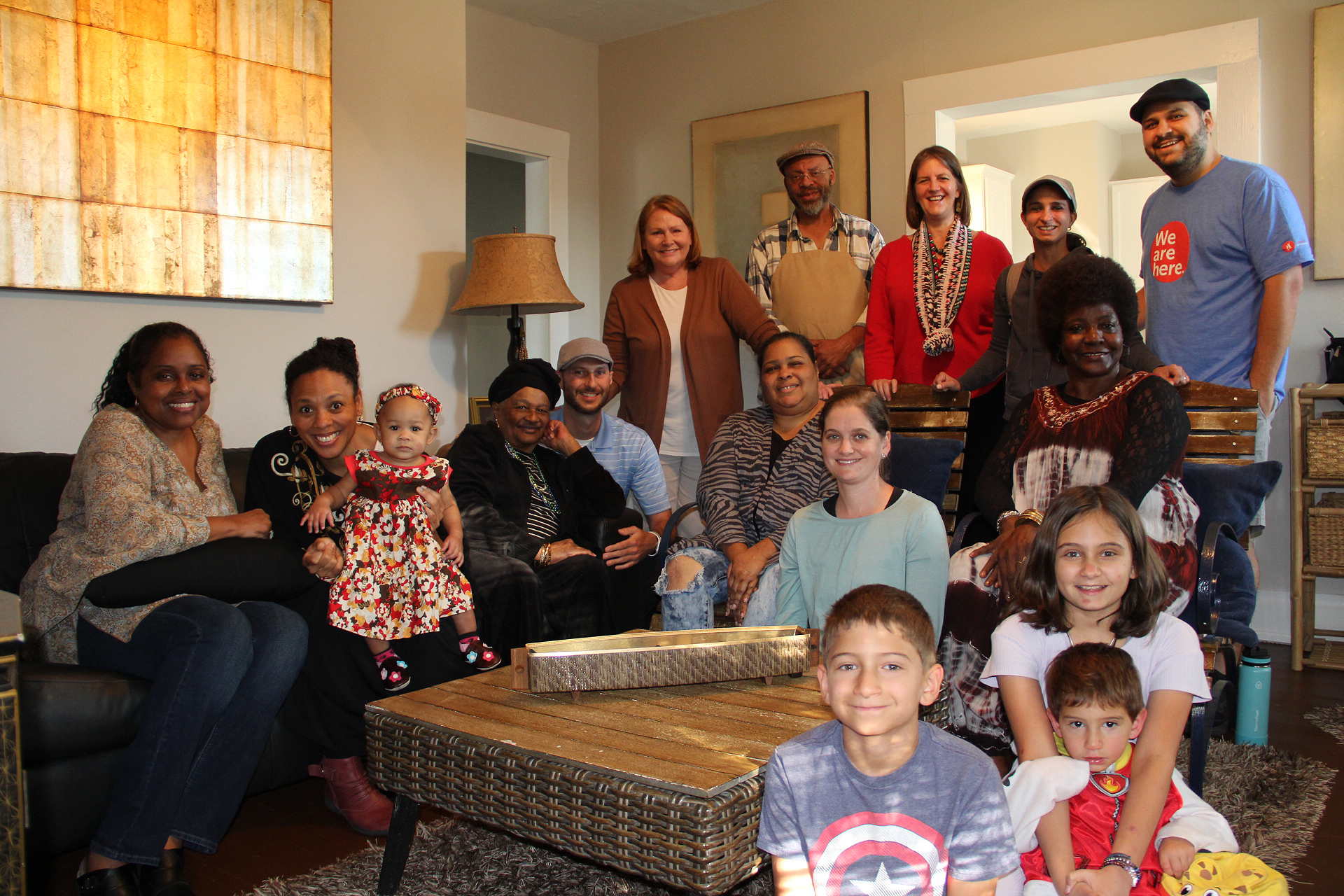
Sixteen people at a gathering.
Aliyah Aziza Ogbue’ (left), Arnicia Tucker (seated, center right), and Angela Murray (seated, above right) joined Birmingham-area friends recently at a Bessemer, Alabama, house being dedicated as the Pupil Place.
Continue reading

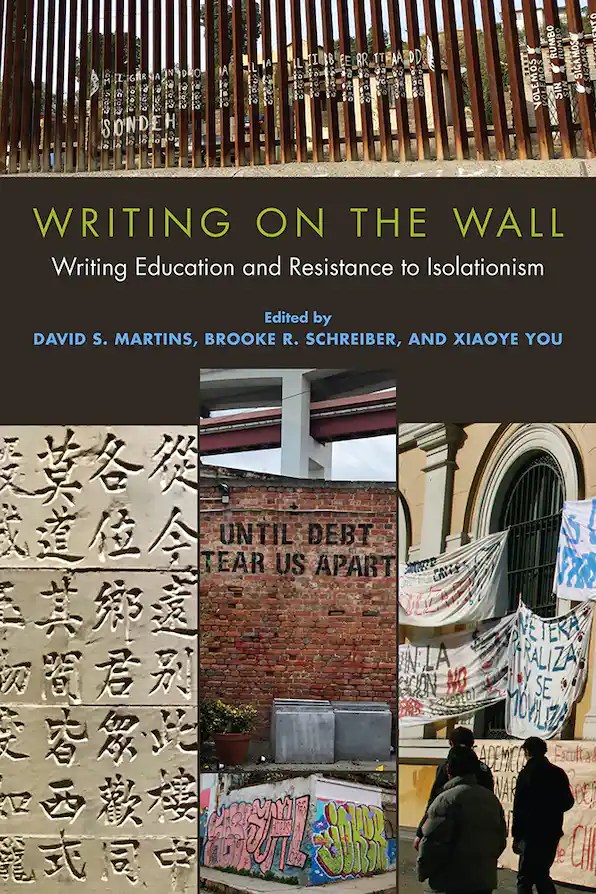
Writing on the Wall: Writing Education and Resistance to Isolationism

The cover of the book Writing on the Wall. The illustrations show graffiti, inscriptions, and signs on various walls.
Cover of Writing on the Wall, featuring four photographs I took.

Miron, Layli Maria. “Public Pedagogy and Multimodal Learning on the US-Mexico Border.” Writing on the Wall: Writing Education and Resistance to Isolationism, edited by David S. Martins, Brooke R. Schreiber, and Xiaoye You. Utah State University Press, 2023, pp. 129-150.

My contribution appears as Chapter 8 in this edited collection, which considers how writing educators can challenge isolationism and xenophobia. You can read the introduction to my chapter below. The essay is drawn from Chapter 4 of my dissertation.

Continue reading

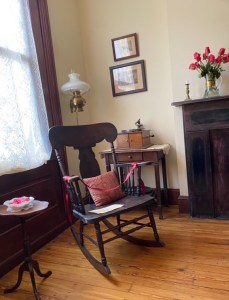
Philadelphia Bahá’ís Restore Home ‘Abdu’l-Bahá Visited in 1912

A rocking chair sits between a window and a fireplace.
A chair ‘Abdu’l-Bahá used in the Revell House’s front room. Photo courtesy of JoAnn Pangione Arcos.

On ‘Abdu’l-Bahá’s extraordinary journey across North America in 1912, He visited Philadelphia from June 8 to 10. While there, He spoke at a hotel and two churches, as well as at a private Bahá’í residence, a house rented by Mary Jane Revell where she and her four daughters lived. ‘Abdu’l-Bahá visited every room in the modest rowhouse and, sitting on a rocking chair, addressed the fifty Bahá’ís crowded inside. He praised them as brilliant “pearls,” exhorting them to serve Bahá’u’lláh.

Continue reading

An Introduction to The Secret of Divine Civilization

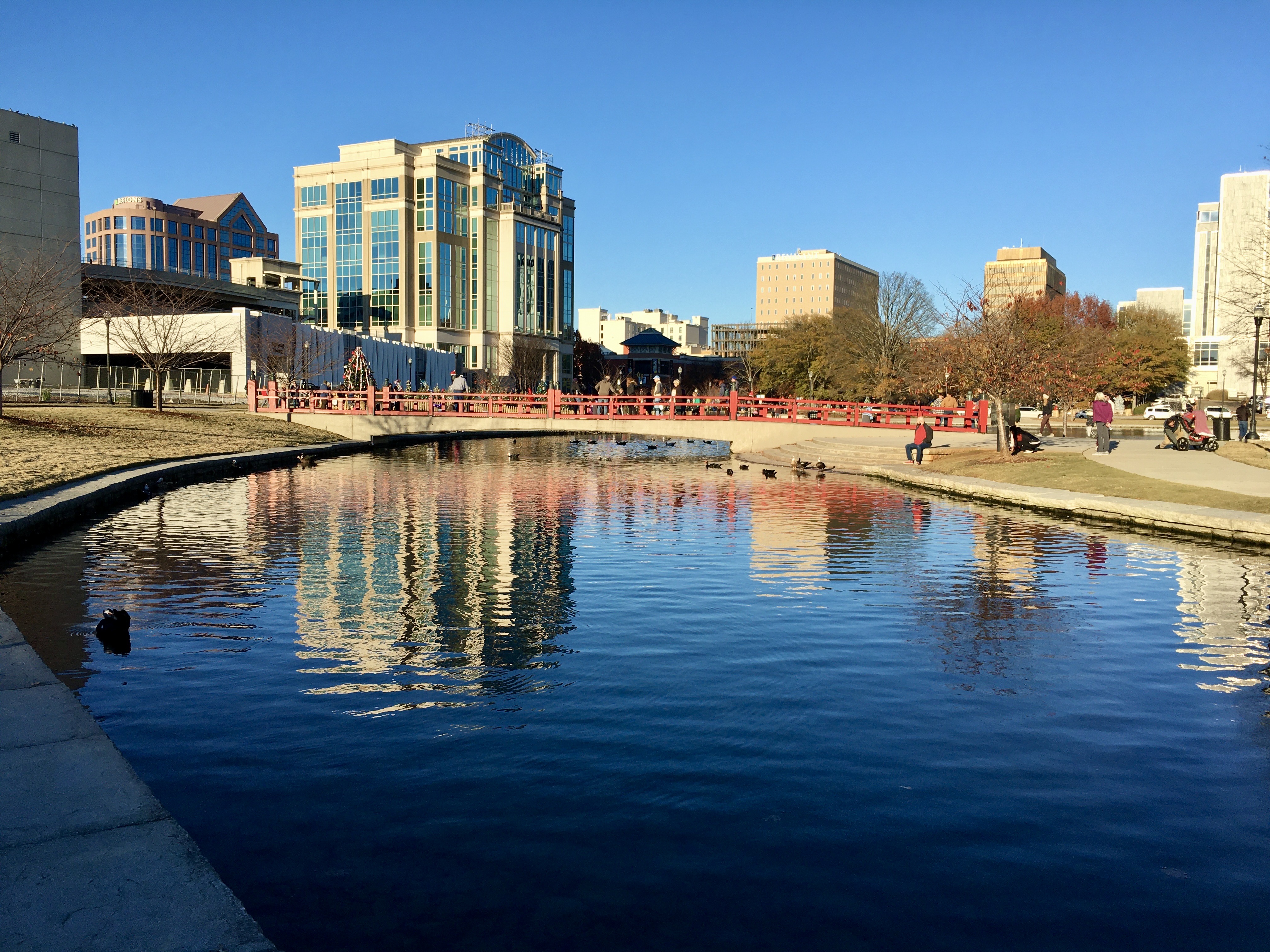
Modern buildings stand next to a canal. A footbridge spans the canal.
Photo by author.

The winds of the true springtide are passing over you; adorn yourselves with blossoms like trees in the scented garden.

Spring clouds are streaming; then turn you fresh and verdant like the sweet eternal fields.

The dawn star is shining, set your feet on the true path.

The sea of might is swelling, hasten to the shores of high resolve and fortune.

The pure water of life is welling up, why wear away your days in a desert of thirst?1

—Abdu’l-Baha
Continue reading

New Mexico Initiative Combats Indigenous People’s Erasure

Sandpainting prepared by Mitchell Silas (Diné) showing the Bahá’í ring stone symbol: the worlds of man (the hogan), the Holy Spirit or mediator between man and God (the smoke rising from the hogan), and the Twin Manifestation (two stars).
A sandpainting by Diné artist Mitchell Silas. Photo by S. Michael Bernhard.

Indigenous people worldwide have rich spiritual traditions that emphasize the oneness of humans with each other and with Mother Earth, a tenet shared with the Bahá’í Faith. Recognizing this commonality, some Native people have become Bahá’ís, making enormous contributions to the community—for instance, in the United States, the late Kevin Locke (Lakota) and his mother Patricia Locke (Lakota) were spiritual giants.

Yet, much work remains to strengthen the connections between Indigenous and Bahá’í teachings. A new task force based in Rio Rancho, New Mexico, is diligently carrying out that work.

Continue reading

Neighbors Become Cherished Friends in Western Michigan

In western Michigan, two very different locales just 30 miles apart illustrate the possibilities of outreach to neighbors. Grand Rapids is a bustling city with a million people in its metropolitan area. To the west, Grand Haven is a picturesque town on the shore of Lake Michigan. In both these “grand” places, Baha’is are working to enrich the spiritual lives of their neighborhoods.

Continue reading

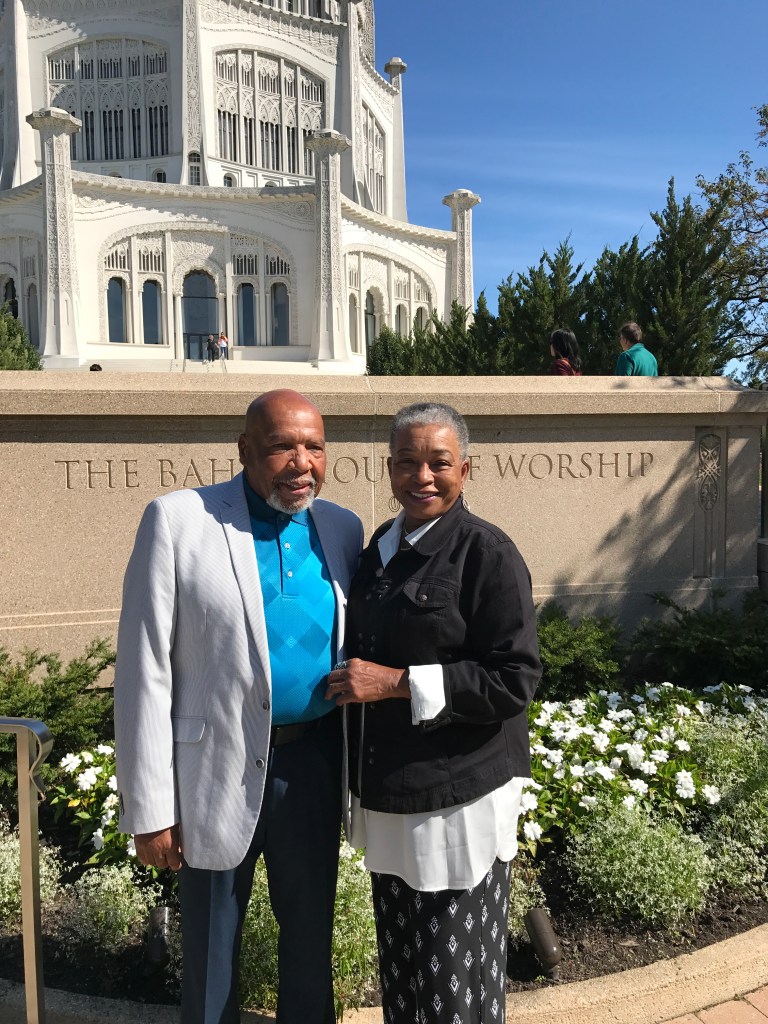
Alabama Couple with Deep Church Roots Finds Inspiration in Baha’i Teachings

In 2016, Jennie Colbert-Kennedy and Dennis Kennedy celebrated their fiftieth wedding anniversary. That was also the year that they became Baha’is. The spiritual journey that ultimately led this loving couple to embrace the Baha’i Faith began in their childhoods, when they attended Baptist churches in Augusta, Georgia, one of which was a church Jennie’s great-great-grandfather founded and pastored. 

Continue reading