Student-Consultant Interactions: From Single Visits to Partnerships

Logo saying the Peer Review, 10th anniversary, 2015 to 2025.

Smith, Zoe, Caroline LeFever, and Layli Miron. “Student-Consultant Interactions: From Single Visits to Partnerships.” The Peer Review, vol. 10, no. 1, 2025.

Abstract: What can consultants do to move students to return to the writing center? To identify strategies that accomplish this end, two undergraduate researchers and an advisor surveyed students who had repeatedly visited a single consultant. We then analyzed the data, coding consultant strategies and noting repeated occurrences. We also recorded appointments of consultants with high rates of returning clients, collecting transcripts detailing the strategies they use in first-time visits. Our research contributes to our field’s understanding of why some students return to the writing center and what students want from their consultant, intersecting with current conversations that acknowledge student writers as co-creators of writing centers and recognize peer tutors’ emotional labor. The consultation that we document and analyze may find use in consultants’ professional development.

Full Text: You can read the article or the full issue.
Sustaining and Incentivizing Tutor Education through Self-Paced Modules

WLN: A Journal of Writing Center Scholarship - Authors Bowles, Stowe, Miron, and Gilmore and Hudson

Miron, Layli. “Sustaining and Incentivizing Tutor Education through Self-Paced Modules.” WLN: A Journal of Writing Center Scholarship, vol. 49, no. 2, 2025, pp. 15–21.

Abstract: Most writing centers staffed by peer tutors undergo regular turnover of employees as they graduate. While a consistent training program for new tutors can ensure that the entire staff knows the essentials of one-to-one writing pedagogy, no such program can cover everything. Often, tutors continue their learning through professional development (PD) meetings that focus on more advanced topics chosen by the center’s leaders. To keep the entire staff engaged, including returning tutors, the PD curriculum must change from semester to semester. Yet, that means that some tutors will miss out on topics covered in a semester before their hiring. In contexts of high turnover, how can tutor educators sustain tutors’ knowledge? This article offers one solution: online PD modules that reward completion with badges.

Full Text: You can read the article or the full issue.
Developing Writing Consultants’ Multimodal Literacy through ePortfolios

Praxis: A Writing Center Journal - 22.1 - Writing Center Practices in Times of Flux

Basgier, Christopher, Layli Miron, and Richard Jake Gebhardt. “Developing Consultants’ Multimodal Literacy through ePortfolios.” Praxis: A Writing Center Journal, vol. 22, no. 1, 2024, pp. 47-61.

Abstract: Writing center consultant training must account for the multiple media and modes students use as they compose on new digital platforms. While most consultants come to writing center work already confident in traditional literacies, to advise on multimodal projects, they also need to understand how elements such as visual design, navigability, and accessibility play into the rhetorical situation. Starting in 2021, our writing center assigned an ePortfolio-focused professional development curriculum to our consultants, culminating with their creation of websites that integrated and showcased their knowledge, skills, and abilities. The authors studied the consultants’ responses over the first two years of implementation, collecting data from surveys, session observations, and interviews, which we analyzed through inductive and deductive coding. Our results indicate that consultants advanced their understanding of multimodality through their participation in the ePortfolio curriculum and applied their learning in consultations not only about ePortfolios, but also about other visually rich media and application materials. Other writing centers may consider incorporating ePortfolios into their tutor development programs.

Full Text: You can read the article on the Praxis website.

Writing on the Wall: Writing Education and Resistance to Isolationism

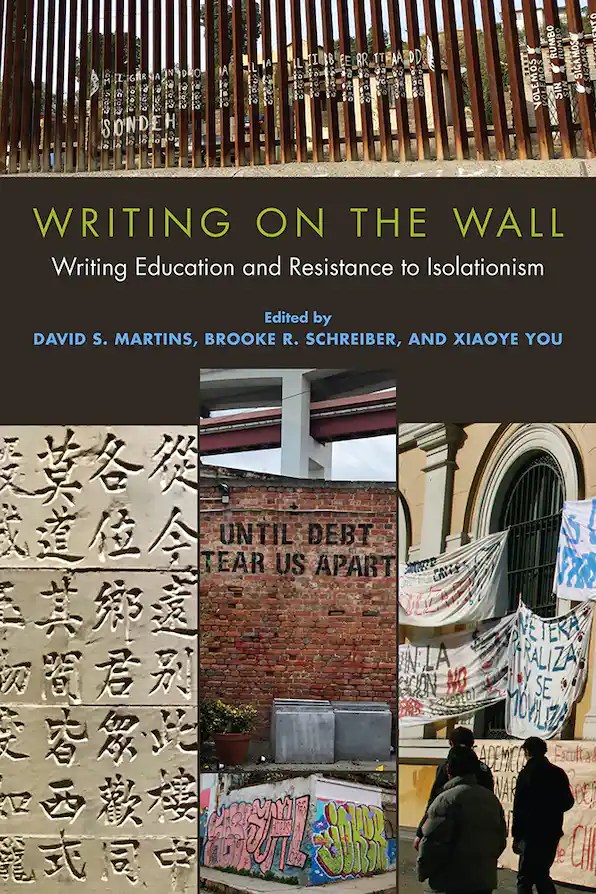
The cover of the book Writing on the Wall. The illustrations show graffiti, inscriptions, and signs on various walls.
Cover of Writing on the Wall, featuring four photographs I took.

Miron, Layli Maria. “Public Pedagogy and Multimodal Learning on the US-Mexico Border.” Writing on the Wall: Writing Education and Resistance to Isolationism, edited by David S. Martins, Brooke R. Schreiber, and Xiaoye You. Utah State University Press, 2023, pp. 129-150.

My contribution appears as Chapter 8 in this edited collection, which considers how writing educators can challenge isolationism and xenophobia. You can read the introduction to my chapter below. The essay is drawn from Chapter 4 of my dissertation.

Continue reading

Graduate Writing Workshops: To Generalize or to Specialize?

The cover of WLN 46.5-6 with author names Bell, Brantley, and van Fleet; Kramer and Ha; Lawson and Benallack; and Miron.

Miron, Layli Maria. “Graduate Writing Workshops: To Generalize or to Specialize?” WLN: A Journal of Writing Center Scholarship, vol. 46, no. 5–6, 2022, pp. 27–30.

In this tutor’s column about my time as a coordinator and consultant for Penn State’s Graduate Writing Center, I discuss how to provide support to graduate students, who often need to learn the highly specialized genres and conventions of their fields. You can read the article online or by downloading it below.

Continue reading

Review of “Constitutive Visions”

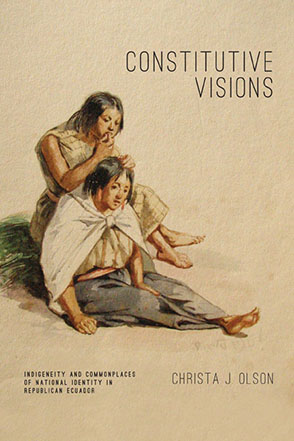
Cover of Constitutive Visions courtesy of Penn State Press

Constitutive Visions: Indigeneity and Commonplaces of National Identity in Republican Ecuador (Review), Quarterly Journal of Speech, vol. 103, no. 1-2, 2017, pp. 186-190.

Christa J. Olson’s first book provides a model for rhetoricians who, like her, wish to transcend disciplinary divisions and the geographic scope of their homelands to study the rhetorics of other lands through an array of artifacts. In Constitutive Visions, Olson ambitiously intervenes in two significant projects: first, to “demonstrate the powerful roles played by resilient commonplaces in the constitution of national identity,” and second, to “emphasize the particular force that elements of visual culture lend to the constitutions of strong identifications” (24). That is, she exposes the processes through which rhetors compose a national identity for their country.

Continue reading