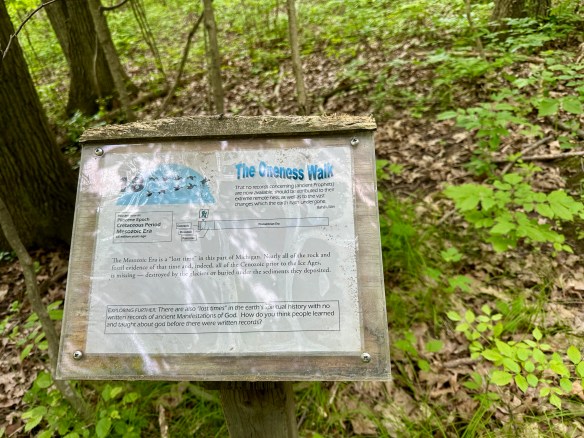
Walking in the woods, I see a field of pink phlox. A giant swallowtail butterfly pumps her wings beside a stream. As I swat mosquitos, signs along the path encourage me to consider this landscape in geological time, its current form molded by the glacier sheet that retreated some 12,000 years ago.
Time to contemplate time: 12,000 years, a moment to our 4.5-billion-year-old planet, yet an unfathomable ocean compared to my few droplets of decades.
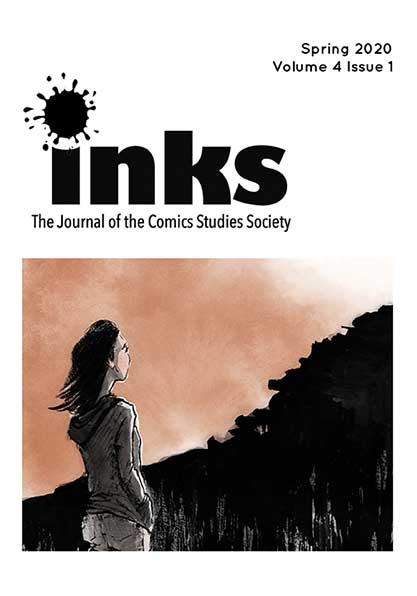
Inks:The Journal of the Comics Studies Society, vol. 4, no. 1, Spring 2020, pp. 44–65.
Abstract:Thi Bui’s The Best We Could Do, a graphic memoir centering on her family’s experience with war in Vietnam and with resettlement in the United States,earned critical acclaim upon publication in 2017. It touched a nerve with U.S. readers attuned to their country’s rising xenophobia, eliciting praise for humanizing refugees. Her comic certainly stirs compassion with its fusion of emotive drawings and text—but it does more. Bui subtly encourages readers to not only see refugees as human but to realize that no polity exists apart from migrancy. Situating her book in recent postcolonial theory, I read it as a commentary on the shifting nature of history and nation. Bui presents no singular homeland, past or present, implicitly calling into question Americans’ desire for a walled nation and bounded culture.
Full Text: You can download the article by clicking the link below.
Journal of Communication and Religion, vol. 42, no. 4, 2019, pp. 5–27.
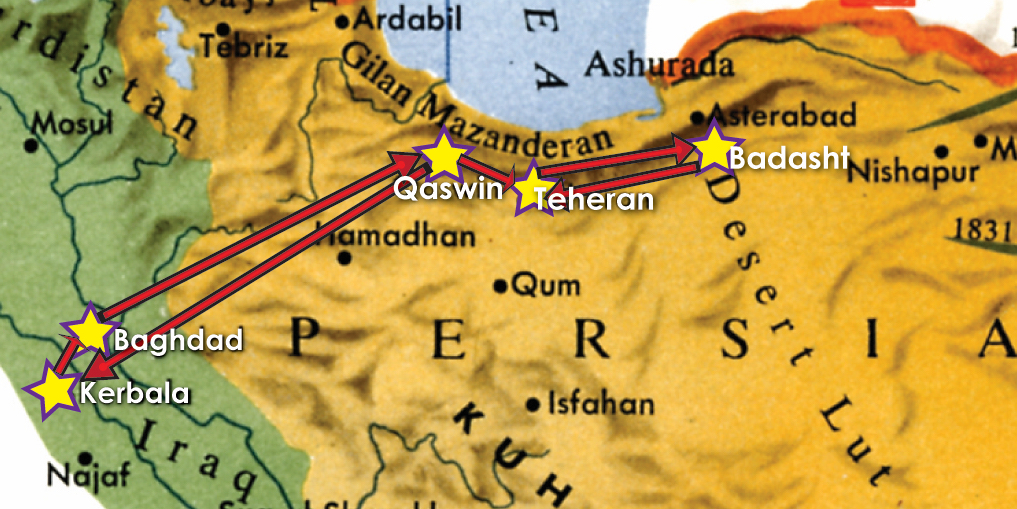
Abstract: During her brief life in the early nineteenth century, the Persian poet and theologian Táhirih advocated for a spiritual revolution. Authorities executed her for heresy in 1852. After death, Táhirih attracted admirers around the world; Western writers—especially women—have interpreted her history to argue for gender equality, religious renewal, and global interdependence. This Middle Eastern preacher has established a posthumous pulpit in the United States, as members of the Bahá’í Faith there have authored a dozen books about her. After introducing Táhirih’s rhetorical rebellions, this essay demonstrates her transnational influence by analyzing her afterlives in U.S. Bahá’í discourse.
Full Text: You can download the article by clicking the link below.
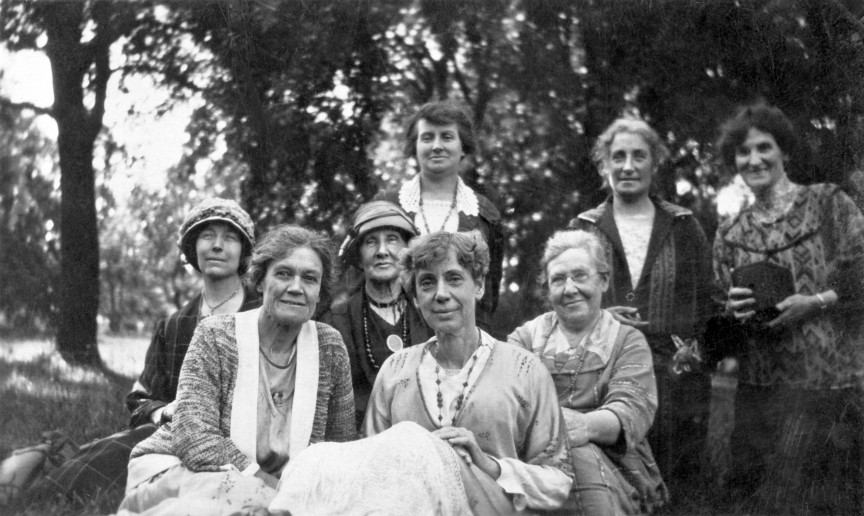
Martha Root sitting front and center, with a group of women in Melbourne, Australia, c. 1924. (Image source)
A century ago, on July 22, 1919, Martha Root embarked on a 20-year journey to destinations in Europe, Australia, Asia, the Americas, and Africa. These travels were motivated by a desire to share Baha’u’llah’s teachings with diverse audiences through public speaking and writing. Before setting out, she had honed her rhetorical skills during her career as a journalist, performer, and teacher. You can learn more about Root’s purpose-driven life from this earlier Baha’i Blog article.
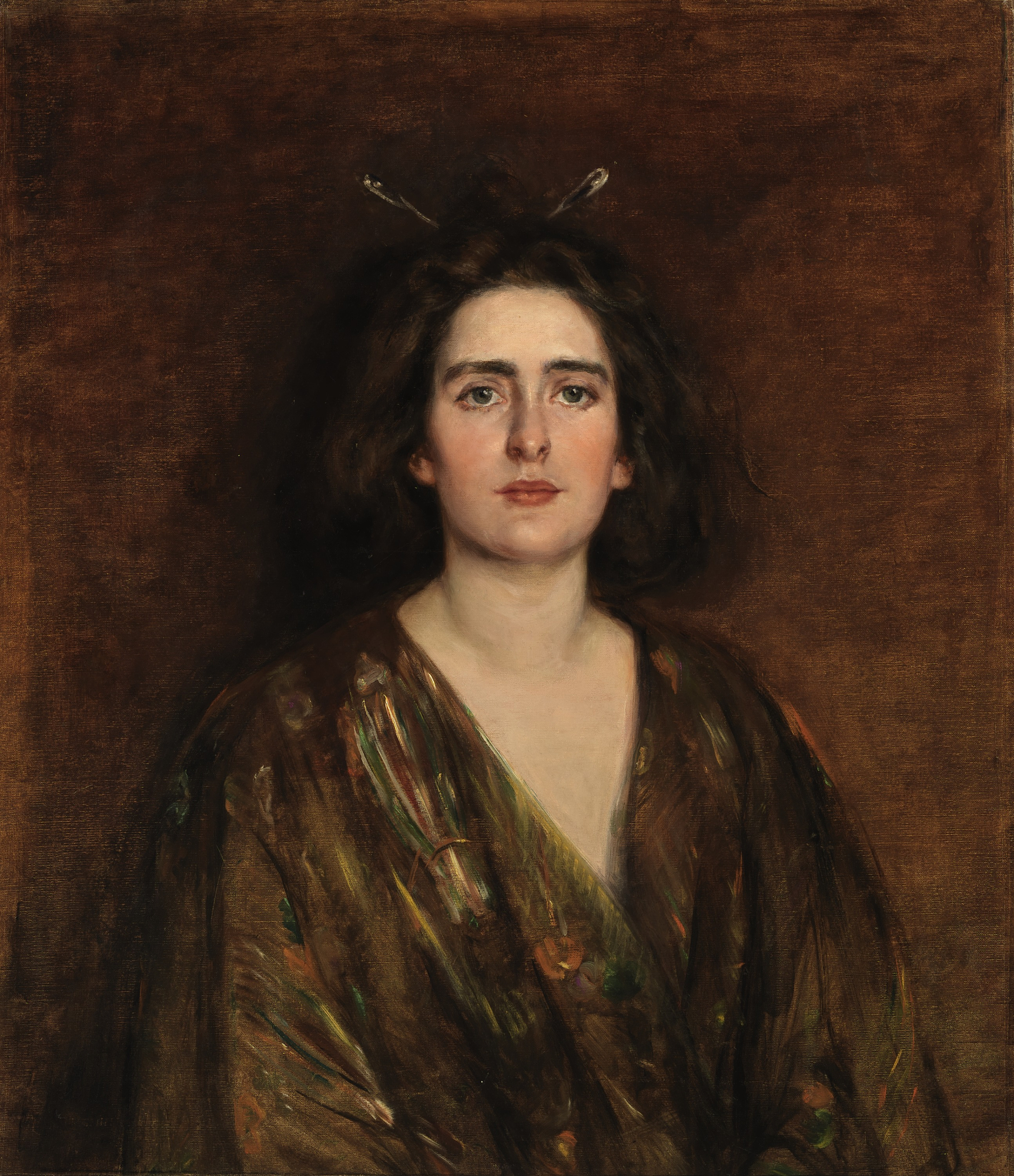
“Laura at Sixteen” by Alice Pike Barney (Image source)
May 16, 1909: a gathering of New Yorkers listens to Laura Clifford Barney; one audience member jots down her words. This scribe records two talks Barney gives: the first, on her journey to Persia, and the second, on her observations of Abdu’l-Baha. To learn more about the context, please refer to my previous post, which describes the second talk.
May 16, 1909, New York City: a group has gathered to hear Laura Clifford Barney speak. Her name is familiar to the audience from Some Answered Questions, which was published last year. This book brought Abdu’l-Baha’s commentary on subjects ranging from the New Testament to criminal justice to the newborn Baha’i community in the United States.
On March 8th, we celebrate “the social, economic, cultural and political achievements of women” and acknowledge the urgency of “accelerating gender parity.”1 As much as International Women’s Day is a celebration, it is also a monument to centuries of discrimination.
Interior courtyard of the House of Abbud. (Photo by the author)
In the years between the World Wars, Tuba Khanum shared with Sara Louisa Blomfield recollections of her grandfather Baha’u’llah, grandmother Asiyih Khanum (Navvab), father Abdu’l-Baha, and older sister Diya’iyyih (mother of Shoghi Effendi, who became Guardian of the Baha’i Faith).
“You can kill me as soon as you like, but you cannot stop the emancipation of women.” These are reputed to be among the last words of Táhirih before her executioner strangled her in 1852.


 Layli Maria Miron