Writing on the Wall: Writing Education and Resistance to Isolationism

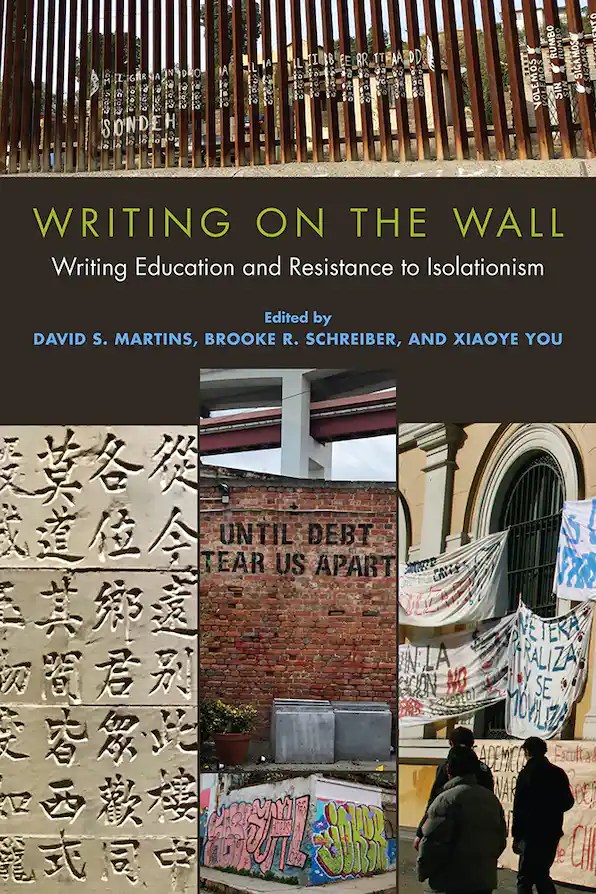
The cover of the book Writing on the Wall. The illustrations show graffiti, inscriptions, and signs on various walls.
Cover of Writing on the Wall, featuring four photographs I took.

Miron, Layli Maria. “Public Pedagogy and Multimodal Learning on the US-Mexico Border.” Writing on the Wall: Writing Education and Resistance to Isolationism, edited by David S. Martins, Brooke R. Schreiber, and Xiaoye You. Utah State University Press, 2023, pp. 129-150.

My contribution appears as Chapter 8 in this edited collection, which considers how writing educators can challenge isolationism and xenophobia. You can read the introduction to my chapter below. The essay is drawn from Chapter 4 of my dissertation.

Continue reading

Frog Pond at Half a Year

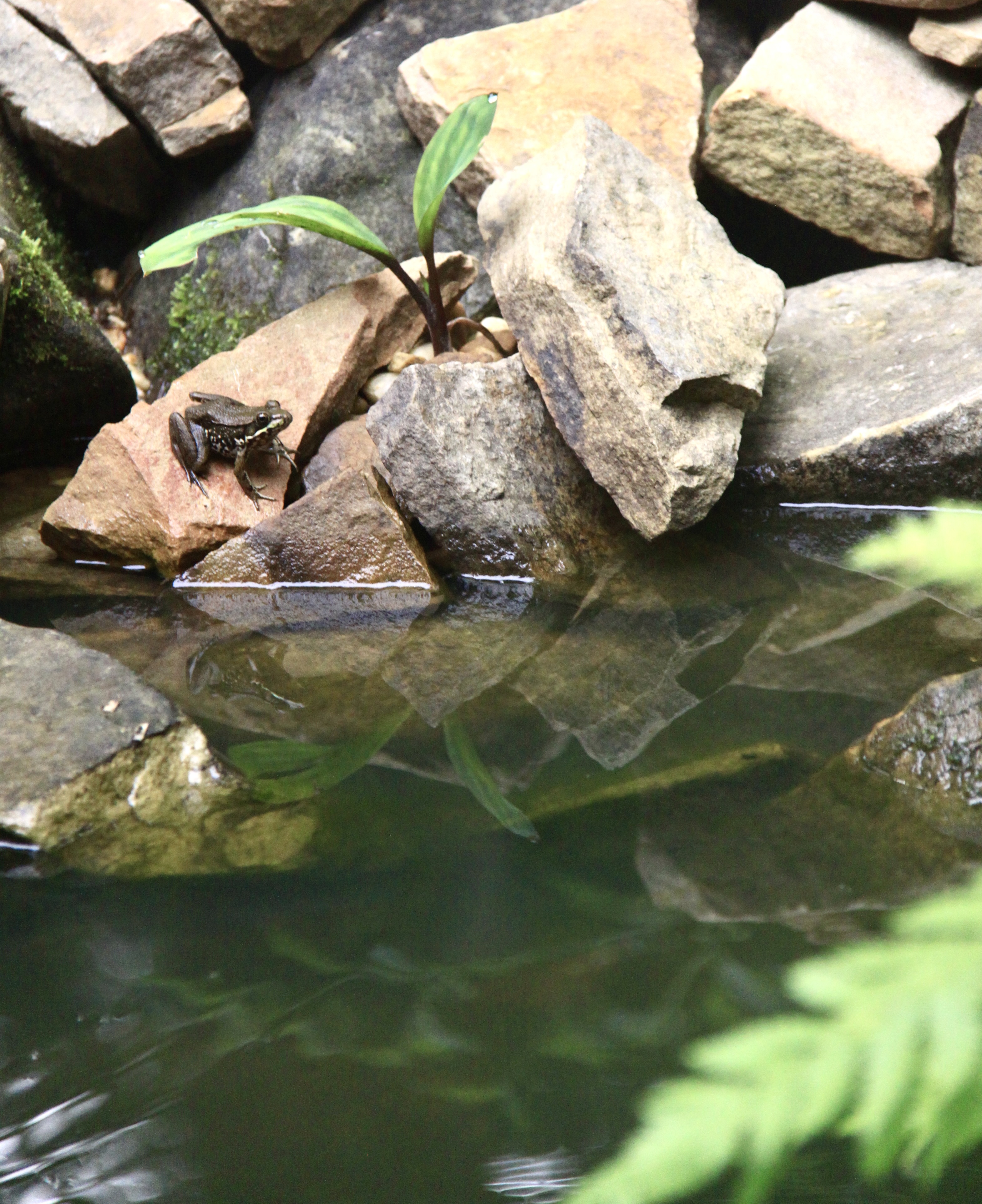
A brown frog sits on a stone next to water.
A Southern leopard frog sits under a golden club plant in my pond.

For a while, the tadpoles made themselves invisible. But gradually, as winter turned to spring, they began showing themselves. Tiny legs grew, then lengthened. 

By late spring, they’d metamorphosed into frogs. Now, breathing air and warming their cold-blooded bodies in the sun, the frogs perched atop stones, allowing me to count them: four tadpoles had survived to froghood.

Continue reading

Water Gardening

Water and stones alone do not make a healthy pond. It needs plants, which provide habitat for animals and filter nutrients out of the water, keeping it clearer and resistant to algal blooms. Plus, when you fill a pond with plants, you can call it a “water garden,” conjuring images of fragrant blossoms nodding at their reflections in limpid pools. Ideally, a pond will have both plants that live fully in the water—submerged plants rooted to the bottom as well as floating ones—and marginal (or “emergent”) plants that live on the banks in perpetually damp soil.

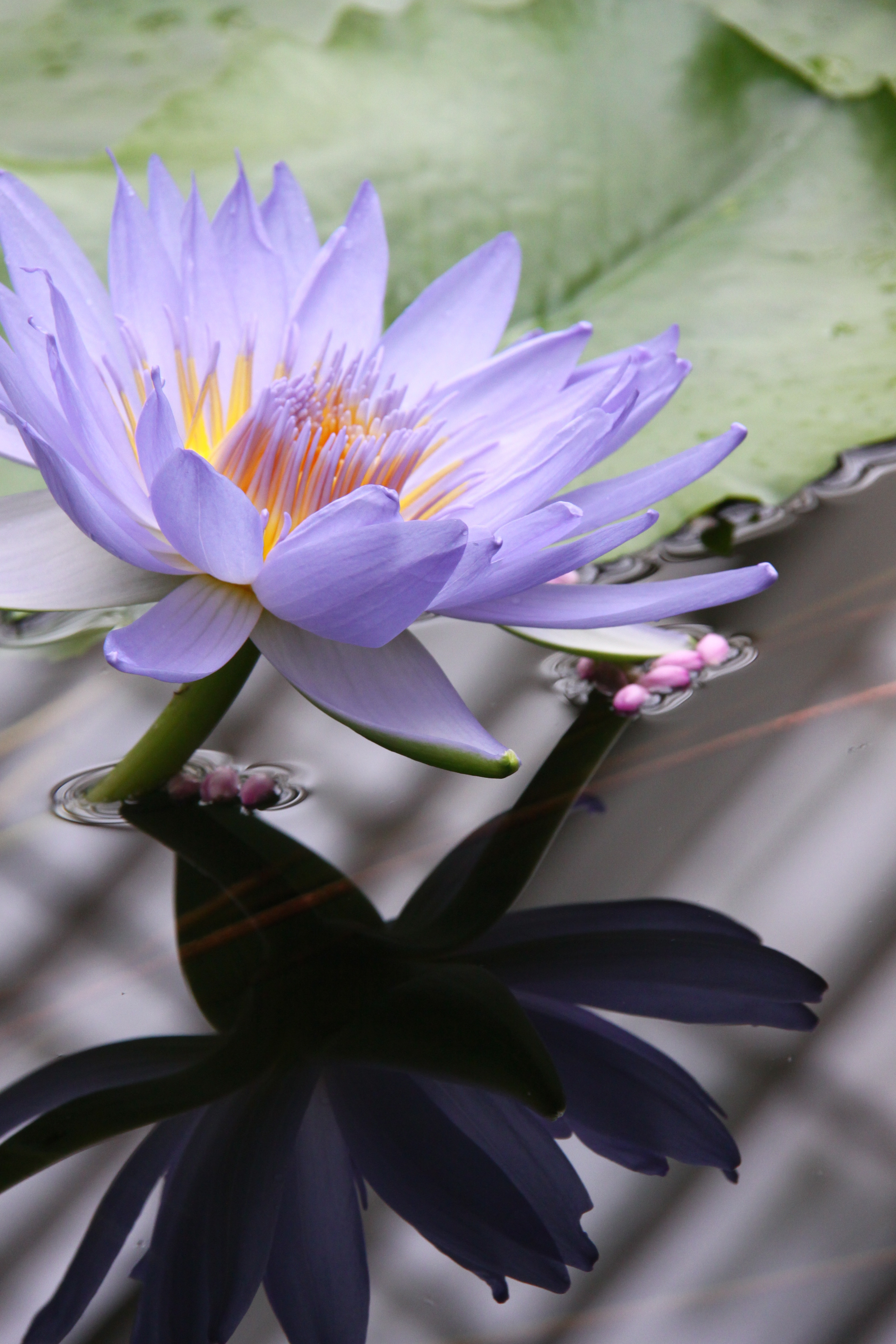
A large purple flower with yellow highlights rises out of the water. Behind it are lily pads. Below it is its own reflection.
A tropical waterlily I admired in the San Francisco Conservatory of Flowers.
Continue reading

Building a Pond

I’d announced to the backyard my intention to make a pond there, but no frogs had volunteered to serve as architects. So, it was up to Sergey and me to design and build it. A lot of online reading about wildlife ponds, frog ponds, toad ponds, amphibian ponds, etc. ensued.

After what felt like years’ worth of moonlighting as a pond researcher, I finally convinced Sergey that our creation wouldn’t become a cesspool populated by breeding mosquitos and venomous snakes. Or, more accurately, his naturally kind-hearted desire to support my hopes and dreams outweighed his many qualms. It was now time to start procurement.

Continue reading

Permeable Skins

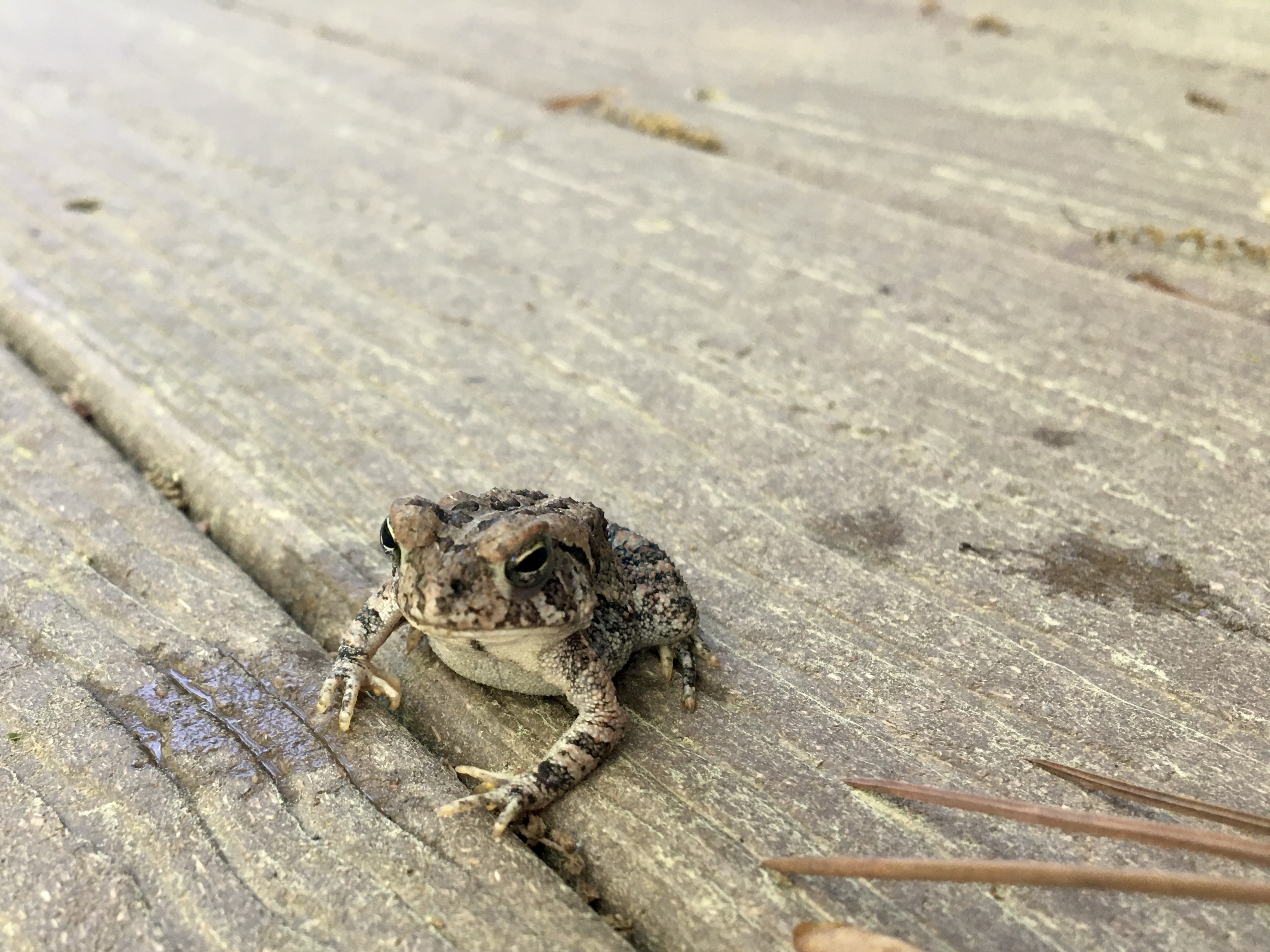
A brown toad with black stripes.

It might seem overzealous for me to worry about our own yard providing habitat given that dozens of species, or probably hundreds or thousands if we’re counting microbial life, already use it, and that at least a hundred native trees—oaks, sweetgums, tulip poplars, dogwoods, loblolly pines, etc.—call it home. But even this habitat could be better. 

Continue reading

A Backyard Safari

We have witnessed a slew of wildlife in the yard, a reminder that “our property” belongs to many beings besides humans. 

Mammals: Gray squirrels and chipmunks make their homes in the yard. Nocturnal visitors include white-tailed deer, raccoons, and opossums—and most likely armadillos. I once saw a red fox run through the yard.

The does here give birth in September, so each fall, we have the pleasure of seeing big-eyed, gangly-legged fawns exploring the yard, which compensates for my annoyance at the deer for sampling nearly everything I plant!

Two fawns, one standing and the other lying down, next to several trees.
Twin fawns rest in the front yard.
Continue reading

The Land, My Nurturer

In every place I live, I find my strongest sense of connection comes from observing the environment. 

In Wisconsin, I had nearly all my growing-up years to do so, starting from childhood nature walks with my parents. When we moved into a house that bordered a small-but-vibrant restored prairie, I had plentiful opportunities to watch the birds and insects that benefited from the native wildflowers and grasses. I recall walking to a small pond next to that prairie to watch hundreds of dragonflies swooping predatorily over cattails.

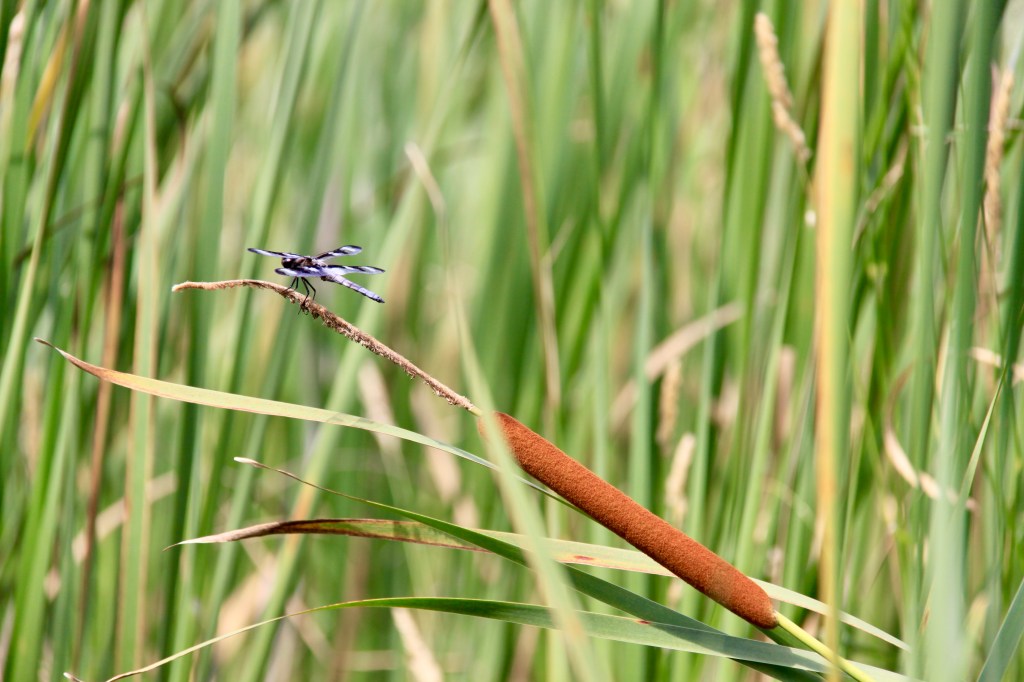
A dragonfly with striped wings sits on the end of a cattail. In the background are many cattail leaves.
A dragonfly rests on a cattail in Verona, Wisconsin. All photos here are my own.
Continue reading

Philadelphia Bahá’ís Restore Home ‘Abdu’l-Bahá Visited in 1912

A rocking chair sits between a window and a fireplace.
A chair ‘Abdu’l-Bahá used in the Revell House’s front room. Photo courtesy of JoAnn Pangione Arcos.

On ‘Abdu’l-Bahá’s extraordinary journey across North America in 1912, He visited Philadelphia from June 8 to 10. While there, He spoke at a hotel and two churches, as well as at a private Bahá’í residence, a house rented by Mary Jane Revell where she and her four daughters lived. ‘Abdu’l-Bahá visited every room in the modest rowhouse and, sitting on a rocking chair, addressed the fifty Bahá’ís crowded inside. He praised them as brilliant “pearls,” exhorting them to serve Bahá’u’lláh.

Continue reading

An Introduction to The Secret of Divine Civilization

Modern buildings stand next to a canal. A footbridge spans the canal.
Photo by author.

The winds of the true springtide are passing over you; adorn yourselves with blossoms like trees in the scented garden.

Spring clouds are streaming; then turn you fresh and verdant like the sweet eternal fields.

The dawn star is shining, set your feet on the true path.

The sea of might is swelling, hasten to the shores of high resolve and fortune.

The pure water of life is welling up, why wear away your days in a desert of thirst?1

—Abdu’l-Baha
Continue reading

New Mexico Initiative Combats Indigenous People’s Erasure

Sandpainting prepared by Mitchell Silas (Diné) showing the Bahá’í ring stone symbol: the worlds of man (the hogan), the Holy Spirit or mediator between man and God (the smoke rising from the hogan), and the Twin Manifestation (two stars).
A sandpainting by Diné artist Mitchell Silas. Photo by S. Michael Bernhard.

Indigenous people worldwide have rich spiritual traditions that emphasize the oneness of humans with each other and with Mother Earth, a tenet shared with the Bahá’í Faith. Recognizing this commonality, some Native people have become Bahá’ís, making enormous contributions to the community—for instance, in the United States, the late Kevin Locke (Lakota) and his mother Patricia Locke (Lakota) were spiritual giants.

Yet, much work remains to strengthen the connections between Indigenous and Bahá’í teachings. A new task force based in Rio Rancho, New Mexico, is diligently carrying out that work.

Continue reading