Smith, Zoe, Caroline LeFever, and Layli Miron. “Student-Consultant Interactions: From Single Visits to Partnerships.” The Peer Review, vol. 10, no. 1, 2025.
Abstract: What can consultants do to move students to return to the writing center? To identify strategies that accomplish this end, two undergraduate researchers and an advisor surveyed students who had repeatedly visited a single consultant. We then analyzed the data, coding consultant strategies and noting repeated occurrences. We also recorded appointments of consultants with high rates of returning clients, collecting transcripts detailing the strategies they use in first-time visits. Our research contributes to our field’s understanding of why some students return to the writing center and what students want from their consultant, intersecting with current conversations that acknowledge student writers as co-creators of writing centers and recognize peer tutors’ emotional labor. The consultation that we document and analyze may find use in consultants’ professional development.
Abstract: Most writing centers staffed by peer tutors undergo regular turnover of employees as they graduate. While a consistent training program for new tutors can ensure that the entire staff knows the essentials of one-to-one writing pedagogy, no such program can cover everything. Often, tutors continue their learning through professional development (PD) meetings that focus on more advanced topics chosen by the center’s leaders. To keep the entire staff engaged, including returning tutors, the PD curriculum must change from semester to semester. Yet, that means that some tutors will miss out on topics covered in a semester before their hiring. In contexts of high turnover, how can tutor educators sustain tutors’ knowledge? This article offers one solution: online PD modules that reward completion with badges.
Basgier, Christopher, Layli Miron, and Richard Jake Gebhardt. “Developing Consultants’ Multimodal Literacy through ePortfolios.” Praxis: A Writing Center Journal, vol. 22, no. 1, 2024, pp. 47-61.
Abstract: Writing center consultant training must account for the multiple media and modes students use as they compose on new digital platforms. While most consultants come to writing center work already confident in traditional literacies, to advise on multimodal projects, they also need to understand how elements such as visual design, navigability, and accessibility play into the rhetorical situation. Starting in 2021, our writing center assigned an ePortfolio-focused professional development curriculum to our consultants, culminating with their creation of websites that integrated and showcased their knowledge, skills, and abilities. The authors studied the consultants’ responses over the first two years of implementation, collecting data from surveys, session observations, and interviews, which we analyzed through inductive and deductive coding. Our results indicate that consultants advanced their understanding of multimodality through their participation in the ePortfolio curriculum and applied their learning in consultations not only about ePortfolios, but also about other visually rich media and application materials. Other writing centers may consider incorporating ePortfolios into their tutor development programs.
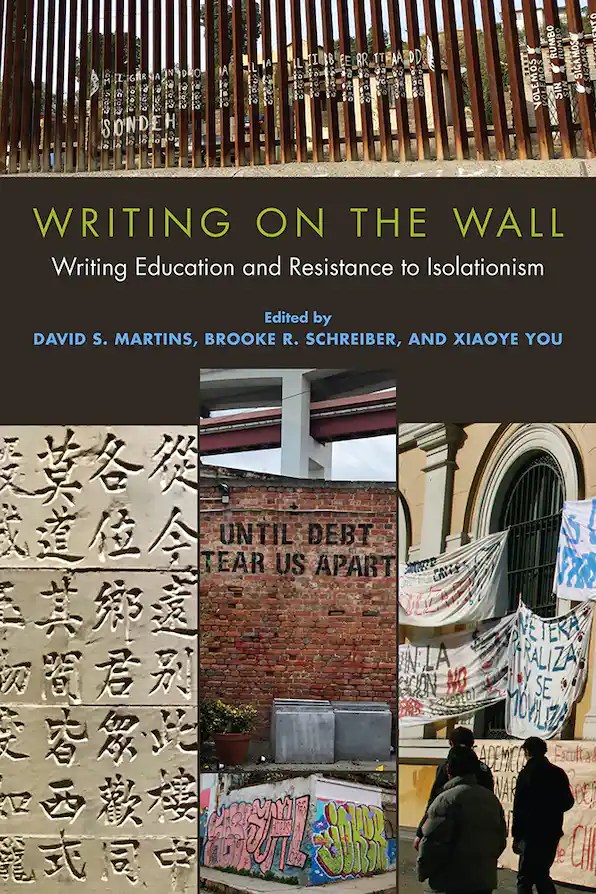
My contribution appears as Chapter 8 in this edited collection, which considers how writing educators can challenge isolationism and xenophobia. You can read the introduction to my chapter below. The essay is drawn from Chapter 4 of my dissertation.
Miron, Layli Maria. “Graduate Writing Workshops: To Generalize or to Specialize?” WLN: A Journal of Writing Center Scholarship, vol. 46, no. 5–6, 2022, pp. 27–30.
In this tutor’s column about my time as a coordinator and consultant for Penn State’s Graduate Writing Center, I discuss how to provide support to graduate students, who often need to learn the highly specialized genres and conventions of their fields. You can read the article online or by downloading it below.
Inks:The Journal of the Comics Studies Society, vol. 4, no. 1, Spring 2020, pp. 44–65.
Abstract:Thi Bui’s The Best We Could Do, a graphic memoir centering on her family’s experience with war in Vietnam and with resettlement in the United States,earned critical acclaim upon publication in 2017. It touched a nerve with U.S. readers attuned to their country’s rising xenophobia, eliciting praise for humanizing refugees. Her comic certainly stirs compassion with its fusion of emotive drawings and text—but it does more. Bui subtly encourages readers to not only see refugees as human but to realize that no polity exists apart from migrancy. Situating her book in recent postcolonial theory, I read it as a commentary on the shifting nature of history and nation. Bui presents no singular homeland, past or present, implicitly calling into question Americans’ desire for a walled nation and bounded culture.
Full Text: You can download the article by clicking the link below.
Journal of Bahá’í Studies, vol. 30, no. 1–2, 2020, pp. 19–44.
Abstract: Scholars have wrestled with the question of how people can be persuaded to extend feelings of kinship beyond their own ethnic or national groups. This article identifies spiritual cosmopolitanism, whose principles of universal love and harmony can be found in the teachings of the Bahá’í Faith, as key to such borderless solidarity. Drawing on data gathered from interviews with Iranian refugees who have settled in the United States, the article demonstrates how cosmopolitan principles shape the worldviews of Bahá’ís. Through this case study, spiritual cosmopolitanism’s potential to enrich public arguments for the inclusion of Others such as immigrants becomes apparent.
Reframing Immigration through Religious Advocacy: Rhetoric, Cosmopolitanism, and the Divine. 2020. Penn State U, PhD dissertation.
Multimedia Abstract:
Please turn on closed captioning if desired.
Textual Abstract:
In the United States, nativist rhetoric is propelling increasingly violent attacks on immigrants[1] and other minority populations. Conversely, discourse taking a more cosmopolitan approach—positing border-transcending obligations to all humanity, unlimited by national or ethnic group—struggles to elicit a comparably passionate following, as I explain in the introduction (chapter one). Perhaps cosmopolitan rhetoric can gain persuasive power by joining forces with religion. In the realm of faith-based immigration advocacy, cosmopolitan arguments leverage appeals to divine, rather than merely manmade, imperatives toward love and fellowship. For many potential audiences in this country, the divine plays a potent role in their lives, as over 75% of Americans belong to a religion—a statistic that suggests the influence of religious rhetoric. What resources can religious rhetoric provide to pro-immigrant arguments? By responding to this question, my project addresses a gap in studies of immigration rhetoric, which have hitherto overlooked the border-crossing potential of religious advocacy. The project also addresses a gap in studies of religious rhetoric, which have predominantly focused on Protestant Christianity, by drawing attention to the contributions of rhetors adhering to other religions.
Every world religion offers some cosmopolitan principles, and many also feature sacred stories of migration, as chapter two demonstrates. To elucidate how these elements invigorate arguments for hospitality toward immigrants, I analyze the rhetoric of Bahá’í, Catholic, and Islamic advocacy organizations through the lens of religious cosmopolitanism (a theory that chapter two elucidates). In each organization’s advocacy, I find a model for reframing immigration rhetoric. In chapter three, I demonstrate how the Tahirih Justice Center uses the Bahá’í principle of nonpartisanship to enlist support across the aisles for its work on behalf of immigrant women. In chapter four, I survey the Kino Border Initiative’s rhetoric of journeying, which draws from Catholic traditions to spiritualize undocumented migration. Chapter five presents Hijabis of New York, a social media campaign that claims public space for a much-maligned immigrant group, U.S. Muslim women.
All three of these organizations mobilize religious tenets that mandate universal justice and compassion. Through their arguments for border-transcending policies and dispositions, these organizations reframe the commonplaces of immigration, replacing the xenophobia that dominates discourse today with recognition of migrants’ humanity and spirituality. This dissertation’s discovery of innovative strategies in cosmopolitan rhetoric has several implications for research and teaching, as I point out in the conclusion (chapter six). In the arena of rhetorical research, my project shows that religion can contribute to arguments that we should welcome them—or, more radically, that there is no them, just a global us. It also implies the need for much more research in cosmopolitan theory even—and especially—in the face of rising xenophobia. The project also offers some practical takeaways for pedagogy, recommending anti-nativist teaching strategies. Overall, by bringing to light advocacy rhetorics that refuse to operate on nativism’s terms, it offers the reader hope for humane responses to those who have come across borders.
Journal of Communication and Religion, vol. 42, no. 4, 2019, pp. 5–27.
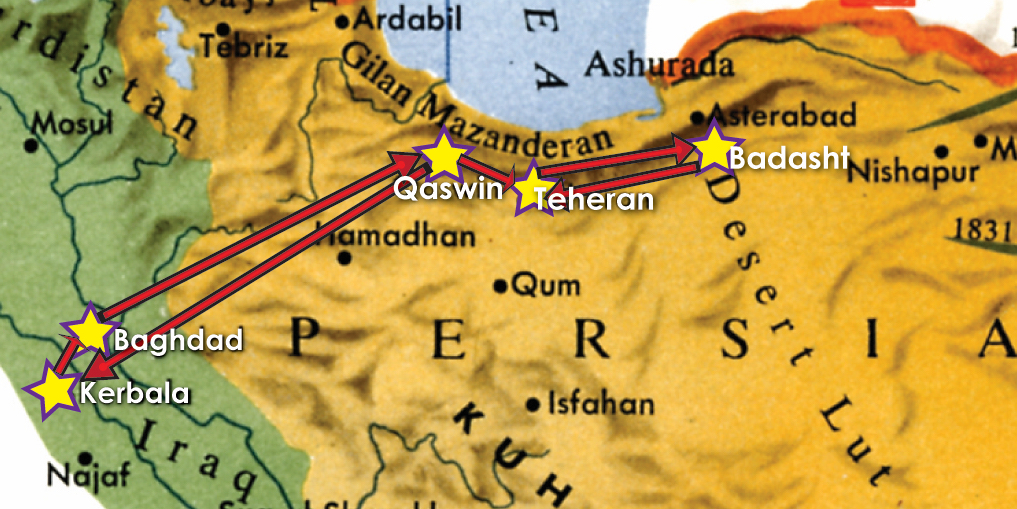
Abstract: During her brief life in the early nineteenth century, the Persian poet and theologian Táhirih advocated for a spiritual revolution. Authorities executed her for heresy in 1852. After death, Táhirih attracted admirers around the world; Western writers—especially women—have interpreted her history to argue for gender equality, religious renewal, and global interdependence. This Middle Eastern preacher has established a posthumous pulpit in the United States, as members of the Bahá’í Faith there have authored a dozen books about her. After introducing Táhirih’s rhetorical rebellions, this essay demonstrates her transnational influence by analyzing her afterlives in U.S. Bahá’í discourse.
Full Text: You can download the article by clicking the link below.
Rhetoric Review, vol. 38, no. 4, 2019, pp. 445-462
Abstract: Nativist ideology, which dominates public discourse, implements ableist hierarchies to reduce immigrants to diseases of the body politic. Immigrants’ graphic narratives, on the other hand, reveal the disabling effects of xenophobic environments. Rhetoricians have begun to recognize comics’ persuasive potential but thus far have not explored their role in immigration rhetoric. Using this medium’s affordances, immigrants critique the nativism-ableism matrix, as exemplified by Parsua Bashi’s comics memoir about immigrating to Switzerland from Iran, Nylon Road (2006/2009). Bashi’s self-worth, displaced by her unreceptive context, depends on accepting a mental (dis)ability. Her comic counters nativism’s eugenic underpinnings by visualizing variation.
You can download the article using this link. Thanks for reading!

 Layli Maria Miron